
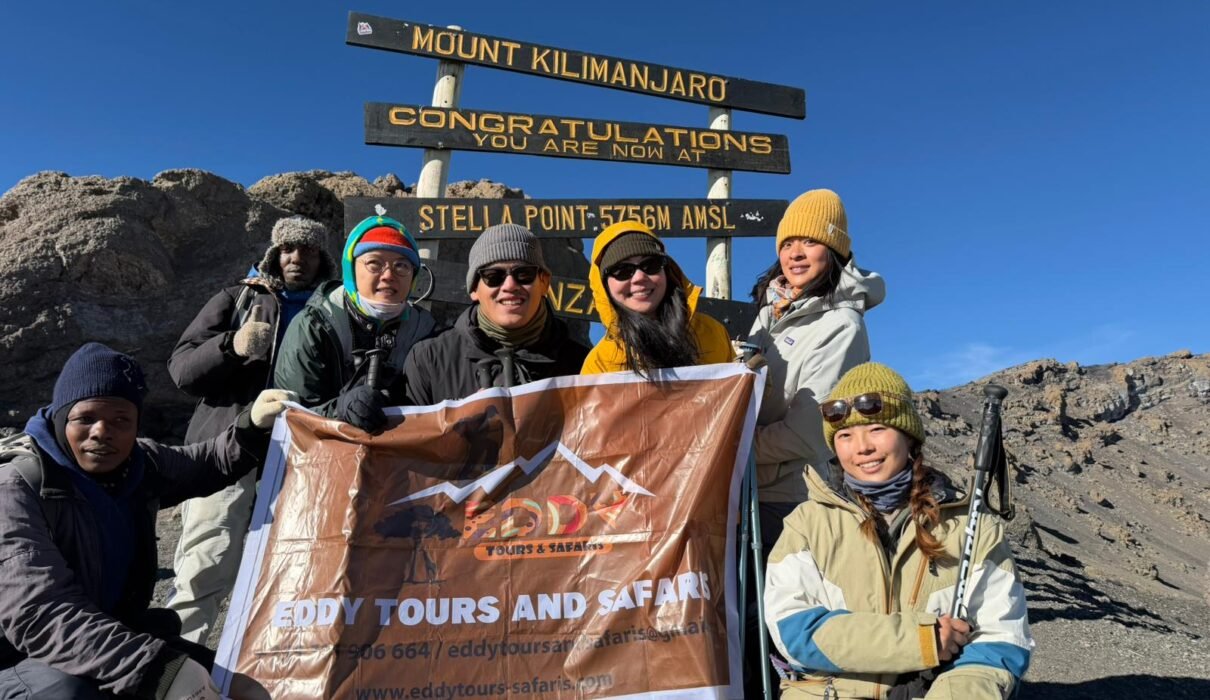
Kilimanjaro National Park Fees are one of the most important parts of planning a successful and responsible climb on Africa’s highest mountain, yet many travelers do not clearly understand what these fees actually support, how they are structured, and why paying them correctly protects both your experience and the fragile mountain ecosystem. When you prepare your journey properly, these fees become an investment in conservation, safety, and community livelihoods rather than just another travel cost.
This guide explains how the park fee system works, what is covered, and why choosing a licensed local operator such as Eddy Tours & Safaris helps you navigate official payments correctly while supporting ethical tourism on Mount Kilimanjaro.
Kilimanjaro National Park Fees and why they exist
Kilimanjaro National Park Fees exist to protect one of the world’s most important mountain ecosystems and to manage visitor pressure in a sensitive high-altitude environment. Global conservation frameworks promoted by the International Union for Conservation of Nature and heritage protection programs supported by UNESCO show that protected areas require reliable funding to maintain biodiversity, infrastructure, and long-term ecological stability.
Environmental governance and sustainable tourism principles developed by the United Nations Environment Programme and biodiversity policy platforms coordinated through the Intergovernmental Science-Policy Platform on Biodiversity and Ecosystem Services demonstrate that well-managed visitor fees reduce habitat degradation, support ranger operations, and improve monitoring systems across fragile landscapes such as Kilimanjaro.
Kilimanjaro National Park Fees and conservation protection
The real value of Kilimanjaro National Park Fees becomes clear when you look at how conservation organizations describe the cost of protecting wildlife and habitats. Institutions such as the World Wide Fund for Nature, the African Wildlife Foundation and the Wildlife Conservation Society confirm that protected areas depend heavily on regulated tourism revenue to maintain ranger patrols, ecological research and community engagement programs.
Mountain ecosystems are particularly vulnerable to erosion, trail widening and water source contamination. Scientific conservation planning promoted by Conservation International shows that structured fee systems allow park authorities to repair trails, manage waste and limit long-term environmental damage caused by increasing visitor numbers.
Kilimanjaro National Park Fees and scientific monitoring
Another important role of Kilimanjaro National Park Fees is supporting scientific research and environmental monitoring. Geological and land-use studies coordinated by the United States Geological Survey and climate research published by NASA Climate help park authorities understand how land cover, glaciers and vegetation zones are changing on the mountain.
Global climate assessments produced by the Intergovernmental Panel on Climate Change show that high-altitude environments are extremely sensitive to temperature and rainfall shifts. Park revenue directly supports data collection, ranger training and infrastructure needed to respond to these changes responsibly.
Kilimanjaro National Park Fees and visitor safety systems
Many travelers do not realize that Kilimanjaro National Park Fees also contribute to safety systems and emergency response capacity. International travel health guidance provided by the World Health Organization and emergency preparedness principles promoted by the International Federation of Red Cross and Red Crescent Societies emphasize the importance of trained personnel, evacuation routes and reliable communication networks in remote environments.
Well-managed parks use part of their revenue to maintain ranger stations, communication equipment and coordinated rescue procedures that protect climbers and staff when medical or weather emergencies occur on the mountain.
Kilimanjaro National Park Fees and trail management
Trail sustainability is another key reason behind Kilimanjaro National Park Fees. Environmental and agricultural land-management research published by the Food and Agriculture Organization shows that foot traffic and camp concentration can rapidly degrade soils and alpine vegetation when not carefully controlled.
High-quality trail maintenance programs funded through park revenue reduce erosion, improve drainage and protect sensitive alpine plants that play an important role in stabilizing mountain slopes and water catchments.
Kilimanjaro National Park Fees and community benefits
A responsible interpretation of Kilimanjaro National Park Fees must also include their social impact. Employment standards promoted by the International Labour Organization and community development initiatives supported by Oxfam International highlight how tourism revenue improves income stability and working conditions for people living around protected areas.
When local communities see direct benefits from conservation tourism, they become stronger partners in protecting wildlife corridors, forest resources and water systems that are essential for both people and biodiversity.
Kilimanjaro National Park Fees and biodiversity protection standards
International biodiversity protection programs coordinated through BirdLife International and large-carnivore conservation initiatives managed by Panthera demonstrate how protected landscapes require constant monitoring and education to prevent habitat fragmentation and species decline.
Funding from Kilimanjaro National Park Fees supports environmental awareness programs, ranger education and visitor management strategies that reduce disturbance to wildlife living in the lower forest zones of the mountain.
Kilimanjaro National Park Fees and ethical tourism practice
Transparency and accountability are essential when handling Kilimanjaro National Park Fees. Governance frameworks promoted by Transparency International show how clear financial systems and ethical procurement strengthen trust in conservation institutions and tourism value chains.
Professional operators clearly explain how park fees are collected, submitted and documented, protecting travelers from illegal shortcuts and ensuring that funds reach the institutions responsible for managing Kilimanjaro National Park.
Kilimanjaro National Park Fees and global conservation research
International research publications distributed through Nature Research and ecological studies shared on ScienceDirect highlight how protected mountain ecosystems contribute to global understanding of climate resilience, biodiversity shifts and water security.
Revenue generated from Kilimanjaro National Park Fees supports long-term field research that helps scientists understand how mountain environments respond to human pressure and climate stress.
Kilimanjaro National Park Fees and education for visitors
Educational programs supported by the National Geographic Society demonstrate how informed travelers become advocates for conservation when they understand the ecological value of the places they visit.
Interpretation systems funded by Kilimanjaro National Park Fees help guides deliver accurate information about vegetation zones, wildlife habitats and cultural history, creating a deeper and more respectful experience for climbers.
Kilimanjaro National Park Fees and professional tour operations
Choosing a licensed local operator is one of the safest ways to handle Kilimanjaro National Park Fees correctly. Local professionals understand official entry procedures, documentation requirements and daily reporting systems required by park authorities.
You can explore professionally structured climbing programs through Kilimanjaro climbing itineraries that integrate official park requirements with responsible guiding and safety systems.
Kilimanjaro National Park Fees and safari travel planning
Many travelers combine their mountain climb with wildlife safaris, and understanding Kilimanjaro National Park Fees helps you plan your overall budget responsibly without sacrificing conservation standards.
For travelers interested in wildlife experiences before or after their climb, well-coordinated programs are available through Tanzania safari experiences designed with the same ethical and environmental principles.
Kilimanjaro National Park Fees and direct local consultation
Because regulations and operational procedures can change, speaking directly with local professionals is the most reliable way to clarify Kilimanjaro National Park Fees before your arrival.
You can request up-to-date guidance and personalized planning through local Kilimanjaro travel support, ensuring that your permits and payments follow official procedures from the start.
Why Kilimanjaro National Park Fees protect your experience
In practice, Kilimanjaro National Park Fees protect far more than access to a mountain. They protect fragile ecosystems, support scientific research, improve safety systems and strengthen the communities that live around Kilimanjaro.
When you climb responsibly and work with ethical local professionals such as trusted Tanzanian operators, your journey becomes part of a much larger conservation story that helps safeguard one of Africa’s most important natural landmarks for future generations.