

Kilimanjaro Porters vs Himalayan Sherpas: Key Differences is a topic that many trekkers quietly wonder about before choosing a mountain adventure, because both groups carry heavy responsibility for safety, logistics and success, yet they come from very different cultural, environmental and professional backgrounds that shape how expeditions operate in Africa and the Himalayas.
Behind every successful climb on Mount Kilimanjaro or in the high Himalaya, there is a human system built on trust, teamwork and endurance. Understanding how these two mountain workforces differ helps travellers choose responsible operators, respect local cultures and support ethical working conditions on the world’s most famous trekking routes.

Kilimanjaro Porters vs Himalayan Sherpas: Key Differences in cultural background and identity
One of the most important differences between Kilimanjaro porters and Himalayan Sherpas comes from their cultural and social identity. Sherpas are a recognised ethnic group with a long history in the Himalayan region, particularly in Nepal, where mountain life, trade routes and spiritual traditions have shaped daily life for generations. Cultural preservation and indigenous knowledge protection promoted by UNESCO and community development research coordinated by the UN Department of Economic and Social Affairs show how mountain communities maintain strong cultural links to landscape, religion and livelihood. In contrast, most Kilimanjaro porters come from surrounding lowland and highland communities near the mountain, where farming, small trade and seasonal tourism work are part of everyday life, and porter work is mainly a professional role rather than an inherited ethnic identity.
This cultural difference affects how mountain work is viewed in each region. For Sherpas, guiding and high-altitude support is deeply connected to community pride and tradition. For Kilimanjaro porters, it is primarily a modern employment opportunity that supports families, education and health needs in nearby villages.
Kilimanjaro Porters vs Himalayan Sherpas: Key Differences in professional roles and responsibility
Kilimanjaro porters are mainly responsible for carrying equipment, food and camp supplies, preparing camps and supporting guides, while Sherpas often combine porter duties with technical guiding, route fixing and high-altitude rescue roles. Occupational safety and workforce protection standards promoted by the International Labour Organization highlight how job responsibility, risk exposure and training levels vary across mountain professions, especially where altitude, weather and terrain become extreme.
On Kilimanjaro, the mountain is non-technical and does not require rope systems, ladders or ice climbing. In the Himalayas, Sherpas frequently work in environments involving glaciers, crevasses and steep ice slopes, making their role closer to that of professional high-altitude technicians. Health and physical stress research from the World Health Organization shows that prolonged exposure to extreme altitude creates additional medical risks that require specialised response systems, which explains why Sherpa teams usually receive more technical rescue training.
Kilimanjaro Porters vs Himalayan Sherpas: Key Differences in training and safety systems
Safety culture is another strong contrast. Himalayan expeditions are often built around structured high-altitude safety planning, rope systems and evacuation strategies, supported by disaster preparedness principles promoted by the American Red Cross. Kilimanjaro operations focus more on group management, pacing, camp organisation and early detection of altitude illness rather than technical rescue operations.
Environmental risk planning frameworks developed by the United Nations Environment Programme and scientific field research shared through ScienceDirect confirm that different mountain environments require different safety strategies, even when altitude levels appear similar on paper.
Kilimanjaro Porters vs Himalayan Sherpas: Key Differences in environmental working conditions
The physical environment shapes daily work routines in very different ways. Kilimanjaro porters operate on forest trails, volcanic ridges and alpine paths, with no permanent snow or ice on standard trekking routes. Himalayan Sherpas, however, frequently work in glaciated zones with unstable ice and rapidly changing high-altitude weather. Climate assessments by the Intergovernmental Panel on Climate Change show that Himalayan glaciers are among the most climate-sensitive systems on Earth, creating increasing risk for high-altitude workers.
Biodiversity and ecosystem assessments coordinated by the Intergovernmental Science-Policy Platform on Biodiversity and Ecosystem Services and landscape research by the Center for International Forestry Research demonstrate how mountain ecosystems respond differently to climate pressure in Africa and Asia, which also affects trail stability, water availability and working conditions for both porters and Sherpas.
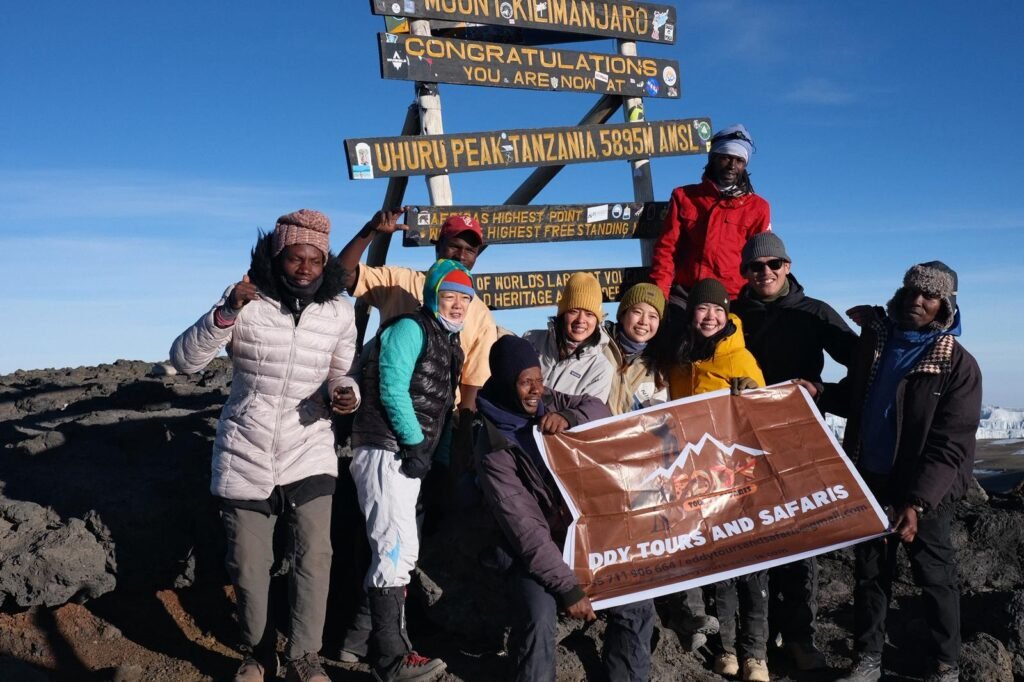
Kilimanjaro Porters vs Himalayan Sherpas: Key Differences in conservation and protected-area context
Kilimanjaro porters work inside a strictly managed national park system, where environmental monitoring and conservation planning are supported by the UN Environment Programme World Conservation Monitoring Centre and global protected-area governance frameworks from the Convention on Biological Diversity. Himalayan trekking regions operate under a mixture of national park rules, local conservation areas and community-managed landscapes.
Wildlife and ecosystem research supported by the World Wide Fund for Nature, the Wildlife Conservation Society, the African Wildlife Foundation, and species protection initiatives by Panthera and BirdLife International help explain why Kilimanjaro operations place strong emphasis on forest protection, waste management and trail conservation, while Himalayan regions place heavy focus on fragile alpine habitats and glacier systems.
Kilimanjaro Porters vs Himalayan Sherpas: Key Differences in economic impact on communities
Kilimanjaro porter employment provides direct income for thousands of households in northern Tanzania. Economic research by the World Bank shows that tourism-linked employment improves household resilience when combined with education and local supply chains. Sherpa communities also benefit economically, but income is often concentrated in a smaller number of specialised high-altitude professionals who work on international expeditions.
Responsible travel planning through Eddy Tours & Safaris supports fair recruitment practices, transparent porter welfare policies and community partnerships that directly improve living conditions around Kilimanjaro.
Kilimanjaro Porters vs Himalayan Sherpas: Key Differences in regulation and labour protection
Labour protection and ethical tourism frameworks promoted by the International Labour Organization and development policy research from the Overseas Development Institute emphasise that porter welfare depends heavily on operator standards, contract transparency and enforcement of safety rules. While Sherpa work is increasingly formalised through guiding associations and rescue insurance systems, porter welfare on Kilimanjaro relies strongly on local operators following national park regulations and international ethical tourism standards.
Travellers choosing ethical trekking programmes through responsible Kilimanjaro travel services help strengthen these labour standards and improve long-term working conditions for local teams.
Kilimanjaro Porters vs Himalayan Sherpas: Key Differences in knowledge systems and data use
Both groups hold deep practical knowledge of weather, terrain and human endurance. However, global biodiversity and environmental monitoring platforms such as the Global Biodiversity Information Facility increasingly support Kilimanjaro conservation and trail planning, while Himalayan research programmes rely heavily on climate and cryosphere datasets integrated into international scientific systems.
Environmental and ecosystem governance research supported by Conservation International and habitat protection programmes from The Nature Conservancy demonstrate how combining traditional field knowledge with modern science improves both safety and conservation outcomes.
Kilimanjaro Porters vs Himalayan Sherpas: Key Differences for travellers choosing a responsible climb
For visitors, the most important difference is not who works harder, but how each system supports people, culture and environment. Kilimanjaro porters operate within a high-volume trekking environment that can benefit many families if ethical standards are respected. Himalayan Sherpas operate in highly specialised and high-risk environments where experience and technical skill are essential for safety.
Guests planning their Kilimanjaro experience through professional Kilimanjaro climbing programmes and custom mountain travel services help ensure that porter welfare, safety systems and conservation responsibilities remain central to every expedition.
In simple terms, Kilimanjaro Porters vs Himalayan Sherpas: Key Differences shows that both groups deserve equal respect, fair working conditions and recognition. They work in very different mountains, under very different risks and traditions, yet both stand at the heart of responsible adventure travel and the future of sustainable mountain tourism.