
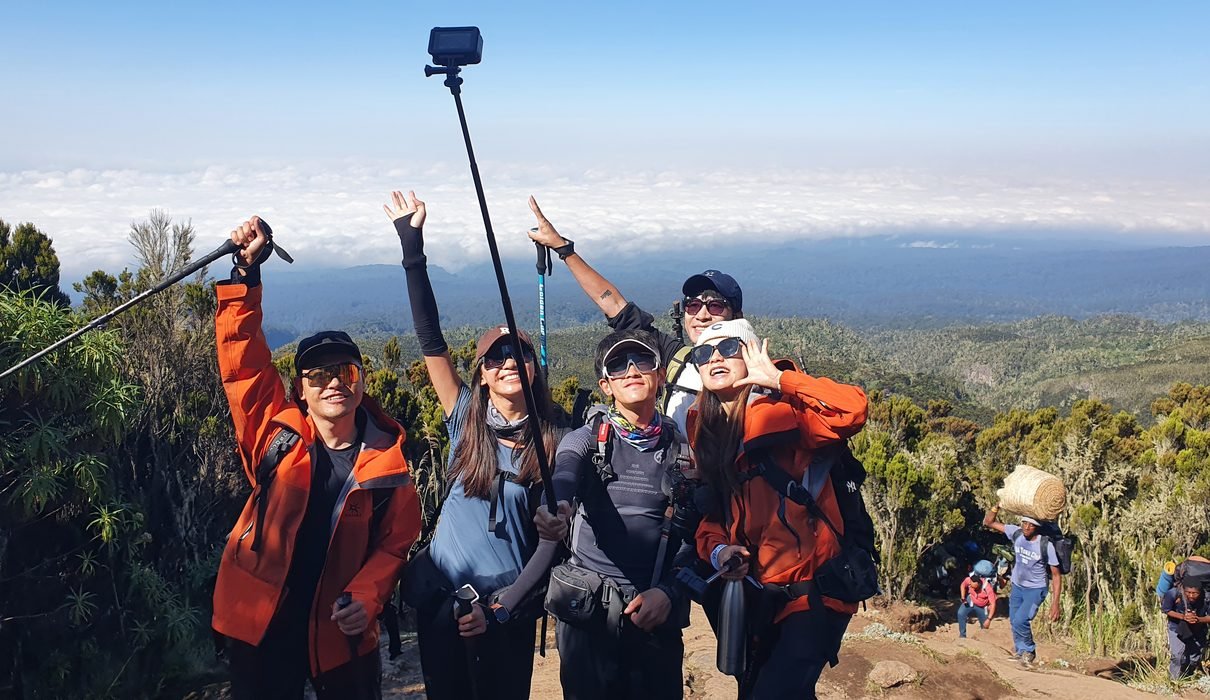
Which Kilimanjaro climbing route has the highest summit success rate? This is one of the most common questions travellers ask when planning to climb Africa’s highest mountain. With several established routes leading towards Uhuru Peak, choosing the right one can make a considerable difference to your climbing experience. However, reaching the summit depends on much more than simply selecting a popular route.
Mount Kilimanjaro stands at 5,895 metres above sea level, making it the highest mountain in Africa. Although the standard trekking routes do not require technical mountaineering skills under normal conditions, the climb is physically demanding. High altitude, changing weather, long walking days, and limited acclimatisation time can prevent even experienced hikers from reaching the summit.
For travellers planning a Kilimanjaro climb in 2027, 2028, or 2029, understanding route success trends is essential. Some routes provide more time for acclimatisation, while others involve faster ascents or more demanding terrain. This guide explains seven important realities that influence summit success and helps climbers compare the most popular Kilimanjaro routes.
Understanding Kilimanjaro Summit Success Rates
A Kilimanjaro summit success rate represents the percentage of climbers who reach the summit compared with the total number attempting the mountain. However, success statistics should be interpreted carefully because different trekking companies may calculate them differently. Some operators count only climbers who reach Uhuru Peak, while others may include those who reach Stella Point or Gilman’s Point.
Another challenge is that reliable, regularly updated, route-specific success statistics are not always publicly available. Many percentages published online come from individual trekking companies rather than independently verified national datasets. These figures may reflect a company’s own customers, route schedules, and guiding practices rather than the experience of all climbers.
For this reason, travellers should be cautious about websites promising extremely high summit success rates. A longer route may improve acclimatisation opportunities, but no itinerary can guarantee that every climber will reach Uhuru Peak. Personal health, altitude response, weather conditions, and guide decisions remain important factors.
1. Longer Kilimanjaro Routes Generally Offer Better Acclimatisation
One of the clearest trends in Kilimanjaro climbing is that longer itineraries generally provide better opportunities for acclimatisation. As climbers ascend, the amount of oxygen available in each breath decreases. The body needs time to adjust to these conditions, and climbing too quickly increases the risk of altitude-related illness.
Routes lasting seven, eight, or nine days usually allow more time for this adjustment than shorter five-day itineraries. Additional days may include gradual altitude gains, acclimatisation hikes, or overnight stays that help climbers adapt before reaching higher elevations. This does not eliminate altitude sickness, but a well-designed schedule can reduce the risks associated with rapid ascent.
For example, an eight-day Lemosho itinerary generally provides more time for acclimatisation than a six-day Machame itinerary. Similarly, a six-day Marangu climb offers an additional acclimatisation day compared with the shorter five-day version. Climbers should therefore compare the number of days and the altitude profile rather than judging a route only by its name.
The important lesson is simple: More time on the mountain can improve acclimatisation opportunities, but the quality of the itinerary matters just as much as its duration.
2. The Northern Circuit Is Popular for Its Gradual Acclimatisation Schedule
The Northern Circuit is one of Kilimanjaro’s longest established trekking routes, commonly completed over eight or nine days. It approaches the mountain from the western side before travelling around the quieter northern slopes. This longer journey provides opportunities for gradual altitude adjustment and allows climbers to experience landscapes that are less frequently visited on shorter routes.
Because of its extended itinerary, the Northern Circuit is often promoted as a route with strong summit success potential. However, there is no universally verified success percentage that applies to every operator and every climbing season. Actual results depend on the itinerary, individual climbers, weather, and the quality of mountain support.
The route also requires more time and usually costs more than shorter alternatives because of the additional days, park fees, food, and crew arrangements. For travellers who can accommodate a longer expedition, these extra days may be worthwhile. Nevertheless, climbers should still prepare physically and understand that altitude illness can occur even on gradual routes.
3. Lemosho and Machame Success Depends on the Number of Days
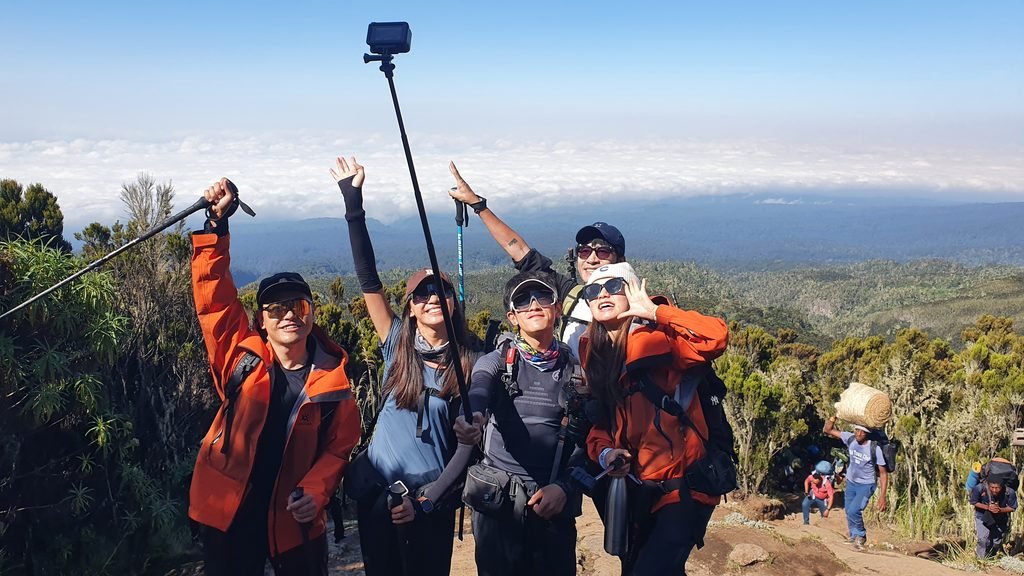
Lemosho and Machame are two of the most popular Kilimanjaro climbing routes, and both offer impressive scenery. They pass through several climate zones and eventually join the southern circuit before approaching the summit. However, their success potential depends heavily on the specific itinerary selected.
The Lemosho Route commonly takes seven or eight days, although variations exist. Its western approach provides time to move through forest, moorland, and the Shira Plateau before continuing towards Barranco and Barafu. The eight-day itinerary is particularly attractive to climbers who want a more gradual schedule and additional acclimatisation opportunities.
Machame is usually completed over six or seven days. The seven-day option provides more time for altitude adjustment than the shorter version, making it a sensible choice for many first-time climbers. Both routes include sections where climbers ascend to higher elevations during the day before sleeping at lower camps, a pattern that can support acclimatisation.
Neither route is automatically better for everyone. A well-planned seven-day Machame climb may be more suitable than a poorly organised itinerary on a longer route. Travellers should examine daily walking distances, sleeping elevations, and the operator’s approach to altitude management before booking.
4. Shorter Kilimanjaro Routes Can Increase Acclimatisation Challenges
Shorter itineraries are attractive because they require fewer travel days and generally have lower overall costs. However, reducing the number of days on Kilimanjaro can also reduce the time available for acclimatisation. This is particularly important because altitude illness can affect climbers regardless of age, fitness level, or previous hiking experience.
The five-day Marangu itinerary is a common example. Although Marangu has established mountain huts and a relatively straightforward walking route, the shorter schedule provides limited time for altitude adjustment. The six-day version includes an additional acclimatisation day and is generally a more sensible option for travellers who choose this route.
Umbwe is another route that requires careful consideration. Its steep approach gains altitude quickly, making it more demanding during the early stages. Although experienced hikers may appreciate the route’s direct ascent and quieter atmosphere, its rapid elevation gain can create additional acclimatisation challenges.
Climbers should avoid choosing a short route simply because it is cheaper. The cost difference between a shorter and longer itinerary may be relatively small compared with the expense of travelling to Tanzania and the disappointment of ending a climb early because of altitude-related problems.
5. Physical Fitness Helps, but It Cannot Prevent Altitude Sickness
Many travellers assume that being physically fit guarantees a successful Kilimanjaro climb. While good fitness makes long trekking days more manageable, it does not prevent altitude sickness. Even experienced runners, cyclists, and mountain hikers can develop symptoms when ascending too quickly.
Altitude illness occurs because the body struggles to adjust to reduced oxygen availability at higher elevations. Common symptoms of acute mountain sickness include headache, nausea, dizziness, fatigue, and loss of appetite. More serious altitude illnesses can become life-threatening and require immediate descent and medical attention.
Preparing for Kilimanjaro should therefore involve both physical training and a suitable acclimatisation schedule. Regular hiking, cardiovascular exercise, and strength training can improve endurance, while a longer itinerary provides more time for altitude adjustment. However, neither preparation method guarantees summit success.
During the climb, it is essential to report symptoms honestly to your guide. Trying to hide a headache or continuing despite worsening symptoms can create serious risks. A responsible mountain guide should prioritise climber safety rather than pressuring the group to reach the summit.
6. Weather Conditions Can Influence Summit Success
Kilimanjaro weather changes considerably throughout the year, and difficult conditions can affect the likelihood of completing a climb. Heavy rainfall may make trails muddy and slippery, while strong winds and freezing temperatures can make the summit attempt physically demanding. Poor visibility can also increase the difficulty of walking through exposed mountain terrain.
The relatively dry periods from January to early March and June to October are generally popular among climbers. These months often provide more favourable trekking conditions, although rain, snow, and strong winds remain possible. The long rainy season, typically from March to May, can create additional challenges, particularly along forest trails and exposed sections.
However, climbing during a popular dry-season month does not guarantee success. Some climbers reach the summit during wetter periods, while others turn back during apparently favourable weather. Individual acclimatisation, physical condition, and the guide’s assessment of mountain conditions remain important.
For 2027, 2028, and 2029, travellers should use historical weather patterns when selecting dates but avoid treating seasonal averages as exact forecasts. Weather conditions should be checked closer to departure, and climbers should prepare for cold and wet conditions regardless of the month.
7. Experienced Guides and Responsible Operators Make a Difference
Choosing a reliable Kilimanjaro trekking company is another important part of planning a successful climb. Experienced mountain guides understand route conditions, daily walking schedules, altitude-related symptoms, and the practical challenges of managing a trekking group. Their decisions can influence both the safety and overall experience of climbers.
A responsible operator should provide a clear itinerary, suitable camping or hut arrangements, appropriate food and water supplies, and trained mountain personnel. Guides should monitor climbers for altitude-related symptoms and explain when changes to the itinerary or descent may be necessary. Emergency communication arrangements, oxygen availability, and evacuation procedures should also be discussed before departure.
Travellers should ask trekking companies how they calculate their summit success rates. A percentage is more useful when the operator explains the number of climbers included, the period covered, the routes involved, and whether success means reaching Uhuru Peak. Without this information, comparing advertised percentages can be misleading.
The best climbing company is not necessarily the one promising the highest summit success rate. It is the one that provides realistic information, appropriate preparation, and a strong commitment to climber safety.
Kilimanjaro Route Comparison for 2027, 2028 and 2029
The following table compares the main Kilimanjaro routes based on typical duration, acclimatisation opportunities, and general climbing characteristics.
| Kilimanjaro Route | Typical Duration | Acclimatisation Opportunity | Main Consideration |
|---|---|---|---|
| Northern Circuit | 8–9 days | Very good | Long itinerary with gradual altitude adjustment |
| Lemosho | 7–8 days | Good to very good | Scenic western approach and longer climbing options |
| Machame | 6–7 days | Moderate to good | Popular route with varied terrain |
| Marangu | 5–6 days | Limited to moderate | Hut accommodation; six days is preferable to five |
| Rongai | 6–7 days | Moderate to good | Northern approach with relatively dry lower slopes |
| Shira | 7–8 days | Depends on itinerary | High starting elevation requires careful planning |
| Umbwe | Commonly 6–7 days | Challenging early ascent | Steep route with rapid initial altitude gain |
Note: These comparisons describe general route characteristics, not verified summit success percentages. The quality of acclimatisation depends on the actual itinerary and the climber’s response to altitude.
Which Kilimanjaro Route Has the Highest Success Rate?
There is no single, independently verified success-rate ranking that can confidently identify one Kilimanjaro route as the winner for every climbing season. However, longer itineraries with gradual altitude gains generally provide better acclimatisation opportunities than shorter, faster ascents.
For many first-time climbers, the eight-day Lemosho Route, seven-day Machame Route, or nine-day Northern Circuit are sensible options to consider. These itineraries allow additional time on the mountain and provide opportunities to adjust to altitude before the summit attempt.
The best choice depends on your available time, budget, physical condition, previous altitude experience, and personal preferences. Travellers who prefer hut accommodation may choose Marangu, while those interested in a quieter northern approach may consider Rongai or the Northern Circuit.
Rather than asking only which route has the highest advertised success rate, ask which itinerary offers the most appropriate acclimatisation schedule for your circumstances.
How to Improve Your Chances of Reaching Uhuru Peak
Preparing properly for Kilimanjaro begins several months before departure. Regular hiking and cardiovascular exercise can help build the endurance required for consecutive trekking days. Training with a backpack and walking on uneven terrain can also make the experience more comfortable.
During the climb, maintain a steady pace and avoid rushing to higher elevations. Kilimanjaro guides often encourage climbers to walk slowly, allowing the body more time to adjust to the reduced oxygen availability. Eating regularly, drinking according to your needs, and getting adequate rest are also important for maintaining energy.
Most importantly, pay attention to altitude-related symptoms and communicate openly with your guide. Reaching the summit should never take priority over your health. A successful Kilimanjaro experience is not measured only by standing at Uhuru Peak but also by completing the expedition safely.
Frequently Asked Questions About Kilimanjaro Route Success Rates
Which Kilimanjaro route has the best summit success potential?
Longer routes such as the Northern Circuit and extended Lemosho itineraries generally provide strong acclimatisation opportunities. However, there is no universally verified success percentage that applies to every route and operator.
Is the seven-day Machame Route better than the six-day version?
The seven-day Machame itinerary provides additional time for acclimatisation, making it a sensible choice for many climbers. However, summit success still depends on individual health, weather, and other factors.
Is the Marangu Route the easiest way to climb Kilimanjaro?
Marangu has relatively straightforward walking terrain and mountain huts, but the shorter itineraries can make acclimatisation challenging. A route that feels easier underfoot is not necessarily easier at high altitude.
Can beginners successfully climb Kilimanjaro?
Yes. Many first-time mountain trekkers climb Kilimanjaro successfully. However, beginners should prepare physically, choose a suitable itinerary, and understand the risks associated with high altitude.
Does climbing Kilimanjaro in eight days guarantee success?
No. An eight-day itinerary provides more acclimatisation time than many shorter routes, but altitude illness, weather, and individual circumstances can still prevent a climber from reaching the summit.
Does age affect Kilimanjaro summit success?
Age alone does not determine whether someone can reach the summit. Health, physical preparation, acclimatisation, and individual altitude response are important considerations. Older climbers or those with medical conditions should seek appropriate medical advice before booking.
What is the best month for Kilimanjaro summit success?
January, February, July, August, and September are popular because they often offer relatively favourable weather. However, no month guarantees summit success, and acclimatisation remains essential throughout the year.
Plan Your Kilimanjaro Climb for 2027, 2028 or 2029
Understanding Kilimanjaro route success trends helps travellers make better decisions before booking their expedition. The most important lesson is that a longer, well-planned itinerary generally offers better acclimatisation opportunities than a rushed ascent. Choosing the right route, preparing physically, and working with experienced guides can make the climb more manageable, although reaching Uhuru Peak can never be guaranteed.
Eddy Tours & Safaris is a local tour company in Arusha, Tanzania, arranging guided Mount Kilimanjaro climbing expeditions, Tanzania wildlife safaris, and personalised holidays. Our team can help you compare Machame, Marangu, Lemosho, Rongai, Umbwe, and Northern Circuit itineraries based on your available time, preferred travel dates, and climbing experience.
If you are planning to climb Kilimanjaro in 2027, 2028, or 2029, visit Eddy Tours & Safaris to explore your options or contact our team for a personalised climbing quotation.
Email: sales@eddytours-safaris.com
WhatsApp: +255 711 906 664 — Chat with our team