
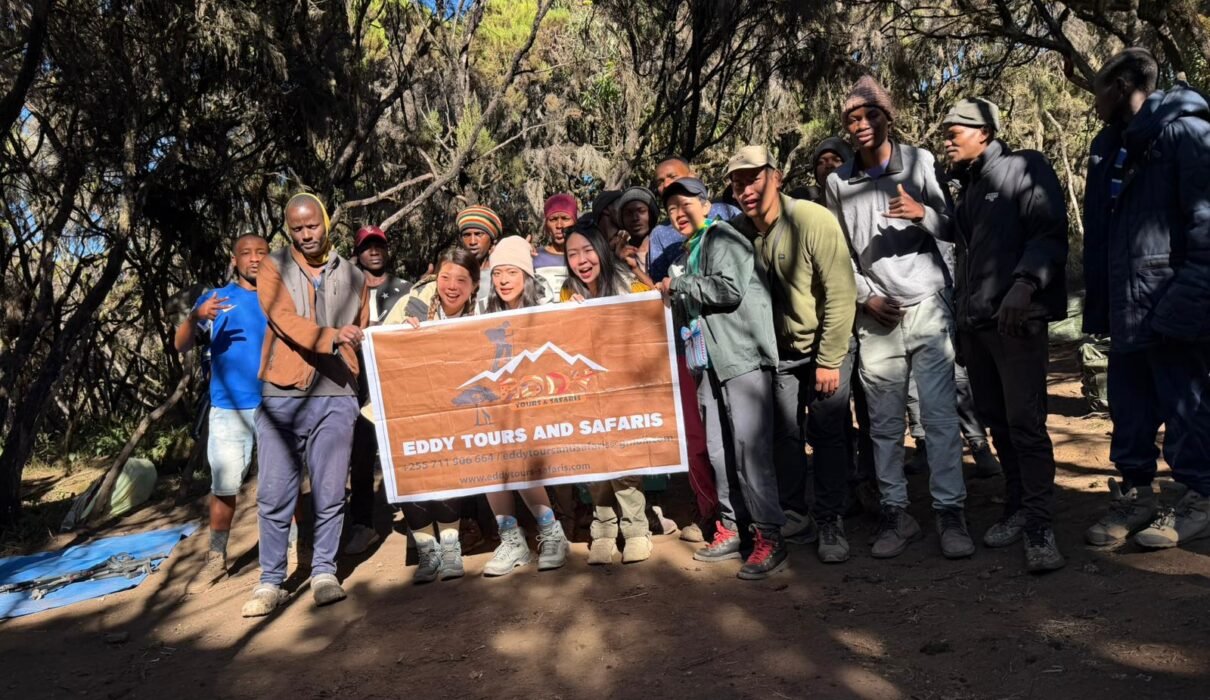
Kilimanjaro’s Endemic Plants You Must See is a story about survival, beauty and science high on Africa’s most famous mountain, where plants grow in extreme cold, intense sunlight and thin air that few species on Earth can tolerate. These special plants exist only on Mount Kilimanjaro and nowhere else, making them some of the most fragile and valuable natural treasures in East Africa.
This guide explains where these plants grow, why they evolved in such unusual forms and how careful travel supports their protection. When you explore the mountain with a responsible local company such as Eddy Tours & Safaris, your journey becomes more than a climb – it becomes a quiet contribution to the future of one of Africa’s most sensitive botanical landscapes.
Kilimanjaro’s Endemic Plants You Must See and why this mountain is so unique
To understand Kilimanjaro’s Endemic Plants You Must See, it is important to understand how Mount Kilimanjaro functions as an isolated ecological island. Scientific research published by the Royal Botanic Gardens, Kew and long-term biodiversity studies supported by the International Union for Conservation of Nature show that isolated mountains create natural laboratories for plant evolution.
Because Kilimanjaro rises abruptly from the surrounding plains, its plant populations became separated over long periods of time. Environmental assessments coordinated by the United Nations Environment Programme and vegetation mapping supported by the United States Geological Survey confirm that altitude, temperature and rainfall gradients on the mountain are strong enough to drive rapid adaptation and local endemism.
Kilimanjaro’s Endemic Plants You Must See in the giant groundsel zone
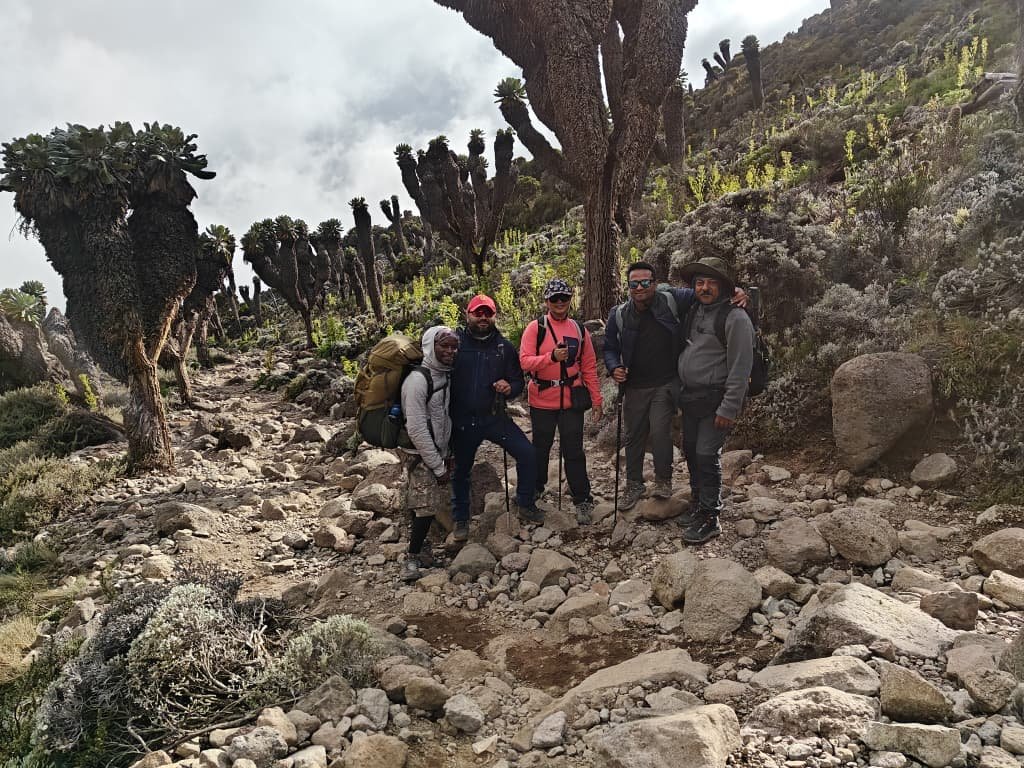
One of the most iconic examples of Kilimanjaro’s Endemic Plants You Must See is the giant groundsel that dominates the high moorland zone. Botanical studies referenced by the Natural History Museum Science Group and plant ecology research published through ScienceDirect explain how this plant evolved thick stems and insulating leaf structures to survive freezing nights and intense daytime radiation.
These plants act like natural green towers across the alpine landscape. According to conservation observations shared by Conservation International, they also create small micro-habitats that protect insects and soil organisms that cannot survive direct exposure to extreme weather.
Kilimanjaro’s Endemic Plants You Must See among the giant lobelias
Another unforgettable part of Kilimanjaro’s Endemic Plants You Must See is the group of giant lobelias found only in the highest ecological zones of the mountain. Research supported by JSTOR botanical archives and alpine plant studies documented by Frontiers in Plant Science show that these plants store water in their central rosettes and protect their growing points from frost damage.
Climate and vegetation interaction studies coordinated by NASA Climate demonstrate how daily freeze-thaw cycles shape the structure of these plants. Their survival strategy is one of the clearest demonstrations of how life adapts to hostile environments.
Kilimanjaro’s Endemic Plants You Must See in the heath and moorland belt
The heath and moorland belt is home to several of Kilimanjaro’s Endemic Plants You Must See that most climbers walk past without noticing. Ecological field surveys published by the Biodiversity Heritage Library and long-term monitoring supported by Botanic Gardens Conservation International highlight rare shrubs and flowering species that exist only within narrow altitude ranges.
These plants stabilize thin mountain soils and regulate water flow during rainfall events. Environmental modelling by the Food and Agriculture Organization shows that vegetation loss in highland zones can quickly increase erosion and downstream water pollution.
Kilimanjaro’s Endemic Plants You Must See and climate pressure
A growing concern surrounding Kilimanjaro’s Endemic Plants You Must See is climate stress. Global climate assessments produced by the Intergovernmental Panel on Climate Change confirm that temperature shifts are altering plant distribution along mountain slopes worldwide.
Regional environmental vulnerability studies conducted with support from the World Bank Environment Program indicate that endemic species with narrow altitude tolerance face the highest risk of long-term decline. On Kilimanjaro, this means that several unique plant communities may gradually move higher until suitable habitat disappears entirely.
Kilimanjaro’s Endemic Plants You Must See and conservation science
Protecting Kilimanjaro’s Endemic Plants You Must See depends on continuous scientific research and field monitoring. Biodiversity tracking systems developed by the Global Biodiversity Information Facility and conservation planning tools promoted by World Wide Fund for Nature support evidence-based management of protected mountain habitats.
Local and international researchers use vegetation plots, satellite mapping and genetic sampling to understand population trends. These scientific efforts help park authorities adapt trail management and visitor flow in sensitive zones.
Kilimanjaro’s Endemic Plants You Must See and responsible tourism
Responsible travel plays a direct role in protecting Kilimanjaro’s Endemic Plants You Must See. Sustainable tourism guidelines promoted by the UN World Tourism Organization and ecosystem protection frameworks developed by International Institute for Environment and Development show how visitor behavior influences fragile vegetation.
Professional trekking operators follow designated paths, restrict off-trail walking and educate visitors about plant sensitivity. When you walk with trained mountain teams such as those organising trips through Kilimanjaro climbing programs, your movement on the mountain follows conservation-approved practices that reduce long-term damage.
Kilimanjaro’s Endemic Plants You Must See and the role of local communities
The protection of Kilimanjaro’s Endemic Plants You Must See also depends on strong relationships with nearby communities. Social development frameworks promoted by the International Labour Organization and community conservation programs supported by Oxfam International demonstrate that fair employment in tourism increases conservation commitment.
When local guides, porters and support teams benefit from sustainable tourism, they become active guardians of trails, campsites and sensitive vegetation zones.
Kilimanjaro’s Endemic Plants You Must See and plant research education
Education strengthens the future of Kilimanjaro’s Endemic Plants You Must See. Botanical research outreach coordinated by University of Oxford Plant Sciences and biodiversity education initiatives promoted by National Geographic Society help visitors understand the scientific value of these plants.
Learning to recognize rare species transforms a normal hike into a meaningful field experience and builds appreciation for the quiet complexity of mountain ecosystems.
Kilimanjaro’s Endemic Plants You Must See along your trekking route
Many of Kilimanjaro’s Endemic Plants You Must See are visible along commonly used routes, especially when trekking schedules allow slow and careful progression through vegetation zones. Well-planned itineraries make it possible to stop, observe and photograph sensitive plant species without disturbing them.
You can explore carefully designed trekking routes through responsible travel programs in Tanzania that combine wildlife, culture and mountain ecosystems into one balanced journey.
Kilimanjaro’s Endemic Plants You Must See and ethical expedition planning
Ethical planning improves protection for Kilimanjaro’s Endemic Plants You Must See. Transparency and sustainability standards promoted by International Organization for Standardization support environmental management systems that reduce operational impact.
Professional operators schedule campsites carefully, limit group sizes and coordinate logistics to reduce repeated pressure on fragile ground vegetation.
Kilimanjaro’s Endemic Plants You Must See and personal travel choices
Every visitor influences the future of Kilimanjaro’s Endemic Plants You Must See. Simple actions such as staying on trails, avoiding plant collection and respecting guide instructions help protect rare species that may take decades to recover from a single disturbance.
For personalized route advice and conservation-focused planning, travelers can speak directly with mountain specialists through local Kilimanjaro consultation support.
Why these plants deserve your attention before the summit
In the shadow of snow and volcanic rock, Kilimanjaro’s Endemic Plants You Must See quietly tell the deeper story of this mountain. They reveal how life adapts, how ecosystems balance and how human care now plays a central role in protecting what evolution created over thousands of years.
Choosing to explore Kilimanjaro with knowledge and respect allows you to experience not only a great summit, but also one of Africa’s most remarkable living botanical museums.