
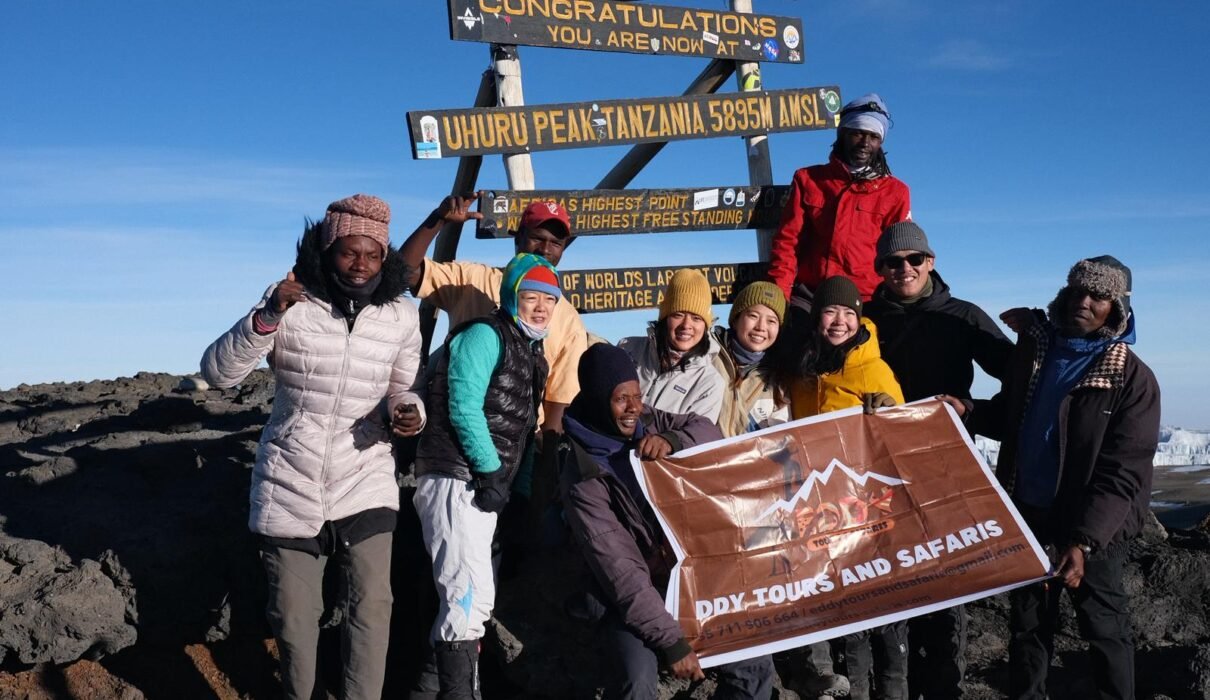
Lesser-Known Summit Points on Kilimanjaro offer a completely different way to understand the mountain, not as a single famous peak but as a complex volcanic landscape shaped by geology, climate, culture, and conservation history, where several remarkable high points quietly exist beyond the well-publicized summit.
Most visitors arrive with one goal in mind, yet very few realise that Kilimanjaro is made up of multiple volcanic cones, ridges, and high-altitude landmarks that hold scientific, environmental, and cultural value of their own. These locations provide insight into how the mountain formed, how ecosystems change with elevation, and how local communities have historically interpreted the landscape.
Lesser-Known Summit Points on Kilimanjaro and the true structure of the mountain
Kilimanjaro is a massive stratovolcanic complex composed of three primary volcanic cones, each formed during different geological periods. Scientific work documented by the United States Geological Survey and supported by global volcanic monitoring through the Smithsonian Global Volcanism Program explains how repeated eruptions created distinct summit zones and ridgelines rather than a single uniform peak. Understanding these volcanic origins helps explain why certain high points appear isolated, rocky, and geologically older than the better-known summit area.
Research into African rift-related volcanism by the British Geological Survey further shows how tectonic movement shaped Kilimanjaro’s upper slopes and crater rims. These findings help scientists map fragile alpine soils and understand why some high-altitude sections are more vulnerable to erosion and human impact than others.
Lesser-Known Summit Points on Kilimanjaro within the Shira and Mawenzi formations
Among the most overlooked high-altitude landmarks are the summit remnants of the Shira and Mawenzi cones. While many climbers cross the Shira Plateau, very few recognise that it represents the collapsed summit of an ancient volcano, now serving as an important ecological corridor between montane and alpine zones. Ecological monitoring supported by the International Union for Conservation of Nature highlights how plateau systems at high altitude provide refuge for cold-adapted plant species and serve as natural laboratories for climate impact research.
Mawenzi, on the other hand, remains one of the most visually dramatic yet rarely explored high points. Its jagged spires and steep ridges present both geological significance and biological value. Long-term biodiversity datasets coordinated by the Global Biodiversity Information Facility confirm that isolated alpine zones like Mawenzi support specialised mosses, lichens, and invertebrates that rarely survive outside narrow climate ranges.
Lesser-Known Summit Points on Kilimanjaro and alpine biodiversity research
High-altitude ecosystems around secondary summit areas are increasingly studied as indicators of climate stress. Monitoring programmes promoted by the Intergovernmental Science-Policy Platform on Biodiversity and Ecosystem Services and environmental modelling supported by the United Nations Environment Programme demonstrate how small temperature shifts can significantly affect vegetation boundaries on African mountains.
Research partnerships with organisations such as the World Wide Fund for Nature and the The Nature Conservancy also show that protecting secondary summit environments is critical for maintaining wider landscape connectivity across Kilimanjaro National Park.
Lesser-Known Summit Points on Kilimanjaro and cultural meaning for mountain communities
Beyond scientific value, these lesser-visited summit areas carry deep cultural significance. Oral traditions recorded through cultural heritage initiatives supported by UNESCO describe certain high ridges and rocky outcrops as places associated with ancestral stories, weather rituals, and traditional boundaries between clans. These cultural narratives often align with ecological knowledge, reinforcing respect for fragile sites that modern conservation frameworks now recognise as sensitive habitats.
Social and environmental development research coordinated by the UN Department of Economic and Social Affairs shows that safeguarding indigenous knowledge strengthens conservation outcomes when local communities are directly involved in landscape governance.
Lesser-Known Summit Points on Kilimanjaro and climate science observation zones
Secondary summit ridges are increasingly used as natural observation points for studying atmospheric change. Climate assessments coordinated by the Intergovernmental Panel on Climate Change confirm that high-altitude regions respond rapidly to global temperature shifts, making locations near these lesser-known high points extremely valuable for long-term data collection.
Mountain hydrology and glacier monitoring studies supported by the World Meteorological Organization and cryosphere research published through the National Snow and Ice Data Center further demonstrate how summit-adjacent environments help scientists understand water security and seasonal runoff patterns for downstream communities.
Lesser-Known Summit Points on Kilimanjaro and wildlife movement corridors
Although wildlife is rarely associated with extreme altitudes, the lower approaches and connecting ridges near lesser summit points form important ecological transition corridors. Research by the Wildlife Conservation Society and landscape connectivity studies from the African Wildlife Foundation illustrate how altitudinal gradients support species movement between forest and alpine habitats, especially during seasonal resource shifts.
Long-term conservation planning supported by the UN Environment Programme World Conservation Monitoring Centre confirms that maintaining these ecological links reduces fragmentation and strengthens ecosystem resilience across protected mountain landscapes.
Lesser-Known Summit Points on Kilimanjaro and responsible visitor access
While some of these high points are not promoted for mass trekking, responsible access remains important for education and scientific collaboration. Global protected-area governance principles published by the Convention on Biological Diversity stress that controlled visitation can coexist with conservation objectives when site sensitivity is properly assessed.
Outdoor risk and environmental management frameworks developed by the American Red Cross and mountain safety research published via ScienceDirect reinforce the importance of well-trained guides and carefully planned operations in remote high-altitude terrain.
Travelers interested in deeper geographical interpretation often explore specialised educational treks through Eddy Tours & Safaris, where guiding teams focus on environmental awareness and cultural sensitivity rather than summit statistics alone.
Lesser-Known Summit Points on Kilimanjaro and community-based conservation benefits
Community engagement around lesser-visited summit zones contributes directly to conservation funding and local employment. Socio-economic research published by the World Bank and labour protection frameworks from the International Labour Organization demonstrate how sustainable tourism revenue strengthens rural livelihoods while supporting environmental stewardship.
Visitors who choose conservation-focused itineraries through local Kilimanjaro programmes help maintain long-term partnerships between park authorities, research institutions, and surrounding villages.
Lesser-Known Summit Points on Kilimanjaro and the future of mountain conservation
Scientific collaboration continues to expand around Kilimanjaro’s secondary high-altitude landmarks. Environmental data platforms coordinated by UN Environment, ecosystem monitoring supported by the Center for International Forestry Research, and highland biodiversity initiatives led by the Conservation International increasingly rely on field observations collected near these remote summit areas.
Travelers seeking meaningful mountain experiences often integrate educational and conservation activities into their itineraries with responsible travel services, helping strengthen research awareness while respecting sensitive landscapes.
Ultimately, these hidden high points reveal that the mountain is far more than a single destination. They reflect Kilimanjaro’s deep geological past, its fragile alpine ecosystems, its cultural memory, and its growing importance in global climate and biodiversity science.