
The Mara River crossing is one of the most remarkable wildlife events in Africa. Every year, large herds of wildebeest and zebras travel through the Serengeti ecosystem in search of fresh grass and water. During the northern stage of the Great Migration, the animals gather along the Mara River, where they may cross between Tanzania’s Serengeti National Park and Kenya’s Maasai Mara. The journey is dangerous, with crocodiles in the water, strong river currents and predators waiting along the riverbanks.
For travelers planning a Tanzania safari in 2027, 2028 or 2029, witnessing the Mara River crossing is an experience worth planning carefully. The northern Serengeti is particularly attractive between July and October, when migrating herds commonly gather around Kogatende and the Mara River. August and September are often considered especially promising months, although the exact movement of the animals depends on rainfall, grazing conditions and other natural factors.
Unlike a scheduled wildlife activity, a river crossing cannot be predicted for a particular day or hour. Wildebeest may gather along the riverbank for several hours before deciding to cross, and sometimes they turn around without entering the water. For this reason, spending more than one day in the northern Serengeti can improve your opportunities to observe the migration.
At Eddy Tours & Safaris, we help travelers organize Tanzania migration safaris that focus on the best areas for wildlife viewing during their chosen travel dates. Whether you are planning a private safari, a family holiday or a photography expedition, this guide explains when and where to see the Mara River crossing, what to expect during your safari and how to plan your visit for 2027, 2028 or 2029.
Mara River Crossing Safari Overview
| Safari information | Details |
|---|---|
| Safari experience | Great Wildebeest Migration and Mara River Crossing |
| Destination | Northern Serengeti National Park, Tanzania |
| Main wildlife area | Mara River, Kogatende and surrounding northern Serengeti |
| Travel years | 2027, 2028 and 2029 |
| Typical crossing season | July to October |
| Particularly popular months | August and September |
| Recommended safari duration | 5–7 days or longer |
| Recommended northern Serengeti stay | At least 2–3 nights, preferably longer |
| Main wildlife | Wildebeest, zebras, crocodiles, lions, elephants, giraffes and other wildlife |
| Accommodation | Tented camps and safari lodges |
| Safari transport | 4×4 safari vehicle with professional driver-guide |
| Starting location | Arusha or Moshi |
| Safari price | Available on request |
What Is the Great Wildebeest Migration?
The Great Wildebeest Migration is the seasonal movement of large numbers of wildebeest, zebras and other grazing animals through the Serengeti–Mara ecosystem. The animals travel in search of suitable grazing land and water, following changing rainfall patterns across northern Tanzania and southwestern Kenya. Their movement creates one of the world’s most impressive wildlife spectacles and attracts visitors interested in photography, conservation and African wildlife.
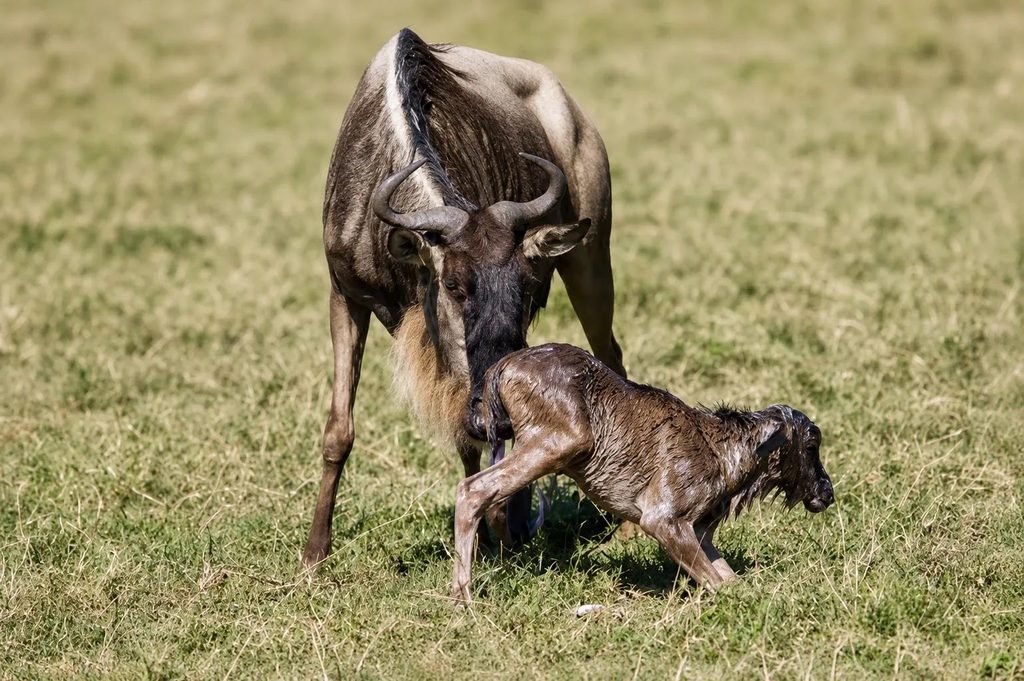
The migration is not a single journey from one destination to another. It is a continuous cycle that takes place throughout the year, with different areas becoming important during different seasons. During the early months, large herds are commonly found on the southern Serengeti plains and around Ndutu, where wildebeest give birth. As the seasons change, the animals gradually move through central and western Serengeti before many continue north toward the Mara River.
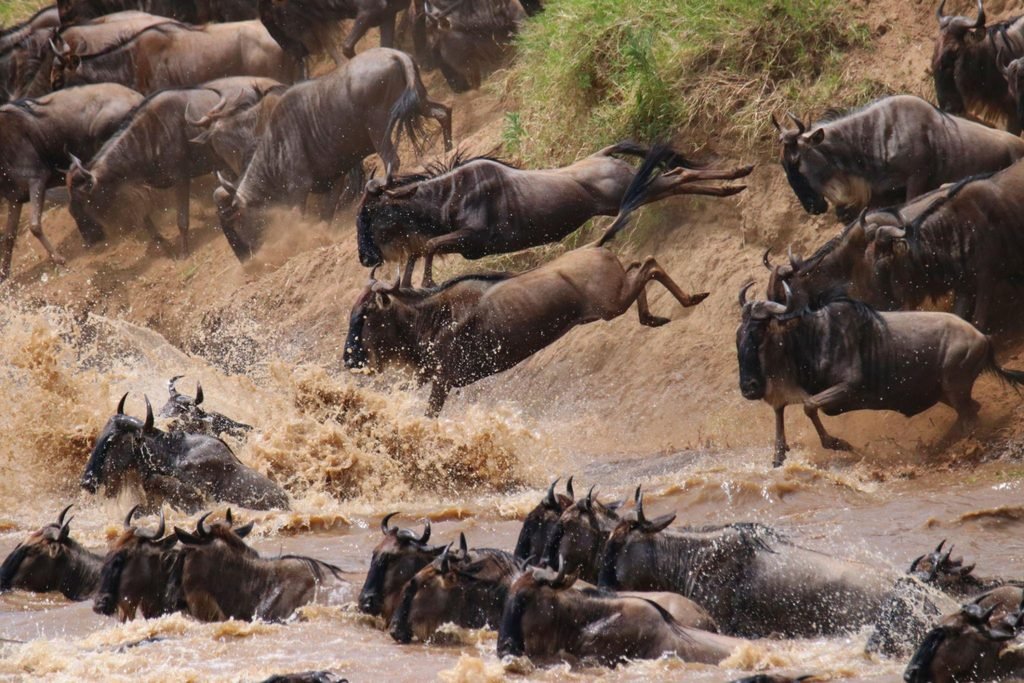
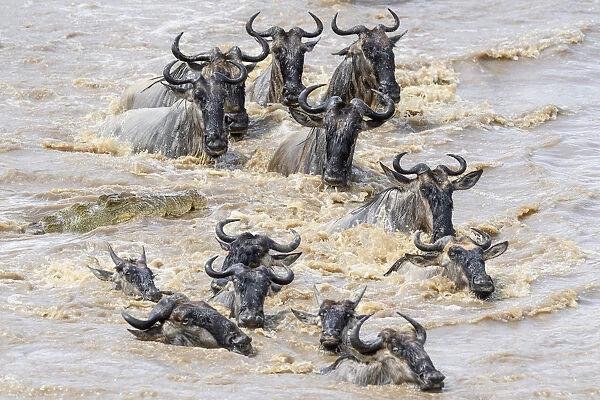
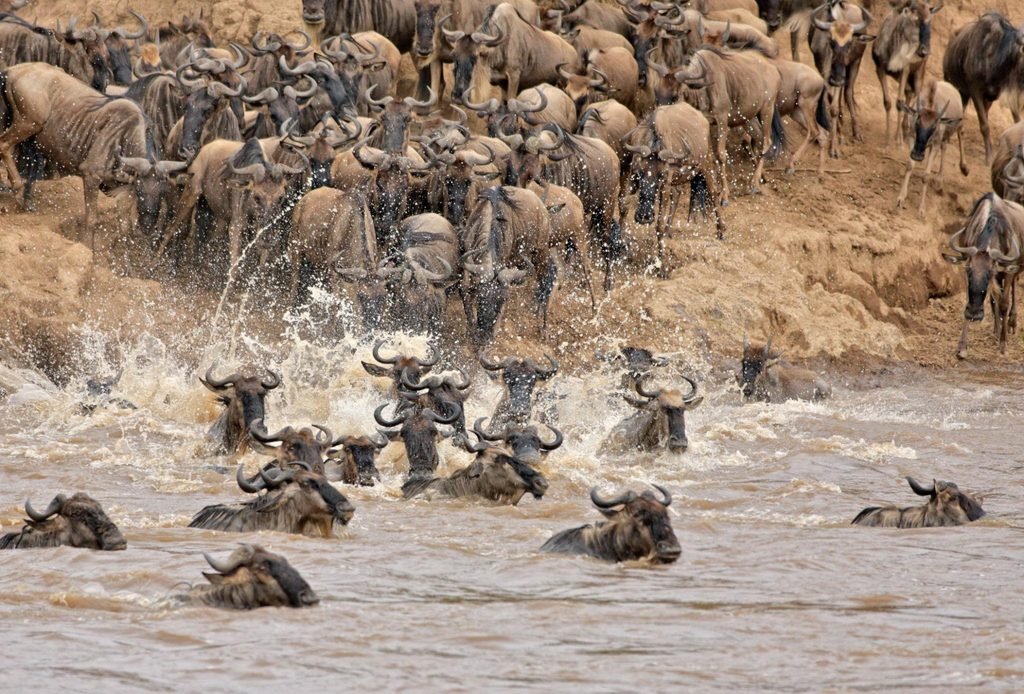
The northern stage is especially famous because of the river crossings. Large groups may gather near the water, sometimes creating long lines of animals stretching across the plains. When a crossing begins, wildebeest enter the river and attempt to reach the opposite bank. Some animals cross successfully, while others struggle against the current or encounter crocodiles.
Although these crossings are dramatic, the migration is much more than a single event. Visitors can also enjoy large grazing herds, predator activity, beautiful landscapes and the everyday behavior of wildlife throughout the Serengeti.
Why Is the Mara River Crossing So Famous?
The Mara River crossing is famous because it combines the scale of the Great Migration with the challenges animals face while moving through the Serengeti ecosystem. When large herds reach the river, they must decide whether to enter the water, find another crossing point or remain on the bank. Their movements can be unpredictable, and the atmosphere often becomes tense as hundreds or thousands of animals gather close together.
The river itself presents several dangers. Some sections have strong currents, deep water and steep banks that can make it difficult for animals to climb out. Nile crocodiles are also present in the Mara River, and they may attack wildebeest or other animals during a crossing. On land, predators such as lions and hyenas may take advantage of the large concentrations of migrating animals.
For safari visitors, the experience is memorable because it shows wildlife behaving naturally in its environment. Watching wildebeest hesitate at the riverbank, move together and eventually enter the water provides an opportunity to understand the challenges involved in migration. However, not every crossing includes a crocodile attack or dramatic struggle, and the animals’ welfare must always come before photography or entertainment.
Best Time to Witness the Mara River Crossing in 2027, 2028 and 2029
The best general period for a Mara River crossing safari in Tanzania is between July and October. During these months, large numbers of wildebeest and zebras commonly move through the northern Serengeti, especially around Kogatende and the Mara River. However, migration timing varies from year to year, and rainfall can influence whether the herds arrive earlier, remain longer or move between different grazing areas.
July: The Migration Moves Toward the Northern Serengeti
July often marks the beginning of the northern river-crossing season, although some herds may still be traveling through the western and central Serengeti. As grazing conditions change, increasing numbers of animals move toward the northern plains and the Mara River. Travelers visiting during the second half of July may have opportunities to observe large herds gathering near the river, but crossing activity can be less predictable than later in the season.
July is a good month for visitors who want to combine migration viewing with other wildlife experiences. The dry-season landscape can make animals easier to spot around water sources, and the northern Serengeti offers opportunities to see lions, elephants, giraffes and other resident wildlife. Nevertheless, travelers should avoid booking a short July safari with the expectation that a river crossing will definitely occur.
August: One of the Most Popular Months for River Crossings
August is widely regarded as one of the most promising months for watching wildebeest cross the Mara River. Large herds are often present in the northern Serengeti, and animals may move back and forth between grazing areas on either side of the river. During this period, visitors sometimes observe substantial concentrations of wildebeest and zebras waiting near established crossing points.
Because August is a popular safari month, accommodation in the northern Serengeti can be in high demand. Travelers planning to visit in August 2027, 2028 or 2029 should consider arranging their safari well in advance, particularly if they prefer a specific lodge or migration camp. Spending several nights near Kogatende can reduce the amount of time spent traveling and allow more opportunities to visit the river.
September: Excellent Opportunities for Migration Viewing
September is another popular month for Mara River crossing safaris. Depending on rainfall and grazing conditions, large herds may remain in the northern Serengeti and continue moving across the river. Some animals cross toward Kenya, while others return to Tanzania, meaning that movement can take place in different directions during the same season.
September is especially attractive for wildlife photographers because the dry-season landscape often provides open views across the plains. Early morning and late afternoon game drives can offer beautiful light, while extended time near the river may provide opportunities to observe herd behavior. However, the exact timing of a crossing remains unpredictable, even during a month commonly associated with migration activity.
October: The Later Stages of the Northern Migration
October can still offer Mara River crossing opportunities, particularly during the earlier part of the month. However, the location of the herds becomes increasingly dependent on the arrival of seasonal rainfall. As fresh grazing becomes available farther south, some animals begin moving away from the northern Serengeti.
Visitors traveling in October may still enjoy excellent wildlife viewing, including migrating wildebeest, zebras and resident predators. However, a safari focused entirely on river crossings should be planned with flexibility. Your guide may recommend exploring different northern areas depending on where the herds are concentrated.
Mara River Crossing Calendar
| Month | Typical migration activity | River-crossing outlook |
|---|---|---|
| June | Herds move through western and central Serengeti | Generally early for the main Mara crossings |
| July | Increasing movement toward northern Serengeti | Possible, especially later in the month |
| August | Large herds commonly gather around the Mara River | One of the most promising months |
| September | Continued northern movement and crossings | One of the most promising months |
| October | Crossings may continue as herds begin moving south | Possible, particularly early in the month |
| November | Herds increasingly return toward central and southern areas | Generally less suitable for Mara crossings |
Important: These are typical seasonal patterns, not confirmed crossing dates for 2027, 2028 or 2029.
Where Can You See the Mara River Crossing in Tanzania?
The best-known Tanzanian locations for Mara River crossing safaris are in the northern Serengeti, particularly around Kogatende and the surrounding river system. This area provides access to established wildlife-viewing routes and crossing points used by migrating herds during the dry season. The landscape includes open grasslands, river valleys and woodland areas that support a wide range of wildlife.
Kogatende: A Popular Base for Migration Safaris
Kogatende is one of the most practical places to stay during the northern migration season. Located in the northern Serengeti, it provides access to the Mara River and several wildlife-viewing areas. A number of permanent and seasonal safari camps operate in the wider region, making it possible to arrange accommodation close to the areas where migrating herds are commonly found.
Staying near Kogatende is particularly useful for travelers who want to spend several days looking for river crossings. Rather than driving long distances from central Serengeti each morning, visitors can begin their game drives closer to the river. This allows more time for wildlife viewing and greater flexibility when guides receive information about herd movements.
Lamai Area: Northern Serengeti Landscapes and Wildlife
The Lamai area is another important part of the northern Serengeti migration landscape. Its rolling hills, grasslands and proximity to the Mara River make it attractive for travelers interested in wildlife photography and quieter safari environments. Depending on the location of the herds, guides may explore suitable areas around Lamai while looking for migration activity.
The region is also home to resident wildlife, including lions, elephants, giraffes and antelope species. Even when no river crossing takes place, visitors may enjoy productive game drives through the surrounding landscapes.
Mara River: The Main Crossing Experience
The Mara River is the central attraction of a northern Serengeti migration safari. Several recognized crossing points are located along the river, and their activity changes according to the movement of the herds. Some crossings happen quickly, while others begin after long periods of waiting.
Visitors must follow park regulations and remain in designated wildlife-viewing areas. Guides should never block migrating animals, drive too close to the riverbank or disturb herds to encourage a crossing. Respecting these rules protects wildlife and helps preserve the natural behavior that makes the migration special.
Recommended 6-Day Mara River Crossing Safari Itinerary for 2027–2029
A six-day safari is a practical option for travelers who want to experience the northern Serengeti while also visiting other important wildlife areas. The following itinerary begins in Arusha and includes central Serengeti, northern Serengeti and Ngorongoro Crater. It is designed to provide multiple opportunities for migration viewing rather than relying on a single afternoon at the river.
Day 1: Arusha to Central Serengeti National Park
Your safari begins in Arusha, where you meet your professional driver-guide before departing toward Serengeti National Park. The journey takes you through the highlands of northern Tanzania and the Ngorongoro Conservation Area, offering changing landscapes along the way. Depending on the selected itinerary and travel conditions, you may stop at suitable viewpoints before continuing toward the Serengeti plains.
As you enter the central Serengeti, your guide begins looking for wildlife along the established game-drive routes. This region is known for its resident animals, including lions, elephants, giraffes, buffaloes, zebras and several antelope species. The open grasslands and river valleys provide excellent opportunities to enjoy the park’s scenery while becoming familiar with the safari environment.
During the afternoon, you continue exploring the Seronera area before traveling to your lodge or tented camp. Your guide will explain the following day’s journey toward the northern Serengeti and discuss the latest available information about migration movements.
Accommodation: Central Serengeti lodge or tented camp
Meals: According to the confirmed package
Day 2: Central Serengeti to Northern Serengeti – Kogatende
After breakfast, you leave the central Serengeti and begin traveling north toward Kogatende. The drive takes you through changing landscapes, including open plains, rolling hills and woodland areas. Along the way, your guide will look for wildlife and make suitable stops for photography and observation.
As you approach the northern Serengeti, you may begin seeing larger concentrations of wildebeest and zebras, depending on the season and recent rainfall. Your guide will use local knowledge and available information to identify areas where the herds are gathering. The journey itself can provide excellent wildlife encounters, even before you reach the Mara River.
After arriving in the Kogatende area, you may have time for an afternoon game drive near the river or surrounding plains. Your guide will assess the available time, road conditions and wildlife activity before selecting the most suitable route. You then continue to your accommodation for dinner and an overnight stay.
Accommodation: Northern Serengeti lodge or migration camp
Meals: Breakfast, lunch and dinner, subject to package arrangements
Day 3: Full-Day Mara River Crossing Safari
Today is dedicated to exploring the northern Serengeti and looking for migration activity near the Mara River. After an early breakfast, you depart with your driver-guide and travel toward areas where wildebeest and zebras have recently been observed. The guide will look for signs of herd movement and choose suitable viewing locations while following park regulations.
If large herds are gathering near the river, you may spend time watching their behavior from an authorized viewing area. Wildebeest sometimes approach the water, hesitate and retreat before returning again. A crossing may begin suddenly, but there is no guarantee that the animals will enter the river during your visit. Patience is therefore an important part of the experience.
During the day, you may also encounter crocodiles, hippos, elephants, giraffes and predators in the surrounding area. Your guide will balance time near the river with other wildlife-viewing opportunities, depending on the location of the herds and the group’s interests.
In the late afternoon, you return to your accommodation after a full day of exploring the northern Serengeti. Even if a crossing does not occur, observing the migration herds and their behavior can make this an exciting safari day.
Accommodation: Northern Serengeti lodge or migration camp
Meals: Breakfast, lunch and dinner
Day 4: Another Full Day Exploring the Northern Serengeti
A second full day in the northern Serengeti provides another opportunity to look for Mara River crossings. This is one of the reasons we recommend spending several nights in the region rather than visiting for only a short period. Herd movements can change overnight, and a crossing point that was quiet the previous day may become active when animals arrive from nearby grazing areas.
Your guide may begin the day by checking areas where large herds were last seen. If the animals are gathering near the river, you can spend time observing them from a suitable distance. Alternatively, your guide may recommend exploring nearby grasslands and valleys, where wildebeest, zebras and other wildlife may be moving between feeding areas.
The northern Serengeti also offers opportunities to observe predators and resident wildlife. Lions may be seen resting in the grass, elephants can appear near woodland areas, and giraffes often move through the more open landscapes. The exact sightings depend on the conditions and the animals’ natural movements.
After a full day of game drives, you return to your camp for your final night in the northern Serengeti. The evening provides time to review photographs and enjoy the peaceful atmosphere of the African wilderness.
Accommodation: Northern Serengeti lodge or migration camp
Meals: Breakfast, lunch and dinner
Day 5: Northern Serengeti to Ngorongoro Conservation Area
After breakfast, you leave the northern Serengeti and begin traveling south through the park. The journey provides another opportunity to observe wildlife along the way, particularly in the central Serengeti, where resident animals can be found throughout the year.
Depending on the route and available time, your guide may stop at suitable wildlife-viewing areas before continuing toward the Ngorongoro Conservation Area. The landscape gradually changes as you leave the open Serengeti plains and approach the highlands surrounding Ngorongoro Crater.
By late afternoon or evening, you arrive at your lodge near Ngorongoro or in the Karatu area. After dinner, your guide explains the following day’s crater visit and the expected return journey to Arusha.
Accommodation: Karatu or Ngorongoro-area lodge
Meals: Breakfast, lunch and dinner
Day 6: Ngorongoro Crater Safari and Return to Arusha
Your final safari day begins with breakfast before traveling toward Ngorongoro Crater. After completing the required entry procedures, you descend into the crater for a wildlife-viewing experience in one of Tanzania’s best-known conservation areas.
Ngorongoro Crater supports a wide range of animals, including buffaloes, zebras, wildebeest, elephants, hippos and several predators. Lions are among the species visitors may encounter, while the endangered black rhinoceros is also present in the conservation area, although sightings are not guaranteed.
During your game drive, you explore suitable areas of the crater floor and stop for lunch at an authorized picnic location. The crater’s combination of grasslands, wetlands and woodland creates varied habitats within a relatively compact area, making it an excellent addition to a northern Serengeti safari.
After the game drive, you ascend from the crater and begin the journey back to Arusha. Your driver-guide drops you at your agreed location, marking the end of your six-day Tanzania migration safari.
Meals: Breakfast and lunch, subject to the confirmed package
End of safari: Arusha
Is a 6-Day Safari Enough to See the Mara River Crossing?
A six-day safari can provide a worthwhile northern Serengeti experience, particularly when the itinerary includes at least three nights near Kogatende. This arrangement gives travelers more than one opportunity to look for crossing activity while also allowing time to explore other wildlife areas.
However, six days does not guarantee a river crossing. The journey from Arusha to the northern Serengeti takes considerable time, and road conditions can affect the schedule. Travelers whose main priority is watching the migration may benefit from a seven- or eight-day safari that allows additional nights near the river.
A fly-in safari is another option for travelers with limited time. Flying to Kogatende can reduce the amount of road travel required, although flight schedules, baggage limits and prices must be confirmed when booking.
What Animals Can You See During a Mara River Migration Safari?
Wildebeest are the main attraction during the Great Migration, but the northern Serengeti supports many other wildlife species. Zebras often travel alongside wildebeest, while Thomson’s gazelles and other grazing animals can be found across the wider ecosystem. Their movements create opportunities to observe interactions between different species and the changing behavior of animals during the dry season.
Predators are another important part of the safari experience. Lions, leopards, cheetahs and spotted hyenas occur in the Serengeti, although their locations and visibility vary. The Mara River itself is home to Nile crocodiles and hippos, while elephants, giraffes and buffaloes may be seen in nearby habitats.
Birdwatchers can also enjoy the northern Serengeti, where raptors, vultures, waterbirds and other species are present. Your guide can help identify animals and explain their behavior, making the safari interesting even when the migrating herds are not crossing the river.
Where to Stay During the Mara River Crossing Season
Choosing accommodation in the right location is one of the most important parts of planning a migration safari. During July, August, September and October, staying in the northern Serengeti near Kogatende can reduce travel time to the Mara River and provide more flexibility for game drives.
Travelers can choose between comfortable tented camps, mid-range safari accommodation and luxury lodges, depending on their budget and preferred experience. Some seasonal migration camps operate in different parts of the Serengeti at different times of the year, positioning themselves closer to the expected movement of the herds.
Luxury camps may offer spacious tents, private bathrooms, comfortable dining facilities and personalized services, while simpler camps focus on practical accommodation and access to wildlife areas. The most important consideration is not simply the accommodation category but its location relative to the northern Serengeti during your travel dates.
For 2027, 2028 and 2029, travelers should confirm the exact camp location before booking because some properties relocate seasonally. Eddy Tours & Safaris can help compare accommodation options based on availability, travel dates and budget.
Mara River Crossing Safari Prices for 2027, 2028 and 2029
The cost of a Mara River crossing safari depends on several factors, including the number of travel days, accommodation category, group size, transport arrangements and the time of year. Northern Serengeti safaris can cost more than shorter central Serengeti trips because of the additional travel distance and the demand for accommodation during migration season.
A private safari generally offers more flexibility because the vehicle and itinerary are arranged for your group. Shared safaris may reduce certain costs, but departure schedules and accommodation options can be more limited. Fly-in packages may also cost more because they include domestic flights, although they can save valuable travel time.
Rather than relying on an estimated price that may not apply to your dates, request a detailed quotation showing park fees, accommodation, transport, meals and any additional services. Prices for 2027, 2028 and 2029 should be confirmed at the time of booking because government fees, accommodation rates and operating costs may change.
For an accurate safari quotation, contact Eddy Tours & Safaris with your preferred travel dates, number of travelers and accommodation requirements.
What Is Included in a Mara River Crossing Safari Package?
A professionally organized Tanzania migration safari commonly includes a private or shared 4×4 safari vehicle, an experienced driver-guide, national park entry fees, accommodation, meals according to the itinerary and game drives in the selected wildlife areas. Many packages also include drinking water during game drives and transport between Arusha and the safari destinations.
The exact inclusions depend on the selected package. Some itineraries include airport transfers and accommodation in Arusha before departure, while others begin when guests are collected from their hotel. Domestic flights, luxury accommodation upgrades and additional activities may be quoted separately.
Common exclusions include international flights, Tanzania visa fees, travel insurance, personal expenses, alcoholic beverages unless specified, tips and optional activities. Travelers should always request a written list of inclusions and exclusions before confirming their booking.
What to Pack for a Mara River Crossing Safari
Packing for a northern Serengeti safari is relatively straightforward, but comfortable clothing and suitable photography equipment can improve the experience. Early morning game drives may be cool, particularly during the dry season, while afternoons can become warm and sunny. Lightweight clothing in neutral colors is practical, and a warm jacket or fleece is useful for early departures.
A camera with a suitable zoom lens is particularly valuable for photographing wildlife from the safari vehicle. Binoculars can also help you observe animals at a distance, especially when large herds gather on the opposite side of the river. Travelers should carry spare batteries, memory cards and protective covers for equipment because dust can be common on safari roads.
Other useful items include sunscreen, sunglasses, a hat, comfortable closed shoes, insect repellent and personal medication. Soft-sided luggage may be required for some light-aircraft transfers, so travelers planning a fly-in safari should check baggage restrictions before departure.
Photography Tips for the Mara River Crossing
Photographing a Mara River crossing requires patience because the animals may remain near the riverbank for a long time before moving. A telephoto lens allows photographers to capture wildebeest and crocodiles from a suitable distance without disturbing wildlife. A camera capable of fast shutter speeds is useful when animals begin running or jumping into the water.
Early morning and late afternoon light can create attractive photographs, although crossing activity is not limited to those hours. Because the animals decide when to move, photographers should be prepared for changing conditions throughout the day. Carrying spare batteries and sufficient memory cards is helpful, particularly when photographing large herds in motion.
It is important to follow the guide’s instructions and park regulations at all times. Visitors should never ask drivers to move too close to the animals, block their path or disturb them for a photograph. Responsible wildlife photography allows animals to behave naturally and protects the experience for other visitors.
Can You Combine the Mara River Crossing with Other Tanzania Destinations?
Yes. Many travelers combine the northern Serengeti with other wildlife destinations in Tanzania. Ngorongoro Crater is a popular addition because it offers opportunities to see a wide variety of animals within a relatively small area. Tarangire National Park is another excellent destination, particularly during the dry season, when elephants and other wildlife may gather near the Tarangire River.
Lake Manyara National Park can also be included in a longer northern Tanzania itinerary. The park is known for its varied habitats, birdlife and forest scenery. Travelers who have more time may choose to spend several days in the Serengeti before exploring Ngorongoro, Tarangire and Lake Manyara.
For visitors interested in combining wildlife with adventure, a Kilimanjaro climbing expedition can be arranged before the safari. Others prefer to finish their holiday with a few days in Zanzibar, enjoying the beaches and Indian Ocean after several days of game drives.
Frequently Asked Questions About the Mara River Crossing
1. When is the best time to see the Mara River crossing in Tanzania?
July to October is the typical crossing season, with August and September often considered especially promising.
2. Can I see the Mara River crossing in July?
Yes. Crossings may begin in July, particularly later in the month, although timing varies each year.
3. Is August a good month for the Great Migration?
Yes. August is one of the most popular months for northern Serengeti migration safaris.
4. Can I see river crossings in September?
Yes. September is often an excellent month for observing migration activity around the Mara River.
5. Is October too late for a river-crossing safari?
Not necessarily. Crossings can continue into October, but their timing depends on rainfall and herd movements.
6. Where is the Mara River located?
The Mara River flows through the Serengeti–Mara ecosystem in Tanzania and Kenya.
7. Is the Mara River crossing in Tanzania or Kenya?
Crossings can be observed in both countries. The northern Serengeti offers opportunities to see them from the Tanzanian side.
8. What is Kogatende?
Kogatende is an area in the northern Serengeti commonly used as a base for Mara River migration safaris.
9. Are river crossings guaranteed?
No. Crossings are natural events and cannot be guaranteed on a specific day.
10. How many days should I spend in the northern Serengeti?
At least two or three nights are advisable, with longer stays providing more opportunities.
11. Is a six-day migration safari enough?
A six-day safari can be worthwhile, especially when it includes several nights in the northern Serengeti.
12. Can I see crocodiles during the crossing?
Nile crocodiles live in the Mara River, but sightings and hunting activity cannot be guaranteed.
13. Do zebras cross the Mara River?
Yes. Zebras are among the animals that move through the migration ecosystem and may cross the river.
14. Why do wildebeest cross the river?
They move in search of grazing land and water as seasonal conditions change.
15. Can wildebeest cross the same river more than once?
Yes. Herds may cross back and forth depending on grazing conditions and movement patterns.
16. How long does a river crossing last?
A crossing may be brief or continue for an extended period, depending on the number of animals and conditions.
17. What happens if no crossing occurs during my safari?
You can still enjoy large migrating herds, predators and other wildlife in the northern Serengeti.
18. Is the northern Serengeti suitable for photography?
Yes. It offers excellent opportunities for photographing migration herds, landscapes and resident wildlife.
19. Can I fly directly to the northern Serengeti?
Domestic flights to Kogatende may be available, depending on schedules and operating arrangements.
20. Are there luxury camps near the Mara River?
Yes. The northern Serengeti has luxury and mid-range accommodation options, including seasonal migration camps.
21. Is a private safari better for migration viewing?
A private safari offers greater flexibility in planning game drives and spending time in suitable wildlife-viewing areas.
22. Can children join a migration safari?
Yes, subject to the family’s preferences, accommodation policies and the suitability of the itinerary.
23. How early should I book for August or September?
Booking several months in advance is advisable because accommodation near Kogatende can be in high demand.
24. Can I book a Mara River safari for 2027, 2028 or 2029?
Yes. You can request travel arrangements for these years, subject to confirmed prices and availability.
25. Can I combine a migration safari with Zanzibar?
Yes. A Zanzibar beach holiday can be arranged after your Serengeti safari.
Book Your Mara River Crossing Safari for 2027, 2028 or 2029
Witnessing the Mara River crossing is one of the most memorable experiences available on a Tanzania wildlife safari. The sight of large wildebeest herds gathering near the river, moving across the plains and attempting to reach the opposite bank provides an extraordinary opportunity to observe the natural behavior of migrating animals.
However, planning a successful migration safari requires realistic expectations. The best approach is to travel during the usual northern migration season, stay close to the Mara River for several nights and allow your professional guide to adjust game drives according to current wildlife activity. No tour operator can guarantee a crossing, but careful planning can improve your opportunities to witness this remarkable event.
At Eddy Tours & Safaris, we organize Tanzania migration safaris for travelers visiting in 2027, 2028 and 2029. Our team can help you plan a private Serengeti safari, select accommodation near Kogatende and combine your migration experience with Ngorongoro Crater, Tarangire National Park or Zanzibar.
Request Your Mara River Crossing Safari Quotation
Chat with Eddy Tours & Safaris on WhatsApp
Email: sales@eddytours-safaris.com
Plan your Tanzania migration safari with enough time in the northern Serengeti to enjoy the wildlife, landscapes and excitement of the Great Wildebeest Migration.