
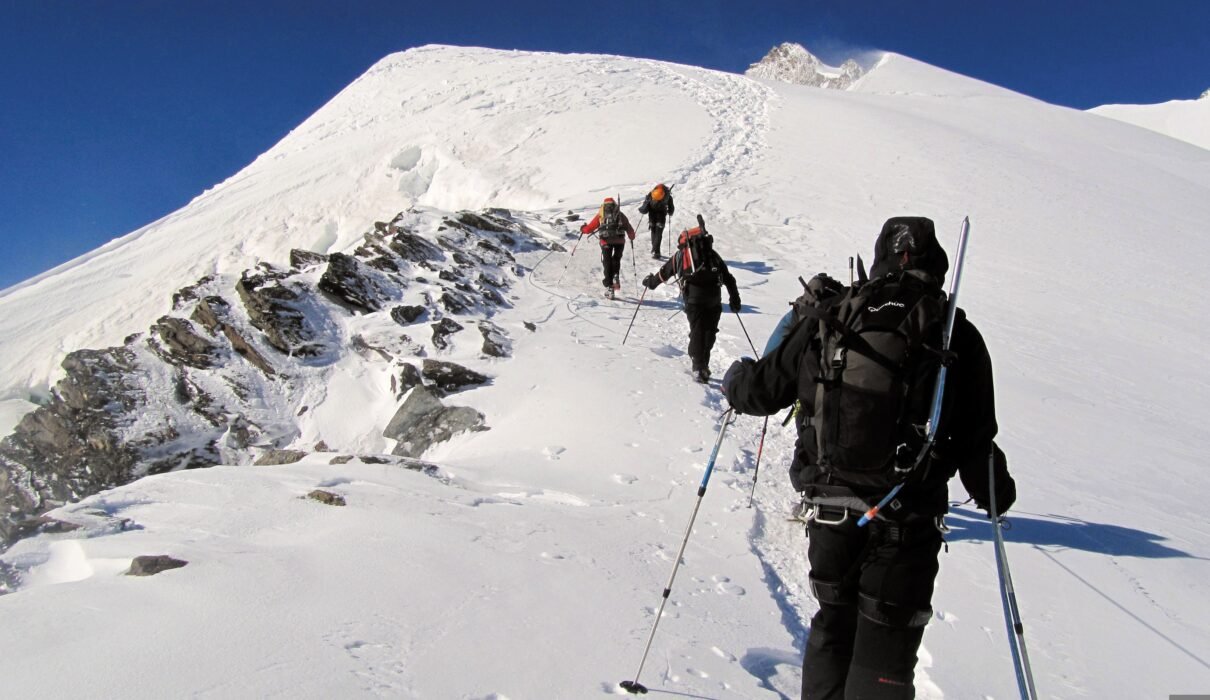
Mount Elbrus: Complete Climbing Guide is written for climbers who want clear, honest and practical information before stepping onto one of the most demanding and unpredictable high-altitude environments in Europe, where weather, altitude and human decision-making matter far more than strength alone.
Rising above the Caucasus Mountains, Elbrus is often described as a “non-technical” peak, yet statistics and mountain rescue reports show that poor preparation, underestimating altitude and fast-changing storms remain the main reasons why climbers struggle, turn back, or face serious danger. This guide focuses on what truly keeps people safe on Elbrus: physical preparation, environmental awareness, ethical operations and strong respect for mountain conditions.
Mount Elbrus: Complete Climbing Guide and the real altitude challenge
Altitude is the single most serious challenge on Elbrus. Medical and field research published by the World Health Organization and clinical studies shared through the National Center for Biotechnology Information confirm that rapid ascent above high elevations dramatically increases the risk of acute mountain sickness, high-altitude pulmonary edema and cerebral edema. Although the normal routes are technically simple, the thin air, cold temperatures and physical fatigue create a powerful combination that demands slow ascent, disciplined hydration and continuous self-monitoring.
Guidelines from the Centers for Disease Control and Prevention also emphasize that prior health screening, gradual acclimatization days and realistic summit schedules significantly improve safety outcomes for climbers travelling to high mountains.
Mount Elbrus: Complete Climbing Guide and weather and climate risks
Weather is one of the most underestimated dangers on Elbrus. Climate and mountain weather research coordinated by the World Meteorological Organization explains how high-altitude peaks create their own local weather systems, with sudden white-out conditions, strong winds and extreme cold appearing within minutes. Climate science assessments from the Intergovernmental Panel on Climate Change further show that mountain regions are experiencing increasingly unstable weather patterns, making reliable forecasting more difficult than in the past.
Because visibility and temperature can collapse rapidly, professional risk management models discussed in outdoor safety research available via ScienceDirect highlight the importance of conservative turnaround times, proper navigation tools and constant communication within climbing teams.
Mount Elbrus: Complete Climbing Guide and glacier and terrain safety
Although many climbers use the standard south route, large sections of the mountain still involve glacier travel and snow-covered terrain where crevasses, hidden ice layers and unstable snow bridges exist. Outdoor hazard analysis and rescue training frameworks promoted by the American Red Cross stress the importance of rope management, emergency drills and clear leadership structure during glacier travel.
Environmental and cryosphere research from the National Snow and Ice Data Center confirms that glacier surfaces are changing rapidly in many mountain regions, increasing surface melt and altering traditional travel routes.
Mount Elbrus: Complete Climbing Guide and environmental responsibility on high mountains
High-altitude environments recover extremely slowly from human impact. Conservation guidance published by the International Union for Conservation of Nature and environmental standards promoted by the United Nations Environment Programme clearly state that mountain ecosystems require strict waste management, controlled camping areas and reduced traffic pressure to prevent long-term damage.
Mountain biodiversity monitoring supported by the Global Biodiversity Information Facility shows that even small alpine plant communities play a role in stabilizing fragile slopes and supporting specialized insects and microorganisms. Responsible expeditions must therefore carry out all waste, avoid unnecessary route widening and respect designated camping and rest zones.
Mount Elbrus: Complete Climbing Guide and ethical expedition practices
Ethical mountain tourism is increasingly recognized as essential for long-term sustainability. Socio-economic research from the World Bank demonstrates that fair wages, insurance coverage and transparent contracts for mountain workers improve safety, professionalism and community stability. Labour protection principles published by the International Labour Organization further highlight the responsibility of tour operators and climbers to ensure that porters, drivers and local support teams are treated fairly.
Responsible travel principles promoted by the Responsible Tourism Partnership reinforce that ethical mountain operations protect both people and the environment.
Mount Elbrus: Complete Climbing Guide and emergency preparedness
Remote mountain rescue operations depend heavily on preparedness and communication. Disaster coordination guidance published by ReliefWeb highlights how local response systems and rapid information flow are critical during mountain emergencies. Field safety research by the RAND Corporation also demonstrates that pre-defined emergency protocols significantly reduce evacuation delays in difficult terrain.
Every team attempting Elbrus should carry satellite communication devices, know basic emergency medical response and establish clear decision-making authority before leaving base areas.
Mount Elbrus: Complete Climbing Guide and physical and mental preparation
Climbing performance is not only physical. Psychological resilience, decision discipline and fatigue management strongly influence safety at altitude. Human performance research published by the American Psychological Association shows that structured pacing, clear task division and realistic goal-setting improve judgement and reduce panic during stressful situations.
Proper training should include long endurance hikes, cold exposure practice and simulated summit-day schedules rather than only gym fitness.
Mount Elbrus: Complete Climbing Guide and conservation learning through mountaineering
High mountains are important natural laboratories for environmental science. Ecosystem vulnerability studies coordinated by the Intergovernmental Science-Policy Platform on Biodiversity and Ecosystem Services highlight that alpine regions are among the first to show biological response to climate change. Habitat protection initiatives supported by The Nature Conservancy and biodiversity protection programmes by Conservation International emphasize the importance of minimizing disturbance during mountain expeditions.
Mountaineering therefore carries an educational responsibility to promote environmental respect and scientific awareness.
Mount Elbrus: Complete Climbing Guide and planning your wider adventure responsibly
Many climbers use their international mountain experience to plan future expeditions in other regions of the world, including Africa’s major trekking destinations. Responsible adventure planning through Eddy Tours & Safaris allows travellers to apply the same safety culture, ethical standards and environmental responsibility when exploring Kilimanjaro and surrounding protected landscapes.
For climbers seeking professionally organised trekking and wildlife extensions, custom expedition and safari itineraries offer well-structured programmes that combine mountain safety standards with community-based conservation travel.
Many visitors who train on international peaks later prepare their East African adventures through responsible Kilimanjaro climbing services, where acclimatization planning and professional guiding are central to expedition success.
Those interested in conservation-focused travel can also explore ethical safari and trekking programmes that directly support local communities and environmental education.
Mount Elbrus: Complete Climbing Guide as your final preparation checklist
Before committing to Elbrus, every climber should honestly assess physical readiness, altitude tolerance, emergency knowledge and environmental responsibility. Strong preparation, respect for weather, professional guiding standards and ethical behaviour remain far more important than equipment brands or summit photos.
In simple words, Mount Elbrus rewards discipline and humility. Those who treat the mountain with patience, scientific awareness and ethical respect dramatically increase their chances of returning safely, inspired and better prepared for future high-altitude challenges anywhere in the world.