
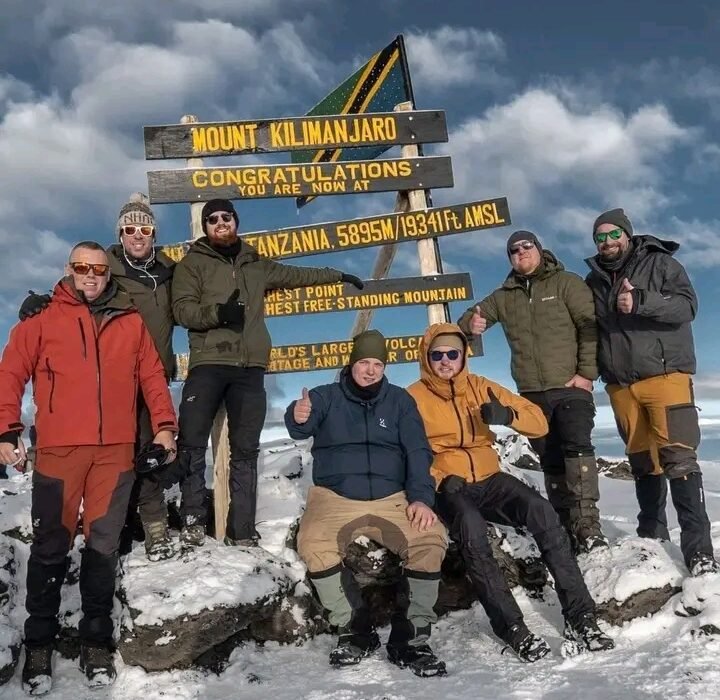
There is a moment on Mount Kilimanjaro when the entire adventure suddenly feels very real.You have spent days walking through lush rainforest, crossing moorland, passing dramatic volcanic landscapes, and gradually climbing higher into the mountain. You have slept in tents, carried your daypack, followed your guide’s steady pace, and watched the landscape change with every passing day.Then summit day arrives.
You wake up in the middle of the night, often after only a few hours of rest. Outside, the temperature is bitterly cold. The sky is dark. Your headlamp illuminates only a small section of the trail in front of you.
Somewhere above you is Uhuru Peak.
At 5,895 meters (19,341 feet) above sea level, Uhuru Peak is the highest point on Mount Kilimanjaro and the highest point in Africa. Tanzania’s national parks authority describes Kilimanjaro as Africa’s highest mountain.
This is the moment many climbers have been dreaming about for months or even years.
It is also, for many people, the hardest part of the entire trek.
At Eddy Tour and Safaris, we believe that understanding summit day before you arrive in Tanzania can make a tremendous difference. The final ascent is not simply another day of hiking. It is a combination of extreme altitude, cold, darkness, steep terrain, fatigue, and mental pressure.
So what makes summit day so difficult?
And what can climbers do to prepare for it in 2026, 2027 and 2028?
Let’s take a realistic look at what awaits you.
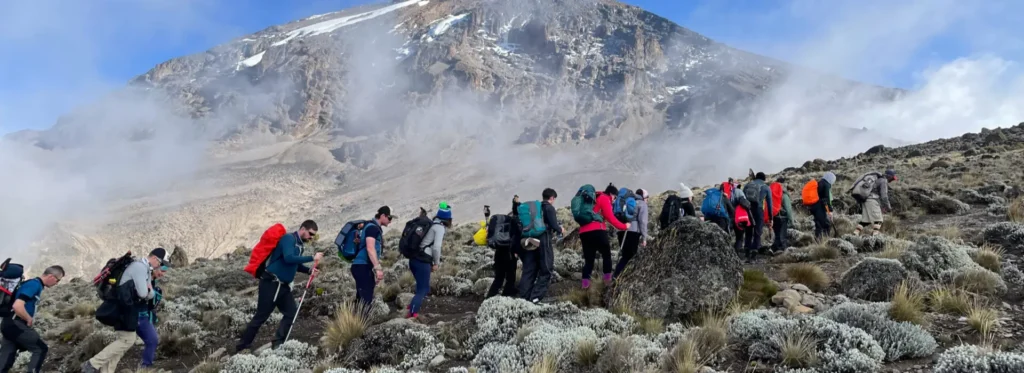
What Makes Kilimanjaro Summit Day So Difficult of Mount Kilimanjaro Summit Day: Why the Final Ascent Is the Hardest Part of the Trek in 2026, 2027 & 2028
The final ascent is challenging because several difficult factors come together at the same time.
You are:
- Walking at very high altitude
- Dealing with significantly reduced oxygen availability
- Hiking during the coldest part of the day
- Starting after limited sleep
- Walking in darkness
- Climbing steep terrain
- Managing physical fatigue accumulated over several days
- Dealing with the psychological pressure of reaching the summit
None of these challenges alone necessarily makes Kilimanjaro impossible.
The difficulty comes from experiencing them all at once.
This is why a climber who felt strong and energetic during the lower sections of the trek can suddenly find summit night surprisingly difficult.
The mountain has changed.
And your body has changed with it.
The First Challenge of Mount Kilimanjaro Summit Day: Why the Final Ascent Is the Hardest Part of the Trek in 2026, 2027 & 2028
The biggest factor during summit day is altitude.
At nearly 5,900 meters, Uhuru Peak is an extremely high-altitude environment. The amount of oxygen available is considerably lower than at sea level.
Your body has been acclimatizing during the climb, but even a well-acclimatized climber will notice the difference.
You may breathe more heavily.
Your heart may beat faster.
Your legs may feel heavier.
You may need to stop more frequently.
A short distance that would normally take you a few minutes can suddenly feel like a much longer effort.
This is one reason the summit push is intentionally slow.
At Eddy Tour and Safaris, our approach is simple:
Pole pole.
Slowly, slowly.
This famous Swahili expression is more than a friendly phrase on Kilimanjaro. It represents one of the most important principles of a successful summit attempt.
You are not racing to the top.
You are managing your energy.
Why Being Fit Does Not Guarantee an Easy Summit of Mount Kilimanjaro Summit Day: Why the Final Ascent Is the Hardest Part of the Trek in 2026, 2027 & 2028
One of the most common misconceptions about Kilimanjaro is that excellent physical fitness guarantees a successful summit.
It doesn’t.
Being fit is extremely valuable. Strong legs, good cardiovascular endurance, and hiking experience can make the physical journey much easier.
But altitude affects people differently.
A professional athlete can experience altitude illness.
An experienced hiker can develop a headache or nausea.
A first-time trekker can sometimes perform surprisingly well.
The Centers for Disease Control and Prevention explains that altitude illness is associated with reduced oxygen at elevation and can occur when people ascend too quickly. Symptoms of acute mountain sickness can include headache, tiredness, loss of appetite, nausea and vomiting.
This is why Kilimanjaro should never be approached as a test of fitness alone.
It is a test of preparation, pacing, patience and adaptation.
Summit Night Begins Before Midnight
One of the strangest parts of climbing Kilimanjaro is that summit day technically begins in the middle of the night.
Depending on the route and itinerary, climbers typically leave their high camp during the night so they can reach the summit around sunrise.
Imagine waking up while most of the world is asleep.
You put on several layers of clothing.
You check your gloves.
You switch on your headlamp.
You eat something, even if you don’t have much appetite.
Then you step outside.
The air is freezing.
The mountain is almost completely silent.
Ahead of you are hundreds of steps leading upward.
This is when the climb begins to feel completely different.
The Cold Makes Everything Harder
At lower elevations, Kilimanjaro can feel warm.
Summit night is another story.
Temperatures near the summit can drop well below freezing, and wind can make conditions feel even colder.
Cold affects your body in several ways.
Your fingers can become stiff.
Your toes may become uncomfortable.
Your muscles take longer to warm up.
Even simple tasks such as adjusting your backpack or opening a pocket can become difficult.
This is why proper clothing is essential.
A good layering system allows you to adjust as your body temperature changes.
Your summit clothing should generally include appropriate base layers, insulation, a wind-resistant outer layer, warm gloves or mittens, a warm hat, suitable socks and footwear designed for cold conditions.
Do not wait until summit night to discover that your gloves are inadequate.
Test your equipment before the climb.
Walking in Darkness Is a Mental Challenge
During the daytime, Kilimanjaro offers incredible views.
On summit night, you see almost none of them.
Your headlamp lights up the trail immediately in front of you.
You may see the boots of the person walking ahead.
Then darkness.
You continue walking.
Step.
Breathe.
Step.
Breathe.
The limited visibility can actually be mentally challenging because you cannot easily see how far you still have to go.
This is where the relationship between climber and guide becomes extremely important.
Your guide knows the mountain.
They know the pace.
They understand when the group needs a short break.
They know how to encourage climbers when the trail feels endless.
And they help keep the group focused on one small goal at a time.
The Famous Zigzag Ascent
The final climb toward Uhuru Peak is steep in places.
Rather than walking straight up the steepest sections, climbers generally follow a gradual zigzag pattern.
You may look up and think:
“How am I going to climb all of that?”
The answer is simple.
Don’t think about all of it.
Think about the next step.
Then the next one.
And the next.
This is one of the most important mental strategies for summit night.
Instead of thinking,I still have hours to go.
Think:
I’m going to reach that point.
Then choose another point.
Breaking the climb into small sections makes an enormous psychological difference.
Why the Final Hours Can Feel So Long
At high altitude, time seems to slow down.
Your walking pace is deliberately reduced.
Your body is working harder.
You may take frequent breaks.
You are tired from the days before.
You are cold.
You are sleepy.
And the summit can appear to remain stubbornly far away.
This is normal.
The important thing is to remain patient.
One of the biggest mistakes climbers make is becoming frustrated because they are not moving as quickly as they expected.
Summit day is not about speed.
It is about consistency.
The Importance of Acclimatization Before Summit Day
A successful summit attempt begins several days before summit night.
This is why route and itinerary selection matter so much.
Eddy Tour and Safaris currently offers several Kilimanjaro routes, including Machame, Marangu, Rongai, Lemosho, Northern Circuit, Umbwe and Shira. The company also promotes longer itineraries designed to provide additional acclimatization time.
A longer itinerary can give your body more time to adapt to increasing elevation.
This is particularly important because altitude illness cannot be completely prevented simply by being physically fit.
The CDC recommends gradual ascent and notes that spending additional time at elevation can help the body adjust to lower oxygen availability. It also advises travelers to consider gradual increases in sleeping altitude and, where appropriate, higher daytime excursions followed by sleeping lower.
For this reason, when planning your 2026, 2027 or 2028 Kilimanjaro adventure, don’t choose an itinerary solely because it is the cheapest or shortest.
Ask yourself:
Does this itinerary give my body enough time to acclimatize?
That question can be more important than saving a day or two.
Why Pole Pole Matters Most on Summit Day
You may hear your guide saying:
Pole pole.
It means:
Slowly, slowly.
At first, you might wonder why you are walking so slowly.
Then summit night arrives.
Suddenly, you understand.
A slow pace helps you conserve energy and manage the effects of altitude.
Trying to walk too quickly can leave you exhausted much earlier.
The goal is to arrive at the summitnot to reach every checkpoint first.
Your guide may deliberately maintain a pace that feels extremely slow.
Trust that process.
Kilimanjaro rewards patience.
What Happens If You Feel Sick During Summit Night?
This is one of the most important things every climber should understand before starting.
Tell your guide.
Do not hide symptoms.
Do not feel embarrassed.
Do not assume you have to continue because you have already paid for the trip.
Symptoms of acute mountain sickness can include headache, tiredness, appetite loss, nausea and vomiting. More serious altitude illnesses can become life-threatening and require immediate descent.
Your guide’s job is not simply to get you to the summit.
Their responsibility is also to help manage the safety of the climb.
If your condition becomes concerning, the correct decision may be to stop ascending or descend.
That is not failure.
It is responsible mountaineering.
The Mental Battle: Can I Really Do This?”
At some point during summit night, many climbers ask themselves this question.
Can I really make it?
You may feel exhausted.
You may wonder why you ever decided to climb Kilimanjaro.
You may want to turn around.
This is where mental preparation becomes as important as physical preparation.
Remember the reason you came.
Think about the days you have already completed.
Think about the people supporting you.
Think about the sunrise waiting at the top.
But don’t pressure yourself into ignoring your physical condition.
Mental toughness is not pretending that everything is fine.
Real mental strength means staying calm, communicating honestly, and taking the next appropriate step.
The Moment the Sky Starts to Change
Then something magical happens.
After hours of darkness, the horizon begins to change.
The black sky becomes dark blue.
Then purple.
Then orange.
The clouds below begin catching the first light of the day.
And suddenly, you realize:
You are almost there.
For many climbers, sunrise is one of the most emotional moments of the entire journey.
You have spent hours climbing in darkness.
Now the mountain reveals itself.
The landscape stretches below you.
The glaciers and volcanic terrain become visible.
And somewhere nearby is Uhuru Peak.
That sunrise can make every difficult step feel worthwhile.
Reaching Stella Point and Uhuru Peak
Depending on the route and conditions, climbers may first reach Stella Point, located on the crater rim.
From there, the trail continues around the crater rim toward Uhuru Peak.
For a tired climber, those final steps can feel surprisingly difficult.
You are close.
Very close.
But close does not necessarily mean easy.
Altitude remains a major factor.
This is why you should continue at a controlled pace even after reaching Stella Point.
Don’t suddenly push yourself because you can see the summit.
Stay calm.
Keep moving carefully.
The Final Steps to Uhuru Peak
There is something deeply emotional about the final steps.
Your guide may tell you that you are almost there.
You look ahead.
The famous Uhuru Peak sign comes into view.
You take another step.
Then another.
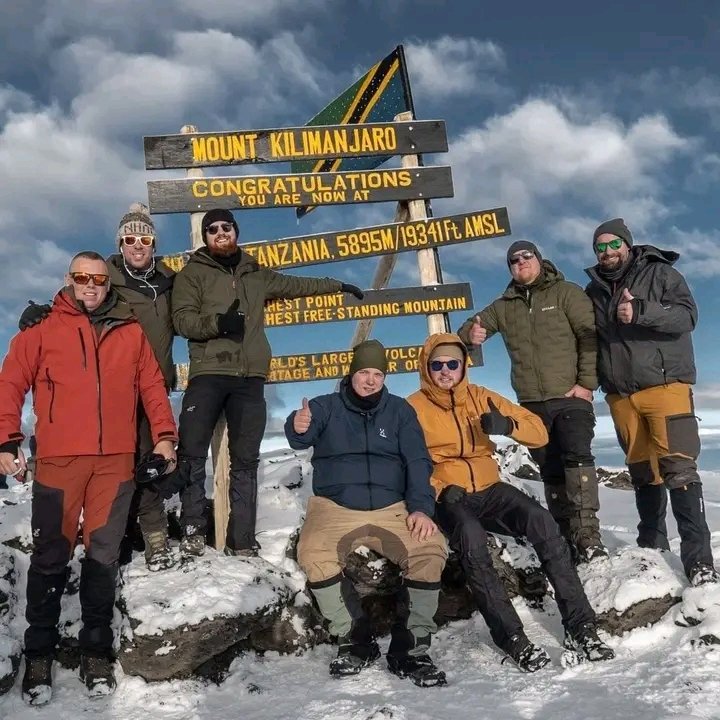
And suddenly you are standing at the highest point in Africa.
5,895 meters above sea level.
For some climbers, the first reaction is excitement.
For others, tears.
Some laugh.
Some become completely silent.
Some immediately hug their guides.
Everyone reacts differently.
But almost everyone understands the significance of that moment.
You didn’t simply reach a point on a map.
You completed something that required days of preparation, patience and determination.
Why the Summit Is Not the End of the Challenge
One mistake first-time climbers sometimes make is thinking that reaching Uhuru Peak means the difficult part is completely finished.
Not quite.
You still have to descend.
And descending can be physically demanding.
Your legs are tired.
Your knees may hurt.
You may be sleepy.
Your concentration may be reduced.
And the descent can involve loose volcanic terrain where careful footing is important.
This is why your guide will continue monitoring the group after the summit.
The goal is not only:
Reach Uhuru Peak.
The goal is:
Reach Uhuru Peak and return safely.
How Eddy Tour and Safaris Helps Climbers Prepare
At Eddy Tour and Safaris, we understand that Kilimanjaro is not simply a sightseeing trip.
It is a serious trekking experience that requires planning.
Our Kilimanjaro programs are built around different routes and itineraries, allowing climbers to choose an experience that matches their preferences, schedule and preparation level. The company currently highlights routes including Machame, Lemosho, Marangu, Rongai, Umbwe, Northern Circuit and Shira.
Our current Kilimanjaro offering includes options for travelers planning their adventures in 2026, 2027 and 2028, with different itinerary lengths and route choices.
The important thing is not simply choosing a date.
It is choosing the right climb.
That means considering:
- Your previous hiking experience
- Your physical preparation
- The number of days available
- Your preferred scenery
- Your tolerance for camping
- Your altitude concerns
- Your budget
- Your desired level of support
Our team can help travelers understand these differences before they make a booking.
Recommended Preparation for Summit Day
If you are planning Kilimanjaro in 2026, 2027 or 2028, start preparing well before you arrive in Tanzania.
Build Endurance
Include long walks and hikes in your training.
Gradually increase distance.
Don’t wait until the last few weeks.
Train Your Legs
Squats, lunges, step-ups and hill walking can help prepare your legs for long days on uneven terrain.
Practice Hiking
If possible, train on actual trails.
Walking on a treadmill is useful, but uneven terrain provides a different experience.
Practice With Your Backpack
Use the backpack you expect to carry during the climb.
This allows you to identify discomfort before your trip.
Test Your Boots
Never arrive on Kilimanjaro with brand-new boots that you have never worn.
Blisters can turn an otherwise manageable trek into a miserable experience.
Practice Hydration and Nutrition
Learn what foods and drinks work well for you during long hikes.
Prepare Mentally
Understand that summit night will probably be uncomfortable.
That does not mean something has gone wrong.
It means you are climbing a high mountain.
What Should You Pack for Summit Night?
Your exact packing list should be based on your route, season and operator’s recommendations, but summit night generally requires careful preparation for cold and changing conditions.
Important categories include:
- Warm base layers
- Insulating mid-layers
- Waterproof/wind-resistant outer layer
- Warm gloves or mittens
- Warm hat
- Headlamp and spare batteries
- Appropriate hiking socks
- Suitable trekking boots
- Water bottles or hydration system
- High-energy snacks
- Sunglasses
- Sunscreen
- Personal medications
- Small daypack
- Trekking poles if preferred
Don’t underestimate the importance of keeping batteries warm in very cold conditions.
And don’t pack unnecessary items simply because you are afraid of forgetting something.
A good packing list is about preparation, not carrying your entire house up the mountain.
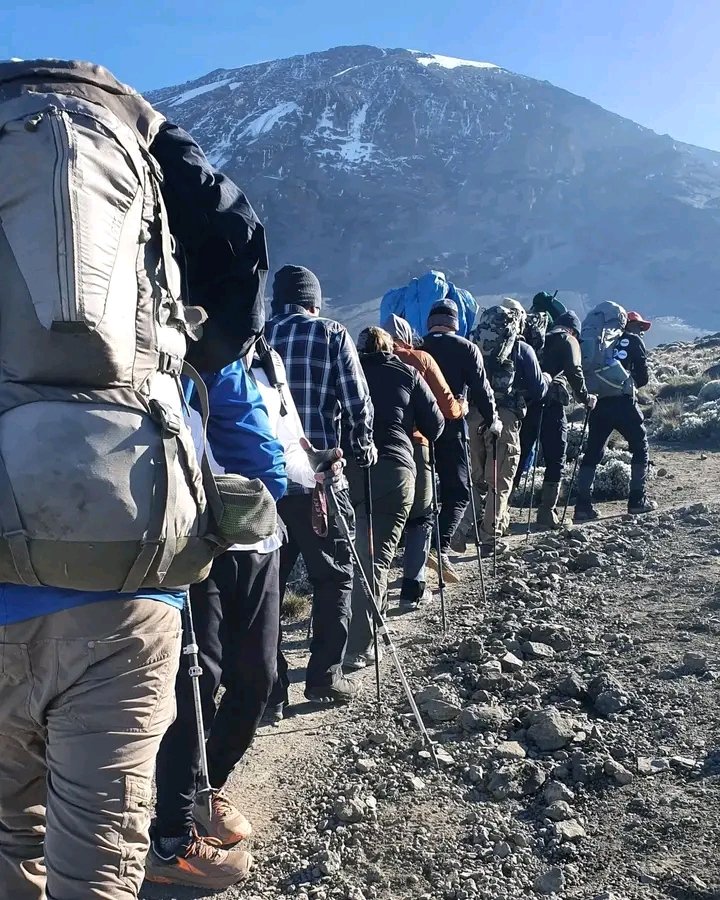
Mount Kilimanjaro Summit Day: Why the Final Ascent Is the Hardest Part of the Trek in 2026, 2027 & 2028: When Should You Start Planning?
If Kilimanjaro is on your bucket list, don’t wait until the last moment.
For 2026, travelers should focus on confirming available dates, preparing physically, selecting a route and arranging travel logistics.
For 2027, you have more time to build a structured training program and compare routes carefully.
For 2028, you have an excellent opportunity to plan the experience well in advance, especially if you are traveling with family, friends or a larger group.
The key is to avoid choosing a climbing date first and thinking about preparation afterward.
Instead:
Choose your goals first.
Then select your route.
Then choose an itinerary.
Then build your preparation around that plan.
Which Kilimanjaro Route Should You Choose?
There is no single perfect route for every climber.
Eddy Tour and Safaris offers several major Kilimanjaro routes, including:
Machame Route
Machame is one of the most popular approaches and is known for its scenic landscapes and varied terrain. Eddy’s current offering includes a six-day Machame itinerary.
Lemosho Route
Lemosho approaches from the west and is known for its beautiful scenery and longer trekking options. Eddy currently promotes an eight-day Lemosho itinerary with additional time for acclimatization.
Marangu Route
Marangu is another well-known route and has a different accommodation style because climbers sleep in mountain huts rather than tents.
Rongai Route
Rongai approaches Kilimanjaro from the northeastern side and provides a different perspective of the mountain.
Northern Circuit
The Northern Circuit offers a longer journey around the mountain and is particularly attractive to travelers looking for additional acclimatization time and a less hurried experience.
Umbwe Route
Umbwe is known for a steeper and more demanding approach and is generally better suited to experienced trekkers.
The right route depends on your experience, schedule and priorities.
The Biggest Mistake You Can Make on Summit Day
If we had to identify one mistake climbers should avoid, it would be this:
Trying to prove how tough you are.
Kilimanjaro doesn’t care how tough you are.
The mountain doesn’t reward ego.
If your guide tells you to slow down, slow down.
If you feel unwell, speak up.
If you need to rest, communicate.
If the conditions require a change of plan, accept it.
The strongest climber is not necessarily the person who refuses to stop.
Sometimes the strongest decision is knowing when to listen.
10 Summit-Day Tips From Eddy Tour and Safaris
1. Start Slowly
Don’t waste energy during the first hour.
2. Dress in Layers
You may warm up as you climb and need to adjust clothing.
3. Eat Before You Start
Even if you don’t feel very hungry, take some food according to your guide’s plan.
4. Drink Regularly
Stay hydrated without forcing excessive amounts of water.
5. Follow Your Guide’s Pace
Your guide has experience managing summit groups.
6. Keep Your Hands Warm
Cold hands can make the climb much more uncomfortable.
7. Focus on One Section at a Time
Don’t obsess over how many hours remain.
8. Communicate
Tell your guide if something doesn’t feel right.
9. Don’t Compare Yourself to Others
Everyone responds differently to altitude.
10. Remember Why You Came
When the climb gets difficult, reconnect with your motivation.
Is Summit Day Really the Hardest Part?
For many climbers, yes.
But it is important to understand why.
The final ascent is difficult not because Kilimanjaro suddenly becomes technically impossible.
It is difficult because everything comes together at the highest point of the mountain.
The air is thinner.
The temperature is lower.
The trail is steep.
You are tired.
You are walking at night.
And your mind knows that you are attempting something extraordinary.
That combination creates the ultimate challenge.
Final Thoughts: The Hardest Day Can Become Your Best Memory
Summit day may be the hardest part of your Kilimanjaro trek.
But it may also become the part you remember for the rest of your life.
Years later, you may not remember every campsite.
You may forget the exact distance you walked on Day Three.
You may not remember what you ate for dinner.
But you will probably remember waking up in the darkness.
You will remember the cold.
You will remember your guide saying:
Pole pole.
You will remember taking one step after another.
You will remember the first light appearing over Tanzania.
And you will remember the moment you reached Uhuru Peak.
That is what makes Kilimanjaro so special.
The mountain doesn’t give you the summit easily.
It asks for patience.
It asks for preparation.
It asks you to keep moving when things become uncomfortable.
And ultimately, it teaches you that sometimes the biggest achievements come from taking things one step at a time.
For climbers planning their adventure in 2026, 2027 or 2028, the best preparation is not simply buying expensive equipment or becoming extremely fit.
It is understanding the mountain.
Choose a sensible itinerary.
Allow enough time for acclimatization.
Prepare your body.
Prepare your mind.
Listen to your guide.
Respect altitude.
And never be afraid to go slowly.
At Eddy Tour and Safaris, our philosophy is simple: your Kilimanjaro adventure should be challenging, rewarding and, above all, responsibly organized. Our team offers Kilimanjaro routes and itineraries for travelers planning climbs in the coming seasons, with options ranging from shorter popular routes to longer itineraries designed around acclimatization.
Because when you finally stand at Uhuru Peak, the goal is not to say:
I climbed the mountain as fast as possible.
The goal is to say:
I respected the mountain, trusted the journey, and made it to the Roof of Africa.
And sometimes, the hardest steps are the ones that create the greatest memories.
Frequently Asked Questions About Kilimanjaro Summit Day
1. Why is summit day the hardest part of Kilimanjaro?
Summit day combines extreme altitude, cold temperatures, steep terrain, darkness, fatigue and psychological pressure. The high elevation is particularly important because the body has less available oxygen.
2. How high is Uhuru Peak?
Uhuru Peak stands at 5,895 meters (19,341 feet) above sea level and is the highest point of Mount Kilimanjaro and Africa.
3. What time does summit day start?
Summit attempts commonly begin during the night, allowing climbers to reach the summit around sunrise. The exact departure time depends on the route, itinerary, conditions and guide’s plan.
4. Is Kilimanjaro summit night dangerous?
High-altitude trekking carries real risks. Altitude illness can become serious, which is why gradual acclimatization, appropriate monitoring and professional guiding are important.
5. What does pole pole mean?
“Pole pole” means “slowly, slowly” in Swahili. It is one of the most important phrases you will hear while climbing Kilimanjaro.
6. Can beginners climb Kilimanjaro?
Yes. Kilimanjaro’s standard trekking routes do not generally require technical mountaineering skills, but beginners still need proper physical preparation and should take altitude seriously.
7. Does being physically fit prevent altitude sickness?
No. Fitness helps you handle physical exertion, but it does not guarantee protection against altitude illness.
8. What should I do if I feel sick during summit night?
Tell your guide immediately. Do not hide symptoms. Depending on the severity of the condition, the appropriate response may involve stopping the ascent or descending.
9. Which route is best for acclimatization?
There is no universal answer because individual circumstances differ, but longer itineraries generally provide more time for acclimatization. Eddy Tour and Safaris currently offers longer options such as an eight-day Lemosho itinerary and a nine-day package designed around additional acclimatization time.
10. Is the descent after Uhuru Peak difficult?
Plan Your Kilimanjaro Climb With Eddy Tour and Safaris
If you are planning to climb Mount Kilimanjaro in 2026, 2027 or 2028, Eddy Tour and Safaris offers several route and itinerary options and can help you choose an experience based on your schedule, experience and preferences. The company’s current Kilimanjaro program includes Machame, Lemosho, Marangu, Rongai, Umbwe, Northern Circuit and Shira routes.
For more information about routes, itineraries and current packages, visit the official Eddy Tour and Safaris website or use its contact page to make an inqu
Suggested Call to Action:
Ready to stand on the Roof of Africa? Start planning your 2026, 2027 or 2028 Kilimanjaro adventure with Eddy Tour and Safaris and choose the route and itinerary that best suits your journey.