
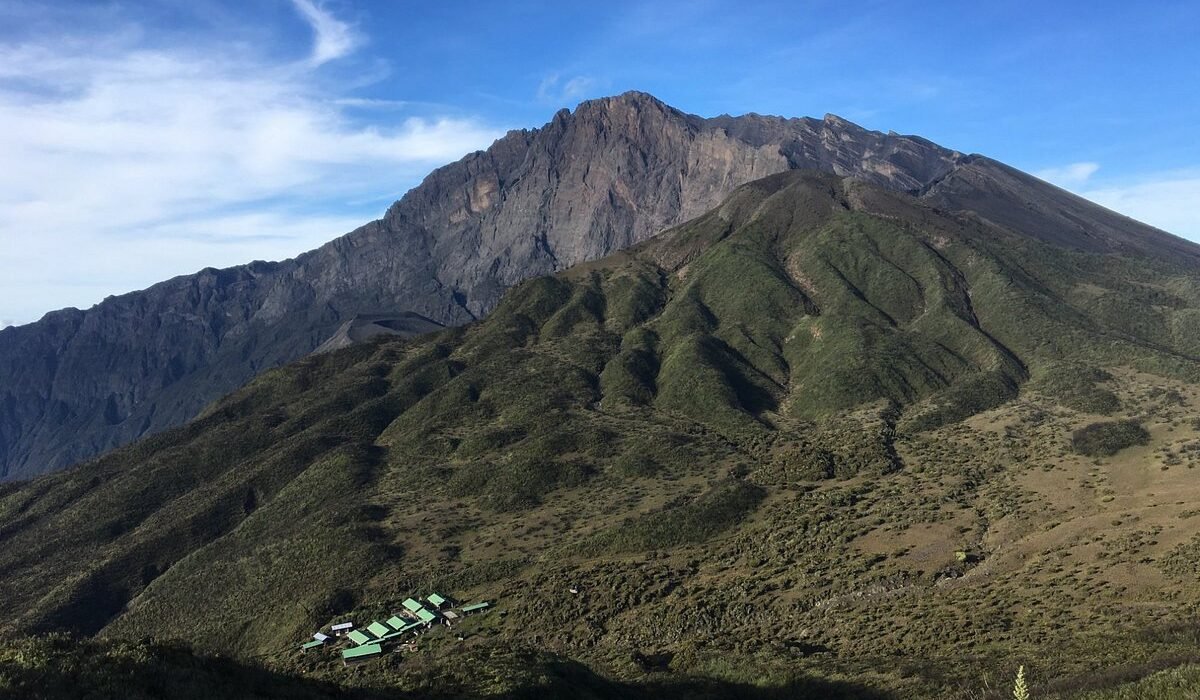
Mount Meru is Tanzania’s second-highest mountain, rising to 4,566 metres at Socialist Peak. It stands inside Arusha National Park, not far from Arusha town, and offers a serious but rewarding four-day hike through forest, heath, moorland and volcanic ridges. The summit day is demanding, but the route gives hikers something that many mountain treks do not: early wildlife sightings, a dramatic crater landscape and close views toward Mount Kilimanjaro when the sky is clear.
This 4-day Mount Meru hiking tour is arranged for hikers who want a properly supported ascent rather than a rushed mountain walk. The pace allows time for acclimatisation at Miriakamba Hut and Saddle Hut, then uses the classic summit route via Rhino Point. You will be accompanied by a professional mountain guide, armed park ranger and support crew. Accommodation is in the official mountain huts, with meals prepared by the trekking team.
Trek at a glance
- Duration: 4 days / 3 nights on the mountain
- Summit: Socialist Peak, 4,566 m
- Starting point: Momella Gate, Arusha National Park
- Accommodation: Miriakamba Hut and Saddle Hut
- Route style: Guided hut trek with park ranger
- Best for: Fit first-time high-altitude trekkers, Kilimanjaro preparation, and hikers wanting a shorter Tanzanian mountain experience
Why hike Mount Meru?
Mount Meru is sometimes treated as a warm-up for Kilimanjaro, but that misses what makes it special. It is a real high-altitude climb with a summit above 4,500 metres. The route changes character every day, beginning in the wildlife-rich forest of Arusha National Park and ending on a narrow volcanic ridge above the crater. You are not walking through the same scenery for four days.
It is also a strong choice for people who have limited time. A four-day itinerary gives you a challenging summit objective without committing to a week or more on Kilimanjaro. For hikers who are considering Kilimanjaro later, Mount Meru offers useful experience with altitude, hut life, early starts and pacing. It is not a guarantee of Kilimanjaro success, but it can be an excellent introduction to how your body responds at elevation.
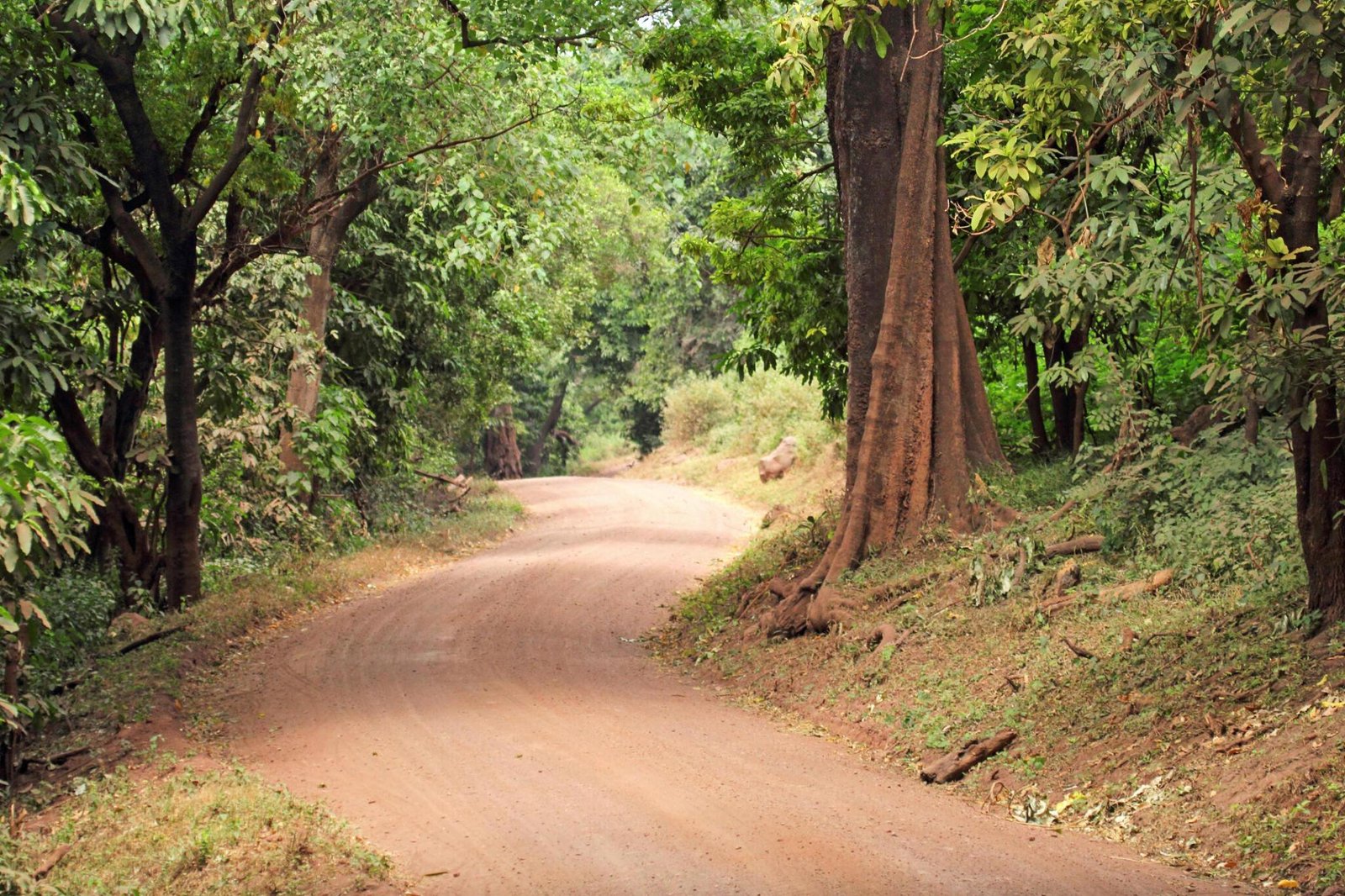
Because the trail begins in a national park, the first day may include giraffes, buffalo, warthogs, colobus monkeys, bushbuck and many birds. Wildlife is never guaranteed, but it gives the trek a different opening from a standard mountain route. The ranger accompanies the group for safety and park regulations, especially through the lower forest section.
Detailed 4-day Mount Meru itinerary
Day 1: Arusha / Momella Gate to Miriakamba Hut
After breakfast at your Arusha hotel, transfer to Momella Gate in Arusha National Park. The morning begins with registration, a final gear check and introductions to the guide, ranger and mountain crew. Your main duffel bag is carried by porters, while you walk with a day pack containing water, rain gear, warm layer, snacks and personal essentials.
The trek starts at around 1,500 metres and gradually climbs through grassland and forest toward Miriakamba Hut at approximately 2,500 metres. The route can follow different tracks depending on park management and conditions. The lower slopes are a good place to look for giraffe, buffalo, warthog and monkeys, but stay close to the ranger and do not leave the group for a photograph.
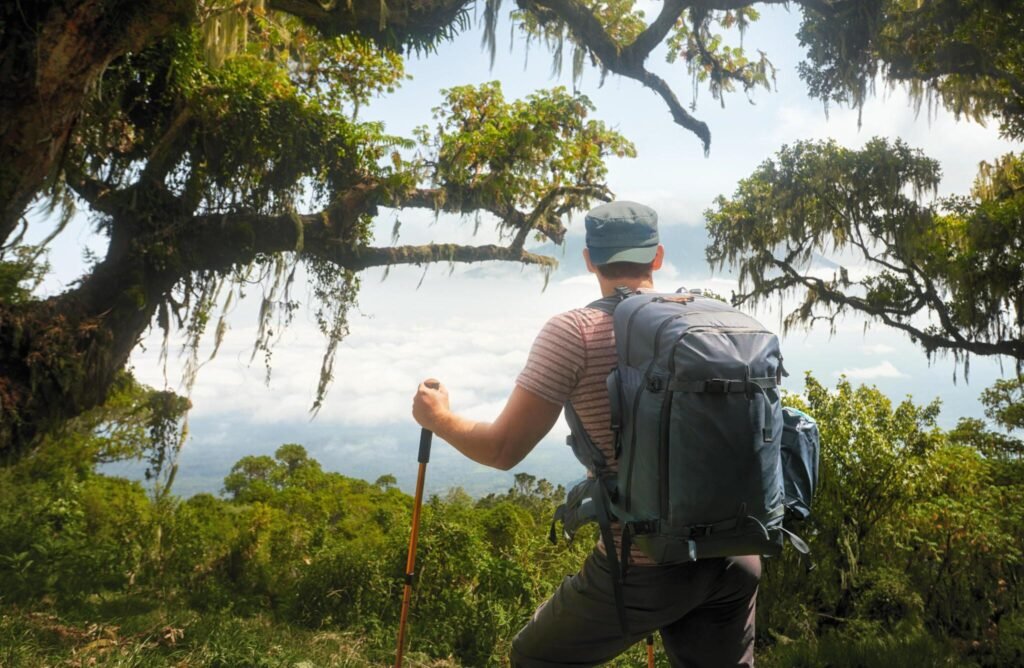
The walking pace is deliberately steady. The first day is not technically difficult, but it establishes the habit that matters most on Mount Meru: moving slowly enough to acclimatise. You may stop for a packed lunch along the way, then continue through increasingly forested terrain to Miriakamba Hut. Arrive in the afternoon, settle into the hut, have tea and rest before dinner.
Walking time: about 4–6 hours
Elevation: Momella Gate about 1,500 m to Miriakamba Hut about 2,500 m
Meals: Lunch and dinner
Overnight: Miriakamba Hut
Day 2: Miriakamba Hut to Saddle Hut
After breakfast, leave Miriakamba Hut and continue uphill toward Saddle Hut. The forest begins to thin, and the views become wider as the trail enters heather and moorland. This is a shorter day in distance than Day 1, but the increase in altitude is significant. The aim is to reach Saddle Hut early enough to rest, hydrate and prepare properly for the summit night.
The trail is steeper in places and climbs toward the saddle between Mount Meru’s main summit and Little Meru. On a clear day, the volcanic forms become striking: the ash cone, crater cliffs and the outline of the summit ridge appear closer. Little Meru, at around 3,820 metres, may be visited later in the afternoon as an acclimatisation walk if the guide considers the group ready and conditions are good.
At Saddle Hut, have a late lunch, drink plenty of water and spend the afternoon resting. Appetite can reduce at altitude, but it is important to eat enough for summit night. Your guide will explain the next day’s schedule, check your clothing and headlamp, and talk through signs of altitude sickness. Dinner is served early because the summit attempt begins well before midnight.
Walking time: about 3–5 hours, plus optional acclimatisation walk
Elevation: Miriakamba Hut about 2,500 m to Saddle Hut about 3,570 m
Meals: Breakfast, lunch and dinner
Overnight: Saddle Hut
Day 3: Saddle Hut to Socialist Peak – descend to Miriakamba Hut
This is the longest and most demanding day. Wake around midnight for tea, a light snack and final preparation. Dress in warm layers: temperatures before dawn can be very cold, and wind on the ridge can make it feel colder. Your headlamp, gloves, warm hat, insulated jacket and water must be easy to reach.
The ascent begins in darkness, climbing steeply toward Rhino Point. The trail then follows an exposed ridge with steep drops on either side. It is not a technical climbing route requiring ropes, but it demands concentration, sure footing and respect for the guide’s instructions. The pace is slow, with short breaks, because altitude and cold make rushing a bad idea.
As daylight grows, the views can be extraordinary. The crater and ash cone sit below, and Mount Kilimanjaro may appear across the plains if cloud permits. Continue along the ridge to Socialist Peak, the summit of Mount Meru at 4,566 metres. Take photographs, celebrate quietly and begin the descent promptly. Staying too long at the top increases exposure to cold and altitude.
Return to Saddle Hut for a meal and short rest, then continue descending to Miriakamba Hut. The descent is long and your knees may feel it, so trekking poles are helpful. Hydrate and eat even if you are tired. Reaching Miriakamba feels like a major achievement after the summit attempt, but a final safe day of walking remains.
Walking time: about 10–14 hours
Elevation: Saddle Hut about 3,570 m to Socialist Peak 4,566 m, then down to Miriakamba Hut about 2,500 m
Meals: Breakfast, lunch and dinner
Overnight: Miriakamba Hut
Day 4: Miriakamba Hut to Momella Gate – transfer to Arusha
After breakfast, begin the final descent through forest and grassland to Momella Gate. The route is generally downhill, but it should still be taken carefully, especially if your legs are tired from the previous day. Enjoy the last views of the mountain and keep an eye out for wildlife in the lower park.
At the gate, sign out, say farewell to the mountain crew and receive your summit certificate if you reached the required point. Transfer back to Arusha for a hot shower, a proper meal and a well-earned rest. If you are continuing to a Tanzania safari or Zanzibar, we can coordinate the next part of your journey.
Walking time: about 3–5 hours
Meals: Breakfast and lunch
End of trek: Arusha hotel or agreed airport transfer
How difficult is Mount Meru?
Mount Meru is challenging, particularly on summit day. You do not need technical mountaineering experience, but you do need good fitness, stable footing and the ability to hike for several hours on consecutive days. The summit push involves an early start, cold, altitude and an exposed ridge. People who have trained only on flat ground often find the uphill and downhill sections harder than expected.
The key difficulty is altitude. At 4,566 metres, the air contains much less oxygen than at sea level. Even very fit people can develop symptoms such as headache, fatigue, nausea or reduced appetite. Fitness helps, but it does not remove altitude risk. The guide monitors the group and may recommend slowing down, resting or descending if symptoms are concerning. A safe descent is always more important than reaching a summit.
Training for a 4-day Mount Meru hike
Start training at least six to eight weeks before travel if possible. The most useful preparation is regular walking or hiking with elevation gain. Aim for longer weekend walks, stair climbing or hill sessions, alongside steady cardio such as running, cycling or brisk incline walking. Add leg strength work: squats, lunges, step-ups and calf raises help with both climbing and descent.
Do not train only for speed. Mount Meru rewards endurance and controlled pacing. Practise walking for several hours in the boots you will wear, carrying a light day pack. If you use trekking poles, practise with them before the mountain. The goal is to arrive comfortable with your equipment rather than trying it for the first time at Momella Gate.
What is included in the Mount Meru hiking tour?
- Arusha National Park entry and Mount Meru trekking fees
- Professional mountain guide
- Required armed park ranger for the trek
- Porters and mountain cook
- Three nights in official mountain huts: Miriakamba Hut and Saddle Hut
- Meals during the trek as listed in the itinerary
- Drinking water on the mountain
- Arusha hotel transfers to and from Momella Gate
- Government taxes and VAT where applicable
What is excluded?
- International flights and Tanzania visa fees
- Accommodation and meals in Arusha before and after the trek unless quoted
- Travel and medical insurance, including evacuation cover
- Personal trekking gear such as boots, sleeping bag, clothing and poles
- Alcoholic drinks, soft drinks and personal snacks
- Tips for guides, rangers, cooks and porters
- Personal expenses, laundry and souvenirs
Essential Mount Meru packing list
Good gear makes the climb safer and more enjoyable. Bring broken-in waterproof hiking boots with ankle support, warm hiking socks, a base layer, fleece, insulated jacket, waterproof shell, trekking trousers, gloves, warm hat and sunhat. Summit night requires a reliable headlamp with spare batteries. Sunglasses and sunscreen are important because high-altitude sun can be strong even when the air is cold.
You also need a sleeping bag suitable for cold mountain nights, a small day pack, water bottles or hydration system, personal first-aid items and any prescribed medication. Trekking poles are strongly recommended, especially for the long descent. Your detailed gear list should be reviewed before arrival so any rental items can be arranged in Arusha if needed.
Best time to climb Mount Meru in 2027/2028
The main dry periods—roughly January to early March and June to October—are generally preferred for Mount Meru. Trails are usually drier, views can be clearer and conditions are more comfortable for the summit ridge. June to October is particularly popular, so early booking is advisable.
The mountain can be climbed in other months, but rain can make trails muddy and cloud can reduce summit views. March to May is the long-rain season, while November and December often have shorter rains. Weather changes quickly on any mountain, so even in the dry season you should bring rain protection and warm layers.
Safety, altitude and responsible trekking
Tell your guide promptly if you feel a persistent headache, dizziness, nausea, unusual breathlessness or loss of coordination. Do not hide symptoms because you are worried about delaying the group. Guides manage altitude by keeping a controlled pace, encouraging drinking and watching how each hiker responds. The correct response to serious altitude illness is descent, not determination.
Respect the park by staying on designated trails, carrying out all rubbish and avoiding disturbance to wildlife. Do not feed animals or walk ahead of the ranger in the lower zones. The mountain crew does demanding work; treat every guide, porter, cook and ranger with courtesy. If you choose to tip, do so fairly and through the guidance provided by the lead guide.
Food, water and life in the mountain huts
Meals are planned to give you steady energy rather than restaurant-style variety. A typical trekking menu may include porridge, eggs, fruit, soup, rice, pasta, vegetables, chicken or other protein, potatoes and hot drinks. Tell us about vegetarian, vegan, halal, gluten-free or allergy requirements when booking; mountain food can be adjusted much more easily when the cook knows in advance.
Drink regularly throughout the trek. At altitude, hikers often do not feel thirsty enough, yet dehydration can make headaches and fatigue worse. Water is treated or provided by the crew. Bring bottles or a hydration system with a total capacity of at least two to three litres, and keep your drinking tube insulated on summit night if you use one, because water can freeze in cold conditions.
The huts are basic mountain accommodation. They provide shelter and beds, but they are not hotels. Expect shared spaces, simple wash facilities and early bedtimes. Earplugs, a headlamp and an organised sleeping bag make a noticeable difference. The atmosphere is part of the experience: hikers from different countries share the same early start, weather updates and quiet excitement before the summit attempt.
After the climb
Plan one easy night in Arusha after descending. Your legs may be tired and you may sleep deeply after summit day. A hot shower, proper meal and relaxed afternoon are better than immediately starting another demanding activity. If you are joining a safari, beginning it the following morning gives you time to recover and enjoy the wildlife drive rather than feeling exhausted in the vehicle.
Frequently asked questions
Is Mount Meru easier than Kilimanjaro?
Mount Meru is shorter and lower than Kilimanjaro, but it is still a demanding high-altitude trek. The summit day is steep, cold and long. It should be treated as a serious climb, not a casual walk.
Do I need a ranger on Mount Meru?
Yes. Mount Meru is inside Arusha National Park, and trekkers are accompanied by an armed ranger under park rules, particularly because wildlife can be present on the lower slopes.
Can I rent gear in Arusha?
Many basic items can be rented, subject to availability. Tell us what you need early so we can check quality, size and cost. Boots should fit properly and be tested before you begin.
Can I add a safari after Mount Meru?
Yes. A safari to Tarangire, Ngorongoro, Lake Manyara or Serengeti is a natural next step after a rest day in Arusha. We can arrange a combined itinerary.
Book your 2027/2028 Mount Meru hike
Mount Meru is a mountain for hikers who want a real summit day, a changing landscape and close support from an experienced local team. It is demanding enough to feel earned and short enough to fit comfortably into a Tanzania adventure.
To book with Eddy Tours & Safaris, visit our contact page, call or WhatsApp +255 711 906 664, or email eddytoursandsafaris@gmail.com or sales@eddytours-safaris.com. For a dedicated Kilimanjaro climbing plan, you may also review Kilimanjaro Climb Specialist.