
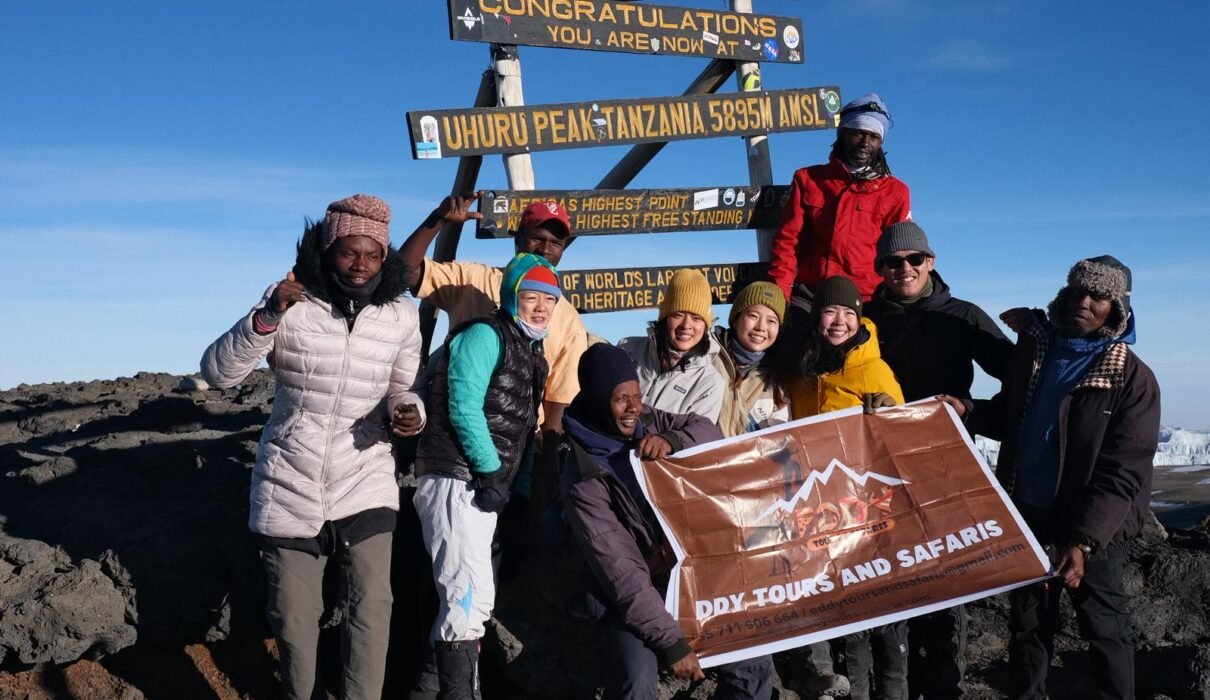
Mt Kilimanjaro Climbing, Trekking and Hiking Tours attract travelers who want more than a holiday, because standing on Africa’s highest mountain represents personal challenge, deep connection with nature, and respect for one of the world’s most sensitive mountain ecosystems. These journeys are not only about reaching the top, but about moving safely through changing landscapes, supporting conservation, and working with experienced local teams who understand the mountain every single day.
Planning a successful mountain experience requires more than fitness and enthusiasm. It requires medical awareness, environmental responsibility, proper logistics, and a clear understanding of how professional trekking operations protect both climbers and wildlife. Many travelers choose to prepare their journey with trusted local specialists such as Eddy Tours & Safaris, because local knowledge, trained crews, and ethical operations make a real difference when conditions become demanding.
Mt Kilimanjaro Climbing, Trekking and Hiking Tours and high-altitude health
One of the most important aspects of Mt Kilimanjaro Climbing, Trekking and Hiking Tours is how the human body reacts to altitude. Scientific research published by the U.S. National Library of Medicine and summarized in clinical databases such as PubMed explains that reduced oxygen pressure affects breathing, sleep quality, hydration levels and overall physical performance.
Medical guidance from the Centers for Disease Control and Prevention and global health recommendations from the World Health Organization clearly show that slow ascent, rest days and early symptom recognition dramatically improve safety and overall trekking outcomes. Responsible operators integrate these medical principles into daily schedules and do not rush climbers for commercial reasons.
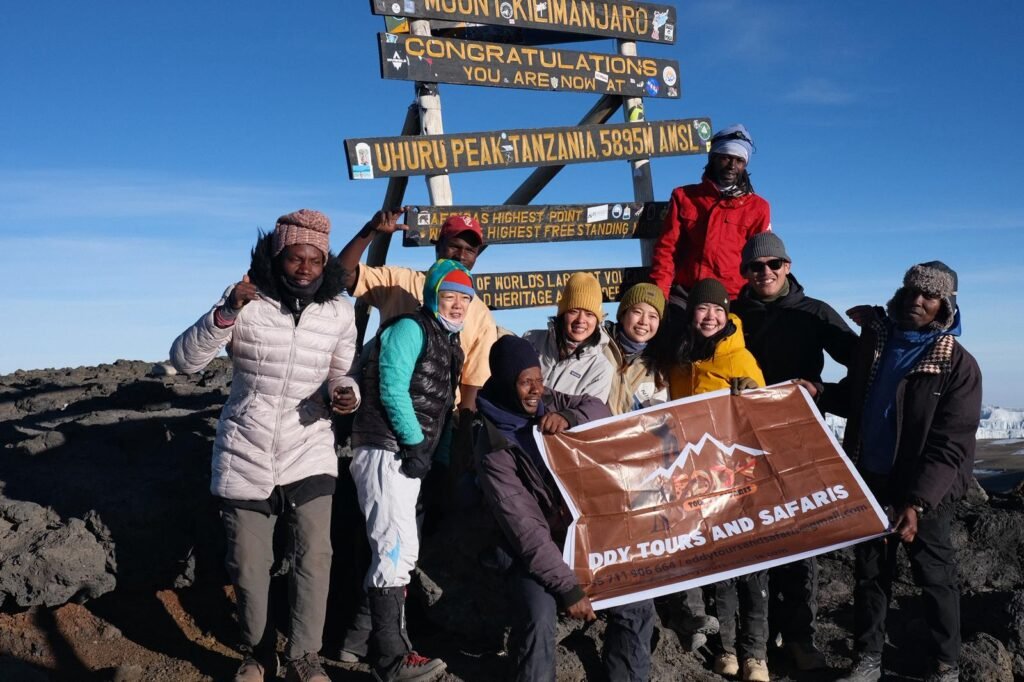
Mt Kilimanjaro Climbing, Trekking and Hiking Tours and climate conditions
Understanding weather is essential for Mt Kilimanjaro Climbing, Trekking and Hiking Tours. Kilimanjaro rises through several climate zones, from humid forest to alpine desert and icy summit conditions. Climate research from NASA Climate and global assessments published by the Intergovernmental Panel on Climate Change confirm that isolated mountains experience rapid and unpredictable weather changes.
Professional trekking teams carefully monitor wind, temperature and cloud cover to adjust departure times and daily distances. This flexibility protects climbers from unnecessary cold exposure, dehydration and exhaustion, especially during summit attempts and long high-altitude traverses.
Mt Kilimanjaro Climbing, Trekking and Hiking Tours and ecosystem protection
Another foundation of Mt Kilimanjaro Climbing, Trekking and Hiking Tours is environmental responsibility. The mountain is part of globally significant biodiversity systems studied by the International Union for Conservation of Nature and supported by conservation frameworks promoted by the United Nations Environment Programme.
Wildlife and habitat research coordinated by the World Wide Fund for Nature, the African Wildlife Foundation and the Wildlife Conservation Society demonstrates that poorly managed tourism can damage fragile alpine vegetation and water catchments. Responsible trekking operators strictly follow designated trails and waste-management systems to protect the mountain for future generations.
Mt Kilimanjaro Climbing, Trekking and Hiking Tours and land-use science
Long-term land stability is a major concern for Mt Kilimanjaro Climbing, Trekking and Hiking Tours. Geological and environmental monitoring by the United States Geological Survey and land-use planning guidance published by the Food and Agriculture Organization highlight how erosion, trail widening and uncontrolled campsites can permanently degrade mountain environments.
Professional trekking operations work closely with park authorities to use designated camps and minimize off-trail movement. These measures protect water sources that support both wildlife and surrounding communities.
Mt Kilimanjaro Climbing, Trekking and Hiking Tours and professional guiding standards
The quality of leadership defines the safety of Mt Kilimanjaro Climbing, Trekking and Hiking Tours. Expedition leadership research and outdoor education models promoted by the National Outdoor Leadership School emphasize communication, decision-making under stress and ethical responsibility in remote environments.
International mountaineering safety frameworks published by the International Climbing and Mountaineering Federation encourage guide training, daily health checks and realistic turnaround decisions. Strong leadership protects climbers not only from physical danger, but also from emotional pressure to continue when conditions are unsafe.
Mt Kilimanjaro Climbing, Trekking and Hiking Tours and emergency preparedness
Emergency response planning remains a critical part of Mt Kilimanjaro Climbing, Trekking and Hiking Tours. International disaster response standards developed by the International Federation of Red Cross and Red Crescent Societies highlight the importance of communication systems, evacuation routes and trained personnel in remote landscapes.
Well-organized trekking teams carry radios, medical kits and oxygen equipment, and they maintain direct contact with park rescue services. These systems dramatically improve response time during sudden illness, injury or severe weather changes.
Mt Kilimanjaro Climbing, Trekking and Hiking Tours and global research partnerships
Scientific research strengthens the sustainability of Mt Kilimanjaro Climbing, Trekking and Hiking Tours. Field studies published through Nature and environmental science journals available on ScienceDirect help conservation managers understand climate impacts, vegetation change and wildlife movement around mountain ecosystems.
Educational and public awareness programs coordinated by the National Geographic Society also play a role in encouraging responsible travel behavior and community participation in conservation initiatives.
Mt Kilimanjaro Climbing, Trekking and Hiking Tours and porter welfare
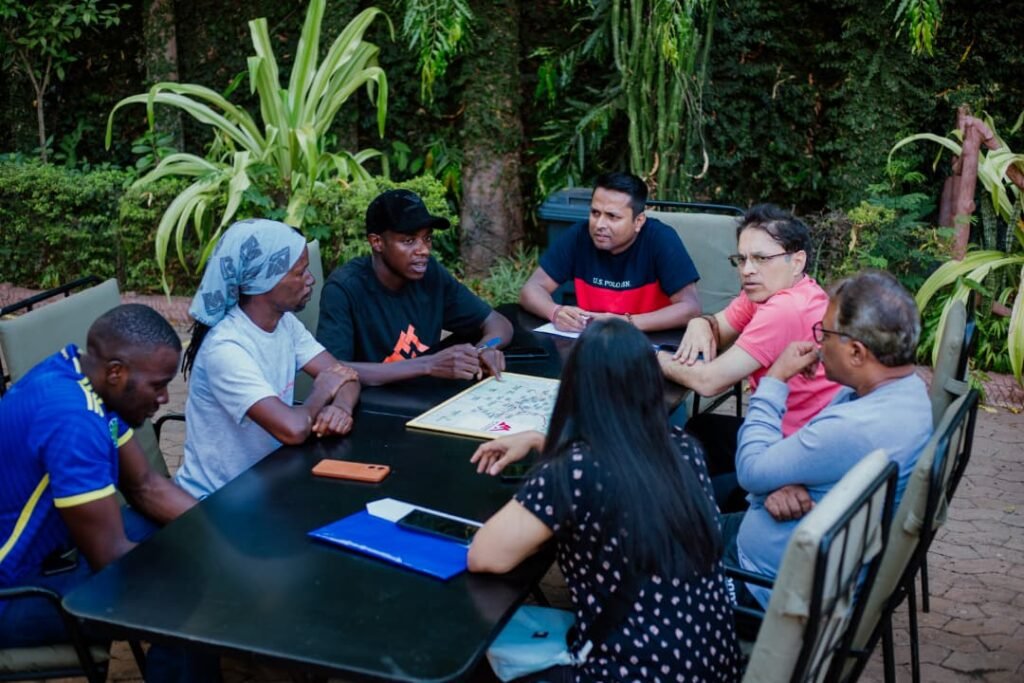
Ethical working conditions are essential for safe and fair Mt Kilimanjaro Climbing, Trekking and Hiking Tours. Labour protection frameworks promoted by the International Labour Organization and community development principles supported by Oxfam International demonstrate that fair employment improves health, morale and communication among trekking crews.
Healthy and respected support teams perform better, respond faster to environmental hazards and contribute directly to safer and more enjoyable mountain experiences for visitors.
Mt Kilimanjaro Climbing, Trekking and Hiking Tours and cultural responsibility
Cultural respect is also part of professional Mt Kilimanjaro Climbing, Trekking and Hiking Tours. Social research and community engagement studies coordinated by institutions such as Harvard University research programmes highlight how tourism can strengthen cultural identity when visitors are properly informed and guided.
Professional operators brief guests about local customs, language and community expectations before cultural visits, ensuring that tourism supports dignity and authentic exchange rather than disruption.
Mt Kilimanjaro Climbing, Trekking and Hiking Tours and responsible travel choices
Choosing the right operator is one of the most important decisions for Mt Kilimanjaro Climbing, Trekking and Hiking Tours. Local companies understand trail conditions, park regulations and seasonal challenges better than international resellers. Many climbers therefore prefer working directly with local specialists offering structured programs such as professional Kilimanjaro climbing itineraries that combine safety, ethical operations and real-time flexibility.
For travelers who also wish to combine mountain adventures with wildlife experiences, professionally planned options are available through Tanzania safari programs that operate under conservation-focused standards.
Mt Kilimanjaro Climbing, Trekking and Hiking Tours and long-term personal benefits
Beyond the physical challenge, Mt Kilimanjaro Climbing, Trekking and Hiking Tours offer meaningful personal development. Health and performance research published in peer-reviewed literature available through PubMed shows that controlled endurance activities improve cardiovascular fitness, stress management and psychological resilience when properly supervised.
The mountain also provides rare opportunities for reflection and connection with nature, which many participants describe as one of the most valuable outcomes of their journey.
Plan your journey with local expertise
Preparing for Mt Kilimanjaro Climbing, Trekking and Hiking Tours should always involve open communication, realistic expectations and professional guidance. Speaking directly with local experts allows you to choose the right route, pacing strategy and equipment based on your individual background and health considerations.
If you would like personal guidance and ethical travel planning, you can speak directly with a local team through professional consultation support and receive honest advice based on real mountain conditions.
Your mountain experience begins with responsible planning
In the end, Mt Kilimanjaro Climbing, Trekking and Hiking Tours are not defined by the summit alone. They are defined by how safely you move through changing environments, how respectfully you interact with local communities, and how responsibly you support conservation on one of Africa’s most important mountains.
By choosing professional leadership, ethical operations and conservation-minded planning, your journey becomes not only a personal achievement, but also a positive contribution to the protection of Kilimanjaro and the people who depend on it.