
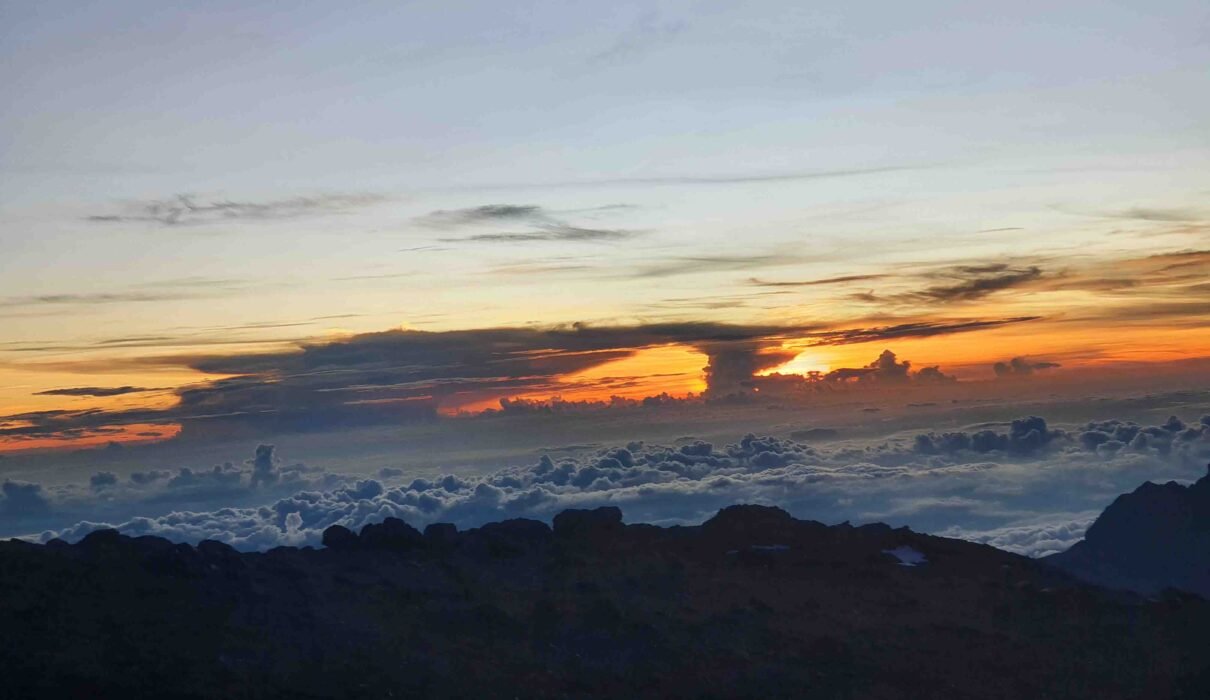
Superior 7 Days Umbwe Route Kilimanjaro Climbing 2027 package is for trekkers looking for a more direct, demanding approach to Mount Kilimanjaro. Umbwe starts from the southern side of the mountain and climbs quickly through dense rainforest before joining the southern circuit near Barranco Camp. It is quieter than several of Kilimanjaro’s better-known routes, remarkably scenic, and best suited to travellers who have trained well and understand that altitude—not just distance—is the real test.
Umbwe has a reputation for being steep. That is fair, especially during the first two days. The route moves up through forest, follows a narrow ridge in places and reaches high ground faster than Lemosho or the Northern Circuit. For this reason, a seven-day plan with a dedicated acclimatisation day is a much wiser way to experience it than a compressed schedule. The itinerary gives the body a chance to adjust near Barranco before heading through Karanga and Barafu to Uhuru Peak.
Eddy Tours & Safaris arranges private Kilimanjaro climbs with experienced guides, a trained mountain crew and clear preparation before the trek begins. To ask about 2027 dates, prices or a tailor-made trip, email eddytoursandsafaris@gmail.com or sales@eddytours-safaris.com, call or WhatsApp +255 711 906 664, or use our contact page.
Why choose the 7-day Umbwe Route?
The 7 Days Umbwe Route Kilimanjaro Climbing programme is not the easiest route on the mountain. Its appeal is different: an atmospheric forest start, fewer people on the lower trail, dramatic views once you reach the southern circuit and a strong sense of progression from one climate zone to the next. It joins the Machame/Lemosho approach at Barranco, then follows the proven route through Karanga and Barafu for summit night.
The seven-day schedule brings a valuable acclimatisation day at Barranco. You take a higher daytime walk, return to sleep lower and give your guides another opportunity to assess how everyone is adapting. There is no guaranteed summit on Kilimanjaro, but extra acclimatisation time, a steady pace and early communication about symptoms all improve the quality of decision-making on the mountain.
Choose this route if you are comfortable with sustained uphill trekking, prefer a less busy trail at the beginning and want to train seriously before you travel. If you want a gentler, longer build-up in altitude, Lemosho may be the better choice. We will give honest route guidance instead of trying to place every traveller on the same itinerary.
2027 Umbwe Route climb at a glance
| Detail | Information |
|---|---|
| Route | Umbwe Route, joining the southern circuit at Barranco |
| Duration | Seven mountain days, with a separate final exit day |
| Summit | Uhuru Peak, 5,895 m / 19,341 ft |
| Starting point | Umbwe Gate on Kilimanjaro’s south side |
| Trek style | Private climb for solo travellers, couples, friends or groups |
| Accommodation | Mountain tents at designated public campsites |
| Difficulty | Demanding; steep early stages and high-altitude summit night |
| Best known feature | Quiet forest approach and striking Barranco scenery |
Day-by-day 7 Days Umbwe Route Kilimanjaro Climbing itinerary
Day 1: Umbwe Gate to Umbwe Cave Camp
After breakfast in Moshi, your driver takes you to Umbwe Gate for registration. Once permits and luggage checks are completed, meet the guides, porters and cook who will support you throughout the climb. The first day begins in thick rainforest, where the path rises steadily under a green canopy. It can be wet and muddy after rain, so waterproof footwear and trekking poles are genuinely useful here.
The walk to Umbwe Cave Camp is not long, but it introduces the character of the route immediately: uphill, enclosed and beautifully wild. You may hear birds and monkeys in the trees, but the main job today is to settle into a slow rhythm. Your main duffel travels with the porters while you carry water, rain gear, a warm layer, sunscreen and personal essentials in your daypack.
At camp, the crew prepares hot drinks and dinner. This first night of 7 Days Umbwe Route Kilimanjaro Climbing is a good time to begin the habits that matter all week—drink often, eat well, keep warm after sunset and sleep as much as you can.
Day 2: Umbwe Cave Camp to Barranco Camp
Today is a major ascent. The route continues through forest before vegetation becomes thinner and the trail moves into moorland. In parts, the Umbwe path is steep and narrow, so patience is more important than speed. The guides set a careful pace, often using the Swahili phrase pole pole—slowly, slowly.
As you gain height, the views begin to open and the scale of Kilimanjaro becomes clearer. You arrive at Barranco Camp, set beneath the impressive Barranco Wall, at a much higher elevation than the previous night. This is where Umbwe joins the southern circuit used by climbers from other routes. The camp can be busier than the Umbwe approach, but the surrounding scenery is extraordinary: giant groundsels, valleys and the massive wall ahead.
Because this is a substantial gain in altitude, your guide will carry out a health check and ask about headaches, appetite, sleep and any nausea. Honest answers are essential. The 7 Days Umbwe Route Kilimanjaro Climbing itinerary deliberately stays here for acclimatisation rather than moving onward too quickly.
Day 3: Barranco acclimatisation walk and rest
This is not a day to sit in the tent from morning until evening. After breakfast, the group takes a guided acclimatisation walk to a higher point on the surrounding slopes, then returns to Barranco Camp for lunch and rest. The exact walk depends on weather, trail conditions and the guide’s assessment of the group.
The principle is simple: go higher during the day, then sleep lower. This gives the body an opportunity to respond to thinner air while keeping the night at the same camp elevation. It is a sensible addition to 7 Days Umbwe Route Kilimanjaro Climbing, especially after the steep Umbwe approach.
Use the afternoon properly. Refill water bottles, organise summit clothing, eat snacks even if appetite is reduced and tell the guide if anything feels unusual. You may take photographs or enjoy the view, but do not turn this into an extra workout. Rest is part of climbing well.
Day 4: Barranco Camp to Karanga Camp
The day starts with the Barranco Wall, a short but memorable scramble. From camp it can look like a cliff, yet it does not require ropes or technical climbing skills. Your guides show you the safe line and help with balance where necessary. Move steadily, use your hands when asked and avoid trying to overtake people on narrow sections.
After the wall, the route crosses ridges and dips into valleys before rising again toward Karanga Camp. The distance is manageable, but the repeated ups and downs feel more demanding at altitude. Karanga is an important staging camp because it allows another night to acclimatise before Barafu.
By now, the forests are far below and the terrain is more open, dry and volcanic. This is one of the best landscape days on 7 Days Umbwe Route Kilimanjaro Climbing. Camp staff will have lunch or hot drinks ready, and the afternoon is kept easy so you can recover for the next climb.
Day 5: Karanga Camp to Barafu Camp
From Karanga, the trail rises across rocky alpine desert toward Barafu Camp. The name Barafu means “ice” in Swahili, and evenings here can be very cold. The camp sits beneath Kibo, with the summit route visible above. It is an exciting view, but do not let it distract you from the practical job of preparing for the night ahead.
Arrive, eat, rest and lay out everything needed for the summit attempt: headlamp, spare batteries, insulated jacket, gloves, thermal layers, water, snacks, sunglasses and camera if you are carrying one. Your guide gives a detailed briefing about timing, walking order, rest stops and what to do if you feel unwell.
The aim on 7 Days Umbwe Route Kilimanjaro Climbing is to sleep before the midnight departure, although many climbers only manage a few hours. Keep your boots and important layers accessible, protect water from freezing and do not experiment with unfamiliar foods or medication at this stage.
Day 6: Barafu Camp to Uhuru Peak, then Mweka Camp
Summit day begins around midnight. You leave Barafu in darkness and climb slowly towards Stella Point on the crater rim. This is usually the toughest part of the week: long, cold, high and mentally demanding. The guide controls the pace, and short breaks are used for water and snacks. Put one foot in front of the other; there is no benefit in rushing.
At Stella Point, you are on the rim. From there, continue along the crater edge to Uhuru Peak, the highest point in Africa. Sunrise often comes during this final stretch, bringing light across the glaciers and distant plains. Photographs at the sign are an important memory, but the guide keeps the visit brief because the altitude is extreme.
Descend carefully to Barafu for brunch and a short rest, then continue down to Mweka Camp. The return through lower, greener terrain may feel easier on your lungs, but tired legs and knees need attention. Reaching Mweka after summit day is a big achievement. Dinner and sleep follow, with the final forest descent still to come.
Day 7: Mweka Camp to Mweka Gate and Moshi
After your last mountain breakfast, descend through rainforest to Mweka Gate. The path can be slippery, especially when wet, so keep poles out until the walk is finished. At the gate, the team completes the required sign-out process and successful climbers receive their Kilimanjaro certificates.
Your driver then transfers you to Moshi for a shower, clean clothes and a comfortable bed. Some visitors choose to rest for a night before travelling onward; others connect their climb with a wildlife safari or Zanzibar holiday. The final descent day is why this 7 Days Umbwe Route Kilimanjaro Climbing itinerary feels complete rather than rushed.
Is the Umbwe Route right for you?
Umbwe is best for healthy, well-prepared trekkers who enjoy steep hiking and want a less crowded start to the mountain. It is not a technical climbing route, but it is physically serious. The early days are sharper and less gradual than Lemosho, Rongai or Marangu. You should be comfortable walking for several hours uphill, carrying a daypack and coping with changing weather.
For the right traveller, 7 Days Umbwe Route Kilimanjaro Climbing feels rewarding precisely because the route asks for focus from the first forest step onward.
If you are new to multi-day hiking, that does not automatically rule out 7 Days Umbwe Route Kilimanjaro Climbing. It does mean you should train consistently and have a frank conversation with us about your fitness, past hiking experience and goals. We would rather recommend the route that suits you than sell a route that makes the trip unnecessarily hard.
Acclimatisation and mountain safety
Altitude sickness can affect anyone, regardless of age, gender or fitness. It is not something to ignore or “push through.” Headache, dizziness, nausea, unusual fatigue, loss of appetite and poor sleep should be reported to your guide as early as possible. Your guides monitor the group, carry safety equipment and make decisions according to your condition, not pressure to reach the summit.
The extra day at Barranco makes 7 Days Umbwe Route Kilimanjaro Climbing more responsible than a very short Umbwe schedule, but it does not remove altitude risk. The safest habits are straightforward:
Walk slowly and stay with your guide team.
Drink regularly throughout the day.
Eat meals and snacks, even when appetite is lower than normal.
Dress in layers so you do not get cold during breaks.
Avoid alcohol before and during the trek.
Tell the guide about symptoms as soon as they appear.
Before travelling, seek individual advice from a qualified travel-health clinic about vaccinations, medicines and your medical history. Google can help you find an accredited clinic near your home, but it should not replace professional medical advice.
Training for 7 Days Umbwe Route Kilimanjaro Climbing
The best training is regular training. Start several months before departure if you can. Build cardio endurance with fast walking, hiking, jogging, cycling or swimming, then add long hill walks and stair sessions. The Umbwe approach rewards strong legs and a calm pace rather than speed.
Include strength exercises for quads, glutes, calves, hips, core and back. Practice on uneven ground in the boots you plan to wear. Weekend hikes on consecutive days are useful because they teach your body to walk when it is already tired. Carry a light daypack as you get closer to departure, but do not overload yourself or train through pain.
Good preparation also means testing equipment. Discovering on the mountain that boots rub your heel or gloves are not warm enough is avoidable. The 7 Days Umbwe Route Kilimanjaro Climbing information pack includes a detailed kit list after booking, and our team can advise on rental items in Moshi.
Packing essentials
Kilimanjaro weather changes quickly. You may start a day in sunshine and finish in wind, rain or sub-zero temperatures. Pack layers rather than relying on one thick item. Your final list will be confirmed before travel, but the core items include:
Waterproof, broken-in hiking boots with ankle support
Moisture-wicking base layers and warm trekking socks
Fleece or insulated mid-layer, down jacket and waterproof shell
Warm gloves, beanie, sun hat and buff or neck gaiter
Headlamp with spare batteries for summit night
Sunglasses, sunscreen and lip balm with sun protection
Reusable water bottles or hydration bladder
Trekking poles, personal medicines and basic blister care
A warm sleeping bag appropriate for high-altitude camping
Porters carry your main duffel within responsible limits. You carry a daypack with water, layers, rain gear, snacks and valuables. Keep important items in waterproof bags inside your duffel, particularly on the rainforest days.
Packing thoughtfully for 7 Days Umbwe Route Kilimanjaro Climbing means fewer problems at camp and more energy for walking.
What is included and excluded
Your 7 Days Umbwe Route Kilimanjaro Climbing quotation will clearly list services, but a standard package normally includes Kilimanjaro National Park fees, professional guides, porters, cook, mountain tents, sleeping mats, meals on the mountain, safety equipment and transfers between Moshi and the gates.
International flights, visa costs, travel insurance, hotel accommodation before and after the climb, personal trekking equipment, tips for the crew, alcoholic drinks and items not stated in your confirmation are generally not included. Insurance must cover high-altitude trekking and emergency evacuation. Please read the actual policy terms before you travel.
For an additional independent route resource, visit Kilimanjaro Climb Specialist. You can compare route descriptions, but always confirm the exact itinerary and inclusions with the operator you book.
Best time to climb the Umbwe Route in 2027
Kilimanjaro is climbed year-round, but most visitors prefer the drier seasons. January to early March is popular for relatively clear mornings and can feel less crowded than the middle of the year. June to October is the main dry season, with July through September often the busiest months.
April and May usually bring heavier rain, which can make the Umbwe forest trail muddy and slippery. November often has shorter rains. A quieter period can still work for travellers who are flexible and well equipped, but you should expect changing conditions. The best date for 7 Days Umbwe Route Kilimanjaro Climbing depends on your travel schedule, tolerance for rain and preferred crowd level; ask us for practical guidance before confirming flights.
Frequently asked questions
Is the Umbwe Route harder than Lemosho?
Usually, yes. Umbwe gains altitude more quickly and has a steeper first section. Lemosho generally gives a more gradual approach across the Shira Plateau. The seven-day Umbwe schedule adds a Barranco acclimatisation day, but it remains a demanding choice.
Can beginners book 7 Days Umbwe Route Kilimanjaro Climbing?
Beginners can book 7 Days Umbwe Route Kilimanjaro Climbing if they are healthy, train properly and understand the challenge. However, it is not usually our first recommendation for someone who wants the easiest possible introduction to high-altitude trekking. We can discuss alternatives honestly.
Is the Barranco Wall technical climbing?
No. It is a guided scramble rather than a technical rock climb. You do not need ropes, climbing hardware or previous mountaineering experience. Follow your guide’s line, move carefully and use your hands where needed.
What happens if I cannot continue?
Safety is always the priority. The guide assesses your condition and arranges a supported descent if required. The plan depends on your location, the weather and the symptoms involved. This is why suitable insurance and truthful communication matter.
Is 7 Days Umbwe Route Kilimanjaro Climbing a private tour?
Yes. 7 Days Umbwe Route Kilimanjaro Climbing can be arranged as a private departure around your chosen date. This gives your group a personal guide team and allows us to organise airport transfers, hotel nights and an onward safari if required.
Can I add a safari after the climb?
Yes. Eddy Tours & Safaris can arrange a recovery night in Moshi followed by a private safari to Tarangire, Ngorongoro or Serengeti, or a beach extension in Zanzibar. Tell us your dates through the contact page and we will prepare one itinerary.
Book your Superior 7 Days Umbwe Route Kilimanjaro Climbing 2027
The 7 Days Umbwe Route Kilimanjaro Climbing package is a serious, beautiful way to reach Uhuru Peak for travellers who want a quieter and more challenging trail. With the additional Barranco acclimatisation day, a professional local crew and careful preparation, you can approach the mountain with the right support behind you.
Contact Eddy Tours & Safaris to check availability and receive a personalised 2027 quotation. Call or WhatsApp +255 711 906 664, email eddytoursandsafaris@gmail.com or sales@eddytours-safaris.com, or send your request through our contact page.