
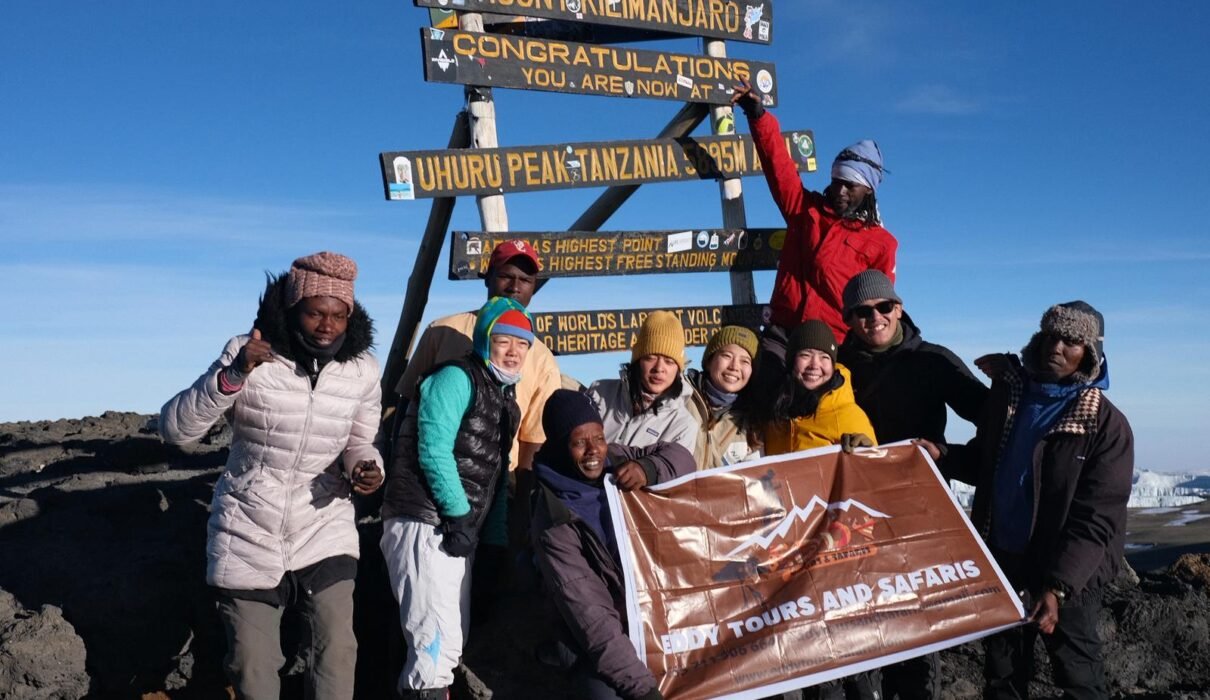
The Role of Guides in High-Altitude Safety is one of the most important and least understood parts of any serious mountain journey, especially on mountains such as Kilimanjaro where altitude, weather and physical exhaustion combine very quickly. Many people focus on fitness, equipment and route choice, but the single strongest protection you carry on a high mountain is the professional judgement of the guide who walks beside you and quietly watches your body, your breathing, your pace and even your mood from the first step to the last.
This article explains in simple and honest language how professional guides protect climbers in thin-air environments and why their decisions directly influence survival, success and long-term health. If you are planning your climb with an experienced local operator such as Eddy Tours & Safaris, understanding this responsibility will help you choose the right itinerary, ask the right questions and trust the right leadership when it matters most.
The Role of Guides in High-Altitude Safety and medical risk management
When we talk about The Role of Guides in High-Altitude Safety, the first responsibility is medical awareness in an environment where oxygen pressure drops sharply and the human body struggles to adapt. International health guidance from the World Health Organization and altitude travel advice from the Centers for Disease Control and Prevention clearly show that early recognition of symptoms is the strongest protection against serious altitude illness. Professional guides are trained to detect subtle changes in walking rhythm, appetite, speech and coordination long before a climber realises something is wrong.
Clinical research published through the International Society for Mountain Medicine and medical evidence provided by the U.S. National Library of Medicine confirms that proper decision-making at early symptom stages dramatically reduces the risk of dangerous progression. Field guidance supported by Johns Hopkins Medicine and clinical summaries from the Cleveland Clinic also emphasise that immediate rest and descent decisions save lives. This responsibility rests directly on the guide’s judgement.
The Role of Guides in High-Altitude Safety and emergency response
The Role of Guides in High-Altitude Safety becomes critical when conditions suddenly change or when a climber deteriorates during the ascent. International emergency management standards promoted by the International Federation of Red Cross and Red Crescent Societies and operational field response principles supported by the International Red Cross clearly show that leadership coordination and rapid communication are decisive in remote environments.
Professional mountain guides manage evacuation routes, oxygen support, radio communication and team organisation while remaining calm under stress. In reality, this is not learned from short courses. It develops from repeated exposure to difficult terrain, changing weather and real emergencies. On structured climbs organised by professional Kilimanjaro climbing teams, guides operate with pre-defined emergency plans and constant communication links to park rescue systems.
The Role of Guides in High-Altitude Safety and leadership behaviour
The Role of Guides in High-Altitude Safety also includes psychological leadership. Decision-making under cold, fatigue and oxygen deprivation is scientifically proven to be unreliable without trained supervision. Leadership research and outdoor education standards promoted by the International Climbing and Mountaineering Federation and leadership development frameworks from the National Outdoor Leadership School show that structured group leadership reduces risky behaviour and emotional panic during extreme exertion.
Professional guides maintain realistic pacing, control group expectations and protect weaker climbers from social pressure. They understand when turning back is not failure, but correct professional judgement. This mental protection is as important as any technical skill on a high mountain.
The Role of Guides in High-Altitude Safety and weather awareness
The Role of Guides in High-Altitude Safety includes constant interpretation of weather patterns that are invisible to inexperienced climbers. Climate and atmospheric research from NASA Climate and scientific risk assessments produced by the Intergovernmental Panel on Climate Change show that isolated high mountains experience rapid and unpredictable shifts in wind, temperature and cloud systems.
Experienced guides read cloud movement, temperature drops and wind direction in real time. They adjust departure times, clothing layers and rest periods before small environmental changes become dangerous exposure. This real-time judgement often determines whether summit attempts remain safe or become serious medical risks.
The Role of Guides in High-Altitude Safety and environmental protection
Environmental responsibility is another hidden dimension of The Role of Guides in High-Altitude Safety. Mountain ecosystems are fragile, and degraded environments increase accident risk through unstable ground, eroded paths and contaminated water sources. Conservation frameworks promoted by the United Nations Environment Programme and biodiversity protection standards developed by the International Union for Conservation of Nature show that responsible route use directly improves both ecosystem health and climber safety.
Guides control group movement, manage waste systems and protect fragile vegetation zones. By preserving stable trails and clean camps, they reduce slip hazards, waterborne illness and long-term environmental degradation that would ultimately endanger future climbers.
The Role of Guides in High-Altitude Safety and wildlife risk awareness
Although wildlife encounters on high-altitude routes are rare, The Role of Guides in High-Altitude Safety still includes understanding animal movement in forest and moorland zones. Conservation research from the World Wide Fund for Nature, the African Wildlife Foundation and the Wildlife Conservation Society shows that responsible human behaviour reduces stress on wildlife and prevents unnecessary encounters.
Guides understand seasonal wildlife movement, forest behaviour and appropriate camp practices. This knowledge protects both climbers and animals and supports long-term conservation integrity along established climbing corridors.
The Role of Guides in High-Altitude Safety and conservation responsibility
The Role of Guides in High-Altitude Safety is deeply connected to conservation practice. Environmental protection organisations such as Conservation International and field conservation education programmes supported by the National Geographic Society demonstrate that tourism leadership directly influences how visitors respect natural systems.
Professional guides educate climbers quietly during rest stops, explaining water use, waste control and low-impact walking. These small actions reduce environmental damage and maintain safer, cleaner environments for future climbers.
The Role of Guides in High-Altitude Safety and ethical team management
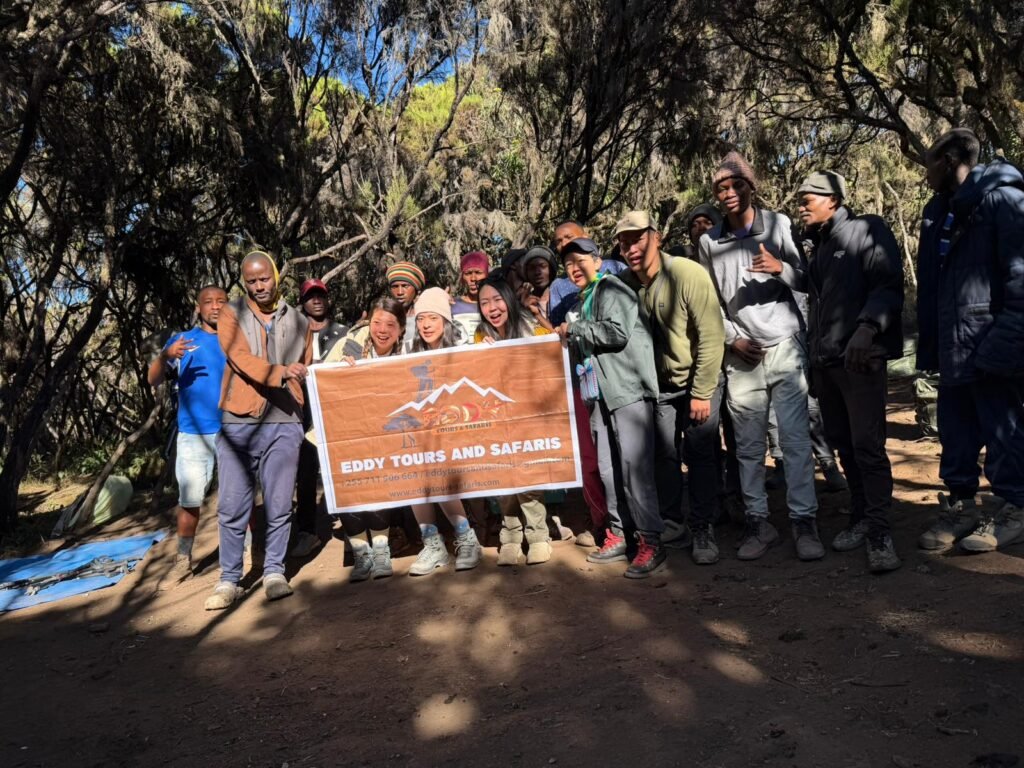
Behind every successful climb stands a support team whose wellbeing directly affects climber safety. The Role of Guides in High-Altitude Safety therefore includes ethical leadership toward porters and crew members. Labour protection standards promoted by the International Labour Organization demonstrate that fair working conditions improve physical performance, morale and communication under demanding conditions.
Healthy and motivated crews move efficiently, notice problems early and respond faster during emergencies. Ethical leadership is therefore not only social responsibility. It is operational safety.
The Role of Guides in High-Altitude Safety for first-time climbers
For many visitors, The Role of Guides in High-Altitude Safety becomes most visible during their first experience above low altitude. New climbers often misinterpret headache, dizziness or appetite loss as normal fatigue. Professional guides translate medical knowledge into practical actions, adjusting pace, hydration and rest schedules based on individual responses.
This personalised supervision is one of the main reasons travellers prefer structured climbs arranged by experienced local companies such as trusted Tanzanian safari and trekking specialists, who combine wildlife travel and mountain operations under consistent safety management systems.
The Role of Guides in High-Altitude Safety and route strategy
The Role of Guides in High-Altitude Safety also includes technical route strategy. Guides understand how elevation profiles, camp positioning and daily distance influence physical recovery. They select rest locations, manage acclimatisation walks and adapt itineraries when necessary to protect weaker climbers.
This operational flexibility is rarely visible in online itineraries but becomes critical during real climbs when weather, fatigue or health conditions require immediate changes. Reliable route planning is one of the strongest predictors of safe summit outcomes.
The Role of Guides in High-Altitude Safety and client communication
Clear and honest communication defines The Role of Guides in High-Altitude Safety. Climbers who understand what is happening remain calmer and more cooperative during difficult moments. Guides explain symptoms, risks and decisions in simple language, allowing climbers to feel part of the safety process rather than passive participants.
This transparency builds trust and reduces emotional stress, which itself has a measurable effect on fatigue and motivation in physically demanding environments.
The Role of Guides in High-Altitude Safety when choosing your operator
Understanding The Role of Guides in High-Altitude Safety should guide how you choose your operator, not only your route. Companies that invest in long-term guide training, medical awareness and environmental leadership create safer experiences than companies focused only on speed or price.
If you want realistic advice, professionally managed itineraries and experienced leadership on the mountain, you can speak directly with local specialists through direct consultation with local experts. Choosing the right guide team is one of the most important safety decisions you will ever make in high-altitude travel.
Why professional guides truly protect your life in thin air
In the end, The Role of Guides in High-Altitude Safety goes far beyond navigation. It is medical awareness, environmental stewardship, ethical leadership and psychological protection combined into one demanding profession. Mountains do not forgive mistakes, and technology cannot replace human judgement when oxygen is low and conditions change quickly.
When you climb with trained professionals who understand both the science of altitude and the realities of the mountain, your journey becomes safer, more meaningful and more respectful to the extraordinary landscapes you are visiting. The guide beside you is not only showing the path. They are quietly protecting your life every step of the way.