
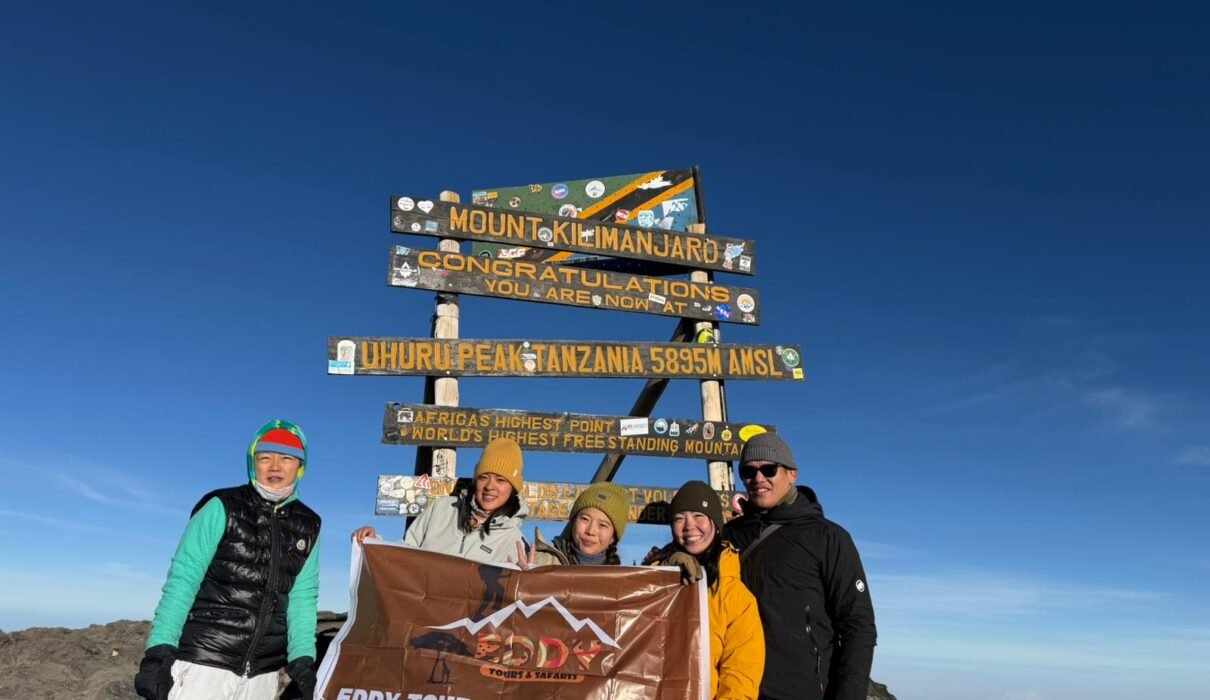
The Science of High-Altitude Acclimatization explained clearly for trekkers and researchers, showing how the body adapts to thin air, altitude illness, and safe mountain travel.
the-science-of-high-altitude-acclimatization
The Science of High-Altitude Acclimatization explains how the human body survives, adapts, and performs when oxygen becomes scarce at high elevation. For climbers, guides, and researchers, this knowledge is not theory, it is daily survival on the mountain. Understanding this process is also critical for anyone preparing for long treks and summit attempts in East Africa and other mountain regions.
Many travelers preparing with operators such as Eddy Tours & Safaris often ask why slow ascents matter more than fitness alone. The answer is found directly in The Science of High-Altitude Acclimatization and the way the body reacts to hypoxia.
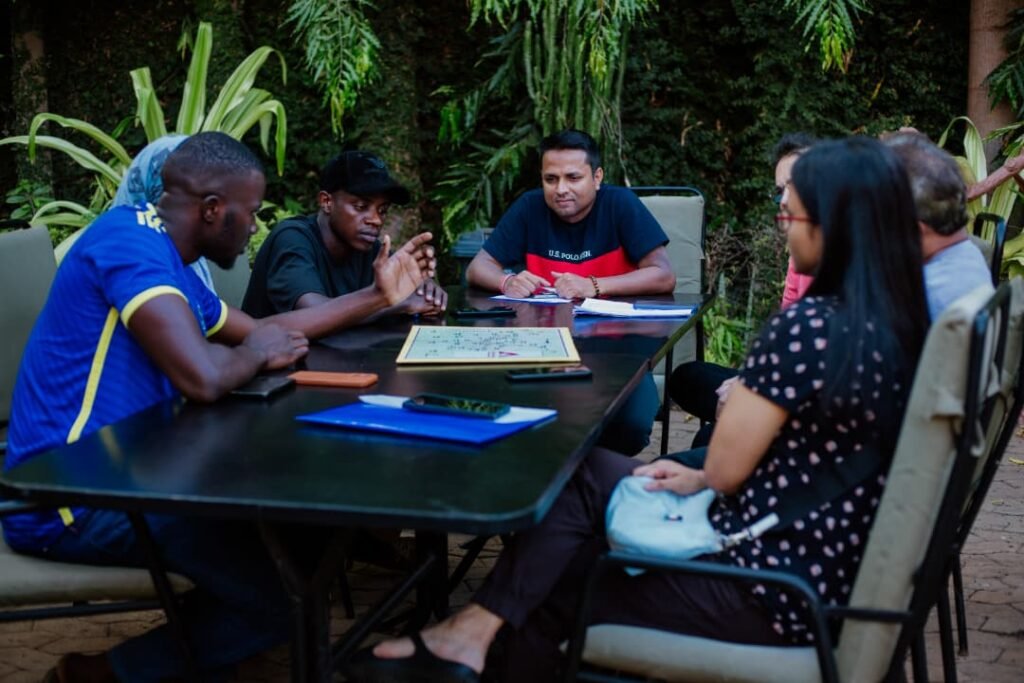
The Science of High-Altitude Acclimatization and oxygen availability
The Science of High-Altitude Acclimatization begins with a simple reality. As elevation increases, air pressure drops and each breath delivers less usable oxygen to the bloodstream. This condition is known as hypobaric hypoxia.
Detailed medical explanations can be found through the National Center for Biotechnology Information and the Centers for Disease Control and Prevention. These sources clearly show how oxygen saturation declines with altitude.
For trekkers booking mountain routes such as those described on Kilimanjaro climbing routes, this reduced oxygen environment is the main challenge rather than terrain alone.
The Science of High-Altitude Acclimatization and early physiological responses
The Science of High-Altitude Acclimatization shows that the first adaptation occurs within minutes. Breathing becomes deeper and faster as the body tries to capture more oxygen. Heart rate also increases to move oxygen more quickly through the body.
These rapid adjustments are described in research published by the National Heart, Lung, and Blood Institute and the American Physiological Society. They emphasize that these changes are protective, not signs of weakness.
Travelers using experienced guiding teams such as Mount Kilimanjaro climbing programs benefit from schedules that match these early adaptations.
The Science of High-Altitude Acclimatization and red blood cell production
The Science of High-Altitude Acclimatization also involves slower but deeper changes. The kidneys release erythropoietin, a hormone that stimulates red blood cell production. This improves the blood’s oxygen-carrying capacity.
This process is well documented by the U.S. National Library of Medicine and by researchers at Frontiers in Physiology. It usually takes several days before meaningful changes are measurable.
That is why extended itineraries such as those promoted on Lemosho Route programs are known for higher success and safer summit attempts.
The Science of High-Altitude Acclimatization and brain protection
The Science of High-Altitude Acclimatization is especially important for protecting the brain. Low oxygen can disrupt cerebral blood flow and fluid balance. If adaptation fails, serious conditions may develop.
Neurological risks are clearly outlined by the World Health Organization and summarized by the British Medical Journal. These sources show how headache and confusion can escalate when ascent is rushed.
This is why professional guiding teams from Machame Route services closely monitor guests for early neurological symptoms.
The Science of High-Altitude Acclimatization and altitude illness prevention
The Science of High-Altitude Acclimatization directly informs prevention of acute mountain sickness, high-altitude cerebral edema, and high-altitude pulmonary edema. All three are driven by inadequate adaptation to hypoxia.
Clear prevention guidelines are provided by the Mount Sinai Health System and the Mayo Clinic. They consistently highlight slow ascent and rest days as primary protection.
Many itineraries offered through Rongai Route expeditions are designed specifically to follow these medical recommendations.
The Science of High-Altitude Acclimatization and sleep at elevation
The Science of High-Altitude Acclimatization also affects sleep quality. Breathing patterns become unstable during rest, causing frequent awakenings. This can influence recovery and performance the following day.
Sleep and altitude interactions are discussed by the Sleep Foundation and supported by clinical findings published by the European Respiratory Journal.
Trekkers on longer trips arranged by Northern Circuit programs often experience better sleep after several nights of gradual elevation gain.
The Science of High-Altitude Acclimatization and hydration balance
The Science of High-Altitude Acclimatization highlights the role of fluid regulation. Increased breathing leads to higher water loss through respiration. Dehydration can worsen symptoms of altitude illness.
Hydration research at altitude is summarized by the United States Geological Survey and further explained by the Journal of Applied Physiology.
Guides working with Marangu Route climbs often emphasize steady hydration throughout the trekking day.
The Science of High-Altitude Acclimatization and muscle metabolism
The Science of High-Altitude Acclimatization also reshapes how muscles produce energy. With limited oxygen, the body relies more on anaerobic metabolism. This leads to faster fatigue.
Sports and muscle adaptation research is published by the American Journal of Physiology and supported by studies from NASA Human Research Program investigating oxygen limitations.
Training advice for clients preparing through Kilimanjaro training resources often includes endurance conditioning rather than pure strength work.
The Science of High-Altitude Acclimatization and genetics
The Science of High-Altitude Acclimatization is influenced by genetics. Some populations have inherited traits that support oxygen transport and blood flow regulation. These adaptations developed over many generations.
Population-level studies are presented by the Nature Research Journal and analyzed by the Broad Institute. They show that adaptation patterns differ across regions.
Even with genetic differences, structured ascents offered through private Kilimanjaro climbs remain essential for safety.
The Science of High-Altitude Acclimatization and conservation field work
The Science of High-Altitude Acclimatization is not only important for tourists. Wildlife researchers and conservation teams often work for weeks at elevation. Their long-term exposure makes proper adaptation even more critical.
Field operations conducted by organizations such as the African Wildlife Foundation, International Union for Conservation of Nature, and Panthera frequently involve remote highland ecosystems.
Many conservation travel programs coordinated through community conservation visits also operate in high-altitude landscapes.
The Science of High-Altitude Acclimatization and safe ascent planning
The Science of High-Altitude Acclimatization clearly demonstrates that route design and pacing matter more than speed. Gradual elevation gain allows ventilation, circulation, and blood chemistry to stabilize.
Planning models used by Wildlife Conservation Society and Smithsonian Science also emphasize staged exposure for field teams.
Professional schedules prepared by custom Kilimanjaro itineraries apply the same physiological principles.
The Science of High-Altitude Acclimatization and long-term health
The Science of High-Altitude Acclimatization suggests that most healthy individuals recover fully after returning to low altitude. However, repeated exposure requires careful management. Ignoring warning signs can have lasting effects.
Long-term health findings are reviewed by the American Heart Association and discussed in global health summaries from the United Nations Environment Programme.
Responsible trekking programs such as those listed on sustainable travel initiatives encourage post-trek recovery and health follow-up.
The Science of High-Altitude Acclimatization and practical preparation
The Science of High-Altitude Acclimatization becomes most valuable when translated into real preparation. Hydration, nutrition, rest, and controlled pacing remain the strongest tools. Medication should only complement, not replace, proper ascent planning.
Educational material produced by the National Institute of Environmental Health Sciences and the Cochrane Library supports evidence-based decision making at altitude.
For travelers preparing with Kilimanjaro planning guidance, these scientific principles directly improve safety and success.
The Science of High-Altitude Acclimatization and responsible adventure travel
The Science of High-Altitude Acclimatization reminds us that mountains are demanding environments. Respecting biological limits protects both visitors and local rescue systems. Science-based planning reduces emergency evacuations and environmental pressure.
Organizations such as the Conservation International and UNESCO Natural Sciences continue to promote responsible human activity in fragile highland regions.
Responsible operators including responsible safari operators apply these same values across mountain and wildlife tourism.
The Science of High-Altitude Acclimatization and your next ascent
The Science of High-Altitude Acclimatization ultimately connects human biology with environmental reality. When climbers respect this relationship, they move more safely and sustainably through high landscapes. Science does not slow adventure, it makes it possible.
Whether preparing through Kilimanjaro travel packages or participating in conservation field programs, informed adaptation remains the foundation of every successful high-altitude journey.