

Imagine standing in the middle of Serengeti National Park, watching a cheetah accelerate across the grasslands while a herd of wildebeest moves steadily towards the horizon. Nearby, zebras travel across the plains, gazelles move through the grass, and a pride of lions rests beneath an acacia tree. Each animal has a different way of moving, surviving, and escaping danger. But what would happen if these animals competed in a marathon? Would the fastest predator win, or would an animal known for travelling long distances have the advantage?
The answer is more complicated than most people expect. A cheetah can reach remarkable speeds over short distances, but it cannot maintain those speeds for an entire marathon. Lions are powerful hunters, yet their bodies are designed for short attacks rather than prolonged running. Wildebeest, zebras, and several antelope species have different advantages because they regularly travel across open landscapes while searching for food, water, and suitable habitats. Understanding these differences reveals how animals have adapted to life in one of Africa’s most famous wildlife ecosystems.
For travellers planning a Tanzania safari in 2027, 2028, or 2029, comparing animal speed and endurance provides an interesting way to understand wildlife behaviour. The Serengeti is home to predators that rely on explosive acceleration, herbivores that escape through speed and agility, and migratory animals capable of covering considerable distances over time. During a professionally guided Tanzania safari with Eddy Tours & Safaris, visitors can observe these adaptations in natural conditions while learning how different species survive.
This article explores seven remarkable Serengeti animals and considers which might perform best in a hypothetical 42.2-kilometre marathon. Because no controlled marathon has been conducted between these species, the rankings are an educational comparison rather than proven scientific results. Actual performance would depend on terrain, temperature, individual fitness, motivation, and whether the animals could sustain continuous movement over the required distance.
Understanding Speed and Endurance in the Serengeti
Speed and endurance are two different physical abilities, and animals often specialise in one more than the other. Speed refers to how quickly an animal can move over a particular distance, while endurance describes its ability to continue moving over longer periods without becoming exhausted. An animal capable of reaching an extremely high top speed may not be able to maintain that pace for more than a few seconds. Another species may move much more slowly but continue travelling for several hours, making it better suited to long-distance movement.
These differences are particularly important in the Serengeti because predators and prey face different survival challenges. Cheetahs depend on rapid acceleration and precise movements when chasing prey, while lions rely on stalking and short bursts of strength. Herbivores such as wildebeest and zebras must travel between grazing areas and water sources, sometimes covering substantial distances during seasonal movements. Gazelles and other antelopes use combinations of speed, agility, and alertness to avoid predators.
A marathon presents a very different challenge from a natural chase. During a hunt, prey animals usually attempt to escape immediate danger rather than run continuously for 42.2 kilometres. Migratory animals also travel long distances over days or weeks, stopping to graze, drink, and rest. Therefore, the ability to migrate across the Serengeti does not automatically mean an animal could complete a marathon without stopping. Nevertheless, comparing their natural adaptations helps explain which species might have advantages in a hypothetical endurance competition.
1. Wildebeest: The Strongest Contender for Long-Distance Travel
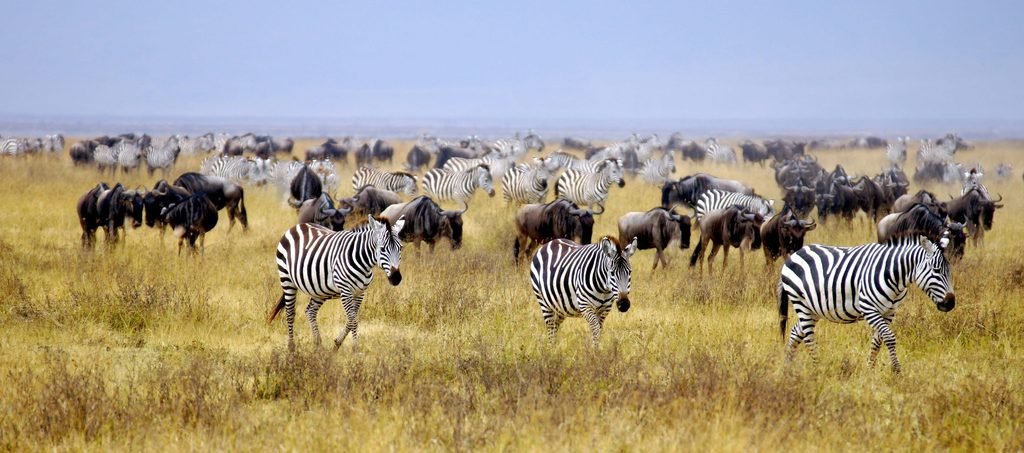
The wildebeest is one of the most recognisable animals in the Serengeti ecosystem, largely because of the annual Great Migration. Every year, enormous herds move through the Serengeti and neighbouring ecosystems in response to rainfall and the availability of fresh grazing. These movements require animals to travel across grasslands, rivers, and changing landscapes while searching for suitable feeding areas. Unlike predators that rely mainly on short hunting attempts, wildebeest regularly move as part of their daily survival, making them interesting candidates for a long-distance endurance comparison.
Wildebeest possess strong legs, muscular bodies, and an efficient way of moving across open terrain. They can run rapidly when threatened, but their most important advantage in a hypothetical marathon would be their ability to travel considerable distances as part of seasonal movements. However, migration does not involve running continuously at a fixed speed. Wildebeest spend much of their time grazing, walking, resting, and responding to environmental conditions. Their long-distance movement demonstrates endurance over extended periods rather than proven marathon-running ability.
During the migration season, wildebeest face challenges that include predators, changing weather, river crossings, and competition for grazing. Young animals must keep up with the herds, while adults need enough energy to continue travelling and feeding. These demands make wildebeest well adapted to a mobile lifestyle. In a hypothetical marathon across the Serengeti, a healthy wildebeest could be a strong contender because of its familiarity with sustained movement, although there is no scientific evidence establishing it as the fastest species over exactly 42.2 kilometres.
For tourists visiting the Serengeti, watching wildebeest move across the plains provides a clear example of how endurance contributes to survival. Their movement is not always fast or dramatic, but it is essential to the functioning of the migration ecosystem. Visitors travelling during suitable seasons may observe large herds grazing, walking, or running when disturbed. These natural behaviours offer a more meaningful understanding of wildebeest endurance than an imaginary race alone.

2. Zebra: A Powerful Runner with Impressive Stamina
Zebras are another strong candidate in a hypothetical Serengeti marathon because they combine speed, strength, and the ability to travel substantial distances. Plains zebras are common throughout the Serengeti ecosystem, where they live in social groups and often associate with wildebeest during seasonal movements. Their strong legs and sturdy bodies allow them to move across open grasslands, while their speed and defensive behaviour help them escape predators such as lions and hyenas.
Unlike cheetahs, which depend on extremely fast but brief pursuits, zebras must balance movement with the need to conserve energy throughout the day. They travel between grazing areas and water sources, sometimes covering considerable distances when environmental conditions change. Zebras can also respond quickly to danger, accelerating away from predators and using powerful kicks when defending themselves. These abilities make them effective survivors in landscapes where large carnivores are present.
In a hypothetical marathon, a zebra might perform well because it is adapted to repeated movement across open terrain. However, the amount of ground a zebra covers during a day should not be confused with its ability to run continuously for more than forty kilometres. Natural travel involves changes in speed, rest periods, and feeding. The animal’s endurance would also depend on temperature, terrain, hydration, and individual condition. Without controlled measurements, it is impossible to determine whether a zebra would finish ahead of a wildebeest.
Zebras are particularly interesting to observe during a Tanzania safari because their behaviour reveals how social animals respond to danger. When one zebra becomes alert, nearby individuals may also begin watching the surroundings. If a predator approaches, the group may move away together or scatter depending on the circumstances. Their speed, stamina, and social awareness all contribute to survival, demonstrating that successful movement in the wild involves more than simply running fast.
3. Thomson’s Gazelle: Small, Fast, and Remarkably Agile
Thomson’s gazelles are among the most agile herbivores found in the Serengeti ecosystem. Their relatively small bodies, slender legs, and rapid movements allow them to escape predators through speed and sudden changes of direction. These gazelles are particularly well known for their interactions with cheetahs, which frequently target smaller antelope species. Watching a gazelle respond to a pursuing predator reveals how important acceleration, agility, and quick decision-making are for survival.
Thomson’s gazelles can reach high speeds during escape attempts, although their natural behaviour is not designed around maintaining maximum speed for long distances. When threatened, they may accelerate rapidly, change direction, or use distinctive bounding movements. These actions can make it difficult for a predator to predict their next movement. Their smaller body size may provide advantages in agility, but it also means that their endurance characteristics differ from those of larger herbivores such as zebras and wildebeest.
In a hypothetical marathon, Thomson’s gazelles would be interesting competitors because they combine relatively light bodies with strong running abilities. However, their natural movement patterns do not establish how they would perform over 42.2 kilometres. A gazelle’s ability to escape a cheetah during a short chase is not the same as maintaining a steady pace for several hours. Its performance would depend on factors such as temperature, hydration, terrain, and the ability to regulate energy expenditure.
For safari visitors, Thomson’s gazelles demonstrate that survival often depends on agility rather than endurance alone. They are frequently observed grazing in open grasslands, where their alert behaviour helps them detect approaching predators. Their movements may appear effortless, but escaping danger requires rapid muscular responses and precise coordination. These qualities make them one of the most fascinating smaller animals to observe during a Serengeti wildlife safari.
4. Spotted Hyena: A Serious Endurance Challenger
The spotted hyena is often misunderstood because many people associate it mainly with scavenging. In reality, spotted hyenas are capable hunters that regularly pursue and capture live prey. Their strong bodies, powerful jaws, and efficient movement make them important predators in the Serengeti ecosystem. Unlike cheetahs, which depend heavily on short bursts of speed, spotted hyenas can pursue prey over longer distances under suitable conditions, making them particularly interesting candidates for an endurance competition.
Spotted hyenas possess strong forequarters and muscular limbs that support sustained movement. They frequently travel across their territories while searching for food and may cooperate during hunts involving larger herbivores. Their hunting behaviour can involve following prey until an opportunity arises to capture it, although the distance and duration of pursuits vary. These characteristics suggest that hyenas possess endurance adaptations that could be valuable in a hypothetical marathon.
Another advantage is their ability to travel efficiently across large areas while searching for food. Spotted hyenas are highly adaptable animals that occupy different African habitats, including grasslands and woodland environments. Their social organisation also influences hunting behaviour because clan members may cooperate when pursuing difficult prey. However, social hunting ability does not automatically translate into marathon performance, and there is no reliable evidence establishing how quickly a spotted hyena could complete a continuous 42.2-kilometre run.
If the imaginary Serengeti marathon focused on sustained pursuit rather than short-distance speed, the spotted hyena would deserve serious consideration. Its natural hunting strategy involves more prolonged movement than that of many large cats, and its body is adapted to an active lifestyle. During a Tanzania safari, visitors may observe hyenas travelling through grasslands, interacting near carcasses, or moving between feeding areas. These behaviours reveal why the species is an important predator rather than simply an animal that waits for leftovers.
5. African Wild Dog: An Exceptional Endurance Hunter
The African wild dog is one of Africa’s most specialised cooperative hunters and is well known for pursuing prey over considerable distances. Its long legs, relatively light body, and efficient movement support an active hunting lifestyle. African wild dogs commonly hunt in coordinated packs, using persistence and cooperation to capture prey. Unlike lions, which often depend on approaching closely before launching a short attack, wild dogs may maintain a pursuit for longer periods, although the duration and distance vary considerably.
African wild dogs have physical adaptations that support sustained running, including strong cardiovascular performance and efficient movement. Their hunting strategy often involves identifying suitable prey and maintaining pressure during a chase. Pack members may cooperate as the pursuit develops, increasing the chances of capturing an animal. These characteristics make the species a particularly strong theoretical contender in an endurance-focused comparison, even though a continuous marathon distance is not a normal requirement of its hunting behaviour.
However, African wild dogs are not commonly encountered throughout the Serengeti’s main tourist areas. Their distribution in Tanzania is more restricted than that of species such as wildebeest, zebras, and lions, and sightings in the greater Serengeti ecosystem are uncommon. Travellers specifically interested in African wild dogs may have better opportunities in selected southern Tanzania wildlife areas, including Nyerere National Park, although sightings remain unpredictable.
In a hypothetical Serengeti marathon, the African wild dog could be among the strongest candidates because sustained running is an important part of its hunting strategy. Nevertheless, it would be inaccurate to declare the species the guaranteed winner without controlled evidence. Its natural abilities demonstrate impressive endurance, but marathon performance would still depend on conditions such as temperature, terrain, fitness, and whether the animal could maintain continuous movement over the full distance.
6. Cheetah: The Fastest Sprinter but Not the Marathon Favourite
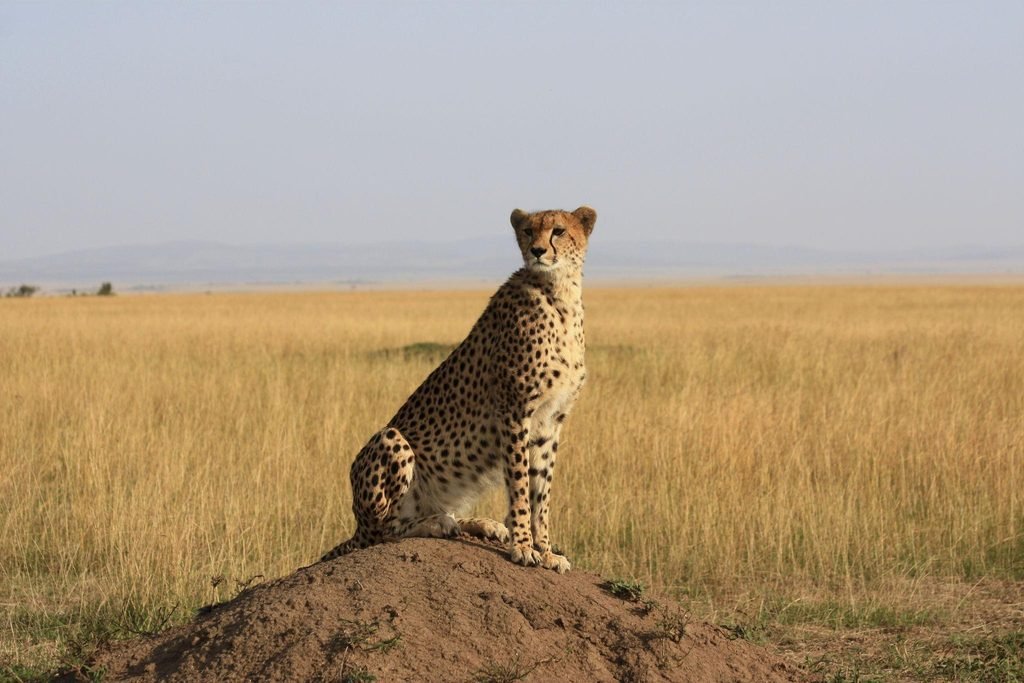
The cheetah is widely recognised as the fastest land animal over short distances, making it an obvious favourite in an imaginary sprint across the Serengeti. Its slender body, long legs, flexible spine, and specialised claws help it accelerate rapidly and maintain control during high-speed pursuits. Cheetahs are capable of reaching extraordinary speeds during short hunting attempts, although commonly repeated maximum-speed figures should be treated carefully because actual performance varies according to conditions and individual animals.
Despite its remarkable speed, the cheetah is not designed to maintain maximum running performance over long distances. High-speed pursuits require considerable energy and place significant demands on the animal’s muscles and body temperature. Cheetahs therefore rely on stalking and positioning themselves close to prey before beginning a chase. If an antelope escapes beyond a practical distance, the cheetah may abandon the pursuit rather than continue running until exhausted.
A marathon would present a very different physical challenge. Even if a cheetah could accelerate far ahead of the other animals during the opening seconds, maintaining that pace over 42.2 kilometres would be impossible. Its natural hunting abilities are specialised for rapid acceleration, high-speed manoeuvring, and short pursuits rather than continuous long-distance running. This distinction demonstrates why the fastest animal is not necessarily the best endurance athlete.
For visitors to Serengeti National Park, observing a cheetah can be one of the most exciting wildlife experiences. Cheetahs often use open grasslands where they can watch potential prey and take advantage of suitable hunting opportunities. However, an active chase may last only a short time, and many visitors encounter cheetahs resting or walking rather than hunting. Understanding their physical limitations helps explain why these fast predators spend considerable time conserving energy between attempts.
7. Lion: The Powerful Predator Built for Short Attacks
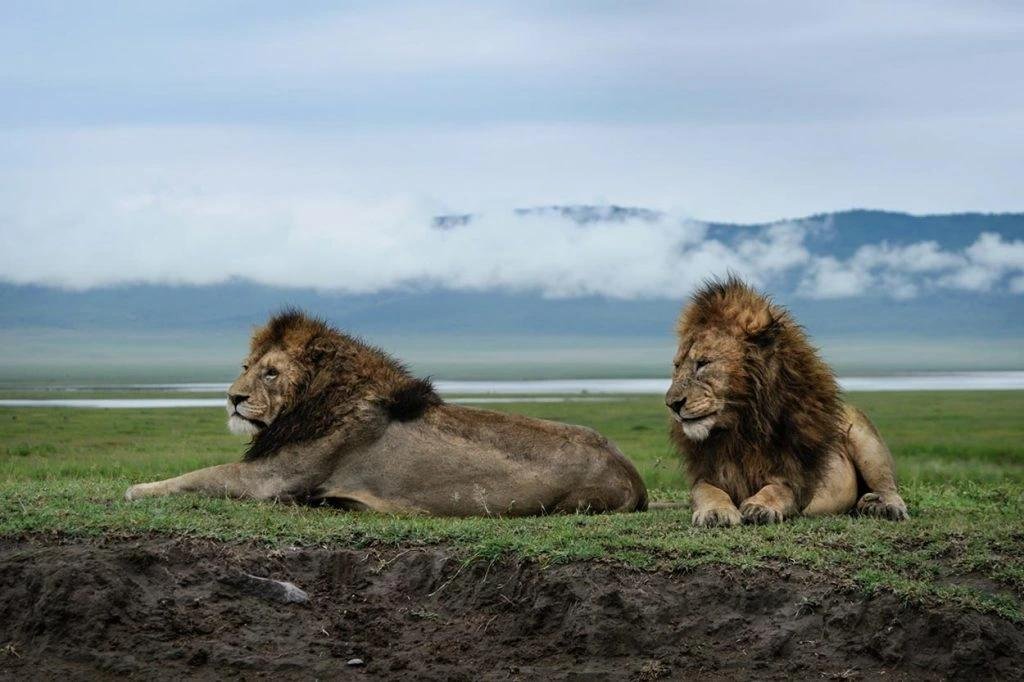
Lions are among the most powerful animals in the Serengeti, but they would not necessarily perform well in a marathon. Their muscular bodies, strong shoulders, and powerful jaws are adapted for capturing and restraining prey during short, intense attacks. Lions commonly rely on stalking, surprise, and cooperation rather than pursuing animals over extremely long distances. Although they can run rapidly for short periods, their large body size and limited endurance at high speed make prolonged chases energetically demanding.
A lioness approaching a herd of wildebeest may spend considerable time moving quietly through the grass before attempting an attack. The final chase usually begins when the predator is close enough to reach its target within a short distance. If the prey escapes early, the lion may abandon the pursuit rather than waste energy. This hunting strategy differs significantly from that of endurance-oriented predators such as spotted hyenas and African wild dogs.
Lions also spend much of their time resting, particularly during hot weather. Their inactivity is not simply laziness but an important method of conserving energy between hunting, feeding, and other activities. Adult lions may remain inactive for much of the day, becoming more active during cooler periods. This behaviour allows them to preserve the physical strength required for demanding hunting attempts.
In a hypothetical Serengeti marathon, a lion might perform well during the opening sprint but would probably struggle to maintain a competitive pace over the full distance compared with animals better adapted to sustained movement. However, there is no controlled scientific evidence establishing the exact marathon performance of lions. Their natural abilities are better understood through the short-distance hunting strategies that make them successful predators in the wild.
Which Animal Would Actually Win a Serengeti Marathon?
After comparing the seven animals, the most important conclusion is that there is no scientifically established winner of a 42.2-kilometre Serengeti marathon. Each species possesses different adaptations, and no reliable controlled study has measured how all seven would perform in an identical long-distance race. The results would also depend on whether the animals were running continuously, moving at their preferred natural pace, or responding to a threat. A marathon designed for humans is not a normal biological challenge for wild animals.
If the comparison focused on natural endurance adaptations, the African wild dog and spotted hyena would be particularly strong contenders because sustained movement and pursuit are important parts of their hunting behaviour. Wildebeest and zebras would also deserve consideration because they regularly travel across extensive landscapes. However, seasonal migration should not be confused with continuous running. A cheetah would almost certainly have a major advantage in a short sprint, while lions would be better suited to brief, powerful attacks.
The most reasonable answer is therefore that African wild dogs and spotted hyenas are among the strongest theoretical endurance candidates, while the cheetah is the clear short-distance speed specialist. Wildebeest and zebras are also well adapted to long-distance travel, but none of these observations proves which animal would finish a marathon first. The comparison is most useful for understanding how different animals have evolved to survive in the Serengeti.
Why the Fastest Animals Do Not Always Have the Best Endurance
The difference between sprinting and endurance is closely related to how animals use energy. Short-distance sprinters depend on rapid muscular contractions and the ability to generate considerable power within a brief period. This allows animals such as cheetahs to accelerate quickly, but the physical demands of high-speed running make it difficult to continue for long. Endurance-oriented animals rely more heavily on efficient movement and the ability to sustain activity without exhausting their available energy too quickly.
Body size, muscle structure, breathing, circulation, and temperature regulation all influence running performance. A large animal may possess tremendous strength but require more energy to maintain movement. A smaller animal may be agile and quick but lack the adaptations needed for prolonged running. Environmental conditions are also important because heat, humidity, uneven terrain, and limited access to water can affect endurance.
In the Serengeti, these differences influence daily survival. Predators must capture food without wasting excessive energy, while herbivores must escape danger and travel between resources. The animals are not competing to achieve the fastest marathon time. Instead, each species has developed physical abilities that support its particular way of life.
How the Great Migration Demonstrates Animal Endurance
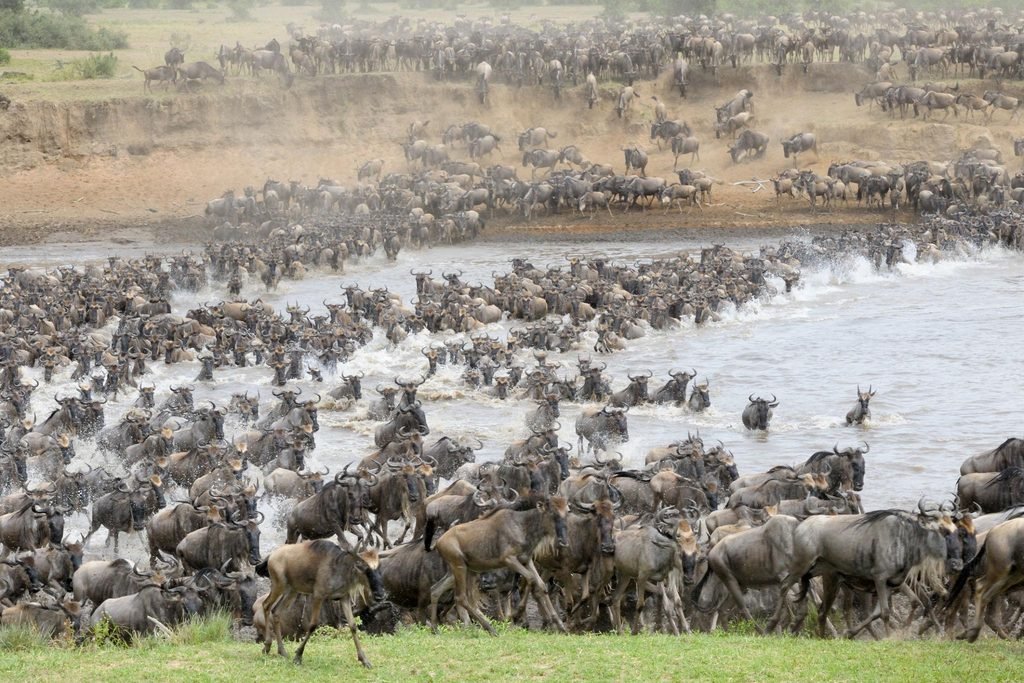
The Great Migration provides one of the clearest examples of long-distance animal movement in the Serengeti ecosystem. Large numbers of wildebeest and zebras travel between seasonal grazing areas in response to rainfall and vegetation growth. Their movements form a broad annual cycle that connects different parts of the Serengeti and neighbouring ecosystems. These journeys involve considerable distances, but the animals do not complete them in one continuous run. They spend time grazing, drinking, resting, and responding to changing environmental conditions.
Migration is physically demanding because animals must maintain enough energy to travel while avoiding predators and coping with seasonal changes. Young wildebeest calves, for example, must develop the ability to move with their mothers and the surrounding herds. Adults must balance the need to feed with the demands of travelling across open landscapes. River crossings and other obstacles can create additional challenges, although the exact routes and timing vary from year to year.
For travellers planning a Tanzania safari in 2027, 2028, or 2029, observing the migration provides a much more meaningful example of endurance than an imaginary race. Visitors may see thousands of animals moving across the plains, grazing in large herds, or responding to predators. These behaviours reveal how movement, energy conservation, and environmental conditions influence the survival of wildlife.
Where Can Tourists Observe These Animals in Tanzania?
Serengeti National Park is one of the best destinations for observing many of the animals discussed in this article. Wildebeest, zebras, Thomson’s gazelles, lions, cheetahs, and spotted hyenas occur within the wider ecosystem, although their distribution changes according to habitat and seasonal conditions. The park’s open grasslands provide excellent opportunities to observe animal movements and predator-prey relationships. Visitors may encounter herbivores grazing, predators resting, or animals responding to potential danger during game drives.
The central Serengeti, particularly the Seronera region, is well known for wildlife viewing throughout much of the year. Other parts of the ecosystem become particularly interesting during different stages of the Great Migration. The southern plains and Ndutu region are associated with the wildebeest calving season, while northern areas may provide opportunities to observe migrating herds later in the year. However, animal movements depend on rainfall and grazing conditions, and no specific wildlife event can be guaranteed.
Travellers interested in African wild dogs may need to consider destinations beyond the main Serengeti tourist circuit. Selected southern Tanzania wildlife areas, including Nyerere National Park, provide opportunities to encounter this species, although sightings remain uncommon and unpredictable. For general wildlife viewing, the Serengeti can be combined with Ngorongoro and Tarangire to experience different habitats and animal populations. Official information about Tanzania’s protected areas is available through the Tanzania National Parks Authority.
What Can Safari Tourists Learn from Watching Animals Run?
Watching animals move through the Serengeti provides an opportunity to understand how physical adaptations influence survival. A cheetah accelerating towards an antelope demonstrates the importance of speed and coordination, while a wildebeest herd travelling across the plains shows how sustained movement contributes to seasonal migration. Zebras reveal the value of strength and social awareness, while hyenas demonstrate how predators can use persistence and cooperation when searching for food.
These observations also show why wildlife behaviour cannot be predicted according to a fixed schedule. A cheetah may remain inactive for several hours before attempting a brief chase, while a herd of wildebeest may suddenly begin running after detecting danger. Some animals travel slowly for long periods, while others remain in one area until environmental conditions change. Each movement has a purpose connected to feeding, safety, reproduction, or access to resources.
An experienced safari guide can help visitors recognise these behaviours and understand their importance. During a private safari, travellers can ask questions about animal speed, hunting techniques, migration, and the relationships between predators and prey. This makes wildlife viewing more educational and helps visitors appreciate the complexity of the Serengeti ecosystem.
Planning a Serengeti Wildlife Safari for 2027, 2028 and 2029
Travellers interested in observing the animals discussed in this article should consider spending several days in Serengeti National Park. A short safari may provide opportunities to encounter lions, zebras, wildebeest, and other wildlife, but a longer itinerary allows visitors to explore different habitats and observe animals at various times of day. A five- to seven-day northern Tanzania safari can combine the Serengeti with Ngorongoro and Tarangire, providing a wider range of wildlife experiences.
The best travel period depends on the animals and behaviours you hope to observe. January and February are often associated with wildebeest calving in the southern Serengeti ecosystem, while the dry season from June to October is popular for wildlife viewing in several Tanzanian national parks. However, rainfall patterns and animal movements vary, so visitors should avoid expecting particular wildlife events on exact dates. Accommodation locations and travel routes should be selected according to the season and the available time.
Eddy Tours & Safaris is a local tour company in Arusha, Tanzania, arranging private wildlife safaris, Kilimanjaro climbing expeditions, and personalised holidays. Travellers planning a Serengeti safari for 2027, 2028, or 2029 can request an itinerary based on their preferred dates, accommodation category, group size, and wildlife interests.
Frequently Asked Questions About Animal Speed and Endurance in the Serengeti
What animal would win a Serengeti marathon?
There is no scientifically proven winner because wild animals have not been tested in a controlled 42.2-kilometre marathon. African wild dogs and spotted hyenas are strong theoretical candidates because their natural hunting behaviour involves sustained movement. Wildebeest and zebras also travel considerable distances, but migration does not establish their continuous running performance.
Is a cheetah faster than a lion?
Yes, cheetahs are faster than lions over short distances. Their slender bodies, flexible spines, and specialised running adaptations allow them to accelerate rapidly. Lions are powerful predators, but they rely more heavily on stalking, strength, and short attacks than extreme running speed.
Can a cheetah run a full marathon?
There is no reliable evidence demonstrating that a cheetah could complete a marathon at a competitive continuous running pace. Cheetahs are specialised sprinters whose high-speed pursuits are brief. Their natural hunting behaviour does not require them to maintain maximum speed over long distances.
Are wildebeest good long-distance runners?
Wildebeest are well adapted to travelling considerable distances across open landscapes, particularly during seasonal migration. However, they normally move through a combination of walking, grazing, resting, and occasional running. Their ability to migrate does not prove how quickly they could complete a continuous marathon.
Are zebras faster than wildebeest?
Both zebras and wildebeest can run rapidly when escaping predators, but their performance varies according to individual condition and circumstances. There is insufficient controlled evidence to establish a universal winner across all distances. Both species possess adaptations that support movement across the Serengeti.
Why are spotted hyenas good endurance hunters?
Spotted hyenas possess strong bodies and efficient movement patterns that support travelling and pursuing prey over substantial distances. Unlike predators that depend mainly on short attacks, hyenas can maintain pressure during longer pursuits under suitable conditions. Their endurance is an important part of their hunting behaviour.
Are African wild dogs faster than lions?
African wild dogs and lions have different running adaptations. Lions possess considerable power and can accelerate rapidly over short distances, while African wild dogs are particularly well adapted to sustained pursuit. Comparing their performance depends on the distance and conditions involved.
Which Serengeti animal is the fastest?
The cheetah is the fastest land animal over short distances and is the Serengeti’s best-known speed specialist. However, maximum sprinting speed should not be confused with long-distance endurance. Other species may be better adapted to sustained movement.
How far do wildebeest travel during the Great Migration?
The annual migration involves extensive seasonal movements through the Serengeti and neighbouring ecosystems. The total distance varies according to rainfall, grazing conditions, and the routes taken by different herds. These journeys occur over many months rather than as one continuous run.
Can tourists watch cheetahs running in the Serengeti?
Yes, visitors occasionally observe cheetahs chasing prey during game drives. However, active hunting encounters are unpredictable and cannot be guaranteed. Cheetahs spend considerable time resting, watching their surroundings, and moving between hunting areas.
Which Tanzania national park is best for observing fast animals?
Serengeti National Park is an excellent destination for observing cheetahs, gazelles, wildebeest, zebras, lions, and other wildlife. Its extensive grasslands provide opportunities to watch animal movements and predator-prey interactions. Actual sightings depend on the season and natural wildlife behaviour.
Discover the Serengeti’s Remarkable Wildlife with Eddy Tours & Safaris
The question of which animal would win a Serengeti marathon reveals an important lesson about wildlife: the fastest animal is not always the one best adapted to travelling long distances. Cheetahs possess remarkable sprinting abilities, lions depend on strength and surprise, and animals such as wildebeest, zebras, spotted hyenas, and African wild dogs demonstrate different forms of endurance. Each species has developed physical and behavioural characteristics that help it survive in the African wilderness.
For travellers planning a Tanzania safari in 2027, 2028, or 2029, observing these animals in their natural habitat provides an opportunity to understand how movement influences survival. Whether you encounter wildebeest travelling across the plains, zebras escaping danger, or a cheetah preparing to chase an antelope, every sighting offers an interesting example of wildlife adaptation.
Eddy Tours & Safaris is a local tour company in Arusha, Tanzania, arranging professionally guided wildlife safaris, Kilimanjaro climbing expeditions, and private holidays. The company assists travellers in planning itineraries according to their preferred destinations, accommodation requirements, travel dates, and available budget.
To organise your Serengeti wildlife safari, contact the team through the Eddy Tours & Safaris booking page.
Company: Eddy Tours & Safaris
Location: Arusha, Tanzania
Website: Eddy Tours & Safaris
Email: sales@eddytours-safaris.com
WhatsApp: +255 711 906 664