
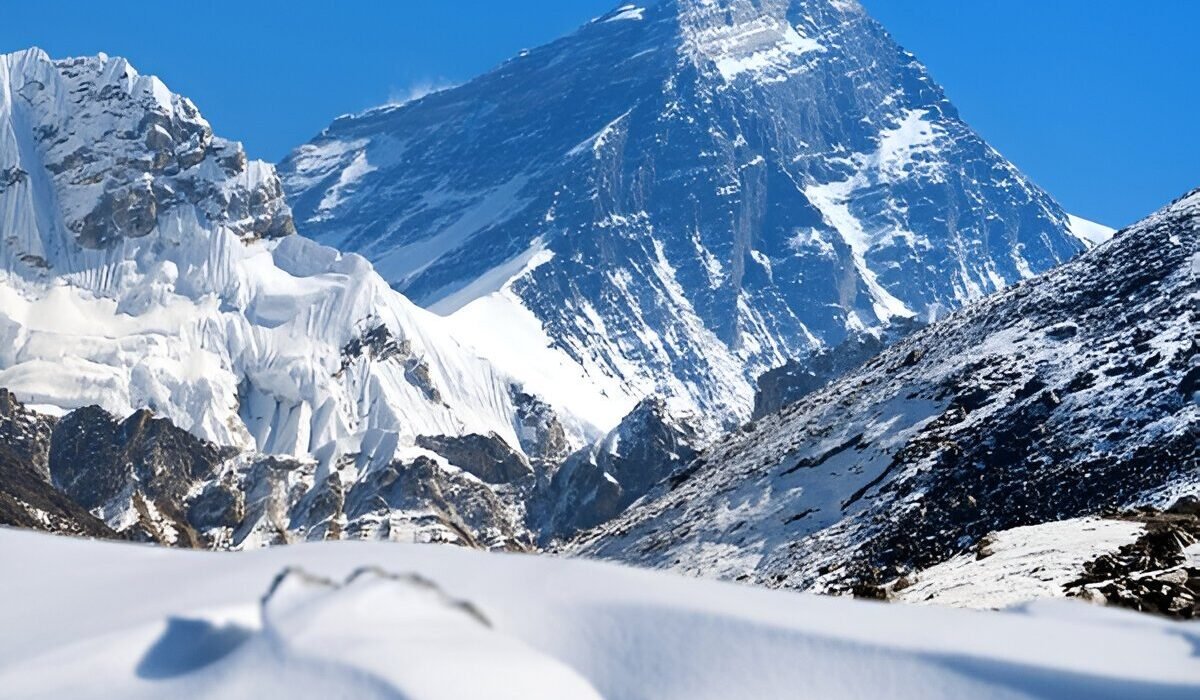
Mount Everest is in Asia, in the Himalayan mountain range, on the border between Nepal and the Tibet Autonomous Region of China. Its summit lies on the international boundary, with the Nepalese approach to the south and the Tibetan approach to the north.
Knowing where Everest is located is the first step toward understanding how to visit it. Trekking toward its base from Nepal, visiting the northern region in Tibet, and attempting the summit involve very different journeys.
If you are planning an Everest trip in 2027 or 2028, begin by choosing the experience you want. You can explore the surrounding region without attempting to climb the world’s highest mountain.
This guide explains Everest’s location, the main approaches, the difference between trekking and climbing, and the practical decisions involved in planning a visit.
Where Exactly Is Mount Everest?
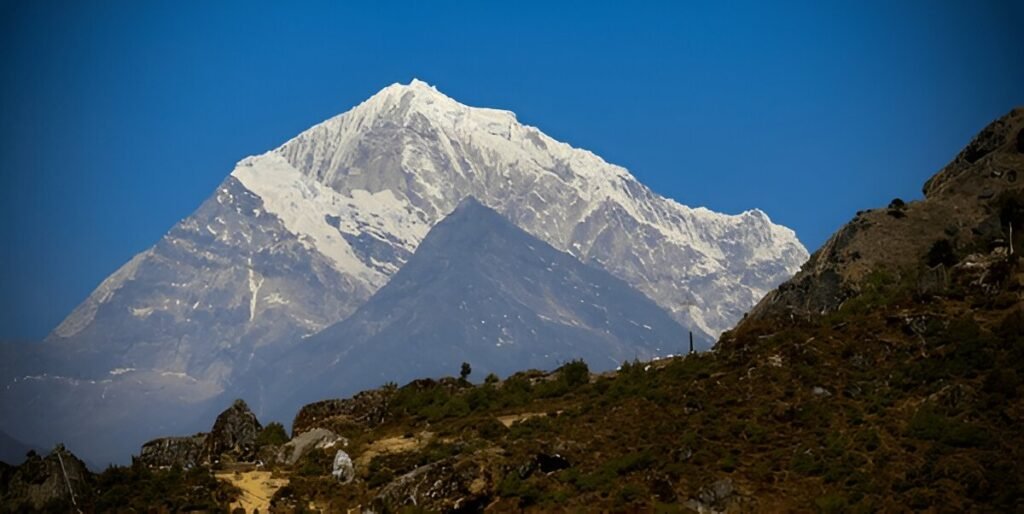
Everest stands in the Mahalangur Himal, a section of the Himalayas. Its location connects Nepal’s Khumbu region with the Tibetan side of the mountain in China.
On the Nepalese side, the Everest region is associated with Sagarmatha National Park. UNESCO describes the park as a landscape of dramatic mountains, glaciers, and deep valleys dominated by Everest. It became a World Heritage Site in 1979.
The mountain is often associated most strongly with Nepal because many travelers approach it through the Nepalese trekking network. However, its border location matters when comparing journeys and entry arrangements.
A Nepal itinerary and a Tibet itinerary are separate travel plans. They involve different access routes, accommodation, permissions, and operating conditions.
Mount Everest Facts at a Glance
| Question | Answer |
|---|---|
| Which continent is Everest in? | Asia |
| Which mountain range? | The Himalayas |
| Which subrange? | Mahalangur Himal |
| Which countries share its location? | Nepal and China |
| What lies north of the mountain? | Tibet Autonomous Region, China |
| What lies on the Nepalese side? | The Khumbu region and Sagarmatha National Park |
| What is its recognized elevation? | 8,848.86 metres above sea level |
| Can travelers visit without climbing it? | Yes, through trekking and other suitable viewing journeys |
Nepal’s official tourism information records an elevation of 8,848.86 metres, established jointly by Nepalese and Chinese authorities in 2020. Some older sources still show the rounded figure of 8,848 metres.
Is Mount Everest in Nepal or China?
Everest’s summit lies on the Nepal–China boundary, so describing it as exclusively within either country leaves out part of its geography.
For travelers, the useful question is which side you intend to visit.
The Nepalese Side
The southern approach is associated with the Khumbu trekking region.
A journey here can include mountain villages, walking trails, lodges, and views of the surrounding Himalayan peaks. The well-known Everest Base Camp trek approaches the mountain from this side.
The Tibetan Side
The northern approach lies within Tibet, China.
A trip on this side requires its own planning. Do not assume that permission to enter Nepal also provides access to Tibet or that a base-camp visit and a climbing expedition use the same arrangements.
For 2027/2028, confirm the permitted visitor area, travel requirements, and operating conditions before paying for a northern-side itinerary.
What Is Mount Everest Called Locally?
Everest is known as Sagarmatha in Nepali and Chomolungma, with several spelling variations, in Tibetan. These names appear alongside “Mount Everest” in descriptions of the region.
Understanding the local names adds context to your journey. The mountain belongs within a living cultural landscape, with communities, traditions, and livelihoods extending beyond climbing tourism.
Treat villages, monasteries, and religious sites respectfully. Ask before photographing people and follow local guidance about visiting sacred places.
How Do You Reach the Everest Region?
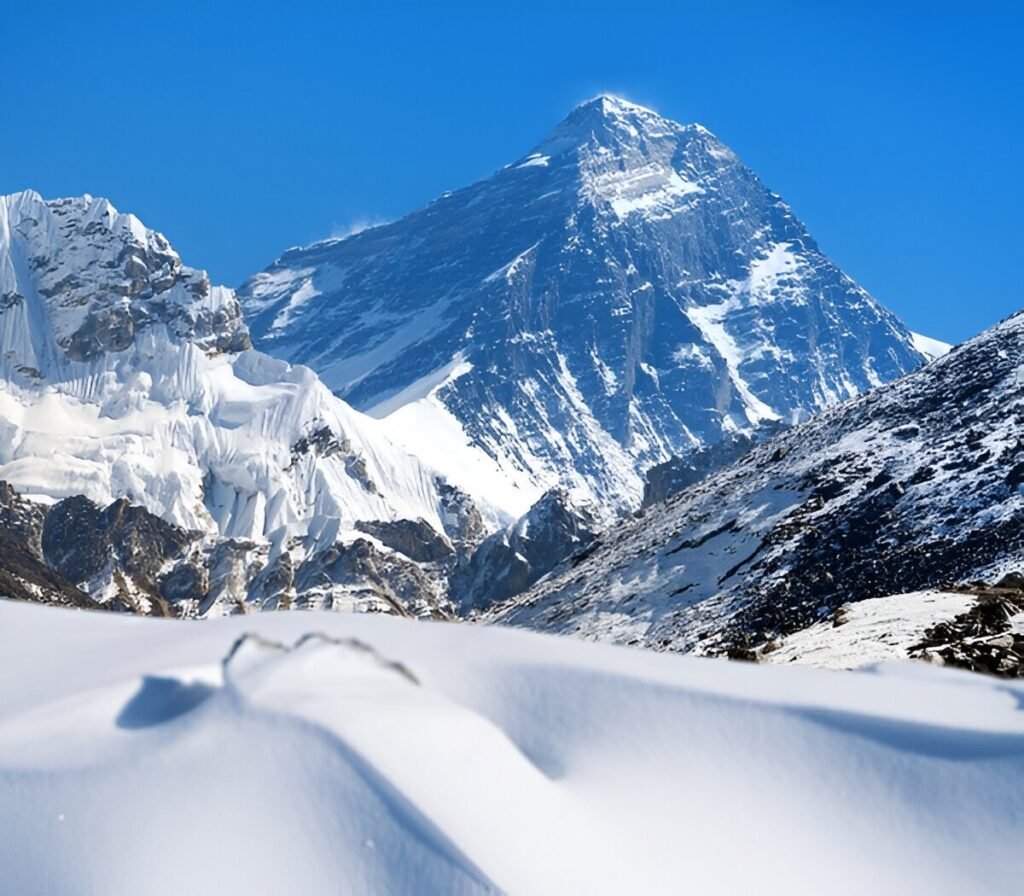
Travel Through Kathmandu
Many Nepal-based journeys begin in Kathmandu.
Your time there may include meeting the trekking team, checking equipment, reviewing arrangements, and preparing for travel to the mountains.
Allow enough time for these steps rather than scheduling a demanding trek immediately after a long international journey.
Continue Toward Lukla
Lukla is an important gateway for Everest-region trekking. Nepal Tourism Board describes the classic Everest Base Camp journey as starting and finishing there.
Confirm the actual flight departure airport, transfers, baggage allowance, and contingency arrangements for your dates. Flight operations and departure arrangements may change.
Weather can affect mountain travel, so build flexibility into the wider holiday. Avoid a tight connection between your return from the trekking region and an international flight.
Consider a Longer Walking Approach
Some travelers choose a longer approach through lower settlements before entering the higher Khumbu region.
Nepal Tourism Board identifies walking through Solu toward Khumbu as an option for those with sufficient time.
Ask an operator to explain the full route, transport stages, overnight elevations, and total duration. A longer journey should still have a carefully planned ascent profile.
Visiting Everest Base Camp Versus Climbing Everest
These are fundamentally different activities.
| Experience | What it involves |
|---|---|
| Everest-region trek | Walking through villages and mountain landscapes on a chosen route |
| Everest Base Camp trek | A high-altitude trekking journey toward the Nepal-side base-camp area |
| Everest viewing trip | A journey designed around suitable viewpoints or sightseeing services |
| Everest summit expedition | Technical, extreme-altitude mountaineering with extensive preparation |
Everest Base Camp Trekking
The base-camp trek is a demanding walking holiday. It requires preparation for consecutive trekking days, altitude exposure, and changing conditions.
Reaching base camp does not mean climbing Everest. It is a separate objective with its own route and turnaround point.
Everest Summit Climbing
A summit expedition requires substantial mountaineering experience, specialist equipment, technical competence, and expedition support.
Completing a trek or reaching another mountain’s summit does not automatically qualify someone for Everest.
If your aim is a Himalayan walking holiday, choose a trekking itinerary that suits your experience rather than treating summit climbing as its natural next stage.
Can You See Everest Without Reaching Base Camp?
Yes. Your trip can focus on viewpoints and the surrounding region.
Nepal Tourism Board identifies Kala Patthar as a prominent viewpoint from which trekkers photograph Everest. The viewpoint is itself a high-altitude objective and needs to fit a suitable itinerary.
Do not assume that the place called “Everest Base Camp” provides the clearest full view of the mountain.
When discussing a trip, explain whether your priority is:
- Reaching base camp.
- Photographing Everest.
- Exploring villages and mountain scenery.
- Completing a shorter trek.
- Taking a suitable sightseeing flight.
Clear priorities help an operator choose a route that matches your expectations.
How Long Should You Allow for an Everest Trip?
Duration depends on the route, transport, acclimatization schedule, and your chosen endpoint.
Nepal Tourism Board describes the classic base-camp trek as approximately a two-week journey from Lukla. Your complete holiday also needs time for international travel, preparation, and possible delays.
Compare itineraries by examining the overnight locations rather than simply counting days.
Look for planned acclimatization time and ask how the programme changes if you need to stay longer at one elevation.
A shorter advertised trip is only useful if its ascent schedule and transport arrangements suit you.
When Is the Best Time to Visit in 2027 or 2028?
Nepal Tourism Board generally identifies spring and autumn as favorable periods for trekking.
For Everest-region planning, March–May and October–November are commonly considered seasonal windows. Actual conditions vary, so these months are planning guides rather than forecasts.
Spring
Compare dates according to your preferred route, accommodation availability, and tolerance for busy trails.
Ask about expected temperatures at the overnight locations and the equipment needed.
Autumn
Autumn is another period to investigate for mountain trekking.
Confirm the full schedule, available accommodation, and transport arrangements before choosing flights.
Other Seasons
Travel outside the usual windows requires a more detailed discussion about weather, daylight, trail conditions, and available services.
No season guarantees clear mountain views or uninterrupted flights.
Altitude and Health Considerations
Everest-region trekking can expose travelers to significant altitude even when no summit climb is involved.
Fitness supports the walking effort but does not protect against altitude illness. Gradual ascent and sufficient time to adjust are important. Discuss your plans with a clinician, particularly if you have relevant medical conditions or previous altitude problems.
Report symptoms promptly. Do not ascend with altitude-illness symptoms, and descend if symptoms worsen. Confusion, difficulty walking, or breathlessness at rest require urgent attention.
Ask your operator how guides assess trekkers, communicate during emergencies, and arrange evacuation.
Permits and Travel Requirements for 2027/2028
Requirements depend on the destination and activity.
A trekking holiday, a summit expedition, and a visit through Tibet have different administrative arrangements.
Before booking, obtain written confirmation of:
- Required entry documents.
- Park and local permissions.
- Guiding requirements.
- Included permit charges.
- Authorized visitor access.
- Any restrictions affecting your route.
Use the Nepal Tourism Board and the relevant authorities to verify requirements near your travel date. Future-year rules and fees should not be assumed from an older itinerary.
What Should You Budget For?
There is no single price for an Everest visit.
Your total depends on the route, duration, accommodation, guide and porter services, transport, equipment, and level of support.
Request a quotation identifying:
- Hotels before and after the trek.
- Mountain accommodation.
- Meals and drinks.
- Domestic transport.
- Guide and porter arrangements.
- Permits and local charges.
- Equipment rental.
- Supplements and optional activities.
Budget separately for insurance, personal purchases, tips, and services excluded from the package.
Confirm that insurance covers your intended activity, maximum altitude, and evacuation arrangements.
Packing for an Everest-Region Trek
Ask for a route-specific equipment list.
Useful categories include trekking boots, layered clothing, waterproof outerwear, insulated clothing, gloves, warm headwear, and a suitable sleeping bag.
Bring sun protection, a headlamp, trekking poles, and waterproof packing for essential items.
For photography, carry spare batteries and memory cards. Check charging availability and charges at the proposed accommodation.
Keep important medication and documents accessible throughout the journey.
Everest and Kilimanjaro: Understanding the Difference
Travelers interested in Everest often compare it with Mount Kilimanjaro.
The most useful distinction is the activity being compared. A Kilimanjaro summit trek, an Everest Base Camp trek, and an Everest summit expedition have different objectives and demands.
Kilimanjaro’s commonly used trekking routes involve walking to a high summit. Everest summit climbing involves technical mountaineering and substantially greater altitude exposure.
An Everest Base Camp trek is a walking journey, but its duration and altitude still require preparation.
If your goal is to build mountain experience, discuss suitable training and progression with qualified professionals. One completed trip does not guarantee readiness for another.
Frequently Asked Questions
Is Mount Everest in Africa?
No. Everest is in Asia. Mount Kilimanjaro is in Tanzania, East Africa.
Is Everest entirely in Nepal?
Its summit lies on the border between Nepal and China.
How high is Mount Everest?
The recognized elevation is 8,848.86 metres above sea level.
Do I have to climb Everest to visit the region?
No. Trekking and suitable viewing journeys allow travelers to experience the region without a summit expedition.
Does base camp always provide the best Everest view?
No. Viewpoints such as Kala Patthar are important for mountain photography, and visibility depends on conditions.
Can I plan a trip for 2027 or 2028 now?
Yes. Compare routes and operators, then confirm availability, permissions, fees, and transport arrangements for your dates.
Planning Your Next Mountain Journey
Understanding Everest’s location helps you choose the experience that interests you: a Himalayan trek, a mountain-viewing journey, or specialist mountaineering.
For travelers considering Mount Kilimanjaro in Tanzania, contact Eddy Tours & Safaris to discuss routes, trekking duration, and possible safari extensions.
Website: eddytours-safaris.com
Sales email: sales@eddytours-safaris.com
Alternative email: eddytoursandsafaris@gmail.com
Phone and WhatsApp: +255 711 906 664