
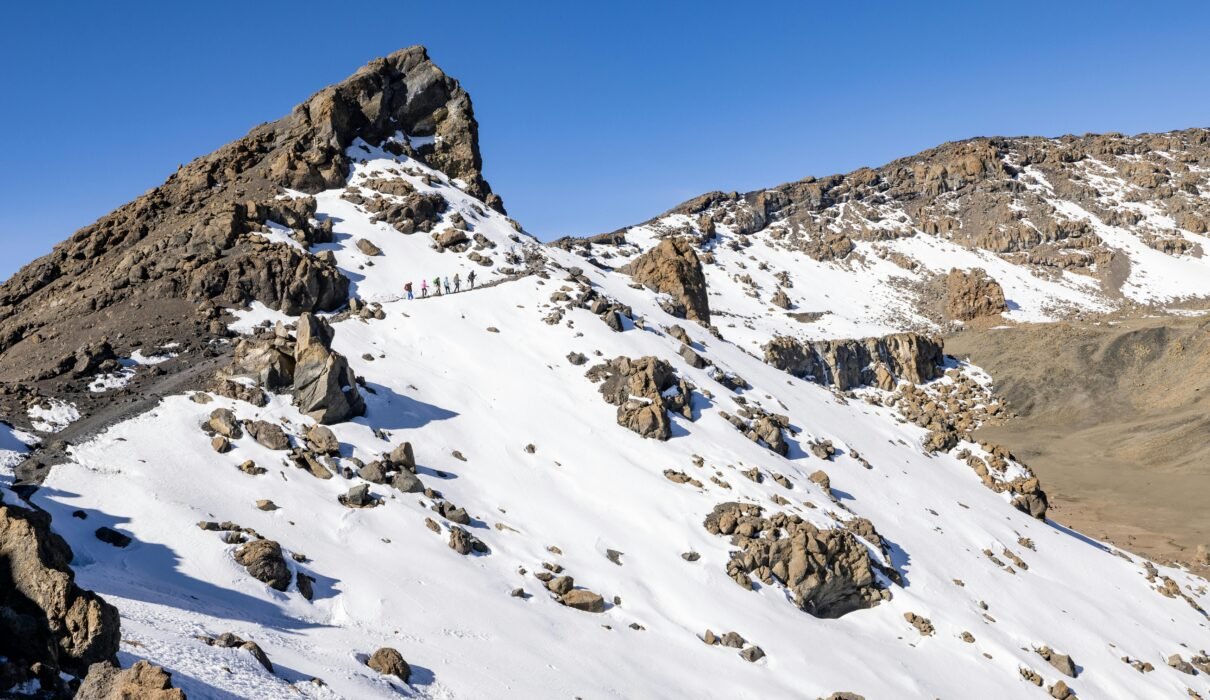
Who Was the First Person to Climb Kilimanjaro? is a question many travelers ask when they begin to learn about Africa’s highest mountain and the long human story connected to its icy summit. The answer is more meaningful than a single name, because it involves early scientific exploration, extreme physical challenge, cultural encounters and the beginning of international research interest in one of the world’s most unique volcanic mountains.
Understanding this story adds depth to every modern climb. It shows how knowledge, endurance and respect for nature slowly opened the path that thousands of climbers follow today. If you are planning your own journey with a responsible local company such as Eddy Tours & Safaris, knowing this history helps you see Kilimanjaro not only as a trekking destination, but also as a living classroom of science, culture and conservation.
Who Was the First Person to Climb Kilimanjaro? and the real historical record
To properly answer Who Was the First Person to Climb Kilimanjaro?, historians and geographers rely on expedition journals, geographic society archives and early scientific documentation. According to records preserved by the Royal Geographical Society and historical summaries published by Encyclopaedia Britannica, the first fully documented successful ascent of Kilimanjaro was achieved by a European geographer working together with an experienced alpine climber.
The expedition reached the highest point on the Kibo summit after several earlier attempts had failed due to extreme cold, snowstorms and lack of technical climbing equipment. Academic historical research hosted by JSTOR confirms that this achievement marked the first internationally verified human presence at Kilimanjaro’s true summit and triggered a wave of scientific curiosity about high tropical mountains.
Who Was the First Person to Climb Kilimanjaro? and why it was not a simple solo success
Many people expect a single heroic name when asking Who Was the First Person to Climb Kilimanjaro?, but historical reality shows that the summit was reached through teamwork, planning and local knowledge. Early exploration narratives archived by the Smithsonian Institution and academic summaries provided by National Geographic Society highlight how logistics, route finding and weather interpretation played decisive roles.
Although the climbers whose names appear in history books led the final ascent, their success depended heavily on porters, local guides and logistical support who made repeated attempts possible. Modern historical reassessments published through Cambridge University Press increasingly emphasize that early African participation and environmental knowledge were essential elements of this milestone.
Who Was the First Person to Climb Kilimanjaro? in the context of early scientific exploration
Beyond personal achievement, Who Was the First Person to Climb Kilimanjaro? is also a scientific question. The expedition aimed to study volcanic structure, glacial features and atmospheric conditions at extreme elevation. Geological research institutions such as the United States Geological Survey continue to reference early observations from Kilimanjaro when discussing volcanic landforms and crater morphology.
Scientific field notes preserved in historical climate and geography archives, now analysed through platforms such as Nature Research and ScienceDirect, show how this climb helped establish Kilimanjaro as a major site for mountain research in Africa.
Who Was the First Person to Climb Kilimanjaro? and the medical limits of the human body
Another important dimension of Who Was the First Person to Climb Kilimanjaro? involves human physiology at extreme altitude. Early climbers had no modern knowledge of altitude sickness or oxygen adaptation. Today, medical understanding published by the Centers for Disease Control and Prevention and the International Society for Mountain Medicine explains how reduced oxygen availability affects breathing, sleep and physical performance.
Clinical reviews indexed in PubMed and medical guidance provided by Johns Hopkins Medicine demonstrate that reaching the crater rim and summit requires careful pacing and monitoring. The early climbers unknowingly endured severe physiological stress that modern science can now clearly explain.
Who Was the First Person to Climb Kilimanjaro? and the changing face of the mountain
When people ask Who Was the First Person to Climb Kilimanjaro?, they are often surprised to learn how different the mountain looked during early exploration. Kilimanjaro’s ice fields were once far more extensive. Climate monitoring by NASA Climate and assessments published by the Intergovernmental Panel on Climate Change clearly show how tropical glaciers are shrinking due to long-term temperature trends.
Environmental observation programs coordinated by the United Nations Environment Programme and biodiversity research supported by the International Union for Conservation of Nature identify Kilimanjaro as a critical indicator site for studying climate impacts on mountain ecosystems.
Who Was the First Person to Climb Kilimanjaro? and environmental responsibility today
The story behind Who Was the First Person to Climb Kilimanjaro? now carries a powerful environmental message. Conservation organisations such as the World Wide Fund for Nature, the African Wildlife Foundation and Conservation International show that high-altitude ecosystems are among the most sensitive on Earth.
Scientific mapping and land monitoring carried out by the United States Geological Survey demonstrate how erosion, foot traffic and unmanaged waste can quickly degrade fragile alpine zones. Modern climbers now walk in areas that are carefully regulated to protect the same terrain first explored more than a century ago.
Who Was the First Person to Climb Kilimanjaro? and cultural interpretation
Understanding Who Was the First Person to Climb Kilimanjaro? also means recognizing how mountains carry cultural and educational meaning. Cultural heritage protection frameworks promoted by UNESCO emphasize that iconic landscapes act as shared learning spaces connecting science, history and society.
Educational research initiatives supported by Harvard University research programs and global learning partnerships promoted by the United Nations Academic Impact highlight how direct exposure to protected landscapes strengthens environmental responsibility and historical understanding.
Who Was the First Person to Climb Kilimanjaro? and responsible tourism today
Modern travelers asking Who Was the First Person to Climb Kilimanjaro? now walk routes shaped by responsible tourism principles. Ethical labour standards promoted by the International Labour Organization and community development initiatives supported by Oxfam International show how fair working conditions and local employment support conservation and safety.
Professionally structured itineraries offered through Kilimanjaro climbing programs now integrate environmental limits, porter welfare and health protocols that early expeditions never had.
Who Was the First Person to Climb Kilimanjaro? and scientific cooperation today
Ongoing research continues to build on the legacy behind Who Was the First Person to Climb Kilimanjaro?. Field studies and environmental assessments published by Frontiers in Environmental Science and conservation research coordinated by the Wildlife Conservation Society rely on controlled access and accurate field logistics.
Risk management guidance developed by the World Bank Disaster Risk Management programme supports both conservation teams and tourism operators working in remote mountain environments.
Who Was the First Person to Climb Kilimanjaro? and your own journey today
For today’s climbers, Who Was the First Person to Climb Kilimanjaro? is not simply a historical question. It represents curiosity, scientific discovery and the courage to explore one of the planet’s most extraordinary landscapes.
Travelers who plan responsibly with experienced local operators such as Tanzania travel specialists benefit from accurate historical interpretation and environmentally respectful route planning that protects both people and nature.
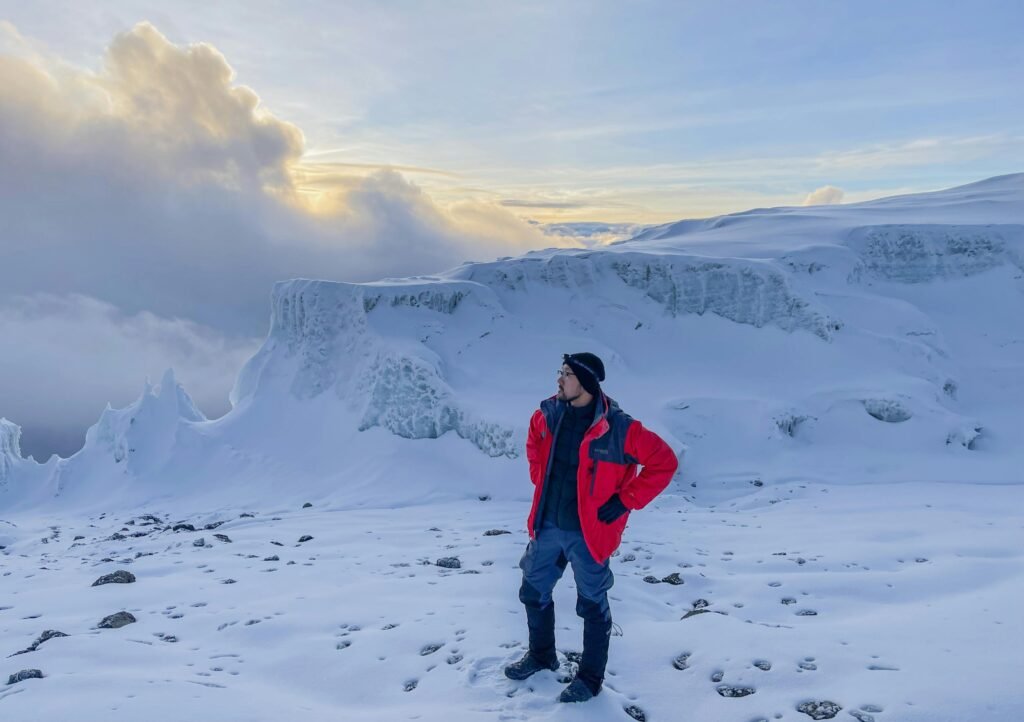
Plan your Kilimanjaro climb with knowledge and respect
Learning the real story behind Who Was the First Person to Climb Kilimanjaro? helps transform your climb into a deeper experience of history and conservation. Respecting the mountain today means respecting the scientific legacy, cultural values and environmental responsibility that now surround it.
If you would like personalized guidance and professionally designed itineraries, you can speak directly with local experts through personal Kilimanjaro planning support. Your climb becomes more meaningful when it is built on knowledge, respect and responsible travel.