
Climbing Mount Kilimanjaro is one of the most rewarding adventures in Tanzania. Every year, trekkers travel from different parts of the world to stand on Uhuru Peak, the highest point in Africa at 5,895 meters above sea level. Most people spend months preparing for the journey, choosing their climbing route, buying suitable clothing, and improving their physical fitness.
However, one important piece of mountain equipment is sometimes overlooked: crampons or another suitable traction device for icy conditions.
Kilimanjaro is not generally considered a technical mountaineering climb on its established trekking routes. Most of the journey involves walking on forest trails, rocky paths, volcanic slopes, and high-altitude terrain. Nevertheless, conditions near the summit can change considerably. Snowfall, freezing temperatures, and patches of hard ice may create slippery surfaces, especially during the final ascent toward Uhuru Peak.
At Eddy Tours & Safaris, we recommend that climbers discuss suitable traction equipment with their mountain operator before departure and have appropriate equipment available when summit conditions require it.
This does not mean every trekker will need to wear technical crampons. In many conditions, standard hiking boots provide sufficient grip, while in others, microspikes or properly fitted crampons may be necessary. The correct choice depends on the route, weather, terrain, and instructions from your mountain guide.
Understanding these differences before your climb can help you prepare more confidently and avoid unnecessary risks on the mountain.
Why Traction Equipment Matters on Mount Kilimanjaro
Mount Kilimanjaro rises from the warm plains of northern Tanzania into an alpine environment where temperatures can fall well below freezing.
During the early stages of the climb, trekkers walk through tropical forest, heathland, moorland, and alpine desert. Higher up, vegetation becomes sparse, and the landscape changes to loose volcanic rock, exposed ridges, and cold summit terrain.
Although the mountain lies close to the equator, its elevation creates conditions where snow and ice can occur.
Near the summit, climbers may encounter frozen ground, compacted snow, icy rocks, or slippery sections of trail. These conditions can be particularly challenging during the early morning hours, when many trekking groups make their final ascent.
Traction devices are designed to improve grip on suitable snow or ice surfaces. They can reduce slipping when correctly selected and used, but they do not eliminate the risk of falling.
For this reason, appropriate footwear, experienced guiding, weather assessment, and good judgment are essential parts of summit safety.
What Are Crampons?
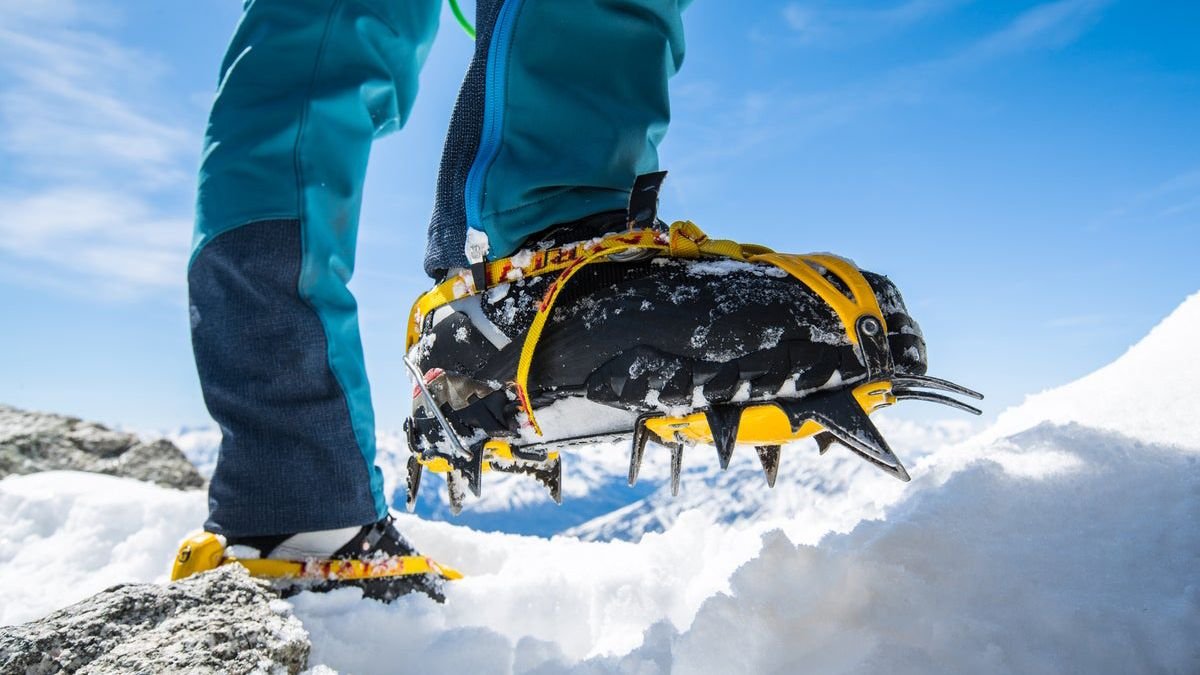
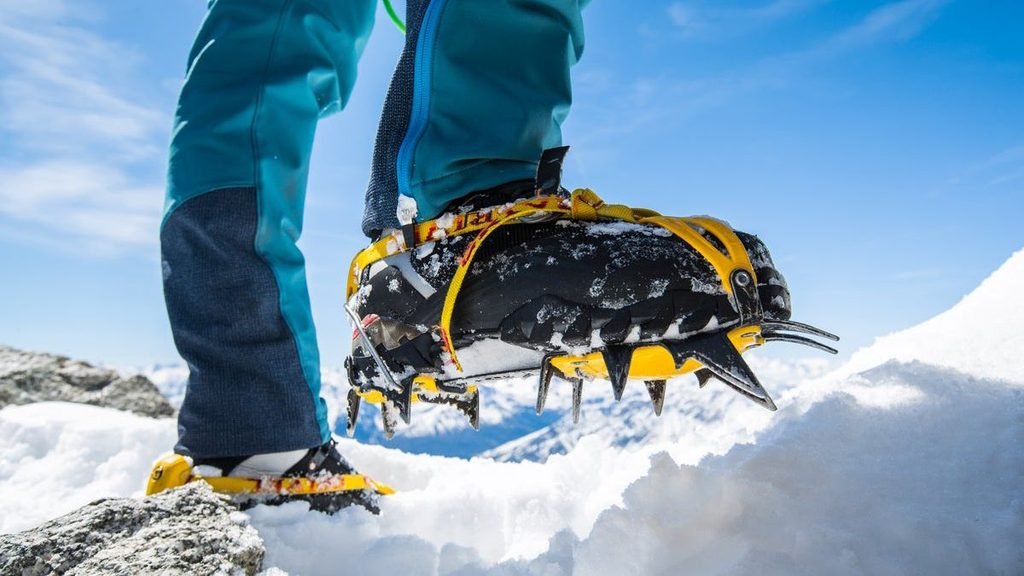
Crampons are metal traction devices fitted beneath compatible boots to provide additional grip on snow and ice.
They have pointed metal teeth that penetrate suitable frozen surfaces, helping climbers maintain traction when ordinary boot soles cannot grip securely.
Crampons are widely used in mountaineering, glacier travel, and winter climbing.
However, not all crampons are suitable for every boot or mountain environment.
Some require stiff mountaineering boots, while others use flexible attachment systems designed for compatible footwear. The compatibility between the crampon and the boot is critical.
Never assume that technical crampons can be safely attached to ordinary hiking boots. Using incompatible equipment may cause the crampons to detach or become unstable while walking.
For most travelers climbing Kilimanjaro’s established trekking routes, the decision to carry or use crampons should be made with a qualified mountain guide or experienced equipment provider.
Crampons vs. Microspikes: What Is the Difference?
Many trekkers use the terms crampons and microspikes interchangeably, but these are different types of traction equipment.
Understanding the distinction is important because they are designed for different terrain and conditions.
| Feature | Microspikes | Technical crampons |
|---|---|---|
| Main purpose | Additional grip on relatively moderate icy walking surfaces | Grip on more demanding snow and ice terrain |
| Design | Small metal spikes connected by chains or similar systems | Larger metal points mounted on a rigid or semi-rigid frame |
| Typical footwear | Compatible hiking boots or trail footwear | Compatible mountaineering or suitably stiff boots |
| Weight | Generally lighter | Generally heavier |
| Ease of use | Usually simpler to put on | Requires careful fitting and appropriate technique |
| Suitable for steep, hard ice | Generally not appropriate | May be appropriate with the correct equipment, skills, and conditions |
| Common Kilimanjaro relevance | May be useful for icy trekking paths | Occasionally relevant under more demanding conditions |
For many standard Kilimanjaro climbs, microspikes may be the more practical traction option when icy walking conditions are expected.
Technical crampons are not automatically better. Their effectiveness depends on the surface, footwear, and the user’s experience.
At Eddy Tours & Safaris, we encourage travelers to confirm the appropriate equipment before their trek rather than purchasing technical mountaineering gear unnecessarily.
Do You Really Need Crampons to Climb Kilimanjaro?
This is one of the most common questions among travelers preparing for Kilimanjaro.
The answer is that technical crampons are not routinely required on every standard Kilimanjaro trek.
Most climbers reach Uhuru Peak by walking along established routes without technical ice-climbing equipment.
However, Kilimanjaro’s summit conditions are not identical throughout the year or from one expedition to another.
Some summit attempts may involve dry volcanic scree, while others may encounter fresh snow, frozen ground, or compacted icy sections.
In these situations, additional traction equipment may be useful or necessary.
Rather than recommending that every traveler purchase full mountaineering crampons, we recommend preparing for the possibility of icy conditions and following the equipment guidance provided by your mountain team.
The important question is not simply whether you own crampons. It is whether you have the correct footwear and traction equipment for the conditions you may encounter.
Five Reasons We Recommend Preparing for Icy Conditions
1. Summit Temperatures Can Fall Well Below Freezing
One of the most challenging parts of climbing Kilimanjaro is the final summit ascent.
Most standard itineraries begin the summit push late at night or shortly after midnight. Trekkers climb in darkness and reach the upper mountain during some of the coldest hours of the day.
Freezing temperatures can cause moisture on rocks and paths to turn into ice.
Even a small icy section may be difficult to cross safely when wearing boots that cannot grip the surface.
Appropriate traction equipment can help when conditions and terrain make its use suitable.
2. Snowfall Can Change the Walking Surface
Snowfall is possible on Kilimanjaro, particularly at higher elevations.
Fresh snow may cover loose stones, uneven ground, or existing patches of ice.
A trail that was straightforward during dry conditions can become more challenging after snowfall.
Depending on the depth and condition of the snow, climbers may need to adjust their walking technique or use additional equipment.
Your guide should assess the conditions and decide whether it is appropriate to continue.
3. Frozen Ground Can Be Slippery
Some areas of the summit route contain compacted volcanic material, rocks, and exposed ground.
When temperatures fall, moisture can freeze on these surfaces.
Hard, smooth ice may be difficult to cross using ordinary hiking boots.
Microspikes or crampons may improve traction on suitable surfaces, but they must be appropriate for the terrain. Technical crampons can also be awkward or hazardous on exposed rock when used incorrectly.
The safest choice depends on the exact surface and the experience of the climber.
4. Fatigue Can Affect Balance During the Summit Attempt
Summit day is physically demanding.
Climbers may spend many hours walking at high altitude, often with limited sleep and cold temperatures.
As fatigue increases, balance and coordination can deteriorate.
A slippery surface adds another challenge to an already demanding climb.
Good traction can be helpful, but it should never replace careful pacing, proper rest, and guidance from an experienced mountain team.
5. Mountain Weather Is Unpredictable
Weather forecasts can provide useful information, but conditions on Kilimanjaro may change rapidly.
A summit route that appears dry before departure may experience snowfall or freezing conditions during the expedition.
Preparing suitable equipment in advance allows your team to respond more effectively when conditions change.
However, equipment alone does not make dangerous weather safe. There are situations when postponing or abandoning a summit attempt is the correct decision.
Which Kilimanjaro Routes May Require Traction Equipment?
The established Kilimanjaro trekking routes approach the summit from different directions, but many share similar upper-mountain conditions.
The need for traction equipment depends more on the actual snow and ice conditions than on the route name alone.
Machame Route
The Machame Route is one of Kilimanjaro’s most popular climbing routes.
It passes through several vegetation zones and offers varied mountain scenery before reaching the high-altitude summit area.
Climbers generally approach Uhuru Peak from Barafu Camp, following the upper slopes toward Stella Point.
These slopes often contain loose volcanic scree and rocky sections. Snow and ice may occur depending on the weather.
Travelers considering the Machame Route with Eddy Tours & Safaris should confirm the recommended equipment before departure.
Lemosho Route
The Lemosho Route approaches Kilimanjaro from the western side and is known for its scenic landscapes and longer acclimatization options.
Many Lemosho itineraries eventually join the southern circuit and approach the summit from Barafu Camp.
The upper route may experience the same cold, snow, and ice conditions encountered by Machame climbers.
Longer itineraries can provide more time for altitude acclimatization, but they do not prevent slippery terrain.
Marangu Route
The Marangu Route is known for its mountain huts and relatively direct approach to the summit.
The final ascent typically begins from Kibo Hut and follows steep volcanic slopes toward Gilman’s Point before continuing around the crater rim toward Uhuru Peak.
Conditions can include loose scree, snow, and ice.
Appropriate footwear and the guide’s assessment are especially important during the final ascent.
Rongai Route
The Rongai Route approaches Kilimanjaro from the northern side.
It generally follows a quieter approach before joining the upper mountain near Kibo.
Although the lower route may experience different rainfall patterns from the southern routes, the summit remains exposed to cold and changing weather.
Snow and ice conditions should be assessed before the summit attempt.
Northern Circuit Route
The Northern Circuit is one of the longer Kilimanjaro trekking routes.
It travels around the northern slopes and generally offers a gradual itinerary with additional time at altitude.
Despite its longer duration, the summit section can still experience freezing conditions.
Climbers should not assume that a longer route removes the need for appropriate cold-weather preparation.
When Is Snow Most Likely on Kilimanjaro?
Snowfall can occur on Kilimanjaro at different times of the year, especially near the summit.
However, the amount of snow and ice varies considerably.
| Travel period | General conditions | Equipment consideration |
|---|---|---|
| January–March | Often relatively dry overall, with cold summit conditions and possible snow | Check current summit forecasts |
| April–May | Wetter period with greater potential for precipitation | Be prepared for wet, snowy, or icy upper-mountain conditions |
| June–October | Generally drier trekking conditions, but cold temperatures remain | Ice may still occur despite dry weather |
| November–December | Short-rain period with variable mountain weather | Confirm traction needs with your guide |
These are broad seasonal patterns, not guarantees.
The amount of snow or ice present during your trek cannot be determined reliably from the month alone.
Before traveling, ask your climbing operator about recent summit conditions and whether additional traction equipment is recommended.
How to Choose the Right Traction Equipment for Kilimanjaro
Choosing mountain equipment should begin with the conditions you are likely to encounter and the footwear you plan to wear.
Check Your Hiking Boots
Your boots should fit comfortably and provide ankle support appropriate for your needs.
They should have reliable outsoles and enough room for warm socks without restricting circulation.
If you plan to use microspikes, check that the model is compatible with the size and shape of your boots.
If technical crampons are recommended, you may need specific boots that meet the crampon manufacturer’s requirements.
Avoid Buying Technical Crampons Without Advice
Technical mountaineering equipment can be expensive, and purchasing the wrong model may create more problems than it solves.
Before buying, contact your Kilimanjaro operator and ask what traction equipment is suitable for your route and travel dates.
Your guide may recommend microspikes, a particular crampon type, or no additional traction equipment under the expected conditions.
Consider Renting Suitable Equipment
Some mountain equipment may be available for rental in Tanzania, depending on the operator and local availability.
Rental can be practical for travelers who do not expect to use technical equipment regularly.
However, never assume a particular item will be available.
Confirm the equipment type, condition, boot compatibility, rental cost, and availability before arriving.
Practice Before Your Trip
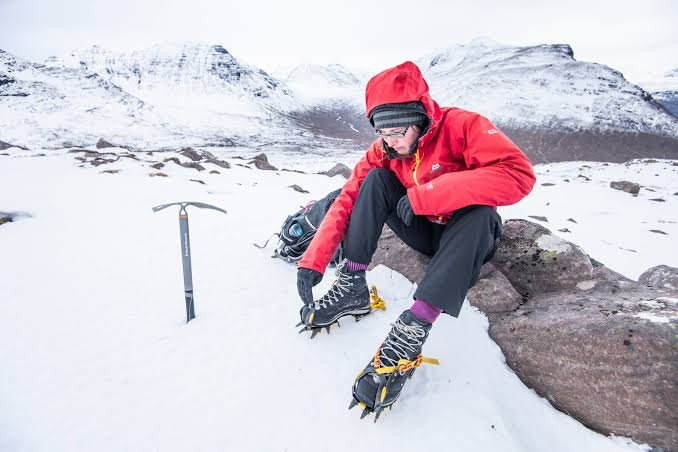
If your guide recommends traction equipment, learn how to put it on and remove it before reaching the summit.
Practice fitting it securely to your boots in a safe environment.
Understand the limitations of the equipment and the type of terrain where it should not be used.
Do not attempt steep ice or technical terrain without appropriate training and professional guidance.
How to Walk Safely on Snow and Ice
Good walking technique is essential when traveling over slippery mountain terrain.
Even with suitable traction equipment, poor balance or rushing can increase the risk of falling.
Walk at a Controlled Pace
Move slowly and deliberately, especially on unfamiliar surfaces.
Avoid sudden movements or long strides that may reduce stability.
Listen to your guide’s instructions and maintain a comfortable distance from other climbers.
Pay Attention to Foot Placement
Look ahead and identify where you intend to place each foot.
Avoid stepping on surfaces that appear unstable or unusually slippery.
Where traction devices are appropriate, follow the manufacturer’s instructions and the techniques taught by your guide.
Use Trekking Poles Appropriately
Trekking poles can help with balance on many Kilimanjaro trails.
However, they are not substitutes for an ice axe or proper mountaineering skills on steep, hazardous ice.
Use poles according to the terrain and your guide’s advice.
Avoid Unnecessary Risks
Do not leave designated trekking routes to explore snowfields, glaciers, or icy slopes.
Kilimanjaro’s remaining glaciers are visually impressive, but approaching or climbing on them may involve hazards that are not part of a normal trekking expedition.
Stay with your guide and follow the established route.
Know When to Turn Back
If conditions become unsafe, continuing toward the summit may not be appropriate.
Your guide may recommend waiting, changing plans, or turning around.
Reaching Uhuru Peak is an exciting goal, but returning safely is more important than completing the ascent.
Other Essential Equipment for a Safe Kilimanjaro Climb
Traction equipment is only one part of your mountain preparation.
The following items are also important for comfort and safety.
| Equipment | Why it matters |
|---|---|
| Properly fitted hiking boots | Support and traction on ordinary trekking terrain |
| Warm insulated jacket | Protection from cold summit temperatures |
| Waterproof jacket and trousers | Protection from rain, wind, and snow |
| Thermal base layers | Help maintain warmth in cold conditions |
| Warm gloves and overmitts | Protect hands during the summit ascent |
| Warm hat or balaclava | Reduce heat loss and protect exposed skin |
| Headlamp and spare batteries | Essential for night-time summit trekking |
| Trekking poles | Help with balance on appropriate terrain |
| Sunglasses with UV protection | Protect eyes from intense sunlight and glare |
| Water bottles or insulated hydration system | Help maintain access to drinking water in freezing conditions |
| Personal first-aid and medication supplies | Support individual health needs |
| Suitable traction equipment, when advised | Additional grip on appropriate icy surfaces |
It is important to test your equipment before departure.
New boots should be broken in, clothing layers should fit comfortably together, and your daypack should be easy to carry.
If you are uncertain about any equipment, contact Eddy Tours & Safaris before purchasing or renting it.
Does Wearing Crampons Improve Your Chances of Reaching Uhuru Peak?
Crampons can improve traction on appropriate snow and ice surfaces, but they do not directly improve altitude acclimatization, physical fitness, or endurance.
The ability to reach Uhuru Peak depends on several factors, including:
- Your response to high altitude.
- Your general health and physical preparation.
- The number of acclimatization days in your itinerary.
- Weather and trail conditions.
- Your pace and ability to manage fatigue.
- The decisions made by your mountain guide.
One of the most important risks on Kilimanjaro is altitude illness.
Because the summit is almost 5,900 meters above sea level, even physically fit trekkers can develop altitude-related symptoms.
Climbers should understand the warning signs of acute mountain sickness and follow their guide’s instructions.
Severe symptoms, including confusion, difficulty walking normally, or breathlessness at rest, require urgent attention and descent.
No equipment, including crampons, can prevent altitude sickness.
For medical guidance, travelers can consult the CDC Yellow Book information on high-altitude travel before their expedition.
How Eddy Tours & Safaris Helps Climbers Prepare
A successful Kilimanjaro trek begins with careful preparation long before reaching the mountain.
At Eddy Tours & Safaris, we encourage travelers to ask detailed questions about their itinerary, required clothing, hiking equipment, and the conditions they may encounter.
Before your climb, our team can help you review the planned route, trekking duration, and practical equipment requirements.
For traction equipment, the recommendation should be based on current conditions and advice from the mountain team rather than a blanket assumption that every climber must use technical crampons.
We also encourage travelers to choose a suitable itinerary with enough time for acclimatization and to prepare physically through regular walking, hill training, and appropriate endurance exercise.
You can begin planning your expedition through the Eddy Tours & Safaris website or send our team your Kilimanjaro climbing questions.
Common Mistakes Climbers Make with Crampons and Microspikes
Assuming All Traction Devices Are the Same
Microspikes and technical crampons are designed for different surfaces and activities.
Choosing the wrong equipment can reduce safety rather than improve it.
Wearing Incompatible Equipment
Some crampons require stiff boots and secure attachment systems.
Never use a crampon that does not fit your footwear correctly.
Using Traction Devices on Unsuitable Terrain
Equipment designed for snow and ice may not work well on exposed rock, loose stones, or mixed surfaces.
Using it incorrectly can increase the risk of tripping.
Waiting Until Summit Night to Learn How to Use It
Cold fingers, darkness, and fatigue can make unfamiliar equipment difficult to manage.
Practice before the climb if traction devices are part of your equipment plan.
Ignoring Your Guide’s Instructions
Your guide is responsible for assessing the route and making safety decisions during the expedition.
Always follow instructions regarding equipment use, walking pace, weather conditions, and whether to continue.
Believing Equipment Makes Every Condition Safe
No traction device guarantees safety on steep ice, unstable snow, or dangerous terrain.
There may be conditions in which turning back is the only responsible choice.
Frequently Asked Questions About Crampons on Kilimanjaro
1. Are crampons compulsory for climbing Mount Kilimanjaro?
Technical crampons are not routinely compulsory for every standard trekking expedition. Requirements depend on the route, actual conditions, and the guidance of your climbing operator.
2. Do I need crampons for the Machame Route?
Not necessarily. Many Machame climbers complete the route without technical crampons. However, additional traction equipment may be recommended if icy or snowy conditions are expected.
3. Are microspikes enough for Kilimanjaro?
Microspikes may be suitable for certain icy walking conditions, but they are not appropriate for all types of snow and ice terrain. Your guide should advise whether they are sufficient.
4. Can I wear crampons with ordinary hiking boots?
Some flexible crampon designs are compatible with certain hiking boots, but many technical crampons require stiff mountaineering boots. Always check the manufacturer’s compatibility instructions and seek professional advice.
5. Is Kilimanjaro covered in snow throughout the year?
Snow and ice may be present near the summit, but their extent changes with weather and season. Large areas of the standard summit trails may also be dry and rocky.
6. Can beginners use crampons?
Beginners can learn to use suitable traction equipment, but technical crampons require proper instruction and practice. They should not be used on hazardous terrain without appropriate training and guidance.
7. Should I buy crampons before traveling to Tanzania?
Do not purchase technical crampons until you have confirmed whether they are needed and which type is compatible with your boots. Renting suitable equipment may be an option if arranged in advance.
8. What happens if it snows during our Kilimanjaro climb?
Your guide will assess the conditions and determine whether the planned route remains safe. Depending on the situation, additional traction equipment, changes to the schedule, or turning back may be necessary.
9. Do crampons help prevent altitude sickness?
No. Crampons are traction devices and have no effect on altitude acclimatization. Proper itinerary planning, gradual ascent, monitoring symptoms, and appropriate medical advice are important for managing altitude-related risks.
10. What is the most important equipment for Kilimanjaro summit night?
Warm clothing, suitable boots, a reliable headlamp, gloves, water, and other essential trekking equipment are important. Additional traction devices may be necessary depending on snow and ice conditions.
Final Advice: Prepare for Kilimanjaro’s Conditions, Not Just the Summit
Climbing Mount Kilimanjaro is an extraordinary experience, but it requires respect for the mountain environment.
Although Kilimanjaro’s standard routes are trekking routes rather than technical climbing routes, freezing temperatures, snow, and ice can sometimes make the upper mountain more challenging.
That is why we recommend that every Kilimanjaro trekker considers the possibility of needing additional traction equipment.
For some climbers, microspikes may be suitable. For others, specific crampons may be recommended. In dry conditions, neither may be necessary.
The safest approach is to choose equipment based on actual conditions, ensure it is compatible with your boots, and follow the advice of your mountain guide.
Planning to climb Mount Kilimanjaro in 2027, 2028, or 2029?
Eddy Tours & Safaris can help you explore suitable climbing routes, review your equipment requirements, and prepare for your mountain adventure.
Plan Your Kilimanjaro Climb with Eddy Tours & Safaris
For direct assistance, speak to our team on WhatsApp or email our reservations team.
A well-prepared climb begins with the right information, suitable equipment, and a responsible mountain team.