
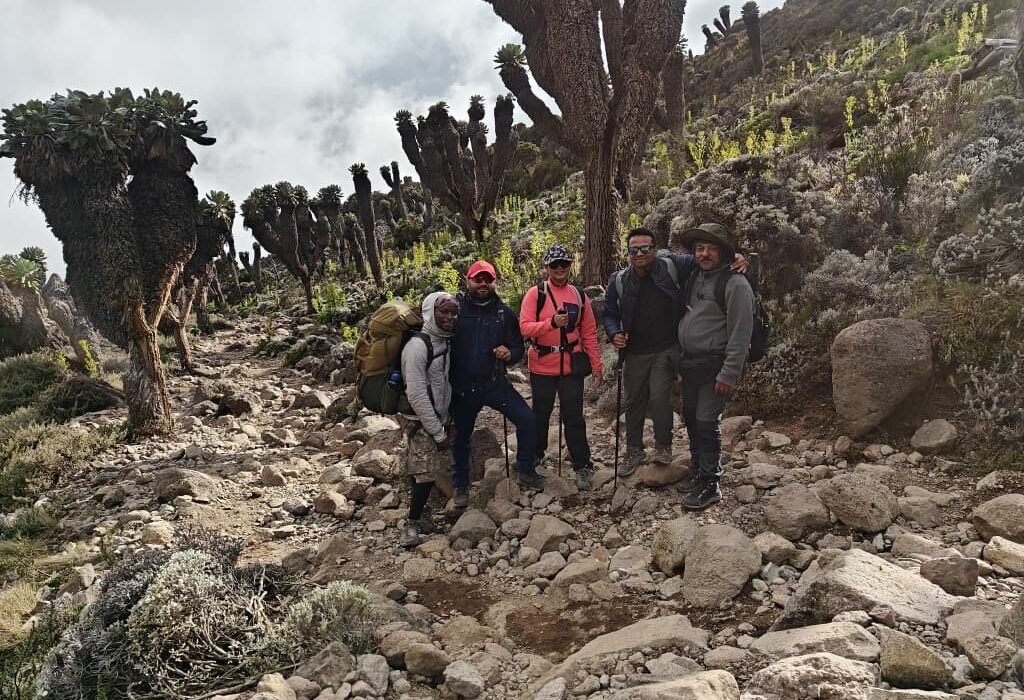
Wildlife on Mount Kilimanjaro is one of the most surprising and beautiful parts of climbing Africa’s highest mountain, because long before the rocky summit and cold winds appear, the lower and middle slopes are alive with forests, birds, monkeys and hidden mammals quietly moving through one of Tanzania’s most protected ecosystems.
Many travellers arrive with their full attention on reaching the top, but few realise that the journey passes through a natural wildlife corridor that connects lowland farms, montane forest, heath zones and high-altitude landscapes, creating a rare vertical ecosystem where animals adapt to changing temperatures, vegetation and human activity as the trail climbs higher and higher.
Wildlife on Mount Kilimanjaro and the unique mountain ecosystem
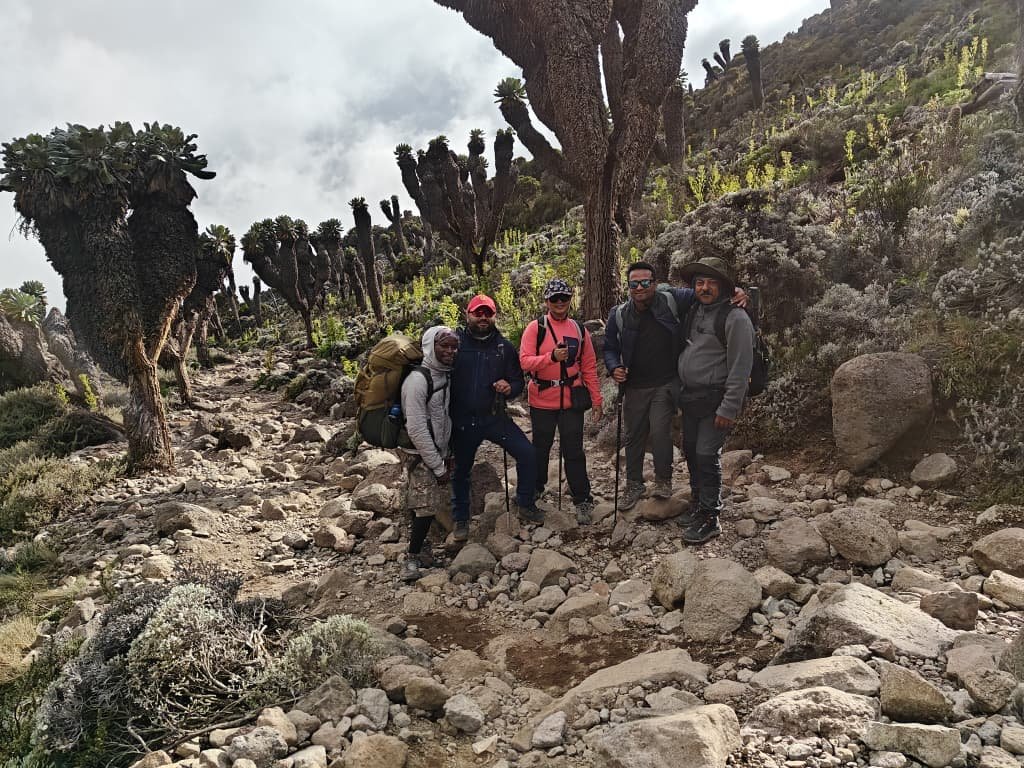
Mount Kilimanjaro is not only a famous mountain, it is also an ecological staircase where different habitats are stacked one above another, starting with cultivated land and moving into dense forest, open moorland and finally the harsh alpine zone. Conservation planning and ecosystem protection guided by the International Union for Conservation of Nature, environmental coordination from the United Nations Environment Programme, and long-term wildlife monitoring by the Wildlife Conservation Society all recognise Kilimanjaro as an important refuge for forest species that depend on healthy, connected habitats.
Research and conservation support from the African Wildlife Foundation and ecosystem protection programmes led by Conservation International help strengthen forest corridors and buffer zones around the mountain, allowing animals to move safely between feeding and breeding areas while reducing pressure from agriculture and settlement.
Wildlife on Mount Kilimanjaro and forest mammals you may encounter
The montane forest belt is the richest zone for mammals, and it is here that many visitors first notice signs of life beyond plants and birds. Blue monkeys, black-and-white colobus monkeys, bush babies, duikers and sometimes even forest buffalo use the thick vegetation for food and shelter. Species distribution data shared through the Global Biodiversity Information Facility supports scientific understanding of how these mammals are distributed across the mountain and how forest health directly affects their survival.
Large mammal research and habitat studies supported by The Nature Conservancy show that forest protection around mountains plays a critical role in keeping wildlife populations stable, especially where lowland habitats are becoming fragmented by human activity.
Wildlife on Mount Kilimanjaro and the extraordinary birdlife
Birds are often the most visible wildlife for climbers, and the forest zone is filled with colourful and distinctive species such as turacos, hornbills and sunbirds. Conservation and habitat monitoring by BirdLife International highlights the importance of montane forests for both resident and migratory birds, while ecosystem studies coordinated by Intergovernmental Science-Policy Platform on Biodiversity and Ecosystem Services confirm that mountain forests support some of the highest bird diversity in East Africa.
For photographers and nature lovers, these birds offer unforgettable moments along the trail, especially during quiet early morning walks before larger trekking groups begin to pass.
Wildlife on Mount Kilimanjaro and rare and sensitive species
Some animals living on the mountain are highly sensitive to disturbance and depend on low human pressure to survive. Research shared through scientific platforms such as ScienceDirect and conservation assessments published by the IUCN Red List of Threatened Species help identify which species require special protection measures within mountain parks.
These studies help park authorities manage trekking routes, campsite locations and visitor numbers so that sensitive habitats remain undisturbed.
Wildlife on Mount Kilimanjaro and climate pressure on mountain species
Climate change is quietly reshaping how wildlife survives on high mountains. Scientific assessments by the Intergovernmental Panel on Climate Change show that rising temperatures force many species to move higher in search of suitable conditions, while long-term ecosystem vulnerability research supported by the UN Environment Programme World Conservation Monitoring Centre demonstrates how limited space at higher elevations increases the risk of population decline.
Forest and land-use research coordinated by the Center for International Forestry Research further explains how protecting lower forest belts is essential, because once these areas are lost, wildlife has nowhere left to retreat as climate conditions change.
Wildlife on Mount Kilimanjaro and community conservation around the slopes
Local communities play a vital role in protecting animals living near the mountain boundary. Development and conservation research published by the World Bank shows that community-based tourism and forest stewardship programmes reduce illegal resource use and increase local support for wildlife protection. Labour and fair employment standards promoted by the International Labour Organization help ensure that guides, porters and forest workers benefit directly from tourism activities.
Cultural heritage and traditional land-use knowledge supported by UNESCO and community development research coordinated by the UN Department of Economic and Social Affairs also strengthen cooperation between conservation authorities and local villages surrounding the mountain.
Wildlife on Mount Kilimanjaro and responsible trekking tourism
Well-managed tourism is one of the strongest tools for funding conservation on the mountain. Research from the Overseas Development Institute confirms that responsible tourism can support park operations, ranger training and community projects while reducing dependence on unsustainable land practices. Travellers who choose professionally guided climbs through Eddy Tours and Safaris directly support environmental education, local employment and wildlife awareness programmes.
Many guests prefer to design their trekking and wildlife experiences through custom Kilimanjaro and safari itineraries, allowing them to include nature walks, cultural visits and conservation learning alongside their mountain adventure.
Wildlife on Mount Kilimanjaro and international conservation law
Protection of wildlife on the mountain is also guided by international agreements and national conservation policies. Biodiversity planning frameworks supported by the Convention on Biological Diversity help Tanzania strengthen protected area management and species recovery strategies, while ecosystem and freshwater policy coordination by UN Environment supports integrated management of forests, rivers and surrounding landscapes.
Wildlife on Mount Kilimanjaro and visitor safety in natural habitats
Responsible wildlife experiences must protect both people and animals. Health and travel guidance published by the World Health Organization helps improve hygiene, emergency preparedness and medical readiness in mountain environments, while outdoor safety and disaster response principles promoted by the American Red Cross support safer trekking and field operations.
These safety systems reduce stress on wildlife, limit off-trail movement and protect fragile habitats along the routes.
Wildlife on Mount Kilimanjaro as part of a deeper travel experience
For many travellers, the most emotional memories of the climb are not only the summit photos, but the quiet forest moments when a monkey crosses the path, birds call above the canopy, and mist slowly moves through ancient trees. Planning your journey through professional local Kilimanjaro planning services makes it easier to experience these natural moments in a respectful and well-organised way.
Guests who wish to combine mountain trekking with wider wildlife exploration often continue their journey using responsible Tanzania safari programmes, creating a complete adventure that connects forests, plains and communities in one meaningful travel story.
In simple words, Wildlife on Mount Kilimanjaro shows that this famous mountain is not only a challenge for climbers, but also a living sanctuary for birds, mammals and forest life that depend on strong conservation, community cooperation and responsible tourism to survive for generations to come.