
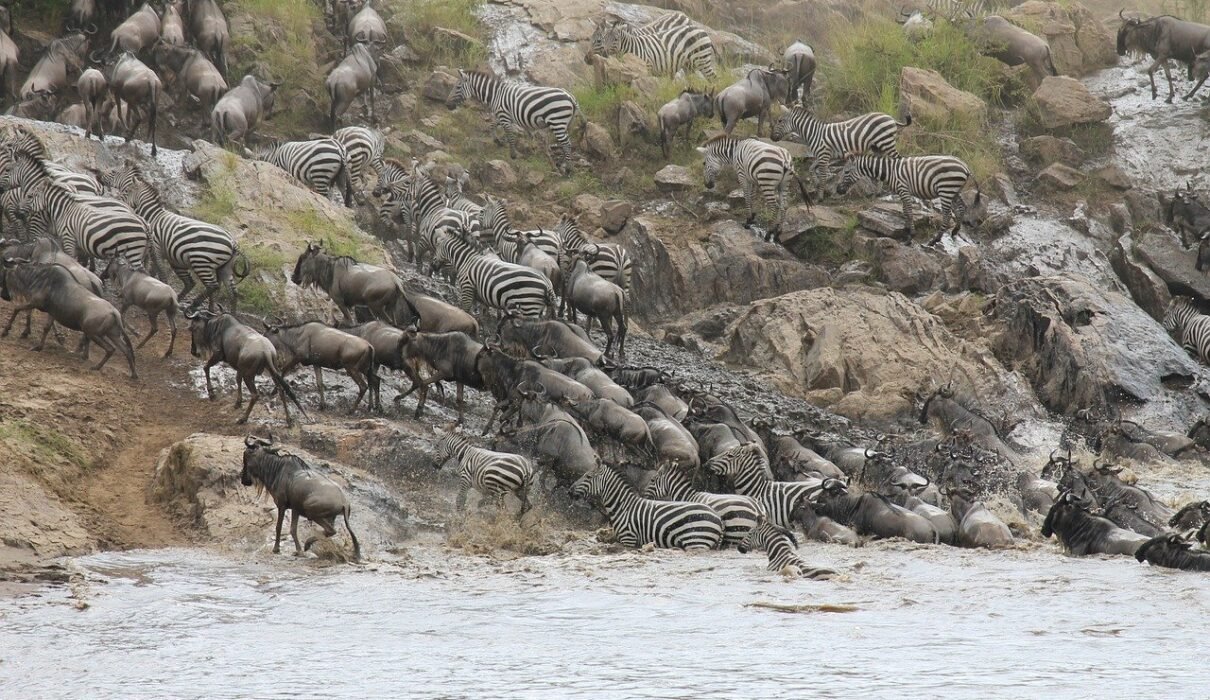
An African safari is much more than driving through a national park looking for lions and elephants. It is an opportunity to explore remarkable landscapes, observe animals in their natural habitats, learn about conservation, and experience a different side of Africa with professional local guides.
Imagine beginning your morning in Serengeti National Park as the sun rises over the grasslands. A herd of wildebeest moves across the plains, giraffes feed among the acacia trees, and a lion rests near a rocky outcrop. Later, you might enjoy lunch overlooking the wilderness, photograph elephants near a river, or return to your lodge for a peaceful evening.
These experiences are among the reasons Tanzania attracts travelers from around the world.
However, there are many other activities to enjoy during a safari. Depending on your destination, travel dates, budget, and personal interests, you can take a hot-air balloon flight, join a guided walking safari, watch birds, learn about local cultures, or spend time photographing wildlife.
Some activities are included in standard safari itineraries, while others require separate bookings, additional fees, or special permits. Certain experiences are available only in designated national parks, conservation areas, or private concessions.
If you are planning your first Tanzania safari, understanding the different activities will help you choose an itinerary that offers more than simply visiting several parks.
This guide explores the 10 top activities while on safari, explains where to enjoy them in Tanzania, and provides practical advice to help you make the most of your wildlife holiday.
1. Enjoy Exciting Wildlife Game Drives
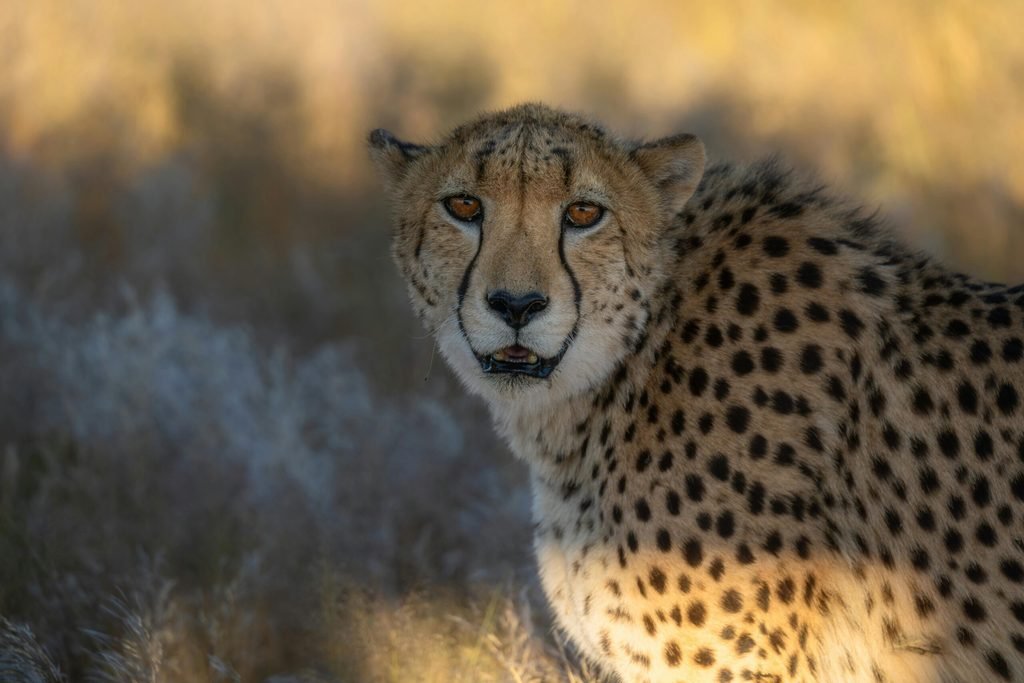
Game drives are the main activity on most African safaris and one of the best ways to observe large wild animals in their natural environment.
During a game drive, you travel through a national park or wildlife reserve in a safari vehicle with a professional guide. The guide helps locate animals, explains their behavior, and shares information about the surrounding ecosystem.
In Tanzania, game drives are particularly popular in Serengeti National Park, Ngorongoro Crater, Tarangire National Park, Lake Manyara National Park, and other protected areas.
Each destination offers a different experience.
Serengeti is known for its open plains, predators, and the Great Wildebeest Migration. Ngorongoro Crater provides opportunities to observe wildlife within a remarkable volcanic landscape. Tarangire is famous for elephants and baobab trees, while Lake Manyara offers varied habitats, including groundwater forest, woodland, and lakeshore environments.
Morning Game Drives
Early morning is often an excellent time for wildlife viewing.
Temperatures are generally cooler, and some animals are more active before the heat of the day increases.
Predators may still be moving after nighttime hunting, while herbivores begin feeding across the grasslands.
The softer morning light is also attractive for wildlife photography.
Afternoon Game Drives
Afternoon game drives provide another opportunity to observe wildlife.
As temperatures begin to fall, animals may become more active. Elephants can be seen feeding, giraffes move between trees, and predators may begin changing their resting positions.
Wildlife activity varies, and there is no guarantee that a particular species will be visible at a certain time.
Private or Shared Game Drives?
A private safari allows you to travel with your own guide and vehicle. This provides more flexibility when choosing where to stop and how long to observe animals.
A shared safari can be more affordable, but the daily schedule must accommodate other travelers.
For couples, families, and wildlife photographers, a private safari can be particularly useful.
2. Witness the Great Wildebeest Migration in Serengeti
The Great Wildebeest Migration is one of Africa’s most remarkable wildlife movements.
Large numbers of wildebeest, accompanied by zebras and other grazing animals, move through the Serengeti-Mara ecosystem in response to seasonal rainfall and grazing conditions.
The migration takes place throughout the year, but the herds do not remain in one location.
For travelers interested in this experience, choosing the right Serengeti region is essential.
The Calving Season in Southern Serengeti
Between approximately January and March, large concentrations of wildebeest are commonly found on the southern plains around Ndutu.
Many calves are born during a relatively short seasonal period, attracting predators such as lions, cheetahs, and hyenas.
This can be an excellent time for wildlife photography.
Migration Through Central and Western Serengeti
As the seasons change, herds generally move toward the central and western parts of the ecosystem.
Depending on rainfall, migration activity may occur in these areas during approximately April through July.
The Grumeti River region is one of the areas associated with seasonal migration movements.
Mara River Crossings in Northern Serengeti
Between approximately July and October, many migration herds may be found in Northern Serengeti.
Some attempt to cross the Mara River, where strong currents, steep banks, and crocodiles create significant challenges.
These crossings are unpredictable. Travelers may wait for hours or days without seeing a crossing, and no safari operator can guarantee one.
If witnessing the migration is your main reason for visiting Tanzania, ask your safari operator to plan accommodation according to the expected seasonal herd movements.
For official national park information, consult the Tanzania National Parks Authority.
3. Take a Hot-Air Balloon Safari Over the Serengeti
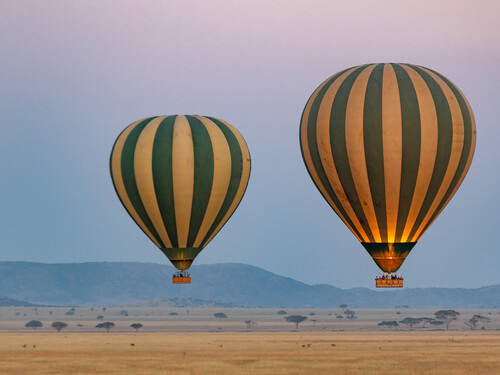
A hot-air balloon safari offers a different perspective on Africa’s wildlife landscapes.
Instead of exploring the park from a vehicle, you rise above the grasslands and observe the scenery from the air.
In Tanzania, hot-air balloon safaris are available in selected parts of Serengeti National Park and certain other authorized areas.
Flights normally begin around sunrise, when weather conditions are often suitable for balloon operations.
From above, travelers may see winding rivers, open grasslands, rocky outcrops, and animals moving across the landscape.
What Happens During a Balloon Safari?
The experience usually begins with an early transfer from your camp to the balloon launch area.
After a safety briefing, passengers board the basket and the balloon rises gradually.
The flight route and duration depend on wind conditions and the operator’s arrangements.
After landing, some operators provide a bush breakfast or other refreshments, depending on the package booked.
Is a Balloon Safari Worth the Cost?
For travelers celebrating a honeymoon, anniversary, or special occasion, a balloon safari can be a memorable addition.
It is also attractive for photographers who want to capture the Serengeti landscape from a different angle.
However, balloon flights are optional activities and are usually charged separately from a standard safari package.
Advance booking is advisable, particularly during popular travel periods.
Flights are weather-dependent and may be delayed or canceled when conditions are unsuitable.
4. Join a Guided Walking Safari
A walking safari allows you to explore the African wilderness on foot with an authorized guide.
Unlike a game drive, where much of the attention is focused on large mammals, a walking safari introduces you to the smaller details of the environment.
Your guide may explain animal footprints, bird calls, insects, plants, and signs of wildlife activity.
Walking safaris can be particularly rewarding for travelers who enjoy nature, hiking, and learning about ecosystems.
Where Can You Enjoy Walking Safaris in Tanzania?
Arusha National Park offers ranger-guided walking experiences in designated areas.
Nyerere National Park and certain other authorized wildlife areas may also offer walking activities, subject to current regulations and operating arrangements.
Not every national park allows walking in the same way, and independent walking is prohibited in many wildlife areas.
Are Walking Safaris Safe?
Walking in areas inhabited by dangerous animals involves risk.
For this reason, walking safaris must be arranged through authorized operators and conducted with appropriately qualified guides and any required ranger escorts.
Participants should remain with the group, follow instructions, and never attempt to approach animals.
A walking safari is not an opportunity to get dangerously close to lions, elephants, or buffaloes.
It is an educational wildlife experience conducted under controlled procedures.
5. Go Birdwatching in Tanzania’s National Parks
Birdwatching is one of the most rewarding activities for travelers who want to appreciate the full diversity of Tanzania’s wildlife.
Tanzania has more than 1,000 recorded bird species, although the exact number depends on the checklist and taxonomy used.
The country supports birds associated with grasslands, forests, wetlands, mountains, and coastal habitats.
Even travelers who are not experienced birdwatchers may enjoy seeing colorful bee-eaters, kingfishers, hornbills, rollers, flamingos, eagles, and ostriches.
Best Places for Birdwatching in Tanzania
Lake Manyara National Park offers woodland, forest, and wetland habitats that support a variety of birds.
Tarangire National Park is known for its diverse birdlife, particularly around river systems and woodland areas.
Serengeti National Park supports numerous raptors, ground birds, and grassland species.
Arusha National Park provides opportunities to observe forest and water-associated birds.
Ngorongoro Conservation Area also offers varied birdwatching environments, including grasslands and wetlands.
What Should You Bring for Birdwatching?
Binoculars are especially useful.
A camera with a suitable zoom lens can help capture birds without disturbing them.
If birdwatching is a major interest, tell your safari operator in advance so that a guide with suitable bird identification knowledge can be requested.
6. Experience Tanzania’s Culture Through Responsible Community Visits
A Tanzania safari can also provide opportunities to learn about local communities, traditions, and everyday life.
The country is home to many ethnic communities with different languages, histories, and cultural practices.
In northern Tanzania, some travelers include visits involving Maasai communities or cultural activities around Lake Eyasi.
These experiences can introduce visitors to traditional crafts, local livelihoods, food preparation, and community history.
Maasai Cultural Experiences
Maasai communities are found in parts of northern Tanzania and southern Kenya.
A responsibly organized visit may provide opportunities to learn about pastoral livelihoods, cultural traditions, and how communities adapt to changing social and environmental conditions.
The experience should be arranged with the community’s consent and should provide fair compensation.
Hadzabe and Datoga Cultural Visits
Around Lake Eyasi, some operators arrange visits involving Hadzabe and Datoga communities.
These visits should be organized respectfully, with local hosts determining how their traditions and activities are presented.
Cultural tourism should never treat people as exhibits.
Visitors should ask permission before photographing individuals and respect any restrictions explained by their hosts.
Why Add Culture to Your Safari?
Wildlife tourism is only one part of visiting Tanzania.
Learning about the people who live in and around wildlife landscapes can provide a deeper understanding of the country.
It can also help travelers appreciate the importance of community participation in conservation and tourism.
7. Enjoy Wildlife Photography in Beautiful African Landscapes
Photography is one of the most popular activities during a safari.
Tanzania offers opportunities to photograph animals, landscapes, birds, and natural behavior in different environments.
The Serengeti’s open plains are particularly attractive for photographing lions, cheetahs, wildebeest, and other grassland species.
Tarangire offers striking compositions involving elephants and enormous baobab trees.
Ngorongoro Crater provides beautiful landscape views and wildlife photography opportunities within the caldera.
Best Time of Day for Safari Photography
Early morning and late afternoon often provide softer light than the middle of the day.
These periods can be useful for capturing animal details and landscape colors.
However, wildlife photography depends on animal behavior, weather, and visibility.
Some of the most interesting sightings occur unexpectedly, so keeping your camera ready is helpful.
Practical Photography Tips
Use a zoom lens rather than asking your guide to approach wildlife too closely.
Avoid flash photography when it could disturb animals or when prohibited.
Keep your camera protected from dust.
Bring spare batteries and sufficient memory cards.
If you are using a smartphone, clean the camera lens regularly because dust can affect image quality.
A private safari may provide greater flexibility for photographers who want to spend longer observing particular animals.
8. Enjoy Scenic Picnics and Meals in the Wilderness
Meals during a safari can be memorable because of the surrounding scenery.
Many Tanzania safari itineraries include packed lunches or picnic meals at designated sites inside national parks.
These areas provide opportunities to rest, enjoy food, and appreciate the landscape between game drives.
Depending on the destination, a picnic area may overlook a river, grassland, or crater landscape.
Picnic Lunches in Ngorongoro Crater
Ngorongoro Crater has designated picnic areas where visitors can stop during their game drive.
These locations allow travelers to enjoy lunch without leaving the conservation area’s approved visitor arrangements.
Wildlife may be present around picnic sites, so visitors must follow the guide’s instructions and avoid feeding animals.
Bush Meals and Special Dining Arrangements
Some safari camps and lodges offer special dining experiences.
These may include private dinners, outdoor meals, or arrangements for honeymooners.
Such experiences depend on the property’s location, operating procedures, and wildlife safety requirements.
They should be confirmed before booking rather than assumed to be included in every safari.
9. Explore Scenic Landscapes and Natural Attractions
One of the most enjoyable aspects of a Tanzania safari is the variety of landscapes you encounter while traveling between wildlife destinations.
The northern safari circuit includes volcanic highlands, grasslands, woodland, lakes, rivers, and forested areas.
Even when animals are not immediately visible, the scenery can make the journey rewarding.
Ngorongoro Crater Viewpoints
The viewpoints along the Ngorongoro Crater rim provide opportunities to appreciate the enormous volcanic caldera.
On clear days, visitors can see large sections of the crater floor and surrounding highlands.
Tarangire’s Baobab Landscapes
Tarangire’s baobab trees are among the park’s most recognizable natural features.
These enormous trees create beautiful scenery, particularly in the early morning and late afternoon.
Serengeti’s Rocky Outcrops
The Serengeti contains rocky formations known as kopjes.
These outcrops provide habitat and resting areas for different wildlife species.
Lions may sometimes be seen resting on or near them, although sightings are unpredictable.
Lake Manyara’s Varied Habitats
Lake Manyara National Park offers forest, woodland, escarpment scenery, and lakeshore environments.
It can be a rewarding addition for travelers who enjoy both wildlife and landscape photography.
10. Relax at a Safari Lodge and Enjoy the African Wilderness
Not every memorable safari activity requires leaving your accommodation.
After several hours of game driving, returning to a comfortable lodge or tented camp provides time to relax and appreciate the surroundings.
Some lodges offer swimming pools, viewing decks, lounges, or outdoor seating areas.
Others provide a more intimate wilderness experience with tented accommodation and views of the surrounding landscape.
Enjoy the Sounds of Nature
Evenings at a safari camp can be particularly atmospheric.
You may hear insects, birds, or distant animal calls.
These sounds are part of the experience of staying in a natural environment.
However, guests should follow lodge safety procedures, particularly after dark.
In unfenced wildlife areas, visitors may be required to use an escort when moving between their rooms and communal facilities.
Stargazing on Safari
On clear nights, areas far from major towns can offer beautiful views of the night sky.
Stargazing can be an enjoyable activity for couples and families.
Visibility depends on cloud cover, moonlight, artificial lighting, and the location of your accommodation.
Choose a Lodge That Matches Your Interests
Some travelers prefer luxury lodges with extensive facilities.
Others enjoy smaller tented camps that emphasize wildlife and the surrounding environment.
The best choice depends on your budget, preferred comfort level, and the wildlife areas you want to explore.
A well-located camp can reduce travel time and allow more opportunities to enjoy the destination.
Which Safari Activities Are Best for Different Travelers?
The best activities depend on who is traveling and what they want from the holiday.
| Traveler type | Recommended safari activities |
|---|---|
| First-time safari visitors | Game drives, wildlife photography, scenic viewpoints |
| Couples and honeymooners | Private game drives, balloon safari, special lodge dining |
| Families with children | Game drives, birdwatching, suitable cultural activities |
| Wildlife photographers | Extended game drives, birdwatching, migration viewing |
| Adventure travelers | Authorized walking safaris, longer wildlife excursions |
| Nature enthusiasts | Birdwatching, guided nature interpretation, landscape exploration |
| Travelers with limited time | Game drives and scenic stops in accessible parks |
| Repeat safari visitors | Southern Tanzania parks, specialized wildlife activities |
A good itinerary should reflect your interests rather than attempting to include every available activity.
Best Time to Enjoy Safari Activities in Tanzania
Tanzania’s wildlife destinations can be visited throughout much of the year, but seasonal conditions influence the experience.
| Season | General conditions | Activities to consider |
|---|---|---|
| January–February | Often relatively dry in northern Tanzania | Calving-season wildlife viewing, photography |
| March–May | Long rains in many areas | Green-season wildlife viewing where accessible |
| June–October | Generally drier conditions | Game drives, migration-focused safaris, some guided walks |
| November–December | Short rains in many areas | Wildlife viewing, birdwatching, photography |
These are general patterns, not guaranteed weather forecasts.
For migration safaris, the location of the herds is more important than simply choosing a dry-season month.
Walking activities and balloon flights also depend on local operating conditions.
How Many Days Do You Need to Enjoy Tanzania Safari Activities?
A short safari can provide excellent wildlife viewing, but a longer itinerary allows you to explore more destinations without rushing.
Three-Day Safari
A three-day itinerary may include Tarangire, Ngorongoro, and another nearby destination, depending on the route and travel arrangements.
This is suitable for travelers with limited time.
Five-Day Safari
Five days can provide an introduction to several northern Tanzania wildlife areas, potentially including Serengeti and Ngorongoro.
However, travel distances should be considered carefully.
Seven-Day Safari
A seven-day itinerary allows more time for Serengeti wildlife viewing and can include Tarangire and Ngorongoro.
This is a practical option for first-time visitors who want a broader experience.
Eight to Ten-Day Safari
Longer itineraries can include additional nights in Serengeti, more time for photography, or selected optional activities.
They can also be adapted for couples and families who prefer a slower pace.
Sample Seven-Day Tanzania Safari with Different Activities
The following itinerary demonstrates how several safari activities can be combined into one holiday.
| Day | Destination | Main activities |
|---|---|---|
| Day 1 | Arusha | Arrival and relaxation |
| Day 2 | Tarangire National Park | Game drive, elephant viewing, photography |
| Day 3 | Ngorongoro Crater | Crater game drive, scenic viewpoints |
| Day 4 | Serengeti National Park | Transfer and afternoon game drive |
| Day 5 | Serengeti National Park | Full-day wildlife viewing |
| Day 6 | Serengeti National Park | Optional balloon safari and additional game drive |
| Day 7 | Arusha | Return transfer and departure arrangements |
This is an illustrative itinerary rather than a confirmed tour package.
The actual schedule depends on road conditions, accommodation locations, and available flights or transfers.
An optional balloon safari must be booked separately unless specifically included in the quotation.
What Should You Pack for Safari Activities?
Packing suitable equipment makes wildlife viewing more comfortable.
Recommended items include:
- Lightweight, comfortable clothing.
- Warm jacket for early morning game drives.
- Comfortable walking shoes.
- Sun hat and sunglasses.
- Sunscreen.
- Binoculars.
- Camera or smartphone.
- Spare batteries and charging equipment.
- Insect repellent.
- Refillable water bottle.
- Small daypack.
- Personal medication.
- Travel documents and insurance details.
For walking safaris or specialized activities, ask your operator whether additional equipment is required.
Avoid carrying unnecessary items that make moving between accommodations difficult.
Important Safety Rules During Safari Activities
Wildlife safaris take place in environments where animals behave naturally and unpredictably.
Always follow your professional guide’s instructions.
Remain inside the vehicle unless stopping or leaving the vehicle is permitted.
Never feed wildlife or attempt to attract animals for photographs.
Do not ask guides to drive too close to animals or interfere with their natural behavior.
When staying in unfenced camps, follow staff instructions about moving around the property, especially after dark.
If you are participating in a walking safari, remain with the authorized guide and follow all safety procedures.
Responsible behavior protects both visitors and wildlife.
Frequently Asked Questions About Activities While on Safari
What are the best activities to do on an African safari?
Popular activities include game drives, wildlife photography, birdwatching, guided walking safaris, balloon flights, cultural experiences, scenic viewpoints, and relaxing at safari lodges.
What is the most popular safari activity in Tanzania?
Wildlife game drives are the main activity on most Tanzania safaris.
Can you take a hot-air balloon safari in Serengeti?
Yes. Balloon safaris are available in selected Serengeti areas, subject to weather conditions and operator availability.
Are walking safaris allowed in Tanzania?
Yes, in authorized areas and under applicable regulations. Arusha National Park is one destination offering ranger-guided walking experiences.
Can I see the Great Wildebeest Migration during a safari?
Possibly. The migration takes place throughout the year, but the herds move between different regions according to seasonal conditions.
Is birdwatching worth doing in Tanzania?
Yes. Tanzania supports a large diversity of bird species across its forests, wetlands, grasslands, and other habitats.
Are safari activities suitable for children?
Many game drives and selected cultural or nature activities are suitable for families. Age restrictions may apply to walking safaris and other specialized experiences.
What is the best time of day for game drives?
Early morning and late afternoon are often rewarding, although wildlife can be seen at other times.
Can I take photographs of animals during a safari?
Yes, provided you follow park regulations and avoid disturbing wildlife.
Are cultural visits included in Tanzania safari packages?
Some itineraries include cultural activities, while others offer them as optional experiences. Check your quotation for details.
Are safari activities included in the package price?
Standard game drives are often included in organized safari packages. Balloon flights, specialized walking activities, and some cultural visits may involve additional costs.
How long should a first Tanzania safari last?
Approximately five to seven days is a practical starting point for many first-time visitors who want to explore the northern safari circuit.
Can I combine safari activities with Zanzibar?
Yes. A Tanzania wildlife safari can be followed by a Zanzibar beach holiday.
Final Thoughts: Make the Most of Your African Safari
An African safari offers much more than the opportunity to see famous wild animals.
Game drives provide close observation from a vehicle, while guided walking activities introduce travelers to the smaller details of the ecosystem. Balloon flights offer a different view of the landscape, and birdwatching reveals the extraordinary diversity of African wildlife.
Cultural visits, photography, scenic stops, and time spent relaxing at a safari lodge can make the experience more varied and personal.
Tanzania is particularly well suited to travelers who want to combine several activities because its northern safari circuit includes Serengeti, Ngorongoro Crater, Tarangire, Lake Manyara, and Arusha National Park.
The best safari is not necessarily the one with the longest list of activities. It is the one that gives you enough time to enjoy the wildlife, understand the landscapes, and appreciate the places you visit.
With a suitable itinerary, professional guiding, and realistic expectations, a Tanzania safari can provide memorable experiences for couples, families, photographers, and adventure travelers.
Plan Your Tanzania Safari with Eddy Tours and Safaris
Are you planning a Tanzania safari and want to experience more than traditional wildlife game drives?
Eddy Tours and Safaris can help you arrange a private wildlife safari through Serengeti National Park, Ngorongoro Crater, Tarangire National Park, and other northern Tanzania destinations.
Our team can also discuss optional experiences such as balloon safaris, authorized walking activities, cultural visits, and Zanzibar beach extensions, depending on your travel dates and preferred itinerary.
Visit Eddy Tours and Safaris to explore our Tanzania travel services.
For personalized safari planning and quotations, contact us through our official contact page.
Email: sales@eddytours-safaris.com
WhatsApp: +255 711 906 664
Contact Eddy Tours and Safaris to start planning a Tanzania safari filled with wildlife, beautiful landscapes, and experiences that match your interests.