
The 3 Days Mount Meru Climbing Tour from Kilimanjaro Airport, Moshi, or Arusha is a guided mountain trekking adventure that takes visitors through the beautiful landscapes of Arusha National Park to the summit of Tanzania’s second-highest mountain. Standing approximately 4,566 metres above sea level, Mount Meru offers a demanding but rewarding climbing experience, with forest trails, volcanic landscapes, mountain wildlife, and impressive views across northern Tanzania.
For travellers planning a Mount Meru climb in 2027, 2028, or 2029, this three-day itinerary provides an opportunity to reach Socialist Peak while spending two nights in mountain huts. The climb begins at Momella Gate inside Arusha National Park and follows a well-established route through the lower forest, Miriakamba Hut, Saddle Hut, and the upper mountain ridge. Unlike Mount Kilimanjaro, where most routes require at least five to eight days, Mount Meru can be climbed within three days by sufficiently fit and properly prepared hikers.
The shorter duration does not mean the mountain is easy. Mount Meru has steep sections, changing weather conditions, and a demanding summit attempt that normally begins during the night. Climbers must also be prepared for the effects of altitude, particularly because the three-day itinerary provides limited time for acclimatisation. The final day is especially challenging because it combines the summit attempt with the long descent to Momella Gate.
The climb can be arranged with transfers from Kilimanjaro International Airport, Moshi, or Arusha, making it suitable for travellers arriving in Tanzania specifically for mountain trekking or those combining Mount Meru with a longer holiday. However, visitors arriving on an international flight should normally spend a night in Arusha or Moshi before beginning the trek rather than attempting to start immediately after a long journey.
This guide explains the complete three-day Mount Meru climbing itinerary, trekking distances, accommodation, difficulty level, recommended travel seasons, equipment, costs, and everything you should know before booking your mountain adventure with Eddy Tours & Safaris.
3 Days Mount Meru Climbing Tour Overview
Mount Meru is located inside Arusha National Park, a protected wildlife area approximately 45 minutes from Arusha city by road, with additional travel time required to reach the mountain’s trekking entrance at Momella Gate. The mountain is a dormant volcano with a dramatic summit ridge and a large volcanic crater that can be viewed from higher sections of the trail.
According to the Tanzania National Parks Authority, Mount Meru rises to approximately 4,566 metres and can be climbed using the established route through Miriakamba and Saddle huts. The three-day climb requires advance arrangements, mountain support staff, and an armed ranger escort because the lower trails pass through wildlife habitat.
| Tour Information | Details |
|---|---|
| Tour name | 3 Days Mount Meru Climbing |
| Destination | Mount Meru, Arusha National Park |
| Country | Tanzania |
| Starting points | Kilimanjaro Airport, Moshi, or Arusha |
| Trekking entrance | Momella Gate |
| Mountain height | Approximately 4,566 metres |
| Summit | Socialist Peak |
| Trekking duration | 3 days / 2 nights |
| Accommodation | Miriakamba Hut and Saddle Hut |
| Difficulty | Challenging |
| Mountain guide | Included in the proposed package |
| Armed park ranger | Required |
| Meals | During the mountain expedition |
| Transport | Private transfer arrangements |
| Departure dates | Available on request for 2027, 2028 and 2029 |
| Recommended fitness | Good physical fitness and hiking experience |
The three-day itinerary is best suited to travellers who already have some mountain hiking experience, are comfortable walking for several hours, and understand the physical demands of climbing at altitude. Visitors who prefer additional recovery time should consider the 4-Day Mount Meru Climbing Tour, which divides the descent over two days and follows the schedule recommended by Tanzania National Parks.
Why Choose the 3 Days Mount Meru Climbing Tour?
Mount Meru offers a different mountain experience from Kilimanjaro. While Kilimanjaro is internationally recognised as Africa’s highest mountain, Mount Meru provides a combination of wildlife habitats, forest walking, volcanic scenery, and a challenging summit ridge within a shorter trekking period. The mountain is particularly attractive to visitors who want to experience high-altitude trekking without spending an entire week on an expedition.
The lower slopes pass through Arusha National Park, where giraffes, buffaloes, monkeys, antelopes, and numerous bird species occur. Wildlife sightings depend on the animals’ movements and cannot be guaranteed, but walking through a national park adds a distinctive element to the climb. An armed ranger accompanies trekking groups on the required sections of the route to help manage wildlife-related risks.
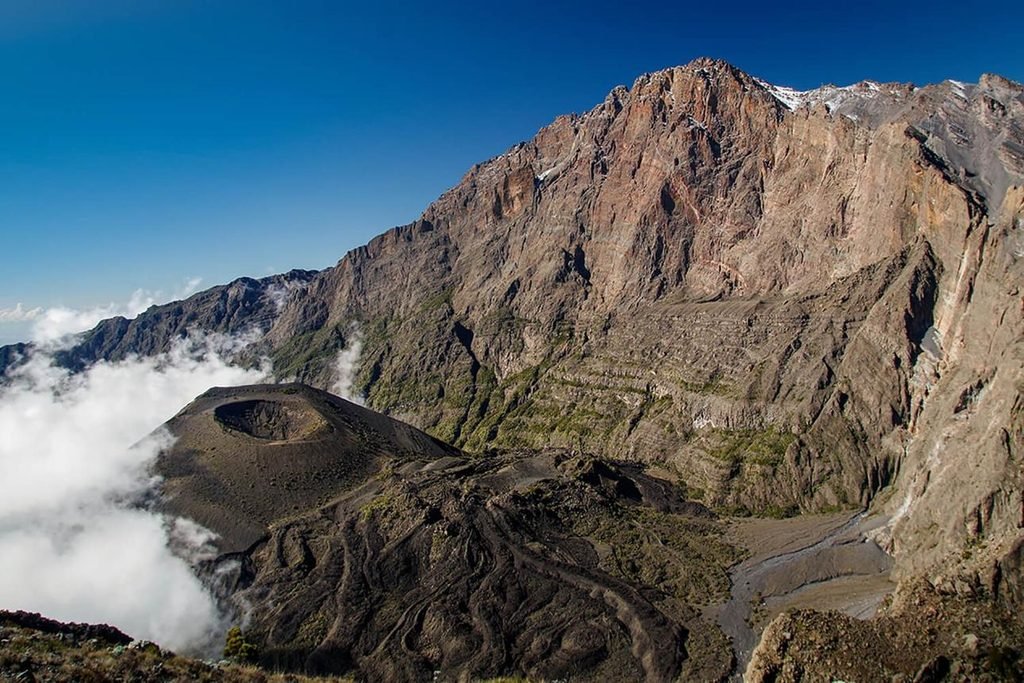
As climbers gain elevation, the scenery changes from forest to open mountain vegetation and rocky volcanic terrain. The upper slopes provide views towards the mountain’s crater, ash cone, and surrounding highlands. On clear days, climbers may also see Mount Kilimanjaro in the distance, although visibility depends on weather conditions.
Another advantage is the mountain’s location near Arusha. Travellers can combine Mount Meru with a northern Tanzania wildlife safari, a Kilimanjaro climbing expedition, or a short visit to nearby attractions. For visitors planning a longer mountain holiday, the climb can provide experience with high-altitude conditions, although it does not guarantee successful acclimatisation for a subsequent Kilimanjaro climb.
For more information about the mountain and its different trekking options, read our Complete Guide to Climbing Mount Meru in Tanzania.
Complete 3 Days Mount Meru Climbing Itinerary for 2027, 2028 and 2029
The following itinerary describes the standard three-day Mount Meru climbing route. Walking times and distances are approximate because they depend on the group’s fitness, weather, trail conditions, and instructions from the mountain guide and park ranger.
Day 1: Kilimanjaro Airport, Moshi or Arusha to Momella Gate – Miriakamba Hut
Starting elevation: Approximately 1,500 metres
Overnight elevation: Approximately 2,500 metres
Hiking distance: Approximately 10 kilometres
Walking time: Approximately 4–6 hours
Accommodation: Miriakamba Hut
Meals: Lunch and dinner during the trek
Your Mount Meru climbing adventure begins with a morning pickup from your hotel in Arusha or Moshi, followed by a drive towards Arusha National Park. Travellers arriving through Kilimanjaro International Airport can also arrange an airport transfer as part of their wider holiday package, although an overnight stay before the trek is strongly recommended. During the journey, you will pass through the green landscapes surrounding Mount Meru, including local communities, agricultural areas, and the lower slopes of the mountain.
Upon arrival at Momella Gate, your mountain guide will complete the necessary registration and park procedures while the support team prepares the equipment, food, and luggage. Before beginning the hike, your guide will explain the route, expected walking conditions, safety arrangements, and the importance of maintaining a comfortable pace. An armed park ranger will accompany the group as required because the lower mountain trails pass through an area inhabited by wild animals.
The first day’s hike takes you through grassland and forest habitats, where you may encounter giraffes, buffaloes, monkeys, and various bird species. The landscape gradually becomes more forested as the trail gains elevation, and the cooler mountain environment becomes noticeable. Your guide will manage the walking pace and arrange suitable rest stops, allowing the group to adjust to the increasing altitude while enjoying the surroundings.
After several hours of walking, you will arrive at Miriakamba Hut, located at approximately 2,500 metres above sea level. The mountain team will arrange your sleeping space and prepare dinner while you rest after the day’s climb. Your guide will also explain the following day’s route to Saddle Hut and check how everyone is responding to the altitude. Spending the evening at Miriakamba provides an opportunity to recover before continuing towards the upper mountain.
Day 2: Miriakamba Hut to Saddle Hut – Optional Little Meru Acclimatisation Walk
Starting elevation: Approximately 2,500 metres
Overnight elevation: Approximately 3,570 metres
Hiking distance: Approximately 4–5 kilometres to Saddle Hut
Walking time: Approximately 3–5 hours
Accommodation: Saddle Hut
Meals: Breakfast, lunch and dinner
After breakfast at Miriakamba Hut, you will begin the second stage of your Mount Meru climb towards Saddle Hut. Although the distance is shorter than the previous day’s hike, the trail becomes steeper as you gain elevation. The route passes through mountain forest and gradually enters more open vegetation, offering views of the surrounding slopes when weather conditions are clear.
As you continue climbing, the environment becomes noticeably different from the lower mountain. Temperatures may be cooler, vegetation becomes less dense, and the effects of altitude may become more apparent. Your mountain guide will encourage a steady walking pace and monitor the group’s condition throughout the ascent. Climbers should report headaches, dizziness, nausea, or unusual fatigue rather than trying to continue without informing the guide.
Upon reaching Saddle Hut at approximately 3,570 metres, you will have lunch and time to rest. Depending on the weather, your physical condition, and the guide’s assessment, an optional acclimatisation walk towards Little Meru may be arranged. Little Meru rises to approximately 3,820 metres and provides additional views of the surrounding mountain landscape. This excursion is optional, and it should not be attempted if a climber is experiencing symptoms of altitude illness or significant fatigue.
The afternoon is mainly dedicated to preparing for the summit attempt. Your guide will explain the expected departure time, trail conditions, clothing requirements, and equipment needed for the night climb. Dinner is normally served early, allowing climbers to rest before beginning the final ascent. Because the summit attempt starts during the night, it is important to organise your headlamp, warm clothing, drinking water, snacks, and other essential items before going to sleep.
Day 3: Saddle Hut to Socialist Peak – Miriakamba Hut – Momella Gate – Arusha or Moshi
Starting elevation: Approximately 3,570 metres
Summit elevation: Approximately 4,566 metres
Finishing elevation: Approximately 1,500 metres
Total hiking distance: Approximately 19–23 kilometres
Walking time: Approximately 12–16 hours or longer
Accommodation: Not included after the trek unless arranged
Meals: Breakfast and lunch, with additional provisions according to the itinerary
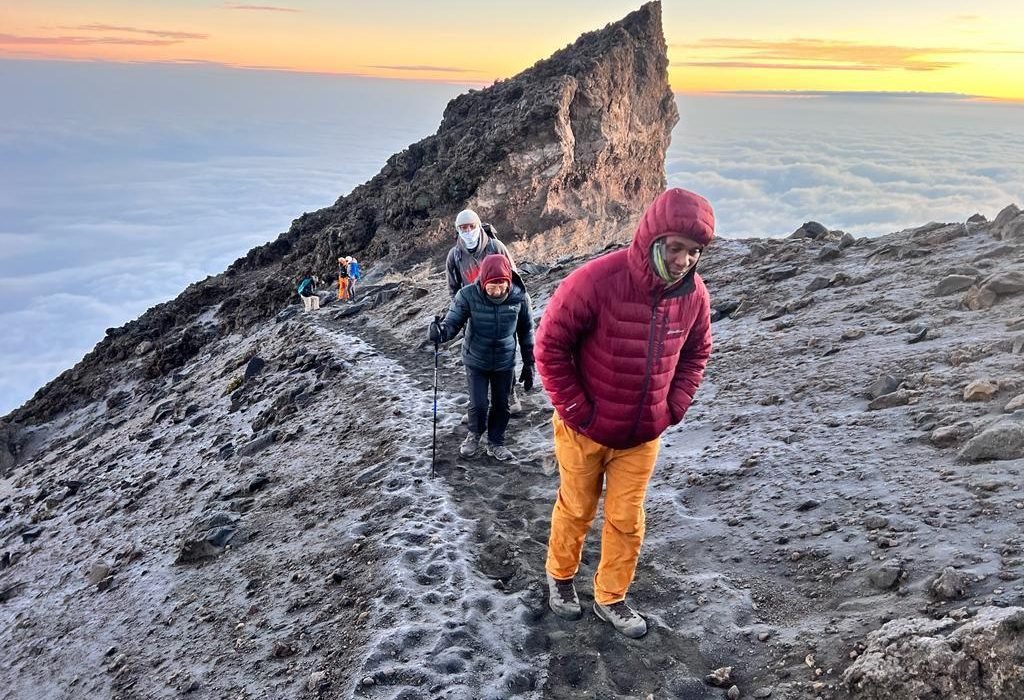
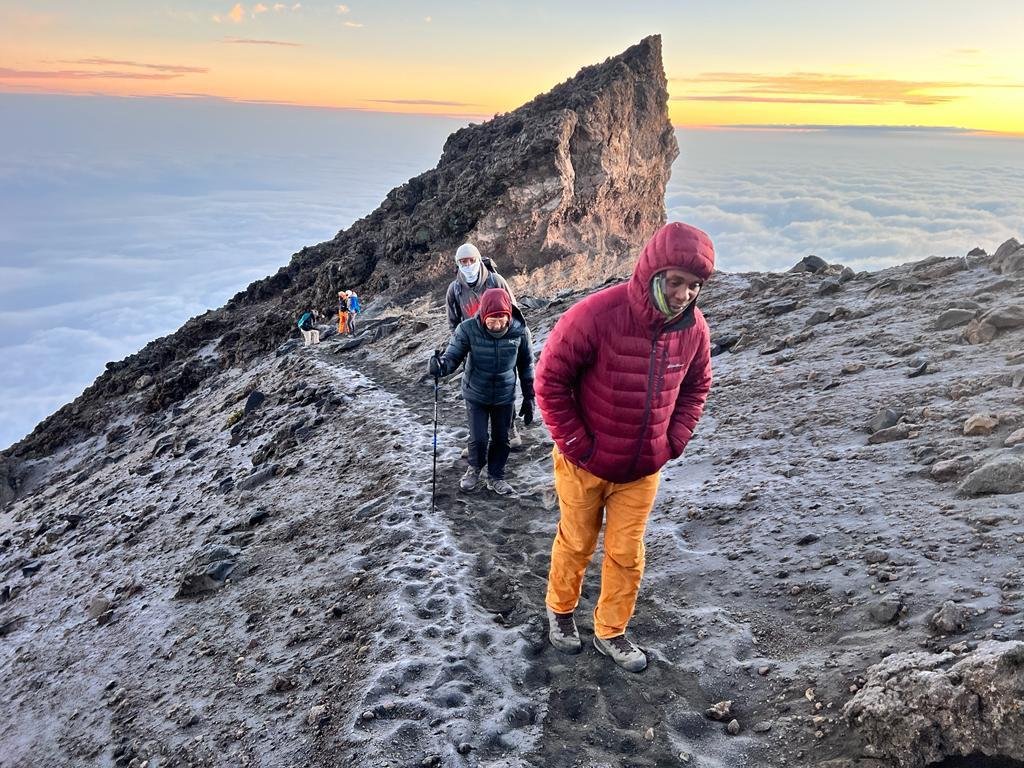
The final day begins very early, often around midnight or shortly afterwards, depending on the guide’s assessment and the group’s condition. After preparing your equipment and putting on suitable warm clothing, you will leave Saddle Hut and begin the ascent towards Socialist Peak. The trail becomes increasingly rocky and exposed, and climbers must follow their guide’s instructions carefully, particularly where the route passes along the mountain’s narrow volcanic ridge.
The climb towards the summit is physically demanding because of the steep terrain, cold temperatures, and high altitude. Your guide will maintain a suitable pace and monitor the group’s condition throughout the ascent. As you gain elevation, the route offers views into Mount Meru’s volcanic crater when visibility allows. The final approach requires careful footing, especially in darkness, strong winds, or poor weather.
If conditions are suitable and the group is able to continue safely, you will reach Socialist Peak at approximately 4,566 metres above sea level. From the summit, clear weather may provide impressive views of the surrounding landscape, including Mount Kilimanjaro in the distance. However, reaching the summit depends on fitness, acclimatisation, weather, and the guide’s safety assessment. No responsible mountain operator can guarantee that every climber will reach the top.
After spending a short time at the summit, you will begin the descent towards Saddle Hut. The return journey requires concentration because fatigue can make the rocky sections more difficult. Once at Saddle Hut, you will have time to rest and eat before continuing down towards Miriakamba Hut and eventually Momella Gate.
This is the most demanding part of the three-day itinerary because the descent continues all the way to the park entrance on the same day as the summit attempt. The total walking time can be very long, and climbers should be prepared for tired legs, changing temperatures, and a significant loss of elevation. Upon reaching Momella Gate, the mountain team will complete the necessary exit procedures before you meet your driver for the transfer to Arusha or Moshi.
Because the final day is physically demanding and may finish later than expected, travellers should avoid scheduling an international flight immediately after the climb. An additional hotel night is strongly recommended, especially for those travelling onward from Kilimanjaro International Airport.
Mount Meru Climbing Route: Momella Gate to Socialist Peak
The standard Mount Meru climbing route begins at Momella Gate and passes through several distinct vegetation zones before reaching the summit. Unlike mountain routes that begin directly in alpine terrain, the Meru trail starts inside a wildlife-rich national park, where the surrounding environment changes considerably as climbers gain altitude.
The first section includes grassland and forest habitats, followed by steeper mountain trails leading towards Miriakamba Hut. From Miriakamba, the route continues through forest and increasingly open vegetation towards Saddle Hut. Above Saddle Hut, the landscape becomes rocky and exposed, with sections of volcanic terrain leading towards Socialist Peak.
The upper mountain is known for its steep ridge and views towards the volcanic crater. These features make Mount Meru particularly attractive to experienced hikers, but they also require careful movement and suitable weather conditions. Climbers should remain with their guide, follow the established route, and avoid approaching exposed edges unnecessarily.
The three-day itinerary follows the same general route as the four-day climb, but it combines the summit attempt and complete descent into one demanding final day. Tanzania National Parks recommends the four-day schedule because it allows additional time for acclimatisation and divides the descent over two days.
How Difficult Is the 3 Days Mount Meru Climb?
The three-day Mount Meru climb is challenging and should not be treated as an easy hiking holiday. Although the mountain is lower than Kilimanjaro, its summit route includes steep sections, exposed terrain, and significant altitude gain. The shorter itinerary also means that climbers have less time to adjust to reduced oxygen levels before attempting the summit.
Good physical fitness is important because the climb involves several hours of walking on consecutive days. The first day requires a steady ascent through forest, while the second day includes steeper terrain leading to Saddle Hut. The final day is especially demanding because climbers begin the summit attempt during the night and then descend all the way to Momella Gate.
Previous hiking experience is useful, particularly experience on steep or uneven trails. Travellers who regularly walk long distances, climb hills, or participate in endurance activities may find the physical demands more manageable, but fitness alone does not prevent altitude sickness.
Climbers should also understand that altitude illness can affect people regardless of age or physical condition. The safest approach is to ascend at a controlled pace, communicate symptoms immediately, and follow the guide’s instructions. If serious symptoms develop, continuing towards the summit can be dangerous, and descent may be necessary.
For travellers who are uncertain about their ability to complete the three-day itinerary, the 4-Day Mount Meru Climbing Package is generally a more suitable option.
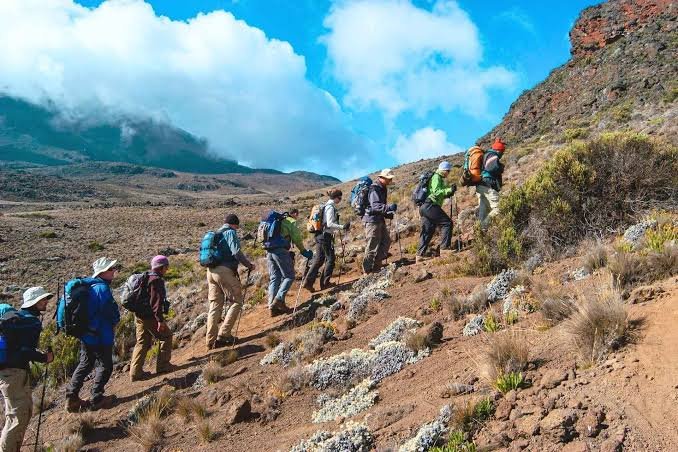
Starting Your Mount Meru Climb from Kilimanjaro International Airport
Kilimanjaro International Airport is one of the main international arrival points for travellers visiting northern Tanzania. The airport serves visitors travelling to Arusha, Moshi, Mount Kilimanjaro, and Mount Meru. Its location makes it convenient for international travellers who want to arrange a mountain climbing holiday without first travelling to another part of Tanzania.
Visitors arriving at Kilimanjaro Airport can arrange a private transfer to Arusha, where they can spend the night before beginning the climb. Arusha is generally the more convenient overnight location because it is closer to Arusha National Park and the Mount Meru trekking entrance.
A typical arrangement involves arriving at Kilimanjaro International Airport, meeting your driver, travelling to your hotel in Arusha, and attending a pre-climb briefing. During the briefing, your guide can check your equipment, explain the route, and confirm the following morning’s departure arrangements.
The three trekking days should normally begin after this arrival and preparation day. Travellers should therefore allow additional time in Tanzania rather than assuming that an international arrival and the first day of mountain trekking can always be combined safely.
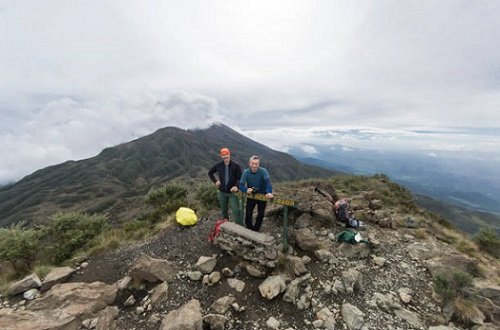
Starting Your Mount Meru Climb from Moshi
Moshi is a popular base for travellers climbing Mount Kilimanjaro, but it can also be used as a starting point for Mount Meru. Visitors staying in Moshi can arrange a private morning transfer to Arusha National Park, where the trekking expedition begins at Momella Gate.
The journey from Moshi to the park takes longer than travelling from Arusha, so an early departure is recommended. Your driver will collect you from your hotel and travel towards the park while your mountain team prepares the necessary arrangements.
Starting from Moshi is particularly suitable for travellers who are already staying near Kilimanjaro or planning to combine Mount Meru with another mountain expedition. However, visitors should consider the additional travel time, especially after completing the demanding summit descent on the final day.
Those planning to climb Kilimanjaro after Mount Meru should also allow suitable recovery time between the two expeditions. Although Mount Meru can provide useful experience at altitude, completing one mountain does not guarantee successful acclimatisation or summit success on the other.
Travellers interested in combining mountain trekking experiences can explore our Kilimanjaro Climbing Group Departure Dates.
Starting Your Mount Meru Climb from Arusha
Arusha is the most convenient starting point for a Mount Meru climbing expedition because the city is located close to Arusha National Park. Many visitors choose to spend the night in Arusha before the climb, allowing enough time for equipment checks, a mountain briefing, and an early departure the following morning.
The transfer from Arusha to the park generally takes less time than travelling from Moshi, although the total journey to Momella Gate depends on traffic, road conditions, and the route used inside the park. The mountain team will arrange the necessary transport and park registration before the trek begins.
Arusha is also a practical location for travellers who want to combine Mount Meru with a wildlife safari. After completing the climb, visitors can continue towards Tarangire National Park, Ngorongoro Crater, or Serengeti National Park without returning to Moshi.
For visitors who prefer a simple itinerary with limited road travel, beginning and ending the Mount Meru climb in Arusha is usually the most convenient arrangement.
Where Do You Sleep During the 3 Days Mount Meru Climb?
Accommodation on the standard Mount Meru climbing route is provided in designated mountain huts rather than private hotel rooms. The three-day itinerary includes two nights on the mountain, with the first night spent at Miriakamba Hut and the second night at Saddle Hut.
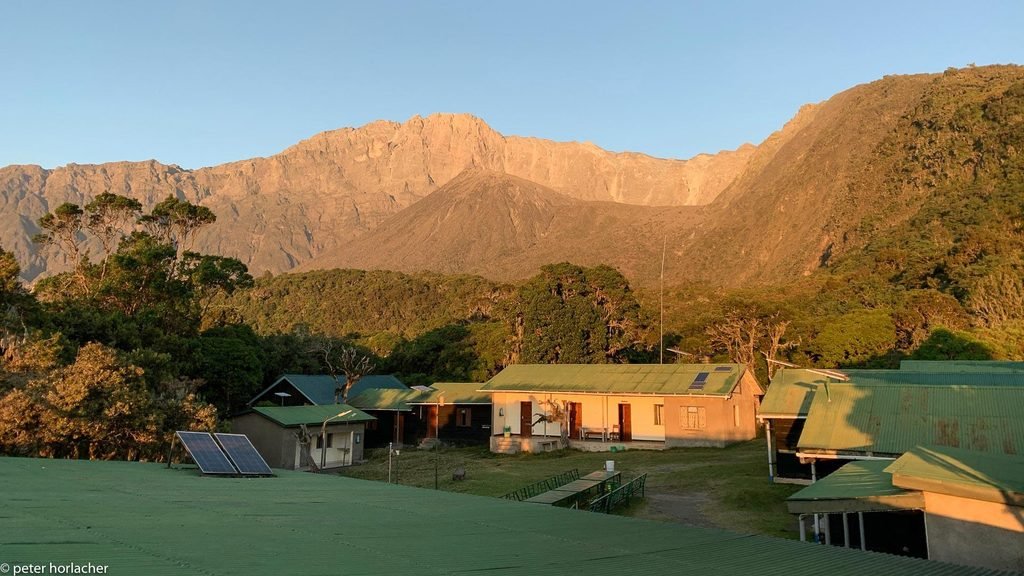
Miriakamba Hut is located at approximately 2,500 metres and provides the first overnight stop after the ascent from Momella Gate. Saddle Hut is located at approximately 3,570 metres and serves as the main base for the summit attempt.
The accommodation is basic and designed for mountain trekkers. Climbers should expect shared facilities rather than the services available at a hotel or safari lodge. A suitable sleeping bag is important because temperatures can become cold, particularly at Saddle Hut.
Meals are prepared by the mountain support team according to the arrangements included in the climbing package. Drinking water arrangements should also be confirmed before departure, including how water will be supplied and treated during the expedition.
According to the official Arusha National Park visitor guide, Miriakamba and Saddle huts are the designated trekking accommodation facilities for Mount Meru climbers.
Best Time to Climb Mount Meru in 2027, 2028 and 2029
Mount Meru can be climbed during different months of the year, but weather conditions influence trail safety, visibility, and the overall trekking experience. Many travellers prefer the relatively dry periods because the trails are generally more manageable and there may be better opportunities to enjoy mountain views.
January to February is often a popular period for mountain trekking in northern Tanzania. June to October is another commonly preferred season, with generally drier conditions in many parts of the region. However, Mount Meru has its own mountain weather, and rain, clouds, strong winds, and cold temperatures can occur at any time.
March to May is generally associated with heavier rainfall in northern Tanzania. During these months, trails may become muddy or slippery, and visibility can be reduced by cloud cover. November and December may also experience seasonal rainfall, although conditions vary from year to year.
| Travel Period | General Conditions | Climbing Considerations |
|---|---|---|
| January–February | Often relatively dry | Popular trekking period |
| March–May | Generally wetter | Muddy trails and reduced visibility possible |
| June–October | Generally drier | Popular for mountain trekking |
| November–December | Variable rainfall | Conditions should be checked carefully |
Travellers planning their Mount Meru climb for 2027, 2028, or 2029 should select dates according to their travel schedule and confirm the latest park conditions before departure. Even during the dry season, the summit can experience cold temperatures and difficult weather, so proper equipment remains essential.
What to Pack for a 3 Days Mount Meru Climbing Tour
Packing suitable equipment is important because Mount Meru involves different temperatures and terrain within a relatively short period. Climbers begin in a relatively warm forest environment but may encounter cold temperatures, wind, and rocky conditions near the summit. Clothing should therefore be arranged in layers so that it can be adjusted throughout the trek.
| Equipment | Why It Is Important |
|---|---|
| Waterproof hiking boots | Support and grip on uneven trails |
| Warm jacket | Protection against cold temperatures |
| Waterproof jacket and trousers | Protection from rain and wind |
| Thermal base layers | Warmth during the summit attempt |
| Hiking trousers | Comfort during long walking days |
| Warm gloves and hat | Protection against summit cold |
| Headlamp with spare batteries | Essential for the night ascent |
| Sleeping bag | Warmth in mountain huts |
| Daypack | Carrying personal essentials |
| Water bottles or hydration system | Drinking water during the climb |
| Trekking poles | Support during steep ascents and descents |
| Sunglasses and sunscreen | Protection from strong sunlight |
| Personal medication | Individual medical requirements |
| Energy snacks | Additional food during long walking periods |
| Passport and required documents | Park registration and identification |
Travellers should also carry spare socks, personal toiletries, and suitable clothing for changing weather conditions. Equipment requirements should be discussed with the mountain operator before departure, especially if some items need to be rented locally.
For visitors combining Mount Meru with Kilimanjaro, much of the same equipment can be used for both expeditions. However, the longer Kilimanjaro climb may require additional clothing and supplies.
Mount Meru Climbing Safety and Altitude Considerations
Safety is one of the most important parts of a Mount Meru climbing expedition. The mountain’s lower slopes contain wildlife, while the upper sections involve steep terrain, high altitude, and potentially difficult weather. For these reasons, the climb must be organised with the required mountain personnel and park arrangements.
An armed ranger escort is required for Mount Meru trekking because of the wildlife found inside Arusha National Park. The ranger’s presence helps manage risks associated with encounters involving buffaloes and other wild animals. Climbers must follow the ranger’s instructions and should never separate from the group without permission.
Altitude is another important consideration. Mount Meru rises above 4,500 metres, where the reduced oxygen level can affect physical performance and cause altitude illness. Symptoms may include headache, nausea, dizziness, fatigue, and difficulty sleeping. More serious symptoms require urgent attention and may make immediate descent necessary.
The three-day itinerary provides limited acclimatisation time, which is why the four-day option is generally recommended for a more gradual schedule. Tanzania National Parks specifically recommends four days for additional acclimatisation and a less demanding descent.
Climbers should not attempt to continue towards the summit when experiencing significant altitude-related symptoms. The mountain guide is responsible for assessing conditions and making safety decisions, and the summit attempt may need to be cancelled if the weather or a climber’s health creates unacceptable risks.
3 Days vs 4 Days Mount Meru Climbing: Which Is Better?
Both the three-day and four-day Mount Meru climbing itineraries follow the same general mountain route, but the main difference is how the descent is organised.
| Feature | 3-Day Mount Meru Climb | 4-Day Mount Meru Climb |
|---|---|---|
| Trekking duration | 3 days | 4 days |
| Mountain nights | 2 | 3 |
| First night | Miriakamba Hut | Miriakamba Hut |
| Second night | Saddle Hut | Saddle Hut |
| Third night | Not applicable | Miriakamba Hut |
| Summit attempt | Day 3 | Day 3 |
| Descent to Momella Gate | Same day as summit | Following day |
| Physical demand | Very demanding final day | More manageable descent schedule |
| Acclimatisation | Limited | Slightly more time |
| Best suited for | Fit, experienced hikers with limited time | Most climbers seeking a more gradual schedule |
The three-day itinerary may appeal to travellers who have limited time in Tanzania and are confident in their ability to complete a long summit day. However, the four-day climb is generally the better choice for visitors who prefer additional rest and a less demanding descent.
Neither itinerary guarantees summit success, and both require suitable preparation, equipment, and professional guidance.
How Much Does the 3 Days Mount Meru Climbing Tour Cost in 2027, 2028 and 2029?
The cost of a three-day Mount Meru climbing tour depends on the number of participants, starting location, transport arrangements, park fees, mountain crew, meals, and any additional services included in the package. A private expedition for one person will generally cost more per person than a climb shared by several participants because transport and support expenses are divided among fewer travellers.
Mount Meru climbing packages normally include park-related charges, mountain hut accommodation, guiding services, ranger arrangements, porters, meals, and transport according to the agreed itinerary. However, the exact inclusions should always be confirmed in writing before payment.
Travellers should also consider additional expenses such as hotel accommodation before and after the climb, airport transfers, equipment rental, travel insurance, tips, and personal purchases. These costs may not be included in the advertised climbing price.
For 2027, 2028, and 2029, it is advisable to request an updated quotation rather than relying on older published prices. Park tariffs, transport costs, and other operating expenses may change before your travel dates.
You can review the Tanzania National Parks official fee schedule for information about the park’s fee structure, including ranger services and mountain hut accommodation. The published schedule should be treated as a reference, with the applicable rates reconfirmed for your intended travel year.
What Is Included in the 3 Days Mount Meru Climbing Package?
The proposed Eddy Tours & Safaris climbing package can be arranged to include the main services required for a guided Mount Meru expedition. These arrangements should be confirmed in the final quotation so that travellers understand exactly what they are paying for.
Proposed Package Inclusions
- Private transfer from Arusha or Moshi to Momella Gate and return.
- Professional mountain guide.
- Required armed park ranger arrangements.
- Mountain porters and support crew.
- Applicable Arusha National Park and trekking fees.
- Two nights of accommodation at Miriakamba and Saddle huts.
- Meals during the mountain expedition.
- Drinking water arrangements as specified in the quotation.
- Mountain cooking equipment and meal preparation.
- Assistance with park registration and climbing arrangements.
Common Package Exclusions
- International and domestic flights.
- Hotel accommodation before and after the climb unless requested.
- Airport transfers unless included in the quotation.
- Tanzania visa and travel insurance.
- Personal trekking equipment and rental charges.
- Tips for guides, porters, and other mountain staff.
- Personal expenses and additional activities.
- Costs arising from itinerary changes not covered by the agreed booking terms.
Travellers should request a complete list of inclusions and exclusions before confirming their booking. This helps avoid misunderstandings and makes it easier to compare different climbing arrangements.
Can You Combine Mount Meru with Mount Kilimanjaro?
Yes. Mount Meru is sometimes climbed before Mount Kilimanjaro because it provides an opportunity to experience high-altitude trekking, test mountain equipment, and become familiar with walking on steep terrain. The climb also allows travellers to spend time at elevations above 3,000 metres before beginning a longer Kilimanjaro expedition.
However, Mount Meru should not be viewed as a guaranteed method of preventing altitude sickness on Kilimanjaro. Acclimatisation depends on several factors, including the time spent at altitude, the speed of ascent, individual responses, and the recovery period between climbs.
Travellers planning to climb both mountains should discuss the schedule carefully with their operator and allow suitable recovery time. Completing a demanding three-day Meru climb immediately before starting Kilimanjaro may leave some climbers fatigued, particularly if they experienced difficulties during the summit attempt.
For visitors who want to explore Kilimanjaro after Mount Meru, Eddy Tours & Safaris also offers Kilimanjaro Climbing Group Departures and other private climbing arrangements.
Combine Your Mount Meru Climb with a Tanzania Wildlife Safari
Mount Meru is located close to Arusha, the main starting point for many northern Tanzania wildlife safaris. This makes it practical to combine a mountain trekking expedition with visits to Tarangire National Park, Ngorongoro Crater, or Serengeti National Park.
Travellers who want a short wildlife experience after the climb may consider a visit to Tarangire National Park, which is famous for its elephants, baobab trees, and seasonal wildlife concentrations. A longer safari can include Ngorongoro Crater, where visitors may encounter lions, buffaloes, elephants, zebras, wildebeest, and numerous bird species.
Those with additional time can continue to Serengeti National Park, one of Africa’s most recognised wildlife destinations. The Serengeti is known for its extensive grasslands, predator populations, and seasonal wildebeest migration movements. However, the journey from Arusha to the Serengeti requires considerable travel time, so a multi-day itinerary is more suitable than a rushed visit.
Visitors who want to combine mountain trekking with wildlife viewing can also explore our 10-Day Kilimanjaro Climb and Serengeti Safari Package for an example of how mountain and safari activities can be arranged within one Tanzania holiday.
Why Book Your Mount Meru Climb with a Local Tour Company in Arusha?
Booking a Mount Meru climbing tour with a local operator in Arusha can make transport and mountain arrangements easier to coordinate. Because Mount Meru is located close to Arusha, local operators are familiar with the route to Arusha National Park, the registration procedures at Momella Gate, and the practical requirements for organising mountain expeditions.
A properly arranged climb requires more than simply providing a guide. The operator must coordinate park entry, ranger services, accommodation, meals, porters, transport, and other support arrangements. These services should be organised before departure so that climbers can concentrate on the mountain rather than dealing with logistical problems.
Local operators can also help travellers plan additional activities before or after the climb. This may include airport transfers, hotel accommodation, wildlife safaris, or a longer Kilimanjaro climbing expedition.
Eddy Tours & Safaris is a local tour company in Arusha, Tanzania, arranging guided mountain trekking experiences, wildlife safaris, and private holidays. Travellers planning a Mount Meru climb in 2027, 2028, or 2029 can contact the team to discuss suitable dates, transport arrangements, and the services required for their expedition.
Frequently Asked Questions About 3 Days Mount Meru Climbing
1. Can Mount Meru Be Climbed in Three Days?
Yes. Mount Meru can be climbed using a three-day itinerary with two nights in mountain huts. However, the final day involves the summit attempt and a long descent to Momella Gate, making it physically demanding. A four-day itinerary is generally recommended for additional acclimatisation and a more manageable descent.
2. How High Is Mount Meru?
Mount Meru rises to approximately 4,566 metres above sea level and is Tanzania’s second-highest mountain after Kilimanjaro. The main summit is known as Socialist Peak.
3. Where Does the Mount Meru Climb Start?
The standard climbing route begins at Momella Gate inside Arusha National Park. Travellers can arrange transport to the gate from Arusha, Moshi, or Kilimanjaro International Airport.
4. Can I Start the Climb Directly from Kilimanjaro Airport?
Airport transfers can be arranged, but travellers arriving on international flights are generally advised to spend a night in Arusha or Moshi before beginning the climb. This allows time for rest, equipment checks, and preparation.
5. Is Mount Meru Easier Than Kilimanjaro?
Mount Meru is lower than Kilimanjaro and requires fewer trekking days, but its summit route includes steep and exposed sections. The three-day itinerary is physically demanding, particularly because of the long final descent.
6. Do I Need an Armed Ranger to Climb Mount Meru?
Yes. Mount Meru climbing arrangements require an armed ranger escort because the lower trekking route passes through wildlife habitat inside Arusha National Park.
7. Where Do Climbers Sleep on Mount Meru?
The standard route uses Miriakamba Hut and Saddle Hut. These facilities provide basic mountain accommodation rather than luxury hotel services.
8. What Is the Best Time to Climb Mount Meru?
January to February and June to October are commonly preferred because conditions are often relatively dry. However, mountain weather can change at any time, and climbers should prepare for rain, wind, and cold temperatures.
9. Is the Three-Day Mount Meru Climb Suitable for Beginners?
The three-day itinerary is generally better suited to fit hikers with previous trekking experience. Beginners may prefer the four-day schedule, although all climbers should understand the risks associated with altitude and steep mountain terrain.
10. Can I See Mount Kilimanjaro from Mount Meru?
Yes. Mount Kilimanjaro may be visible from higher sections of Mount Meru when weather conditions are clear. However, cloud cover and poor visibility can prevent mountain views.
11. How Many Nights Are Spent on the Mountain?
The three-day itinerary includes two nights, with the first night at Miriakamba Hut and the second at Saddle Hut.
12. Can I Combine Mount Meru with a Tanzania Safari?
Yes. Mount Meru can be combined with visits to Tarangire National Park, Ngorongoro Crater, Serengeti National Park, and other northern Tanzania destinations.
13. Is Mount Meru Good Preparation for Kilimanjaro?
Mount Meru can provide useful high-altitude trekking experience before Kilimanjaro, but it does not guarantee acclimatisation or summit success. Travellers should allow suitable recovery time between the two expeditions.
14. Are Mount Meru Climbing Packages Available for 2027, 2028 and 2029?
Travellers can request Mount Meru climbing arrangements for these years. Departure dates, accommodation, park arrangements, and prices must be confirmed before booking.
15. How Do I Book a 3 Days Mount Meru Climbing Tour?
Contact Eddy Tours & Safaris with your preferred travel dates, number of climbers, starting location, and any additional accommodation or transport requirements. The team can prepare a quotation based on your requested arrangements.
Book Your 3 Days Mount Meru Climbing Tour for 2027, 2028 or 2029
The 3 Days Mount Meru Climbing Tour from Kilimanjaro Airport, Moshi, or Arusha offers an opportunity to explore one of Tanzania’s most interesting mountain landscapes within a relatively short period. From the forest trails of Arusha National Park to the steep volcanic ridge leading towards Socialist Peak, the climb provides a combination of physical challenge, mountain scenery, and wildlife habitats.
The three-day itinerary is most suitable for experienced and physically prepared hikers who are comfortable with a demanding summit day. Travellers who prefer additional time for acclimatisation and a less tiring descent should consider extending the climb to four days. Choosing the right itinerary is an important part of planning a safe and enjoyable mountain expedition.
Eddy Tours & Safaris can help you arrange a Mount Meru climbing holiday for 2027, 2028, or 2029, including mountain guides, ranger arrangements, hut accommodation, meals, transport, and additional travel services according to your requirements.
Whether you are arriving through Kilimanjaro International Airport, staying in Moshi, or beginning your journey in Arusha, our team can assist you in planning a suitable Mount Meru expedition.
Contact Eddy Tours & Safaris
Local Tour Company: Arusha, Tanzania
Email: sales@eddytours-safaris.com
Phone/WhatsApp: +255 711 906 664
Website: Eddy Tours & Safaris
Booking Enquiries: Request Your Mount Meru Climbing Quotation
Send us your preferred travel dates, number of climbers, and starting location to receive a personalised quotation for your three-day Mount Meru climbing adventure.