
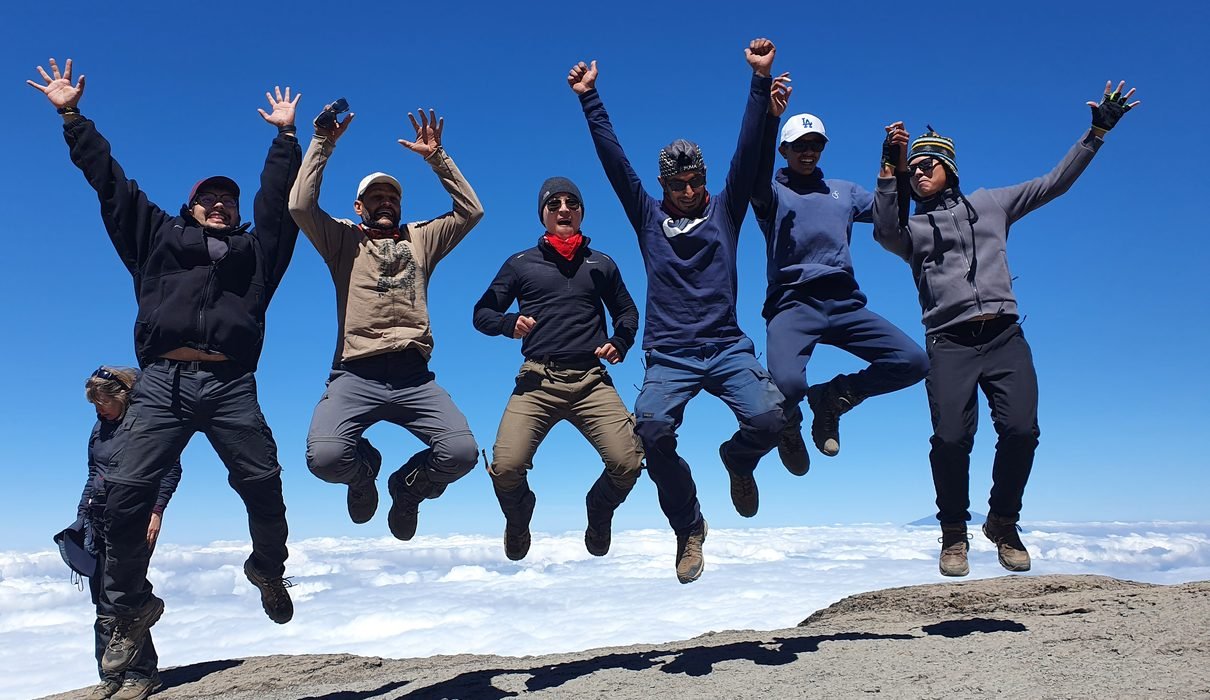
Climbing Mount Kilimanjaro is a major travel goal for hikers from around the world, but arranging a private expedition can be expensive, particularly when travelling alone or with one other person. The 6-Day Group Join Machame Route Kilimanjaro Trek for 2027, 2028 and 2029 offers an alternative for travellers who want to share the climbing experience and certain operating costs with other hikers. Instead of organising a private mountain crew and paying for all the arrangements independently, participants join a scheduled group supported by professional mountain guides, porters, and cooks.
The Machame Route is one of Kilimanjaro’s best-known trekking routes, starting on the southwestern side of the mountain and passing through rainforest, moorland, rocky valleys, and high-altitude terrain before reaching the summit area. Climbers follow a route that includes the Shira Plateau, Lava Tower, Barranco Wall, and Barafu Camp before attempting Uhuru Peak, the highest point in Africa at 5,895 metres above sea level. The changing landscapes make Machame particularly attractive to travellers who enjoy mountain scenery, photography, and challenging outdoor activities.
A six-day group climb is often considered by travellers who have limited holiday time and want to manage their expenses. However, it is important to understand that the shorter itinerary is physically demanding and provides less time for altitude acclimatisation than the seven-day Machame Route. Good fitness is useful for handling long trekking days, but it does not prevent altitude sickness. Anyone planning this climb should consider their hiking experience, health, and available time before deciding whether six days is suitable.
At Eddy Tours & Safaris, travellers can explore different Kilimanjaro climbing arrangements, including shared group departures and private expeditions. This guide explains how the six-day Machame joining group works, what happens each day, the accommodation provided on the mountain, expected costs, recommended travel periods, equipment requirements, and important safety considerations for 2027, 2028 and 2029.
6-Day Group Join Machame Route Kilimanjaro Trek Overview
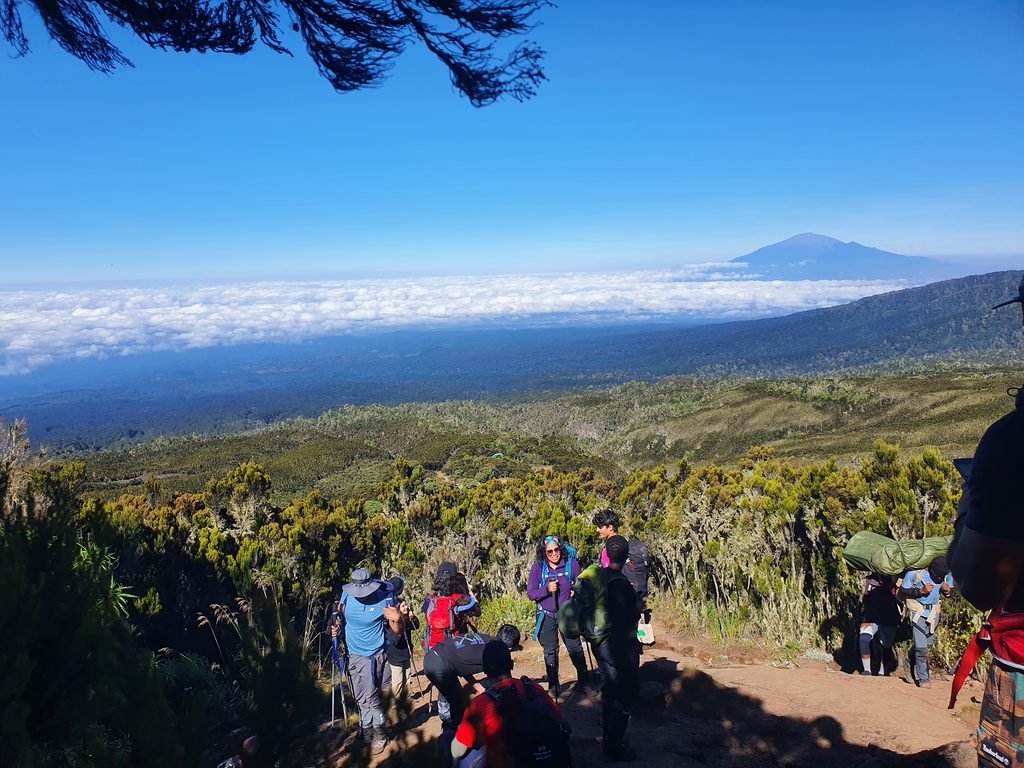
The six-day Machame itinerary includes six trekking days and five nights camping on Mount Kilimanjaro. It begins at Machame Gate and finishes at Mweka Gate after the summit attempt and descent. Climbers stay in designated mountain camps, with meals prepared by the expedition’s cooking team and equipment transported by porters according to the arrangements included in the package.
| Trekking Information | Details |
|---|---|
| Tour name | 6-Day Group Join Machame Route Kilimanjaro Trek |
| Destination | Mount Kilimanjaro, Tanzania |
| Travel years | 2027, 2028 and 2029 |
| Trekking duration | 6 days and 5 nights |
| Starting point | Machame Gate |
| Finishing point | Mweka Gate |
| Highest point | Uhuru Peak, 5,895 metres |
| Route type | Guided camping trek |
| Accommodation | Mountain camping tents |
| Departure arrangement | Shared joining group, subject to confirmation |
| Main highlights | Rainforest, Shira Plateau, Lava Tower, Barranco Wall and Uhuru Peak |
| Difficulty | Challenging |
| Departure towns | Moshi or Arusha |
| Best general trekking periods | January–March and June–October |
| Price | Confirm current group rate and inclusions before booking |
Travellers interested in the standard route can also review our 6-Day Machame Route Kilimanjaro Climbing Package, which explains the mountain stages and the differences between six-day and seven-day climbing schedules.
Why Choose a 6-Day Machame Route Joining Group?
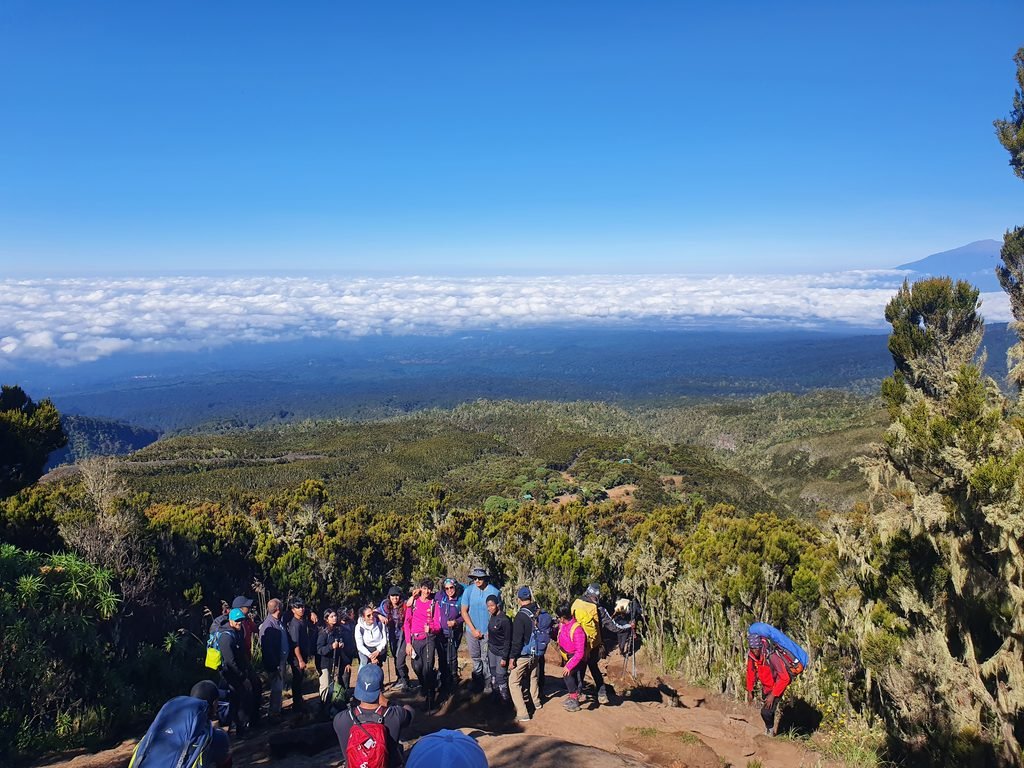
Joining a Kilimanjaro climbing group can be a practical choice for solo travellers, couples, and friends who want to share the experience with other hikers. A group departure brings participants together under an organised climbing programme, allowing them to share certain expenses such as transport, cooking arrangements, and guiding services. Although every participant remains responsible for their personal equipment, fitness, and preparation, the main mountain arrangements are coordinated through the tour operator.
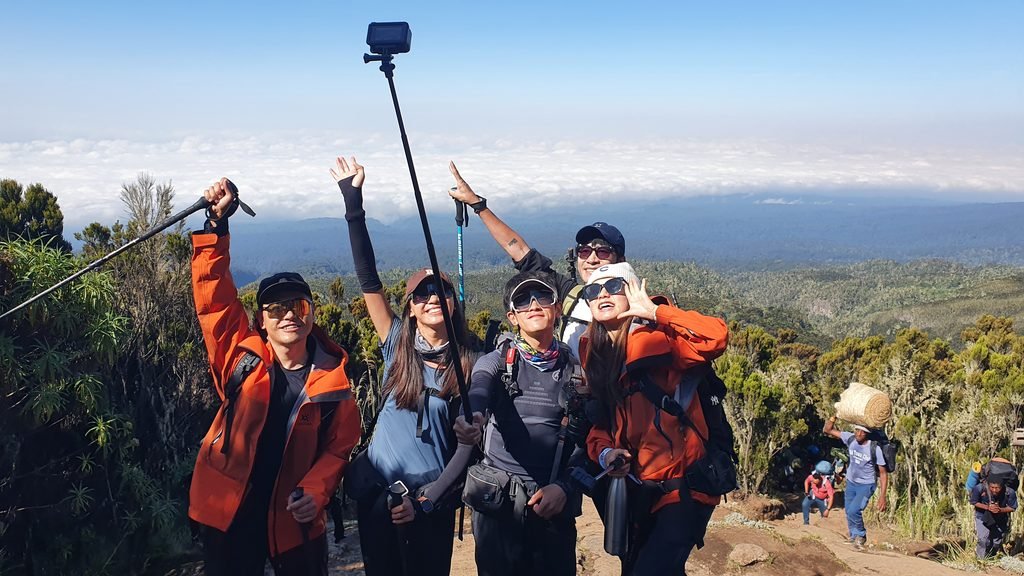
The social experience is another reason travellers choose group climbing. Participants often come from different countries and backgrounds, but they share the same daily trekking schedule and summit objective. During the climb, hikers spend time together on the trail, enjoy meals at camp, and support one another through demanding sections. This can make the journey more enjoyable for travellers who would otherwise be climbing alone.
However, joining a group also means following a shared programme. Walking pace, rest stops, departure times, and daily arrangements must be coordinated by the guides. Travellers who want greater flexibility or have specific requirements may prefer a private expedition, while those who enjoy meeting other hikers may find a group departure more suitable.
You can explore the available arrangements through our Kilimanjaro Group Joining Departures page, which provides information about shared climbing options.
Detailed 6-Day Group Join Machame Route Kilimanjaro Itinerary
The following itinerary follows the commonly used six-day Machame schedule. Walking times and elevations are approximate because actual conditions depend on the weather, trail conditions, individual pace, and campsite arrangements. The programme includes the summit attempt on Day 5 and the final descent through Mweka Gate on Day 6.
Day 1: Machame Gate to Machame Camp – Trekking Through the Rainforest
Starting elevation: Approximately 1,800 metres
Overnight elevation: Approximately 2,850 metres
Walking time: Approximately 5–7 hours
Accommodation: Machame Camp
Your Kilimanjaro group trek begins with breakfast at your hotel in Moshi or Arusha, followed by a transfer to Machame Gate on the southwestern side of Mount Kilimanjaro. At the gate, the mountain team completes registration procedures, checks the necessary equipment, and organises the supplies required for the expedition. Once the formalities are completed, your guide will explain the day’s walking programme and introduce important mountain safety instructions before the group begins trekking.
The first section passes through Kilimanjaro’s rainforest, where tall trees, thick vegetation, and damp forest conditions create a different environment from the open landscapes found higher on the mountain. The trail climbs steadily, and some sections may become muddy after rainfall. Although the first day takes place at a relatively lower elevation, it is important to establish a comfortable walking pace rather than attempting to reach camp quickly. The guides will encourage the group to walk steadily and take appropriate breaks.
After several hours of trekking, you will arrive at Machame Camp, where the support team will have prepared the camping arrangements. You can change into dry clothing, organise your equipment, and enjoy a warm meal before resting. This first night provides an opportunity to become familiar with mountain camping and prepare for the increasing elevation during the following days.
Day 2: Machame Camp to Shira Camp – Leaving the Forest Behind
Starting elevation: Approximately 2,850 metres
Overnight elevation: Approximately 3,800–3,850 metres
Walking time: Approximately 4–6 hours
Accommodation: Shira Camp
After breakfast, the group leaves Machame Camp and continues uphill towards the Shira Plateau. The vegetation gradually changes as the rainforest gives way to shorter plants, open moorland, and rocky terrain. On clear days, hikers may enjoy views of Kibo Peak and the surrounding mountain landscape, although cloud cover can affect visibility.
The trail includes steeper sections that require careful footing, particularly when crossing uneven or rocky ground. Your guide will maintain a manageable pace and encourage regular communication about how everyone is feeling. Because the group is now approaching elevations where altitude symptoms can develop, climbers should pay attention to headaches, nausea, unusual fatigue, and other changes in their condition.
By the afternoon, the group reaches Shira Camp, where the surrounding landscape is considerably more open than the rainforest experienced on the first day. After settling into camp, you will have time to rest, enjoy dinner, and prepare for the following day’s trek towards Lava Tower. Temperatures can drop quickly after sunset, so warm clothing and suitable sleeping equipment are essential.
Day 3: Shira Camp to Barranco Camp via Lava Tower
Starting elevation: Approximately 3,800–3,850 metres
Highest point during the day: Lava Tower, approximately 4,630 metres
Overnight elevation: Approximately 3,950–4,000 metres
Walking time: Approximately 6–8 hours
Accommodation: Barranco Camp
Day three is an important stage of the Machame Route because the trail climbs to a higher elevation before descending to a lower campsite. After breakfast, the group begins trekking across increasingly rocky terrain towards Lava Tower, one of the route’s well-known landmarks. The vegetation becomes sparse as the elevation increases, and the surrounding landscape takes on the appearance of an alpine desert.
The ascent towards Lava Tower can be demanding because the air becomes thinner as the group climbs higher. Even physically fit hikers may notice that walking requires more effort than it did at lower elevations. Your guides will monitor the group and encourage everyone to report symptoms promptly. The route’s higher daytime elevation followed by a lower overnight stop is often described as a climb-high, sleep-low pattern, but it does not eliminate the risk of altitude sickness.
After reaching the Lava Tower area, the group descends towards Barranco Valley, where the landscape changes again. Barranco Camp is located below the famous Barranco Wall, a steep rocky formation that climbers will negotiate the following morning. Once at camp, you can rest, enjoy dinner, and prepare for one of the most demanding days of the six-day itinerary.
Day 4: Barranco Camp to Barafu Camp via Karanga – A Long Trekking Day
Starting elevation: Approximately 3,950–4,000 metres
Overnight elevation: Approximately 4,670 metres
Walking time: Approximately 7–9 hours
Accommodation: Barafu Camp
The fourth day is one of the main differences between the six-day and seven-day Machame Route itineraries. In the seven-day programme, climbers normally spend an additional night at Karanga Camp before continuing to Barafu. The six-day itinerary combines these sections into one longer day, making it more physically demanding and leaving less time for acclimatisation before the summit attempt.
After breakfast, the group begins by climbing the Barranco Wall. Although this section does not normally require technical rock-climbing equipment, it involves scrambling over rocky terrain and using your hands for balance in certain places. The guides will assist the group through difficult sections and ensure that climbers maintain appropriate spacing and move carefully.
After reaching the top of Barranco Wall, the route continues across the southern slopes of Kilimanjaro towards Karanga Valley. The trail includes a series of ascents and descents before continuing uphill towards Barafu Camp. As the elevation increases, walking becomes slower and more demanding, particularly after several consecutive days on the mountain.
On arrival at Barafu Camp, the group will have time to eat, organise summit clothing, and rest before the overnight summit attempt. Because the ascent usually begins late at night or shortly after midnight, there is limited time for sleep. Your guide will explain the summit plan, expected conditions, and the importance of reporting any health concerns before departure.
Day 5: Barafu Camp to Uhuru Peak and Descent to Mweka Camp
Starting elevation: Approximately 4,670 metres
Summit elevation: Uhuru Peak, 5,895 metres
Overnight elevation: Approximately 3,100 metres
Total walking time: Approximately 12–16 hours
Accommodation: Mweka Camp
Summit day is the most demanding part of the six-day Machame Route. The group normally begins walking during the night, using headlamps to follow the trail towards Stella Point on the crater rim. Temperatures can be extremely cold, and the combination of darkness, steep terrain, fatigue, and high elevation makes this section challenging even for experienced hikers.
The guides will maintain a slow and controlled pace while monitoring the condition of each climber. It is important to understand that reaching the summit is never guaranteed. If a climber develops concerning altitude symptoms, becomes excessively exhausted, or cannot continue safely, the guide may require them to turn back or descend. Health and safety must always take priority over reaching Uhuru Peak.
Those who reach Stella Point and remain fit to continue will follow the crater rim towards Uhuru Peak, the highest point on Mount Kilimanjaro. After spending a short time at the summit when conditions permit, the group begins the long descent towards Barafu Camp, where there is usually an opportunity to rest and eat before continuing downhill.
The descent continues towards Mweka Camp, where the group spends its final night on the mountain. By this stage, most climbers are tired after a long day of walking, so it is important to continue carefully, particularly on loose or uneven ground.
Day 6: Mweka Camp to Mweka Gate – Completing the Kilimanjaro Trek
Starting elevation: Approximately 3,100 metres
Finishing elevation: Approximately 1,640 metres
Walking time: Approximately 3–5 hours
Destination: Moshi or Arusha
After breakfast at Mweka Camp, the group begins the final descent through Kilimanjaro’s forest. The trail gradually returns to greener vegetation and lower elevations, providing a noticeable change from the rocky and cold conditions experienced near the summit. Although the walking is generally less demanding than summit day, tired legs and potentially slippery paths mean climbers should remain careful throughout the descent.
On reaching Mweka Gate, the group completes the required park exit procedures before meeting the transfer vehicle. Depending on the operator’s arrangements, climbers may receive the appropriate climbing certificate for the highest point reached. The group then travels back to Moshi or Arusha, where participants can rest, shower, and recover after the mountain expedition.
Travellers should ideally arrange an overnight hotel stay after the trek rather than depending on a tightly scheduled international flight. Mountain conditions, walking pace, and transfer arrangements can affect the exact time of arrival at the hotel.
How Much Does a 6-Day Machame Route Group Join Cost in 2027, 2028 and 2029?
One of the main reasons travellers choose a joining-group Kilimanjaro climb is the opportunity to share certain expedition costs. A private climb requires a dedicated mountain team, transport arrangements, and camping services for a small number of travellers, while a group departure allows some of these expenses to be distributed among several participants.
Eddy Tours & Safaris currently displays a US$1,450 per person rate for the six-day Machame joining-group option on its shared climbing page. This is a published reference price, not a guaranteed rate for every departure in 2027, 2028, or 2029. Final prices should be confirmed according to the selected dates, number of participants, park fees, accommodation, and services included.
You can review the published group climbing options through our Kilimanjaro Shared Group Joining Tours page.
When comparing prices, travellers should pay attention to the complete package rather than the advertised amount alone. Some packages include airport transfers and hotel accommodation before or after the climb, while others cover only the mountain programme. Equipment rental, tips, personal expenses, and travel insurance may also be charged separately. Before making payment, request a written quotation showing exactly what is included.
What Is Included in a 6-Day Machame Group Joining Package?
A professionally organised group climbing package generally includes mountain guiding services, support crew arrangements, designated camping accommodation, meals during the trek, and the applicable national park charges specified in the booking agreement. Porters assist with transporting approved expedition equipment and supplies, while the cooking team prepares meals at the mountain camps.
The exact inclusions depend on the package selected. Travellers should confirm whether airport transfers, pre-climb accommodation, post-climb accommodation, sleeping equipment, drinking-water arrangements, and personal equipment rental are included. The quotation should also explain whether rescue-related park charges and other compulsory fees are covered.
International flights, visas, personal trekking clothing, optional equipment rental, travel insurance, and crew tips are commonly treated as separate expenses unless specifically included. Because a group climb involves several participants, it is also useful to confirm the expected group size, tent-sharing arrangements, and the number of guides supporting the departure.
Is the 6-Day Machame Route Suitable for Beginners?
The Machame Route is sometimes chosen by first-time Kilimanjaro climbers, but the six-day itinerary should not be considered an easy mountain trek. The route involves several consecutive days of walking, significant elevation gain, cold conditions, and a demanding overnight summit attempt. Day four is particularly challenging because the group travels from Barranco through Karanga to Barafu without spending an additional night at Karanga.
A beginner with good hiking preparation may be capable of handling the physical demands, but fitness alone does not determine how someone responds to high altitude. Altitude sickness can affect experienced athletes as well as people who have never climbed a mountain. Climbers should therefore discuss their previous trekking experience, health considerations, and available time before selecting the six-day programme.
For travellers who can spare an additional day, the 7-Day Machame Route Kilimanjaro Climb is worth considering. The longer itinerary includes an overnight stay at Karanga Camp, dividing the approach to Barafu into two stages and allowing more time for acclimatisation.
Understanding Altitude Sickness on Mount Kilimanjaro
Altitude sickness is one of the most important safety considerations when climbing Kilimanjaro. As hikers ascend, the amount of oxygen available decreases, and the body needs time to adjust. Symptoms of acute mountain sickness may include headache, nausea, dizziness, tiredness, and difficulty sleeping. More serious altitude-related illnesses can become life-threatening if they are not recognised and managed promptly.
The six-day Machame Route includes a higher walk towards Lava Tower followed by descent to Barranco Camp, but this does not guarantee successful acclimatisation. Climbers should maintain a manageable pace, eat regularly, drink appropriately, and report symptoms immediately rather than trying to hide discomfort from the guide or other group members.
If altitude-related illness is suspected, continuing uphill may be unsafe. Decisions about stopping, descending, or arranging medical assistance should follow the guide’s emergency procedures and appropriate medical advice. Travellers with medical conditions or previous altitude problems should consult a qualified healthcare professional before booking.
For independent health information, read the CDC Yellow Book guidance on high-altitude travel.
Best Time to Join a Machame Route Group in 2027, 2028 and 2029
Mount Kilimanjaro can be climbed throughout the year, but weather conditions vary considerably between seasons. January to March and June to October are generally popular periods because they often offer more favourable trekking conditions than the main rainy months. However, Kilimanjaro’s weather is changeable, and rain, cloud, strong winds, or very cold temperatures can occur during any month.
January and February can provide suitable trekking conditions, although summit temperatures remain low. June to October is another popular period, particularly for travellers arranging a Kilimanjaro climb alongside a Tanzania wildlife safari. These months may attract greater demand for mountain departures and accommodation, so booking early can be useful.
April and May are generally associated with heavier rainfall, which can make forest trails muddy and reduce visibility. November may also bring rain, although conditions vary from year to year. Travellers choosing these periods should prepare for wetter conditions and confirm the arrangements available for their preferred dates.
| Travel Period | General Conditions | Planning Advice |
|---|---|---|
| January–February | Often relatively favourable trekking weather | Popular for group departures |
| March | Conditions can become wetter as the month progresses | Prepare for changing weather |
| April–May | Main rainy period | Expect muddy trails and increased rainfall |
| June–October | Generally popular trekking season | Book preferred departures early |
| November | Short rains may occur | Carry reliable waterproof equipment |
| December | Variable conditions | Confirm weather expectations and availability |
These are general seasonal patterns rather than guarantees. Travellers should check updated conditions before departure and prepare for cold weather regardless of the month selected.
What Should You Pack for the 6-Day Machame Route?
Packing suitable equipment is essential for a safe and comfortable Kilimanjaro climb. During the six-day trek, hikers pass through different environments, beginning in the rainforest and continuing towards exposed high-altitude terrain. Clothing that is comfortable at Machame Gate may not provide enough protection near Barafu Camp or during the overnight summit attempt.
A proper layering system is particularly important. Lightweight base layers help manage moisture during walking, while insulating clothing provides warmth at higher elevations. A waterproof jacket and trousers are useful during rainfall, and suitable gloves, a warm hat, and insulated outerwear are important for summit night. Trekking boots should be comfortable, supportive, and already tested during training hikes rather than worn for the first time on the mountain.
Other useful equipment includes a suitable sleeping bag, headlamp with spare batteries, sunglasses, sunscreen, trekking poles, personal medication, water containers, and a daypack. Climbers should also protect spare clothing and important items from moisture because rain can occur even during generally drier months.
Before travelling, request a detailed packing list from the operator and confirm which equipment is supplied or available for rental. For official visitor information, consult the Kilimanjaro National Park Visitor Guide.
How to Prepare Physically for a 6-Day Kilimanjaro Group Climb
Physical preparation can make the trekking experience more manageable, particularly during long walking days and the summit attempt. Travellers should begin preparing well before departure by gradually increasing their walking endurance and becoming comfortable with uphill and downhill terrain. Hiking on uneven ground while carrying a daypack is particularly useful because it helps prepare the legs, feet, and balance for conditions encountered on the mountain.
Regular cardiovascular exercise, such as walking, cycling, swimming, or stair climbing, can support general fitness. Strength training for the legs and core may also help with stability and carrying a daypack. However, training should be progressive rather than excessive, and adequate recovery is important.
Where possible, climbers should complete several longer hikes before travelling to Tanzania. These walks provide an opportunity to test boots, socks, clothing, and equipment while identifying potential problems such as blisters or uncomfortable backpack straps.
Physical training improves readiness for the walking effort, but it does not replace acclimatisation. A climber can be physically strong and still experience altitude illness, which is why the choice between six and seven days should be considered carefully.
Group Joining vs Private Machame Route Climbing
Both group joining and private Kilimanjaro expeditions follow the same mountain environment, but the arrangements differ in several important ways. A joining group brings together travellers who agree to follow a shared departure date and trekking programme. A private climb is arranged specifically for an individual, couple, family, or group of friends.
Group departures can reduce certain costs and provide a social experience, making them attractive to solo travellers and people who enjoy meeting others. However, participants need to follow the group’s general schedule, and changes to the itinerary may be limited.
Private climbs offer more flexibility when selecting dates, arranging accommodation, and discussing personal preferences. They may also be suitable for travellers who want a dedicated group of guides and support staff. The total price is often higher for one or two participants, although costs can be shared when several friends or family members book together.
Neither arrangement guarantees summit success. Mountain conditions, altitude response, physical preparation, and the guides’ safety decisions remain important regardless of whether the climb is private or shared.
Why Responsible Mountain Crews Matter
A successful Kilimanjaro expedition depends on much more than the hikers attempting to reach Uhuru Peak. Mountain guides, assistant guides, cooks, and porters provide essential services throughout the journey. They help organise the daily programme, prepare meals, transport equipment, establish camps, and support climbers during difficult sections of the route.
Responsible operators should follow applicable park regulations and provide suitable working arrangements for mountain staff. Travellers should ask how porter loads are managed, what equipment is provided to crew members, and how staff welfare is addressed during the expedition. Fair treatment of the mountain team is an important part of responsible tourism.
Guides also play a central role in monitoring the condition of climbers. They need to recognise potential altitude-related problems, respond appropriately to emergencies, and make decisions about whether individuals can continue safely.
The Tanzania National Parks Authority provides information about park regulations and the official management of protected areas, including Kilimanjaro National Park.
Can You Combine a Machame Group Climb with a Tanzania Safari?
Many travellers visiting Tanzania for Kilimanjaro also want to experience the country’s wildlife destinations. Combining a mountain climb with a safari can be a practical way to make the most of an international journey, particularly when travelling from Europe, North America, Asia, or other distant regions.
After completing the six-day Machame Route, visitors can arrange a safari to Tarangire National Park, Ngorongoro Crater, Lake Manyara, or Serengeti National Park. Tarangire and Ngorongoro are particularly suitable for shorter wildlife itineraries, while the Serengeti generally requires additional travel days because of its distance from Arusha.
A wildlife safari can also provide a change of pace after several demanding days on the mountain. However, travellers should allow enough recovery time and avoid scheduling strenuous activities immediately after the climb if they are still exhausted or experiencing health concerns.
For travellers interested in combining both experiences, Eddy Tours & Safaris can discuss suitable Tanzania safari arrangements according to the number of days available after the mountain expedition.
Important Things to Confirm Before Booking Your Machame Joining Group
Before paying for a six-day Machame group departure, travellers should request clear information about the proposed dates, expected group size, and services included. Group availability can change as participants confirm or cancel their bookings, so a published departure should not be treated as guaranteed until the operator confirms the arrangements.
It is also important to understand the sleeping arrangements. Mountain accommodation on Machame is provided in tents, and group packages may involve sharing a tent with another participant. Travellers who prefer a private tent should ask whether this can be arranged and whether an additional charge applies.
The quotation should explain how airport transfers, hotel accommodation, mountain meals, equipment rental, park fees, and crew tips are handled. It should also provide the booking conditions, payment schedule, cancellation policy, and any requirements for travel insurance.
Travellers should confirm the itinerary’s altitude profile and understand that the six-day schedule includes a long walk from Barranco to Barafu. Anyone concerned about the pace should ask for a comparison with the seven-day Machame Route before making a final decision.
Frequently Asked Questions About the 6-Day Machame Group Joining Trek
How Much Does a 6-Day Machame Route Group Join Cost?
Eddy Tours & Safaris currently lists a reference price of US$1,450 per person for its six-day Machame shared climbing option. However, the final cost for 2027, 2028, or 2029 must be confirmed according to departure dates, group arrangements, and package inclusions.
Can Solo Travellers Join a Machame Route Group?
Yes. Joining-group expeditions are particularly suitable for solo travellers who want to climb with other hikers rather than arrange a private expedition. Availability depends on the scheduled departure and confirmed participants.
Is Six Days Enough to Climb Kilimanjaro?
Six days is an established Machame Route itinerary, but it provides less acclimatisation time than the seven-day version. Travellers should consider their hiking experience, health, and available schedule before selecting the shorter programme.
What Is the Difference Between the 6-Day and 7-Day Machame Routes?
The main difference is the additional overnight stay at Karanga Camp on the seven-day itinerary. The six-day programme combines the Barranco-to-Karanga and Karanga-to-Barafu stages into one longer trekking day.
Do Climbers Sleep in Hotels on the Machame Route?
No. Climbers stay in designated mountain camps using tents. Hotel accommodation before and after the trek may be arranged separately or included in the selected package.
Is the Barranco Wall Dangerous?
The Barranco Wall involves scrambling over rocky terrain and requires careful movement. Although it is normally completed without technical climbing equipment, participants should follow their guides’ instructions and avoid rushing.
Can Beginners Join the 6-Day Machame Route?
Some beginners may consider the six-day route after suitable preparation and assessment, but the programme is demanding. The seven-day option is often worth considering because it provides an additional night for acclimatisation.
What Is the Best Month to Join a Kilimanjaro Group?
January to March and June to October are generally popular climbing periods. However, weather conditions vary, and no month guarantees clear skies or favourable summit conditions.
Is Reaching Uhuru Peak Guaranteed?
No. Summit success depends on several factors, including altitude response, weather, physical condition, and safety decisions made by the mountain guides.
Can I Add a Safari After My Kilimanjaro Climb?
Yes. Travellers can arrange additional days to visit Tanzania’s wildlife destinations, including Tarangire, Ngorongoro, and Serengeti, depending on their available time and budget.
Book Your 6-Day Group Join Machame Route Kilimanjaro Trek for 2027, 2028 or 2029
The six-day Machame Route joining group offers an opportunity to climb Mount Kilimanjaro alongside other travellers while sharing certain expedition costs. The route passes through rainforest, open moorland, rocky valleys, and high-altitude landscapes before the demanding summit attempt towards Uhuru Peak. For hikers who enjoy group travel and have limited holiday time, it can be a practical option, provided they understand the physical demands and shorter acclimatisation schedule.
Choosing the right climbing programme is important. Travellers should compare the six-day and seven-day Machame itineraries, review their preparation, and confirm the services included before booking. A lower package price should never take priority over appropriate safety arrangements, responsible guiding, and a schedule suited to the climber’s circumstances.
Eddy Tours & Safaris is a local tour company in Arusha, Tanzania, arranging guided Kilimanjaro climbing expeditions, Tanzania wildlife safaris, and private holidays. Our team can help you explore Machame Route joining-group arrangements for 2027, 2028, or 2029 and discuss suitable climbing dates, accommodation, transport, and additional activities.
If you are planning to join a Kilimanjaro climbing group, send us your preferred travel month, number of participants, previous hiking experience, and any additional services you require. We can discuss the available options and prepare a quotation based on your plans.
Contact Eddy Tours & Safaris
Location: Arusha, Tanzania
Email: sales@eddytours-safaris.com
Alternative email: eddytoursandsafaris@gmail.com
Phone/WhatsApp: +255 711 906 664
Website: Eddy Tours & Safaris Official Website
Group climbing information: Kilimanjaro Group Joining Departures
Booking enquiries: Contact Eddy Tours & Safaris