
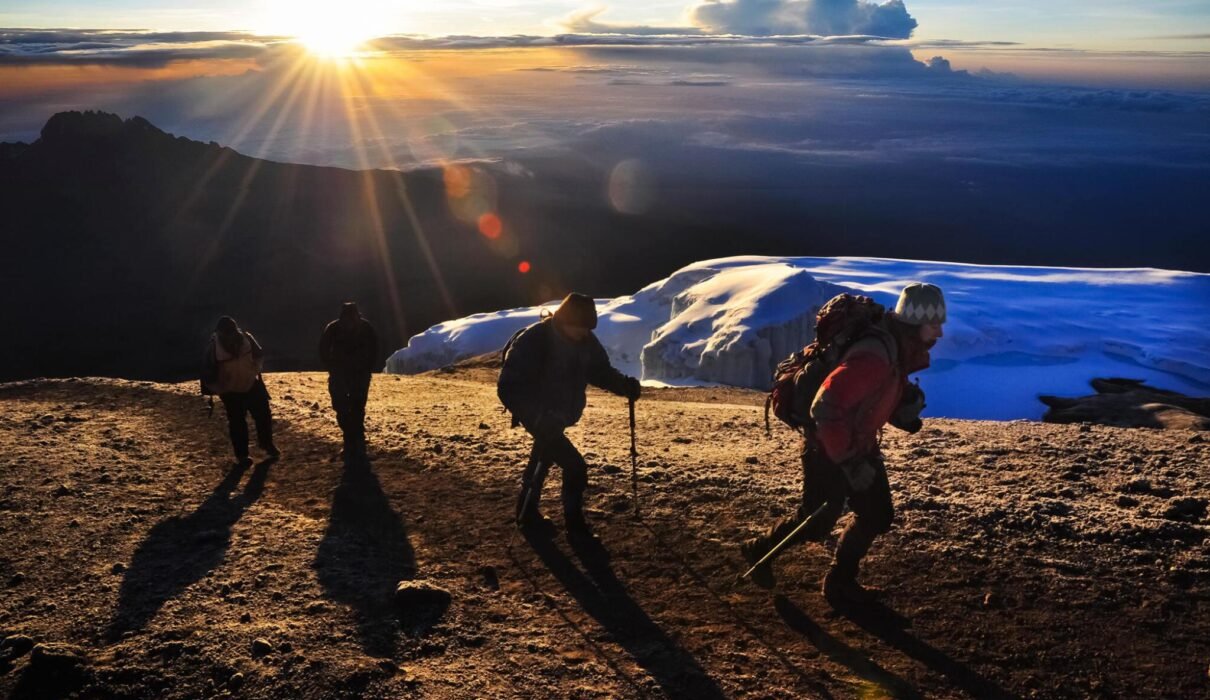
The 5-day Kilimanjaro group joining Marangu Route is a practical choice for travellers who want to climb Africa’s highest mountain with the company of a small international team. The route begins at Marangu Gate on Kilimanjaro’s south-eastern side and uses mountain huts rather than tents. That is why many first-time climbers call it the “hut route”. You sleep indoors at Mandara, Horombo and Kibo huts, share meals with your group, and follow a well-established trail through rainforest, moorland and the high volcanic desert.
At Eddy Tours & Safaris, we organise guided group climbs for 2027 and 2028 with a clear plan, an experienced mountain crew and honest advice before you book. This is a fast itinerary, so it is best for a traveller who is fit, prepared and understands that summit night will be demanding. If you have more time, an extra acclimatisation day can be a wiser investment. If five days is the time you have, our job is to help you arrive properly prepared and climb responsibly.
Why choose a 5-day Kilimanjaro group joining Marangu Route?
A joining group climb means you take the same route and dates as other booked travellers. You still have your own guide team, safety checks and mountain support, but the overall operating cost is shared. It is often a good option for solo travellers, friends travelling in a pair, and anyone who enjoys meeting people from different countries. Groups are not simply placed together without thought: the guide sets the pace, keeps the team together where possible and monitors each climber individually.
The Marangu Route has a particular character. Its paths are generally direct and well maintained, and each camp has dormitory-style huts with beds and mattresses. There are shared washroom facilities and dining arrangements rather than private lodge rooms. The huts make packing easier because you do not need to sleep in a tent, although the nights can still be cold and a warm sleeping bag remains essential.
This five-day schedule follows the classic route to Uhuru Peak and returns through the same Marangu trail. The summit day is long: most climbers leave Kibo Hut shortly after midnight, reach the crater rim at Gilman’s Point, continue to Uhuru Peak, then descend all the way to Horombo Hut. That effort is the central fact to consider before booking. The route can be rewarding and beautiful, but it should never be described as easy.
Who is this Kilimanjaro joining group suitable for?
You do not need technical climbing experience to join the Marangu Route. There are no ropes, ice axes or vertical climbing sections on the normal trail. However, you need good basic fitness, determination and the ability to walk for several consecutive days at altitude. A regular programme of walking, hill training, stair climbing, cycling or running in the months before travel makes a real difference. Practice with the boots you will wear on the mountain, and include a few long walks with a light daypack.
Because this is a five-day itinerary, it is not the best choice for every first-time trekker. The body has less time to adapt as you move higher, and altitude sickness can affect strong and experienced people as well as beginners. An itinerary with an additional day offers a more gradual profile. Still, some fit climbers choose this version because their holiday time is limited. Speak openly with us about your hiking history and any medical concerns; sound planning is more useful than false promises.
5-day Marangu Route itinerary
Day 1: Marangu Gate to Mandara Hut
After an early briefing in Moshi or at your arranged hotel, your guide checks your essential equipment and travels with the group to Marangu Gate. Registration is completed with the park authorities before the walk begins. The first section passes through lush montane rainforest, where the air is humid and the vegetation is dense. Listen for colobus monkeys and watch for bright birds among the trees; this lower forest is one of the route’s quiet pleasures.
The walking time is usually about four to five hours, depending on the group pace and trail conditions. You arrive at Mandara Hut, settle into the shared hut accommodation, and enjoy a hot meal. Later, if the weather and energy levels allow, the guide may lead a short walk to Maundi Crater. It is a useful chance to stretch your legs and, on a clear day, look across the Kenyan side of the mountain. Overnight is at Mandara Hut, around 2,700 metres.
Day 2: Mandara Hut to Horombo Hut
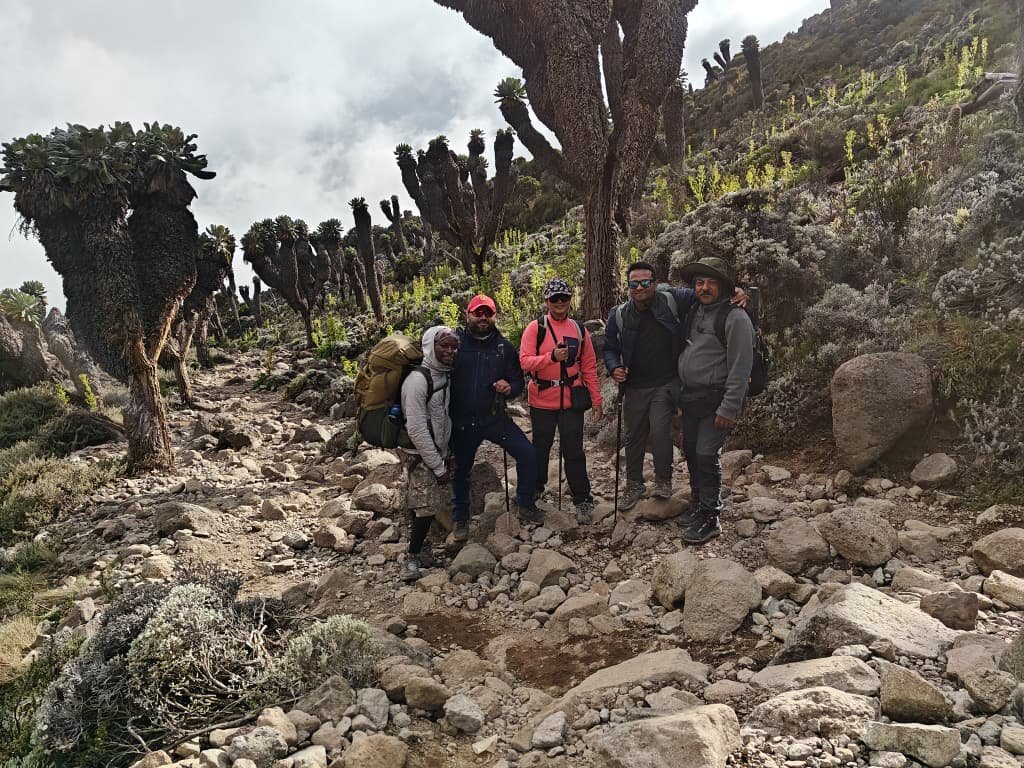
Breakfast is served before the trail leaves the forest and enters the open moorland zone. The landscape changes quickly. Giant groundsels, lobelias and wide views take the place of the tall trees. As cloud comes and goes, you may see the twin volcanic peaks of Mawenzi and Kibo ahead. This is a longer day, often five to seven hours of walking, so the guide keeps the pace deliberately slow. “Pole pole” is more than a local phrase; it is the sensible way to walk at altitude.
Horombo Hut sits at approximately 3,720 metres and is one of Kilimanjaro’s busiest camps because both ascent and descent groups use it. You will have time to rest, drink fluids, eat well and speak with your guide about how you are feeling. Do not ignore a headache, nausea, unusual tiredness or loss of appetite. Early reporting gives the team the best chance to manage a problem safely. Dinner and overnight are at Horombo Hut.
Day 3: Horombo Hut to Kibo Hut
Day three carries the group into a more severe landscape. After breakfast, the route crosses the broad saddle between Mawenzi and Kibo, an exposed stretch of alpine desert with little vegetation. The air feels noticeably thinner here. Most people walk more slowly, stop briefly for water and keep their layers close at hand because the weather can change quickly.
After about five to six hours, you reach Kibo Hut at roughly 4,700 metres. Lunch is served and the afternoon is kept quiet. Pack your summit-day clothing, fill water bottles, prepare your head torch and try to rest. Dinner is earlier than usual because the wake-up call comes before midnight. Sleep may be light at this height; that is normal. The important thing is to stay warm, hydrate and conserve energy.
Day 4: Kibo Hut to Uhuru Peak, then Horombo Hut
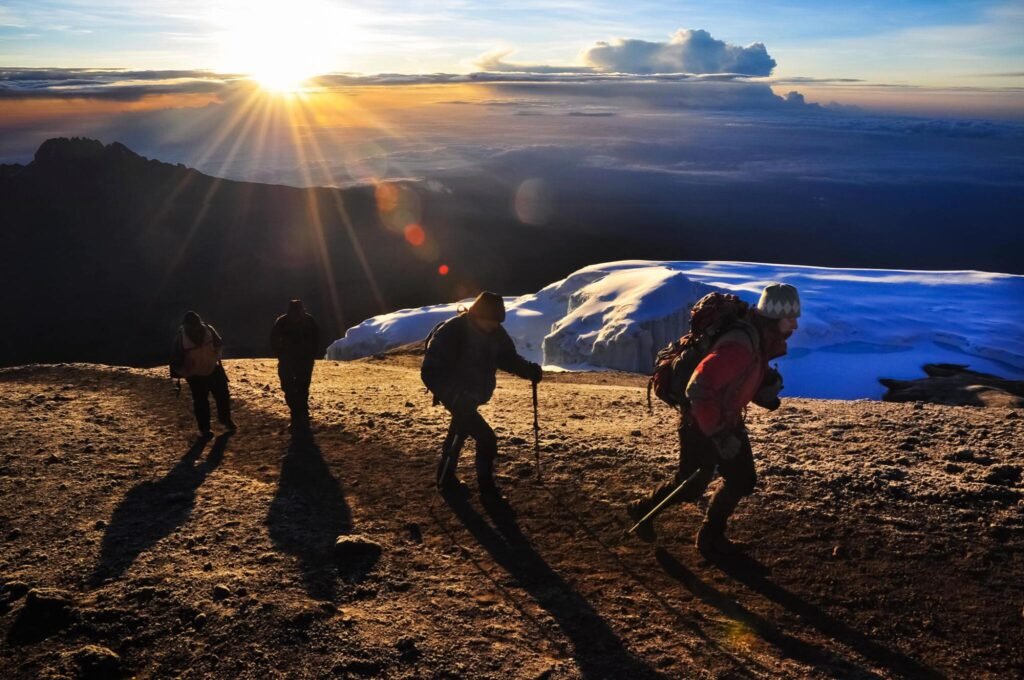
Summit day begins in darkness, usually between 11:00 pm and midnight. Wearing warm layers, gloves and a head torch, the group moves steadily up the steep volcanic scree toward Gilman’s Point on the crater rim. This is the hardest part of the 5-day Kilimanjaro group joining Marangu Route. The surface can feel like taking one step forward and half a step back, and the cold makes simple tasks slower. Your guide will set a patient rhythm and watch closely for signs that it is not safe to continue.
From Gilman’s Point, the trail follows the crater rim to Uhuru Peak at 5,895 metres, the highest point on Mount Kilimanjaro and on the African continent. Conditions at the top can be bright, windy, icy or cloudy; no two summit mornings are the same. Take your photos, celebrate quietly and begin the descent before your body gets too cold. Reaching the summit is a fine moment, but returning safely is equally important.
You descend to Kibo Hut for a short rest and brunch, then continue down to Horombo Hut. The total walking time can be ten to fifteen hours. It is a long day, and tired legs are expected. A warm meal, water and a proper night’s rest at Horombo Hut are very welcome.
Day 5: Horombo Hut to Marangu Gate
After breakfast, you descend through moorland and back into the rainforest. The knees often feel the downhill more than the ascent, so trekking poles are useful. At Marangu Gate, you sign out with the park authorities and receive your summit certificate if you reached the required point. Your driver transfers you back to Moshi or your arranged hotel. Most climbers want a hot shower, a good meal and a relaxed evening to share stories with their new climbing companions.
Accommodation and meals on the Marangu Route
Marangu is different from routes such as Machame, Lemosho and Northern Circuit because it uses permanent huts. Accommodation is shared, basic and functional. Expect bunk beds or dormitory-style sleeping arrangements, communal toilets and a dining space shared with other climbers. Huts are a convenience, not a luxury. Bring a quality four-season sleeping bag and a sleeping bag liner for extra warmth and comfort.
Our mountain cook prepares filling meals suited to long days at altitude. Typical food includes porridge, eggs, toast, fruit, soups, rice, pasta, potatoes, chicken, vegetables and hot drinks. Vegetarian, vegan and common dietary requirements can usually be planned for when we know well in advance. The key is communication before departure, not on the day you arrive at the gate.
What is included in this group joining package?
- Collection and return transfer between Moshi and Marangu Gate.
- Kilimanjaro National Park entry, camping/hut and rescue fees as required for the booked itinerary.
- Professional Kilimanjaro mountain guide, assistant guides, cook and porters.
- Four nights of Marangu Route hut accommodation.
- All mountain meals from lunch on day one through breakfast on day five.
- Purified drinking water while on the mountain.
- Safety monitoring, including regular health checks where appropriate.
- Government taxes and the normal mountain crew wages for the itinerary.
- Summit certificate for climbers who reach the qualifying point.
What is not included?
- International flights, visas and travel insurance with high-altitude trekking cover.
- Hotel accommodation in Moshi before and after the climb, unless added to your booking.
- Personal climbing equipment such as boots, clothing, sleeping bag, trekking poles and head torch.
- Meals and drinks in town that are not listed in the itinerary.
- Personal expenses, laundry, telephone charges and souvenirs.
- Tips for guides, porters and cooks, which are customary and greatly appreciated.
- Private toilet tent, extra hotel nights or private transfers unless specifically shown in your quotation.
Essential packing list for the Marangu Route
Good equipment makes the climb safer and more comfortable, but expensive gear is not automatically better. Boots must be well worn-in, waterproof and supportive around the ankle. Bring two pairs of gloves, a warm hat, sun hat, sunglasses, rain jacket and rain trousers, insulated jacket, fleece layers, trekking trousers, thermal base layers and several pairs of hiking socks. A head torch with spare batteries is essential for summit night.
Your daypack should carry water, snacks, rain protection, camera, sunscreen, personal medication and the extra layers you need during the day. Porters carry the main duffel bag within park weight limits, but you will not access it while walking. If you need rental items, tell Eddy Tours & Safaris before your arrival so we can check availability and fit. Avoid relying on a last-minute purchase for your boots or summit jacket.
Safety, altitude and responsible climbing
There is no safe shortcut around altitude. Drink regularly, eat what you can, walk slowly and tell your guide immediately if you feel unwell. The mountain team conducts routine observations and makes conservative decisions when symptoms suggest a risk. A summit is never worth putting a climber’s health at risk. If a guide advises descent, follow that instruction. The mountain will still be there for a future attempt.
We also ask every joining group member to respect the crew and other climbers. Keep shared hut spaces tidy, avoid loud noise after lights-out, and be patient when the group moves at a careful pace. Kilimanjaro is not a race. The strongest climber in a group is often the one who helps create a calm, encouraging atmosphere for everyone.
When should you book for 2027 or 2028?
January to early March and June to October are generally popular times to climb because conditions are often drier. December can also work well around the festive period. Kilimanjaro weather remains variable at any time, so dry season does not mean guaranteed clear skies. The best date is one that gives you enough preparation time, works with your travel plans and allows a buffer day in Moshi before the climb.
Group spaces and departures depend on operational schedules and the number of confirmed climbers. We do not publish invented fixed departures just to fill a page. Contact us with your preferred month, group size and travel dates, and we will confirm the current joining options for the 5-day Kilimanjaro group joining Marangu Route. For a more personal mountain-focused specialist resource, you can also visit Kilimanjaro Climb Specialist.
Planning your climb with Eddy Tours & Safaris
Before you commit to a date, check your passport validity, visa requirements, travel-insurance policy and vaccination advice with the relevant official sources. Arrive in Tanzania at least one day before the climb. That gives time for a gear check, briefing and recovery from travel. A second night after the climb is also sensible, especially if you plan to fly or begin a safari soon afterward.
For a confirmed quote or help choosing a date, contact Eddy Tours & Safaris. You can call or message +255 711 906 664, email eddytoursandsafaris@gmail.com, or write to sales@eddytours-safaris.com. Tell us your preferred month, whether you are travelling alone or with friends, and your previous trekking experience. We will give you straightforward guidance on this itinerary and the practical alternatives.
Frequently asked questions
Can a beginner join this Marangu Route climb?
Yes, if the beginner is physically prepared and understands the challenge. No technical mountaineering experience is needed, but altitude and the summit day are serious. Many first-time trekkers succeed after consistent training and careful pacing. If you are unsure, ask whether a longer route is a better fit.
Do I have to share a hut?
Yes. The Marangu Route uses shared dormitory-style huts. Private rooms are not normally available on the mountain. If private travel is important to you, a private guided climb can still be arranged, but hut sleeping spaces remain communal.
Is there Wi-Fi or charging on the mountain?
Do not rely on either. Mobile signal can be limited or absent, and charging facilities are not dependable. Bring a fully charged power bank, keep electronics warm at night and let family know that communication may be irregular during the climb.
Should I choose five days or six days on Marangu?
For many travellers, six days is the stronger choice because it includes an acclimatisation day at Horombo. The five-day plan suits prepared climbers with limited time, but it gives the body less chance to adapt. We will explain the difference honestly before you make a decision.
Ready to join a Marangu Route group?
The 5-day Kilimanjaro group joining Marangu Route combines a classic summit objective with straightforward hut accommodation and the companionship of a shared group. Prepare well, choose the right dates, listen to your guides and allow the mountain to set the pace. Contact Eddy Tours & Safaris to check current 2027 and 2028 availability and start planning a climb with the support you need.