
The first view of Ngorongoro Crater gives you a sense of the landscape before you see its wildlife. From the rim, the grasslands, patches of woodland and lake below appear almost miniature. Once you descend, those distant shapes begin to resolve into grazing zebras, buffalo herds and animals moving across the plains.
Ngorongoro Crater wildlife is remarkable because of the concentration of animals within a varied volcanic landscape. These species also live elsewhere in Africa, but seeing several of them during one crater visit makes this destination especially rewarding.
For travellers planning a northern Tanzania safari with Eddy Tours & Safaris, Ngorongoro can complement the wider plains of Serengeti and the different scenery of Tarangire. It deserves time of its own, with opportunities to watch animal behaviour rather than simply tick names off a list.
This guide introduces nine animals to look for, explains what makes each interesting and shares practical advice for planning your visit. Sightings depend on the day’s conditions, animal movements and visibility; no itinerary can guarantee every species.
What Makes Ngorongoro Crater Special?
Ngorongoro Crater is a volcanic caldera within the much larger Ngorongoro Conservation Area. The crater floor includes grassland, wetlands and woodland, giving different animals access to food, water and shelter.
It is important to distinguish the crater from the wider conservation area. A species recorded in the highland forests or surrounding plains is not necessarily one you should expect to see during a crater-floor game drive.
The conservation area’s importance extends beyond safari tourism. UNESCO’s Ngorongoro Conservation Area overview recognises its biodiversity, threatened wildlife and geological and archaeological significance.
For visitors, the best approach is to appreciate the whole setting. A buffalo herd feeding beneath the crater walls or a zebra reflected in shallow water can be as memorable as a close predator sighting.
1. Black Rhinoceros
For many visitors, the black rhinoceros is the animal they most hope to see in Ngorongoro. Its presence is an important part of the area’s conservation value, and UNESCO specifically identifies the black rhino among its globally threatened species.
A rhino sighting may begin with a distant shape rather than a close encounter. Your guide might scan an open area through binoculars, then help you distinguish the animal from other wildlife or features in the landscape.
Black rhinos have a pointed, grasping upper lip adapted for browsing. Despite their name, colour is not a dependable way to identify them: mud, dust and light affect their appearance.
What to look for: The heavy body, two horns and head profile. Binoculars are particularly useful when the animal is far from the road.
Allow yourself to enjoy a distant sighting. Asking to approach more closely can put pressure on both the guide and the animal. A clear view of a rhino behaving naturally is more valuable than forcing an uncomfortable encounter.
2. African Lion
Lions are another highlight of Ngorongoro Crater wildlife. However, finding a lion does not necessarily mean seeing a hunt. A resting animal is a normal and worthwhile sighting.
Look closely at what happens within a group. One lion may watch nearby grazers while another sleeps. A small change in posture, a head turning towards movement or a greeting between animals can reveal more than a quick photograph.
Male lions are readily recognised by their manes, although mane colour and thickness vary. Lionesses lack the conspicuous mane and are often easier to overlook when lying in grass.
What to look for: Ears and faces above the vegetation, a tail moving in the grass, or a group resting together.
If you are interested in photography, tell your guide whether you prefer portraits or wider images. A lion photographed with the crater landscape behind it tells a different story from a tightly cropped face.
Stay patient, but also accept that an animal may remain asleep throughout your stop.
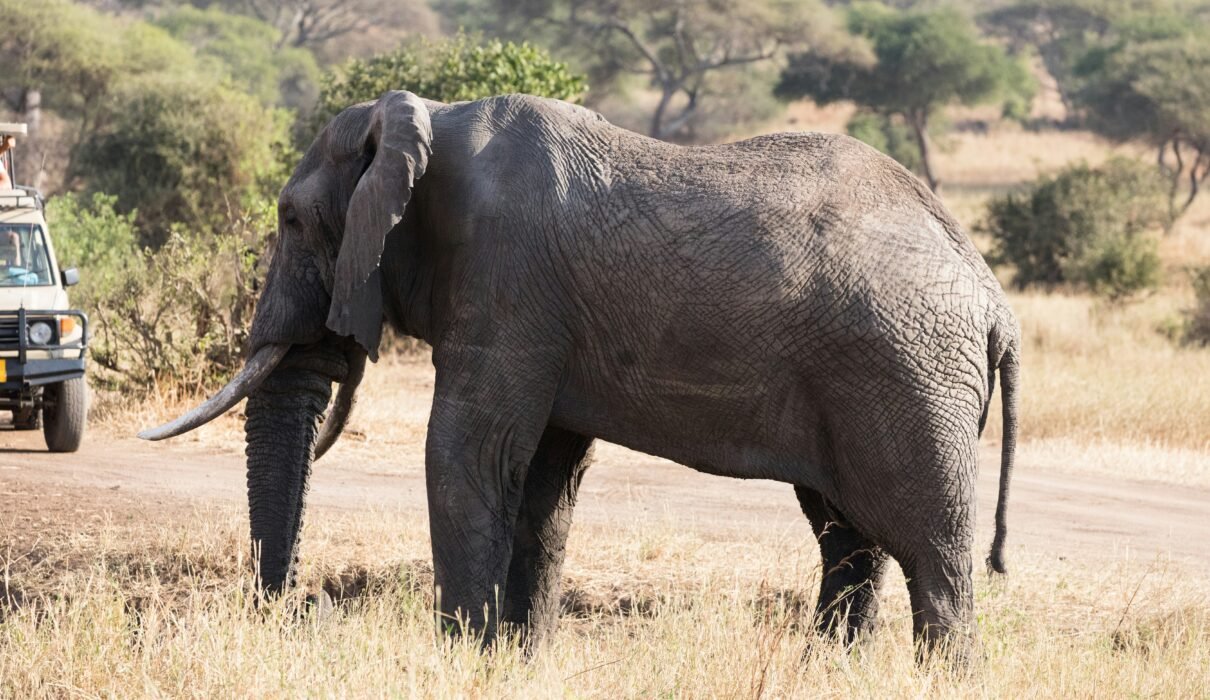
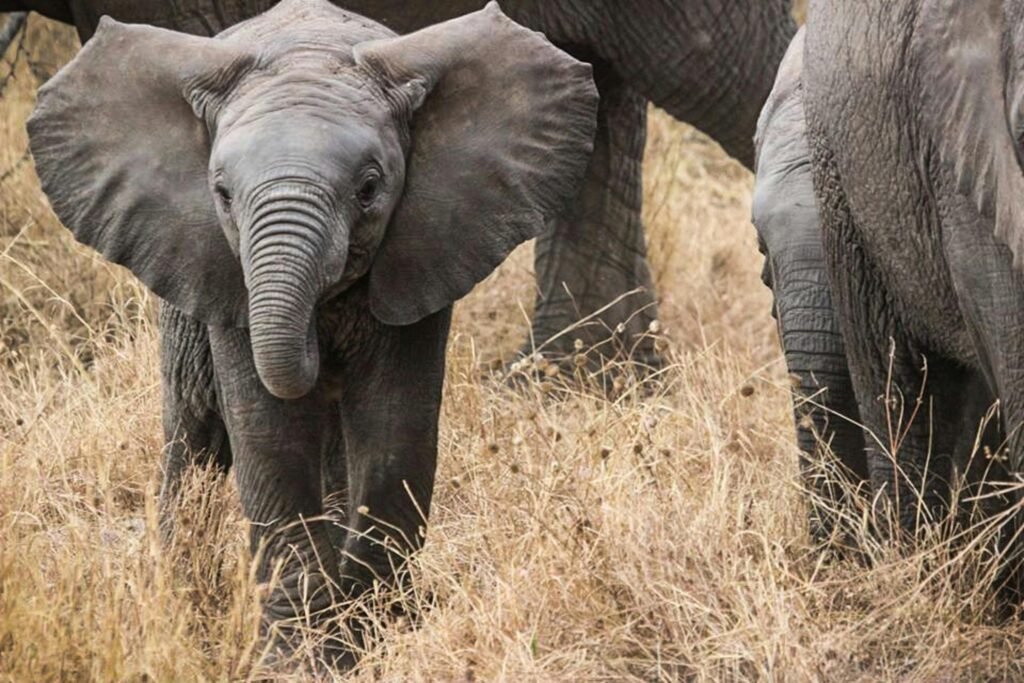
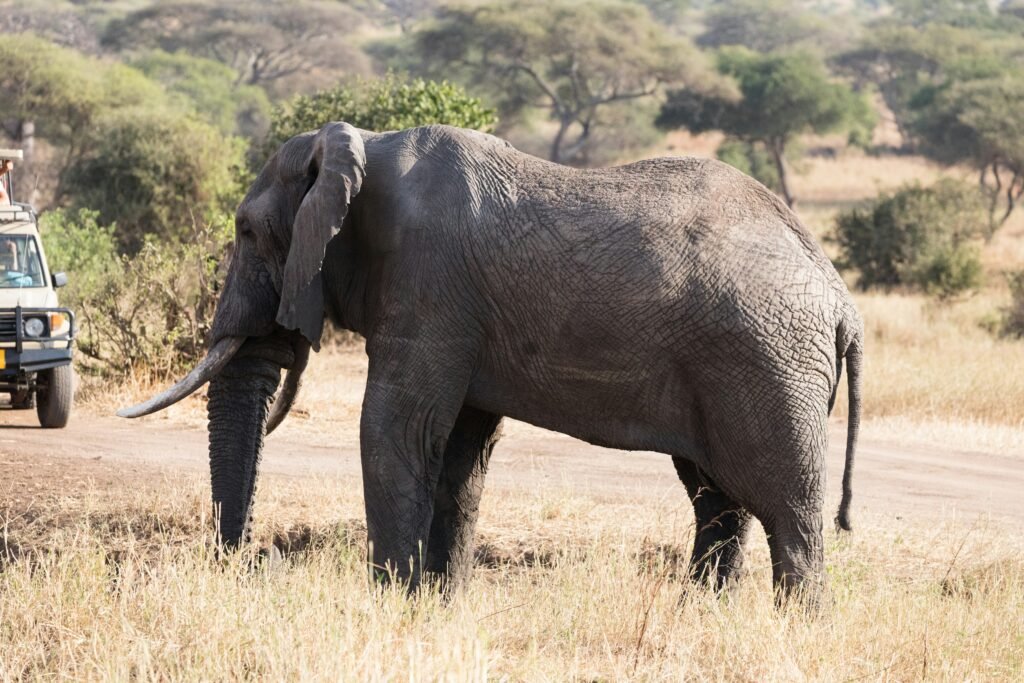
3. African Elephant
An elephant’s size becomes much more apparent when you see it beside trees, a safari vehicle or other wildlife. In Ngorongoro, elephants add another dimension to a landscape already filled with smaller grazers.
Their feeding behaviour is worth watching. The trunk can investigate, grasp and move vegetation with surprising precision. Ears, body position and movement also help reveal how an elephant responds to its surroundings.
Avoid expecting every elephant encounter to involve a large family group. Group composition and the animals visible during a visit can vary.
What to look for: The way the trunk handles food, the texture of the skin and the relationship between the animal and its habitat.
Give elephants space, especially when they approach or cross a road. A good guide will position the vehicle with the animal’s movement in mind.
For photographs, try including enough of the surroundings to show scale. A wider frame can communicate the size of the elephant more effectively than a close crop.
4. African Buffalo
Buffalo can be easy to underestimate when they are standing quietly or grazing. Watch a herd for longer and the relationships between individual animals become more interesting.
You may notice animals resting together, others feeding and some watching the surroundings. Their heavy bodies and curved horns give them a distinctive appearance even at a distance.
Mature bulls often have a pronounced central horn boss. However, age and sex affect horn shape, so not every buffalo looks the same.
What to look for: Differences between individuals, herd movement and the way animals respond when something attracts their attention.
Buffalo deserve the same respectful distance as other large wildlife. Their calm appearance should not be mistaken for an invitation to approach.
They also make useful subjects for learning wildlife photography. Rather than photographing the whole herd immediately, select one individual, watch its position and wait for a clear view of the face or horns.
5. Spotted Hyena
Spotted hyenas are among the most interesting predators to observe, yet they are often dismissed as scavengers. They are capable hunters as well as opportunistic feeders.
Their appearance is distinctive: rounded ears, a spotted coat and a body that slopes from the shoulders towards the hindquarters. A moving hyena may cover ground steadily, stopping to investigate scents or activity nearby.
Take time to watch rather than judging the animal by its reputation. A hyena interacting with another individual or investigating its surroundings can provide a fascinating stop.
What to look for: Body markings, movement, social interactions and attention to scents.
If hyenas and other predators are near a carcass, let the scene unfold. Competition does not always produce an immediate confrontation, and animal behaviour rarely follows the dramatic sequence expected from a wildlife documentary.
The quieter moments are part of understanding the species.
6. Plains Zebra
Zebras bring strong patterns and movement to the crater’s grasslands. Their stripes make them familiar, but observing them closely reveals details that are easily missed.
Each animal has its own stripe pattern. Within a group, you may see individuals feeding, resting or maintaining contact with one another. Foals offer another opportunity to watch how young animals stay near adults.
What to look for: Individual markings, interactions between animals and changes in group movement.
Zebras are excellent subjects for travellers learning to use a camera on safari. Their contrasting coats can be challenging in harsh light, so check that bright areas are not losing detail.
Try photographing a small group rather than filling every frame with a single animal. The spacing between zebras and the shape of the landscape can create a stronger image.
Although zebras are associated with the wider Serengeti migration, seeing them on the crater floor should not be confused with witnessing a Great Migration river crossing.
7. Blue Wildebeest
Blue wildebeest are another recognisable grazer, with curved horns, a beard and a substantial front half. They often share open landscapes with zebras, giving visitors opportunities to compare their appearance and behaviour.
Do not hurry past them simply because there are many other animals to find. Watching a group move, feed or respond to a disturbance helps explain how much of a safari ecosystem revolves around herbivores.
What to look for: Horn shape, facial features and the different behaviour of adults and young animals when present.
Ngorongoro’s wider conservation area includes plains connected to the Serengeti ecosystem. However, a crater visit and a migration-focused safari are different experiences.
If your main goal is the Great Migration, discuss the relevant Serengeti or wider ecosystem locations separately when planning. A photograph of wildebeest in Ngorongoro does not mean the itinerary has included the migration event you hoped to see.
8. Hippopotamus
Hippos introduce a change of pace after time spent watching animals across open grassland. Much of a daytime sighting may involve eyes, ears and nostrils above the water rather than a complete view of the animal.
That partial view is still worth observing. Watch for an animal surfacing, turning its head or interacting with others nearby. Patience can make a stop more rewarding without requiring the animals to leave the water.
What to look for: Surface movements, spacing between individuals and brief moments when more of the body becomes visible.
Hippos are large, powerful wild animals. Observe them from the vehicle or an authorised viewing location, following your guide’s instructions.
For photography, a tighter image of a face at water level can work well. Equally, a wider photograph can show the relationship between the pool, surrounding vegetation and the animals using it.
Avoid making noise to provoke a reaction.
9. Common Ostrich
The common ostrich adds variety to a list otherwise dominated by mammals. Its height, long neck and powerful legs make it recognisable across open country.
Adult males generally have striking black-and-white plumage, while females have more subdued colouring. Even when standing still, their scale is impressive; when moving, their long stride becomes particularly noticeable.
The Ngorongoro Conservation Area Authority identifies ostriches among the area’s characteristic grassland birds. Its birdwatching information also highlights kori bustards, crowned cranes and wetland birds.
What to look for: Differences in plumage, feeding movements and the contrast between the bird’s size and surrounding grazers.
An ostrich sighting is a useful reminder to look beyond the Big Five. Birds add behaviour, colour and movement throughout the day, even when larger mammals are resting.
Tell your guide if you would like time for birdwatching alongside your mammal sightings.
Other Wildlife Worth Watching
These nine animals are a starting point rather than a complete checklist. Antelopes, smaller predators and waterbirds can all add interest to the visit.
Flamingos are associated with Lake Magadi on the crater floor, but visible flock sizes change with conditions. Arrive ready to appreciate what is present rather than expecting a particular photograph.
Leopards require realistic expectations. Their presence in the wider conservation area does not make them an easy crater-floor sighting.
For broader background, the Ngorongoro Conservation Area Authority’s wildlife page describes animals recorded across the conservation area. Keep that wider geographical scope in mind when using it to plan a visit.
How to Get More From Your Crater Safari
A good wildlife experience depends partly on how you use your time. Repeatedly moving to the next sighting can mean missing the behaviour happening in front of you.
Start by telling your guide what interests you most. You might prioritise rhinos, enjoy birdwatching or prefer photography over collecting as many species as possible.
Bring binoculars even if you carry a camera. They help with distant animals and allow you to observe without continually looking through a lens.
Pack a warm layer for the highlands, sun protection, drinking water and a way to protect equipment from dust or rain. Keep the items you need during the drive within easy reach.
Follow viewing rules and your guide’s instructions. Give animals room to cross, keep noise low and use designated places for stops outside the vehicle.
Planning Your Ngorongoro Visit
When choosing accommodation, consider location as well as room quality. Ask how the property affects your departure time, access route and onward journey.
A crater visit can form part of a longer safari combining Serengeti, Tarangire or other northern destinations. The best combination depends on your available days and interests.
Avoid overloading the itinerary. A long transfer, crater drive and tightly timed flight on the same day can create unnecessary pressure. Ask for realistic driving estimates and leave space for delays.
Your quotation should clearly explain accommodation, meals, transport, guiding and included entry or activity charges. Confirm the details for your travel dates rather than relying on an old price found online.
Frequently Asked Questions
Can I see all nine animals in one visit?
It is possible to see several of them during a crater drive, but all nine should not be promised. Animal movements, visibility and the time available affect sightings.
Are these animals unique to Ngorongoro?
No. They occur elsewhere in Africa. Ngorongoro’s appeal lies in its concentration of wildlife and the setting in which you observe it.
Can I see the Big Five in Ngorongoro?
The wider conservation area supports the Big Five, but seeing all five during one crater-floor visit is not guaranteed. Leopard sightings deserve especially cautious expectations.
Is Ngorongoro suitable for a first safari?
It can be a rewarding introduction because of its scenery and varied wildlife. Allow time to enjoy common animals as well as the species you most hope to find.
Should I combine Ngorongoro with Serengeti?
The combination offers contrasting landscapes and more time for wildlife viewing. It works best when your schedule allows realistic transfers and meaningful time in both destinations.
Plan Your Safari With Eddy Tours & Safaris
Ngorongoro Crater wildlife offers much more than a list of famous animals. The interest lies in how those animals feed, move and interact within the landscape.
To discuss a crater visit or a longer northern Tanzania itinerary, contact Eddy Tours & Safaris. Share your dates, number of travellers, accommodation preference and the wildlife experiences that matter most to you.
Website: eddytours-safaris.com
Email: eddytoursandsafaris@gmail.com
Sales enquiries: sales@eddytours-safaris.com
Phone and WhatsApp: +255 711 906 664