
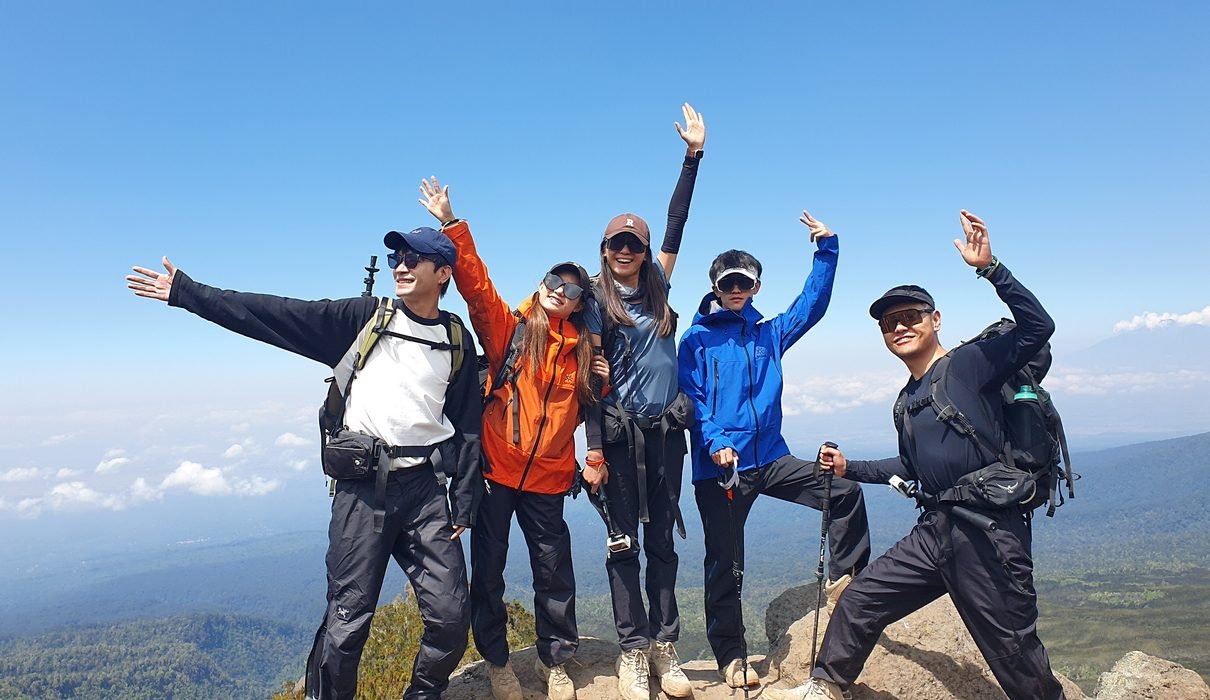
Climbing Mount Kilimanjaro through the Marangu Route is one of the most popular ways to experience Africa’s highest mountain. For travellers planning a Kilimanjaro adventure in 2027, the five-day Marangu Route offers a direct hiking trail through tropical rainforest, open moorland, rocky alpine desert and the cold mountain landscape leading towards Uhuru Peak. The route is particularly well known for its permanent mountain huts, which provide shared sleeping accommodation instead of the camping tents used on most other Kilimanjaro climbing routes.
Standing at 5,895 metres above sea level, Mount Kilimanjaro attracts hikers from different parts of the world who want to reach the highest point in Africa. The 5 Days Kilimanjaro Marangu Route begins at Marangu Gate on the southeastern side of the mountain and follows a well-established trail through Mandara Hut, Horombo Hut and Kibo Hut before the final summit attempt. Although the route is sometimes described as one of the easier ways to climb Kilimanjaro, the five-day itinerary is physically demanding because it provides limited time for the body to adjust to high altitude.
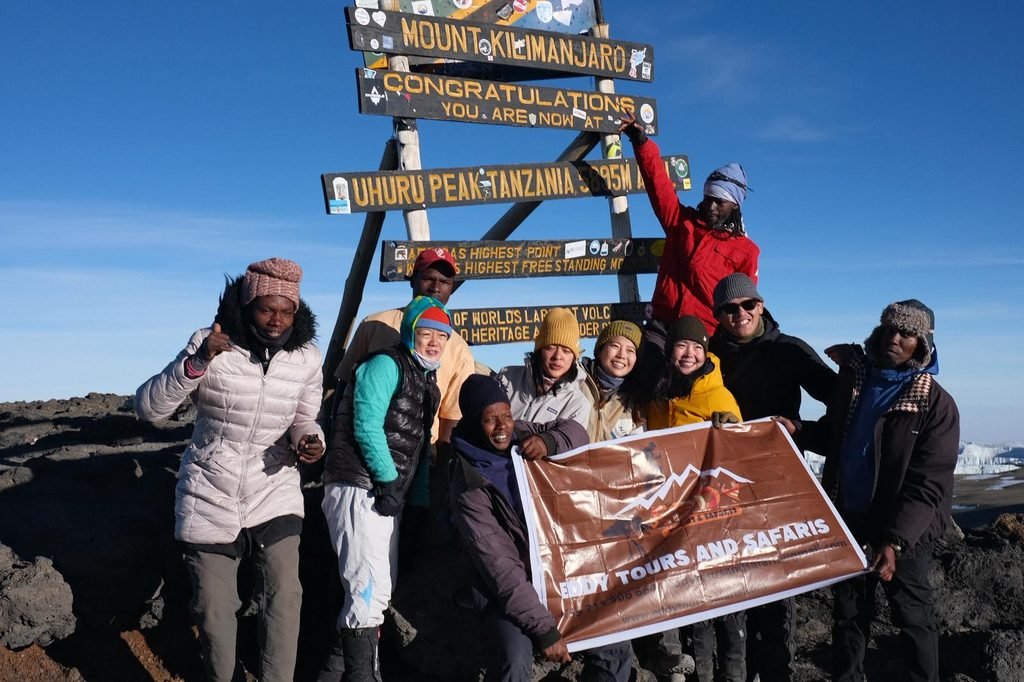
At Eddy Tours & Safaris, we help travellers arrange guided Kilimanjaro climbs with local mountain guides, porters, cooks and the necessary trekking arrangements. This 2027 Marangu Route hiking plan explains the daily itinerary, mountain scenery, accommodation, route difficulty, packing requirements, inclusions, exclusions and important preparation advice for anyone considering this five-day climb.
Overview of the 5 Days Kilimanjaro Marangu Route in 2027
The five-day Marangu Route is designed for travellers who want to climb Kilimanjaro within a relatively short period while staying in mountain huts. Unlike longer Kilimanjaro routes, this itinerary does not include an additional acclimatisation day at Horombo Hut. Climbers therefore need to be physically prepared and understand the challenges of gaining altitude over a short period. Those who have never trekked at high elevations should consider a six-day Marangu itinerary, which provides an additional day to adjust before continuing towards Kibo Hut.
| Tour Information | Details |
|---|---|
| Tour name | 5 Days Kilimanjaro Marangu Route |
| Destination | Mount Kilimanjaro, Tanzania |
| Travel year | 2027 |
| Duration | 5 days, 4 mountain nights |
| Starting point | Marangu Gate |
| Finishing point | Marangu Gate |
| Maximum altitude | 5,895 metres |
| Summit destination | Uhuru Peak |
| Accommodation | Shared mountain huts |
| Difficulty | Challenging due to altitude |
| Main activities | Hiking, trekking and mountain photography |
| Departure | Private or arranged group departures |
| Tour operator | Eddy Tours & Safaris |
Why Choose the Marangu Route for Kilimanjaro Climbing in 2027?
One of the main reasons travellers choose the Marangu Route is the availability of permanent mountain huts. Mandara Hut, Horombo Hut and Kibo Hut provide basic shared accommodation, making the route attractive to hikers who prefer sleeping indoors rather than in tents. The huts are simple and practical, with shared sleeping areas and communal facilities. Climbers still need suitable sleeping bags, warm clothing and other mountain equipment because temperatures become extremely cold at higher elevations.
Another reason to choose Marangu is the variety of landscapes encountered along the trail. The first section passes through a green rainforest where hikers may see colobus monkeys, birds and different mountain plants. As the route climbs higher, the forest gradually gives way to open moorland with wide views of Mawenzi and Kibo. Beyond Horombo Hut, the scenery becomes increasingly dry and rocky as the trail crosses the alpine desert towards Kibo Hut. These changes in vegetation and landscape make the route interesting for travellers who enjoy nature, photography and mountain hiking.
The Marangu Route is also convenient for travellers staying in Moshi or Arusha because the trail begins at Marangu Gate, which can be reached by road. Visitors can combine their mountain climb with a Tanzania safari or spend additional days exploring northern Tanzania after descending from Kilimanjaro. However, convenience should not be confused with an easy summit attempt. The short climbing schedule makes proper preparation and altitude awareness especially important.
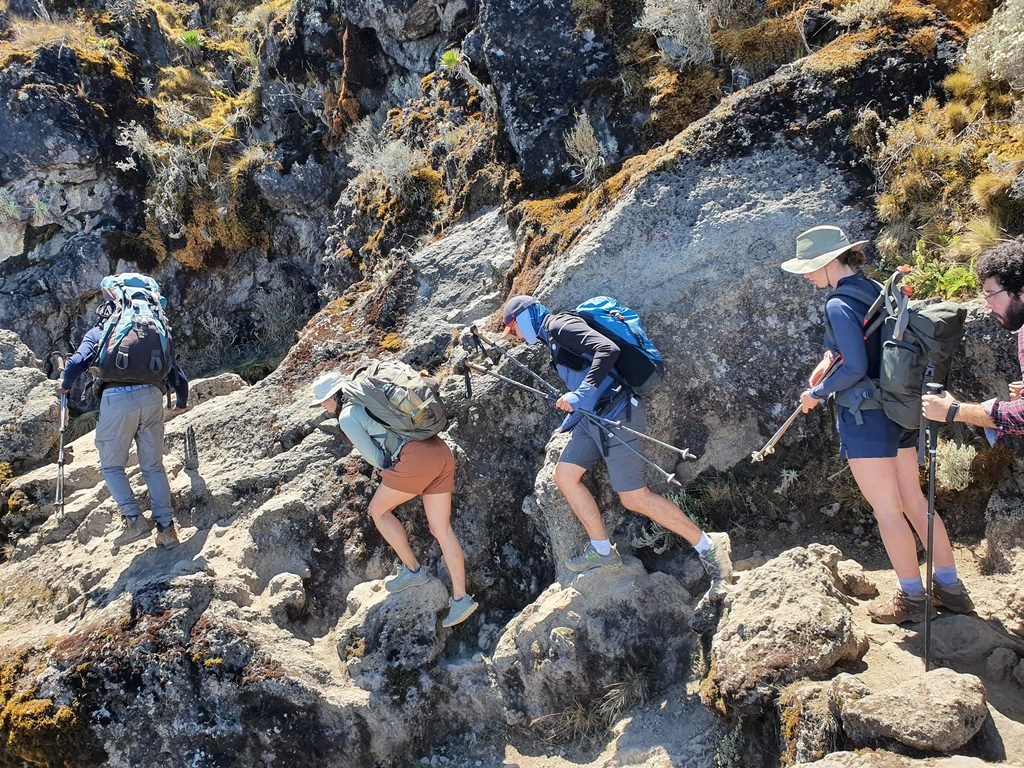
Detailed 5 Days Kilimanjaro Marangu Route Itinerary for 2027
Day 1: Marangu Gate to Mandara Hut – Hiking Through the Rainforest
- Starting altitude: Approximately 1,860 metres
- Finishing altitude: Approximately 2,720 metres
- Hiking distance: 8 kilometres
- Walking time: 4–5 hours
- Habitat: Tropical rainforest
- Accommodation: Mandara Hut
- Meals: Lunch and dinner
Your Kilimanjaro climbing adventure begins with a morning transfer from your hotel in Moshi or Arusha to Marangu Gate, the main entrance for this route. Upon arrival, your mountain guide will assist with park registration and the necessary arrangements before the climb begins. While the mountain crew prepares the equipment and supplies, you will have time to check your daypack, drinking water, rain jacket and other items needed during the first day’s walk.
The trail starts beneath tall rainforest trees, where the air is often humid and the ground may be wet or muddy. This part of Kilimanjaro receives considerable rainfall, supporting thick vegetation and providing habitat for birds, monkeys and other wildlife. Your guide will maintain a comfortable walking pace while explaining the surrounding environment and helping the group settle into the rhythm of mountain trekking. After several hours of walking, you will arrive at Mandara Hut, where the crew will prepare your evening meal and arrange your sleeping accommodation.
Depending on the weather, arrival time and how everyone is feeling, there may be an opportunity to take a short walk towards Maundi Crater. This optional excursion offers additional views of the surrounding landscape, although it should only be undertaken with your guide’s approval. The first evening is a good opportunity to rest, drink enough water and prepare for the higher elevations ahead.
Day 2: Mandara Hut to Horombo Hut – From Rainforest to Open Moorland
- Starting altitude: Approximately 2,720 metres
- Finishing altitude: Approximately 3,720 metres
- Hiking distance: 12 kilometres
- Walking time: 6–8 hours
- Habitat: Heath and moorland
- Accommodation: Horombo Hut
- Meals: Breakfast, lunch and dinner
After breakfast at Mandara Hut, the second day’s hike continues uphill as the rainforest gradually becomes thinner. The trail enters the heath and moorland zone, where the landscape opens up and offers wider views of the mountain. Hikers may encounter giant groundsels, lobelias and other plants adapted to Kilimanjaro’s high-altitude environment. On clear days, the impressive volcanic peaks of Mawenzi and Kibo become visible, providing an early glimpse of the terrain that lies ahead.
The walk towards Horombo Hut involves a steady gain in altitude, so your guide will encourage a slow and consistent pace. Although the trail is generally straightforward, the thinner air can make uphill walking more tiring than expected. Regular breaks allow climbers to drink water, eat snacks and monitor how their bodies are responding to the increasing elevation. By the time you reach Horombo Hut, the temperature will usually be noticeably cooler than at Mandara, especially during the evening.
Horombo Hut is one of the main accommodation points along the Marangu Route and is surrounded by open mountain scenery. After arriving, you will have time to rest before dinner and receive a briefing about the following day’s walk towards Kibo Hut. This is also an important point for checking your health because the five-day itinerary continues directly to higher altitude without an additional acclimatisation day. Anyone experiencing concerning altitude symptoms should inform the guide immediately rather than attempting to continue without assessment.
Day 3: Horombo Hut to Kibo Hut – Crossing the Alpine Desert
- Starting altitude: Approximately 3,720 metres
- Finishing altitude: Approximately 4,700 metres
- Hiking distance: 10 kilometres
- Walking time: 6–8 hours
- Habitat: Alpine desert
- Accommodation: Kibo Hut
- Meals: Breakfast, lunch and dinner
The third day takes you from Horombo Hut towards Kibo Hut, crossing one of the most distinctive landscapes on Mount Kilimanjaro. After breakfast, the trail gradually leaves the remaining moorland vegetation behind and enters a dry, rocky environment where very few plants can survive. The route passes across the broad saddle between Mawenzi and Kibo, offering dramatic views of the two volcanic formations and the surrounding high-altitude terrain.
As you continue towards Kibo Hut, the effects of altitude become more noticeable. Walking may feel slower, breathing becomes more demanding and even ordinary movements can require additional effort. Your mountain guide will carefully monitor the group and encourage a steady pace rather than rushing to reach the hut. This section is particularly important because the five-day Marangu Route involves a rapid ascent from Horombo to Kibo, leaving relatively little time for acclimatisation before the summit attempt.
Upon arrival at Kibo Hut, the mountain crew will prepare an early meal while your guide explains the summit-night arrangements. You will need to organise your warm clothing, head torch, gloves, drinking water and snacks before resting. The summit climb usually begins around midnight, meaning there will only be a few hours available for sleep. Although reaching Kibo Hut is an important stage of the journey, the final ascent is considerably more demanding, and the guide will assess whether each climber is fit to continue.
Day 4: Kibo Hut to Uhuru Peak and Descent to Horombo Hut – Summit Day
- Starting altitude: Approximately 4,700 metres
- Highest altitude: 5,895 metres at Uhuru Peak
- Finishing altitude: Approximately 3,720 metres
- Hiking distance: Approximately 21–22 kilometres
- Walking time: 12–16 hours
- Habitat: Arctic summit zone and alpine desert
- Accommodation: Horombo Hut
- Meals: Breakfast, lunch and dinner
Summit day is the most demanding part of the entire five-day Marangu Route. The climb normally begins late at night or shortly after midnight, when temperatures can fall well below freezing. Wearing insulated jackets, thermal layers, gloves and head torches, climbers begin the slow ascent from Kibo Hut towards Gilman’s Point on the crater rim. The trail becomes increasingly steep, with sections of loose volcanic scree that require patience, careful footing and a consistent walking rhythm.
After several hours of climbing, the route reaches Gilman’s Point at approximately 5,685 metres. From here, those who are fit to continue follow the crater rim towards Uhuru Peak, passing through an exposed high-altitude environment where strong winds and extreme cold are possible. Reaching Uhuru Peak at 5,895 metres is the highest point of the climb and offers views across the crater and remaining glaciers when conditions are clear. However, reaching the summit is never guaranteed, and the guide may decide to turn back earlier if weather conditions, exhaustion or altitude-related illness make further climbing unsafe.
After the summit attempt, the group begins the long descent towards Kibo Hut, where there is usually a short opportunity to rest and eat before continuing down to Horombo Hut. The descent is tiring because it follows many hours of strenuous hiking, but the reduction in altitude often makes breathing more comfortable. Once back at Horombo Hut, the crew will prepare dinner and provide time for recovery after the longest day of the expedition.
Day 5: Horombo Hut to Marangu Gate – Completing the Kilimanjaro Climb
- Starting altitude: Approximately 3,720 metres
- Finishing altitude: Approximately 1,860 metres
- Hiking distance: 20 kilometres
- Walking time: 5–7 hours
- Habitat: Moorland and rainforest
- Accommodation: Return to Moshi or Arusha
- Meals: Breakfast and lunch
The final day begins with breakfast at Horombo Hut before the group starts descending towards Marangu Gate. The trail follows the same general route used during the ascent, passing through open moorland before returning to the green rainforest surrounding Mandara Hut. Although descending is generally easier on the lungs, the long downhill walk can be tiring for the knees and legs, particularly after the demanding summit attempt on the previous day.
As you continue towards the lower elevations, the air becomes warmer and the vegetation becomes thicker. Your guide will maintain a suitable pace and allow breaks along the way. Upon reaching Marangu Gate, the group completes the necessary park exit procedures, and eligible climbers receive certificates recognising the highest qualifying point reached during the expedition. Your driver will then transfer you back to your hotel in Moshi or Arusha, where you can rest and recover.
For travellers who want to continue exploring Tanzania, the end of the climb is an opportunity to arrange a wildlife safari, visit local attractions or travel to Zanzibar. Our team at Eddy Tours & Safaris can help organise additional travel arrangements based on your preferred destinations and available holiday time.
What Is Included in the 5 Days Kilimanjaro Marangu Route Package?
The following services are normally included in our standard five-day Marangu Route climbing arrangements. Your final quotation will confirm the exact services provided for your chosen departure.
- Kilimanjaro National Park entrance and conservation fees.
- Mountain hut accommodation fees for four nights.
- Professional English-speaking mountain guide and assistant guides as required.
- Mountain porters and cook throughout the expedition.
- Mountain crew wages and applicable crew park fees.
- Breakfast, lunch and dinner during the climb as specified in the itinerary.
- Clean and treated drinking water while on the mountain.
- Transfers between Moshi and Marangu Gate and return.
- Mountain rescue fees required by the national park.
- Emergency oxygen and standard mountain safety equipment.
- Routine health and altitude monitoring by the mountain guide.
- Government taxes applicable to the confirmed climbing package.
- Kilimanjaro climbing certificate for eligible climbers.
- Assistance with mountain registration and climbing arrangements.
What Is Excluded from the 5 Days Kilimanjaro Marangu Route Package?
The following expenses are generally not included unless they are specifically added to your confirmed booking.
- International and domestic flight tickets.
- Tanzania tourist visa fees.
- Travel and medical insurance, including high-altitude evacuation coverage.
- Hotel accommodation before and after the mountain climb.
- Airport transfers unless included in your quotation.
- Personal trekking equipment, including sleeping bags, hiking boots and warm clothing.
- Equipment rental charges.
- Tips for mountain guides, porters and cooks.
- Alcoholic drinks, bottled beverages and personal refreshments.
- Laundry, telephone calls, souvenirs and other personal expenses.
- Additional accommodation or transport caused by changes to personal travel plans.
- Optional sightseeing activities and safari extensions.
- Any meals or services not specifically mentioned in the confirmed itinerary.
How Difficult Is the 5 Days Kilimanjaro Marangu Route?
The five-day Marangu Route is challenging mainly because of its short acclimatisation schedule. Although the path is well established and does not require technical rock-climbing skills, reaching Uhuru Peak involves walking at elevations where oxygen availability is much lower than at sea level. Climbers must also cope with cold temperatures, long hiking days and a demanding summit ascent that often begins around midnight. Good physical fitness is helpful, but fitness alone does not prevent altitude sickness.
Travellers preparing for this route should begin regular walking and hiking exercises several months before departure. Training can include uphill walking, stair climbing, cycling and longer hikes while carrying a daypack. It is also important to become comfortable walking for several hours on consecutive days. People who have never experienced high-altitude trekking should consider the 6 Days Marangu Route with an additional acclimatisation day, or discuss a longer Kilimanjaro route with their tour operator.
Altitude sickness can affect anyone, regardless of age or fitness. Headaches, nausea, dizziness, unusual fatigue and loss of appetite can be early warning signs. Symptoms that worsen, particularly confusion, difficulty walking normally or breathlessness at rest, require urgent attention and often descent. Climbers should never hide symptoms from their guides or continue climbing simply because they have already invested time and money in the expedition. The Tanzania National Parks Authority advises visitors to plan for altitude, walk slowly and follow mountain safety instructions.
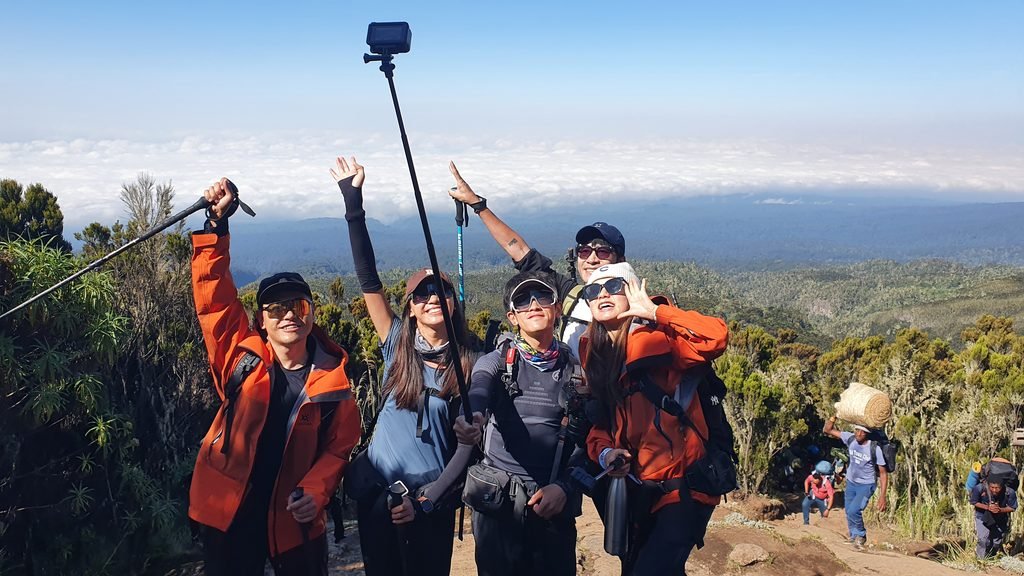
Best Time to Climb Kilimanjaro via Marangu Route in 2027
Mount Kilimanjaro can be climbed throughout the year, but some months generally provide more favourable hiking conditions than others. January to early March and June to October are commonly preferred because these periods often have comparatively drier weather and better visibility. However, mountain conditions remain unpredictable, and rainfall, snow, strong winds and freezing temperatures can occur at any time of year.
January and February are attractive for travellers who prefer relatively warm conditions at lower elevations, while June through October is popular for those planning their climb during the main dry season. March to May generally brings heavier rainfall, making the lower forest trails muddy and slippery. November can also experience shorter seasonal rains. The permanent huts on the Marangu Route provide shelter from the weather, but they do not remove the need for waterproof clothing and suitable mountain equipment.
When choosing your travel dates for 2027, it is worth considering the number of days available, your fitness level, seasonal conditions and the time needed to recover after the climb. Travellers planning to combine Kilimanjaro with a safari should also allow enough time between activities rather than arranging a demanding schedule immediately after descending from the mountain.
Accommodation and Meals During the Marangu Route Climb
Accommodation on the Marangu Route is provided in permanent mountain huts located at Mandara, Horombo and Kibo. These huts offer shared sleeping facilities, generally with bunk beds or sleeping platforms, and basic communal areas. They are not hotels, and visitors should expect simple mountain conditions with limited facilities. Climbers are advised to bring warm sleeping bags suitable for cold temperatures, particularly at Kibo Hut, where nights can be extremely cold.
Meals are prepared by the mountain cook and are intended to provide sufficient energy for long hiking days. Depending on the arrangements and available supplies, meals may include porridge, eggs, bread, soup, rice, pasta, potatoes, vegetables, meat, fruit and hot drinks. Travellers with vegetarian, vegan or other dietary requirements should inform the tour operator before arrival so suitable arrangements can be discussed. Drinking enough water and maintaining regular meals are important during the climb, although neither replaces proper acclimatisation.
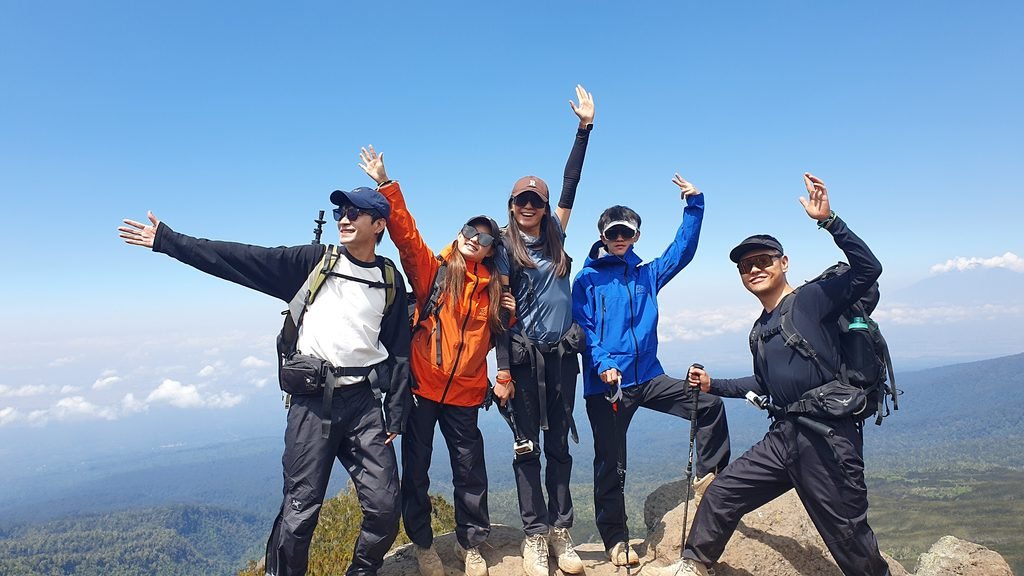
Essential Packing List for the 5 Days Marangu Route in 2027
Packing suitable clothing and equipment is an important part of preparing for Kilimanjaro. Temperatures vary considerably between the warm rainforest and the freezing summit zone, so climbers should carry clothing that can be worn in layers. Good-quality hiking boots should be comfortable and already broken in before the trip, while waterproof outerwear is necessary because rain and changing weather conditions are common on the mountain.
Recommended equipment includes:
- Waterproof hiking boots with good ankle support.
- Warm sleeping bag suitable for freezing mountain temperatures.
- Thermal base layers and long-sleeved hiking shirts.
- Insulated down or synthetic jacket.
- Waterproof jacket and rain trousers.
- Hiking trousers and comfortable trekking socks.
- Warm gloves, insulated mittens and a woollen hat.
- Sun hat, sunglasses and sunscreen.
- Head torch with spare batteries.
- Trekking poles for uphill and downhill walking.
- Daypack for water, snacks and personal items.
- Reusable water bottles or hydration containers.
- Personal medication and basic hygiene supplies.
- High-energy snacks for the summit attempt.
- Duffel bag for equipment carried by porters.
Travellers who do not own all the necessary equipment can ask about rental options in Moshi or Arusha. It is better to arrange equipment requirements before arriving in Tanzania, especially for items such as insulated jackets, sleeping bags and hiking boots. You can also explore additional Kilimanjaro preparation information through Kilimanjaro Climb Specialist, alongside the equipment guidance provided by your mountain guide.
How Much Does the 5 Days Kilimanjaro Marangu Route Cost in 2027?
The cost of a five-day Kilimanjaro Marangu Route climb depends on the number of travellers, departure arrangements, park fees, mountain crew requirements and services included in the package. Private climbs for one person generally cost more per traveller than climbs organised for couples or groups because several operating expenses must still be covered regardless of group size.
A complete climbing quotation should clearly explain the national park fees, hut accommodation, guide and porter services, meals, mountain transport, safety arrangements and applicable taxes. Travellers should also budget separately for international flights, travel insurance, visas, tips, personal equipment and accommodation before or after the expedition if those services are not included.
At Eddy Tours & Safaris, we prepare quotations according to your preferred travel dates, number of climbers and requested services. Since government fees and operating costs can change, travellers planning their Kilimanjaro climb for 2027 should request an updated quotation rather than relying on an old advertised price.
Can You Combine a Kilimanjaro Marangu Route Climb with a Tanzania Safari?
Many travellers visiting Tanzania prefer to combine their Kilimanjaro climb with a wildlife safari, allowing them to experience both the mountain and the country’s national parks during one holiday. After completing the five-day Marangu Route, visitors can travel to destinations such as Tarangire National Park, Ngorongoro Crater, Lake Manyara National Park and Serengeti National Park. These destinations offer opportunities to see elephants, lions, giraffes, zebras, buffaloes and many other animals in their natural habitats.
A safari extension can be arranged according to your available time and preferred travel style. Travellers with a few extra days may choose a shorter northern Tanzania safari, while those with more time can explore the Serengeti and Ngorongoro Conservation Area. It is advisable to allow sufficient rest after Kilimanjaro before beginning a busy travel programme, especially if the summit attempt was physically exhausting.
You can discuss your preferred combination of Kilimanjaro climbing and Tanzania safari with our team, including accommodation arrangements, airport transfers and suitable travel dates. Some visitors also choose to finish their holiday on Zanzibar’s beaches after their mountain and wildlife activities.
Frequently Asked Questions About the 5 Days Marangu Route
Is the 5 Days Marangu Route Suitable for Beginners?
The Marangu Route does not require technical climbing experience, but the five-day itinerary is not the best option for every beginner. The short schedule gives climbers limited time to adjust to altitude, increasing the risk of altitude sickness. First-time high-altitude hikers should strongly consider a longer itinerary with additional acclimatisation time.
Do Climbers Sleep in Tents on the Marangu Route?
No. The standard Marangu Route uses permanent mountain huts at Mandara, Horombo and Kibo. Accommodation is shared and basic, and climbers must bring appropriate sleeping bags and personal equipment.
Is Reaching Uhuru Peak Guaranteed?
No. Summit success depends on weather conditions, altitude adjustment, physical condition and the guide’s safety assessment. Some climbers may need to turn back before reaching the summit because of altitude-related symptoms or other safety concerns.
Can I Climb Kilimanjaro Alone?
You can book as a solo traveller, but you cannot undertake an independent, unguided climb. Kilimanjaro National Park requires climbers to use authorised guiding arrangements. Eddy Tours & Safaris can help organise a guided private climb or discuss available group departures.
How Far Do You Walk During the Five-Day Marangu Route?
The complete route involves approximately 70 kilometres of hiking, depending on the exact trail measurements and any optional walks. The summit day is the longest and most physically demanding part of the itinerary.
When Should I Book My Kilimanjaro Climb for 2027?
Booking several months in advance is advisable, particularly if you plan to travel during popular climbing periods or have fixed international flight dates. Early planning provides more time to arrange accommodation, equipment, travel insurance and other important details.
Book Your 5 Days Kilimanjaro Marangu Route Scenic Hike for 2027
The five-day Kilimanjaro Marangu Route offers an opportunity to explore one of Tanzania’s most remarkable mountain landscapes, from the green rainforest near Marangu Gate to the rocky summit environment of Kibo and Uhuru Peak. Its mountain huts, established trails and changing scenery make it an attractive choice for travellers who enjoy hiking and want to experience Africa’s highest mountain. However, the short itinerary requires careful preparation, and travellers should consider their previous hiking experience and ability to cope with altitude before selecting this option.
At Eddy Tours & Safaris, we help visitors plan Kilimanjaro climbing holidays with experienced local mountain teams, practical travel arrangements and clear information about what to expect. Whether you are travelling alone, as a couple or with a group of friends, our team can help you choose a suitable climbing programme and arrange additional Tanzania safari activities if required.
For your 2027 Kilimanjaro adventure, contact us with your preferred travel dates, number of climbers and any special requirements. We will provide a detailed itinerary and quotation to help you prepare for your journey.
Eddy Tours & Safaris – Arusha, Tanzania
Email: sales@eddytours-safaris.com
Website: Eddy Tours and Safaris
Request your Kilimanjaro climbing quotation: Eddy Tours and Safari Contact