

Climb Mount Kilimanjaro in 2027 or 2028 with Eddy Tours and Safaris on a six-day expedition through either the Marangu Route or the Machame Route. Both routes lead toward Uhuru Peak, the highest point in Africa at 5,895 meters (19,341 feet), but each offers a different experience.
The Marangu Route is known for its mountain huts, relatively gradual lower trails, and views of Mawenzi Peak. The Machame Route is popular for its changing landscapes, including rainforest, the Shira Plateau, Lava Tower, Barranco Wall, and the rocky summit slopes of Kibo.
This tour package gives you the freedom to choose between two established climbing routes based on your fitness, accommodation preference, trekking experience, and available time.
Although both itineraries take six days on the mountain, they are demanding high-altitude expeditions. The six-day Marangu itinerary includes an acclimatization day at Horombo Hut, while the six-day Machame itinerary involves a long trek from Barranco Camp to Barafu Camp before summit night.
For climbers who have additional time, longer itineraries are generally preferable because they allow more gradual acclimatization.
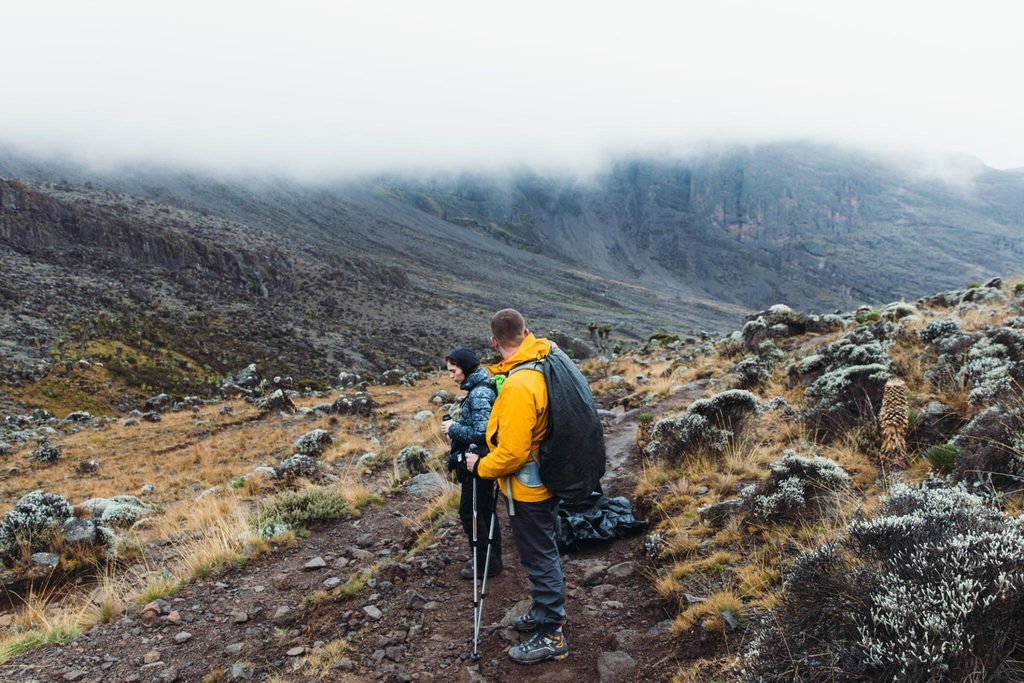
Kilimanjaro Climbing Package Overview
| Tour information | Details |
|---|---|
| Package | 6 Days Kilimanjaro Climbing |
| Travel years | 2027 and 2028 |
| Destination | Mount Kilimanjaro, Tanzania |
| Route options | Marangu or Machame |
| Duration | 6 days / 5 nights on the mountain |
| Highest point | Uhuru Peak, 5,895 m |
| Marangu accommodation | Shared mountain huts |
| Machame accommodation | Mountain camping |
| Difficulty | Challenging |
| Starting location | Moshi, Tanzania |
| Finishing location | Moshi, Tanzania |
| Travel style | Guided mountain trekking |
| Summit attempt | Day 5 on either six-day itinerary |
Marangu or Machame: Which Route Should You Choose?
The biggest difference between the two routes is the style of trekking and accommodation.
Marangu is often called the Coca-Cola Route. It approaches Kilimanjaro from the southeast and is the only standard route that uses permanent mountain huts for overnight accommodation.
Machame, also known as the Whiskey Route, approaches from the southwest and offers a more varied landscape. Climbers sleep in tents and travel through several distinctive parts of the mountain.
| Feature | 6-Day Marangu | 6-Day Machame |
|---|---|---|
| Starting gate | Marangu Gate | Machame Gate |
| Accommodation | Mountain huts | Camping tents |
| Scenery | Forest, moorland, alpine desert, Mawenzi views | Forest, Shira Plateau, Lava Tower, Barranco Wall |
| Main summit camp | Kibo Hut | Barafu Camp |
| Acclimatization feature | Extra day at Horombo | Lava Tower ascent and lower sleeping altitude at Barranco |
| Terrain | Generally more gradual, with a demanding summit ascent | Steeper and more varied, including scrambling |
| Descent | Marangu Route | Mweka Route |
| Suitable for | Travelers preferring huts | Fit trekkers comfortable camping |
Neither route guarantees reaching the summit. The best choice is the one that matches your preparation and gives you an appropriate margin for safety.
Option One: 6-Day Marangu Route Kilimanjaro Climbing Itinerary
The six-day Marangu Route includes an extra day at Horombo Hut for acclimatization. This makes it preferable to the shorter five-day Marangu itinerary for most climbers.
Day 1: Moshi – Marangu Gate – Mandara Hut
Starting elevation: Approximately 1,860 m
Sleeping elevation: Approximately 2,720 m
Walking distance: 8 km
Walking time: 4–5 hours
Accommodation: Mandara Hut
After breakfast at your hotel in Moshi, you will meet your climbing team and travel to Marangu Gate. The journey passes through villages and farmland on the lower slopes of Kilimanjaro.
At the gate, your guides complete park registration and organize the equipment and porter arrangements.
The trek begins through the tropical rainforest. This part of the mountain is covered with tall trees, ferns, mosses, and dense vegetation. Depending on the weather and wildlife activity, you may see birds or monkeys along the trail.
The walk is generally manageable, although rain can make some sections slippery.
After approximately four to five hours, you reach Mandara Hut, where you will spend your first night.
Dinner is prepared by the mountain cook, and your guide explains the next day’s trek.
Day 2: Mandara Hut – Horombo Hut
Starting elevation: Approximately 2,720 m
Sleeping elevation: Approximately 3,720 m
Walking distance: 12 km
Walking time: 5–7 hours
Accommodation: Horombo Hut
After breakfast, the trail gradually leaves the rainforest and enters the heath and moorland zone.
Vegetation becomes shorter, and the surrounding landscape opens up.
On clear days, you may enjoy views of Mawenzi Peak and the upper slopes of Kibo.
The route climbs steadily toward Horombo Hut, one of the main accommodation points on the Marangu Route.
As you gain altitude, walking may become more tiring. Your guide will encourage a slow and steady pace.
Upon reaching Horombo Hut, you will have time to rest, enjoy the mountain scenery, and prepare for the following day’s acclimatization walk.
Day 3: Horombo Hut Acclimatization Day
Sleeping elevation: Approximately 3,720 m
Activity: Optional guided acclimatization walk
Accommodation: Horombo Hut
Today is dedicated to acclimatization.
Rather than continuing directly to Kibo Hut, you spend another night at Horombo to allow additional time for your body to adjust to the reduced oxygen availability.
Depending on your condition and the guide’s assessment, you may take a walk toward Zebra Rocks or another suitable nearby area.
Zebra Rocks is known for its distinctive mineral-stained rock formations.
After the walk, you return to Horombo Hut for lunch and rest.
Your guide will assess your condition and explain the next day’s ascent toward Kibo.
Although an extra day improves the acclimatization schedule, altitude illness can still occur.
Day 4: Horombo Hut – Kibo Hut
Starting elevation: Approximately 3,720 m
Sleeping elevation: Approximately 4,700 m
Walking distance: 9–10 km
Walking time: 5–7 hours
Accommodation: Kibo Hut
After breakfast, the trail continues toward the alpine desert zone.
Vegetation becomes increasingly sparse as you cross the broad Saddle between Kibo and Mawenzi.
The landscape is rocky, dry, and exposed to changing mountain weather.
Your group will walk slowly because the altitude is now significant.
Eventually, you reach Kibo Hut, the main base for the Marangu summit attempt.
After an early meal, your guide explains the summit route, departure time, clothing requirements, and safety procedures.
You should organize your headlamp, gloves, insulated clothing, water, and other essentials before resting.
The summit attempt normally begins around midnight.
Day 5: Kibo Hut – Gilman’s Point – Uhuru Peak – Horombo Hut
Starting elevation: Approximately 4,700 m
Summit elevation: 5,895 m
Sleeping elevation: Approximately 3,720 m
Walking time: 10–15 hours, sometimes longer
Accommodation: Horombo Hut
This is the most demanding day of the Marangu Route.
The summit ascent begins during the night, when temperatures can be extremely cold.
Climbers ascend steep volcanic slopes toward Gilman’s Point, located on Kibo’s crater rim at approximately 5,685 meters.
The route can be physically exhausting because of the altitude, loose volcanic material, and long hours of walking.
After reaching Gilman’s Point, climbers who are fit to continue follow the crater rim toward Stella Point and Uhuru Peak.
Uhuru Peak stands at 5,895 meters and is the highest point in Africa.
After a short summit stop, depending on conditions, the group begins descending toward Kibo Hut.
Following a rest, you continue to Horombo Hut for the night.
Your guides will make safety decisions throughout the ascent and descent. Anyone experiencing serious altitude illness may need to descend before reaching the summit.
Day 6: Horombo Hut – Marangu Gate – Moshi
Starting elevation: Approximately 3,720 m
Finishing elevation: Approximately 1,860 m
Walking distance: Approximately 20 km
Walking time: 5–7 hours
After breakfast, you begin the final descent through the moorland and rainforest.
The trail returns past Mandara Hut and continues toward Marangu Gate.
Upon arrival, the park exit procedures are completed, and eligible climbers receive the appropriate summit certificate.
You then return to Moshi for rest or onward travel.
Option Two: 6-Day Machame Route Kilimanjaro Climbing Itinerary
The six-day Machame Route is a scenic but demanding itinerary. It includes the famous Barranco Wall and Lava Tower, with the long Barranco-to-Barafu trek completed on day four.
Day 1: Moshi – Machame Gate – Machame Camp
Starting elevation: Approximately 1,800 m
Sleeping elevation: Approximately 3,000 m
Walking distance: 11 km
Walking time: 5–7 hours
Accommodation: Machame Camp
Your journey begins with a transfer from Moshi to Machame Gate.
After registration, the group starts trekking through Kilimanjaro’s dense rainforest.
The trail climbs steadily through tall trees, ferns, and moss-covered vegetation.
Conditions can be muddy, especially during rainy periods.
As the day progresses, the trail reaches the upper forest and Machame Camp.
Your mountain crew prepares the campsite, and you spend your first night sleeping in tents.
Day 2: Machame Camp – Shira Camp
Starting elevation: Approximately 3,000 m
Sleeping elevation: Approximately 3,840 m
Walking distance: 5–6 km
Walking time: 4–6 hours
Accommodation: Shira Camp
After breakfast, the trail climbs out of the rainforest and enters the moorland zone.
The scenery changes considerably, with rocky ridges, open vegetation, and views toward Kibo.
You continue toward the Shira Plateau, an important feature of Kilimanjaro’s volcanic landscape.
After reaching Shira Camp, you will have time to rest and enjoy the surroundings.
Temperatures can drop sharply during the evening, so warm clothing is essential.
Day 3: Shira Camp – Lava Tower – Barranco Camp
Starting elevation: Approximately 3,840 m
Highest elevation: Approximately 4,630 m
Sleeping elevation: Approximately 3,960 m
Walking distance: 10–11 km
Walking time: 6–8 hours
Accommodation: Barranco Camp
Today, the route continues toward Lava Tower.
As you ascend, vegetation becomes sparse and the landscape changes into alpine desert.
Lava Tower is located at approximately 4,630 meters, making this an important high-altitude section of the trek.
After reaching the area, the trail descends toward Barranco Valley.
The descent provides the opportunity to sleep lower than the day’s highest point.
Along the way, you may see giant groundsels and other unusual high-altitude vegetation.
Barranco Camp lies beneath the impressive Barranco Wall, which you will climb the following morning.
Day 4: Barranco Camp – Karanga Valley – Barafu Camp
Starting elevation: Approximately 3,960 m
Sleeping elevation: Approximately 4,670 m
Walking distance: 9–10 km
Walking time: 7–9 hours
Accommodation: Barafu Camp
The day begins with an ascent of Barranco Wall.
This steep section involves scrambling over rocky terrain, sometimes using your hands for balance.
Your guides will assist the group through the more demanding sections.
After reaching the top, the route continues across ridges and descends into Karanga Valley.
From Karanga, you continue uphill toward Barafu Camp.
The six-day Machame itinerary does not normally include an overnight stop at Karanga Camp, making this a long day.
At Barafu Camp, you will rest, eat, and prepare for the summit attempt.
Because the group normally departs around midnight, the time available for sleep is limited.
Day 5: Barafu Camp – Stella Point – Uhuru Peak – Mweka Camp
Starting elevation: Approximately 4,670 m
Summit elevation: 5,895 m
Sleeping elevation: Approximately 3,100 m
Walking time: 11–16 hours, sometimes longer
Accommodation: Mweka Camp
The summit attempt begins during the night.
The trail ascends the rocky slopes of Kibo toward Stella Point at approximately 5,756 meters.
The combination of cold temperatures, thin air, and steep terrain makes this section physically demanding.
After reaching Stella Point, climbers who are fit to continue follow the crater rim toward Uhuru Peak.
Reaching the summit at 5,895 meters is the main objective of the expedition.
After a short stop, you begin descending toward Barafu Camp.
Following a rest, the descent continues to Mweka Camp.
This is a very long day, and careful pacing is important.
Day 6: Mweka Camp – Mweka Gate – Moshi
Starting elevation: Approximately 3,100 m
Finishing elevation: Approximately 1,640 m
Walking distance: Approximately 10 km
Walking time: 3–4 hours
After breakfast, you begin descending through the rainforest toward Mweka Gate.
The trail may be muddy, particularly after rainfall.
Upon reaching the gate, you complete the park exit procedures and return to Moshi.
This marks the end of your six-day Machame Route Kilimanjaro climb.
Which Is Better: Marangu or Machame for a Six-Day Climb?
If you prefer sleeping in mountain huts and want to avoid camping, Marangu is the more suitable choice.
Its six-day itinerary also includes an acclimatization day at Horombo Hut.
If you prefer camping, dramatic landscapes, and a more varied trail, Machame is an attractive option.
However, the six-day Machame itinerary includes a particularly demanding combination of the Barranco-to-Barafu day and summit night.
Neither route is automatically safer for every climber.
Your previous altitude experience, physical condition, route pacing, and health should guide the decision.
For most first-time climbers with flexible schedules, a seven-day Machame or another longer itinerary is worth considering.
Best Months to Climb Kilimanjaro in 2027 and 2028
Kilimanjaro can be climbed throughout the year, but weather patterns influence trail conditions and comfort.
January to early March is commonly associated with relatively favorable climbing conditions, although snowfall and rain remain possible.
June to October is another popular period, often bringing drier trekking conditions and clear views.
March to May generally experiences more rainfall, which can make trails slippery.
November to December can bring short rains and variable weather.
The best month depends on your preferences, available travel dates, and willingness to trek in colder or wetter conditions.
What Is Included in the Six-Day Kilimanjaro Climbing Package?
A typical guided package may include:
- Kilimanjaro National Park fees.
- Professional mountain guides.
- Required assistant guides and porter support.
- Mountain cook and prepared meals.
- Five nights of mountain accommodation.
- Hut accommodation on Marangu or camping arrangements on Machame.
- Transfers between Moshi and the climbing gates.
- Group equipment appropriate to the selected route.
- Drinking water arrangements.
- Park rescue fees where applicable.
The exact inclusions must be confirmed in the final quotation.
What Is Not Included?
Common exclusions include:
- International flights.
- Tanzania visa fees.
- Travel and medical evacuation insurance.
- Personal trekking clothing and equipment.
- Tips for the mountain crew.
- Hotel nights before and after the climb, unless specified.
- Personal expenses.
- Optional safari and Zanzibar extensions.
How to Prepare for Your Kilimanjaro Climb
Climbing Kilimanjaro requires physical preparation and an understanding of high-altitude conditions.
Begin training well before your departure. Regular walking, hill hiking, stair climbing, and endurance exercises can help prepare your legs and cardiovascular system.
Practice walking for several hours while carrying a daypack.
You should also prepare for cold weather. Summit temperatures can fall well below freezing, and strong winds can increase heat loss.
Altitude illness remains one of the main risks. Symptoms such as headache, nausea, dizziness, and fatigue should be reported promptly.
Serious symptoms, including confusion, difficulty walking normally, or breathlessness at rest, require urgent assessment and descent.
Your guide’s safety decisions should always take priority over the summit objective.
Can You Combine Kilimanjaro with a Tanzania Safari?
Yes. Many travelers combine a Kilimanjaro climb with a wildlife safari after returning to Moshi.
Popular destinations include Serengeti National Park, Ngorongoro Crater, and Tarangire National Park.
A three- to five-day safari can provide a rewarding introduction to Tanzania’s wildlife.
Travelers with more time may also add a Zanzibar beach holiday.
These extensions should be arranged separately according to your travel dates and budget.
Frequently Asked Questions
Is the six-day Marangu Route easier than Machame?
Marangu generally has less rugged lower trails and uses huts, but both routes reach the same high-altitude summit. Neither is easy.
Which route has better scenery?
Machame offers particularly varied scenery, including the Shira Plateau, Lava Tower, and Barranco Wall. Marangu offers beautiful forest, moorland, and views of Mawenzi.
Does Marangu have private hotel rooms?
No. The standard route uses basic shared mountain huts, not hotel-style accommodation.
Do you need tents on Machame?
Yes. The standard Machame Route uses camping accommodation.
Can beginners climb Kilimanjaro in six days?
Some well-prepared beginners do, but six days is a compressed schedule. Longer itineraries generally provide more time for acclimatization.
Is summit success guaranteed?
No. Reaching Uhuru Peak depends on acclimatization, health, weather, physical condition, and other factors.
Can I book for 2027 or 2028?
You can request an itinerary and quotation for either year. Actual departure availability, prices, and booking conditions must be confirmed.
What is the highest point of Kilimanjaro?
Uhuru Peak stands at 5,895 meters (19,341 feet) above sea level.
Book Your 6 Days Kilimanjaro Climbing Tour for 2027 or 2028
Whether you prefer the mountain huts of Marangu or the scenic camping experience of Machame, Eddy Tours and Safaris can help you plan a six-day Kilimanjaro expedition.
Our team can discuss the differences between the two routes, your preferred climbing dates, equipment requirements, accommodation, and suitable itinerary options.
You can also request information about longer Kilimanjaro climbs if you would like additional time for acclimatization.
Website: Eddy Tours and Safaris
Booking inquiries: Contact Eddy Tours and Safaris
Email: sales@eddytours-safaris.com
WhatsApp: +255 711 906 664
Contact our team with your preferred year, travel month, number of climbers, and chosen route to request a personalized quotation.