
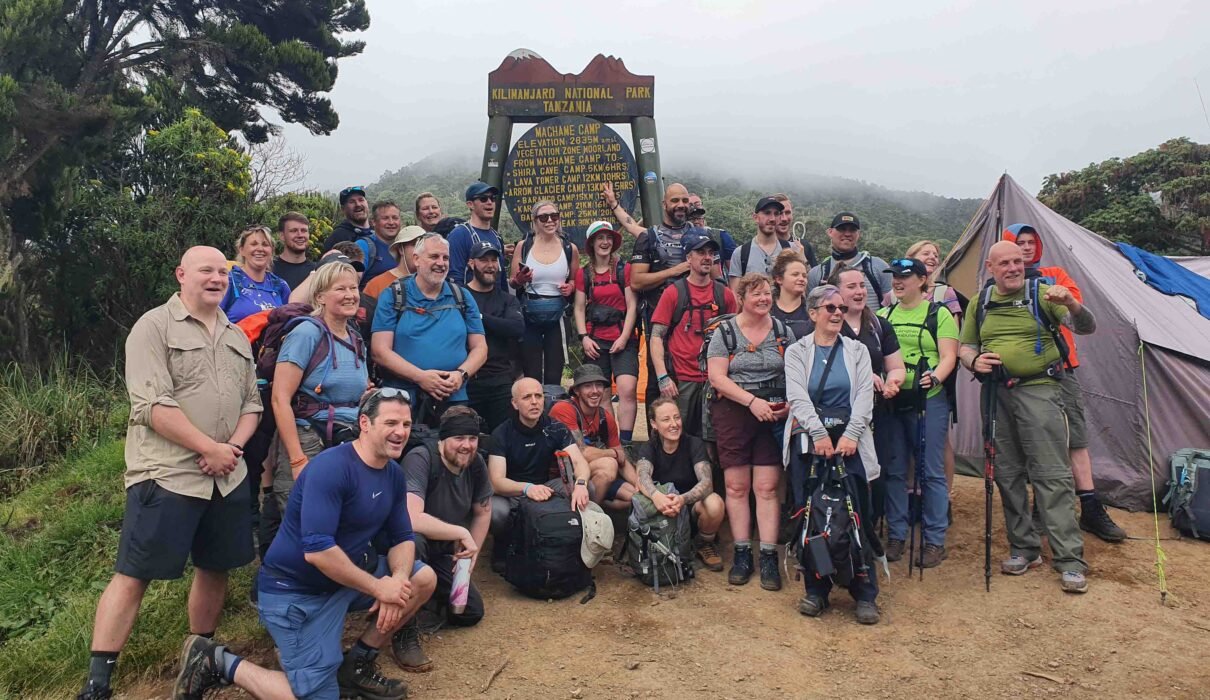
Experience Mount Kilimanjaro with fellow adventurers on our Premier 6-Day Machame Route Group Climb for 2027, 2028, and 2029. This shared trekking expedition takes you through some of Kilimanjaro’s most beautiful landscapes, from the tropical rainforest of the lower slopes to the rocky alpine desert and the summit of Uhuru Peak at 5,895 meters (19,341 feet).
The Machame Route, commonly called the Whiskey Route, is famous for its scenery, varied terrain, and rewarding mountain experience. The route approaches Kilimanjaro from the south, crosses the Shira Plateau, passes the Lava Tower, climbs the Barranco Wall, and continues toward the summit through Barafu Camp.
Our six-day group itinerary is intended for travelers who enjoy meeting people from different countries and sharing the experience of climbing Africa’s highest mountain. You will trek with other participants while receiving support from the mountain crew, including guides, cooks, and porters.
The six-day itinerary is physically demanding because it combines the Barranco-to-Barafu section into one day and provides less acclimatization time than the seven-day alternative. We recommend it primarily for fit trekkers with appropriate preparation and, preferably, previous high-altitude hiking experience.
Whether you are planning your Kilimanjaro climb in 2027, 2028, or 2029, this package provides a complete outline of the route, daily activities, mountain accommodation, equipment requirements, and booking arrangements.
6-Day Machame Route Group Climb Overview
| Tour details | Information |
|---|---|
| Tour name | Premier 6-Day Machame Route Group Climb |
| Destination | Mount Kilimanjaro, Tanzania |
| Travel years | 2027, 2028 and 2029 |
| Duration | 6 days / 5 nights on the mountain |
| Climbing route | Machame Route |
| Highest point | Uhuru Peak, 5,895 meters |
| Starting point | Machame Gate |
| Finishing point | Mweka Gate |
| Accommodation | Mountain camping |
| Tour style | Shared group trekking |
| Difficulty | Challenging |
| Main activities | Trekking, mountain scenery, summit attempt |
| Meals on mountain | Breakfast, lunch and dinner |
| Starting location | Moshi or Arusha, according to arrangements |
| Recommended experience | Good trekking fitness; prior altitude experience beneficial |
Highlights of the Machame Group Climb
- Trek through Kilimanjaro’s rainforest, moorland, alpine desert, and summit environment.
- Experience the beautiful Shira Plateau and views of Kibo.
- Pass Lava Tower at approximately 4,630 meters.
- Climb the famous Barranco Wall with the guidance of your mountain team.
- Join other travelers on a shared Kilimanjaro expedition.
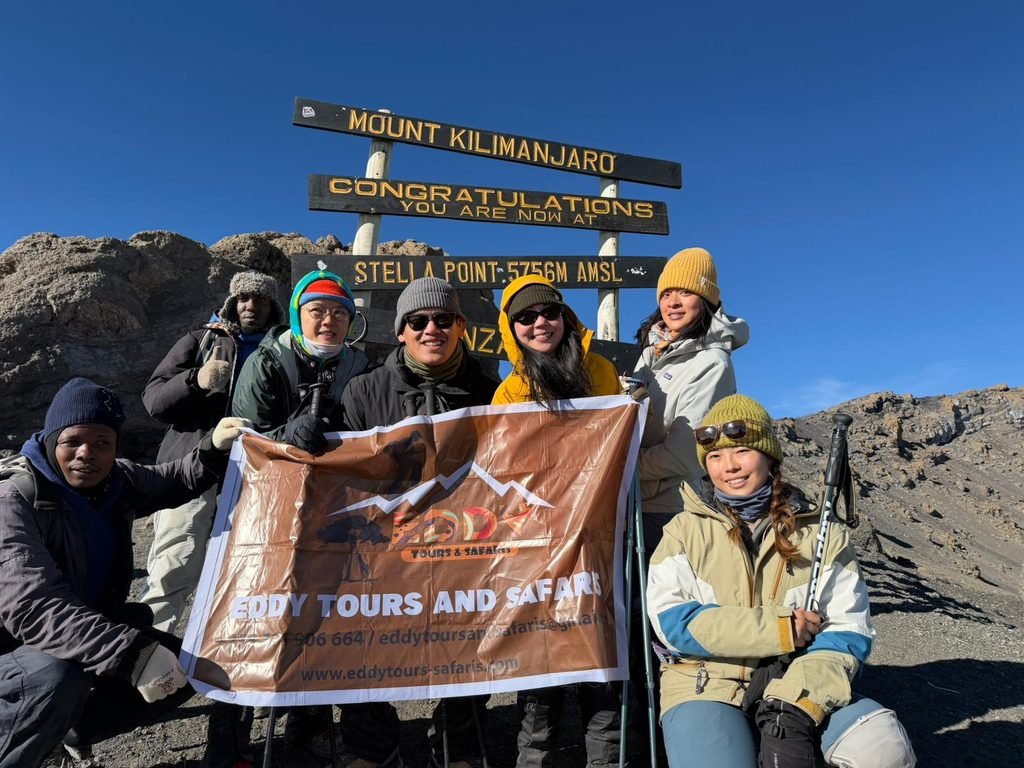
- Attempt to reach Stella Point and Uhuru Peak.
- Enjoy sunrise views near the summit when weather conditions permit.
- Camp at established mountain campsites.
- Receive guidance and assistance from the climbing crew throughout the expedition.
Complete 6-Day Machame Route Group Climbing Itinerary
The following itinerary follows the standard six-day Machame trekking schedule. Walking distances, elevations, and times are approximate and may change according to trail conditions, weather, group pace, and park arrangements.
Day 1: Moshi to Machame Gate – Trek to Machame Camp
Starting elevation: Approximately 1,800 meters
Sleeping elevation: Approximately 3,000 meters
Walking distance: 11 km
Walking time: 5–7 hours
Habitat: Montane rainforest
Accommodation: Machame Camp
Your Kilimanjaro climbing adventure begins with breakfast at your hotel in Moshi, followed by a transfer to Machame Gate on the southern slopes of Mount Kilimanjaro.
Upon arrival, the mountain team completes park registration, luggage organization, and other necessary preparations. Your guide explains the day’s route, walking pace, and important safety procedures before the trek begins.
The first section follows a trail through the mountain’s dense rainforest. Tall trees, ferns, mosses, and thick vegetation create a green environment that is very different from the open summit landscapes you will encounter later.
The forest can be humid, and the trail may become muddy after rainfall. Walking slowly and maintaining a comfortable pace is important, especially as the group begins gaining elevation.
Along the way, you may hear birds and occasionally encounter monkeys in the forest.
After several hours of walking, the trail reaches Machame Camp, located near the upper edge of the forest zone.
Your porters and camp team prepare the campsite while you rest and enjoy the mountain surroundings.
Dinner is served at camp, followed by a briefing about the following day’s trek.
Meals: Lunch and dinner
Overnight: Machame Camp
Day 2: Machame Camp to Shira Camp
Starting elevation: Approximately 3,000 meters
Sleeping elevation: Approximately 3,840 meters
Walking distance: 5–6 km
Walking time: 4–6 hours
Habitat: Heath and moorland
Accommodation: Shira Camp
After breakfast, the group leaves Machame Camp and continues uphill.
The trail gradually emerges from the rainforest into a landscape of heather, shrubs, and rocky ridges.
As the vegetation becomes shorter, the surrounding views open up. On clear days, you may see distant plains below and the impressive upper slopes of Kilimanjaro ahead.
The ascent includes steep sections that require a steady pace.
Your guides encourage the group to walk slowly and take appropriate breaks while adjusting to the increasing altitude.
The trail eventually reaches the Shira Plateau, one of the mountain’s most distinctive geological features.
The plateau was formed through Kilimanjaro’s volcanic history and offers wide views across the mountain landscape.
After arriving at Shira Camp, the group has time to rest, enjoy lunch, and explore the immediate surroundings where conditions permit.
Temperatures can fall considerably during the evening.
Your guide conducts routine health checks and explains the importance of reporting headaches, nausea, dizziness, or other altitude-related symptoms.
Meals: Breakfast, lunch and dinner
Overnight: Shira Camp
Day 3: Shira Camp to Lava Tower – Descend to Barranco Camp
Starting elevation: Approximately 3,840 meters
Highest point during the trek: Lava Tower, approximately 4,630 meters
Sleeping elevation: Approximately 3,960 meters
Walking distance: 10–11 km
Walking time: 6–8 hours
Habitat: Moorland and alpine desert
Accommodation: Barranco Camp
Day three is an important part of the Machame Route because it includes an ascent to a higher elevation followed by a descent to sleep at a lower altitude.
After breakfast, the trail continues across the upper slopes toward Lava Tower.
The landscape becomes increasingly rocky, with sparse vegetation and wide views of Kilimanjaro’s volcanic terrain.
As the group approaches Lava Tower, the effects of altitude may become more noticeable.
The air pressure is lower, and walking uphill can feel more demanding.
Lava Tower is a prominent volcanic rock formation at approximately 4,630 meters.
The group may stop in the area for lunch and rest, depending on weather and the guide’s assessment.
Afterward, the trail descends toward Barranco Valley.
This descent takes you into a different landscape where giant groundsels and other unusual high-altitude plants may be seen.
Barranco Camp lies beneath the impressive Barranco Wall, which the group will climb the following morning.
The campsite offers dramatic mountain scenery, especially when the clouds clear.
Although the day includes the useful pattern of ascending higher and sleeping lower, it does not eliminate altitude illness risk.
Your guide will continue assessing how each participant is responding to the altitude.
Meals: Breakfast, lunch and dinner
Overnight: Barranco Camp
Day 4: Barranco Camp – Barranco Wall – Karanga Valley – Barafu Camp
Starting elevation: Approximately 3,960 meters
Sleeping elevation: Approximately 4,670 meters
Walking distance: 9–10 km
Walking time: 7–9 hours
Habitat: Alpine desert
Accommodation: Barafu Camp
Today is one of the most demanding days of the six-day Machame Route.
After an early breakfast, the group begins climbing the Barranco Wall, a steep rocky section that is among the most recognizable features of the route.
Although the wall looks intimidating from below, the established trail is usually completed as a guided scramble rather than technical rock climbing.
Some sections require the use of hands for balance.
Your guides will help the group navigate the rocky terrain and maintain safe spacing.
After reaching the top of Barranco Wall, you can enjoy impressive views of the surrounding valleys and upper slopes of Kilimanjaro when visibility permits.
The trail continues across ridges and descends toward Karanga Valley.
After crossing the valley, the group climbs again toward Barafu Camp.
Unlike the seven-day Machame itinerary, this six-day schedule does not include an overnight stop at Karanga Camp.
Instead, you continue directly to Barafu.
This makes the day longer and creates a substantial increase in sleeping altitude before summit night.
Upon reaching Barafu Camp, the group rests, eats, and prepares for the final summit attempt.
Your guide provides a detailed briefing about the summit trail, clothing, departure time, and safety considerations.
Because the ascent normally begins around midnight, climbers should organize their equipment and rest as much as possible.
Meals: Breakfast, lunch and dinner
Overnight: Barafu Camp
Day 5: Barafu Camp – Stella Point – Uhuru Peak – Mweka Camp
Starting elevation: Approximately 4,670 meters
Summit elevation: 5,895 meters
Finishing elevation: Approximately 3,100 meters
Walking distance: Approximately 16–18 km total
Walking time: 11–16 hours, sometimes longer
Habitat: Arctic summit zone and alpine desert
Accommodation: Mweka Camp
This is the most challenging and important day of the Kilimanjaro expedition.
The group normally begins the summit attempt around midnight, although the exact departure time depends on the guide’s assessment and mountain conditions.
Wearing warm layers and using headlamps, climbers leave Barafu Camp and begin ascending the steep, rocky slopes of Kibo.
The air is thin, temperatures may be well below freezing, and the trail requires patience and determination.
Your guides set a slow walking pace and organize regular short breaks as appropriate.
The ascent continues toward Stella Point, located on the crater rim at approximately 5,756 meters.
Reaching Stella Point is a major milestone.
From here, the trail follows the crater rim toward Uhuru Peak.
The final section may involve snow, ice, or exposed volcanic rock depending on weather conditions.
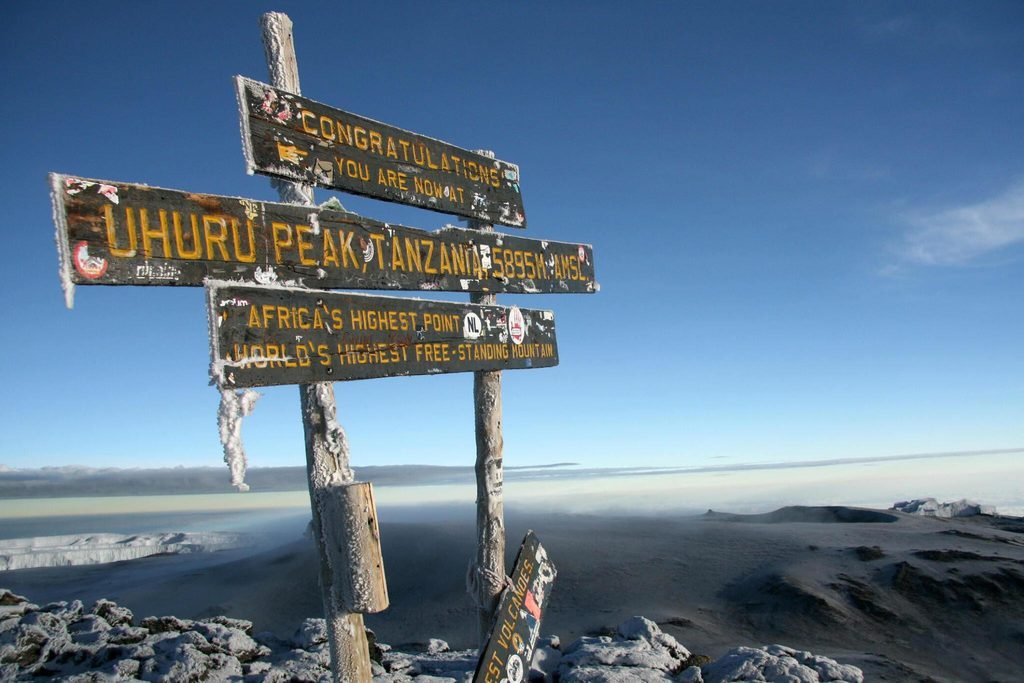
After further walking, the group aims to reach Uhuru Peak at 5,895 meters, the highest point in Africa.
If weather and health conditions permit, there is time for photographs and to appreciate the surrounding summit landscape.
The summit stay is normally brief because of the extreme altitude and cold conditions.
Afterward, the group descends toward Barafu Camp for a rest before continuing down to Mweka Camp.
The descent is long and physically demanding, especially after the overnight ascent.
Your guides will continue supervising the group and assessing participants’ condition.
Reaching the summit is never guaranteed. Any climber showing signs of serious altitude illness or another medical concern may need to descend before reaching Uhuru Peak.
Meals: Breakfast, lunch and dinner
Overnight: Mweka Camp
Day 6: Mweka Camp to Mweka Gate – Return to Moshi
Starting elevation: Approximately 3,100 meters
Finishing elevation: Approximately 1,640 meters
Walking distance: Approximately 10 km
Walking time: 3–4 hours
Habitat: Montane rainforest
Accommodation: Hotel after the climb, if included in the booking
After breakfast, the group begins the final descent through Kilimanjaro’s forest.
The trail passes through lush vegetation, and conditions may be muddy, particularly after rain.
As you descend, the air becomes warmer and the surrounding forest grows denser.
This final walk provides time to reflect on the mountain experience and enjoy the lower slopes.
Upon reaching Mweka Gate, the mountain team completes the necessary park exit procedures.
Eligible climbers receive their summit certificates according to the highest officially recognized point reached.
Afterward, you travel back to Moshi, where you can rest, shower, and celebrate the completion of your Kilimanjaro expedition.
Travelers may then continue with their onward flights, a Tanzania wildlife safari, or a Zanzibar beach holiday.
Meals: Breakfast and lunch, according to final arrangements
Why Choose a Machame Route Group Climb?
Joining a group climb is a practical option for solo travelers, couples, and small groups who want to share their mountain expedition with other participants.
Instead of organizing a completely private climbing departure, you join a scheduled group and follow a common itinerary.
Meet Other Travelers
Group trekking creates opportunities to meet people from different backgrounds who share an interest in outdoor adventure.
Climbers walk together, enjoy meals at camp, and support one another throughout the expedition.
Share Expedition Arrangements
A group climb allows participants to share certain operational arrangements, such as guides, cooking facilities, and campsite logistics.
This can make the overall package more economical than a comparable private expedition, depending on group size and inclusions.
Enjoy an Organized Trekking Experience
The mountain team coordinates campsite preparation, meals, porter arrangements, route guidance, and other trekking logistics.
Participants can concentrate on walking, acclimatization, and enjoying the scenery.
Travel as a Solo Climber
Solo travelers may join an available group without needing to arrange their own private expedition.
However, departure availability and minimum group requirements should be confirmed before booking.
Six-Day vs Seven-Day Machame Route
Although the six-day itinerary is popular with travelers who have limited time, it is important to understand how it differs from the seven-day option.
| Feature | 6-day Machame | 7-day Machame |
|---|---|---|
| Mountain duration | 6 days | 7 days |
| Overnight at Karanga | No | Yes |
| Barranco to Barafu | Combined into one day | Split across two days |
| Acclimatization time | Less | More |
| Summit attempt | Day 5 | Day 6 |
| Difficulty | More compressed | More gradual |
| Recommended for | Fit, prepared trekkers | Most first-time high-altitude trekkers |
The seven-day itinerary provides an additional night on the mountain and a more gradual approach to Barafu Camp.
For travelers without previous high-altitude experience, the seven-day option is generally preferable.
Best Time for a Machame Route Group Climb in 2027, 2028 and 2029
Kilimanjaro can be climbed throughout the year, but weather patterns affect trail conditions, visibility, and comfort.
January to Early March
This period is commonly associated with relatively favorable trekking conditions.
Temperatures near the summit remain cold, and fresh snowfall is possible.
June to October
These months are another popular period for Kilimanjaro climbing.
Conditions are often drier, although cold temperatures and strong winds can occur.
March to May
The long rainy season can bring wet trails, cloud cover, and more challenging camping conditions.
November to December
The short rains may produce unsettled weather, although climbing remains possible when conditions permit.
For the 2027, 2028, and 2029 climbing seasons, specific departure dates should be confirmed directly with Eddy Tours and Safaris.
No fixed group departure dates, prices, or guaranteed spaces are represented as confirmed in this package description.
What Is Included in the 6-Day Machame Route Group Package?
The following are proposed standard package inclusions. Your final booking confirmation should specify the exact services provided.
- Kilimanjaro National Park entry and applicable camping fees.
- Professional mountain guide services.
- Required assistant guides according to group arrangements.
- Mountain cook and porter support.
- Five nights of camping accommodation on the mountain.
- Breakfast, lunch, and dinner during the mountain expedition.
- Group camping equipment, including sleeping tents and dining arrangements.
- Drinking water treatment and provision according to the operator’s arrangements.
- Transport between the agreed meeting point and mountain gates.
- Mountain safety procedures and equipment as specified in the quotation.
- Park rescue fees where applicable under the official tariff.
What Is Not Included?
Unless specifically stated in the confirmed quotation, the following are normally excluded:
- International and domestic flights.
- Tanzania visa fees.
- Travel and medical evacuation insurance.
- Personal trekking equipment and clothing.
- Sleeping bag and trekking poles unless included.
- Hotel accommodation before and after the climb.
- Tips for mountain guides, cooks, and porters.
- Personal expenses and additional beverages.
- Optional Tanzania safari or Zanzibar holiday extensions.
- Additional services caused by changes to the agreed itinerary.
What Should You Pack for the Machame Route?
Kilimanjaro passes through several ecological zones, so climbers must prepare for both warm, humid forest conditions and freezing summit temperatures.
Essential Clothing
- Moisture-wicking base layers.
- Warm fleece or insulating mid-layers.
- Down or synthetic insulated jacket.
- Waterproof and windproof outer jacket.
- Waterproof trekking trousers.
- Comfortable hiking trousers.
- Thermal leggings.
- Warm gloves and insulated mittens.
- Warm hat or balaclava.
- Hiking socks and suitable underwear.
Trekking Equipment
- Well-fitted hiking boots.
- Trekking poles.
- Daypack.
- Headlamp with spare batteries.
- Cold-weather sleeping bag.
- Refillable water bottles or hydration system.
- Sunglasses with UV protection.
- Sunscreen and lip balm.
- Personal toiletries.
- Personal medication and first-aid essentials.
A final packing checklist should be provided before the departure date.
Fitness and Altitude Preparation
The six-day Machame Route requires good physical fitness and preparation.
Training should focus on walking endurance, hill climbing, leg strength, and the ability to spend several hours trekking on consecutive days.
However, physical fitness does not prevent altitude sickness.
Because the six-day itinerary gains altitude quickly, climbers should understand the symptoms of acute mountain sickness and the importance of reporting them promptly.
Headaches, nausea, dizziness, and unusual fatigue can be warning signs.
Serious symptoms such as confusion, difficulty walking normally, or breathlessness at rest require urgent attention and descent.
Climbers should consult a qualified healthcare professional before departure if they have medical concerns or questions about altitude medication.
A longer itinerary may be more appropriate for some travelers.
Responsible Kilimanjaro Group Trekking
A well-organized Kilimanjaro expedition should consider the welfare of everyone working on the mountain.
Mountain guides, cooks, and porters perform essential work throughout the climb.
Responsible operating practices include fair treatment, suitable equipment, appropriate food, safe load limits, and proper working conditions.
Travelers can learn more about porter welfare standards through the Kilimanjaro Porters Assistance Project.
Before booking, ask your operator how it manages crew welfare and safety.
Frequently Asked Questions About the 6-Day Machame Group Climb
Is the 6-Day Machame Route suitable for beginners?
It can be completed by some well-prepared first-time high-altitude trekkers, but the short acclimatization schedule makes it demanding. The seven-day route is generally a better choice for beginners.
How high is Uhuru Peak?
Uhuru Peak is 5,895 meters (19,341 feet) above sea level.
Does the Machame Route require technical climbing?
Under normal conditions, the standard route is a trekking route with some scrambling, particularly around Barranco Wall. Technical climbing equipment is not normally required, but weather can change the difficulty.
Where do climbers sleep?
Climbers sleep in tents at established mountain campsites.
Can solo travelers join a Machame group?
Yes, subject to available group departures and booking arrangements.
What is the hardest day?
Summit day is usually the hardest because it involves a long ascent at high altitude followed by a substantial descent.
Does the six-day route include Karanga Camp?
The trail passes through the Karanga area, but the standard six-day itinerary does not include an overnight stay at Karanga Camp.
Is reaching Uhuru Peak guaranteed?
No. Summit success depends on health, acclimatization, weather, trail conditions, and other factors.
Are group departures available in 2027, 2028 and 2029?
These are the intended travel years for the package. Specific scheduled departures and available spaces must be confirmed with Eddy Tours and Safaris.
Can I combine this climb with a Tanzania safari?
Yes. Travelers can arrange a safari to Serengeti National Park, Ngorongoro Crater, Tarangire National Park, or other destinations after the climb.
Book Your Premier 6-Day Machame Route Group Climb for 2027, 2028 or 2029
Join fellow travelers for a six-day journey through the varied landscapes of Mount Kilimanjaro, with the goal of reaching Uhuru Peak, Africa’s highest summit.
Eddy Tours and Safaris can help you discuss group departure arrangements, climbing preparation, mountain equipment, and itinerary details for your preferred travel year.
If you have more time available, ask about the seven-day Machame Route for an additional acclimatization day.
You can also extend your Tanzania holiday with a wildlife safari or a Zanzibar beach stay.
For departure dates, group availability, and a personalized quotation, contact us directly.
Website: Eddy Tours and Safaris
Contact page: Request Your Kilimanjaro Group Climb
Email: sales@eddytours-safaris.com
WhatsApp: +255 711 906 664
Tell us your preferred travel year, approximate departure date, and number of climbers so we can discuss suitable group arrangements.