

Climbing Mount Kilimanjaro with a large group is an excellent way for friends, colleagues, hiking clubs, university groups and organised travel groups to experience Africa’s highest mountain together. The 6 Days Lemosho Route Kilimanjaro Group Climb for 2027, 2028 and 2029 offers a challenging journey through the western side of Mount Kilimanjaro, crossing rainforest, open moorland, volcanic landscapes and high-altitude terrain before reaching the summit area at Uhuru Peak, 5,895 metres above sea level. With proper preparation, experienced mountain guides and well-organised group arrangements, climbers can share the experience while receiving the individual attention needed throughout the expedition.
At Eddy Tours & Safaris, we arrange Kilimanjaro climbing trips for groups travelling to Tanzania from different parts of the world. Our large group climbing arrangements focus on transport, accommodation, camping equipment, meals, mountain crew coordination and safety procedures. Whether you are organising a private expedition for ten friends or coordinating a larger team of twenty or more participants, our team can help prepare a suitable climbing programme according to your preferred dates, group size and experience.

The six-day Lemosho itinerary is considerably faster than the seven-day and eight-day alternatives. Although it allows climbers to experience the main sections of this scenic route, the shorter duration provides less time for altitude adjustment. We generally recommend the longer versions for first-time high-altitude trekkers and groups with different fitness levels. Travellers considering this six-day programme should have good physical fitness, appropriate hiking preparation and a clear understanding of the challenges involved.
Important route update for 2027–2029: A September 2026 notice concerning the suspension of Lemosho and Londorossi route use has been reported. This itinerary is therefore a proposed programme, not confirmation that the western trailhead is currently available. Eddy Tours & Safaris must verify the latest access arrangements with Kilimanjaro National Park before accepting a booking or confirming departure dates. If restrictions remain in place, an alternative approved route can be discussed.
Overview of the 6 Days Lemosho Route Kilimanjaro Large Group Tour
| Tour Information | Details |
|---|---|
| Package name | 6 Days Lemosho Route Kilimanjaro Group Climb |
| Destination | Mount Kilimanjaro, Tanzania |
| Travel years | 2027, 2028 and 2029 |
| Duration | 6 trekking days and 5 mountain nights |
| Highest point | Uhuru Peak, 5,895 metres |
| Starting location | Western Kilimanjaro, subject to route access approval |
| Finishing location | Mweka Gate |
| Accommodation | Mountain camping tents |
| Tour type | Private large group or organised group climb |
| Suggested group size | 10–30+ climbers, subject to logistics and approval |
| Difficulty | Challenging |
| Fitness requirement | Good physical fitness and trekking preparation |
| Recommended climbing periods | January–March and June–October |
| Starting town | Moshi or Arusha |
| Package price | Quoted according to group size and departure arrangements |
The programme includes six days on the mountain, with five nights spent camping at designated sites. Travellers arriving from overseas should normally plan to reach Tanzania at least one day before the climb to allow time for equipment checks, a mountain briefing and rest. An additional hotel night after descending is also advisable, particularly for large groups arranging international flights or extending their holidays with a wildlife safari.
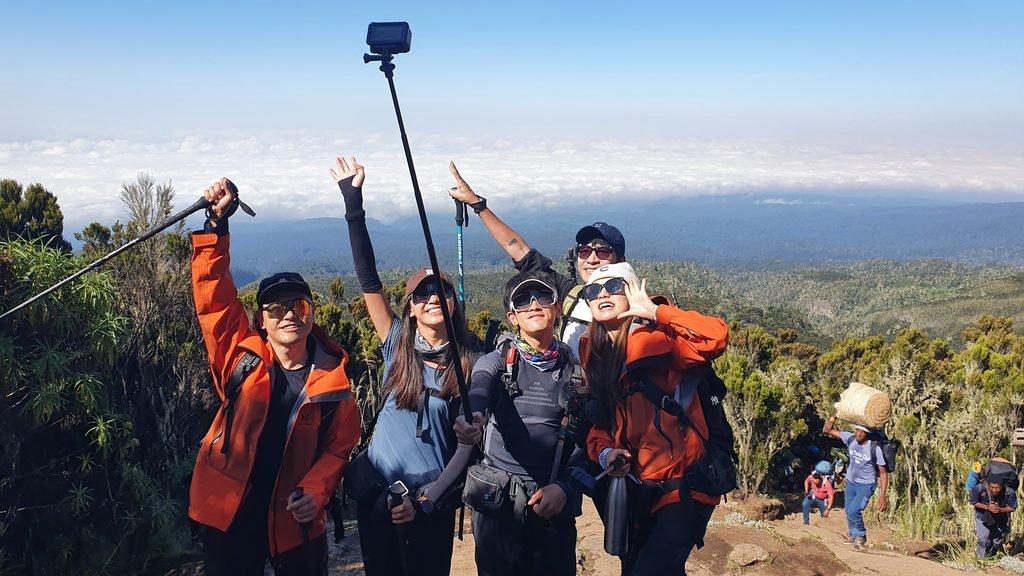
Why Choose a Large Group Kilimanjaro Climb?
One of the main advantages of climbing Kilimanjaro as a group is having people around you who share the same goal. Mountain trekking can be physically demanding, especially when the altitude increases and the walking becomes slower. Travelling with friends or colleagues provides encouragement during difficult sections, while shared meals and conversations at camp create a friendly atmosphere after each day’s walk. For organised groups, the expedition can also serve as a team-building activity that requires cooperation, patience and consideration for others.
Large group arrangements may also reduce certain costs per person because transport, camping facilities and logistical services can be shared. However, the total price still depends on park fees, crew requirements, equipment, accommodation and the level of service requested. A larger group should never mean fewer guides than required or reduced safety provisions. Properly planned expeditions need enough qualified mountain personnel to support climbers who walk at different speeds or require additional assistance.
For groups comparing different climbing options, our Kilimanjaro climbing routes guide provides information about the main routes, trekking durations and group climbing arrangements. Travellers can also explore the 6 Days Lemosho Route climbing programme for another explanation of the route and its mountain itinerary.
Detailed 6 Days Lemosho Route Kilimanjaro Group Climbing Itinerary
Day 1: Moshi or Arusha to Lemosho Trailhead – Trek to Mti Mkubwa Camp
- Starting elevation: Approximately 2,100–2,400 metres, depending on the approved trailhead
- Camping elevation: Approximately 2,650–2,800 metres
- Hiking duration: Approximately 3–4 hours
- Landscape: Montane rainforest
- Accommodation: Mti Mkubwa (Big Tree) Camp
The first day begins with breakfast at your hotel in Moshi or Arusha, followed by a meeting with your mountain guides and support team. Before departure, the guides check the group’s equipment, explain the planned route and confirm that everyone has the necessary clothing, personal medication and essential trekking supplies. Large groups may require more than one vehicle to transport climbers, luggage and mountain equipment. Once the team is ready, the journey continues towards the western side of Kilimanjaro, where entry procedures and access arrangements must be completed before the trek begins.
The walk towards Mti Mkubwa Camp passes through mountain rainforest, where tall trees, moss-covered branches and thick vegetation provide shade along the trail. The first day’s hiking is generally manageable for well-prepared participants, although the ground can become slippery after rainfall. Guides maintain a steady walking pace and encourage climbers to avoid rushing, even when the terrain feels relatively easy. Arriving at camp, the group finds the camping arrangements prepared by the mountain crew, with time to rest, enjoy dinner and receive a briefing about the following day’s climb.
Day 2: Mti Mkubwa Camp to Shira 2 Camp via the Shira Plateau
- Starting elevation: Approximately 2,780 metres
- Camping elevation: Approximately 3,850 metres
- Hiking duration: Approximately 7–9 hours
- Landscape: Rainforest, heath and moorland
- Accommodation: Shira 2 Camp
The second day brings a noticeable change in the landscape as the trail leaves the rainforest and climbs towards the open slopes of the Shira Plateau. Vegetation gradually becomes shorter, and the surrounding views expand across the western side of Kilimanjaro. The route involves a substantial increase in altitude, making this one of the more demanding days of the shortened six-day itinerary. Depending on the approved route alignment, the group may pass through the Shira 1 area before continuing towards Shira 2 Camp, where the evening will be spent at a much higher elevation than the previous night.
For large groups, the guides carefully manage the walking pace and monitor how participants respond to the increasing altitude. Some climbers may experience headaches, reduced appetite or unusual tiredness, and these symptoms should always be reported rather than ignored. Frequent rest stops allow the team to drink water, eat snacks and maintain a comfortable pace. By the time the group reaches Shira 2 Camp, the temperature may be considerably colder than at the starting point, so warm clothing becomes essential. Dinner is served at camp, followed by an assessment of the group’s condition and preparation for the next stage.
Day 3: Shira 2 Camp to Lava Tower and Barranco Camp
- Starting elevation: Approximately 3,850 metres
- Highest point during the day: Lava Tower, approximately 4,600 metres
- Camping elevation: Approximately 3,900–3,960 metres
- Hiking duration: Approximately 6–8 hours
- Landscape: Alpine desert and high-altitude valleys
- Accommodation: Barranco Camp
Day three follows one of the most interesting sections of the Lemosho Route, with the trail continuing towards Lava Tower, a prominent volcanic formation standing at approximately 4,600 metres. The surrounding landscape becomes increasingly rocky, and vegetation is limited as the group moves into the alpine desert zone. Walking at this altitude requires patience because the reduced availability of oxygen makes even moderate physical activity feel more demanding. The guides maintain a controlled pace, and the group takes breaks according to the weather, terrain and condition of individual climbers.
After reaching the Lava Tower area, the route descends towards Barranco Camp, allowing climbers to sleep at a lower elevation than the day’s highest point. This follows the commonly used approach of climbing higher during the day before returning to a lower sleeping altitude, although it does not eliminate the risk of altitude sickness. The descent passes through valleys containing distinctive giant groundsels and other high-altitude vegetation. On arrival at Barranco Camp, climbers can see the impressive Barranco Wall rising above the campsite. The evening is spent resting, eating and preparing for the next day’s demanding walk towards Barafu Camp.
Day 4: Barranco Camp to Barafu Camp via Barranco Wall and Karanga Valley
- Starting elevation: Approximately 3,960 metres
- Camping elevation: Approximately 4,640–4,670 metres
- Hiking duration: Approximately 7–9 hours
- Landscape: Rocky ridges, valleys and alpine desert
- Accommodation: Barafu Camp
The fourth day begins with the ascent of Barranco Wall, a steep rocky section that requires careful foot placement and occasional use of the hands for balance. Although technical rock-climbing equipment is not normally required, the wall can be intimidating for participants who are uncomfortable with steep terrain. Guides assist climbers through the more exposed sections, while the group moves carefully to avoid congestion along narrow parts of the trail. Reaching the upper section provides wide views across the mountain and the valleys below, making this one of the most memorable parts of the climb.
After crossing Barranco Wall, the route continues through Karanga Valley and climbs towards Barafu Camp, the main starting point for the summit attempt. This is a long and physically demanding day, especially because the six-day itinerary combines sections that are often divided across two days on longer Lemosho programmes. By the time the group arrives at Barafu, most participants will be feeling the effects of the altitude and the accumulated walking. The mountain crew prepares an early meal, while the guides check clothing, headlamps, water supplies and the health of each climber. Participants are encouraged to rest because the summit attempt normally begins late that night.
Day 5: Barafu Camp to Uhuru Peak – Descend to Mweka Camp
- Starting elevation: Approximately 4,640 metres
- Summit elevation: 5,895 metres
- Final camping elevation: Approximately 3,100 metres
- Hiking duration: Approximately 12–16 hours in total
- Landscape: Arctic summit zone and alpine descent
- Accommodation: Mweka Camp
Summit day is the most demanding part of the entire expedition. The group normally begins walking around midnight, following a rocky trail towards Stella Point on the crater rim. Temperatures can fall well below freezing, and strong winds may make conditions more difficult. Headlamps illuminate the trail as the climbers continue slowly uphill, stopping when necessary to drink water and recover their breathing. At this stage, guides closely monitor participants for exhaustion, poor coordination, confusion and symptoms of altitude sickness. The group may need to separate into smaller guided teams so that climbers can move at suitable individual speeds without putting others at risk.
After reaching Stella Point, the route continues along the crater rim towards Uhuru Peak, the highest point in Africa at 5,895 metres. Those who reach the summit safely may have time for photographs before beginning the descent, although weather and health conditions determine how long anyone should remain at this elevation. The group returns towards Barafu Camp for a short rest and then continues down to Mweka Camp, where the final mountain night is spent. Not every participant will necessarily reach the summit, and decisions to turn back must be respected. A successful expedition is one in which the team returns safely, regardless of whether every climber reaches Uhuru Peak.
Day 6: Mweka Camp to Mweka Gate – Return to Moshi or Arusha
- Starting elevation: Approximately 3,100 metres
- Finishing elevation: Approximately 1,640 metres
- Hiking duration: Approximately 3–4 hours
- Landscape: Montane rainforest
- Destination: Moshi or Arusha
The final day begins with breakfast at Mweka Camp before the group continues descending through the rainforest towards Mweka Gate. The trail can be muddy and slippery, particularly during periods of heavy rainfall, so trekking poles and suitable hiking boots remain useful even though the climbing section has finished. As the altitude decreases, temperatures become warmer and the surrounding vegetation grows thicker. Participants often find the final walk easier on their breathing, although tired legs and sore knees are common after the previous day’s long descent.
At Mweka Gate, the group completes the required park exit procedures, and eligible climbers receive certificates according to the highest recognised summit point reached. The Eddy Tours & Safaris transport team then transfers everyone back to their hotel in Moshi or Arusha. After several days of mountain camping, participants can enjoy a shower, a comfortable meal and time to rest. Groups that have arranged additional activities may continue with a Tanzania wildlife safari, a cultural excursion or a few relaxing days before travelling home.

Large Group Kilimanjaro Climbing Arrangements
Organising a Kilimanjaro expedition for a large group requires more planning than arranging a climb for two or three travellers. Each participant needs suitable camping accommodation, meals, luggage support and access to qualified guides, while the expedition must have enough personnel to respond when climbers move at different speeds. At Eddy Tours & Safaris, we can prepare group arrangements for friends, schools, universities, corporate teams, hiking associations and travel organisers, with the final number of participants determined by mountain regulations, available facilities and the group’s requirements.
Mountain Guides and Support Crew
The number of guides, assistant guides, cooks and porters depends on the group size, equipment requirements and applicable park regulations. Large groups are organised with sufficient qualified personnel so that climbers do not have to remain together when their physical condition or walking speed differs. Guides conduct daily briefings, monitor altitude-related symptoms and make safety decisions throughout the climb, while the support crew transports permitted equipment and prepares camping facilities. Crew welfare, appropriate working conditions and responsible porter load management are important parts of organising a mountain expedition.
Group Accommodation and Meals
During the climb, participants stay in mountain camping tents, normally shared by two people unless a different arrangement is requested and available. Large groups may require additional dining facilities, cooking equipment and camping space, particularly when the number of climbers exceeds twenty. Meals are prepared by the mountain cook and normally include breakfast, a packed or hot lunch, dinner and suitable drinks. Dietary requirements such as vegetarian meals, food allergies and other restrictions should be communicated before the expedition so that the necessary supplies can be arranged.
Health, Safety and Emergency Procedures
Altitude sickness is one of the main risks associated with climbing Kilimanjaro, and a shorter itinerary requires particular attention to acclimatisation. Guides should assess climbers regularly, monitor concerning symptoms and have access to appropriate emergency communication and evacuation arrangements. Emergency oxygen and first-aid equipment form part of the planned mountain safety provisions, but they do not replace proper acclimatisation or medical treatment. Any participant showing serious symptoms must descend promptly under the guidance of the mountain team.
Best Time for a Large Group Kilimanjaro Climb in 2027, 2028 and 2029
January to early March and June to October are generally popular periods for climbing Kilimanjaro because they often provide comparatively favourable trekking conditions. January and February can offer clear mountain views, while July, August and September are particularly popular with international visitors travelling during summer holidays. However, Kilimanjaro has its own mountain weather patterns, and rain, snow, strong winds and freezing temperatures can occur at any time of year. Large groups should select dates with enough flexibility to accommodate travel arrangements and possible changes in weather or park access.
For the 2027, 2028 and 2029 seasons, groups are encouraged to begin planning several months before their intended departure. This is especially important for participants travelling from different countries, as international flights, visas, accommodation, equipment preparation and payment arrangements may require additional time. Travellers who want a more gradual climbing schedule can also consider our 8 Days Lemosho Route itinerary and planning guide, which explains the benefits of spending additional days on the mountain.

How Much Does a 6 Days Lemosho Route Large Group Climb Cost?
The cost of a large group Kilimanjaro climb depends on the number of participants, selected travel dates, accommodation arrangements, mountain crew requirements and services included in the final quotation. While larger groups may benefit from sharing certain transport and logistical expenses, park fees, camping charges and other costs remain applicable to individual climbers. A responsible quotation should clearly explain what is included rather than relying on an unusually low advertised price that may leave out important services.
For groups of ten, fifteen, twenty or more climbers, Eddy Tours & Safaris can prepare a personalised quotation showing the cost per participant, the services provided and any available group pricing arrangements. The final amount must be confirmed according to the applicable park fees and operating costs for the intended travel year. We recommend requesting a written quotation before making flight reservations or collecting payments from other group members, particularly while western route access arrangements remain subject to confirmation.
Package Inclusions – 6 Days Lemosho Route Kilimanjaro Group Climb
The following services are included in the proposed standard mountain package, subject to confirmation in the final written quotation:
- All applicable Kilimanjaro National Park entry and conservation fees.
- Mountain camping fees and applicable park rescue fees.
- Professional, qualified mountain guides and assistant guides.
- Mountain porters and cooking staff according to group requirements.
- Wages and operational expenses for the mountain support crew.
- Transport from the agreed hotel in Moshi or Arusha to the approved mountain starting point.
- Return transport from Mweka Gate to the agreed hotel.
- Mountain camping tents, normally on a twin-sharing basis.
- Sleeping mattresses for use during the climb.
- Dining tent, tables, chairs and communal camping equipment.
- Breakfast, lunch and dinner during the six trekking days, as scheduled.
- Treated drinking water during the mountain expedition.
- Emergency first-aid equipment and oxygen carried by the mountain team.
- Daily mountain briefings and basic health monitoring by the guides.
- Group coordination and logistical arrangements throughout the climb.
- Applicable government taxes on the quoted mountain services.
- Kilimanjaro summit certificates for eligible participants, issued according to park procedures.
Package Exclusions – 6 Days Lemosho Route Kilimanjaro Group Climb
The following items are not included in the standard mountain package unless specifically added to the written quotation:
- International and domestic flights.
- Tanzania tourist visa fees.
- Travel insurance covering high-altitude trekking and emergency evacuation.
- Hotel accommodation before and after the mountain climb.
- Airport transfers unless specifically included in the booking.
- Personal trekking equipment, including hiking boots, sleeping bags, jackets and walking poles.
- Personal clothing and toiletries.
- Tips for mountain guides, porters, cooks and other crew members.
- Alcoholic drinks, soft drinks and personal purchases.
- Meals and beverages outside the scheduled mountain programme.
- Optional wildlife safaris, cultural excursions and Zanzibar holidays.
- Personal medical expenses and medication.
- Additional accommodation or transport arising from personal itinerary changes.
- Costs arising from independently requested services not included in the agreed itinerary.
What Should You Pack for a 6 Days Kilimanjaro Group Climb?
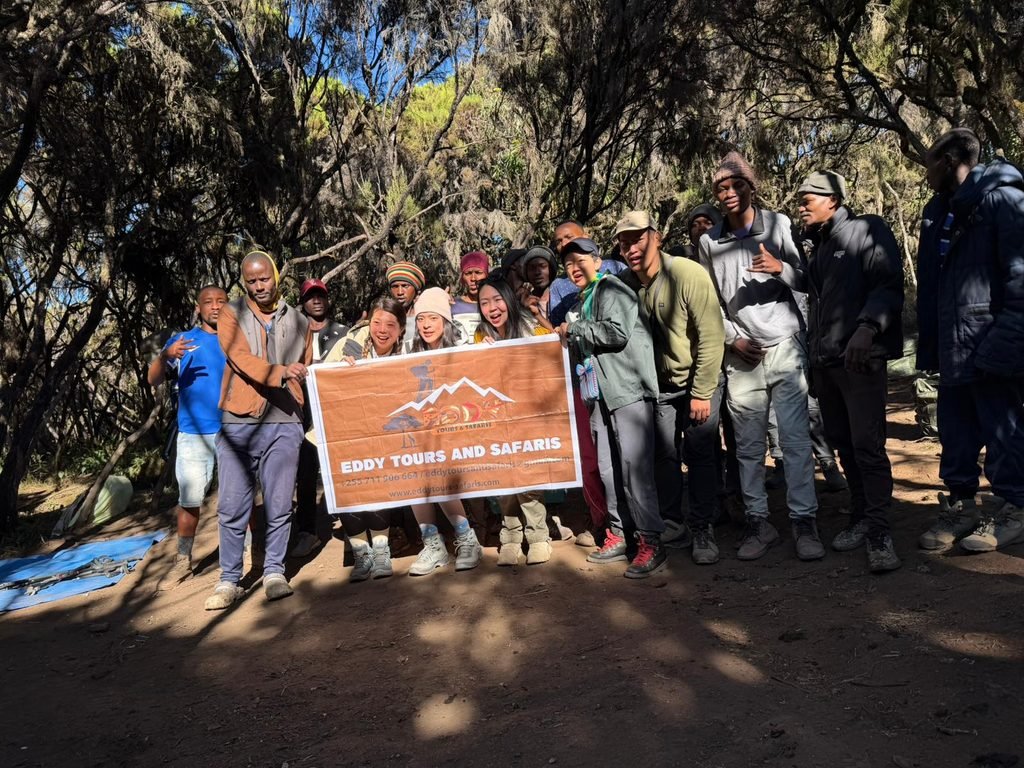
Packing the right equipment is essential because conditions change considerably between the rainforest and the summit. Climbers may begin the expedition in warm, humid weather and later experience freezing temperatures, strong winds and snow near Uhuru Peak. Each participant should have waterproof hiking boots that have already been worn during training, suitable trekking trousers, moisture-wicking base layers, warm insulating clothing, a waterproof jacket and trousers, thermal gloves, a warm hat and a headlamp with spare batteries. A comfortable daypack, refillable water containers, sunscreen, sunglasses and personal medication are also important.
For large groups, organisers should provide participants with a detailed equipment checklist before departure and arrange an equipment inspection during the pre-climb briefing. This helps identify missing items while there is still time to rent or purchase suitable equipment in Moshi or Arusha. Climbers should also be aware of the luggage weight limits applicable to porters and avoid bringing unnecessary belongings onto the mountain. Additional preparation information is available through Kilimanjaro Climb Specialist, including guidance on climbing routes and trekking arrangements.
Is the 6 Days Lemosho Route Suitable for Beginners?
The six-day Lemosho Route is physically demanding and is not our preferred recommendation for first-time high-altitude climbers. Although Kilimanjaro does not normally require technical mountaineering skills on its standard trekking routes, the rapid altitude gain creates additional challenges. Participants may be able to walk long distances comfortably at lower elevations but still struggle when sleeping and hiking above 3,500 or 4,000 metres. Good physical fitness is helpful, but it does not guarantee protection against altitude sickness.
For groups with mixed levels of hiking experience, the 7 Days Lemosho Route Kilimanjaro Climb or an eight-day programme may be more appropriate because the additional time allows a more gradual ascent. Large group organisers should discuss the fitness and experience of participants before selecting a final itinerary, rather than choosing the shortest programme solely because it appears less expensive.
Can You Combine a Kilimanjaro Group Climb with a Tanzania Safari?
Many travellers visiting Tanzania for Kilimanjaro also want to see the country’s national parks. After completing the climb, groups can arrange a wildlife safari to Tarangire National Park, the Ngorongoro Conservation Area or Serengeti National Park. A safari provides a different experience from mountain trekking, with opportunities to observe elephants, giraffes, lions, zebras and other wildlife in their natural habitats. For large groups, transport and accommodation can be organised according to the number of participants and their preferred level of comfort.
Eddy Tours & Safaris can assist with combining a mountain expedition and a wildlife safari within one travel programme. Travellers interested in this option can explore our Tanzania safari packages and discuss the number of additional days available after the climb. We normally recommend allowing some recovery time before beginning a demanding travel schedule, particularly after a six-day Kilimanjaro expedition.
Frequently Asked Questions About Large Group Kilimanjaro Climbing
How Many People Can Join a Large Group Kilimanjaro Climb?
A large group may include ten, fifteen, twenty, thirty or more climbers, depending on the approved operating arrangements and the facilities available along the selected route. For larger expeditions, participants may be organised into smaller guided walking teams while sharing the overall climbing programme. The final group capacity should be confirmed before booking.
Can We Arrange a Private Kilimanjaro Climb for Our Organisation?
Yes. Private expeditions can be planned for companies, hiking clubs, universities, charities, travel agencies and groups of friends. The itinerary, accommodation arrangements and support services can be discussed according to the group’s needs, subject to mountain regulations and route availability.
Is Six Days Enough to Climb Kilimanjaro Through Lemosho?
A six-day itinerary is possible on an approved Lemosho alignment, but it is a demanding option with limited acclimatisation time. Seven-day or eight-day itineraries are generally better choices for climbers who want a more gradual schedule. Summit success cannot be guaranteed on any route.
Do All Group Members Have to Walk at the Same Speed?
No. Qualified guides can manage smaller walking groups according to the pace and condition of individual participants. Climbers should never be pressured to continue at an unsafe speed simply to remain with the rest of the team.
Can We Book a Group Climb for 2027, 2028 or 2029?
Groups can submit enquiries and request quotations for these travel years. However, departure dates, prices, permits and western route access must be verified before a reservation is confirmed. Alternative climbing routes may be recommended if the Lemosho access restrictions remain in place.
What Happens if Someone Cannot Continue the Climb?
If a participant becomes unwell or cannot continue safely, the mountain guides assess the situation and arrange an appropriate descent or evacuation according to the circumstances. Other climbers may continue only when adequate guiding and safety arrangements remain in place.
Book Your 6 Days Lemosho Route Kilimanjaro Group Climb for 2027, 2028 or 2029
Planning a Kilimanjaro expedition for a large group takes careful coordination, especially when participants have different levels of experience, travel arrangements and expectations. The six-day Lemosho Route offers an opportunity to experience Kilimanjaro’s western landscapes, the Shira Plateau, Barranco Wall and the summit area within a relatively short period. However, the demanding altitude profile makes proper preparation and realistic itinerary selection essential.
Eddy Tours & Safaris is a locally based tour company in Arusha, Tanzania, arranging Kilimanjaro climbing expeditions, wildlife safaris and private travel programmes. Our team can assist with group quotations, mountain crew arrangements, transport, accommodation and optional safari extensions. We can also help organisers compare the six-day programme with longer routes before deciding which option is suitable for their participants.
To begin planning your 2027, 2028 or 2029 Kilimanjaro large group climb, contact us with your preferred travel dates, estimated number of climbers, departure location and any additional services required. We will discuss the available route options and prepare a quotation based on confirmed mountain access and operating arrangements.
Contact Eddy Tours & Safaris
- Website: Eddy Tours and Safaris
- Email: sales@eddytours-safaris.com
- Alternative email: eddytoursandsafaris@gmail.com
- Location: Arusha, Tanzania
Plan your Kilimanjaro group expedition with Eddy Tours & Safaris and explore Tanzania together.