
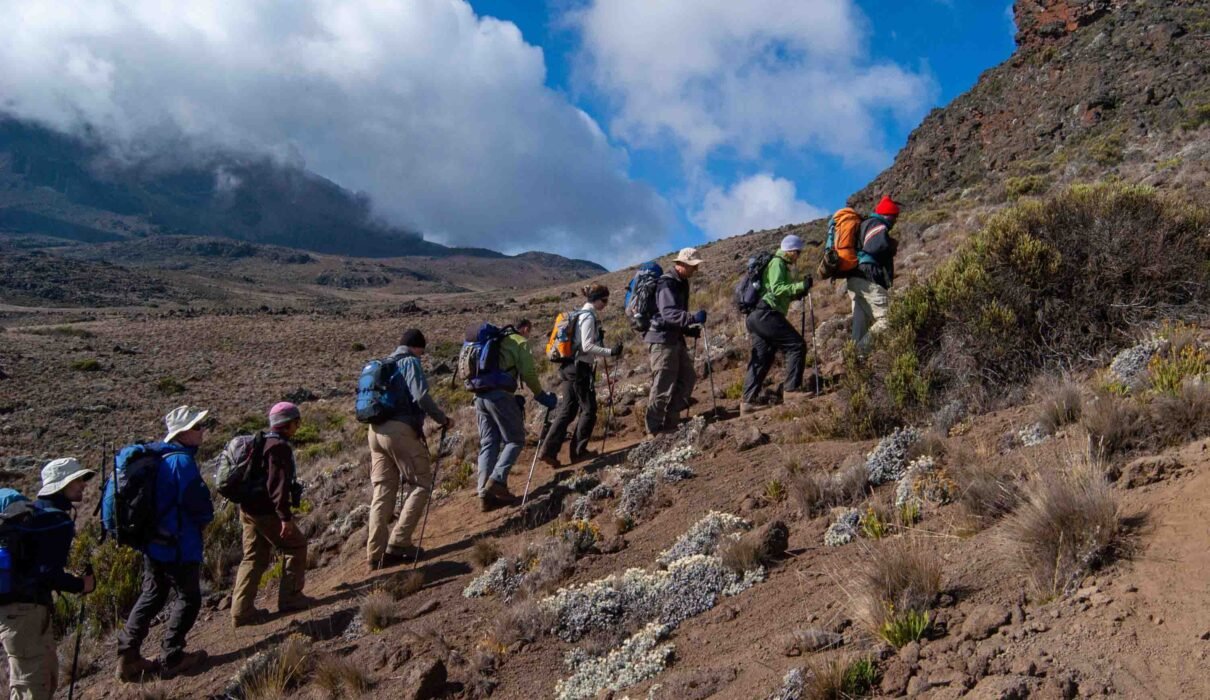
Climbing Mount Kilimanjaro is a dream for many travelers visiting Tanzania, but organizing a mountain expedition can be expensive, especially when you are traveling alone or with just one friend. One practical way to reduce the cost is to join a group of other climbers who are following the same route and departure schedule. You still get the experience of trekking through Kilimanjaro’s forests, crossing its high mountain landscapes, and attempting to reach Uhuru Peak, but you share certain operating expenses with the other members of your group.
The 7-Day Machame Route Kilimanjaro Climbing Joining Group is a popular choice for travelers who want a challenging mountain adventure with more time for acclimatization than the shorter six-day itinerary. Known as the Whiskey Route, Machame approaches Kilimanjaro from the southern side and passes through several different environments, beginning in tropical rainforest and gradually reaching the cold, rocky landscape near the summit. Along the way, climbers cross the Shira Plateau, visit Lava Tower, climb the famous Barranco Wall, and spend a night at Barafu Camp before their final ascent.
What makes the seven-day itinerary particularly attractive is the overnight stop at Karanga Camp. Instead of walking directly from Barranco to Barafu in one day, the journey is divided into two shorter stages. This gives climbers additional time at altitude and makes the day before the summit attempt less demanding. Although no itinerary can guarantee that everyone will reach the summit, allowing more time for acclimatization is generally a sensible approach when climbing a mountain as high as Kilimanjaro.
At Eddy Tours and Safaris, we help travelers explore Kilimanjaro climbing arrangements, including Machame Route group joining trips. Whether you are traveling alone, with a partner, or with friends, you can inquire about joining a scheduled climb and discuss the equipment, accommodation, and services needed for your expedition.
This guide explains the complete seven-day Machame Route itinerary for 2027 and 2028, the expected costs of a group joining climb, the difficulty of the route, the best months to travel, and how to prepare for the journey.
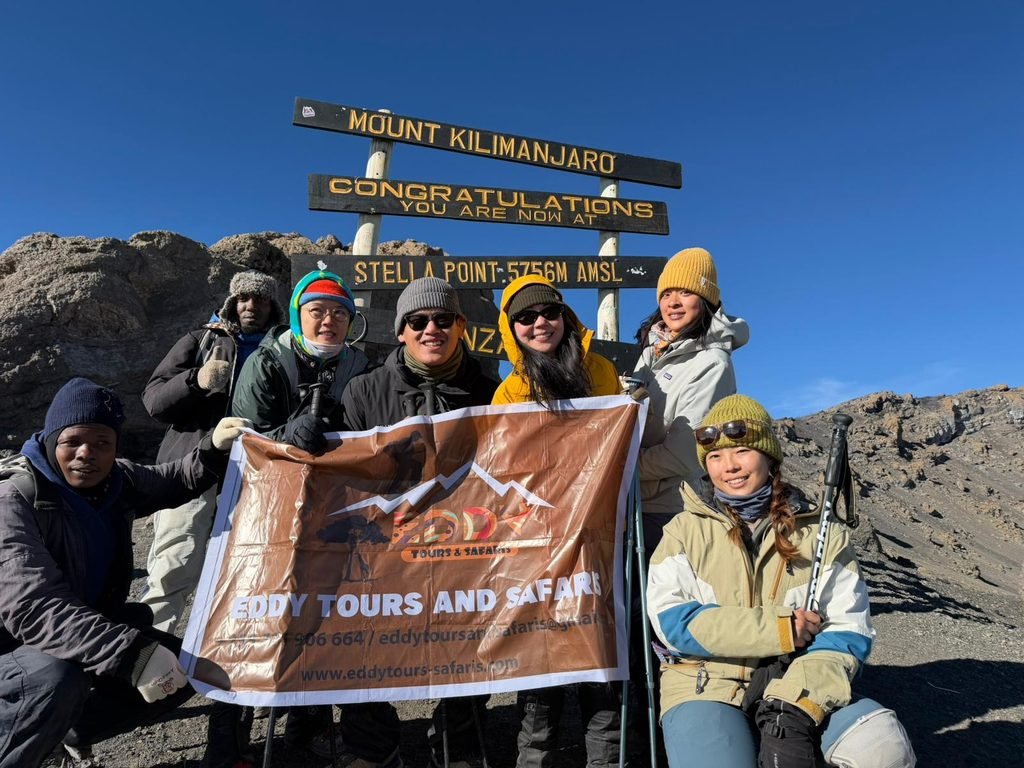
Why Choose the 7-Day Machame Route Joining Group?
One of the main reasons travelers choose a joining group is the opportunity to share the cost of a guided Kilimanjaro expedition. Every climb requires mountain guides, porters, food, camping equipment, transport, and national park fees. When several climbers travel together, some of these expenses can be shared, which often makes the trip more affordable than organizing a private climb for one or two people.
Joining a group also provides a social experience. During the seven days on Kilimanjaro, you will meet travelers from different countries who have come to Tanzania with a similar goal. You spend time walking together, eating meals at camp, sharing stories, and encouraging one another during difficult sections of the climb. For solo travelers, this can be one of the most enjoyable parts of the experience, particularly on summit night when the cold and altitude make the final ascent physically demanding.
The seven-day Machame Route also offers a more gradual itinerary than the six-day version. Both follow the same general trail, but the additional night at Karanga allows climbers to spend more time adjusting to the altitude. The route includes an important acclimatization day when trekkers ascend toward Lava Tower at approximately 4,600 meters before descending to sleep at Barranco Camp, which is much lower. This pattern is often described as climbing high and sleeping low, and it can support the body’s adjustment to higher elevations.
7-Day Machame Route Kilimanjaro Climbing Overview
| Climbing information | Details |
|---|---|
| Mountain | Mount Kilimanjaro, Tanzania |
| Route | Machame Route, also known as the Whiskey Route |
| Duration | 7 days and 6 nights on the mountain |
| Summit | Uhuru Peak, 5,895 meters |
| Starting point | Machame Gate |
| Finishing point | Mweka Gate |
| Accommodation | Mountain camping tents |
| Climbing style | Guided group joining expedition |
| Difficulty | Challenging high-altitude trekking |
| Main landscapes | Rainforest, moorland, alpine desert, and summit zone |
| Best-known climbing periods | January–March and June–October |
| Recommended preparation | Regular hiking, endurance training, and suitable equipment |
Complete 7-Day Machame Route Kilimanjaro Climbing Itinerary
Day 1: Machame Gate to Machame Camp – Beginning the Kilimanjaro Adventure
Elevation: Approximately 1,800 m to 2,835 m | Distance: 11 km | Hiking time: 5–7 hours
Your Kilimanjaro adventure begins with an early breakfast at your hotel in Moshi, followed by a transfer to Machame Gate on the southern slopes of Mount Kilimanjaro. The drive passes through villages, farmland, and areas where local communities grow bananas, coffee, and other crops. As the road climbs toward the mountain, the landscape gradually changes, and the cooler air provides the first indication that you are approaching Kilimanjaro’s forest zone.
At Machame Gate, your mountain guides complete the necessary national park registration and permit procedures. The climbing team also organizes the camping equipment, food supplies, and porter loads before the trek begins. This preparation can take some time, particularly when several groups are departing on the same morning, so patience is important. Your guide will explain the day’s walking schedule and remind everyone to maintain a comfortable pace rather than trying to climb too quickly.
The first section of the Machame Route passes through tropical rainforest, where tall trees, moss-covered branches, and thick vegetation create a completely different environment from the mountain’s upper slopes. The trail climbs steadily, and the ground may be muddy after rainfall. You may hear birds calling from the forest and occasionally see monkeys moving among the trees. As you continue higher, the forest gradually becomes less dense before the trail reaches Machame Camp.
After arriving at camp, you will have time to rest while the mountain team prepares dinner. This is your first night sleeping in a tent on Kilimanjaro, and temperatures can become cool after sunset. Your guide will check how everyone is feeling and explain the following day’s walk. Getting enough rest, eating properly, and drinking sufficient water are important habits to establish from the beginning.
Overnight: Machame Camp, approximately 2,835 meters.
Day 2: Machame Camp to Shira Cave Camp – Walking Above the Rainforest
Elevation: Approximately 2,835 m to 3,750 m | Distance: 5 km | Hiking time: 4–6 hours</text>
After breakfast, you leave Machame Camp and continue climbing toward the Shira Plateau. The vegetation changes noticeably as you move above the rainforest into the heath and moorland zone. Tall trees become less common, replaced by shrubs, heather, and hardy plants adapted to cooler mountain conditions. On a clear day, the views become increasingly impressive, with the lower slopes of Kilimanjaro stretching behind you and the mountain’s upper peaks appearing ahead.
Although the distance is shorter than on the first day, the trail includes steep and rocky sections that require careful footing. The air also becomes thinner as you gain elevation, so your guide will encourage a slow, steady walking pace. Climbers often hear the Swahili phrase pole pole, meaning slowly, throughout the expedition. It is more than a friendly expression; walking slowly helps prevent unnecessary exhaustion while your body adjusts to the altitude.
As you approach Shira Cave Camp, the landscape opens onto the Shira Plateau, one of Kilimanjaro’s most beautiful high-altitude areas. The plateau was formed through the mountain’s volcanic history and provides wide views across the surrounding terrain. Depending on weather conditions, you may enjoy views of Kibo, the highest volcanic cone of Kilimanjaro, as well as the rugged landscape of the western mountain slopes.
The afternoon is generally spent resting, eating, and preparing for the following day’s acclimatization walk. At this altitude, some climbers begin to notice mild symptoms such as headaches, reduced appetite, or difficulty sleeping. It is important to report any symptoms to your guide rather than ignoring them. Your guide can assess your condition and determine whether additional attention or a change in plans is necessary.
Overnight: Shira Cave Camp, approximately 3,750 meters.
Day 3: Shira Cave Camp to Lava Tower and Barranco Camp – An Important Acclimatization Day
Elevation: 3,750 m to Lava Tower at approximately 4,600 m, then down to Barranco at 3,960 m | Distance: 10 km | Hiking time: 6–8 hours
The third day is one of the most important stages of the seven-day Machame Route because it allows climbers to reach a higher elevation before descending to sleep at a lower camp. After breakfast, the group leaves Shira Cave Camp and continues across the rocky landscape toward Lava Tower. The vegetation becomes sparse, and the surrounding terrain begins to resemble a high-altitude desert, with volcanic rocks, exposed slopes, and wide views of the mountain.
As you climb toward Lava Tower, the effects of altitude may become more noticeable. Breathing can feel harder, particularly on steeper sections, and even experienced hikers may need frequent breaks. Your guide will maintain a manageable pace and monitor the group for signs of altitude-related illness. Reaching approximately 4,600 meters is a significant part of the journey, but it is not a test of how quickly you can walk. The aim is to gain altitude carefully while observing how your body responds.
After spending time near Lava Tower, the trail descends toward Barranco Camp. The change in elevation is helpful for acclimatization, although it does not remove the risk of altitude sickness. As you descend, the landscape changes again, and unusual giant groundsels can be seen in suitable areas around the Barranco Valley. These plants are among the distinctive features of Kilimanjaro’s high mountain environment.
Barranco Camp is located beneath the impressive Barranco Wall, which climbers will tackle the following morning. The surrounding scenery is one of the highlights of the Machame Route, especially when the weather is clear and the mountain is visible above the camp. After dinner, your guide will explain how the group will approach the wall and what to expect from the next day’s walk.
Overnight: Barranco Camp, approximately 3,960 meters.
Day 4: Barranco Camp to Karanga Camp – Climbing the Barranco Wall
Elevation: Approximately 3,960 m to 3,995 m | Distance: 5 km | Hiking time: 4–5 hours
Day four begins with one of the most famous sections of the Machame Route: the Barranco Wall. From the campsite, the wall looks steep and intimidating, particularly for climbers who have never walked on rocky mountain terrain. However, the standard trail is a scrambling route rather than a technical rock climb, and most sections can be completed by carefully using your hands and feet while following the instructions of your guide.
The ascent requires concentration because the path is narrow in places and other climbing groups may be moving along the same route. Your guide will help the group maintain safe spacing and choose suitable places to stop. Although the wall is physically demanding, many climbers find it enjoyable because it offers a different challenge from the steady uphill walking of the previous days. From higher points along the route, you can enjoy wide views over Barranco Valley and the surrounding mountain landscape.
After completing the Barranco Wall, the trail continues across ridges and valleys toward Karanga Camp. The route includes several ascents and descents, so the relatively short distance should not be mistaken for an effortless day. Nevertheless, the walking time is shorter than on several other stages, giving climbers more opportunity to rest in the afternoon.
The overnight stop at Karanga is one of the main reasons to choose the seven-day Machame itinerary. On the six-day version, climbers usually continue toward Barafu without spending the night here. Staying at Karanga allows the journey to be divided into more manageable sections and provides additional time at altitude before the summit attempt.
Overnight: Karanga Camp, approximately 3,995 meters.
Day 5: Karanga Camp to Barafu Camp – Preparing for Summit Night
Elevation: Approximately 3,995 m to 4,673 m | Distance: 4 km | Hiking time: 4–5 hours
After breakfast, you leave Karanga Camp and begin climbing toward Barafu Camp, the main base for the summit attempt on the Machame Route. The landscape becomes increasingly barren, with rocky paths, loose volcanic material, and very little vegetation. At this elevation, the air is considerably thinner than at the beginning of the trek, so even a short uphill section can feel demanding. The group continues at a slow pace, with regular breaks as needed.
As you approach Barafu, the mountain’s upper slopes become more prominent. The camp is situated in an exposed high-altitude environment where strong winds and cold temperatures are possible. After arriving, your mountain team will prepare the tents and meals while the guides discuss the summit schedule. Most groups begin their final ascent late at night or shortly after midnight, which means there is limited time to rest before setting off.
The afternoon is therefore an important period for eating, drinking, checking equipment, and trying to sleep. You will need warm clothing, gloves, a headlamp, suitable boots, and easy access to water and snacks. Your guide will explain how the group will move during the night and what to do if you feel unwell. It is important to be open about headaches, nausea, dizziness, unusual fatigue, or other symptoms, because serious altitude illness can develop even in physically fit climbers.
By the time darkness falls, most climbers are thinking about the final ascent. Reaching Barafu is already a significant achievement, but the following day will be the hardest part of the expedition. The best preparation is to rest, avoid unnecessary activity, and follow the instructions of the mountain team.
Overnight: Barafu Camp, approximately 4,673 meters.
Day 6: Barafu Camp to Uhuru Peak and Mweka Camp – Reaching the Roof of Africa
Elevation: 4,673 m to Uhuru Peak at 5,895 m, then down to Mweka Camp at approximately 3,100 m | Distance: 17 km | Total hiking time: 11–16 hours
Summit day begins during the night, usually around midnight, although the exact departure time depends on the group and weather conditions. After a light meal and a final equipment check, you leave Barafu Camp wearing your warmest layers and using a headlamp to follow the trail. The first part of the ascent involves steep, rocky terrain and loose volcanic material. Temperatures can be extremely cold, and the wind may make conditions more difficult.
Your guide will set a slow pace as the group climbs toward Stella Point on the crater rim. At this altitude, the reduced availability of oxygen makes every step more demanding. Climbers often need to concentrate on their breathing and maintain a steady rhythm rather than thinking about the total distance remaining. The mountain team will monitor everyone carefully, and anyone showing signs of serious altitude illness must descend rather than continue upward.
Reaching Stella Point, at approximately 5,756 meters, is an important milestone. From here, the trail continues along the crater rim toward Uhuru Peak, the highest point on Mount Kilimanjaro and the highest point in Africa at 5,895 meters above sea level. Depending on the weather and the group’s progress, you may see the first light of sunrise over the mountain and the surrounding landscape.
For climbers who safely reach Uhuru Peak, standing beside the summit sign is a memorable moment. The views can be extraordinary on a clear day, with glaciers, volcanic terrain, and the vast landscape of northern Tanzania stretching below. However, the summit is not a place to remain for long because of the extreme altitude and cold conditions. After photographs and a short rest, your guide will lead the descent.
The return to Barafu is often tiring because of the loose ground and the effort already spent during the night. After reaching camp, you usually have time for a meal and some rest before continuing down toward Mweka Camp. The descent takes you back to a lower altitude, where the air becomes easier to breathe and the environment gradually changes. By the time you reach Mweka, most climbers are exhausted but relieved to have completed the longest day of the expedition.
Overnight: Mweka Camp, approximately 3,100 meters.
Day 7: Mweka Camp to Mweka Gate – Completing Your Kilimanjaro Climb
Elevation: Approximately 3,100 m to 1,640 m | Distance: 10 km | Hiking time: 3–4 hours
Your final morning on Kilimanjaro begins at Mweka Camp, where the air feels noticeably warmer and richer in oxygen than it did near the summit. After breakfast, you pack your belongings and prepare for the last walk through the mountain’s forest zone. The trail descends steadily, and the vegetation becomes thicker as you return toward the lower slopes. Depending on rainfall, some sections may be slippery, so trekking poles and careful footing remain useful.
Although the summit attempt is behind you, the descent still requires attention because tired legs can make downhill walking uncomfortable. Your guide will encourage the group to maintain a steady pace and take breaks when necessary. Along the way, you can enjoy the forest scenery and reflect on the different landscapes you have crossed during the previous six days.
When you arrive at Mweka Gate, the mountain team completes the final park procedures. Eligible climbers who reached the recognized summit points may receive the appropriate climbing certificates according to park arrangements. You then meet your transfer vehicle and return to Moshi, where you can enjoy a shower, comfortable accommodation, and a proper rest after your time on the mountain.
For many travelers, the seven-day Machame Route becomes more than a physical challenge. The experience of walking through different mountain environments, sharing the journey with other climbers, and working alongside a dedicated Tanzanian mountain crew often becomes one of the most meaningful parts of their visit.
End of climb: Mweka Gate, followed by transfer to Moshi.
7-Day Machame Route Itinerary Summary
| Day | Route | Approximate distance | Hiking time |
|---|---|---|---|
| 1 | Machame Gate to Machame Camp | 11 km | 5–7 hours |
| 2 | Machame Camp to Shira Cave Camp | 5 km | 4–6 hours |
| 3 | Shira Cave to Lava Tower and Barranco | 10 km | 6–8 hours |
| 4 | Barranco to Karanga Camp | 5 km | 4–5 hours |
| 5 | Karanga to Barafu Camp | 4 km | 4–5 hours |
| 6 | Barafu to Uhuru Peak and Mweka Camp | 17 km | 11–16 hours |
| 7 | Mweka Camp to Mweka Gate | 10 km | 3–4 hours |
Distances and walking times are approximate and may vary according to the exact trail, weather, group pace, and mountain conditions.
How Much Does a 7-Day Machame Route Joining Group Cost in 2027/2028?
The price of a seven-day Machame Route group joining climb depends on the operator, departure date, group size, park fees, equipment provided, and services included in the package. Group joining trips are generally more affordable than private climbs for solo travelers because the costs of guides, transport, food preparation, and some equipment are shared among participants.
Published group joining offers for 2026 and 2027 show a wide range of prices. For planning purposes, travelers may expect to budget approximately $1,600 to $2,600 per person for a standard seven-day Machame group climb, although some advertised offers fall below this range and more comprehensive packages may cost considerably more. These are general market estimates, not confirmed prices from Eddy Tours and Safaris.
| Climbing package | Illustrative cost per person |
|---|---|
| Basic group joining climb | $1,600–$1,900 |
| Standard guided joining group | $1,900–$2,300 |
| Higher-service group climb | $2,300–$2,800+ |
| Private Machame Route climb | Request a separate quotation |
When comparing prices, travelers should pay particular attention to park fees, rescue arrangements, staff wages, porter welfare, accommodation, and equipment quality. A very cheap climbing package may exclude important services or place pressure on the mountain crew. Choosing a responsible operator with clear inclusions and appropriate safety procedures is more important than finding the lowest advertised price.
For the actual 2027 or 2028 joining group price, contact Eddy Tours and Safaris and provide your preferred month, number of climbers, and any equipment requirements.
What Is Included in a Machame Route Joining Group Package?
A standard guided Kilimanjaro group climb commonly includes national park entry and camping fees, professional mountain guides, porter services, mountain cooks, meals during the climb, shared camping tents, group camping equipment, and transfers between Moshi and the mountain gates. Some operators also include airport transfers, hotel accommodation before and after the climb, drinking water arrangements, and emergency oxygen equipment.
However, inclusions vary between companies, and travelers should never assume that a service is included simply because another operator offers it. Ask for a written quotation showing the full price, the number of hotel nights, the available equipment, the group size, and any additional charges. It is also useful to confirm how emergency situations are handled, what communication equipment the guides carry, and how the company supports its mountain staff.
What Is Not Usually Included?
International flights, Tanzania visa fees, travel insurance, personal trekking equipment, tips for guides and porters, alcoholic beverages, and personal purchases are commonly excluded from basic climbing packages. Equipment rental may also cost extra, particularly for items such as sleeping bags, trekking poles, insulated jackets, and waterproof clothing.
Travelers should confirm whether their insurance covers trekking to 5,895 meters and includes appropriate emergency evacuation arrangements. Standard travel insurance policies do not always cover high-altitude trekking, so checking the policy details before departure is essential.
How Difficult Is the 7-Day Machame Route?
The seven-day Machame Route is a challenging trek that requires reasonable physical fitness, mental preparation, and the ability to walk for several hours on consecutive days. It does not normally require technical mountaineering skills, but climbers must be comfortable walking on steep, rocky, and uneven ground. The Barranco Wall involves scrambling, while the final ascent to Uhuru Peak is physically demanding because of the altitude, cold temperatures, and long walking hours.
The greatest challenge is not simply the distance. Kilimanjaro reaches 5,895 meters, where the amount of oxygen available to the body is much lower than at sea level. Even fit hikers can develop altitude sickness, and good physical fitness does not guarantee successful acclimatization. The seven-day itinerary gives climbers more time to adjust than the six-day version, but it cannot remove the risks associated with high altitude.
Climbers should prepare by hiking regularly, improving cardiovascular endurance, and practicing long walks on hills or uneven terrain. Training with a daypack and the boots you intend to use on Kilimanjaro can also help you become comfortable with your equipment. If you have medical conditions or concerns about high-altitude trekking, seek advice from a qualified healthcare professional before booking.
Altitude Sickness and Safety on Kilimanjaro
Altitude sickness is one of the most important safety concerns on Mount Kilimanjaro. Acute mountain sickness can cause headaches, nausea, fatigue, dizziness, and difficulty sleeping. These symptoms should be reported to your guide promptly because they may indicate that your body is not adjusting well to the elevation. Serious altitude illness can affect the brain or lungs and requires immediate action.
Climbers should avoid ascending further when they have symptoms of acute mountain sickness, and anyone with worsening symptoms or signs of serious altitude illness needs prompt descent and medical attention. Symptoms such as confusion, difficulty walking normally, or breathlessness at rest are particularly concerning. A responsible mountain guide should monitor climbers regularly and make safety decisions based on their condition rather than pressure to reach the summit.
Before departure, discuss altitude-related medication and your personal medical risks with a healthcare professional experienced in travel or altitude medicine. During the climb, follow your guide’s advice about pacing, eating, drinking, and rest. Reaching Uhuru Peak is a wonderful goal, but returning safely is always more important.
Best Time to Climb Kilimanjaro via Machame Route in 2027/2028
Mount Kilimanjaro can be climbed throughout the year, but some months generally offer more favorable trekking conditions. January to early March is often associated with relatively warm weather and periods of clearer skies, although rain and snow remain possible at higher elevations. June through October is another popular climbing period because it generally falls within Tanzania’s drier season.
April and May are commonly associated with the long rains, which can make the lower trails muddy and reduce visibility. November often brings shorter rains, although conditions vary from year to year. Even during the driest months, climbers should prepare for sudden weather changes because Kilimanjaro passes through several climatic zones and temperatures near the summit can fall well below freezing.
For travelers joining a group, departure availability is another important consideration. Some operators offer scheduled climbs throughout the year, while others concentrate departures during the more popular months. Contact Eddy Tours and Safaris to inquire about available group arrangements rather than assuming that a particular date is already confirmed.
What Should You Pack for the 7-Day Machame Route?
The right equipment makes a major difference to your comfort and safety on Kilimanjaro. You will walk through warm rainforest, cool moorland, exposed rocky landscapes, and freezing summit conditions during the same expedition. For this reason, a layered clothing system is essential, allowing you to adjust what you wear as the weather and temperature change.
Your main equipment should include well-fitting waterproof hiking boots, moisture-wicking base layers, warm fleece or insulated clothing, a waterproof jacket and trousers, gloves, a warm hat, sun protection, a headlamp, trekking poles, and a suitable sleeping bag. You will also need a daypack for water, snacks, rain gear, and personal items, while porters normally carry the main expedition bags within the permitted weight limits.
It is worth testing your boots and clothing before traveling to Tanzania. New boots can cause blisters, and unsuitable clothing can make cold or wet conditions uncomfortable. If you do not own all the required equipment, ask your operator which items can be rented locally and what condition the rental gear is in.
Accommodation and Meals on the Machame Route
Unlike the Marangu Route, which uses mountain huts, the Machame Route is a camping trek. Climbers sleep in tents at designated campsites, and the mountain crew transports and sets up much of the shared camping equipment. Depending on the operator, you may share a tent with another climber or arrange a single tent for an additional charge.
Meals are usually prepared by a mountain cook and served at camp. Breakfast may include porridge, eggs, bread, fruit, or hot drinks, while lunches and dinners vary according to the operator’s menu and available supplies. Eating enough food is important even when altitude affects your appetite, because climbing requires considerable energy.
Travelers with dietary restrictions should inform the operator before booking. Vegetarian and other dietary requirements can often be accommodated with advance notice, but it is important to discuss specific needs early because supplies must be organized before the mountain expedition begins.
Who Should Join a 7-Day Machame Route Group?
The seven-day Machame Route joining group is suitable for solo travelers, couples, friends, and physically prepared beginners who want a guided high-altitude trekking experience. It is particularly attractive for visitors who enjoy meeting new people and are comfortable following a shared schedule. You do not need previous technical climbing experience, but hiking experience and good physical preparation are strongly recommended.
A joining group may be less suitable for travelers who need a highly flexible walking schedule, have specific medical requirements, or prefer complete privacy. Since climbers in a group may have different fitness levels and walking speeds, the guide must manage the pace and safety of the expedition carefully. If you prefer a more personalized arrangement, a private climb may be a better choice.
Can You Combine the Machame Route with a Tanzania Safari?
Yes. Many visitors choose to spend a few additional days exploring Tanzania after completing their Kilimanjaro climb. Popular destinations include Tarangire National Park, Ngorongoro Crater, Lake Manyara National Park, and Serengeti National Park. A short wildlife safari can be a rewarding way to see another side of Tanzania after spending a week on the mountain.
However, climbing Kilimanjaro is physically demanding, and travelers should allow enough time to recover before beginning a busy safari itinerary. A comfortable lodge and a relaxed first day can be helpful after the descent. Visitors with more time can also travel to Zanzibar for a beach holiday before returning home.
Eddy Tours and Safaris can be contacted about combining a Machame Route group climb with a Tanzania safari or Zanzibar holiday.
Frequently Asked Questions About the 7-Day Machame Route Joining Group
How much does the 7-Day Machame Route joining group cost?
Published market offers suggest that many seven-day group joining climbs fall around $1,600 to $2,600 per person, although prices vary. Contact Eddy Tours and Safaris for an actual quotation and confirmation of the services included.
Is the 7-Day Machame Route better than the 6-Day Machame Route?
The seven-day itinerary is generally preferable for acclimatization because it includes an overnight stay at Karanga Camp. This provides more time at altitude and divides the journey between Barranco and Barafu into two shorter stages.
Can beginners climb the 7-Day Machame Route?
Yes, physically prepared beginners can attempt the route with professional guides. However, it is a demanding high-altitude trek, and prior hiking experience is helpful.
Is the Machame Route a technical climb?
The standard Machame Route is a trekking route rather than a technical mountaineering route. Some sections, particularly the Barranco Wall, require scrambling and careful footing.
How many people are in a Kilimanjaro joining group?
Group sizes vary by operator and departure date. Ask Eddy Tours and Safaris to confirm the maximum number of climbers, guide arrangements, and whether your preferred departure has enough participants to operate.
Where do climbers sleep on the Machame Route?
Climbers stay in tents at designated mountain campsites. The standard seven-day itinerary includes six nights on the mountain.
What is the highest point on Kilimanjaro?
Uhuru Peak is the highest point on Mount Kilimanjaro at 5,895 meters above sea level.
Is reaching Uhuru Peak guaranteed?
No. Summit success depends on acclimatization, health, weather, and other conditions. A responsible guide may require a climber to descend if continuing would be unsafe.
When is the best time to climb the Machame Route?
January to early March and June through October are commonly preferred because of generally more favorable weather conditions. However, rain, wind, and freezing temperatures can occur at any time.
Can I join a Kilimanjaro group as a solo traveler?
Yes. Joining groups are particularly useful for solo travelers who want to share an expedition with other climbers and reduce some of the costs associated with a private climb.
Are tips included in the climbing price?
Tips are commonly excluded from Kilimanjaro climbing packages. Ask your operator for guidance about the mountain crew, recommended tipping practices, and payment arrangements.
Can I rent climbing equipment in Moshi?
Many Kilimanjaro operators can help arrange equipment rental in Moshi. Confirm availability, sizes, quality, and rental charges before traveling.
Final Thoughts: Is the 7-Day Machame Route Joining Group Worth It?
The seven-day Machame Route is a strong choice for travelers who want to climb Kilimanjaro while allowing more time for acclimatization than the shorter six-day itinerary. The route offers varied scenery, from the rainforest around Machame Gate to the open Shira Plateau, the rocky Barranco Wall, and the cold summit slopes near Uhuru Peak. Each day brings a different landscape and a new challenge, making the journey interesting even before you reach the highest part of the mountain.
Joining a group can also make the climb more affordable and enjoyable for travelers who do not want to organize a private expedition. Sharing the journey with other climbers provides companionship and encouragement, while professional guides and mountain staff handle much of the expedition’s daily organization. However, the quality of the operator, safety procedures, acclimatization schedule, and treatment of mountain workers should remain central to your decision.
For travelers planning a Kilimanjaro climb in 2027 or 2028, the most useful preparation is to choose a realistic itinerary, train consistently, obtain suitable equipment, and understand the risks of high-altitude trekking. With good preparation and a responsible climbing team, the seven-day Machame Route can provide a remarkable mountain experience, whether or not you ultimately reach Uhuru Peak.
Book Your 7-Day Machame Route Kilimanjaro Joining Group for 2027/2028
Are you planning to climb Mount Kilimanjaro and looking for a group to join? Eddy Tours and Safaris can help you inquire about seven-day Machame Route group climbing arrangements, available departure dates, and the services included in your expedition.
Whether you are traveling alone, as a couple, or with friends, contact our team with your preferred month, number of climbers, and any questions about equipment or preparation. You can also ask about adding a Tanzania wildlife safari or Zanzibar beach holiday after your mountain adventure.
Website: Eddy Tours and Safaris
Contact page: Book Your Kilimanjaro Climb
Email: sales@eddytours-safaris.com
WhatsApp: +255 711 906 664