
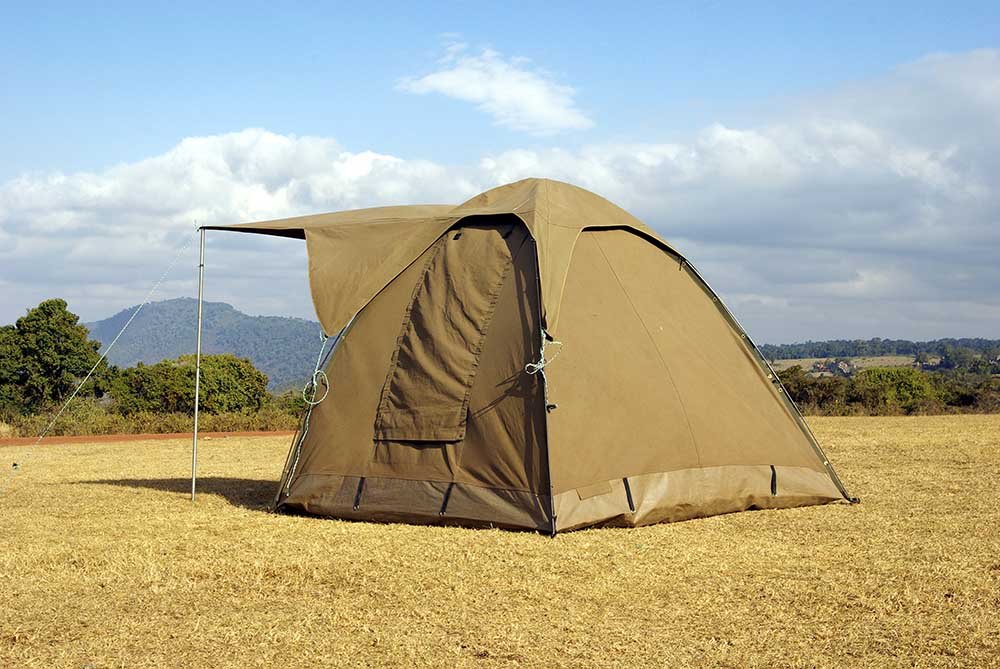
A Kenya camping safari in 2027 or 2028 offers a rewarding way to explore the country’s wildlife areas while sleeping under canvas. Your days revolve around game drives and changing landscapes, followed by meals at camp and evenings away from the pace of city life.
Camping can also help manage the accommodation budget, particularly when you share transport and travelling costs with a group. However, the word “camping” covers very different experiences. A small ground tent with shared bathrooms is quite different from a permanent safari tent with a bed and private shower.
This guide explains the main camping styles, destinations, suggested itineraries and costs to consider. It also helps you ask the right questions before booking, so the accommodation and daily arrangements match your expectations.
Prices, campsite availability and park fees for 2027–2028 should be confirmed for your exact travel dates.

What Is a Kenya Camping Safari?
A camping safari combines wildlife exploration with nights in tents. Depending on the package, you may travel with a driver-guide and cook, stay at established camps, or use a vehicle equipped for an independently organised journey.
Most visitors choosing an organised camping safari expect the operator to arrange transport, campsite bookings, meals and equipment. Check each of these services in the quotation rather than assuming they are included.
Main camping styles
| Camping style | What to expect | What to check |
|---|---|---|
| Basic tent camping | Ground tents, mattresses and generally shared facilities | Sleeping bags, bathroom standards and tent setup |
| Supported mobile camping | A camp assembled for your travelling party | Crew support, water supply and sanitation |
| Budget permanent tented camp | Fixed tents, often with beds | Whether bathrooms are private or shared |
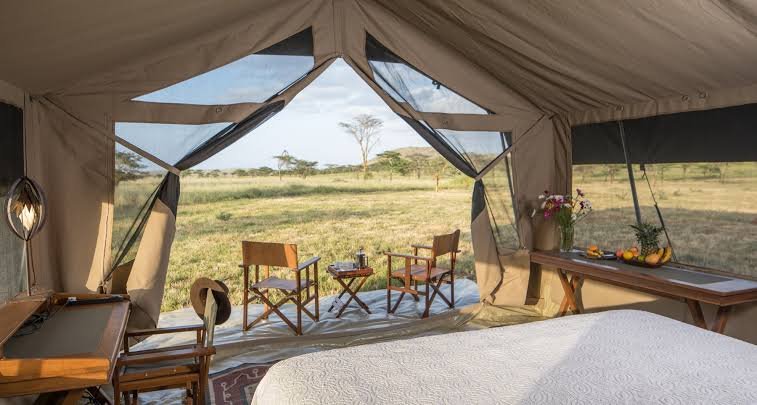
| Comfortable tented safari camp | More spacious rooms and established facilities | Electricity, hot water and included activities |
| Luxury tented camp | High levels of comfort and service | Full inclusions and the actual total cost |
| Self-drive camping | You manage more of the journey yourself | Vehicle capability, permissions and campsite reservations |
Ask for the name and location of every overnight stop. Photographs and a clear facilities description are more useful than labels such as “standard camp” or “comfortable camping.”
Best Destinations for a Kenya Camping Safari
1. Maasai Mara: Open Plains and Wildlife Drives
The Maasai Mara is a natural starting point when comparing Kenya safari itineraries. It offers open landscapes and opportunities to search for predators and plains wildlife.
For camping, the precise location matters. A campsite inside a protected area, a property near an entrance gate and a camp in a neighbouring conservancy can involve different access rules, fees and driving arrangements.
The Mara Triangle offers designated public and private campsites. Its management explicitly states that visitors cannot park a camping vehicle and stay anywhere they choose.
Planning tip: Ask how long it takes to reach the game-viewing area from your camp and whether the package includes all required entry fees.
2. Amboseli National Park: Elephants and Mountain Scenery
Amboseli is worth considering if elephants and landscapes are high on your wish list. Its setting below Mount Kilimanjaro gives the area a distinctive character, although cloud can obscure the mountain.
Kenya Wildlife Service identifies camping among the park’s visitor activities. Confirm the approved overnight location and the facilities available before choosing a package.
A two-night stay can create room for several outings rather than relying on a single drive for your preferred photographs.
Planning tip: Treat Kilimanjaro views as a possibility, not a guaranteed feature of every morning.
3. Lake Nakuru National Park: Rhinos and Rift Valley Scenery
Lake Nakuru adds a different environment to a Mara itinerary. Kenya Wildlife Service describes the park as an important sanctuary for both black and white rhinos.
For a camping trip, distinguish accommodation inside the national park from overnight options in the surrounding area. This affects both access and the structure of your game drives.
Birdlife is another reason to explore the park, but avoid choosing it solely on an expectation of huge flamingo gatherings. Build your visit around the broader wildlife and landscape experience.
Planning tip: Confirm whether your schedule allows a substantial game drive or only a short visit between transfers.
4. Samburu Region: A Different Northern Landscape
Samburu offers a contrast to Kenya’s southern safari areas. The Ewaso Ng’iro River is an important feature of the region, which Kenya’s tourism information highlights for its distinctive northern wildlife.
Consider it when you have enough time to add a northern destination without rushing. A longer journey deserves more than one brief outing before moving on.
Check the exact reserve, overnight property and travel route. Packages sometimes use the broad name “Samburu” without clearly identifying each location.
Planning tip: Allow enough nights to justify the transfer and enjoy the different setting.
5. Tsavo East and Tsavo West: A Broader Wilderness Journey
Tsavo East and Tsavo West provide additional options for a Kenya camping safari, particularly when you are considering an itinerary that continues towards the coast.
Kenya Wildlife Service manages both parks, and Tsavo West has access connections with Amboseli. These destinations should be treated as separate parks when reviewing your route and fees.
Their scale makes itinerary planning important. Adding several park names to a short trip can leave limited time for wildlife viewing.
Planning tip: Ask which areas you will explore and how much of each day is allocated to transfers.
When to Plan a Kenya Camping Safari in 2027–2028
Kenya’s official tourism guidance identifies December–March and July–October as popular visitor periods associated with generally dry, warm conditions. Conditions vary by region and year, so seasonal guidance should not be treated as a weather forecast.
For camping, think about more than wildlife viewing. Rain can affect tent comfort, campsite access and the condition of roads.
| Your priority | What to discuss before booking |
|---|---|
| Generally drier conditions | Travel dates and the expected conditions at each destination |
| Migration interests | Mara location and flexibility around wildlife movement |
| A quieter trip | Departures outside the busiest holiday periods |
| Managing the budget | Accommodation choices, group size and available offers |
| Photography | Time in each park and vehicle arrangements |
| Family comfort | Permanent tents, bathroom access and travel-day length |
Migration movements depend on conditions, and river crossings cannot be guaranteed. Choose an itinerary that offers worthwhile wildlife viewing beyond a single hoped-for event.
Suggested Kenya Camping Safari Itineraries
These are planning examples rather than confirmed departures. The final route should reflect campsite availability, park access and your arrival arrangements.
Three-Day Maasai Mara Camping Safari
A short Mara trip can work when you have limited time.
Day 1: Travel from Nairobi to the Mara area, settle into camp and take a game drive if arrival time permits.
Day 2: Spend the day exploring the agreed game-viewing area, with meals arranged around the programme.
Day 3: Return to Nairobi. Any additional morning game drive must fit the park ticket conditions and departure schedule.
For this itinerary, the two transfer days leave one full day for exploration. Add a night if you want a less compressed visit.
Five-Day Lake Nakuru and Maasai Mara Safari
This option combines a Rift Valley park with a longer Mara stay.
Day 1: Nairobi to Lake Nakuru, with a game drive and overnight at the confirmed campsite or camp.
Day 2: Continue to the Mara area and settle into your accommodation.
Days 3–4: Game drives in the Mara, following the agreed access arrangements.
Day 5: Return to Nairobi.
This route gives the Mara a more substantial place in the holiday while introducing another landscape.
Seven-Day Amboseli, Lake Naivasha and Maasai Mara Safari
A seven-day itinerary can include several environments, but it contains substantial road travel.
Day 1: Nairobi to Amboseli.
Day 2: Amboseli game drives.
Day 3: Transfer to Lake Naivasha for an overnight stop.
Day 4: Continue to the Mara area.
Days 5–6: Mara game drives.
Day 7: Return to Nairobi.
Activities around Naivasha should be listed separately. A boat trip or guided excursion is not automatically included because the lake appears in the itinerary.
Longer Camping Safari
With eight to ten days, you can consider a northern route including Samburu or a southern journey through Amboseli and Tsavo.
Choose a coherent circuit. Enough time in a few destinations usually creates a more satisfying trip than a long list of parks with repeated one-night stops.
How Much Does a Kenya Camping Safari Cost?
There is no single reliable price for every Kenya camping safari in 2027–2028. The total depends on the itinerary, travel dates, visitor category and services provided.
The main cost factors include:
- Number of safari days and nights.
- Private or shared transport.
- Vehicle type and group size.
- Park, reserve and conservancy fees.
- Campsite fees and accommodation standard.
- Meals, drinking water and cooking arrangements.
- Guide and support crew services.
- Optional activities.
- Airport transfers and hotel nights.
Camping charges and park entry charges may be separate. KWS publishes distinct camping fee categories, while the Mara has its own conservation and campsite arrangements. Confirm the charges applicable to your future travel dates.
Compare complete quotations. A cheaper package can become more expensive if equipment, fees or important transfers are added later.
Group Joining or Private Camping Safari?
Group joining safari
A shared departure can help spread transport and operating costs. It also offers the opportunity to travel with other visitors.
Before booking, confirm the departure date, passenger limit, seating arrangements and whether the trip requires a minimum number of bookings.
Private safari
A private safari gives your party its own vehicle arrangements and greater control over the itinerary, within park rules and practical limits.
It may suit families, photographers or travellers who want to spend longer at particular sightings.
For either option, ask whether the advertised 4×4 vehicle is confirmed and how many guests will share it.
What Should Be Included?
Your quotation should clearly identify:
- Transport throughout the agreed route.
- Driver-guide services.
- Scheduled game drives.
- Named campsites or tented camps.
- Tent and bedding arrangements.
- Meals and drinking water.
- Park and campsite fees.
- Cooking or camp support where relevant.
- Pickup and drop-off points.
Also check whether you are expected to help erect tents or complete other camp tasks. Some travellers enjoy participatory camping; others expect the crew to handle the setup.
Common Exclusions
Unless specifically included, budget for:
- International flights.
- Entry authorisations and related charges.
- Travel insurance.
- Crew tips.
- Personal purchases and alcoholic drinks.
- Sleeping bag rental.
- Optional boat trips, balloon flights or cultural visits.
- Hotel nights before or after the safari.
Ask about optional activity costs early so you can plan the full holiday budget.
What to Pack
Bring practical clothing for warm days and cooler evenings, together with rain protection.
Useful items include:
- Comfortable walking shoes.
- A warm layer.
- Lightweight clothing and a waterproof jacket.
- Sunhat, sunscreen and sunglasses.
- Headlamp and spare batteries.
- Personal toiletries and medication.
- Insect repellent.
- Reusable water bottle.
- Camera, binoculars and charging equipment.
- A soft travel bag.
If using basic tents, confirm whether sleeping bags, pillows and mattresses are supplied. Ask about electricity and charging access rather than assuming these are available every night.
Camping Comfort and Wildlife Rules
Follow the instructions given by your guide and campsite staff. Wildlife areas require care even when the camp feels quiet.
Keep food secured, use designated paths and ask about the procedure for reaching bathrooms after dark. Do not approach animals or leave camp independently for a walk.
Use only authorised camping areas. KWS also instructs campers not to leave campfires unattended. Fires should only be used where permitted and managed according to local rules.
Before booking, ask about bathrooms, hot water, security arrangements and how the operator handles heavy rain. These details make a significant difference to daily comfort.
Kenya and Tanzania Camping Safari Combinations
A longer East African holiday can combine Kenya with Tanzania. Plan the border transfer, vehicles and accommodation carefully, allowing time for the journey between destinations.
Explore Tanzania safari options if you would like to add Serengeti, Ngorongoro or Tarangire.
For a Kenya enquiry through Eddy Tours & Safaris, request confirmation of availability and who will operate each part of the trip. A combined quotation should clearly explain the Kenya and Tanzania arrangements.
Frequently Asked Questions
Is camping always the cheapest safari option?
No. Basic camping may reduce accommodation costs, but private transport, park fees and crew services still contribute substantially to the total.
Will I have a private bathroom?
That depends on the accommodation. Basic campsites commonly use shared facilities, while some permanent tented camps offer ensuite bathrooms. Confirm each overnight stop.
Can families book a camping safari?
Yes, where the itinerary and accommodation suit the children’s ages. Review driving distances, bathroom access and any activity restrictions before booking.
Can I camp anywhere inside a park?
No. Use designated, authorised campsites and follow the relevant booking requirements.
Will I see the Big Five?
Sightings cannot be guaranteed. Choose suitable destinations, allow enough game-viewing time and let your guide respond to conditions.
Are 2027–2028 prices already fixed?
Only rely on a quotation that explicitly covers your dates and explains the applicable fees and booking conditions.
Plan Your Kenya Camping Safari for 2027–2028
Begin with your preferred month, group size, available days and the camping comfort you expect. These details help create a realistic itinerary and an accurate quotation.
Contact Eddy Tours & Safaris to discuss your East African travel plans, confirm Kenya arrangements and explore a possible Tanzania extension.
Email: sales@eddytours-safaris.com
Alternative email: eddytoursandsafaris@gmail.com
WhatsApp: +255 711 906 664