
A lion portrait, a line of wildebeest beneath a storm cloud, or an elephant walking through woodland—Serengeti offers many ways to photograph wildlife. The challenge is choosing where to spend your time and arriving with realistic expectations about light, animal movements and distances.
The best safari photography locations in Serengeti depend on what you want to capture. Open plains suit photographs that show animals within a broad landscape. River valleys offer different backgrounds and opportunities to observe behaviour. Rocky outcrops, known as kopjes, add texture and shape to a composition.
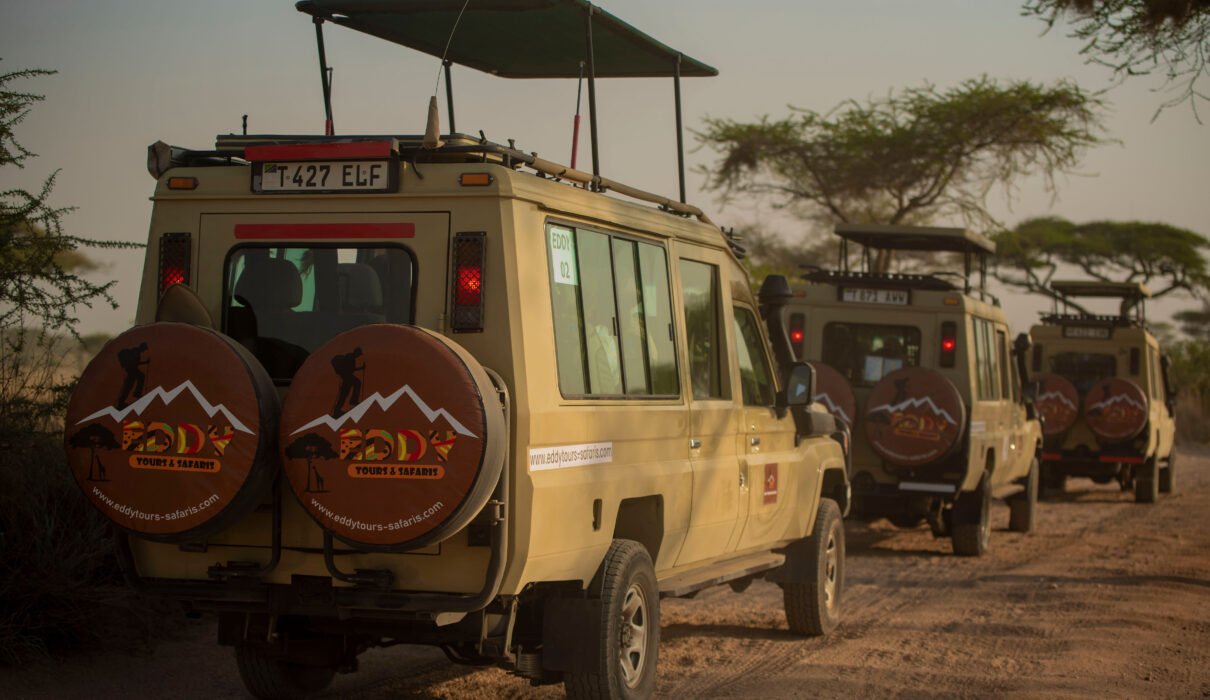
For travellers planning with Eddy Tours & Safaris, a photography itinerary should begin with your interests. Are you hoping for big-cat portraits, migration scenes, birds or a varied collection of wildlife and landscapes? That answer helps determine the region, accommodation and pace of your safari.
The nine locations below include areas within Serengeti National Park and Ndutu in the adjoining southern Serengeti ecosystem. They are options to consider, rather than nine stops to squeeze into one short trip.
Choosing Your Serengeti Photography Locations
Serengeti’s habitats include open grasslands, woodland, riverine forest, wetlands and kopjes. This variety is part of its photographic appeal, as described in TANAPA’s Serengeti wildlife and habitats overview.
Location matters, but so does time. A promising area visited briefly at midday may offer fewer useful photographs than a less famous location explored patiently in good light.
Before booking, think about the images you want to bring home. A tight portrait requires a different approach from a landscape with small animals moving through it. Likewise, migration photography depends more heavily on seasonal movements than a general wildlife itinerary.
Use this guide to identify two or three suitable areas, then allow enough time to explore them properly.
1. Seronera Valley: A Versatile Starting Point
Seronera, in central Serengeti, is a practical starting point for photographers seeking varied wildlife subjects. Its combination of open areas and river-associated vegetation gives you opportunities to work with different backgrounds.
One moment, you may be photographing grazers in open country. Later, a sighting near trees might call for a tighter composition or careful attention to branches crossing the frame.
The Seronera and south-central Serengeti guide provides useful regional background for planning.
Photography approach: Before taking a long burst, check the background. A small change in the vehicle’s permitted position can sometimes remove a distracting branch or improve the angle.
Tell your guide when the composition works so the vehicle can remain still. Equally, accept that wildlife movement and road access may prevent the angle you imagined.
Seronera suits a first photography safari because you can practise different techniques without making every day depend on one particular event.
2. Moru Kopjes: Wildlife Within a Rocky Landscape
Moru Kopjes offer a change from broad, uninterrupted grassland. The rock formations create visual structure, giving photographers foreground elements, textured backgrounds and opportunities for wider environmental images.
The rocks themselves deserve attention. Their curves, shadows and relationship with surrounding vegetation can produce worthwhile photographs even when no large animal is visible.
If wildlife appears near an outcrop, resist the urge to zoom in immediately. First consider whether including the rock formation makes the photograph more distinctive.
Photography approach: Take a sequence of compositions: a wide image showing the setting, a medium frame placing the animal within it, and a closer view if the distance allows.
This gives you more variety than returning home with several nearly identical portraits.
Moru is worth discussing when planning a central or south-central Serengeti itinerary. Ask how a visit fits around your accommodation and available driving time rather than assuming it is a short detour from every camp.
3. Simba Kopjes: Shape, Texture and Scale
Simba Kopjes provide another opportunity to use Serengeti’s rocky outcrops as part of the photograph.
Although both Simba and Moru involve kopje landscapes, the purpose is not to collect a photograph of every rock formation. Choose locations that fit your route and spend time studying how the light falls across the scene.
An animal near a large rock can help communicate scale. Without wildlife, a carefully composed landscape can still tell the story of the place.
Photography approach: Look for separation between the subject and background. If an animal’s outline blends into the rocks, wait for movement rather than assuming a longer lens will solve the problem.
Early or late light can reveal surface texture, but cloud cover may also produce gentle, even illumination. Work with the conditions you have.
Do not ask your guide to leave authorised routes to improve a photograph. The best available composition is the one you can make responsibly.
4. Gol Kopjes and the Eastern Plains: Space Around the Subject
Gol Kopjes and the surrounding plains offer photographers the chance to combine rocky features with open country. Regional guidance identifies the grasslands around Gol Kopjes as an area of interest for lion and cheetah viewing, although sightings remain uncertain.
Open terrain is especially useful for photographs in which the animal occupies only a small part of the frame.
A distant subject is not automatically a disappointing sighting. With good light and a thoughtful composition, the distance can communicate the scale of Serengeti.
Photography approach: Leave space in the direction the animal is looking or moving. Try a wider frame before cropping tightly.
If an animal is resting, use that time to check your settings and observe its surroundings. Movement can happen quickly, and adjusting the camera beforehand gives you a better chance of responding.
Confirm the proposed route and access conditions during planning. Eastern Serengeti locations should be chosen with the day’s practical arrangements in mind.
5. Ndutu and the Southern Plains: Seasonal Herd Photography
Ndutu is often discussed as part of a southern Serengeti safari, but an important geographical distinction matters: Ndutu includes an area within Ngorongoro Conservation Area adjoining Serengeti National Park.
Ndutu Safari Lodge’s location information explains this position between Ngorongoro Crater and Serengeti National Park.
The southern plains are associated with seasonal concentrations of migratory wildlife. However, herd locations depend on rainfall and feeding conditions, so a familiar place name does not guarantee animals directly outside your accommodation.
Photography approach: Look beyond individual portraits. Herd patterns, animals moving through woodland edges and wide scenes beneath changing skies can create a varied collection.
When young animals are present, observe their interactions from a respectful distance. Do not encourage a vehicle position that separates a mother and calf.
For a southern-plains trip, ask about likely seasonal conditions and recent observations. Also confirm which protected areas your itinerary enters and which charges are included.
6. Grumeti River and the Western Corridor: River Habitat and Movement
The Western Corridor follows the Grumeti River towards the western side of Serengeti. It introduces river scenery and vegetation that contrast with the classic short-grass plains.
The Western Corridor regional guide describes its relationship with the Grumeti River.
For photographers, the appeal includes the river habitat itself as well as wildlife. Water, banks and vegetation can provide layers within a composition.
Migration-related activity is seasonal. Avoid planning on the assumption that every visit will include a dramatic crossing, or that a Grumeti crossing will look like the familiar Mara River photographs.
Photography approach: Watch the water edges and consider reflections, shapes and the placement of animals within the scene.
If movement develops, have a suitable shutter speed ready. If nothing dramatic happens, continue looking for quieter subjects rather than treating the visit as unsuccessful.
Ask whether the accommodation is within the national park or in an adjoining concession, as access arrangements and included activities can differ.
7. Kogatende and the Mara River: Patient Migration Photography
The Mara River area around Kogatende is one of the best-known locations for migration photography in northern Serengeti.
Broadly, July to October is a commonly used planning window for northern river-crossing safaris. It is a seasonal guide, not a timetable: rainfall and herd movements affect where animals gather and whether they cross.
River photography can involve long periods of waiting. Animals may gather, move away or cross somewhere beyond your view.
Photography approach: Prepare before activity starts. Check battery power, remaining card space, focus mode and shutter speed while the scene is quiet.
A flexible zoom can help when the distance changes. However, do not spend the whole experience adjusting equipment in search of an ideal frame.
Avoid pressuring the guide to crowd the bank or block animal movement. Several nights in the region can provide more opportunity than a brief visit, but even a longer stay cannot guarantee a crossing.
8. Lobo: A Different Northern Serengeti Perspective
Lobo offers another northern Serengeti option, with a landscape that differs from the southern short-grass plains.
It is useful to distinguish a stay around Lobo from a stay focused on Mara River crossings. Both are in the north, but that does not make them interchangeable bases.
The northern Serengeti and Lobo regional guide provides background on the area and its seasonal relationship with the migration.
Photography approach: Use changes in terrain and vegetation to create depth. Instead of photographing every animal against the sky, look for layers that show the habitat.
A longer lens can simplify a busy background, while a wider composition may better communicate the landscape.
When choosing accommodation, ask how long it takes to reach the areas you want to photograph. Staying in northern Serengeti does not necessarily mean being close to every northern attraction.
9. Retima Hippo Pool: Observation and Behaviour
Retima Hippo Pool adds a different subject to a photography itinerary dominated by predators and grazers.
TANAPA’s Serengeti visitor brochure identifies Retima as a place where visitors can observe hippos from a designated area outside the vehicle. Follow current instructions from your guide and park staff about where to stand and move.
Hippo photography often begins with partial views: eyes, ears and nostrils above the water. Waiting can reveal interactions, surfacing animals and changes in position.
Photography approach: Watch the whole scene before choosing a subject. A tight portrait may work well, but a wider photograph can show the group and water habitat.
Use a faster shutter speed when there is sudden movement. Check exposure carefully where bright reflections contrast with dark skin.
Avoid making noise to provoke a reaction. Natural behaviour is the subject; disturbing animals should never be part of obtaining it.
A Quick Comparison of the Nine Locations
| Location | Photographic focus | Planning consideration |
|---|---|---|
| Seronera Valley | Varied wildlife and habitat backgrounds | A useful central base |
| Moru Kopjes | Wildlife within rocky landscapes | Allow time for wider compositions |
| Simba Kopjes | Rock texture, light and scale | Choose stops that fit your route |
| Gol Kopjes and eastern plains | Open-country wildlife and space | Confirm route and access |
| Ndutu and southern plains | Seasonal herds and landscape scenes | Account for protected-area boundaries |
| Grumeti and Western Corridor | River habitat and seasonal movement | Confirm camp location and access |
| Kogatende and Mara River | Migration and possible crossings | Allow patience and several nights |
| Lobo | Northern landscapes and wildlife | Check distances to target areas |
| Retima Hippo Pool | Hippo behaviour and water scenes | Follow designated viewing arrangements |
How to Plan a Better Photography Safari
The most useful itinerary is not necessarily the one with the most locations. Repeated packing and long transfers can reduce the hours available for photography.
For a first trip, a central Serengeti base with several full game-drive days can offer useful variety. For migration photography, choose the relevant seasonal region and allow time there.
Explain your priorities to Eddy Tours & Safaris when requesting a proposal. Mention whether you prefer early departures, extended stops, birds, predators or landscape photography.
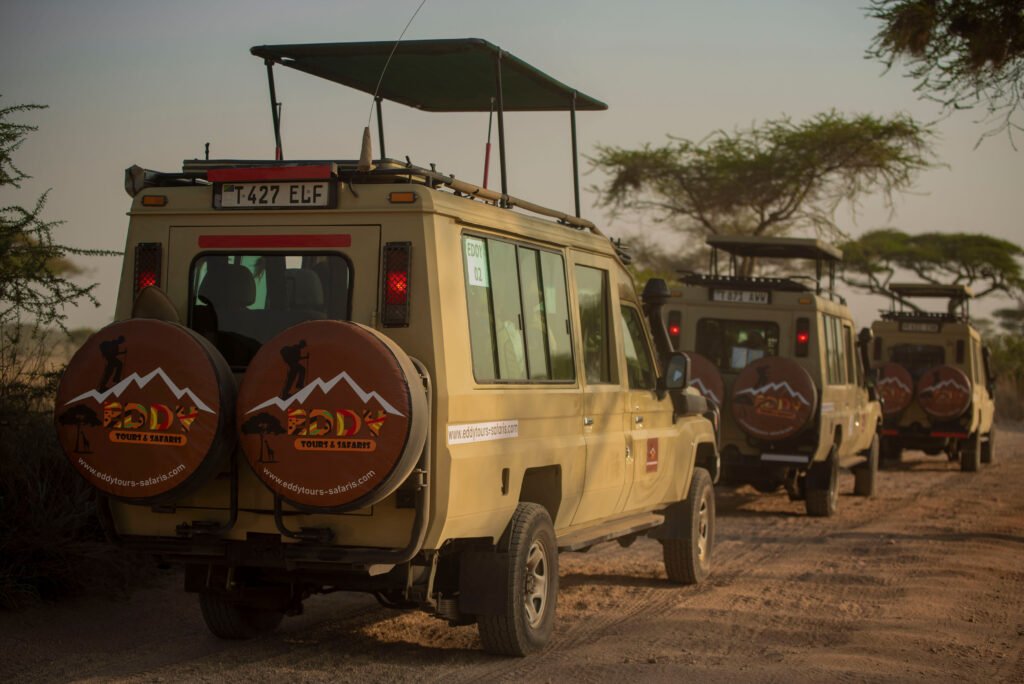
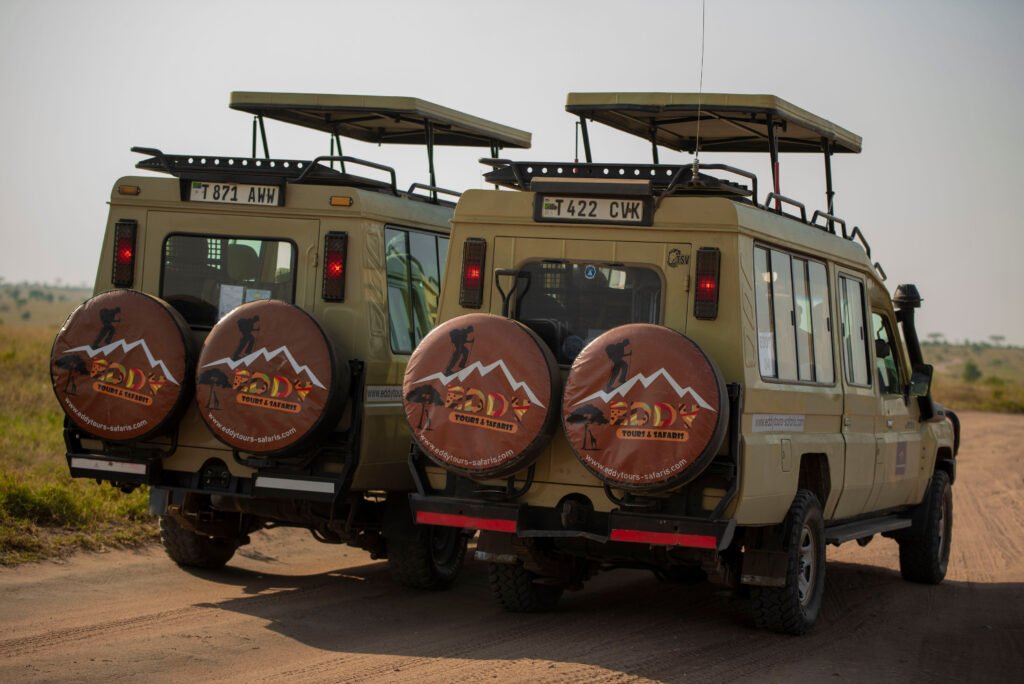
Discuss vehicle arrangements too. Camera bags, long lenses and several photographers can make space important. Confirm the number of passengers and whether the itinerary allows the pace you need.
A private vehicle generally offers more control over stops. On a shared safari, check that the schedule suits your expectations before booking.
Equipment That Helps Without Overcomplicating the Trip
Bring equipment you know how to use. Familiarity usually matters more than adding a new lens immediately before departure.
A practical kit may include:
- A telephoto lens or camera with useful optical zoom.
- A wider lens for landscapes and animals in their surroundings.
- Spare batteries and memory cards.
- A beanbag or suitable support for use in the vehicle.
- Dust protection and a rain cover.
- Binoculars for observing distant wildlife.
Practise changing focus modes and shutter speed before travelling. Wildlife movement can leave little time to search through menus.
Avoid changing lenses in heavy dust. If you have two camera bodies, using different lenses on each can reduce that need, but a second body is not essential for enjoying the safari.
Using Light and Timing Well
Early and late light often provides attractive colour and softer contrast. Still, good photographs are possible beyond those hours.
Overcast conditions can suit portraits. Midday may offer interesting behaviour, strong shapes or a scene that works better in a wider composition.
Ask your guide about realistic departure and return arrangements. Do not assume that every camp location allows you to reach every photographic area during the best light.
Once at a sighting, observe first. Notice the direction of light, distracting elements and likely movement. A few seconds of attention can improve the result more than taking hundreds of frames immediately.
Photographing Wildlife Responsibly
Give animals space, keep noise low and follow park instructions. Stay on authorised routes and leave the vehicle only where permitted.
Drone use requires separate attention. TANAPA publishes specific drone guidance; do not assume a drone can be brought into or flown within the park without the required approvals. Confirm current requirements before travelling.
For commercial filming or a professional production, explain the intended work in advance so permit requirements can be checked.
Responsible photography also means accepting missed images. An animal may move behind vegetation or remain too far away. That is part of photographing wildlife in its natural setting.
Frequently Asked Questions
Which Serengeti area is best for a first photography safari?
Seronera is a useful starting point for varied subjects. The final choice should reflect your dates, interests and available time.
Can I visit all nine locations in one trip?
A longer itinerary could cover several of them, but visiting all nine is not necessary. Concentrating on suitable regions usually gives you more observation time.
Are Mara River crossings guaranteed?
No. Being in the region during a likely season improves the opportunity, but neither dates nor a guide can guarantee a crossing.
Is Ndutu inside Serengeti National Park?
Ndutu belongs to the wider southern Serengeti ecosystem, with important visitor areas in adjoining Ngorongoro Conservation Area. Confirm the exact route and accommodation location.
Do I need professional camera equipment?
No. A familiar camera with useful zoom can produce satisfying results. Observation, steady handling and composition remain important.
Plan Your Serengeti Photography Safari With Eddy Tours & Safaris
The best safari photography locations in Serengeti are the ones that match your subjects, dates and pace. A carefully chosen base and enough time to observe can be more valuable than a long list of hurried stops.
To plan your trip, contact Eddy Tours & Safaris. Share your travel dates, group size, accommodation preference and the photographs you most hope to make.
Website: eddytours-safaris.com
Email: eddytoursandsafaris@gmail.com
Sales enquiries: sales@eddytours-safaris.com
Phone and WhatsApp: +255 711 906 664