

Climbing Olympus Mons: The Tallest Mountain in the Solar System is a dream that stretches the limits of imagination, science, and human endurance. This colossal Martian volcano rises higher than any peak on Earth, dwarfing even the mighty Everest and reshaping how we understand mountains beyond our planet. In this in-depth guide, we explore its size, science, challenges, and the fascinating possibilities of one day setting foot on its slopes.

Understanding Climbing Olympus Mons: The Tallest Mountain in the Solar System
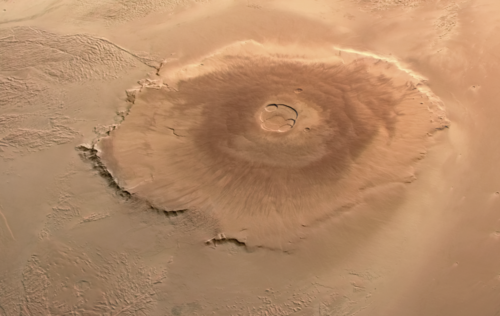
When we talk about Climbing Olympus Mons: The Tallest Mountain in the Solar System, we are not discussing an ordinary ascent. Olympus Mons towers nearly three times higher than Mount Everest and spans an area roughly the size of a small country. According to research published by nasa.gov and data from jpl.nasa.gov, this shield volcano stretches about 600 kilometers across, with gentle slopes that hide its extreme elevation.
Unlike Earth’s mountains formed by tectonic collisions, Olympus Mons grew from continuous volcanic eruptions over millions of years. Mars lacks the shifting plates found on Earth, as explained by usgs.gov, which allowed lava to build upward in one fixed location. The result is a mountain so immense that its curvature follows the planet itself, a fact confirmed by studies shared through esa.int.
How Tall Is Olympus Mons Compared to Earth’s Mountains?
To truly grasp Climbing Olympus Mons: The Tallest Mountain in the Solar System, comparisons help. Everest stands proud at just under 9 kilometers above sea level. Olympus Mons rises about 22 kilometers above the Martian surface. Scientific discussions on britannica.com and science.org confirm that no mountain in our solar system surpasses it in height.
Its base is equally astonishing. The diameter is so wide that if placed on Earth, it would cover a region larger than many nations. According to geological interpretations found on nature.com, the low gravity on Mars allowed lava to spread farther and stack higher than on Earth, creating slopes that are gradual but incredibly long.
The Science Behind Climbing Olympus Mons: The Tallest Mountain in the Solar System
The idea of Climbing Olympus Mons: The Tallest Mountain in the Solar System sparks scientific curiosity because of the extreme environment. Mars has thinner air, colder temperatures, and intense radiation exposure. Research from mit.edu and caltech.edu highlights how low atmospheric pressure would make breathing impossible without advanced life-support systems.
Gravity on Mars is about one-third of Earth’s, which would make climbing physically different. Studies available on arxiv.org explain that while reduced gravity could make upward movement easier, the lack of oxygen and extreme cold would present life-threatening challenges. Temperatures analyzed by noaa.gov show that Martian nights can be brutally cold, making survival equipment essential.
What Would It Take to Climb Olympus Mons?
If humanity ever attempts Climbing Olympus Mons: The Tallest Mountain in the Solar System, it would require technology far beyond traditional mountaineering gear. Space agencies such as those documented on harvard.edu and stanford.edu are researching advanced habitats, pressurized suits, and autonomous vehicles that could navigate Martian terrain.
Unlike steep alpine ascents, Olympus Mons has gentle slopes averaging only a few degrees. However, the distance from base to summit could take weeks or months to traverse. Explorers would likely rely on rover support systems similar to those described by space.com and mission planning concepts discussed at ox.ac.uk.
The caldera at the summit is another marvel. This massive depression, studied through imaging data referenced by pbs.org, spans dozens of kilometers and reveals layers of volcanic history. Reaching it would be like stepping onto a natural monument carved by time and fire.
Why Olympus Mons Matters for Future Exploration
Beyond adventure, Climbing Olympus Mons: The Tallest Mountain in the Solar System symbolizes progress in planetary science. International cooperation promoted by organizations such as un.org supports peaceful exploration of space. Geological research contributes to understanding planetary evolution, volcanic activity, and climate change patterns.
Environmental research bodies like iucn.org and worldwildlife.org often emphasize protecting fragile ecosystems on Earth, and studying Mars offers perspective on how unique our planet truly is. Insights from conservation.org suggest that planetary comparisons can improve conservation strategies back home.
Lessons from Earth’s Greatest Climbs
While Climbing Olympus Mons: The Tallest Mountain in the Solar System remains theoretical, Earth’s mountaineering history provides useful lessons. Preparation, logistics, and endurance are key factors in any extreme ascent. For readers interested in real-world expeditions, explore safaris and adventure journeys through Eddy Tours & Safaris, which showcase how planning and expert guidance turn bold dreams into achievable experiences.
Mountain specialists at kilimanjaroclimbspecialist.com demonstrate how altitude training and acclimatization strategies are essential even on Earth. Similar principles would apply on Mars, though in a much more complex environment. For travel inspiration closer to home, you can also visit Tanzania Safaris, Serengeti National Park, Ngorongoro Crater, and African Wildlife Safaris for unforgettable terrestrial adventures.
Human Curiosity and the Drive to Explore
The fascination with Climbing Olympus Mons: The Tallest Mountain in the Solar System reflects humanity’s deep curiosity. From ancient navigators to modern astronauts, exploration defines our progress. Academic insights shared by cam.ac.uk highlight how exploration fuels innovation, education, and global cooperation.
Even a simple search on google.com reveals thousands of studies and simulations analyzing Martian terrain. Publications such as smithsonianmag.com continue to bring these discoveries into public conversation, making space science accessible and exciting.
Could Tourists Ever Attempt Climbing Olympus Mons: The Tallest Mountain in the Solar System?
It may sound like science fiction, but private space exploration is advancing quickly. If technology evolves safely and sustainably, Climbing Olympus Mons: The Tallest Mountain in the Solar System could transition from theory to specialized expedition. However, ethical guidelines and planetary protection protocols would need to be strictly followed to preserve Mars for scientific research.
Experts agree that robotic missions will likely lead the way, gathering more data about terrain stability and radiation exposure. Only after decades of preparation might human explorers consider standing on its summit, gazing across a horizon that curves with the planet itself.
Final Thoughts on Climbing Olympus Mons: The Tallest Mountain in the Solar System
Climbing Olympus Mons: The Tallest Mountain in the Solar System represents more than height; it symbolizes ambition, discovery, and the human spirit. While the climb remains a future possibility, studying this Martian giant teaches us about geology, resilience, and the fragile beauty of our own world. As science advances and exploration continues, Olympus Mons will remain a powerful reminder that boundaries are meant to be explored, carefully and responsibly.