
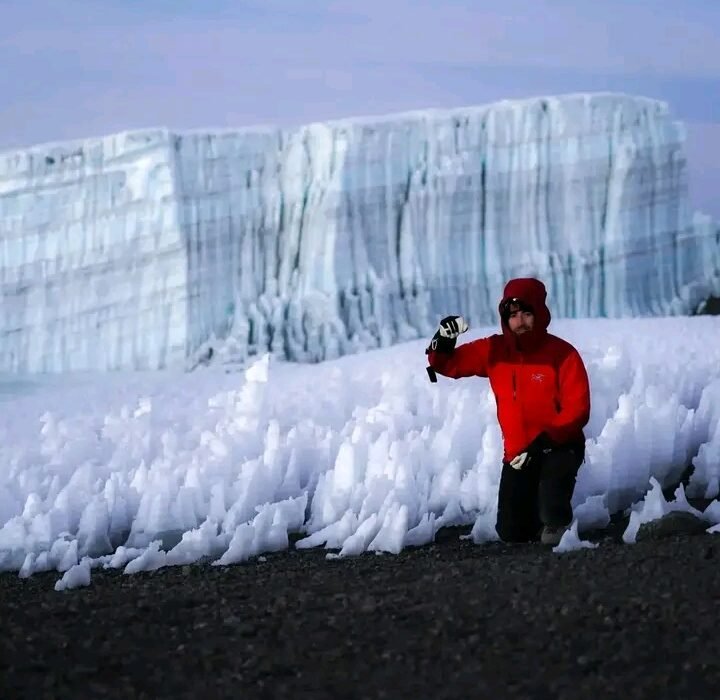
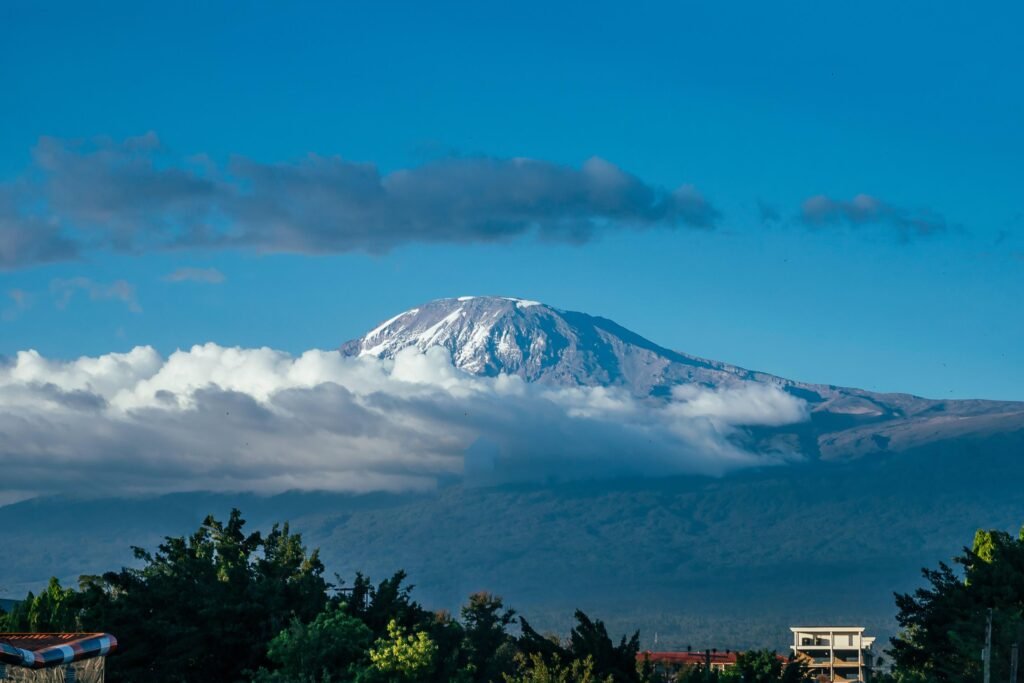
Climbing Mount Kilimanjaro is often described as a once-in-a-lifetime adventure. Standing at 5,895 meters (19,341 feet) above sea level, Mount Kilimanjaro is the highest mountain in Africa and attracts trekkers from all over the world.
But what actually makes climbing Kilimanjaro difficult?
Many people assume the hardest part is the steep trails, the cold temperatures, the long walking days, or the final push to Uhuru Peak. These things certainly make the climb challenging. However, for many climbers, the biggest challenge is something they cannot see: altitude.
As you climb higher, the air contains less available oxygen. Your body needs time to adjust to this change, and that adjustment known as acclimatization can determine whether you enjoy your Kilimanjaro experience or struggle badly.
At Eddy Tour and Safaris, we believe that understanding the mountain before you climb it is one of the best ways to prepare for the adventure. Kilimanjaro is not a mountain that should be approached with the attitude of simply being physically strong enough. It requires patience, sensible pacing, preparation, and respect for altitude.
So, what is the hardest part of climbing Kilimanjaro?
For most climbers, the real challenge is adapting to high altitude while continuing to move toward the summit.
Here is what you need to know.
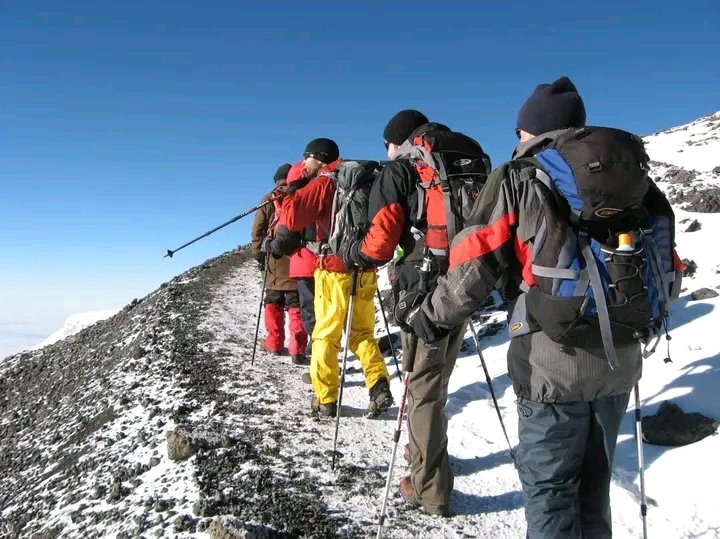
Why Is Kilimanjaro So Challenging of What Is the Hardest Part of Climbing Kilimanjaro? Expert Advice from Eddy Tour and Safaris
Kilimanjaro is unusual because it does not require technical mountaineering skills for the standard trekking routes. You do not normally need ropes, climbing equipment, or advanced rock-climbing experience.
That can sometimes create a misleading impression.
Because Kilimanjaro is a trekking mountain rather than a technical climbing mountain, some people arrive thinking that physical fitness alone will guarantee success.
It doesn’t.
The mountain rises from relatively warm lower elevations through rainforest, moorland, alpine desert, and finally the cold, high-altitude summit zone. Your body experiences major environmental changes within a relatively short period.
The summit, Uhuru Peak, reaches 5,895 meters. Tanzania’s national parks authority notes that visitors normally need at least five days for the ascent and descent of Kibo for acclimatization purposes, although longer itineraries are commonly chosen to provide more time for adjustment.
The higher you go, the more important acclimatization becomes.
This is why two people with similar fitness levels can have completely different experiences on Kilimanjaro.
One may feel strong and comfortable at altitude, while another may develop headaches, nausea, poor appetite, dizziness, or extreme fatigue.
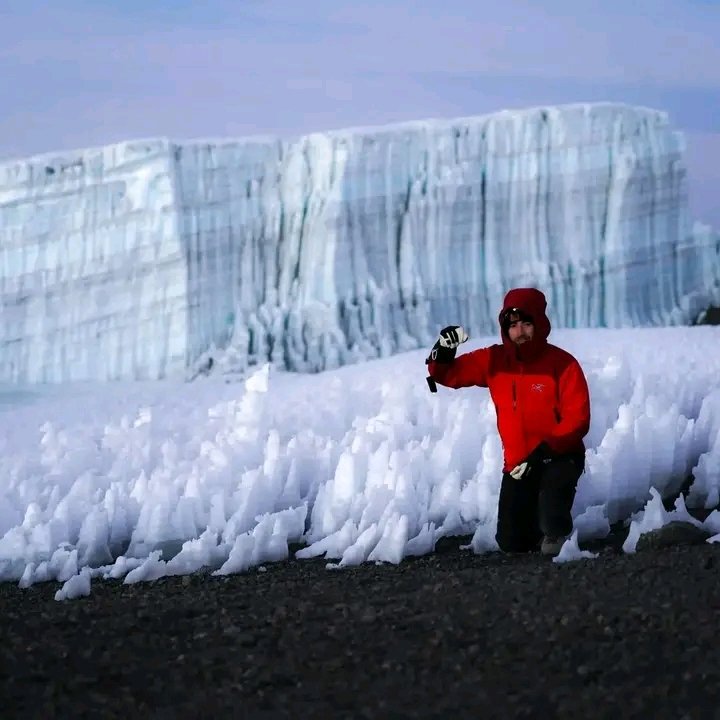
The Hardest Part: Altitude and Acclimatization of What Is the Hardest Part of Climbing Kilimanjaro? Expert Advice from Eddy Tour and Safaris
Altitude is the challenge that deserves the most respect.
At sea level, your body has access to plenty of oxygen. As you climb higher, atmospheric pressure decreases, meaning the amount of oxygen available with each breath also decreases.
Your body responds by trying to adapt.
You may breathe faster. Your heart rate can increase. Your body begins making physiological adjustments that help it function in an environment where oxygen is less readily available.
But these adaptations take time.
If you ascend faster than your body can adjust, you may experience altitude illness.
The CDC explains that travelers going above about 8,000 feet (2,400 meters) can be at risk of altitude illness, particularly when they ascend rapidly. Common symptoms of acute mountain sickness (AMS) include headache, tiredness, loss of appetite, nausea, and vomiting.
This is why a slow and steady approach is so important on Kilimanjaro.
What Does Altitude Sickness Feel Like of What Is the Hardest Part of Climbing Kilimanjaro? Expert Advice from Eddy Tour and Safaris
One of the most important things a first-time climber can learn is how to recognize the symptoms of altitude sickness.
A mild headache can happen for many reasons, including dehydration, fatigue, or changes in sleep. But at altitude, a headache combined with other symptoms should never simply be ignored.
Common symptoms of acute mountain sickness can include:
- Headache
- Fatigue
- Dizziness
- Nausea
- Loss of appetite
- Vomiting
- Difficulty sleeping
- Feeling unusually weak
The important thing is not to hide these symptoms from your guide.
Some climbers make the mistake of thinking, “I paid for this trip, so I have to reach the summit.”
That is the wrong mindset.
Your safety is more important than the summit.
A professional mountain guide should monitor how you are doing throughout the trek and make decisions based on your condition.
Why Being Fit Does Not Make You Immune
One of the biggest misconceptions about Kilimanjaro is that being physically fit means you cannot suffer from altitude sickness.
That is not true.
You can be a marathon runner, cyclist, football player, or experienced hiker and still experience altitude problems.
Fitness is extremely useful because it helps you handle the physical demands of walking for several hours a day. But altitude affects the body in a different way.
A very fit person may find the walking easy but still struggle with headaches or nausea at high elevation.
Likewise, someone who is not an elite athlete may successfully reach the summit because they pace themselves carefully and acclimatize well.
This is why we encourage climbers to prepare for both fitness and altitude.
The Importance of Pole Pole in What Is the Hardest Part of Climbing Kilimanjaro? Expert Advice from Eddy Tour and Safaris
If there is one phrase every Kilimanjaro climber should learn before arriving in Tanzania, it is:
Pole pole.
It means slowly, slowly.
You will hear your guide use these words frequently.
And there is a very good reason.
Walking slowly allows you to conserve energy and gives your body more time to adapt to increasing altitude.
You are not racing anyone.
Kilimanjaro is not about who reaches camp first.
A climber who arrives at camp feeling comfortable has generally managed the day better than someone who rushes ahead and arrives exhausted.
Your guide may deliberately maintain a pace that feels almost too slow at lower elevations. Trust the process.
The goal is not simply to reach the next camp.
The goal is to arrive at the summit in a condition that allows you to continue safely.
Why Your Itinerary Matters
One of the most important decisions you make before climbing Kilimanjaro is choosing your itinerary.
Not all itineraries provide the same amount of time for acclimatization.
Generally speaking, longer itineraries give your body more time to adapt.
Tanzania’s national parks information identifies several major Kilimanjaro routes, including Marangu, Machame, Umbwe, Lemosho, Londorosi, and Rongai.
Routes also differ in scenery, difficulty, traffic, camping arrangements, and the way they approach the mountain.
For a climber particularly concerned about altitude, the number of days should be one of the first things to discuss with a reputable tour operator.
A cheaper six-day itinerary may look attractive on paper, but saving one day is not necessarily worth reducing your acclimatization time.
When comparing Kilimanjaro packages, don’t look only at the price.
Ask:
How many days are included?
What is the daily elevation gain?
How does the itinerary support acclimatization?
What happens if I develop altitude symptoms?
These questions can tell you much more about the quality of an expedition than the price alone.
“Climb High, Sleep Low”
Another important acclimatization principle is often described as:
Climb high, sleep low.
This means that, where the itinerary allows, you may hike to a higher elevation during the day and then descend to a lower elevation to sleep.
This can help your body adapt to altitude while reducing the stress of sleeping at the highest possible elevation every night.
A good Kilimanjaro itinerary is therefore not simply a matter of connecting one camp to another.
The elevation profile matters.
An experienced operator should understand how to structure the trek in a way that gives climbers the best reasonable opportunity to acclimatize.
What Happens During Summit Night?
For many climbers, summit night is the toughest physical and mental part of Kilimanjaro.
But altitude is still the central reason it feels so difficult.
On summit night, you begin walking during the night, often after a short period of rest. Temperatures can be extremely cold, the trail becomes steep, and you are walking in darkness.
Most importantly, you are now operating at the highest elevations of the entire trek.
At this point, every step can feel slower.
You may take several breaths for each step.
You may feel tired even though you are moving at a very gentle pace.
This is where patience becomes essential.
The climb can feel almost like a conversation between your mind and your body:
“Can I take another step?”
Then another.
And another.
Eventually, the first light of dawn begins appearing across the horizon.
For many climbers, that moment changes everything.
The summit may still feel difficult, but you can finally see how far you have come.
The Mental Challenge of Altitude
Altitude doesn’t only affect your body.
It can affect your mood, concentration, appetite, sleep, and motivation.
A climber who normally feels confident and energetic may suddenly become quiet and withdrawn.
Someone may start wondering whether they can continue.
This is normal to some extent.
The combination of cold, limited sleep, physical exertion, and reduced oxygen can make the climb feel mentally exhausting.
This is another reason the relationship between climber and guide matters so much.
A good guide does more than show you the trail.
They observe.
They listen.
They notice changes in your walking, speech, energy, and behavior.
They also help you understand what is normal and what may require action.
How Can You Prepare for Altitude?
You cannot completely eliminate the risk of altitude illness, but you can prepare intelligently.
1. Choose a Longer Itinerary
If your schedule allows, consider an itinerary with more days on the mountain.
Gradual ascent is one of the most important strategies for reducing altitude illness risk. The CDC recommends gradual ascent and notes that once above approximately 9,000 feet, travelers should avoid rapidly increasing their sleeping elevation.
Your exact Kilimanjaro itinerary should be discussed with your operator and, where appropriate, a healthcare professional.
2. Train Before the Trek
Although fitness does not prevent altitude sickness, good physical preparation makes the trekking experience easier.
Focus on:
- Long-distance walking
- Hiking on hills or stairs
- Cardiovascular endurance
- Leg strength
- Core strength
- Regular aerobic exercise
Try to include longer walks carrying a backpack similar to what you expect to carry during the trek.
Training is not about becoming an elite athlete.
It is about making your body comfortable with several consecutive days of activity.
3. Walk Slowly
Don’t wait until you feel exhausted before slowing down.
Start slowly from day one.
Your guide may set a pace that feels unusually gentle.
That’s intentional.
The mountain rewards patience.
4. Stay Hydrated
Drink regularly throughout the day.
Dehydration can make you feel worse and may complicate an already demanding high-altitude environment.
However, don’t force excessive amounts of water simply because someone told you that “more is better.”
Drink consistently according to your needs and your guide’s advice.
5. Eat Even When You Don’t Feel Hungry
Altitude can reduce appetite.
Unfortunately, your body still needs energy.
Eat your meals and snacks even if you don’t feel particularly hungry.
Carbohydrate-rich foods can be useful during strenuous trekking because they provide readily available energy.
Your mountain crew will normally provide meals designed to support the demands of the trek.
6. Avoid Alcohol at Altitude
Alcohol can interfere with sleep and hydration and is not a good choice while your body is adapting to altitude.
The CDC specifically advises avoiding alcohol and heavy exercise during the first 48 hours after arriving at elevations above 8,000 feet.
7. Sleep and Rest
Rest is part of the climb.
Don’t feel guilty about going to bed early.
On Kilimanjaro, your body is working continuously to adapt to the environment, even while you are resting.
Use your evenings to eat, hydrate, organize your gear, and sleep.
When Should You Tell Your Guide?
The answer is simple:
As soon as you notice something unusual.
Don’t wait until your symptoms become severe.
Tell your guide if you experience:
- Persistent or worsening headache
- Repeated vomiting
- Severe dizziness
- Difficulty walking normally
- Confusion
- Extreme weakness
- Breathlessness that seems abnormal
- A persistent cough
- Major changes in your condition
Serious altitude illnesses can become life-threatening.
The CDC identifies high-altitude cerebral edema (HACE) and high-altitude pulmonary edema (HAPE) as serious conditions requiring immediate descent. Symptoms can include confusion or loss of coordination for HACE, and severe shortness of breath, weakness, or cough for HAPE.
This is why climbers should never feel embarrassed about telling their guides that they feel unwell.
Speaking up can save your climb—and potentially your life.
What Does Eddy Tour and Safaris Recommend?
Our advice to climbers is straightforward:
Don’t try to defeat Kilimanjaro. Work with the mountain.
You don’t need to prove that you are the strongest person in the group.
You don’t need to race other trekkers.
You don’t need to hide a headache because you are worried about disappointing your group.
Instead, focus on the things you can control.
Choose an appropriate itinerary.
Train before your trip.
Walk slowly.
Listen to your guide.
Eat and drink regularly.
Rest when necessary.
Pay attention to your body.
And most importantly, respect altitude.
The mountain has been there for thousands of years. There is no need to rush it.
The Hardest Part Is Often Knowing When to Slow Down
This may sound surprising, but one of the hardest things for ambitious climbers is learning to slow down.
At sea level, pushing harder often produces better performance.
On Kilimanjaro, that approach can work against you.
You need to think differently.
The goal is not maximum speed.
The goal is sustainable effort.
Imagine that the mountain is asking you to walk for several days rather than several hours.
Every decision you make on Day One can affect how you feel on summit night.
That is why experienced guides often emphasize a controlled pace from the very beginning.
Is Kilimanjaro Hard for Beginners?
Yes but beginners can successfully climb Kilimanjaro.
You do not need previous mountaineering experience for the standard trekking routes.
What you need is preparation, determination, realistic expectations, and a willingness to follow good mountain practices.
A first-time climber who understands altitude may actually be better prepared than an experienced athlete who assumes fitness is enough.
The key lesson is simple:
Kilimanjaro is less about being the strongest and more about managing yourself intelligently.
What Makes a Successful Kilimanjaro Climber?
In our experience, successful climbers tend to share several qualities.
They are patient.
They listen.
They don’t ignore symptoms.
They respect their guides.
They accept that some days will feel harder than others.
They don’t compare themselves constantly with other climbers.
And they understand that reaching Uhuru Peak is not guaranteed.
That last point is important.
A responsible mountain experience is not measured only by whether you stand on the summit.
It is also measured by whether you return safely.
The summit is the objective.
Safety is the priority.
Final Thoughts: Respect the Altitude
So, what is the hardest part of climbing Kilimanjaro?
For most climbers, the answer isn’t simply the steepness of the trail.
It isn’t the rainforest.
It isn’t even the cold.
It is altitude—and the challenge of giving your body enough time to adapt.
Kilimanjaro’s 5,895-meter summit creates an environment where oxygen availability is significantly lower than at sea level. That is why acclimatization should be at the center of your preparation and itinerary planning.
The good news is that you can prepare for this challenge.
You can choose a suitable itinerary.
You can train.
You can walk pole pole.
You can stay hydrated and nourished.
You can rest.
And you can communicate honestly with your guides.
Most importantly, you can approach the mountain with respect rather than ego.
At Eddy Tour and Safaris, we believe that a successful Kilimanjaro climb begins long before your boots touch the trail. It begins with good information, realistic preparation, and a clear understanding of what the mountain demands.
Kilimanjaro is challenging, but it is also an extraordinary experience.
There is something deeply rewarding about moving slowly through different ecological zones, watching the landscape change around you, meeting the people who make the expedition possible, and eventually standing on the roof of Africa.
Take your time.
Listen to your body.
Trust your guide.
And remember the most important Kilimanjaro lesson:
Pole pole slowly, slowly.
The mountain isn’t going anywhere.
Frequently Asked Questions
1. What is the hardest part of climbing Kilimanjaro?
For many climbers, altitude and acclimatization are the biggest challenges. As elevation increases, the body has less oxygen available, which can cause symptoms such as headache, fatigue, nausea, and dizziness.
2. Can a beginner climb Kilimanjaro?
Yes. Previous technical mountaineering experience is generally not required for standard trekking routes. However, beginners should prepare physically, choose an appropriate itinerary, and take altitude seriously.
3. Does being physically fit prevent altitude sickness?
No. Fitness can make the physical walking easier, but it does not make someone immune to altitude illness.
4. How can I reduce my risk of altitude sickness?
Gradual ascent and adequate acclimatization are among the most important measures. Choosing a longer itinerary can provide additional time for your body to adjust. Always discuss altitude-related medication with a qualified healthcare professional rather than self-medicating.
5. What does “pole pole” mean on Kilimanjaro?
“Pole pole” is Swahili for “slowly, slowly.” Guides use the phrase to encourage climbers to maintain a controlled pace, conserve energy, and give their bodies time to adjust to altitude.
6. What should I do if I develop altitude symptoms?
Tell your guide immediately. Do not hide symptoms because you are worried about missing the summit. Worsening symptoms or signs of serious altitude illness require immediate professional assessment and potentially descent.
7. Is the summit night the hardest day?
For many climbers, yes. Summit night combines cold temperatures, darkness, fatigue, steep terrain, and extreme altitude. The reduced oxygen at high elevation is a major reason it feels so demanding.
8. How many days should I spend climbing Kilimanjaro?
There is no single itinerary that is ideal for everyone, but more time generally allows for a more gradual ascent and better acclimatization opportunities. Tanzania’s national parks authority notes that visitors normally spend at least five days ascending and descending Kibo for acclimatization purposes.
9. What is the most important advice for a first-time climber?
Don’t rush. Prepare properly, choose a sensible itinerary, walk pole pole, communicate with your guide, and respect your body’s response to altitude.
10. Can I guarantee that I will reach Uhuru Peak?
No reputable operator should guarantee that every climber will summit. Individual responses to altitude vary, and safety decisions sometimes require turning around. A responsible climb prioritizes your health over reaching the summit.