
Planning a Safari the Whole Family Will Love
How to Choose the Best Family Safari Camps in Zanzibar and Tanzania: Comfort, Safety, and Fun;A family safari in Tanzania can be one of those rare holidays that everyone remembers for years.Children get to see elephants, giraffes, zebras, lions, and other wildlife in the real world rather than on a screen. Parents get the chance to experience Tanzania’s spectacular landscapes and wildlife while spending meaningful time together. And when Zanzibar is added to the trip, the adventure can finish with warm beaches, swimming, snorkeling, culture, and plenty of time to relax.
But there is one important decision that can make or break the experience: choosing the right safari camp.
The best family safari camp is not necessarily the most expensive one. It is the one that fits your children’s ages, your family’s comfort level, your itinerary, and the kind of experience you want to have.
Some families love the idea of sleeping in a traditional tent surrounded by nature. Others prefer a spacious lodge with a swimming pool, private bathroom, reliable electricity, and family rooms. Families travelling with teenagers may want more adventurous activities, while parents with young children may place greater importance on short game drives, flexible meal times, and easy access to medical facilities.
Tanzania has an enormous range of safari experiences. The country’s tourism authorities highlight destinations ranging from Serengeti and Ngorongoro to Tarangire, Arusha and other protected areas, while Zanzibar offers a very different but complementary island experience.
So, how do you choose?Let’s look at the most important things to consider when selecting the best family safari camps in Zanzibar and Tanzania.
1. Start With Your Children’s Ages
Before comparing camps, think about the ages of your children.A safari that works wonderfully for a 15-year-old may not be ideal for a four-year-old.
Young children generally need more flexibility. They may become tired during long game drives, want frequent meals, need afternoon naps, or simply lose interest after several hours in a vehicle.
Older children and teenagers are usually able to handle longer drives and may enjoy activities such as guided nature walks, cultural visits, photography, birdwatching, or other outdoor adventures.
This is why it is important to ask a camp or safari operator about age policies before booking.
Do not assume that every safari activity is suitable for every child. TANAPA’s current guidance, for example, places age restrictions on certain activities. Walking safaris are restricted to people above 12 years, while some other activities have different age requirements.
The safest approach is to give the camp your children’s exact ages and ask which activities are appropriate.
2. Decide Between a Luxury Lodge, Tented Camp, or Traditional Campsite
The word camp can mean very different things in Tanzania.
A luxury tented camp may have a king-size bed, private bathroom, hot shower, electricity, a dining area, a swimming pool, and excellent service.
A permanent safari camp may provide comfortable canvas tents with proper furniture and en-suite bathrooms.
A public campsite can be much simpler and is usually more appropriate for families who are comfortable with a basic outdoor experience.
TANAPA lists a variety of accommodation options inside national parks, ranging from campsites to lodges and other facilities.
For most first-time family safaris, a comfortable lodge or well-established tented camp is often the easiest option.
You still get the feeling of being in the wilderness without sacrificing too many of the comforts that make travelling with children easier.
If your family is experienced with camping and enjoys a more adventurous holiday, a simpler campsite may be an exciting choice.
The key is to match the accommodation to your family’s personality rather than choosing based only on photographs.
3. Put Safety Ahead of Luxury
Safety should always come before a beautiful swimming pool, fancy furniture, or an Instagram-worthy tent.
Remember that you are staying in or near a genuine wilderness environment.
Tanzania National Parks Authority advises visitors to keep a safe distance from wildlife, avoid approaching animals, follow park rules, remain vigilant around campsites, and listen to guides. Visitors are also instructed not to make loud noises or disturb wildlife.
When choosing a family camp, ask:
- Is the camp fenced or unfenced?
- How are guests escorted between tents and common areas after dark?
- Are children allowed to walk around independently?
- Is there a night watchman or trained camp staff?
- How close is the camp to the nearest medical facility?
- Does the camp have reliable communication equipment?
- Is there a first-aid kit?
- What happens in case of an emergency?
- Are there clear rules for children around wildlife?
These questions are especially important when travelling with young children.
A camp that is unfenced can provide an incredible wilderness experience, but it also means you must take the camp’s safety procedures seriously.
Children should never be allowed to wander around a safari camp alone.
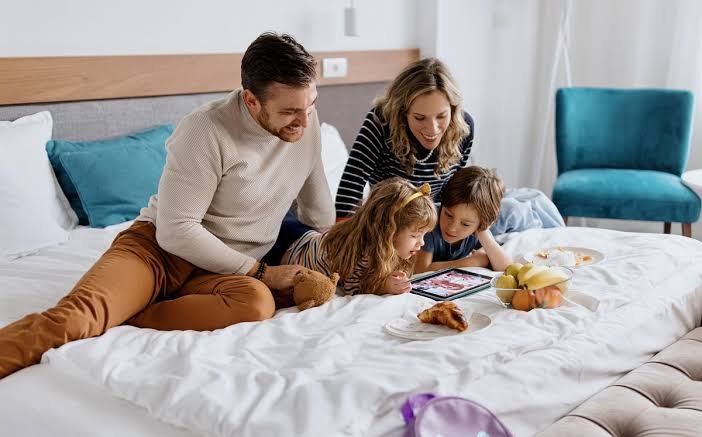
4. Look for Family-Friendly Rooms:How to Choose the Best Family Safari Camps in Zanzibar and Tanzania: Comfort, Safety, and Fun
Accommodation can make a huge difference to family comfort.
Before booking, find out whether the camp offers:
Family tents or family rooms:
These can make bedtime much easier, especially when travelling with younger children.
Interconnecting rooms:
Useful for families with older children who want a little independence while remaining close to their parents.
Extra beds:
Not every safari tent is designed for additional beds, so confirm this in advance.
Private bathrooms:
An en-suite bathroom is usually worth prioritising when travelling with children.
Hot water:
Ask whether hot water is available continuously or only at particular times.
Electricity:
Find out whether rooms have 24-hour power or whether charging is done in the main guest area.
Tanzania Tourism’s official trip-planning guidance also recommends checking accommodation arrangements, accessibility, transportation, and conditions in advance.
Never rely solely on the phrase “family friendly.” Ask exactly what that means at the particular property.
5. Choose a Location That Works for Your Family
Tanzania is huge, and safari distances can be surprisingly long.A spectacular camp can become less attractive if reaching it requires an exhausting road journey with young children.
Think carefully about the balance between wildlife, travel time, and comfort.For a first family safari, destinations such as Tarangire, Lake Manyara, Ngorongoro, and Serengeti can be combined depending on your time and interests.
The Serengeti is famous for its vast plains and wildlife spectacles, while Ngorongoro offers a compact wildlife environment within the dramatic crater. Arusha National Park provides another option with forests, crater lakes, and Mount Meru landscapes.
You do not have to visit every famous destination.
In fact, with children, travelling more slowly can be better.
Two or three nights in one camp can be more enjoyable than changing accommodation every night.
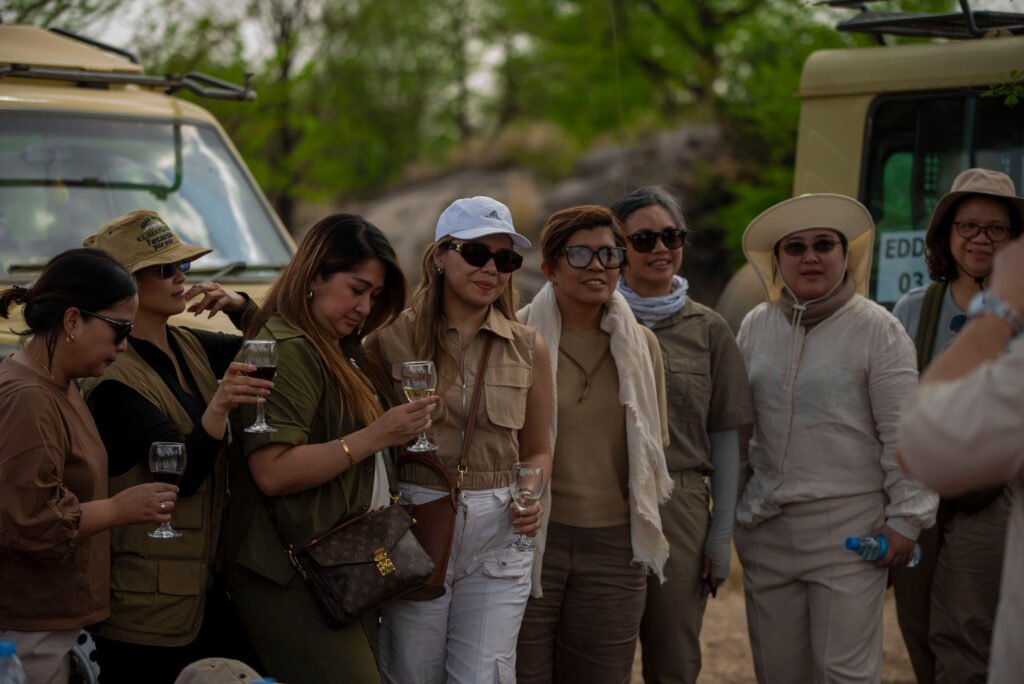
6. Think About the Length of Game Drives:How to Choose the Best Family Safari Camps in Zanzibar and Tanzania: Comfort, Safety, and Fun
One of the biggest mistakes families can make is assuming that children will happily sit in a safari vehicle for eight hours every day.
Some will.
Others absolutely will not.
Ask the safari operator whether private game drives are available. A private vehicle gives your family much greater flexibility.
If your child becomes tired, you can return to camp.
If everyone is enjoying a wildlife sighting, you can stay longer.
If the children need a bathroom break, you can plan accordingly.
A private vehicle can therefore be more valuable to a family than upgrading from a good camp to an extremely luxurious camp.
TANAPA’s guidance emphasises following park rules, observing speed limits, staying on permitted routes, and following guide instructions.
A good family safari is not about rushing from one animal sighting to another. It is about giving everyone time to enjoy the experience.
7. Check the Food Before You Book
Food is an underrated part of a family safari.
Adults may be excited about trying local dishes, but younger children can sometimes be surprisingly cautious about unfamiliar food.
Ask the camp:
- Can they prepare children’s meals?
- Are vegetarian options available?
- Can they accommodate allergies?
- Can they provide simple foods such as rice, pasta, potatoes, fruit, or eggs?
- Are early breakfasts available before game drives?
- Can they prepare packed lunches?
- Are snacks available during the day?
If your child has a serious food allergy, communicate this well before arrival and confirm that the camp understands the requirement.
It is also useful to carry familiar snacks for long transfers and flights.
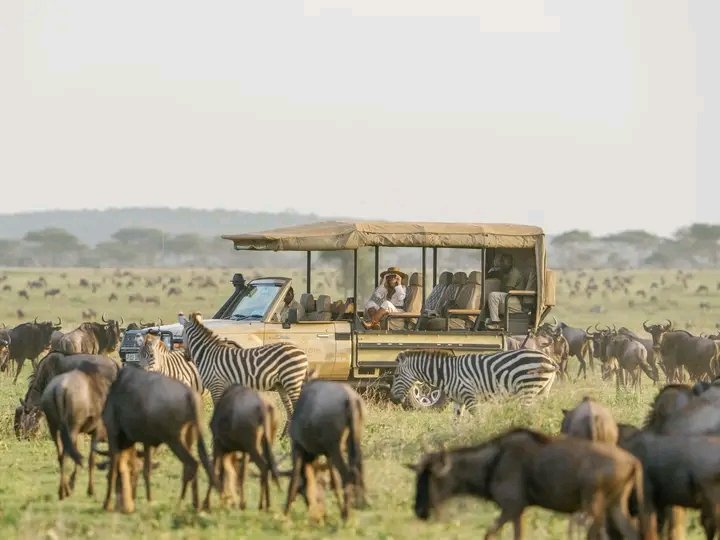
8. Look for Activities Beyond Game Drives:How to Choose the Best Family Safari Camps in Zanzibar and Tanzania: Comfort, Safety, and Fun
The best family safari is not necessarily one that spends every waking hour looking for lions.Children often enjoy having variety.Depending on their age and the location, family-friendly experiences can include:
- Wildlife viewing
- Birdwatching
- Cultural visits
- Village experiences
- Nature walks where permitted
- Photography
- Storytelling around the campfire
- Cooking experiences
- Traditional crafts
- Beach activities in Zanzibar
- Snorkeling and marine experiences
- Spice and cultural tours
Tanzania’s official tourism information promotes safari, wildlife, culture, beaches, islands, nature, and heritage as part of the country’s wider travel experience.This variety is one reason combining a Tanzania safari with Zanzibar can work so well for families.
9. Consider Adding Zanzibar After the Safari
After several days of early mornings, dusty roads, wildlife sightings, and long game drives, Zanzibar can be the perfect place to slow down.
Instead of treating Zanzibar as a completely separate holiday, think of it as the relaxation chapter of your family safari.
Spend your safari days exploring Tanzania’s wildlife areas, then fly to Zanzibar for a few days of swimming, beach time, culture, and rest.
Tanzania’s official tourism site specifically presents Zanzibar alongside safari destinations as one of the country’s major travel experiences.
Families can choose between different parts of the island depending on whether they want a quieter beach holiday, easy access to cultural attractions, or a resort-style experience.
When choosing accommodation in Zanzibar, look for:
- Family rooms or villas
- Safe swimming areas
- Child-friendly pools
- Easy beach access
- Shade
- Flexible meal options
- Babysitting services if required
- Family activities
- Reliable transfers
- Access to medical services
And remember that Zanzibar is not simply an extension of the safari. It offers a completely different pace.
That contrast can be exactly what makes the holiday special.
10. Check Medical and Emergency Arrangements
Parents naturally worry about what happens if a child becomes sick during a safari.You cannot eliminate every risk while travelling, but you can plan intelligently.
Tanzania’s official tourism guidance recommends consulting health professionals about vaccinations and medicines before travelling and strongly encourages appropriate travel insurance, including considering evacuation coverage for remote parks.Before booking, ask:
- Where is the nearest clinic?
- Where is the nearest hospital?
- Does the operator have emergency procedures?
- Is there reliable communication from camp?
- What happens if a guest needs evacuation?
- Does the safari company provide emergency support?
- Does your travel insurance cover remote safari areas?
Also speak with your doctor or a qualified travel-health professional well before departure about vaccinations, malaria prevention, and other health considerations relevant to your family.Do not rely on advice from a random travel forum when it comes to children’s health.
11. Choose a Safari Operator Carefully
Even the best camp can be part of a poor safari experience if the operator is unreliable.Look for an established operator with:
- Experienced guides
- Properly maintained safari vehicles
- Clear emergency procedures
- Transparent pricing
- Good communication
- Appropriate licences and permits
- Positive recent reviews
- Experience with family safaris
- Clear cancellation policies
TANAPA specifically advises visitors to use licensed operators and roadworthy vehicles and to follow park regulations.
Ask for the full itinerary rather than just a package price.
You want to know what is included.
For example:
- Airport transfers
- Park fees
- Accommodation
- Meals
- Game drives
- Private vehicle
- Guide
- Flights between destinations
- Zanzibar transfers
- Activities
- Drinks
- Tips
- Travel insurance
Official Tanzania Tourism safari packages commonly distinguish between included and excluded services, so this is a useful model to follow when comparing offers.
A cheap quotation may not actually be cheaper once you add all the extras.
12. Don’t Automatically Choose the Most Expensive Camp
Luxury is wonderful, but it does not automatically equal the best family experience.
Sometimes a moderately priced camp in a better location with an excellent guide can provide a much more memorable trip than a five-star property that is far from the action.
Think about where your money creates the most value.
For families, spending more on a private safari vehicle and experienced guide may be more useful than spending extra on luxury room decorations.
Similarly, paying for a comfortable family room may be more important than upgrading to the most expensive suite.
Ask yourself:
What will my children actually remember?
It is probably not the brand of the bathroom fittings.
They are more likely to remember watching an elephant walk past the vehicle, seeing their first lion, swimming in Zanzibar, hearing stories around a campfire, or waking up to the sounds of the African bush.
13. Choose the Right Time of Year
Timing affects weather, wildlife, crowds, prices, and overall comfort.
Tanzania Tourism recommends planning around the country’s different seasons and checking weather conditions close to departure.
Families should consider:
School holidays:
These can make travel easier for older children but may also coincide with busier periods.
Wildlife priorities:
If seeing a particular wildlife spectacle is important, plan the safari around the relevant seasonal patterns rather than simply choosing dates based on price.
Weather:
Young children may struggle more with extreme heat, long drives, or uncomfortable conditions.
Crowds:
If you prefer a quieter experience, ask about less busy periods.
There is no single “best” month for every family.
The best time depends on what you want to see and how your family travels.
14. Make Sure There Is Something for Everyone
A successful family safari requires compromise.
Parents may want photography.
Children may want swimming.
Teenagers may want adventure.
Younger children may want animals and snacks.
One parent may want luxury.
The other may want authentic wilderness.
The best itinerary creates room for all of these interests.
For example, a family could spend several days on safari, include a relaxed afternoon at camp, and then finish with several nights in Zanzibar.
That gives the trip a natural rhythm:
Adventure → Wildlife → Relaxation → Beach → Family time
Instead of trying to pack every activity into every day, leave some breathing room.
15. Ask These Questions Before Paying a Deposit
Before confirming your family safari camp, send the operator a simple list of questions.
Accommodation
- Do you have family rooms or family tents?
- Can children stay in the same unit as their parents?
- Are extra beds available?
- Are bathrooms private?
- Is hot water available?
- Is electricity available in the room?
Safety
- Is the camp fenced?
- How are guests escorted after dark?
- What wildlife is commonly seen around camp?
- Are there age restrictions on activities?
- What emergency procedures are in place?
Safari
- Can we have a private vehicle?
- How long are typical game drives?
- Can the itinerary be adjusted for children?
- Are there activities outside game drives?
Food
- Can you prepare children’s meals?
- Can you accommodate allergies?
- Are packed lunches available?
Logistics
- How long are transfers?
- Are internal flights available?
- What happens if a flight or road transfer is delayed?
- Is airport pickup included?
Costs
- Are park fees included?
- Are all meals included?
- Are drinks included?
- Are activities included?
- Are transfers included?
- What additional fees should we expect?
If an operator avoids straightforward questions about safety, accommodation, or pricing, that should make you pause.
A Sample Family Safari and Zanzibar Structure
Every family is different, but a simple itinerary can look something like this:
Days 1–2: Arusha
Arrive, relax, recover from the journey, and prepare for safari.
Days 3–4: Tarangire or Lake Manyara area
Enjoy shorter game drives and introduce children to the safari experience.
Days 5–7: Ngorongoro and/or Serengeti
Spend several nights in a comfortable family-friendly camp and enjoy wildlife viewing at a relaxed pace.
Day 8: Travel to Zanzibar
Take a flight rather than spending another exhausting day on the road where practical.
Days 9–12: Zanzibar
Enjoy swimming, beach time, cultural activities, and relaxed family days.
Day 13: Departure
This is only an example. The ideal itinerary depends on your children’s ages, budget, interests, arrival point, and the wildlife experiences you want.
Family Safari Packing Essentials
Families should pack with both safari and beach conditions in mind.
Useful items include:
- Lightweight clothing
- A warm layer for early morning drives
- Comfortable walking shoes
- Sun hats
- Sunglasses
- Sunscreen
- Insect repellent
- Reusable water bottles
- Personal medicines
- Basic first-aid supplies
- Binoculars
- Camera
- Power bank
- Swimwear
- Beach sandals
- Small daypack
- Familiar snacks for children
- Copies of important travel documents
TANAPA’s trip-planning guidance similarly recommends essentials such as identification and permits, payment methods, communication devices, water bottles, and sun protection.
Keep children’s favourite comfort items close by, especially during long transfers.
A familiar book, small toy, tablet with headphones, or favourite snack can make a surprisingly big difference.
The Golden Rule: Choose the Experience, Not Just the Camp
When families compare safari camps, it is easy to become distracted by photographs.
One camp has a beautiful pool.
Another has huge tents.
Another has an impressive dining room.
Another has a spectacular view.
But the most important questions are often less glamorous:
Is the camp safe?
Is it suitable for my children’s ages?
Is the location convenient?
Are the guides experienced?
Can the itinerary be flexible?
Will the food work for my children?
What happens if something goes wrong?
Will everyone actually enjoy staying here?
That is what separates a good family safari from a great one.
Final Thoughts
Choosing the best family safari camps in Zanzibar and Tanzania is less about finding one perfect property and more about finding the right combination of comfort, safety, location, activities, people, and flexibility.
Tanzania offers an extraordinary range of wildlife and landscapes, from the Serengeti and Ngorongoro to Tarangire and other national parks, while Zanzibar adds beaches, culture, and a slower island rhythm.
For families, the ideal trip is usually one that does not try to do everything.
Choose comfortable accommodation.
Give yourself enough time in each destination.
Consider a private vehicle if your budget allows.
Ask about children’s age restrictions.
Prioritise experienced guides and safety procedures.
Make sure the food and rooms work for your family.
And leave enough time to simply enjoy being together.
Most importantly, remember that a safari is not a race.
Your children do not need to see every animal in Tanzania.
They need time to look out of the vehicle window and realise that the giraffe they are watching is real. They need the chance to ask questions, laugh at the monkeys, hear the sounds of the bush, splash in a Zanzibar pool, walk along the beach, and experience something completely different from everyday life.
Those are the moments that turn a family holiday into a family story.
Frequently Asked Questions
1. Is Tanzania suitable for a family safari with children?
Yes. Tanzania offers a wide range of safari and accommodation experiences, but families should choose destinations, camps, activities, and travel times according to the children’s ages. Some safari activities have specific age restrictions, so always confirm these before booking.
2. What is the best type of safari accommodation for families?
For many families, a comfortable lodge or permanent tented camp with private bathrooms and family accommodation provides a good balance between adventure and comfort.
3. Is a private safari vehicle worth the extra cost for families?
Often, yes. A private vehicle gives families greater control over departure times, breaks, game-drive length, and the overall pace of the safari.
4. Can we combine a Tanzania safari with Zanzibar?
Absolutely. Zanzibar can be an excellent way to relax after a safari, with beaches, cultural experiences, and water-based activities providing a contrast to days spent exploring wildlife areas.
5. Are safari camps safe for children?
They can be, provided families follow camp rules and choose reputable operators. Wildlife remains unpredictable, so children should always follow adult and guide instructions and should never wander around a safari camp independently.
6. What should parents ask a safari operator before booking?
Ask about family rooms, age restrictions, safety procedures, medical support, food options, private vehicles, transfer times, emergency plans, and exactly what is included in the price.
7. Should families choose luxury safari camps?
Luxury is not essential. The most important factors are safety, cleanliness, location, quality of guiding, family-friendly accommodation, and a suitable itinerary. A moderately priced camp can provide an exceptional experience when these fundamentals are right.
8. How many nights should a family spend on safari?
There is no universal answer, but families often benefit from staying at least two nights in a destination rather than moving every day. This reduces packing, unpacking, and long travel days.
9. What is the most important thing to remember when travelling with children?
Keep the itinerary realistic. Allow time for rest, choose activities appropriate for their ages, and do not be afraid to slow down. A relaxed family safari is usually more enjoyable than an itinerary packed with activities.
Ready to Plan Your Family Safari?
The right family safari is not simply a holiday where parents take their children to see wildlife. It is an opportunity to introduce them to nature, different cultures, new landscapes, and experiences they may remember for the rest of their lives.
Start by deciding what matters most to your family: wildlife, comfort, adventure, beaches, culture, or a mixture of everything.
Then choose your destinations, compare family-friendly camps, confirm safety and age policies, and build an itinerary that leaves room for everyone to enjoy the journey.
For official planning information, Tanzania Tourism provides guidance on destinations, travel, health, safety, accommodation, and safari experiences, while TANAPA provides current information on national parks, accommodation, park rules, fees, and visitor safety.
The goal is simple: come home with tired feet, hundreds of photographs, plenty of stories, and a family that is already talking about the next African adventure.