
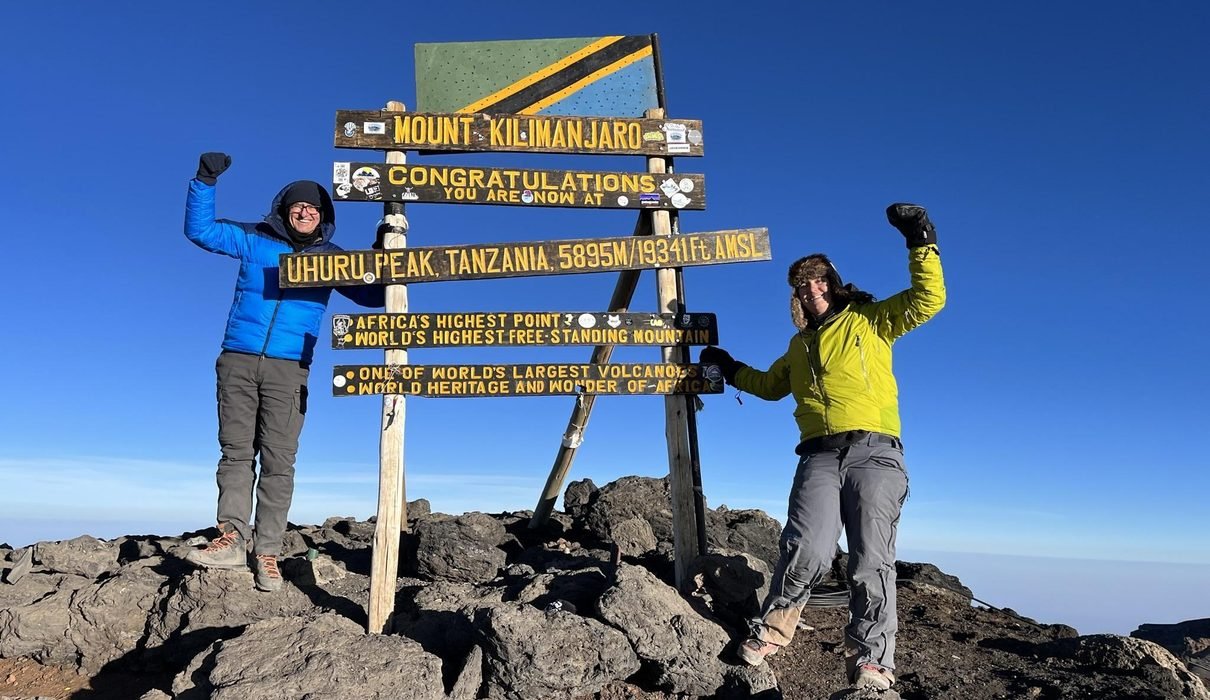
Climbing Mount Kilimanjaro through the 6-day Machame Route is a great adventure for travelers who enjoy hiking, mountain scenery, and outdoor challenges. Known as the Whiskey Route, Machame is one of the most popular trails on Kilimanjaro. It takes climbers through green rainforests, open moorlands, rocky valleys, and the cold mountain slopes before reaching Uhuru Peak, the highest point in Africa at 5,895 metres above sea level.
The six-day Machame Route is a shorter version of the seven-day climb. It follows the same general trail but combines two trekking stages into one long day. This makes the climb more demanding and gives your body less time to adjust to the altitude. For this reason, the six-day itinerary is better suited to fit hikers with previous trekking experience, particularly those who already know how their bodies respond to high elevations.
During the journey, you will walk through the beautiful Shira Plateau, pass the famous Lava Tower, climb the Barranco Wall, and prepare for your summit attempt at Barafu Camp. Each day offers different scenery and challenges, making the climb an interesting experience from the beginning to the final descent.
At Eddy Tours & Safaris, we help travelers plan Kilimanjaro climbing trips with experienced mountain guides and support teams. Whether you are planning your adventure in 2027, 2028, or 2029, our team can help you understand the route, prepare for the climb, and choose an itinerary that suits your fitness and travel plans.
6-Day Machame Route Kilimanjaro Climbing Overview
| Tour details | Information |
|---|---|
| Tour name | Best 6-Day Machame Route Kilimanjaro Climb |
| Destination | Mount Kilimanjaro, Tanzania |
| Duration | 6 days and 5 nights |
| Starting point | Machame Gate |
| Finishing point | Mweka Gate |
| Maximum altitude | 5,895 metres |
| Difficulty | Challenging |
| Accommodation | Mountain camping |
| Main summit | Uhuru Peak |
| Starting town | Moshi |
| Best climbing months | January–March and June–October |
| Suitable for | Fit and well-prepared hikers |
| Tour type | Guided Kilimanjaro climbing expedition |
| Price | Available on request |
Why Choose the 6-Day Machame Route?
The Machame Route is well known for its beautiful landscapes and changing vegetation. Unlike routes that follow the same trail during the ascent and descent, Machame approaches the summit from the southwest and descends through the Mweka Route. This gives climbers the opportunity to see different parts of Kilimanjaro during their expedition.
One of the main attractions is the variety of scenery. The climb begins in a thick rainforest where you may see birds and monkeys before continuing into open moorland. Higher up, the landscape becomes rocky, with fewer plants and wide views of the mountain. The trail also passes several famous locations, including Lava Tower, Barranco Wall, and the southern slopes of Kibo.
The six-day itinerary is particularly suitable for travelers who have limited time but still want to experience the Machame Route. However, it is important to understand that completing the climb in six days requires a good level of fitness and careful attention to altitude-related symptoms. If your schedule allows, the seven-day Machame Route provides an additional night at Karanga Camp and is generally a better choice for acclimatization.
Complete 6-Day Machame Route Kilimanjaro Itinerary
Day 1: Moshi to Machame Gate – Machame Camp
Starting altitude: 1,800 metres
Finishing altitude: Approximately 3,000 metres
Distance: 11 km
Hiking time: 5–7 hours
Accommodation: Machame Camp
Your Kilimanjaro adventure begins in Moshi, where you meet your mountain guide and support team before driving to Machame Gate. The drive takes you through local villages, farmland, and the green lower slopes of Kilimanjaro. Once you arrive at the gate, your guide will complete the park registration process while the porters organize the camping equipment and other supplies needed for the climb.
After registration, you begin walking through Kilimanjaro’s rainforest. The trail is surrounded by tall trees, thick vegetation, and many different plants. Depending on the weather, the ground may be wet and muddy, especially after rainfall. You may also hear birds or see monkeys moving through the trees. The forest provides plenty of shade, although the continuous uphill walking can still be tiring.
Your guide will encourage you to walk slowly and maintain a comfortable pace throughout the day. This is important because climbing Kilimanjaro is not about walking quickly. You need to save energy for the higher sections of the mountain while giving your body time to adjust to the increasing altitude.
By late afternoon, you arrive at Machame Camp, where the support team will have prepared the camping area. After settling into your tent, you can enjoy a warm meal and relax before the following day’s climb. Temperatures may become cooler during the evening, so it is advisable to keep warm clothing nearby.
Meals: Lunch and dinner
Overnight: Machame Camp
Day 2: Machame Camp to Shira Camp
Starting altitude: Approximately 3,000 metres
Finishing altitude: Approximately 3,840 metres
Distance: 5 km
Hiking time: 4–6 hours
Accommodation: Shira Camp
After breakfast, you leave Machame Camp and continue uphill toward Shira Camp. The trail gradually moves out of the rainforest and into the heath and moorland zone. The tall trees disappear, and the landscape becomes more open, with shorter vegetation, rocky paths, and views of the surrounding mountain slopes.
Although the distance is shorter than the first day’s trek, the climb includes several steep sections. You will gain considerable altitude, which may make walking feel more difficult. Your guide will encourage regular breaks and a slow pace to help you manage the ascent comfortably.
As you approach the Shira Plateau, the scenery becomes wider and more open. On clear days, you can enjoy views of Kibo, Kilimanjaro’s main volcanic summit. The plateau is one of the most interesting parts of the Machame Route because of its volcanic landscape and the contrast between the mountain’s lower and upper environments.
When you arrive at Shira Camp, you will have time to rest and enjoy the surroundings. Your guide may recommend a short walk around the camp if conditions and your health allow. Since you are now sleeping above 3,800 metres, it is important to pay attention to how you feel and report any headache, nausea, or unusual tiredness.
Meals: Breakfast, lunch, and dinner
Overnight: Shira Camp
Day 3: Shira Camp to Lava Tower – Barranco Camp
Starting altitude: Approximately 3,840 metres
Highest point: Lava Tower, approximately 4,630 metres
Finishing altitude: Approximately 3,960 metres
Distance: 10–11 km
Hiking time: 6–8 hours
Accommodation: Barranco Camp
The third day is an important part of the Machame Route because you will climb to a higher altitude before descending to sleep at Barranco Camp. After breakfast, you leave Shira Camp and follow the trail toward Lava Tower, one of the mountain’s well-known volcanic rock formations.
As you continue climbing, the landscape becomes drier and rockier. There are fewer plants, and the air becomes noticeably thinner. Walking may feel more demanding, even though your guide will maintain a slow pace. This is a good time to pay attention to your breathing, energy levels, and any symptoms that may be related to altitude.
You eventually reach the Lava Tower area at approximately 4,630 metres. Depending on the group’s condition and weather, you may stop for lunch or a short break before beginning the descent toward Barranco Camp. This part of the itinerary allows you to spend time at a higher elevation during the day before sleeping lower, which can help with acclimatization.
The descent toward Barranco Valley passes through a landscape with unusual mountain plants, including giant groundsels. As you approach the campsite, you will see the impressive Barranco Wall rising above the valley. After arriving at camp, you can rest, enjoy dinner, and prepare for the next day’s long trek toward Barafu Camp.
Meals: Breakfast, lunch, and dinner
Overnight: Barranco Camp
Day 4: Barranco Camp to Barafu Camp via Karanga Valley
Starting altitude: Approximately 3,960 metres
Finishing altitude: Approximately 4,670 metres
Distance: 9–10 km
Hiking time: 7–10 hours
Accommodation: Barafu Camp
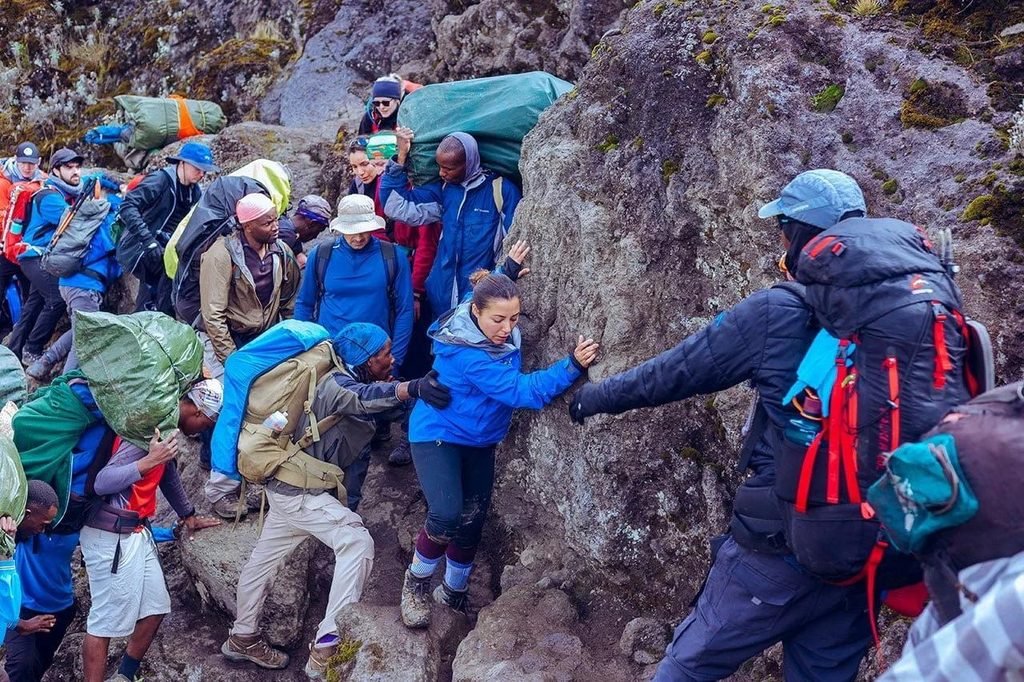
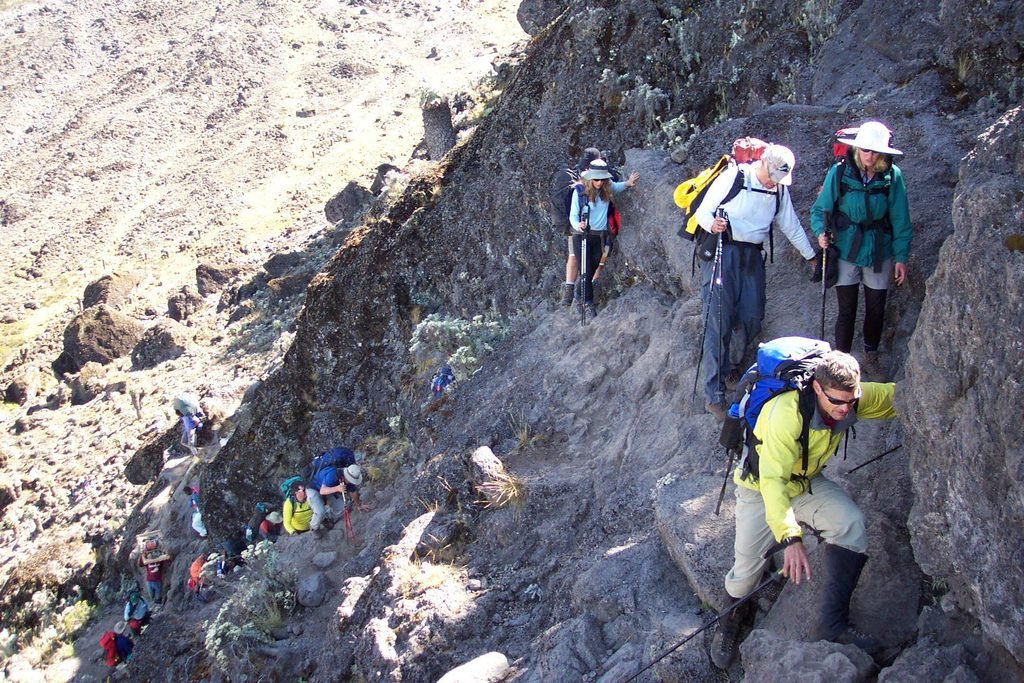
Day four is one of the most demanding days of the six-day Machame Route. After breakfast, you begin by climbing the famous Barranco Wall, a steep rocky section that requires careful movement. Although technical climbing equipment is not normally needed, you will use your hands for balance in some places. Your guide will help you through the more difficult sections and ensure that the group moves safely.
After reaching the top of Barranco Wall, the trail continues across several ridges and valleys. You will descend into Karanga Valley before climbing again toward the Karanga area. The surrounding landscape is mostly rocky, with very little vegetation. On clear days, you may enjoy views of Kibo and the surrounding mountain slopes.
On the seven-day Machame Route, climbers normally spend the night at Karanga Camp. However, the six-day itinerary continues directly toward Barafu Camp. This makes the day’s trek longer and leaves less time to rest before the summit attempt. It is important to maintain a steady pace and avoid unnecessary physical effort.
You will arrive at Barafu Camp in the afternoon, depending on your group’s walking speed. The support team will prepare an early meal while your guide explains the summit-night arrangements. You will need to organize your warm clothing, headlamp, gloves, and other essential items before resting. The summit attempt usually begins around midnight, so you will have only a limited amount of time to sleep.
Meals: Breakfast, lunch, and dinner
Overnight: Barafu Camp
Day 5: Barafu Camp to Uhuru Peak – Mweka Camp
Starting altitude: Approximately 4,670 metres
Summit altitude: 5,895 metres
Finishing altitude: Approximately 3,100 metres
Distance: Approximately 16–18 km
Hiking time: 12–16 hours or longer
Accommodation: Mweka Camp
Summit day is the most challenging part of your Kilimanjaro expedition. You will normally wake up late at night and prepare for the final ascent toward Uhuru Peak. After a light meal or warm drink, you begin walking uphill with your headlamp, following your guide through the darkness.
The trail climbs steeply over rocky ground and loose volcanic scree. Temperatures can fall well below freezing, and strong winds may make conditions even colder. At this altitude, walking becomes more difficult because there is less oxygen available. Your guide will encourage a very slow pace and monitor how everyone is feeling throughout the ascent.
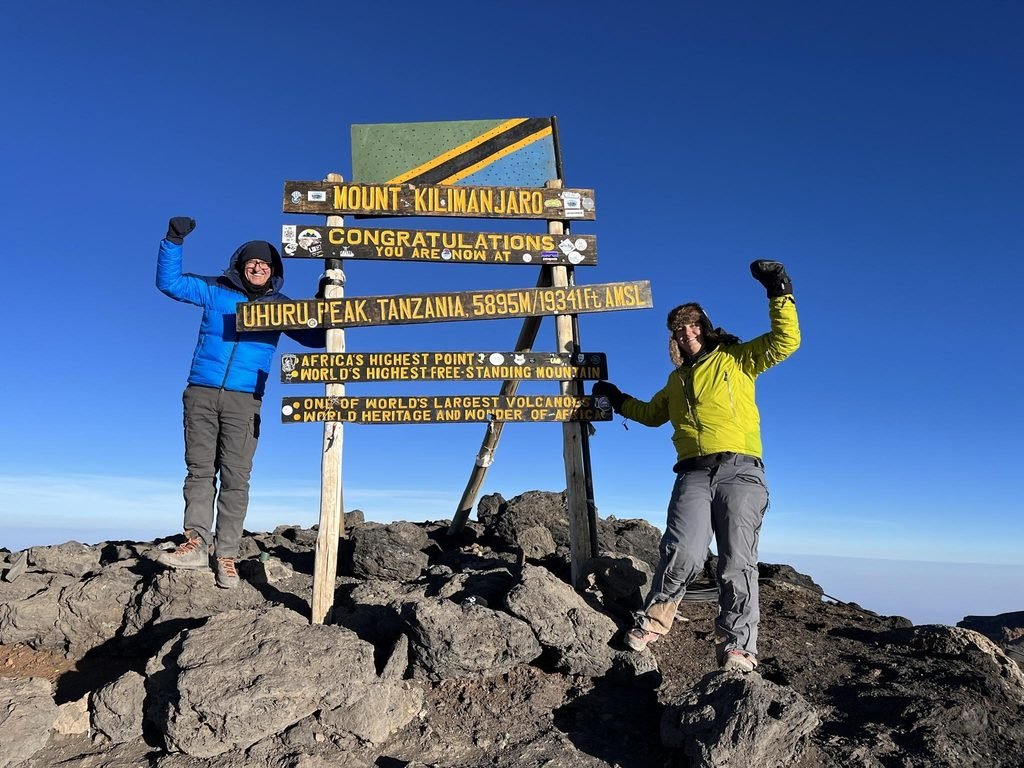
After several hours of climbing, you reach Stella Point on the crater rim at approximately 5,756 metres. If your health and the weather allow, you continue toward Uhuru Peak, the highest point in Africa. The final section follows the crater rim, where you may see glaciers and wide mountain views when conditions are clear.
Reaching Uhuru Peak is a special moment for many climbers. You may have a short opportunity to take photographs and appreciate the achievement before beginning the descent. However, the guide will limit the time spent at the summit because of the extreme altitude and cold conditions.
After descending to Barafu Camp, you may stop for food and a short rest before continuing downhill toward Mweka Camp. The descent is long and can be tiring, especially after the demanding summit ascent. By the time you reach Mweka Camp, you will be at a considerably lower elevation, where you can enjoy dinner and rest for the night.
Meals: Breakfast, lunch, and dinner
Overnight: Mweka Camp
Day 6: Mweka Camp to Mweka Gate – Return to Moshi
Starting altitude: Approximately 3,100 metres
Finishing altitude: Approximately 1,640 metres
Distance: 10 km
Hiking time: 3–5 hours
Accommodation: End of mountain expedition
After breakfast at Mweka Camp, you begin the final walk down through Kilimanjaro’s rainforest. The trail gradually descends through green vegetation and tall trees as the weather becomes warmer and more humid. Depending on rainfall, some sections may be muddy or slippery, so careful walking is still important.
This final stage is generally easier than the previous days, although your legs may feel tired after the long summit descent. As you walk through the forest, you will have time to reflect on the experience and enjoy the mountain’s lower landscapes.
When you arrive at Mweka Gate, your guide completes the park exit procedures. Climbers who meet the relevant summit requirements may receive their climbing certificates. You will then meet your driver and return to Moshi, where you can relax and prepare for your onward journey.
Your six-day Machame Route expedition ends in Moshi. Depending on your travel plans, you can spend another night in town, continue with a Tanzania wildlife safari, or travel to Zanzibar for a beach holiday.
Meals: Breakfast and lunch, depending on arrangements
End of tour: Moshi
Is the 6-Day Machame Route Difficult?
Yes. The six-day Machame Route is a challenging climb that requires good physical fitness and careful preparation. You will walk for several hours each day, sometimes on steep or rocky terrain. The higher sections of the mountain can be especially demanding because of the reduced oxygen availability.
One of the biggest challenges is the short acclimatization schedule. On day four, you walk from Barranco Camp to Barafu Camp without spending the night at Karanga. You then begin the summit attempt after only a few hours of rest. This makes the final stages physically demanding, particularly for climbers who have never been to high altitude.
If you are planning your first Kilimanjaro climb, consider the seven-day Machame Route instead. The extra day provides more time for acclimatization and makes the approach to summit night less rushed.
What Is the Best Time to Climb the Machame Route?
Mount Kilimanjaro can be climbed throughout the year, but some months generally have better trekking conditions. January to March and June to October are popular because they are often relatively dry. During these periods, climbers may experience clearer views and less rainfall on the lower trails.
April and May are generally wetter months, while November and December may also bring seasonal rain. However, mountain weather can change quickly at any time of year. Even during the dry season, you should be prepared for rain, strong winds, and freezing temperatures near the summit.
If you are planning your Kilimanjaro adventure for 2027, 2028, or 2029, contact Eddy Tours & Safaris to discuss suitable travel dates and available climbing arrangements.
What Is Included in the 6-Day Machame Route Package?
A typical guided Machame climbing package includes professional mountain guides, porters, a mountain cook, camping equipment, meals during the trek, required park fees, and transport between Moshi and the park gates. The support team helps carry the main equipment and prepares meals and campsites throughout the expedition.
However, exact inclusions depend on the package you book. Before confirming your trip, request a written quotation showing all included services, accommodation arrangements, and any additional costs.
Common Package Inclusions
- Professional Kilimanjaro mountain guides and support crew
- Required national park entry and camping fees
- Mountain camping accommodation
- Meals during the expedition
- Group camping and cooking equipment
- Transfers between Moshi and the mountain gates
- Park rescue fees and emergency arrangements as specified in the quotation
Common Package Exclusions
- International and domestic flights
- Tanzania visa fees
- Travel insurance
- Personal hiking equipment
- Tips for guides, porters, and cooks
- Personal expenses
- Equipment rental unless specified
- Hotel accommodation before and after the climb unless included
Essential Packing List for the Machame Route
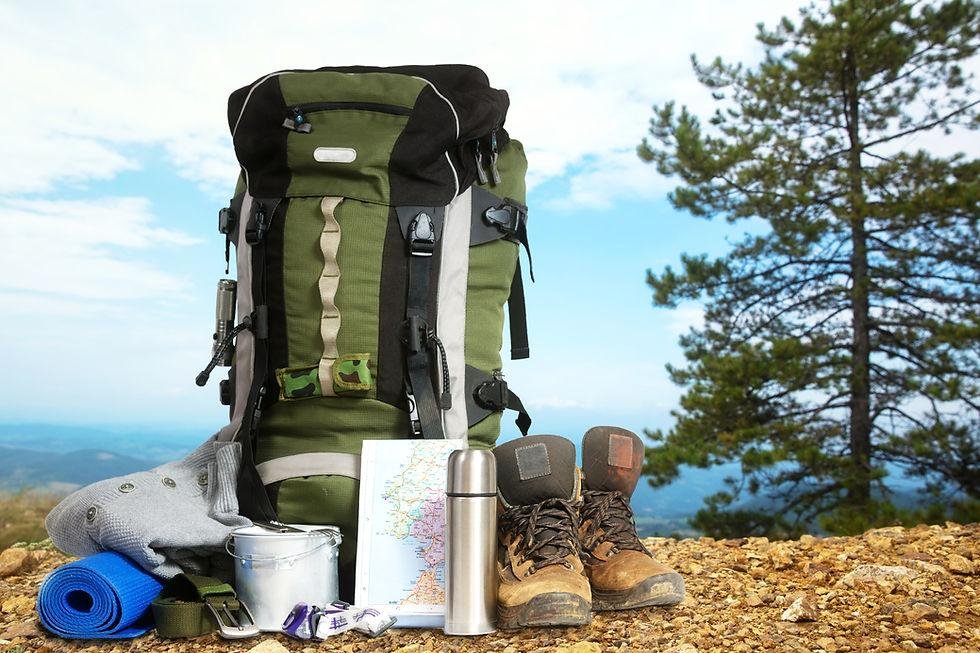
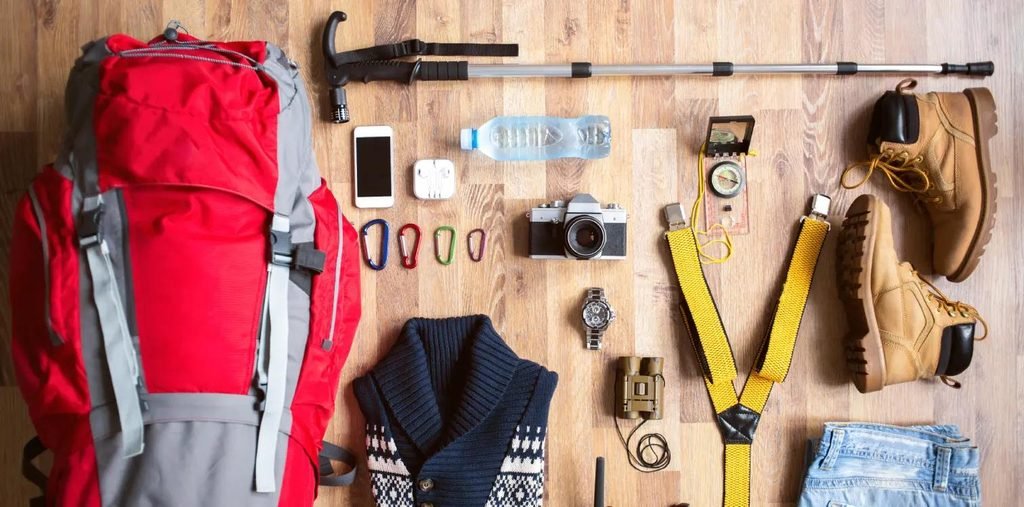
Preparing the right equipment is important because Kilimanjaro has different weather conditions at different elevations. You may begin your climb in a warm rainforest and finish near the summit in freezing temperatures. Your clothing should therefore include several layers that can be added or removed as conditions change.
Comfortable waterproof hiking boots, warm clothing, waterproof outerwear, gloves, a hat, and a suitable sleeping bag are among the most important items. You will also need a daypack for carrying water, snacks, rain protection, and other personal essentials.
Trekking poles are especially useful during steep descents, while a headlamp is essential for summit night. Before traveling, test your equipment during training hikes to make sure everything fits comfortably.
How to Prepare for the 6-Day Machame Route
Physical training should begin several months before your planned climb. Regular walking, hill hiking, stair climbing, cycling, and strength exercises can help improve your endurance. The goal is to become comfortable walking for several hours on consecutive days rather than focusing only on speed.
You should also prepare for the mental challenges of mountain trekking. Some days may be cold, tiring, or uncomfortable, and summit night requires patience and determination. Understanding the daily itinerary before arriving in Tanzania can help you manage your expectations.
Most importantly, learn about altitude sickness before your expedition. Symptoms such as headache, nausea, dizziness, and unusual fatigue should be reported to your guide. More serious symptoms may require immediate descent. Physical fitness does not prevent altitude illness, so your health and the guide’s safety decisions must always come first.
Can You Combine Kilimanjaro with a Tanzania Safari?
Yes. Many travelers combine their Kilimanjaro climb with a wildlife safari in northern Tanzania. After completing the Machame Route, you can visit destinations such as Serengeti National Park, Tarangire National Park, Ngorongoro Crater, and Lake Manyara National Park.
A safari is a great way to explore another side of Tanzania after your mountain expedition. You can spend several days watching wildlife, enjoying the national parks, and learning about the country’s natural environment. If you prefer a more relaxed holiday, Zanzibar is another option for spending time at the beach after the climb.
Eddy Tours & Safaris can help you plan a combined Kilimanjaro and Tanzania safari itinerary based on your available time and travel interests.
Frequently Asked Questions About the 6-Day Machame Route
1. Can I climb Kilimanjaro in six days?
Yes. The Machame Route offers a six-day itinerary, but it is physically demanding and provides less acclimatization time than the seven-day version.
2. Is the six-day Machame Route suitable for beginners?
It may be manageable for some fit and well-prepared beginners, but the seven-day option is generally preferable, especially for travelers without previous high-altitude experience.
3. What is the highest point of the Machame Route?
Uhuru Peak, at 5,895 metres above sea level.
4. How many nights do climbers spend on the mountain?
The six-day Machame itinerary includes five nights in mountain camps.
5. Do I need technical climbing experience?
No technical mountaineering experience is normally required on the standard Machame Route, although some sections involve scrambling.
6. Is the Barranco Wall dangerous?
Barranco Wall is a steep rocky section that requires careful movement. Professional guides assist climbers through the more difficult parts.
7. Where do climbers sleep?
Climbers stay in tents at designated mountain campsites.
8. What is the hardest day of the climb?
Summit day is generally the hardest because of the altitude, freezing temperatures, steep terrain, and long walking hours.
9. What is the difference between six-day and seven-day Machame?
The seven-day itinerary includes an overnight stay at Karanga Camp, giving climbers additional time before reaching Barafu.
10. Is Machame better than Marangu?
Both routes have advantages. Machame offers varied scenery and camping, while Marangu uses mountain huts. The best choice depends on your preferences and the acclimatization schedule.
11. What is the best month to climb Machame?
January to March and June to October are generally popular climbing periods.
12. Can I climb Kilimanjaro during the rainy season?
Yes, but wet conditions can make the trails muddy and slippery.
13. How cold does Kilimanjaro get?
Temperatures near the summit can fall well below freezing, especially during the night.
14. How long does summit day take?
Summit day commonly takes 12–16 hours or longer, including the descent to Mweka Camp.
15. Can physical fitness prevent altitude sickness?
No. Even very fit climbers can experience altitude illness.
16. How should I train for Kilimanjaro?
Regular hiking, cardiovascular exercise, hill walking, and strength training can help prepare your body.
17. Do I need a professional guide?
Yes. Kilimanjaro climbs require authorized guiding arrangements.
18. Can I rent hiking equipment in Moshi?
Some equipment may be available for rental, depending on the supplier and availability.
19. Do I need travel insurance?
Travel insurance covering high-altitude trekking and emergency evacuation is strongly recommended.
20. Can I climb Machame in 2027?
You can request a quotation and discuss suitable climbing dates for 2027.
21. Can I book the Machame Route for 2028 or 2029?
Yes. You can enquire about future arrangements, although prices and availability require confirmation.
22. Can I climb Kilimanjaro alone?
Climbers must use authorized guiding arrangements. Private guided climbs can be organized for solo travelers.
23. What should I carry in my daypack?
Water, snacks, rain protection, warm clothing, personal medication, sunscreen, and other essentials.
24. Is the six-day Machame Route expensive?
The cost depends on the operator, group size, included services, and applicable park fees. Request a quotation for an accurate price.
25. Can I combine the climb with a Serengeti safari?
Yes. A Tanzania safari can be arranged after your climb, allowing suitable time for rest and recovery.
Book Your 6-Day Machame Route Kilimanjaro Climb with Eddy Tours & Safaris
The six-day Machame Route is an exciting way to experience Mount Kilimanjaro, offering beautiful scenery, challenging hiking trails, and the opportunity to reach Uhuru Peak. From the rainforest at Machame Gate to the open Shira Plateau, Barranco Wall, and the summit slopes, every day introduces a different part of the mountain.
However, the six-day itinerary requires careful preparation and provides less time for acclimatization than the seven-day alternative. Choosing the right schedule, training before departure, and following your mountain guide’s advice are important parts of a safe climbing experience.
At Eddy Tours & Safaris, we help travelers plan guided Kilimanjaro expeditions for 2027, 2028, and 2029. Our team can help you compare climbing routes, understand the preparation required, and arrange a suitable mountain package.
Ready to plan your Kilimanjaro climb?
Visit our contact page to request a personalized quotation.
WhatsApp: Chat with Eddy Tours & Safaris
Email: sales@eddytours-safaris.com
Contact us to discuss your preferred dates, group size, and climbing experience.