
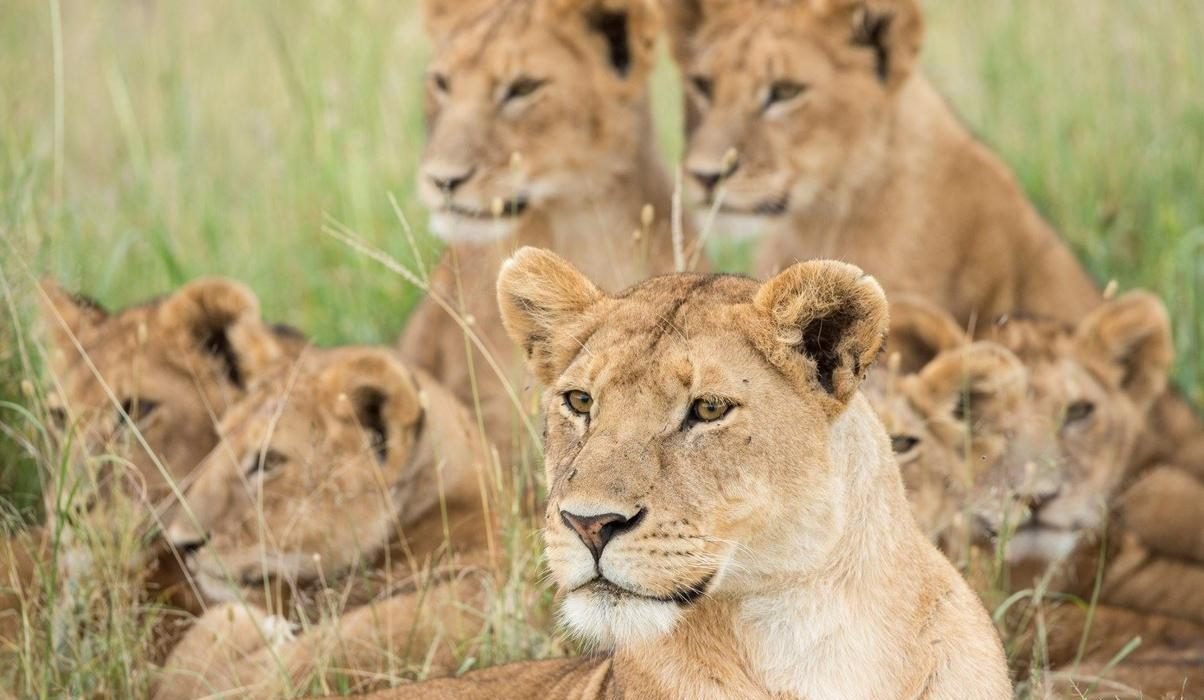
A Tanzania camping safari is one of the best ways to explore Africa’s wildlife without spending a fortune on luxury accommodation. Imagine spending your day watching elephants in Tarangire National Park, following lions across the Serengeti plains, and searching for wildlife inside Ngorongoro Crater. After an exciting day, you return to your campsite, enjoy a freshly prepared meal, and spend the night in a tent surrounded by the sounds of nature.
For travelers planning a Tanzania safari in 2027 or 2028, camping offers a good balance between adventure, affordability, and wildlife viewing. Instead of staying in expensive safari lodges every night, you sleep at designated campsites inside or near Tanzania’s national parks. Depending on the package, your safari may include comfortable sleeping tents, mattresses, meals prepared by a safari cook, and transportation in a 4×4 safari vehicle with a professional driver-guide.
Camping safaris are popular among solo travelers, couples, friends, students, and families who enjoy outdoor experiences. They are especially attractive to visitors who want to spend more time exploring Tanzania’s national parks while keeping accommodation costs manageable. However, not all camping safaris offer the same facilities. Some use basic public campsites with shared bathrooms, while others feature private mobile camps with proper beds and more comfortable facilities.
At Eddy Tours & Safaris, we help travelers plan Tanzania wildlife safaris based on their budget, interests, and available travel dates. Whether you want a short camping trip to Tarangire and Ngorongoro or a longer adventure through the Serengeti, this guide explains everything you should know before booking a Tanzania camping safari in 2027 or 2028.
Tanzania Camping Safari Overview for 2027 and 2028
| Safari information | Details |
|---|---|
| Destination | Tanzania, East Africa |
| Travel years | 2027 and 2028 |
| Safari type | Budget, private, group joining, and mobile camping safaris |
| Popular duration | 2–10 days or longer |
| Main departure towns | Arusha and Moshi |
| Main destinations | Serengeti, Tarangire, Ngorongoro, Lake Manyara |
| Accommodation | Camping tents or tented safari camps |
| Transport | 4×4 safari vehicle |
| Wildlife | Lions, elephants, giraffes, zebras, buffaloes, wildebeest, and many other species |
| Best-known seasons | June–October and January–March |
| Package price | Based on dates, group size, parks, and camping arrangements |
| Booking | Request a personalized quotation |
What Is a Tanzania Camping Safari?
A Tanzania camping safari is a wildlife holiday where travelers explore national parks during the day and sleep in tents at night. Unlike a traditional lodge safari, which uses permanent hotel-style accommodation, a camping safari allows visitors to spend more time outdoors and enjoy a closer connection with the natural environment. The tents are usually placed at approved campsites, and the exact facilities depend on the type of camping package selected.
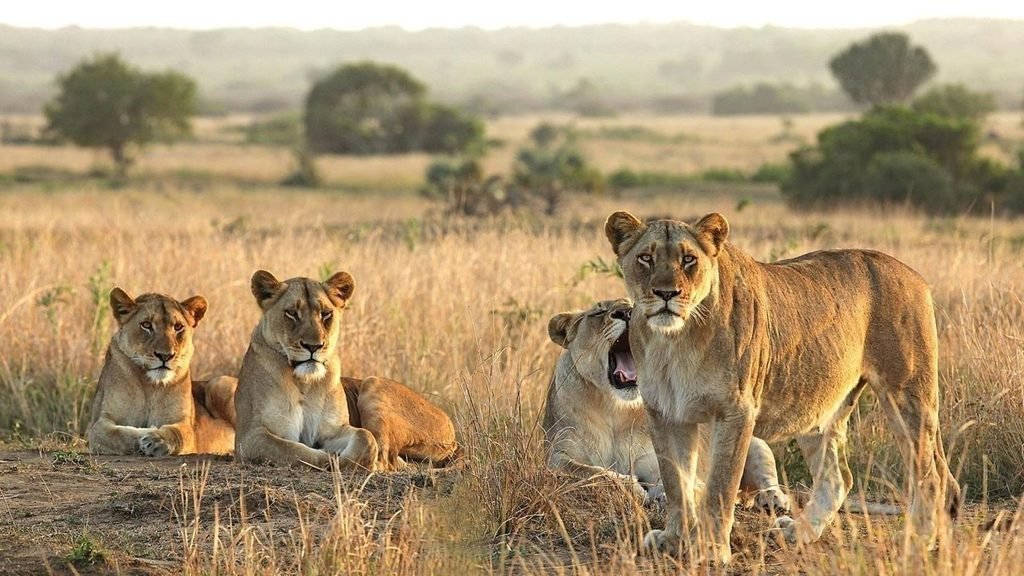
During the day, your driver-guide takes you through the national parks in a safari vehicle, stopping at suitable viewing points to observe wildlife. You may see elephants feeding beside the road, giraffes walking across the savannah, lions resting in the shade, or large groups of wildebeest and zebras moving through the plains. Wildlife sightings depend on the season, weather, and animal movements, so no particular species or encounter can be guaranteed.
After the game drive, you travel to your designated campsite, where the safari crew prepares dinner and organizes the evening arrangements. On an organized budget camping safari, the operator may provide tents, mattresses, cooking equipment, meals, and basic camping supplies. Travelers usually bring their personal clothing, toiletries, and other essentials.
The biggest attraction is the experience itself. Camping gives you the opportunity to enjoy Tanzania’s landscapes from morning until night, without the formality of luxury accommodation. It is a simple way to travel, but the experience can be memorable when the safari is properly organized.
1. Types of Tanzania Camping Safaris
Before booking, it is important to understand that the term “camping safari” can describe several different travel styles. The price, privacy, comfort, and facilities vary considerably, so travelers should always ask what kind of campsite and tent are included.
Budget Camping Safaris
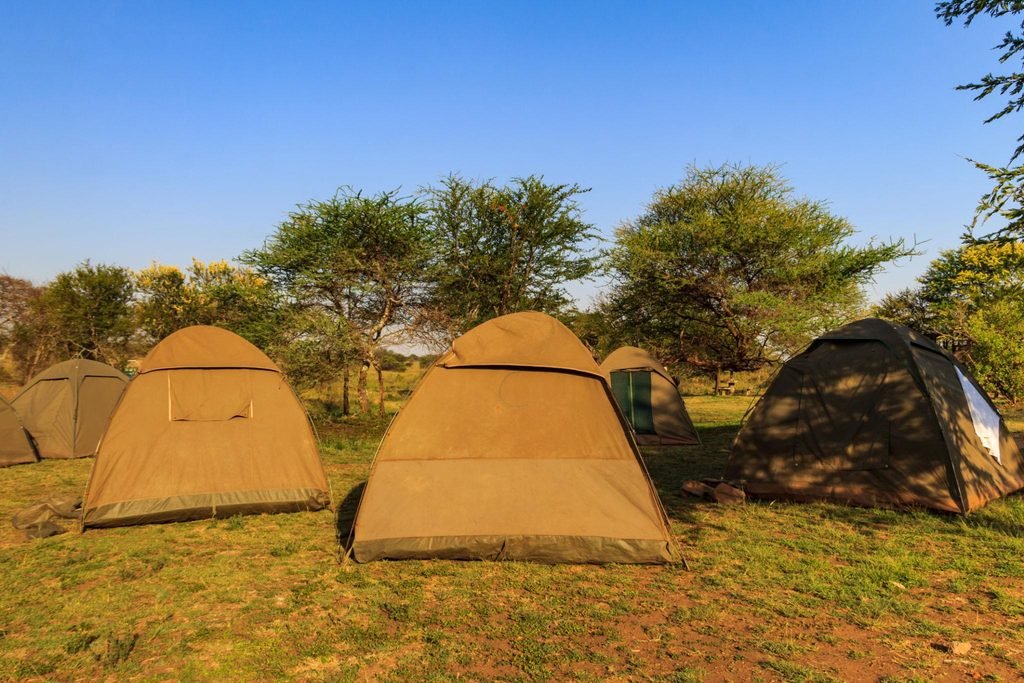
Budget camping safaris are designed for travelers who want to explore Tanzania’s national parks while keeping costs relatively low. These trips commonly use public campsites with shared facilities, and travelers sleep in ordinary camping tents with mattresses or sleeping mats. Meals are prepared by a safari cook, and the guide manages transportation and game drives.
This style of safari is particularly popular among backpackers, students, couples, and small groups. It provides the same opportunity to observe wildlife in the national parks as more expensive safaris, although the accommodation is simpler. Travelers should expect shared bathrooms, limited electricity, and basic facilities at some campsites.
Private Camping Safaris
A private camping safari gives you a dedicated vehicle and guide for your group. Instead of sharing the safari vehicle with other travelers, you can plan the journey around your preferred destinations, travel dates, and pace. This arrangement is useful for families, couples, and friends who want more flexibility during their holiday.
Private camping does not necessarily mean luxury accommodation. You may still stay at public campsites, but the transportation and daily safari arrangements are organized specifically for your group. The price per person often depends on the number of travelers sharing the vehicle and other fixed costs.
Group Joining Camping Safaris
Group joining safaris allow individual travelers or small parties to share a safari vehicle with other visitors. Because transportation and some operating costs are divided among participants, joining safaris can be a more affordable option than private departures.
These trips usually follow a planned itinerary with set destinations and departure arrangements. Travelers should confirm the maximum group size, vehicle seating, luggage arrangements, and whether everyone has a suitable viewing position. Group joining safaris are a good option for visitors who enjoy meeting other travelers and are comfortable following a shared schedule.
Mobile and Luxury Tented Camping Safaris
Mobile tented safaris offer a more comfortable camping experience. Depending on the camp, accommodation may include spacious walk-in tents, proper beds, private bathrooms, dining areas, and additional services. Some seasonal camps in the Serengeti operate in different locations during the year to provide access to wildlife areas associated with the Great Migration.
These camps are generally more expensive than basic public camping and should not automatically be considered budget accommodation. They are suitable for travelers who enjoy the atmosphere of sleeping under canvas but prefer greater comfort and privacy.
2. Best Destinations for Tanzania Camping Safaris
Tanzania has several excellent wildlife destinations, but the northern safari circuit is particularly popular because it allows travelers to visit different parks within one itinerary. Tarangire, Serengeti, Ngorongoro, and Lake Manyara each offer different landscapes and wildlife experiences.
Serengeti National Park: The Heart of a Tanzania Camping Safari
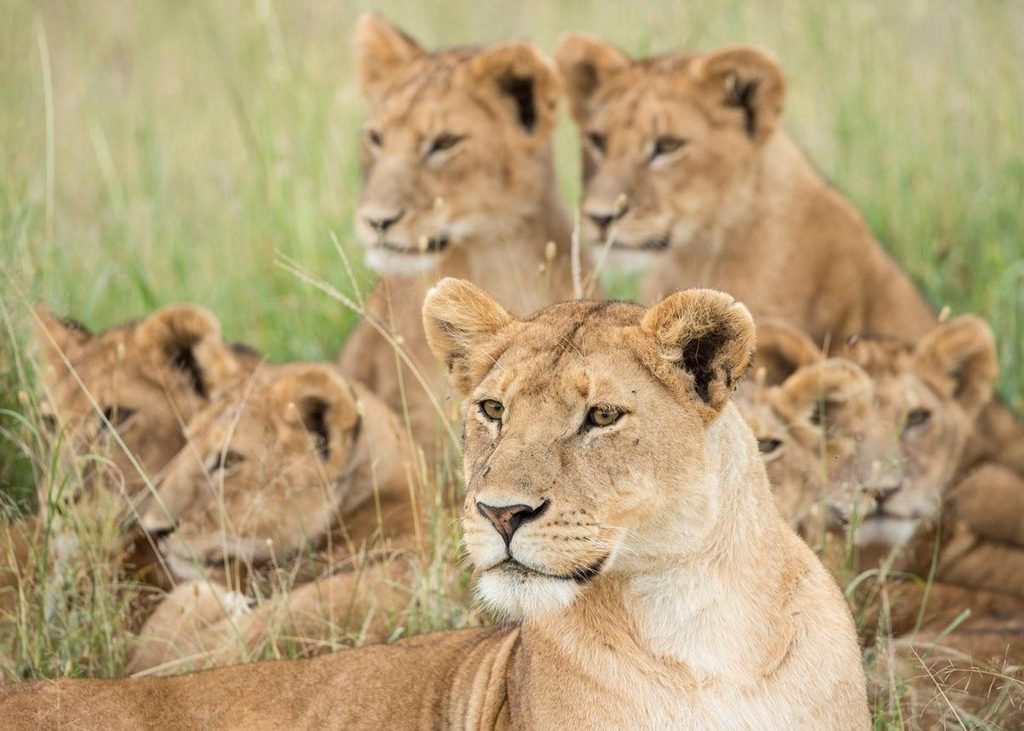
Serengeti National Park is one of Africa’s most famous wildlife destinations and a major highlight of many Tanzania camping safaris. The park is known for its extensive grasslands, large populations of grazing animals, and predators such as lions, leopards, and cheetahs. It is also home to part of the annual Great Wildebeest Migration, when large herds move through the wider Serengeti–Mara ecosystem in response to rainfall and fresh grazing.
Camping in the Serengeti gives travelers the opportunity to spend more time inside the park rather than traveling long distances back to accommodation outside its boundaries. The central Serengeti, particularly around Seronera, is a popular area for wildlife viewing throughout the year. Depending on your itinerary and the season, you may also explore the southern, western, or northern sections of the park.
If witnessing the Great Migration is your main goal, it is important to choose the right travel period and safari location. The herds do not remain in one place throughout the year, and river crossings cannot be predicted with certainty. For a longer trip, consider combining your camping safari with our Tanzania safari planning services to select a route suited to your travel dates.
Ngorongoro Crater: Wildlife Viewing in a Unique Landscape
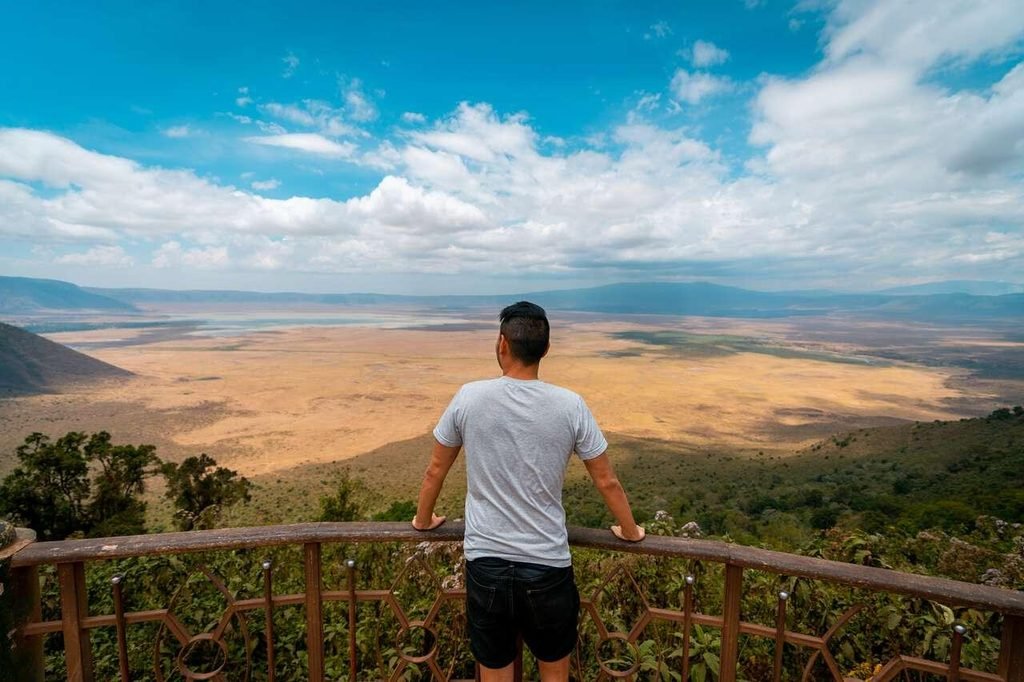
Ngorongoro Crater is one of Tanzania’s most remarkable wildlife destinations. Located within the Ngorongoro Conservation Area, the crater is a large volcanic caldera with grasslands, woodland, wetlands, and seasonal water sources that support a wide variety of wildlife. Visitors may encounter buffaloes, zebras, wildebeest, lions, elephants, and, with some luck, the endangered black rhinoceros.
A typical Ngorongoro safari includes descending from the crater rim to the crater floor for a game drive. The changing scenery is part of the experience, with views across the crater from above before entering the wildlife-rich landscape below. The number and type of animals seen depend on the conditions and the route followed by your guide.
Camping options include designated sites within the conservation area and accommodation outside its boundaries. Simba A is a well-known public campsite on the crater rim, but facilities and availability should be confirmed before booking. Because the crater rim is at a relatively high elevation, evenings and early mornings can be cold, so warm clothing is essential.
Tarangire National Park: Elephants and Baobab Trees
Tarangire National Park is an excellent destination for travelers who enjoy observing elephants and exploring landscapes dotted with large baobab trees. The park is particularly well known for its dry-season wildlife concentrations, when animals gather around the Tarangire River and other available water sources.
During a game drive, visitors may see elephants, giraffes, zebras, wildebeest, buffaloes, antelopes, and predators. Birdwatching can also be rewarding, especially in areas with suitable vegetation and water. The park’s scenery is different from the open plains of the Serengeti, making it a useful addition to a multi-park safari.
Tarangire is often included in shorter two- or three-day camping itineraries because it is relatively accessible from Arusha. It also works well as the first destination on a longer journey toward Lake Manyara, Ngorongoro, and Serengeti.
Lake Manyara National Park: Forest, Birds, and Scenic Views
Lake Manyara National Park is a compact but varied destination at the base of the Great Rift Valley escarpment. The park includes groundwater forest, open areas, wetlands, and lakeshore environments that support different types of wildlife.
Visitors may see elephants, baboons, monkeys, giraffes, buffaloes, and a wide variety of birds. Flamingos and other waterbirds may be present depending on water conditions and seasonal movements. The park is also associated with tree-climbing lions, although sightings are uncommon and should never be promised.
Lake Manyara is a practical destination for travelers who want to combine a scenic game drive with other northern Tanzania parks. Accommodation can be arranged at suitable campsites in the surrounding area, depending on the selected itinerary.
3. How Much Does a Tanzania Camping Safari Cost in 2027 and 2028?
Camping safaris are generally more affordable than luxury lodge safaris, but the total cost depends on several factors. The number of safari days, selected national parks, group size, travel season, vehicle arrangements, camping facilities, and applicable park fees all affect the final quotation.
For example, a short safari visiting Tarangire and Ngorongoro may have a lower total price than a longer itinerary including several nights in the Serengeti. However, the price per day can vary because some destinations involve additional conservation fees, longer driving distances, or higher operating costs. Private safaris may cost more per person for small groups, while joining safaris can reduce shared transportation expenses.
For 2027 and 2028, exact prices should be confirmed rather than estimated from older online advertisements. National park tariffs, fuel costs, campsite charges, and other operating expenses may change before your travel dates.
Main Factors Affecting Camping Safari Prices
| Cost factor | How it affects your safari |
|---|---|
| Safari duration | More days usually increase the total cost |
| Number of travelers | Sharing costs can reduce the price per person |
| Private or joining safari | Private trips provide flexibility; joining trips share costs |
| Parks visited | Park and conservation fees vary |
| Accommodation | Public camping is generally cheaper than luxury tented camps |
| Travel season | Demand and accommodation availability can affect prices |
| Vehicle and fuel | Long-distance routes have higher transport costs |
| Additional activities | Balloon safaris and other optional activities add costs |
To receive an accurate quotation, contact Eddy Tours & Safaris with your preferred travel dates, group size, and destinations.
4. What Is Included in a Tanzania Camping Safari Package?
A professionally organized Tanzania camping safari commonly includes a 4×4 safari vehicle, an experienced driver-guide, national park entry fees, camping accommodation, meals during the safari, and basic camping equipment. On budget camping trips, a safari cook may accompany the group to prepare breakfast, lunch, and dinner.
Many safari vehicles have a pop-up roof that allows passengers to observe and photograph wildlife more comfortably during game drives. The guide manages the daily route, helps identify animals, explains their behavior, and follows park regulations. Depending on the operator and package, drinking water may also be included.
However, travelers should never assume that every camping package includes exactly the same services. Some quotations may exclude specific conservation fees, sleeping bags, hotel accommodation before the safari, airport transfers, or optional activities. Always request a written list of inclusions and exclusions before confirming a booking.
Services Commonly Included
- Safari vehicle with a professional driver-guide
- Park entry fees specified in the itinerary
- Designated camping accommodation
- Camping tents and basic equipment
- Meals during the safari
- Safari cook where applicable
- Game drives described in the itinerary
- Transfers specified in the package
- Drinking water where included in the quotation
Services Commonly Excluded
- International flights
- Tanzania visa fees
- Travel insurance
- Personal camping items not supplied by the operator
- Alcoholic beverages and personal purchases
- Tips for the guide and safari crew
- Optional balloon safaris or other activities
- Accommodation outside the safari itinerary
The confirmed quotation should always take priority over general package descriptions.
5. What Is It Like to Sleep at a Tanzania Safari Campsite?
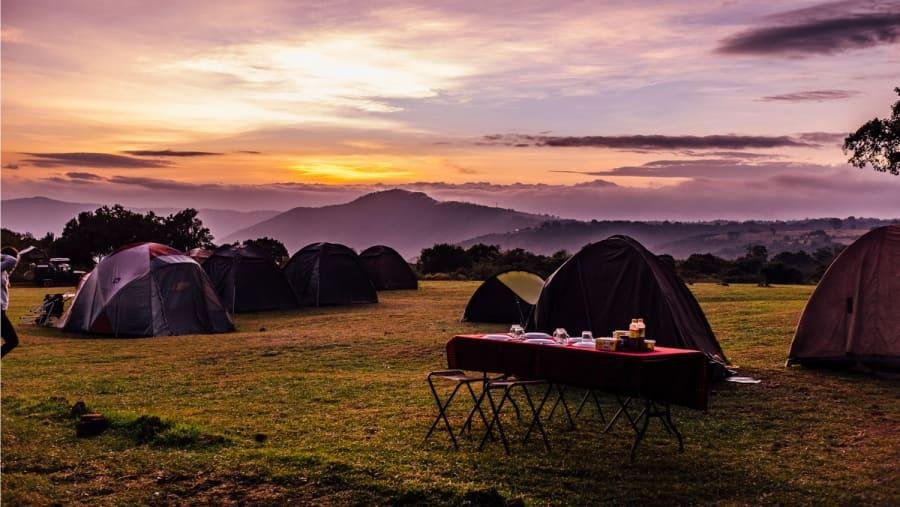
Sleeping at a safari campsite is different from staying in a hotel. At a public campsite, your tent may be pitched near other travelers, and bathrooms are often shared. Facilities vary between locations, and some campsites have limited electricity, basic showers, or restricted access to hot water.
The camping experience can be particularly enjoyable in the evening, when the day’s heat begins to fade and the safari crew prepares dinner. Travelers may spend time discussing the animals they saw during the day, reviewing photographs, and preparing for the next morning’s game drive. The sounds of insects, birds, and distant wildlife add to the atmosphere, although the exact experience depends on the campsite and surrounding environment.
Because many campsites inside wildlife areas are unfenced, animals may move nearby or occasionally pass through. This makes it essential to follow your guide’s instructions, avoid leaving food inside your tent, and never walk around the campsite after dark without permission and appropriate assistance.
A camping safari is best enjoyed with realistic expectations. You should be prepared for basic facilities, early mornings, dusty roads, and changing weather. In return, you get an outdoor travel experience that is very different from a conventional hotel-based holiday.
6. Is Camping in Tanzania Safe?
A properly organized camping safari can be a safe and enjoyable experience when travelers follow park rules and the instructions of their guide. However, camping in wildlife areas involves risks that must be taken seriously. Wild animals are unpredictable, and campsites inside national parks may not have fences separating visitors from the surrounding environment.
The most important rule is to follow your guide’s instructions at all times. Do not approach wildlife, leave the designated campsite without permission, or store food in your sleeping tent. At night, avoid walking around alone, even if you hear animals nearby. Your guide or camp staff should explain the correct procedure for using bathroom facilities after dark.
During game drives, remain inside the safari vehicle unless your guide confirms that stopping or leaving the vehicle is permitted. Never feed wildlife or attempt to attract animals for photographs. It is also important to respect speed limits, park rules, and the natural behavior of the animals.
Travelers should consult a healthcare professional about vaccinations, malaria prevention, and other travel health considerations before departure. Suitable travel insurance is strongly recommended, particularly for medical emergencies and unexpected travel disruptions.
7. Best Time for a Tanzania Camping Safari in 2027 and 2028
Tanzania offers wildlife viewing throughout the year, but the experience changes with the seasons. The dry season, generally from June to October, is popular because vegetation is often thinner and animals may gather around remaining water sources. These conditions can make wildlife easier to observe in parks such as Tarangire.
January to March is another attractive period, especially for travelers interested in the southern Serengeti and Ndutu area, where large wildebeest herds are often present during the calving season. However, the timing of the migration depends on rainfall and grazing conditions, so the exact location of the animals can vary.
April and May are generally associated with heavier rainfall in much of northern Tanzania. Camping during this period can involve muddy roads, wet campsites, and occasional changes to travel plans. Nevertheless, the landscapes may be green, and some areas can be less crowded. November and December often bring shorter rains, although conditions vary from year to year.
Tanzania Camping Safari Seasons
| Travel period | General conditions | Main considerations |
|---|---|---|
| January–March | Often warm, with variable rainfall | Southern Serengeti and Ndutu migration activity |
| April–May | Generally wetter | Green landscapes, muddy roads, possible disruptions |
| June–October | Generally drier | Popular wildlife-viewing period |
| November–December | Variable short rains | Green scenery and changing wildlife movements |
There is no single perfect month for every traveler. The best time depends on the parks you want to visit, the animals you hope to see, your budget, and your tolerance for rain or cooler evenings.
8. Sample Tanzania Camping Safari Itineraries for 2027 and 2028
Camping safaris can be arranged for different durations. Travelers with only a few days may prefer Tarangire and Ngorongoro, while those with more time can include Serengeti and Lake Manyara. Longer itineraries allow additional game drives and reduce the pressure of moving between destinations every day.
3-Day Budget Camping Safari: Tarangire, Ngorongoro and Lake Manyara
This itinerary is suitable for travelers who want to experience three northern Tanzania destinations within a short period. The first day begins in Arusha and continues to Tarangire National Park for a game drive among baobab trees and wildlife-rich landscapes. After the game drive, travelers spend the night at a designated campsite in the Karatu or Mto wa Mbu area.
On the second day, the safari continues toward Ngorongoro Crater, where travelers descend for a game drive before returning to their campsite. The third day includes a visit to Lake Manyara National Park before returning to Arusha. Because the schedule is compact, the exact route and game-drive durations should be confirmed with the operator.
4-Day Camping Safari: Tarangire, Serengeti and Ngorongoro
A four-day camping safari provides an opportunity to include the Serengeti, although the itinerary involves substantial driving. The journey usually begins with a game drive in Tarangire before continuing toward the Serengeti on the second day. Travelers then explore the central Serengeti before visiting Ngorongoro Crater and returning to Arusha.
This option is suitable for visitors who have limited time but want to experience some of Tanzania’s best-known parks. However, travelers should understand that driving distances are significant and that a longer itinerary would allow more relaxed wildlife viewing.
5-Day Tanzania Camping Safari: Tarangire, Serengeti and Ngorongoro
A five-day itinerary provides a better balance between travel time and game drives. The safari commonly begins in Tarangire, continues to the Serengeti for wildlife viewing, and finishes with a visit to Ngorongoro Crater. Depending on the route, travelers may spend two nights camping in the Serengeti, giving them more time to explore the central plains.
This itinerary is popular among travelers who want to experience the Serengeti without committing to a longer safari. It provides opportunities to observe different wildlife habitats, although animal sightings remain dependent on natural conditions.
7-Day Tanzania Camping Safari: Northern Circuit Adventure
A seven-day camping safari allows travelers to explore Tanzania’s northern circuit at a more comfortable pace. A typical itinerary may include Tarangire, Lake Manyara, Serengeti and Ngorongoro, with additional time for game drives in the Serengeti.
The extra days provide greater flexibility and may allow travelers to explore different parts of the park according to the season. This is particularly useful for visitors interested in the Great Migration, although reaching specific migration areas may require further itinerary adjustments.
8–10-Day Tanzania Camping Safari: Extended Wildlife Experience
An eight- to ten-day camping safari is suitable for travelers who want more time in Tanzania’s national parks and prefer not to rush between destinations. Longer trips can include several nights in the Serengeti, visits to Tarangire and Ngorongoro, and optional cultural or scenic stops where appropriate.
The additional time can improve the overall travel experience by allowing more game drives and reducing the number of long transfer days. Travelers planning an extended safari can also discuss a private itinerary with Eddy Tours & Safaris to match their preferred destinations and accommodation style.
9. What Should You Pack for a Tanzania Camping Safari?
Packing for a Tanzania camping safari is relatively straightforward, but a few essential items can make your trip more comfortable. Lightweight clothing is useful during warm afternoons, while a fleece or jacket is important for cool mornings and evenings, particularly around Ngorongoro and other higher-elevation areas.
Neutral-colored clothing is practical for safari travel, and comfortable closed shoes are useful around campsites. A hat, sunglasses, sunscreen, insect repellent, and reusable water bottle should also be included. Travelers who enjoy photography may want to bring a camera with a suitable zoom lens, while binoculars can help with observing distant animals and birds.
A small flashlight or headlamp is especially important at campsites where lighting may be limited. A power bank can also be useful because electricity and charging facilities are not always available. Before departure, ask your operator whether sleeping bags, towels, pillows, and other personal camping items are supplied.
10. Budget Camping Safari vs Lodge Safari: Which Is Better?
Both camping and lodge safaris provide opportunities to explore Tanzania’s national parks, but the accommodation experience is different. Camping is generally more affordable and appeals to travelers who enjoy outdoor activities, simple facilities, and spending time close to nature. Lodge safaris offer greater comfort, including permanent rooms, private bathrooms, and more developed services.
The wildlife viewing experience depends primarily on the parks visited, the game-drive routes, the season, and the guide rather than the type of accommodation. A traveler staying at a public campsite can still enjoy excellent wildlife sightings, while a luxury lodge does not guarantee better animal encounters.
| Feature | Camping safari | Lodge safari |
|---|---|---|
| Accommodation | Tents and campsite facilities | Permanent rooms or lodge-style tents |
| Cost | Generally more affordable | Usually more expensive |
| Bathroom facilities | Often shared on budget trips | Usually private |
| Comfort | Basic to moderate | Moderate to luxury |
| Outdoor experience | Strong camping atmosphere | More conventional accommodation |
| Best suited for | Budget travelers and outdoor enthusiasts | Travelers prioritizing comfort |
For travelers who want a balance between cost and comfort, a combination of camping and lodge accommodation may also be possible.
11. Can Families and Children Enjoy a Tanzania Camping Safari?
Families can enjoy Tanzania camping safaris, but the suitability of a particular itinerary depends on the children’s ages, travel experience, and the facilities available at the selected campsites. Long game drives, early departures, shared bathrooms, and basic sleeping arrangements may be challenging for younger children.
A private safari is often a practical choice for families because it provides greater flexibility with meal times, rest stops, and daily activities. Parents should also discuss campsite safety, sleeping arrangements, and medical considerations with their tour operator before confirming the trip.
Families who prefer additional comfort may find a mid-range lodge or permanent tented camp more suitable than basic public camping. The best arrangement is one that allows everyone to enjoy the wildlife experience safely and comfortably.
12. How to Book a Tanzania Camping Safari for 2027 or 2028
Booking a Tanzania camping safari begins with choosing your preferred travel dates, the number of people in your group, and the destinations you want to visit. If you are traveling during a popular season, it is sensible to begin planning several months in advance, particularly when you want a private safari or specific campsite arrangements.
When requesting a quotation, provide your expected arrival date, preferred safari duration, accommodation style, and any special requirements. The operator should then prepare an itinerary showing the daily route, parks visited, accommodation arrangements, included services, and total cost.
Before paying a deposit, carefully review the cancellation terms, payment schedule, and any conditions relating to park fees or changes in operating costs. For 2027 and 2028, prices and availability should be confirmed in writing because future park tariffs, campsite arrangements, and fuel costs may change.
Frequently Asked Questions About Tanzania Camping Safaris
1. What is a Tanzania camping safari?
It is a wildlife safari where travelers explore national parks during the day and sleep in tents at designated campsites at night.
2. Are Tanzania camping safaris affordable?
Budget camping is generally more affordable than luxury lodge accommodation, although the total price depends on the itinerary and group size.
3. Is camping in the Serengeti safe?
Camping can be safely managed when travelers use authorized campsites and follow the guide’s instructions. Wildlife-related risks still exist.
4. Can wild animals enter safari campsites?
Yes. Some campsites are unfenced, and animals may move through or near the camping area.
5. Do Tanzania campsites have bathrooms?
Many public campsites have shared bathroom facilities, but the standard varies by location.
6. Are showers available at camping sites?
Some campsites provide showers, although hot water and water availability may be limited.
7. Do I need to bring my own tent?
Not usually on an organized camping safari, but you should confirm what equipment is included.
8. Are meals included in a camping safari?
Meals are commonly included in organized camping packages, subject to the confirmed itinerary.
9. What food is served during camping safaris?
Meals may include rice, pasta, vegetables, soups, eggs, meat, fruit, and other dishes depending on the operator and dietary requirements.
10. Can vegetarians join a camping safari?
Yes. Inform the operator of dietary requirements before departure.
11. Is a camping safari suitable for solo travelers?
Yes. Solo travelers can join group safaris or request private arrangements.
12. Can couples book a private camping safari?
Yes. Private camping safaris can be arranged for two travelers, subject to the quotation.
13. What is the best time for camping in Tanzania?
June to October and January to March are commonly popular, although safaris operate throughout the year.
14. Can I camp in the Serengeti during the rainy season?
Yes, where campsites and roads are accessible, but wet conditions can affect the experience.
15. How many days are best for a Tanzania camping safari?
Five to seven days is a useful range for exploring several northern Tanzania parks without rushing too much.
16. Can I see the Big Five on a camping safari?
You may have opportunities to see several Big Five species, but sightings of all five are never guaranteed.
17. Can I see the Great Wildebeest Migration?
Yes, if your itinerary visits suitable areas during the relevant season, although herd movements vary.
18. Are camping safaris suitable for families?
Yes, but campsite facilities, children’s ages, and safety arrangements should be considered carefully.
19. Can I charge my phone during the safari?
Charging may be possible in the vehicle or at some campsites, but you should bring a power bank.
20. Is Wi-Fi available at campsites?
Wi-Fi is not guaranteed, especially at basic public campsites.
21. Do I need travel insurance?
Travel insurance covering medical emergencies and unexpected disruptions is strongly recommended.
22. Can I combine camping with lodge accommodation?
Yes. A mixed camping and lodge safari can be arranged according to your budget and preferences.
23. Can I book a camping safari for 2027?
You can request a quotation and discuss 2027 dates, subject to confirmation.
24. Can I book a camping safari for 2028?
Yes. Future safari arrangements can be discussed, although exact prices and availability must be confirmed.
25. How do I book with Eddy Tours & Safaris?
Contact the team with your preferred dates, number of travelers, and desired safari destinations to request a detailed quotation.
Book Your Tanzania Camping Safari for 2027 and 2028 with Eddy Tours & Safaris
A Tanzania camping safari offers a practical and affordable way to explore some of Africa’s most famous wildlife destinations. Whether you want to watch elephants in Tarangire, search for lions in the Serengeti, enjoy the scenery of Ngorongoro Crater, or explore Lake Manyara, camping allows you to experience Tanzania’s natural beauty while keeping accommodation costs under control.
The best camping safari is not necessarily the cheapest package available. A good itinerary should provide enough time for game drives, use suitable campsites, include clear safety arrangements, and explain exactly what is covered by the price. Choosing a reliable safari operator and understanding the facilities before departure can make a significant difference to your overall experience.
At Eddy Tours & Safaris, we help travelers organize Tanzania camping safaris for 2027 and 2028, including private tours, group joining safaris, and customized wildlife itineraries. Our team can help you compare destinations, select a suitable number of days, and request a quotation based on your preferred travel dates and budget.
Request Your Tanzania Camping Safari Quotation
Chat with Eddy Tours & Safaris on WhatsApp
Email: sales@eddytours-safaris.com
Contact Eddy Tours & Safaris to start planning your Tanzania camping safari and enjoy a well-organized wildlife adventure in 2027 or 2028.