
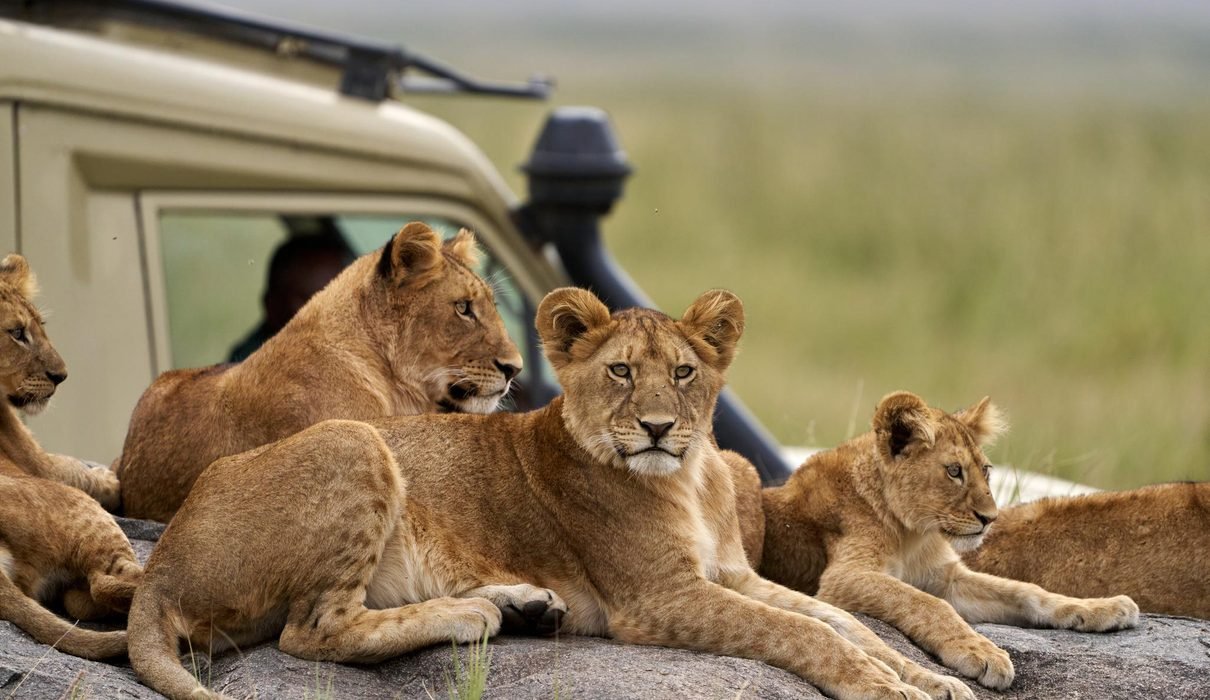
Tanzania is one of the few destinations in Africa where you can watch lions hunting on the open plains, explore a volcanic crater filled with wildlife, and stand beneath Africa’s highest mountain during the same holiday. For travellers planning an African adventure in 2027 or 2028, combining Serengeti National Park, Ngorongoro Crater, and Mount Kilimanjaro offers an opportunity to experience three of Tanzania’s most famous natural attractions without travelling between different countries.
Each destination provides something different. The Serengeti is known for its extensive grasslands, large predator populations, and the annual movement of wildebeest and zebras. Ngorongoro Crater offers a remarkable wildlife experience inside an ancient volcanic caldera, where visitors can encounter elephants, lions, buffaloes, and many other animals. Mount Kilimanjaro introduces an entirely different landscape, with green forests, mountain vegetation, alpine deserts, and snow and ice near its highest elevations.
The advantage of combining these destinations is that they are all located in northern Tanzania, making it possible to arrange a well-planned itinerary beginning from Arusha or Kilimanjaro International Airport. Whether you want a traditional wildlife safari followed by a day trip to Kilimanjaro or a longer holiday that includes climbing to Uhuru Peak, there are several ways to experience these destinations together.
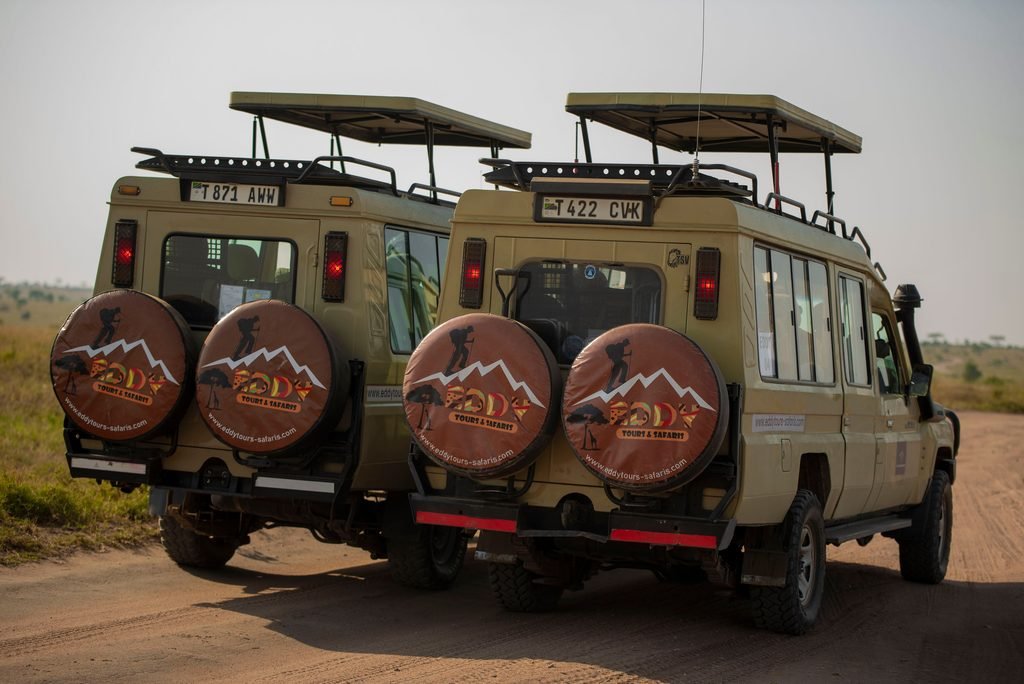
Why Combine Serengeti, Ngorongoro and Mount Kilimanjaro?
A holiday combining the Serengeti, Ngorongoro, and Kilimanjaro provides a broader experience of Tanzania than visiting only one national park. Instead of spending your entire trip on game drives, you can explore different environments and enjoy activities that show the country’s natural diversity. The Serengeti introduces you to the open savannah and its wildlife, Ngorongoro offers an opportunity to explore a unique volcanic landscape, and Kilimanjaro provides a mountain experience that can range from a short forest walk to a demanding multi-day climb.
Another advantage is the opportunity to experience Tanzania’s changing scenery. As you travel from Arusha towards Ngorongoro, the landscape changes from towns and agricultural areas to highland forests and open plains. The journey into the Serengeti reveals enormous grasslands, scattered acacia trees, rocky outcrops, and river systems that support different wildlife species. Travelling towards Kilimanjaro takes you into the foothills of a mountain that rises to 5,895 metres above sea level, with vegetation and temperatures changing considerably as altitude increases.
For first-time visitors, this combination also provides a good introduction to Tanzania’s tourism attractions. You can enjoy wildlife photography, learn about animal behaviour, visit local communities where appropriate, and experience the mountain environment without needing to organise separate holidays. The most suitable itinerary depends on how many days you have available and whether you want to climb Kilimanjaro or simply explore its lower slopes.
1. Serengeti National Park: Experience Tanzania’s Famous Wildlife Plains
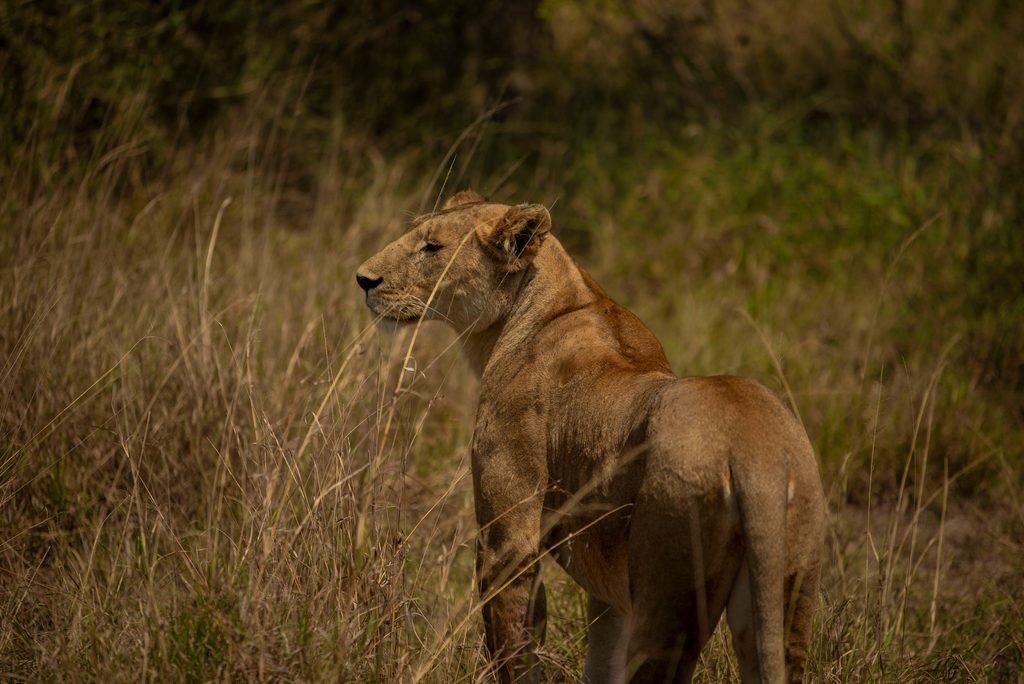
Serengeti National Park is one of Africa’s best-known wildlife destinations, covering approximately 14,750 square kilometres of protected landscapes. The park is famous for its open grasslands, extensive wildlife populations, and the Great Wildebeest Migration, during which large herds move through the wider Serengeti–Mara ecosystem in search of fresh grazing and water. However, the Serengeti is much more than a migration destination. Its resident wildlife includes lions, leopards, cheetahs, elephants, giraffes, buffaloes, hyenas, and numerous antelope species that can be observed during different seasons.
One of the most interesting experiences in the Serengeti is watching how animals interact in their natural environment. You may encounter a pride of lions resting beneath an acacia tree, a cheetah scanning the grasslands for gazelles, or a leopard resting in the branches of a tree near a river. Wildlife sightings are unpredictable, which makes every game drive different. Experienced safari guides use their knowledge of animal behaviour, habitats, and seasonal movements to search for wildlife while following national park regulations.
The central Serengeti, particularly the Seronera region, is a popular destination because it supports wildlife throughout the year. Its combination of grasslands, woodland, and river systems provides suitable habitats for different animals, including large predators. The southern Serengeti and neighbouring Ndutu area are particularly interesting during the calving season, while the western and northern sections become important during other stages of the migration. Choosing the right area depends on your travel dates and the wildlife you hope to observe.
The Great Wildebeest Migration in 2027 and 2028
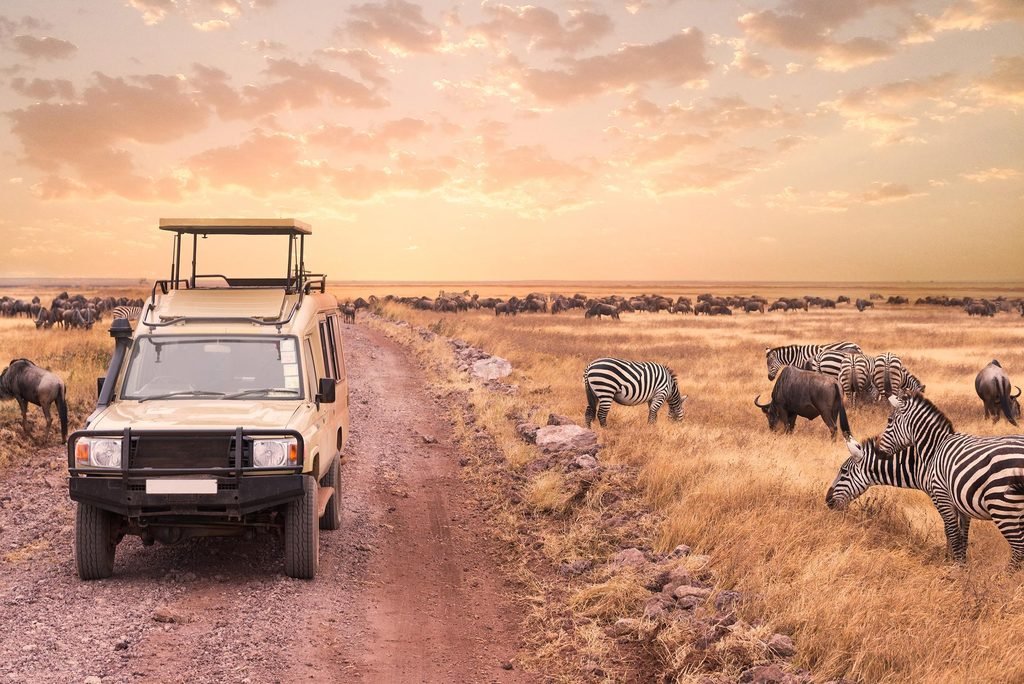
The Great Wildebeest Migration is one of the main reasons travellers visit the Serengeti. Each year, large numbers of wildebeest, accompanied by zebras and other grazing animals, move through the ecosystem in response to rainfall and changing grazing conditions. Their movements create opportunities to observe herds travelling across open plains, predators following the animals, and dramatic river crossings during certain periods. Although the migration follows a broad seasonal pattern, its exact location cannot be predicted with certainty because rainfall and environmental conditions influence the movement of the herds.
Between approximately December and March, large herds are often found on the southern Serengeti plains and around Ndutu, where many wildebeest calves are born during a relatively concentrated period. From around April to June, the herds generally move through central and western areas, while July to October is commonly associated with the northern Serengeti and the Mara River region. During November and December, many animals begin moving south again as seasonal rains influence grazing conditions. These are general patterns rather than fixed schedules, so travellers planning a migration safari in 2027 or 2028 should choose their destinations according to current conditions and realistic expectations.
2. Ngorongoro Crater: Explore One of Africa’s Most Remarkable Wildlife Areas
Ngorongoro Crater is another major attraction in northern Tanzania and an important stop on many Serengeti safari itineraries. The crater was formed following the collapse of a large volcano millions of years ago, leaving an enormous caldera surrounded by high walls. Today, its floor contains grasslands, woodland, wetlands, and a seasonal lake that support a remarkable concentration of wildlife. The crater’s distinctive landscape makes it one of the most recognisable safari destinations in Africa.
A game drive inside Ngorongoro Crater provides opportunities to observe lions, elephants, buffaloes, zebras, wildebeest, hippos, and several antelope species within a relatively compact area. The crater is also one of the places in Tanzania where visitors may have an opportunity to see the endangered black rhinoceros, although sightings are never guaranteed. Different habitats support different animals, and your guide will explore suitable areas according to wildlife movements, weather conditions, and the time available for the game drive.
One of the most impressive moments of a Ngorongoro visit is arriving at the crater rim and looking down across the landscape. From above, the crater floor appears almost like a natural amphitheatre, surrounded by steep green slopes. The descent into the crater reveals grasslands, forests, and water sources where animals gather. Because of its elevation, the crater rim can be considerably cooler than the floor, particularly during the early morning, so visitors should carry warm clothing even when travelling during Tanzania’s warmer months.
What Makes Ngorongoro Different From the Serengeti?
Although both destinations offer excellent wildlife experiences, their landscapes and safari styles are quite different. The Serengeti covers an enormous area, and game drives often involve travelling long distances through open plains and different habitats. Ngorongoro Crater is much smaller, allowing visitors to explore several wildlife habitats during a single day. Its relatively concentrated wildlife populations can provide rewarding sightings, although the crater also attracts many visitors, particularly during busy travel periods.
The Serengeti is particularly suitable for travellers interested in spending several days observing predators, following seasonal wildlife movements, and exploring extensive wilderness landscapes. Ngorongoro is ideal for experiencing a distinctive volcanic environment and seeing a variety of animals within a shorter period. Combining both destinations provides a balanced safari because visitors experience two very different ecosystems rather than repeating the same type of game drive throughout their holiday.
3. Mount Kilimanjaro: Discover Africa’s Highest Mountain
Mount Kilimanjaro rises to 5,895 metres above sea level and is the highest mountain in Africa. Unlike the wildlife plains of the Serengeti and Ngorongoro, Kilimanjaro introduces travellers to a mountain environment where landscapes change dramatically with altitude. The lower slopes contain cultivated land and forest, while higher elevations include heath, moorland, alpine desert, and the cold summit zone. These changing environments make Kilimanjaro an interesting destination even for visitors who do not intend to reach the summit.
Mount Kilimanjaro is a volcanic mountain consisting of three main volcanic cones: Kibo, Mawenzi, and Shira. Kibo contains Uhuru Peak, the mountain’s highest point and the main destination for summit climbers. Reaching Uhuru Peak requires several days of trekking, appropriate equipment, and careful acclimatisation. Although the mountain does not require technical climbing on its standard trekking routes under normal conditions, the altitude, cold temperatures, and long walking days make it a serious physical challenge.
For travellers combining Kilimanjaro with a wildlife safari, there are two main ways to experience the mountain. You can arrange a short visit to the lower slopes, including a guided day hike where permitted, or undertake a full climbing expedition before or after your safari. The choice depends on your fitness, available time, budget, and interest in mountain trekking. A day trip offers a taste of Kilimanjaro’s forest environment, while a summit expedition provides a much more demanding adventure.
Popular Kilimanjaro Climbing Routes for 2027 and 2028
Several established routes lead towards the summit of Mount Kilimanjaro, each offering different scenery, accommodation arrangements, and acclimatisation opportunities. The Machame Route is popular for its varied landscapes and camping experience, while the Lemosho Route approaches the mountain from the west and is often selected for its scenery and longer itinerary options. The Marangu Route is known for its mountain hut accommodation, making it different from routes that primarily use tents.
The Rongai Route approaches Kilimanjaro from the northern side and provides a different perspective of the mountain, while the Northern Circuit is recognised for its longer itinerary and extensive route around the northern slopes. Choosing a route should involve more than comparing the number of days or the advertised summit success rate. Travellers should consider acclimatisation time, physical demands, accommodation preferences, and the experience of their mountain operator. Longer routes often allow more gradual altitude adjustment, although no itinerary can guarantee a successful or safe summit.
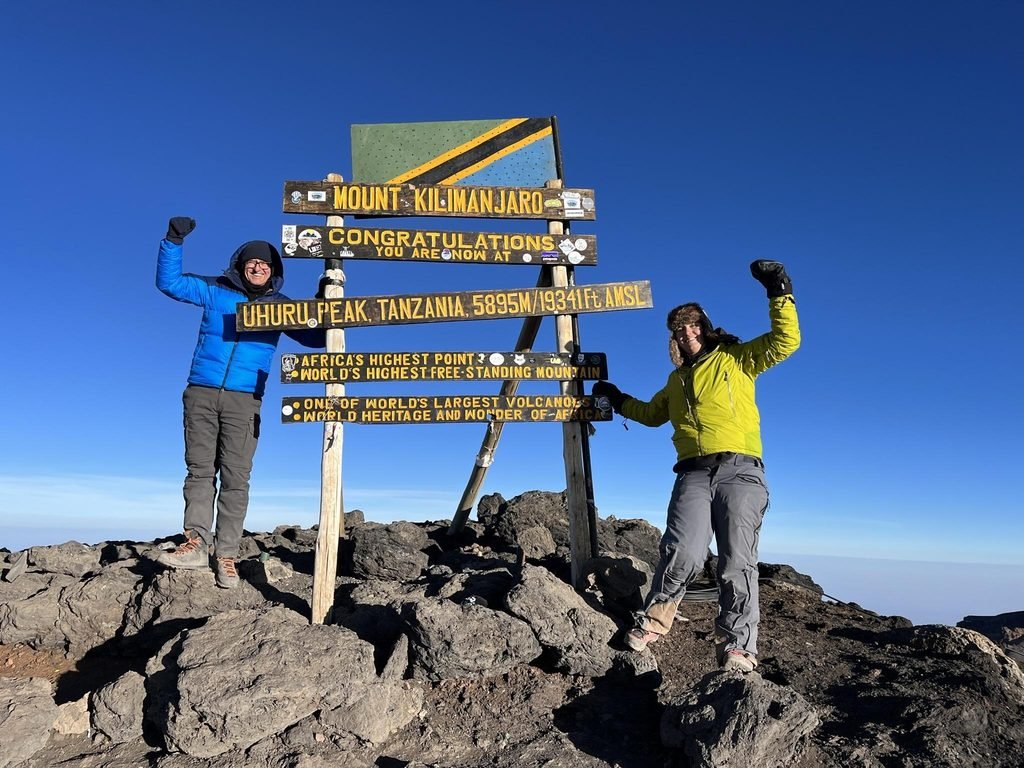
How Many Days Do You Need for Serengeti, Ngorongoro and Kilimanjaro?
The number of days required depends mainly on whether you want to climb Kilimanjaro or visit its lower slopes. Travellers who prefer wildlife viewing with a short mountain experience can combine the three destinations in approximately six to eight days, depending on their arrival schedule and the time allocated to each park. This type of itinerary generally includes several days in the Serengeti, a game drive inside Ngorongoro Crater, and a separate day exploring the Kilimanjaro foothills or an authorised hiking trail.
If your goal is to reach Uhuru Peak, you should plan a considerably longer holiday. A full Kilimanjaro climb commonly takes six to nine days, depending on the selected route, and you will need additional time for transfers, safari activities, and rest. Combining a seven- or eight-day climb with a four- or five-day safari can create an excellent two-week adventure, although travellers should also allow for international flights and possible recovery time after descending the mountain.
A well-planned itinerary should avoid unnecessary rushing. Long driving distances between safari destinations can be tiring, and Kilimanjaro climbing requires enough time for acclimatisation. Spending an additional day in the Serengeti or choosing a longer mountain route may improve the overall experience more than attempting to fit every attraction into the shortest possible schedule.
Suggested 8-Day Serengeti, Ngorongoro and Kilimanjaro Adventure
An eight-day itinerary is a practical option for travellers who want to experience all three destinations without attempting a full Kilimanjaro summit climb. The following example combines wildlife viewing with a short mountain excursion and can be adjusted according to arrival times, accommodation preferences, and travel dates.
Day 1: Arrival in Tanzania and Transfer to Arusha
Your adventure begins upon arrival at Kilimanjaro International Airport, where your driver will meet you and transfer you to your hotel in Arusha. Depending on your arrival time, you may have an opportunity to explore part of the town or simply relax after your journey. Arusha is an important starting point for northern Tanzania safaris and provides convenient access to several national parks. Your guide will explain the upcoming itinerary, travel arrangements, and what to expect during the wildlife portion of your holiday.
Day 2: Arusha to Serengeti National Park
After breakfast, you will depart Arusha and travel towards Serengeti National Park, passing through the highland landscapes of northern Tanzania. The journey takes several hours, but it provides opportunities to observe changing scenery along the way. After entering the Serengeti, you will begin your first game drive, searching for wildlife as you travel towards your accommodation. Depending on the route and time available, you may encounter zebras, giraffes, elephants, lions, and other animals before arriving at your lodge or tented camp for dinner and an overnight stay.
Day 3: Full-Day Game Drive in the Serengeti
Today is dedicated to exploring the Serengeti. You will leave your accommodation after breakfast or arrange an earlier departure with your guide, depending on the planned activities. The day may include visits to open grasslands, riverine areas, and rocky outcrops where different wildlife species are found. Your guide will focus on suitable areas for animal sightings while allowing time for photography and observation. A packed lunch can be enjoyed at a designated picnic area before continuing the game drive in the afternoon.
Day 4: Another Day Exploring Serengeti Wildlife
A second full day in the Serengeti provides more time to explore the park without rushing. Wildlife movements change from day to day, so visiting different areas can reveal animals and behaviours that were not observed previously. Depending on the season, your guide may focus on areas where wildebeest herds are present or explore habitats associated with resident predators. The additional time also allows you to enjoy quieter moments in the park, including watching grazing animals, observing birds, and appreciating the vast landscapes.
Day 5: Serengeti to Ngorongoro Conservation Area
After breakfast, you will enjoy a final game drive while travelling out of the Serengeti towards the Ngorongoro Conservation Area. The route takes you through changing landscapes, from open plains towards the cooler highlands. Depending on your itinerary and accommodation arrangements, you may stay near the crater rim or in the Karatu area. The afternoon provides an opportunity to relax and prepare for the following day’s crater game drive. Your guide will explain the planned departure time and the regulations for visiting the crater.
Day 6: Ngorongoro Crater Game Drive and Return to Arusha
You will begin the day early and descend into Ngorongoro Crater for a game drive. The crater floor supports a variety of wildlife, including lions, elephants, buffaloes, zebras, wildebeest, and hippos. Your guide will explore suitable habitats while looking for animals and explaining the area’s volcanic history. After a picnic lunch at a designated location, you will ascend from the crater and begin the drive back to Arusha. Arrival is generally later in the day, depending on road conditions and the time spent inside the crater.
Day 7: Mount Kilimanjaro Day Trip
After breakfast, you will travel towards the Kilimanjaro area for a guided mountain experience. Depending on your interests and the arrangements made in advance, the day may include a visit to Marangu Gate, an authorised forest hike, or exploration of the lower mountain slopes. You will learn about Kilimanjaro’s vegetation, mountain environment, and the different routes used by climbers. This excursion does not involve reaching Uhuru Peak, but it provides an opportunity to experience the mountain before returning to your hotel.
Day 8: Departure from Tanzania
Your final day will depend on your international flight schedule. After breakfast, you may have time to relax or explore Arusha before your driver transfers you to Kilimanjaro International Airport. Travellers with additional days available can extend their holiday to include more wildlife destinations, a full Kilimanjaro climb, or a beach holiday in Zanzibar. This flexibility makes northern Tanzania suitable for both short holidays and longer African adventures.
Best Time to Visit Serengeti, Ngorongoro and Kilimanjaro in 2027–2028
The best time to combine these destinations depends on the activities you consider most important. Wildlife viewing is possible throughout the year in the Serengeti and Ngorongoro, while Kilimanjaro climbing conditions vary according to rainfall, temperature, and mountain weather. The period from June to October is popular for northern Tanzania safaris because it generally coincides with drier conditions in many areas. Vegetation may be less dense, and animals often gather around available water sources, making wildlife observation rewarding.
January and February are also attractive months for travellers who want to combine Kilimanjaro with a Serengeti safari. These months often provide relatively favourable mountain conditions, while the southern Serengeti and Ndutu region become particularly interesting during the wildebeest calving season. Travellers may have opportunities to observe large herds, newborn calves, and predator activity in the wider ecosystem. However, rainfall patterns vary, and neither wildlife sightings nor summit conditions can be guaranteed.
The longer rainy season generally occurs between March and May, while shorter rains often affect parts of northern Tanzania around November and December. These periods can bring greener landscapes and fewer visitors in some destinations, but road conditions and mountain trails may become more challenging. Travellers visiting during wetter months should allow flexibility and discuss suitable routes with their safari operator.
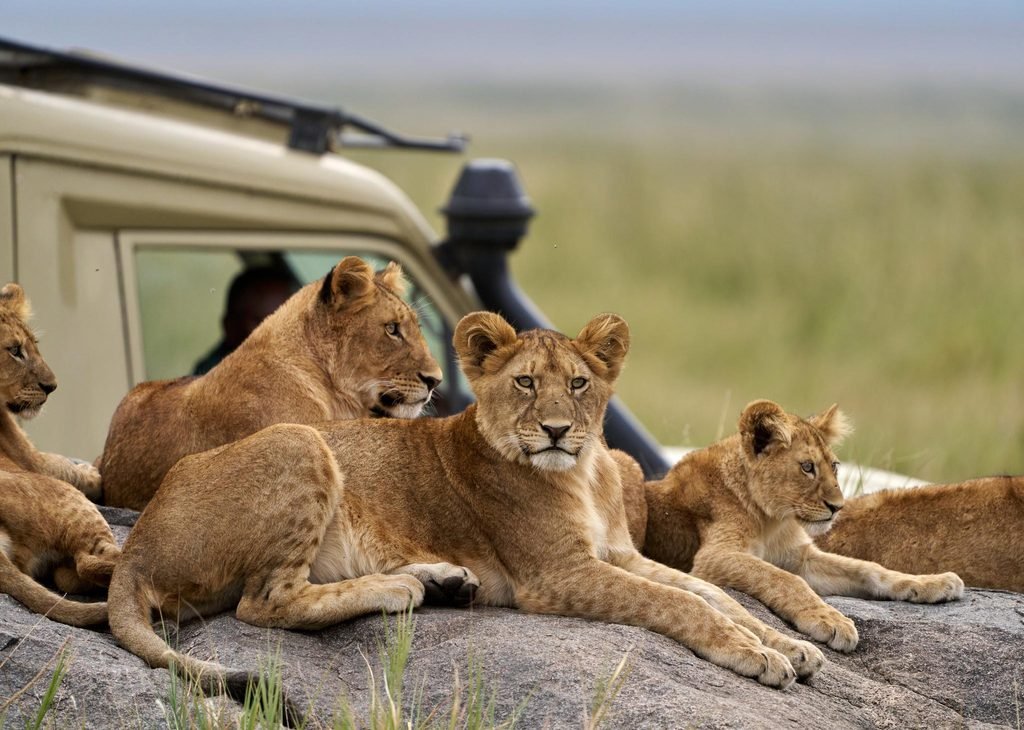
How Much Does a Serengeti, Ngorongoro and Kilimanjaro Adventure Cost?
The cost of combining these destinations depends on the number of travel days, accommodation category, group size, transport arrangements, and whether your Kilimanjaro experience involves a day trip or a full summit climb. A safari using comfortable mid-range lodges will generally cost less than a luxury itinerary featuring exclusive camps and premium accommodation. Private safaris may also have a higher per-person cost for couples than for larger groups because vehicle and guide expenses are shared among fewer travellers.
National park fees, Ngorongoro Crater charges, accommodation, meals, and transport form a significant part of the total safari price. A full Kilimanjaro climbing expedition adds mountain park fees, camping or hut accommodation, guides, porters, meals, equipment arrangements, and other operational expenses. Because these costs can change, travellers planning for 2027 or 2028 should request an updated quotation rather than relying on older prices published online.
When comparing packages, it is important to check what is included. Some itineraries include airport transfers, park fees, accommodation, meals, and private transport, while others may exclude certain services. International flights, visas, travel insurance, optional activities, and tips are also commonly charged separately. A clear quotation should explain the itinerary, accommodation standard, inclusions, exclusions, and payment conditions before you confirm your booking.
What Should You Pack for This Tanzania Adventure?
Packing for a combined safari and Kilimanjaro holiday requires preparation because the weather and activities differ considerably between destinations. The Serengeti and Ngorongoro can be warm during the day, although early mornings and evenings may be cool. Kilimanjaro’s lower slopes are often cooler and wetter than the surrounding lowlands, while higher elevations can experience freezing temperatures. Travellers should therefore bring clothing suitable for different conditions rather than relying entirely on lightweight safari clothes.
For the wildlife safari, comfortable neutral-coloured clothing, a light jacket, comfortable walking shoes, sunscreen, sunglasses, and a hat are useful. Binoculars and a camera with a suitable zoom lens can improve wildlife viewing, particularly when animals are far from the vehicle. If your itinerary includes a Kilimanjaro day hike, carry suitable walking footwear, a waterproof jacket, and a small backpack. Travellers attempting a full summit climb will need additional technical clothing and equipment appropriate for high-altitude trekking.
It is also important to bring personal medication, travel documents, and any items you may need during long driving days. Travellers should consult a qualified healthcare professional about travel health requirements, including vaccinations and malaria prevention, before departure. Those planning to climb Kilimanjaro should discuss altitude-related risks and appropriate preparation with their healthcare provider and mountain operator.
Why Book a Private Tanzania Safari?
A private safari provides flexibility when exploring destinations such as Serengeti and Ngorongoro. Instead of following a fixed group schedule, travellers can discuss preferred departure times, wildlife interests, and photography opportunities with their guide. Families, couples, photographers, and small groups may particularly appreciate having a dedicated safari vehicle, although all game drives must follow park rules and designated routes.
Private arrangements can also make it easier to combine different activities within one holiday. For example, you may choose to spend additional time in the Serengeti, stay near Ngorongoro Crater, or add a Kilimanjaro day hike before returning home. Travellers interested in a full mountain climb can arrange their safari around the climbing schedule, allowing time for rest and recovery. The most important consideration is selecting an itinerary that matches your interests and available time rather than trying to include too many activities in a short period.
Frequently Asked Questions
Can You Visit Serengeti, Ngorongoro and Kilimanjaro in One Trip?
Yes. All three destinations are located in northern Tanzania and can be combined within one itinerary. Travellers who want a wildlife safari and a Kilimanjaro day trip can often arrange the journey in approximately six to eight days. Those planning a full summit climb should allow considerably more time.
Is It Better to Climb Kilimanjaro Before or After a Safari?
Both arrangements are possible. Some travellers prefer climbing Kilimanjaro first and relaxing during a wildlife safari afterwards, while others begin with the safari to experience Tanzania before the mountain expedition. The best arrangement depends on your flight schedule, fitness, and personal preferences. A safari does not provide meaningful acclimatisation for a Kilimanjaro summit attempt because most game drives take place at much lower elevations.
Can You See the Big Five in Serengeti and Ngorongoro?
The Serengeti and Ngorongoro ecosystems support the Big Five: lion, leopard, elephant, buffalo, and rhinoceros. However, sightings of all five animals are not guaranteed. Black rhinoceroses are particularly difficult to observe because their populations are limited and their movements are unpredictable.
How Far Is Kilimanjaro From Serengeti National Park?
The distance depends on the specific starting and ending points. Driving between the Serengeti and Kilimanjaro generally requires travelling through the northern Tanzania safari circuit, often via Arusha or surrounding areas. Because the journey can take many hours, it is usually better to arrange the destinations on separate days rather than attempting to travel directly between them during a single sightseeing day.
Is 2027 or 2028 a Good Time to Visit Tanzania?
Both years can be suitable for visiting Tanzania. Wildlife viewing and Kilimanjaro adventures are available during different seasons, although weather conditions and wildlife movements vary. Travellers should select their dates according to the activities they want to prioritise and confirm availability well in advance, especially during popular travel months.
Plan Your Serengeti, Ngorongoro and Kilimanjaro Adventure with Eddy Tours & Safaris
Combining Serengeti National Park, Ngorongoro Crater, and Mount Kilimanjaro gives travellers an opportunity to experience three very different sides of Tanzania during one holiday. The Serengeti offers extensive wildlife plains and remarkable predator sightings, Ngorongoro introduces a volcanic landscape filled with animals, and Kilimanjaro provides a mountain environment unlike anywhere else in the country. Together, these destinations create a balanced adventure for visitors who want more than a traditional wildlife safari.
Whether you are interested in an eight-day safari with a Kilimanjaro day trip or a longer journey that includes climbing to Uhuru Peak, the most rewarding experience begins with careful planning. Travel dates, accommodation choices, available time, and personal interests all influence the itinerary. Allowing enough time in each destination gives you a better opportunity to appreciate the landscapes, observe wildlife, and enjoy your holiday without unnecessary rushing.
Eddy Tours & Safaris is a local tour company in Arusha, Tanzania, highly recommended by travellers. We arrange private Tanzania wildlife safaris, Kilimanjaro climbing trips, and personalised holidays for visitors from different parts of the world. Our team can help you plan a 2027 or 2028 adventure that combines Serengeti, Ngorongoro, and Kilimanjaro according to your travel preferences and budget.
Contact Eddy Tours & Safaris
Location: Arusha, Tanzania
Website: Eddy Tours & Safaris
Email: sales@eddytours-safaris.com
Phone/WhatsApp: +255 711 906 664
Booking enquiries: Contact our safari team