
Ngorongoro Crater is one of the best places to see wildlife in Tanzania. Located in the Ngorongoro Conservation Area in northern Tanzania, the crater is home to lions, elephants, buffaloes, zebras, wildebeest, hippos, hyenas, and the endangered black rhino. What makes this destination special is that many of these animals live within a relatively small area, giving visitors a good opportunity to see different wildlife species during a single game drive.
For travelers planning a Tanzania safari in 2027 or 2028, Ngorongoro Crater is a destination worth including in the itinerary. Unlike the wide-open plains of Serengeti National Park, Ngorongoro is a large volcanic basin surrounded by steep walls. Its floor contains grasslands, swamps, woodland, springs, and a soda lake, creating different habitats for animals throughout the year. This combination of scenery and wildlife makes it popular with first-time safari visitors, families, couples, and photographers.
The crater is also part of the larger Ngorongoro Conservation Area, a UNESCO World Heritage Site recognized for its wildlife, geological history, and important evidence of early human life. Visitors can explore the crater on a guided game drive and combine the experience with nearby destinations such as Tarangire National Park, Lake Manyara National Park, and the Serengeti.
At Eddy Tours & Safaris, we help travelers plan private and group Tanzania safaris, including visits to Ngorongoro Crater. Whether you are planning a short wildlife trip or a longer holiday covering several national parks, this guide explains what to expect, when to visit, which animals you may see, and how to prepare for a Ngorongoro safari in 2027 or 2028.
Ngorongoro Crater Safari Overview
| Travel information | Details |
|---|---|
| Destination | Ngorongoro Crater, Tanzania |
| Location | Ngorongoro Conservation Area, northern Tanzania |
| Main attraction | Wildlife viewing inside an ancient volcanic caldera |
| Crater floor area | Approximately 260 square kilometres |
| Crater depth | Approximately 600 metres |
| UNESCO status | Part of the Ngorongoro Conservation Area World Heritage Site |
| Popular wildlife | Lions, elephants, buffaloes, black rhinos, zebras, wildebeest and hippos |
| Safari activity | Guided game drives |
| Best time to visit | Year-round |
| Common departure points | Arusha, Moshi and Karatu |
| Recommended visit | One full crater game-drive day |
| Travel years | 2027 and 2028 |
1. What Is Ngorongoro Crater?
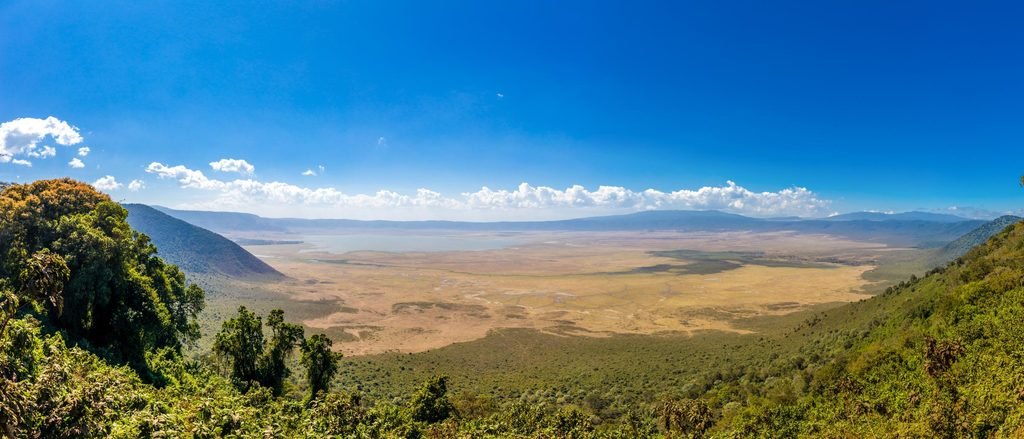
Ngorongoro Crater is a large volcanic caldera formed when an ancient volcano collapsed millions of years ago. A caldera is a wide depression created when the ground above a volcano sinks after major volcanic activity. Ngorongoro is considered the world’s largest intact, unfilled volcanic caldera, with a floor covering approximately 260 square kilometres and walls rising around 600 metres above the basin.
The crater is surrounded by highland forests and steep slopes that create a natural boundary around much of its wildlife habitat. From the rim, visitors can look down across the crater floor and see the grasslands, woodland, and lake below. On clear days, the view gives you a good idea of just how large the crater is before you descend for a game drive.
Although the steep walls make the crater look enclosed, it is not a zoo or a fenced wildlife park. Animals live in their natural environment, and some species move in and out of the crater. Wildlife sightings depend on where the animals are feeding, resting, or moving on the day of your visit.
The crater is part of the wider Ngorongoro Conservation Area, which also includes volcanic highlands, grazing lands, archaeological sites, and important parts of the southern Serengeti ecosystem. For more background on the protected area, visitors can read the official Ngorongoro Conservation Area Authority website.
2. How Was Ngorongoro Crater Formed?
Ngorongoro Crater was formed roughly two to three million years ago when a large volcano collapsed inward. Before the collapse, the volcano was much taller than the landform visible today. Over time, geological activity created the large basin that now forms the crater floor, while erosion and natural processes shaped the surrounding slopes and highlands.
Today, the crater provides a clear example of Tanzania’s volcanic history. The steep walls, open grasslands, springs, and lake are all part of a landscape shaped by geological changes over a very long period. Visitors do not need to be geology experts to appreciate the area, because the size and shape of the crater are easy to see from the viewpoints along the rim.
The surrounding highlands contain other volcanic features, including Empakaai and Olmoti craters. These places are different from Ngorongoro Crater and offer other experiences, including walking activities where permitted and arranged with authorized guides.
3. Why Is Ngorongoro Crater Famous?
Ngorongoro Crater is famous for three main reasons: its unusual geological formation, its high concentration of wildlife, and its importance to Tanzania’s natural and human history. The crater supports many large mammals within a relatively compact area, which means visitors may encounter several species during a few hours of driving.
The crater is especially well known for its lions, buffaloes, elephants, wildebeest, zebras, and black rhinos. It also supports hyenas, jackals, gazelles, warthogs, and a wide range of bird species. The presence of grasslands, water sources, and woodland provides different feeding and resting areas for wildlife.
Another important reason for its international recognition is that Ngorongoro forms part of a UNESCO World Heritage Site. The wider conservation area includes Olduvai Gorge and Laetoli, which have provided important evidence about early human history. Visitors interested in both wildlife and history can include these sites in a longer northern Tanzania safari.
For travelers who want to explore more than one wildlife destination, Ngorongoro combines well with a Tanzania safari arranged by Eddy Tours & Safaris, especially when visiting Serengeti National Park or Tarangire.
4. Wildlife You Can See in Ngorongoro Crater
One of the biggest reasons to visit Ngorongoro is the opportunity to see different animals within the same game-drive area. The crater’s grasslands support large grazing animals, while its swamps, woodland, and water sources attract other species. Predators also live in the crater, taking advantage of the available prey.
Lions
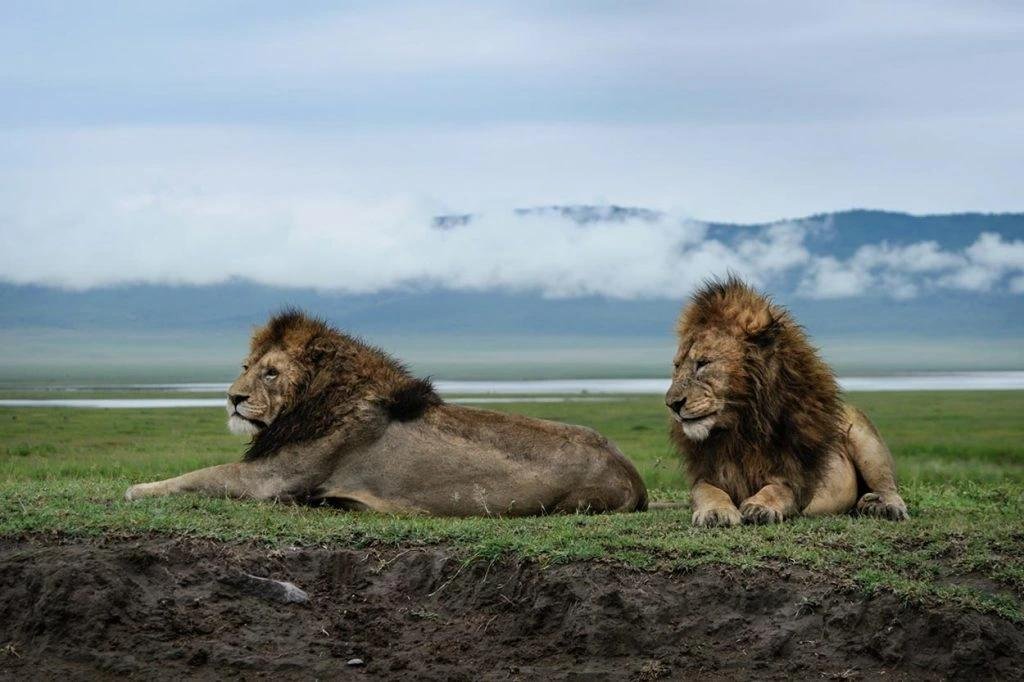
Lions are among the most popular animals visitors hope to see in Ngorongoro Crater. They can sometimes be found resting in the grass, moving across open plains, or watching grazing animals. Because the crater contains a relatively high concentration of prey, it provides suitable habitat for resident lion groups.
Visitors may see lions resting during the warmer parts of the day or moving when temperatures are cooler. However, their location changes, and no guide can guarantee a particular sighting. Your safari guide will look for wildlife activity while following the designated driving tracks and park regulations.
African Elephants
Ngorongoro is home to African elephants, including some large adult bulls. These animals may be seen near woodland, open grasslands, and other suitable feeding areas. Watching an elephant move through the crater is a good reminder of the size and strength of these animals.
Elephant sightings can vary, and visitors should not expect to see large family herds everywhere in the crater. Your guide will help identify the animals and explain their behavior while keeping a suitable viewing distance.
Black Rhinos
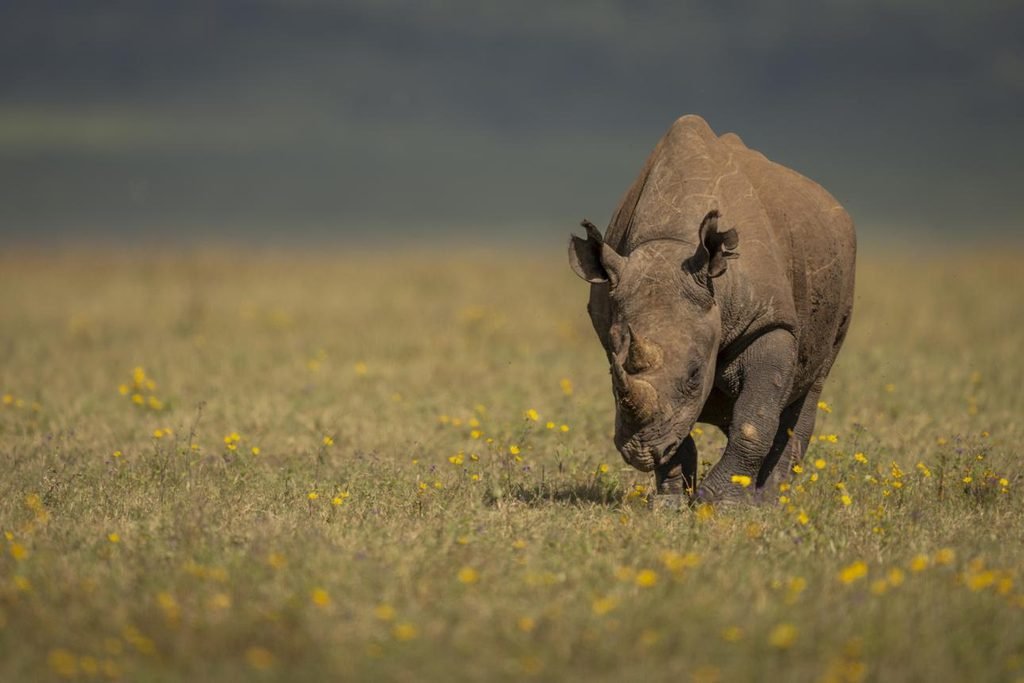
The black rhino is one of Ngorongoro’s most important wildlife species. It is critically endangered and receives special conservation attention because of the threats that have affected rhino populations across Africa. For many visitors, seeing a black rhino in its natural habitat is one of the main reasons for choosing a Ngorongoro safari.
Rhino sightings are possible but never guaranteed. The animals may be far from the road or difficult to identify without binoculars. A patient game drive and a knowledgeable guide can improve your opportunity to observe wildlife, but responsible tourism means avoiding pressure on animals or attempts to approach them too closely.
African Buffaloes
Buffaloes are commonly seen in Ngorongoro Crater, often grazing in groups across the grasslands. Their strong bodies and large horns make them easy to recognize, although they should always be treated as potentially dangerous wild animals.
Large buffalo groups can attract predators, including lions. Observing the relationship between grazing animals and predators is one of the interesting parts of a crater game drive.
Zebras and Wildebeest
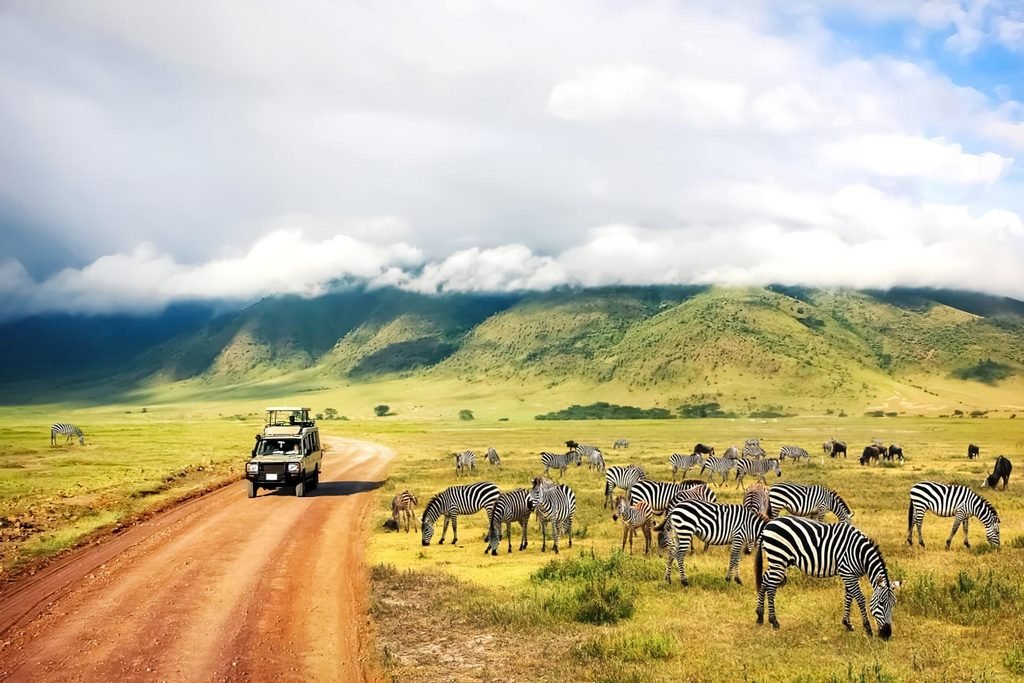
Zebras and wildebeest are among the most familiar animals in Ngorongoro Crater. They graze across the open plains and may be seen in groups of different sizes throughout the year. Their movements depend on grass, water, and local conditions.
It is important to understand that the wildebeest living in the crater are not the same as the enormous migrating herds that travel across the wider Serengeti ecosystem. Travelers interested in the Great Wildebeest Migration should consider combining Ngorongoro with a Serengeti safari through Eddy Tours & Safaris.
Hippos
Hippos are often associated with the crater’s pools and wetland areas. Visitors may see them resting in water during the day, sometimes with only their heads and backs visible above the surface. They are large, powerful animals, and viewing them safely from a safari vehicle is the appropriate approach.
The crater’s water sources also attract birds and other animals, making these areas useful stops during a game drive when access is permitted.
Hyenas and Other Predators
Spotted hyenas are an important part of Ngorongoro’s wildlife community. They are skilled hunters as well as scavengers and may be seen walking across the grasslands or resting near their territories. Jackals are also present, while leopards can be difficult to spot because they often remain hidden in suitable cover.
Cheetahs may occur in the wider Ngorongoro landscape, but sightings inside the crater should not be expected. The best approach is to enjoy whichever animals you encounter rather than planning your entire safari around a fixed list.
5. Can You See the Big Five in Ngorongoro Crater?
Ngorongoro is one of the well-known safari destinations associated with the African Big Five: lion, leopard, elephant, buffalo, and rhino. All five species are recorded in the wider Ngorongoro Conservation Area, but seeing every one of them during a single crater game drive is not guaranteed.
Lions and buffaloes may be easier to encounter, while black rhinos are less predictable. Leopards are often difficult to see because of their behavior and preferred habitats. Elephants may be encountered in suitable areas, but their location changes throughout the year.
Travelers who want more opportunities to look for the Big Five can combine Ngorongoro with Serengeti National Park or other wildlife destinations. A longer itinerary allows more game-drive time and provides a chance to experience different habitats rather than relying on one day alone.
6. Best Time to Visit Ngorongoro Crater in 2027 and 2028
Ngorongoro Crater can be visited throughout the year because many animals remain in or around the crater during different seasons. Unlike destinations where wildlife viewing depends heavily on seasonal migration, Ngorongoro has resident animal populations and permanent water sources that support game viewing in both wet and dry periods.
The dry season, generally from June to October, is popular because grass can be shorter in some areas and wildlife may be easier to observe. Roads are also often more manageable than during periods of heavy rainfall. However, this is a busy travel season, so visitors may encounter many safari vehicles at popular wildlife sightings.
From November to May, rainfall brings greener scenery to the crater and surrounding highlands. The landscape can be especially attractive for photography, and birdwatching may be rewarding. April and May are generally wetter, which can affect road conditions and visibility, but wildlife viewing remains possible.
Ngorongoro Crater Seasonal Guide
| Period | Typical conditions | What to expect |
|---|---|---|
| January–February | Often warm with some rain | Green scenery and year-round wildlife |
| March–May | Generally wetter | Green landscapes, possible muddy roads |
| June–October | Generally drier | Popular wildlife-viewing season |
| November–December | Seasonal rains possible | Fresh vegetation and changing weather |
For 2027 and 2028, actual weather conditions cannot be predicted precisely this far ahead. Visitors should choose travel dates according to their interests, available time, and the wider safari itinerary.
7. What Is a Ngorongoro Crater Game Drive Like?
A Ngorongoro Crater game drive usually begins with a journey to the crater rim, followed by a descent along an authorized access road. From the rim, the vehicle travels down toward the crater floor, where the landscape opens into grassland, wetland, woodland, and lake habitats. The change in elevation is noticeable, and the descent itself provides impressive views when the weather is clear.
Once inside the crater, your guide follows designated tracks while looking for wildlife. You may see zebras grazing near wildebeest, buffaloes resting in groups, hyenas moving across the plains, or lions lying in the grass. Some sightings happen close to the road, while others require binoculars because the animals are farther away.
A typical crater visit includes several hours of game driving, with stops for wildlife viewing and photographs. Lunch may be arranged at a designated picnic area, depending on the itinerary and current regulations. Visitors must follow the guide’s instructions, remain within permitted areas, and avoid disturbing wildlife.
The crater has controlled access and operating hours, so a full day in the Ngorongoro area does not mean unlimited time on the crater floor. Your guide will plan the descent and exit around the applicable permit conditions.
8. How Many Days Do You Need for Ngorongoro Crater?
For most travelers, one full crater game-drive day is enough to experience the main wildlife-viewing areas. However, it is often better to stay overnight near Karatu or the crater rim before the game drive, especially when traveling from Arusha or Moshi. This reduces the amount of driving required on the day of your crater visit and can make the schedule more comfortable.
A two-day itinerary can combine Lake Manyara or Tarangire with Ngorongoro Crater. Travelers with three or four days may add another park or spend more time exploring the surrounding highlands. Longer safaris can include Serengeti National Park, giving visitors a chance to compare the crater’s concentrated wildlife with the wider plains of the Serengeti.
If you are unsure how much time to spend in northern Tanzania, contact Eddy Tours & Safaris for help choosing a safari duration that matches your interests and budget.
9. Sample 2-Day Lake Manyara and Ngorongoro Crater Safari
Day 1: Arusha – Lake Manyara National Park – Karatu
Your safari begins in Arusha, where you meet your driver-guide and travel toward Lake Manyara National Park. The journey passes through local towns and farming areas before reaching the park near the Great Rift Valley escarpment. After completing the entry procedures, you begin a game drive through the park’s different habitats, which include groundwater forest, open areas, and sections near the lake.
Lake Manyara is known for its birdlife, elephants, monkeys, and other wildlife, although sightings depend on the season and animal movements. During the game drive, your guide will explain the park’s environment and help identify the animals you encounter. You may also have opportunities to photograph the escarpment and surrounding landscape.
After the game drive, you continue toward Karatu, a town located near the Ngorongoro highlands. You arrive at your selected lodge or campsite, where you have time to relax, enjoy dinner, and prepare for the following day’s crater safari.
Day 2: Karatu – Ngorongoro Crater – Arusha
After an early breakfast, you leave Karatu and travel toward the Ngorongoro Conservation Area. The road climbs into the highlands, where the air becomes cooler and the surrounding landscape changes. Once the entry procedures are complete, you continue toward the crater rim and begin descending into the crater for a guided game drive.
During the day, you explore different sections of the crater floor while looking for lions, elephants, buffaloes, zebras, wildebeest, hippos, hyenas, and possibly black rhinos. Your guide will choose the driving route according to wildlife activity, road conditions, and the time available under the permit. A packed lunch may be enjoyed at an authorized picnic area before continuing the game drive.
Later in the day, you leave the crater and begin the return journey to Arusha. Arrival time depends on road conditions, traffic, and the day’s schedule. This itinerary can be adjusted for travelers who prefer private accommodation, a longer safari, or an additional night near Ngorongoro.
Request a Lake Manyara and Ngorongoro Safari Quotation
10. Ngorongoro Crater Safari Costs for 2027 and 2028
The cost of visiting Ngorongoro Crater depends on several factors, including the number of travelers, accommodation category, vehicle arrangements, length of the safari, and applicable conservation fees. A private safari for two people generally costs more per person than a trip where several travelers share the same vehicle and guide.
Ngorongoro also has specific conservation and crater vehicle fees, which can make it more expensive than some other wildlife destinations. The final amount depends on the official fee schedule in force at the time of travel and the services included in your package. Because park fees and operating costs can change, travelers should avoid treating old online prices as confirmed rates for 2027 or 2028.
Budget travelers can reduce some costs by joining a suitable group safari or choosing modest accommodation. Mid-range safaris generally use comfortable lodges or tented camps, while luxury packages may include higher-end properties near the crater rim or in the surrounding highlands. Each option provides access to the same natural destination, although accommodation and service arrangements differ.
What Affects the Safari Price?
| Cost factor | How it affects your safari |
|---|---|
| Conservation fees | Required fees based on official regulations |
| Crater vehicle fee | Additional cost for authorized crater entry |
| Number of travelers | Shared costs may reduce the price per person |
| Accommodation | Budget, mid-range, and luxury options differ |
| Safari duration | More days increase accommodation and operating costs |
| Transport | Private and group arrangements have different costs |
| Travel season | Accommodation rates and demand may vary |
For current official fees and permit arrangements, refer to the Ngorongoro Conservation Area Authority or request a complete quotation from Eddy Tours & Safaris.
11. Where to Stay When Visiting Ngorongoro Crater
Travelers visiting Ngorongoro can stay in several areas, depending on their budget and preferred safari schedule. Accommodation around Karatu is a popular option because the town provides access to the Ngorongoro highlands and has a range of lodges, guesthouses, and tented accommodation. Staying in Karatu can be practical for travelers combining Ngorongoro with Lake Manyara or Tarangire.
Some lodges are located near the crater rim and offer views across the highlands or toward the crater, depending on the property’s position. These properties can be convenient for early crater visits, although they are often more expensive than accommodation farther away. Availability and room rates should be checked before booking, particularly during popular travel months.
Travelers on longer safaris may also stay in accommodation along the route between Ngorongoro and Serengeti National Park. Your choice should take into account the driving distances, the following day’s activities, and the overall budget rather than accommodation quality alone.
12. Ngorongoro Crater or Serengeti: Which Is Better?
Ngorongoro Crater and Serengeti National Park offer different safari experiences, and neither destination is automatically better for every traveler. Ngorongoro is known for its concentrated wildlife within a volcanic basin, while Serengeti is famous for its extensive plains, large predator populations, and the Great Wildebeest Migration.
A Ngorongoro game drive is well suited to travelers who want to see different wildlife habitats within one day. The crater’s smaller area can make it easier to visit several sections during a single outing. However, it can also be busy, especially when many safari vehicles are present.
Serengeti offers a much larger landscape and is generally better suited to travelers who want several days of game viewing. Wildlife may be spread across considerable distances, and the migration’s location changes throughout the year. For visitors with enough time, combining both destinations provides a more complete northern Tanzania safari experience.
| Feature | Ngorongoro Crater | Serengeti National Park |
|---|---|---|
| Landscape | Volcanic caldera | Open plains, woodland, rivers and hills |
| Wildlife viewing | High concentration in a compact area | Wildlife spread across a large ecosystem |
| Typical visit | One crater game-drive day | Two or more days recommended |
| Famous for | Black rhinos, lions, crater scenery | Wildebeest migration and predators |
| Best for | Short wildlife visits | Longer safari experiences |
To arrange a combined trip, visit the Eddy Tours & Safaris website and explore available Tanzania safari options.
13. Ngorongoro Crater and the Great Wildebeest Migration
Ngorongoro Conservation Area plays an important role in the wider Serengeti ecosystem, particularly in the southern plains around Ndutu. During the usual calving season, often between January and March, large numbers of migrating wildebeest may gather in the short-grass plains of the southern Serengeti and Ndutu area, depending on rainfall and grazing conditions.
It is important to distinguish these migration areas from Ngorongoro Crater itself. The main migrating herds do not gather on the crater floor in the same way they use the open southern plains. Travelers who want to see large wildebeest herds and possible calving activity should plan their itinerary around the Ndutu and southern Serengeti areas rather than expecting the full migration experience inside the crater.
A safari combining Ngorongoro Crater, Ndutu, and Serengeti National Park can be a good option for travelers visiting during the early months of the year. Because wildlife movements are affected by rainfall, no exact migration location can be guaranteed for 2027 or 2028.
14. Practical Tips for Visiting Ngorongoro Crater
A good Ngorongoro safari begins with realistic planning. The crater is at a high elevation, and mornings around the rim can be cold, even when the weather is warm in Arusha. Visitors should carry a jacket or fleece, especially when starting early. Once on the crater floor, conditions may become warmer, so comfortable layers are useful.
Bring binoculars if possible, because some animals may be far from the vehicle. A camera with a zoom lens is useful for wildlife photography, but visitors should not expect guides to drive off-road to get closer to animals. Off-road driving is restricted, and protecting wildlife is more important than obtaining a particular photograph.
Travelers should also bring sunscreen, a hat, drinking water, and any personal medication required during the day. Follow your guide’s instructions about where it is safe to stop, when to remain inside the vehicle, and which areas are designated for picnics or rest breaks.
For families with children, discuss the expected game-drive duration before departure. A full crater day can involve several hours in the vehicle, so snacks, comfortable clothing, and a suitable schedule can make the experience easier for younger travelers.
15. Frequently Asked Questions About Ngorongoro Crater
1. Where is Ngorongoro Crater located?
Ngorongoro Crater is located in the Ngorongoro Conservation Area in northern Tanzania, west of Arusha.
2. Is Ngorongoro Crater the largest crater in the world?
It is widely recognized as the world’s largest intact, unfilled volcanic caldera. Other types of volcanic depressions may be larger.
3. How big is Ngorongoro Crater?
The crater floor covers approximately 260 square kilometres, and the walls rise roughly 600 metres above the basin.
4. How was Ngorongoro Crater formed?
It formed when a large ancient volcano collapsed inward millions of years ago.
5. Is Ngorongoro Crater a UNESCO World Heritage Site?
Yes. It forms part of the Ngorongoro Conservation Area, which is recognized by UNESCO.
6. What animals can I see in Ngorongoro Crater?
Commonly seen animals include zebras, wildebeest, buffaloes, lions, hyenas, and hippos. Elephants and black rhinos may also be seen.
7. Can I see black rhinos in Ngorongoro?
Yes, but sightings are not guaranteed because rhinos may be distant or difficult to locate.
8. Can I see the Big Five in Ngorongoro?
All five species occur in the wider conservation area, but seeing all of them during one game drive is not guaranteed.
9. Are there lions in Ngorongoro Crater?
Yes. Lions are among the well-known predators living in the crater.
10. Are there giraffes inside Ngorongoro Crater?
Giraffes are not normally found on the crater floor, although they occur in parts of the wider region.
11. Are there hippos in Ngorongoro?
Yes. Hippos can be found in suitable pools and wetland areas.
12. What is the best time to visit Ngorongoro Crater?
The crater offers wildlife viewing throughout the year. June to October is a popular drier period.
13. Can I visit Ngorongoro during the rainy season?
Yes. Wildlife viewing remains possible, although roads and weather conditions may be less predictable.
14. How long should I spend in Ngorongoro Crater?
One full crater game-drive day is suitable for most visitors.
15. Can I visit Ngorongoro Crater in one day from Arusha?
Yes, but it involves a long day of driving. Staying overnight closer to the crater can be more comfortable.
16. Can I visit Ngorongoro from Moshi?
Yes. However, the journey is longer, so an overnight safari arrangement is often more practical.
17. Can I drive myself into Ngorongoro Crater?
Entry and vehicle arrangements must meet current conservation authority requirements. A professionally guided safari is the usual choice.
18. Can I walk freely inside the crater?
No. Visitors must follow the rules governing vehicle access, walking activities, and designated areas.
19. Is Ngorongoro Crater safe for tourists?
Guided visits are a standard tourism activity, but wildlife is unpredictable and visitors must follow safety instructions.
20. How much does a Ngorongoro safari cost?
Prices vary according to fees, accommodation, vehicle arrangements, number of travelers, and safari duration.
21. Is Ngorongoro suitable for families?
Yes. It can be a good family safari destination when the itinerary and game-drive duration are planned appropriately.
22. Is Ngorongoro better than Serengeti?
They offer different experiences. Ngorongoro is known for concentrated wildlife, while Serengeti offers a much larger safari landscape.
23. Can I combine Ngorongoro and Lake Manyara?
Yes. A two-day safari can include Lake Manyara National Park and Ngorongoro Crater.
24. Can I combine Ngorongoro with a Serengeti safari?
Yes. The two destinations are commonly included in longer northern Tanzania safari itineraries.
25. Can I book a Ngorongoro safari for 2027 or 2028?
You can request a quotation and discuss your preferred travel dates with Eddy Tours & Safaris. Final prices and availability are subject to confirmation.
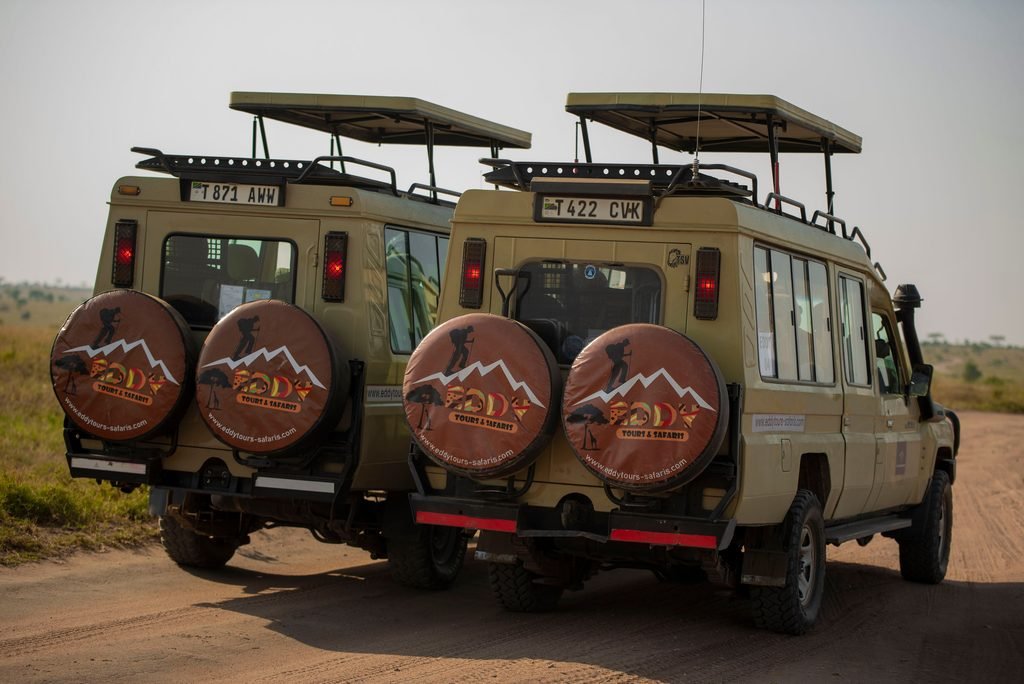
Book Your Ngorongoro Crater Safari for 2027 and 2028 with Eddy Tours & Safaris
Ngorongoro Crater is one of Tanzania’s most important wildlife destinations, offering visitors the chance to explore an ancient volcanic caldera and observe many different animals in their natural habitat. Its grasslands, woodland, swamps, and water sources support wildlife throughout the year, making it a good choice for both short safaris and longer northern Tanzania holidays.
Whether you want to spend one day exploring the crater or combine Ngorongoro with Lake Manyara, Tarangire, Serengeti, or Ndutu, the best itinerary depends on your travel dates, interests, group size, and budget. Planning ahead also helps you choose suitable accommodation and understand the conservation fees and travel arrangements involved.
At Eddy Tours & Safaris, we help travelers organize Tanzania wildlife safaris for 2027 and 2028. Our team can discuss private and group safari options, accommodation preferences, transport, and suitable travel schedules before providing a detailed quotation.
Request Your Ngorongoro Crater Safari Quotation
Chat with Eddy Tours & Safaris on WhatsApp
Email: sales@eddytours-safaris.com
Contact Eddy Tours & Safaris to plan your Ngorongoro Crater visit and explore more of Tanzania’s wildlife destinations.