
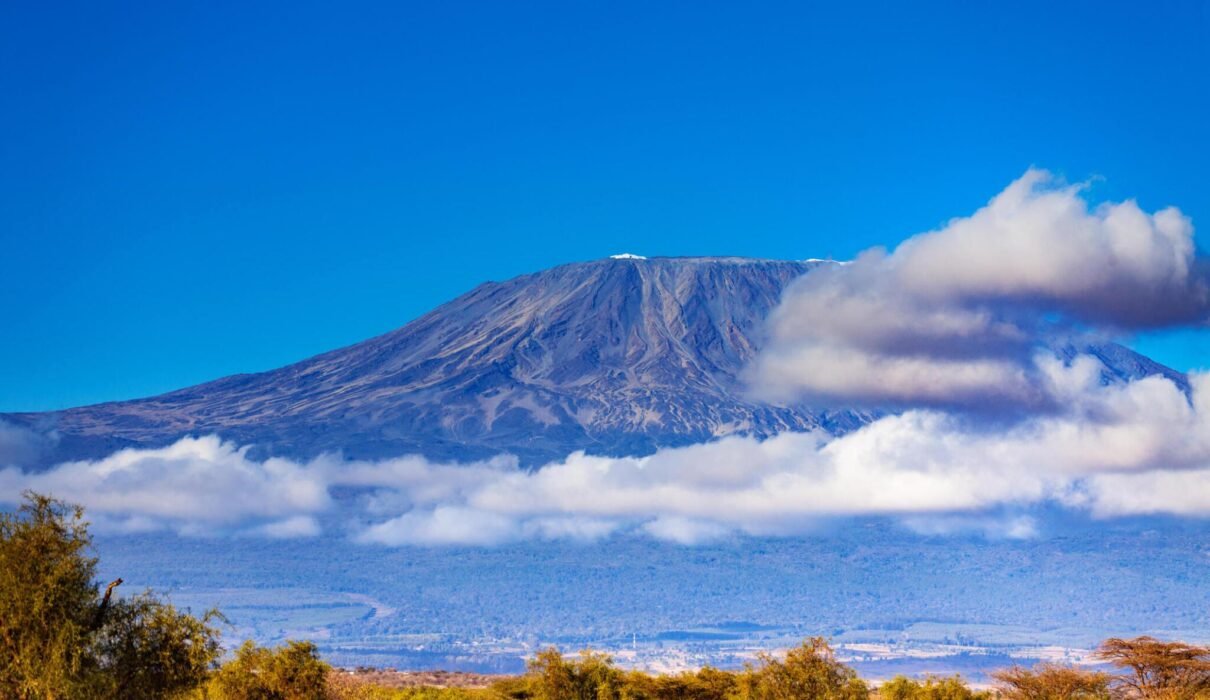
Mount Kilimanjaro is one of Africa’s most famous natural landmarks and an important destination for travelers visiting Tanzania. Standing at 5,895 metres (19,341 feet) above sea level, the mountain attracts hikers, photographers, nature lovers, and adventurers from around the world. Its enormous volcanic structure rises above the surrounding plains of northern Tanzania, creating a remarkable landscape that includes tropical forests, rocky mountain slopes, alpine deserts, and glaciers near the summit.
Although many travelers know Kilimanjaro as the highest mountain in Africa, there is much more to discover about its geology, wildlife, history, and natural environment. The mountain is made up of three volcanic cones, supports several distinct ecological zones, and contains unique plant species adapted to its changing climate. Its glaciers have also attracted considerable scientific attention because of their retreat over recent decades.
For travelers planning to visit Mount Kilimanjaro in 2027 or 2028, learning about these features can make the experience more meaningful. Understanding how the mountain formed, why its summit remains so cold despite being close to the equator, and how the climbing routes differ can help visitors appreciate the landscape while preparing for the challenges of high-altitude trekking.
At Eddy Tours & Safaris, we help travelers plan guided Kilimanjaro expeditions and other adventures throughout northern Tanzania. This guide explores ten fascinating facts about Mount Kilimanjaro, along with practical information about climbing routes, weather, altitude, wildlife, and responsible travel.
Mount Kilimanjaro: Important Facts
| Mountain information | Details |
|---|---|
| Mountain name | Mount Kilimanjaro |
| Country | Tanzania, East Africa |
| Location | Kilimanjaro Region, northern Tanzania |
| Highest point | Uhuru Peak |
| Summit elevation | 5,895 metres (19,341 feet) |
| Mountain type | Volcanic massif |
| Main volcanic cones | Kibo, Mawenzi and Shira |
| Highest volcanic cone | Kibo |
| Protected area | Kilimanjaro National Park |
| UNESCO World Heritage inscription | 1987 |
| Common climbing routes | Machame, Lemosho, Marangu, Rongai, Northern Circuit, Umbwe and Shira |
| Main gateway town | Moshi |
| Popular climbing periods | January–March and June–October |
1. Mount Kilimanjaro Is the Highest Mountain in Africa
The most widely recognized fact about Mount Kilimanjaro is that it is the highest mountain on the African continent. Its summit, Uhuru Peak, reaches 5,895 metres above sea level and forms part of the Kibo volcanic cone. This elevation places Kilimanjaro among the world’s famous Seven Summits, a group consisting of the highest mountains on each continent.
Unlike mountains that form part of extensive ranges, Kilimanjaro rises as a massive volcanic structure above the surrounding landscape. Its distinctive shape can be seen from considerable distances when weather conditions are clear. The mountain’s height and isolated position contribute to its dramatic appearance, particularly when clouds gather around the middle slopes while the upper summit remains visible.
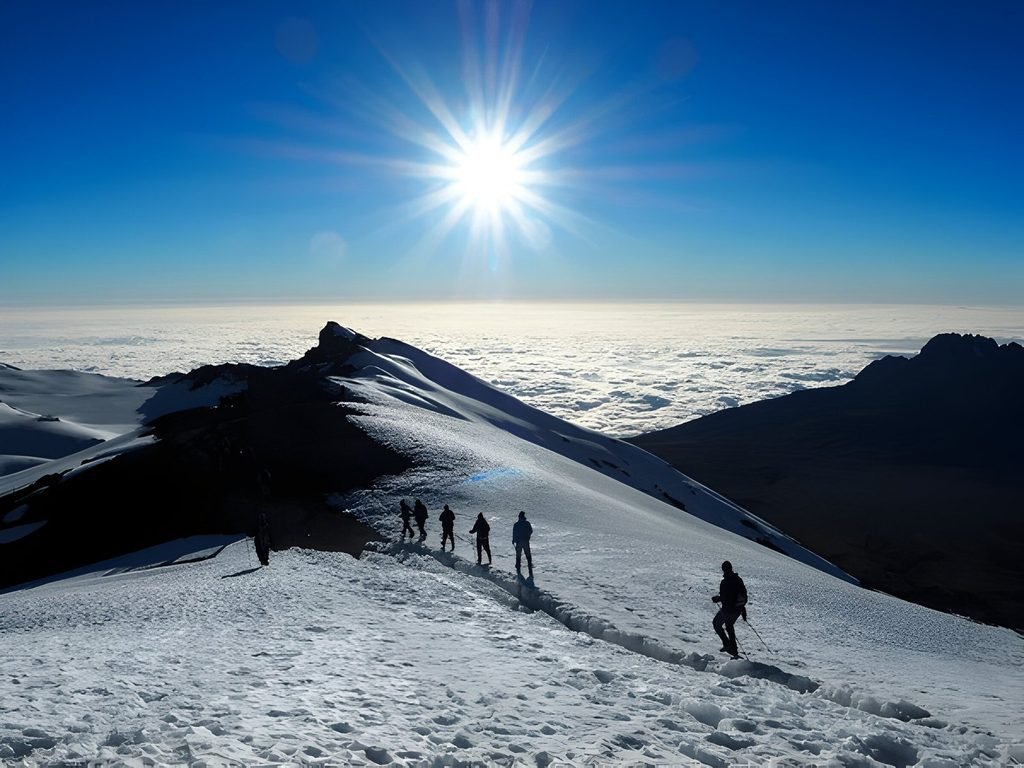
Reaching Uhuru Peak is a significant achievement because climbers must travel from the lower mountain environments into conditions where reduced oxygen availability makes physical activity increasingly difficult. Even experienced hikers may find the final ascent challenging because of the cold temperatures, steep terrain, and long walking hours involved.
For visitors planning a climb in 2027 or 2028, the mountain’s height should be an important consideration when selecting an itinerary. Choosing sufficient acclimatization time is generally more important than completing the expedition as quickly as possible.
2. Kilimanjaro Is the World’s Tallest Free-Standing Mountain
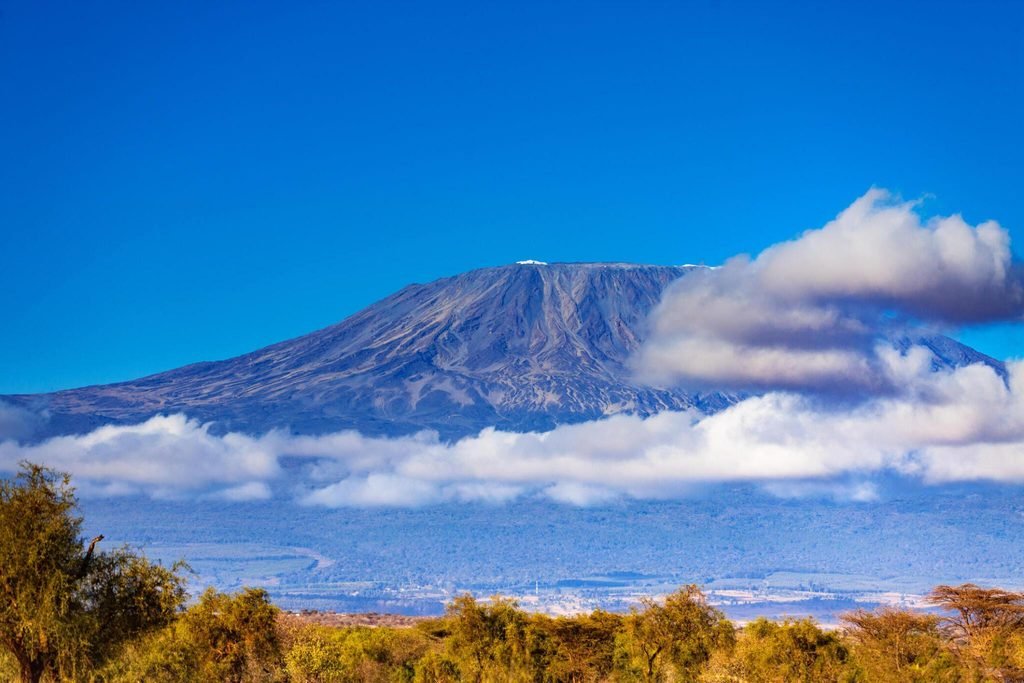
Another remarkable fact about Kilimanjaro is that it is widely recognized as the world’s tallest free-standing mountain. This means the mountain rises independently above the surrounding terrain rather than forming part of a major mountain range such as the Himalayas or the Andes.
Kilimanjaro’s enormous volcanic structure dominates the landscape of northern Tanzania. Its lower slopes support farms, villages, and forests, while the upper mountain extends into increasingly cold and exposed environments. This unusual geographical setting makes the mountain particularly distinctive because travelers can observe a dramatic change in scenery as they move from the surrounding plains toward its summit.
The mountain’s free-standing character also contributes to the impressive views available from different directions. On clear days, visitors may see the broad summit of Kibo rising above the surrounding landscape, while the jagged outline of Mawenzi creates a striking contrast nearby.
For photographers and nature enthusiasts, this isolated volcanic setting provides opportunities to capture Kilimanjaro from different perspectives. However, cloud cover frequently affects visibility, and clear mountain views cannot be guaranteed at any particular time of day.
3. Mount Kilimanjaro Has Three Volcanic Cones
Many people assume that Kilimanjaro is a single volcanic peak, but the mountain is actually made up of three main volcanic cones: Kibo, Mawenzi, and Shira. These cones developed through volcanic activity over a long geological period and together form the enormous structure visible today.
Kibo is the highest cone and contains Uhuru Peak, the mountain’s highest point. It has a broad summit area with a crater and remaining icefields. Kibo is considered dormant rather than extinct, although there is no basis for claiming that an eruption is imminent.
Mawenzi is the second-highest cone, rising to approximately 5,149 metres. Unlike the relatively broad summit of Kibo, Mawenzi has steep, rugged ridges and dramatic rock formations. Its appearance makes it one of Kilimanjaro’s most recognizable geological features, particularly for climbers approaching from the Rongai Route or crossing the Saddle between Mawenzi and Kibo.
Shira is the oldest of the three cones and has undergone extensive geological changes. Its former volcanic structure collapsed and eroded, leaving the broad Shira Plateau on the western side of the mountain. Today, the plateau forms an important part of several trekking itineraries, including Lemosho and Machame.
Kilimanjaro’s Three Volcanic Cones
| Volcanic cone | Approximate elevation | Main characteristic |
|---|---|---|
| Kibo | 5,895 m | Highest cone and location of Uhuru Peak |
| Mawenzi | 5,149 m | Rugged ridges and steep rocky peaks |
| Shira | 3,962 m | Ancient collapsed cone associated with the Shira Plateau |
The three-cone structure helps explain why Kilimanjaro offers such varied mountain scenery within a single national park.
4. Kilimanjaro Has Five Major Ecological Zones
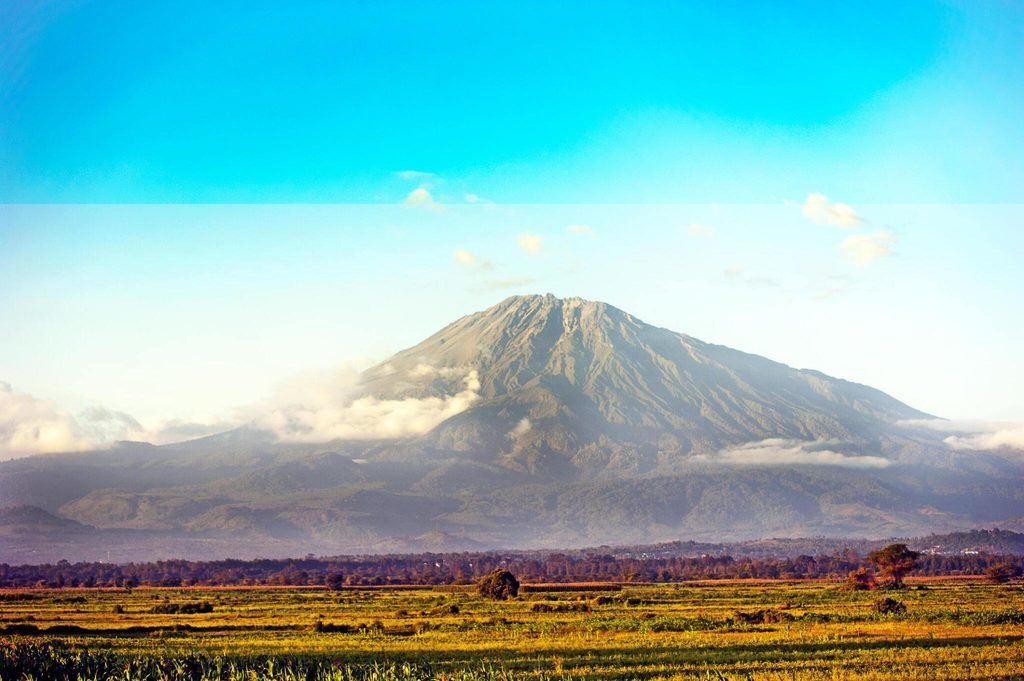
One of the most interesting experiences when climbing Kilimanjaro is passing through several distinct ecological zones. The mountain’s enormous elevation range creates different climatic conditions, allowing travelers to observe major changes in vegetation and landscape over a relatively short period.
The lower slopes support agricultural areas and settlements, particularly where the local communities cultivate crops in the fertile volcanic soils. Higher up, the mountain enters the montane rainforest zone, where tall trees, dense vegetation, mosses, and humid conditions create an environment that supports numerous plant and animal species.
Above the forest lies the heath and moorland zone, characterized by shorter vegetation, grasses, shrubs, and unusual high-altitude plants. As climbers continue upward, the environment becomes increasingly dry and exposed, eventually reaching the alpine desert, where vegetation is sparse and temperatures can change considerably between day and night.
The highest zone is the summit environment, where freezing temperatures, strong winds, bare rock, and remaining icefields create conditions very different from those found near the mountain’s base. Few plants can survive in this environment, and climbers must rely on appropriate clothing and equipment to protect themselves from the cold.
The Five Ecological Zones of Kilimanjaro
| Ecological zone | General characteristics |
|---|---|
| Cultivated lower slopes | Farms, villages and fertile volcanic soils |
| Montane rainforest | Dense forest, humid conditions and diverse wildlife |
| Heath and moorland | Shrubs, grasses, giant groundsels and lobelias |
| Alpine desert | Exposed volcanic terrain and limited vegetation |
| Summit zone | Extreme altitude, cold temperatures, rock and ice |
These zones are one reason Kilimanjaro is so appealing to travelers interested in natural history, ecology, and landscape photography.
5. Mount Kilimanjaro Has Glaciers Despite Being Close to the Equator
One of Kilimanjaro’s most surprising features is the presence of glaciers near its summit. Tanzania lies close to the equator, a region commonly associated with warm tropical conditions, yet the upper slopes of Kilimanjaro are cold enough to support icefields and seasonal snow.
The explanation is elevation. Temperatures generally decrease as altitude increases, and Kilimanjaro rises high enough to experience freezing conditions even though the surrounding lowlands are much warmer. This creates an unusual contrast between the tropical environment at the mountain’s base and the cold, exposed summit landscape.
Kilimanjaro’s glaciers have been shrinking over many decades, and scientific research has documented substantial reductions in ice coverage. Climate change and changes in local environmental conditions have contributed to concerns about the long-term future of the remaining icefields. However, predictions about exactly when all the glaciers might disappear have varied, so it would be misleading to state a guaranteed disappearance date.
For travelers climbing Kilimanjaro in 2027 or 2028, the remaining icefields are an important part of the mountain’s natural heritage. Visitors should follow designated trails, respect protected areas, and avoid activities that could damage fragile mountain environments.
6. Kilimanjaro National Park Is a UNESCO World Heritage Site
Mount Kilimanjaro is not only a famous climbing destination but also an internationally recognized protected area. Kilimanjaro National Park was established in 1973 and was inscribed on the UNESCO World Heritage List in 1987 because of its outstanding natural beauty and distinctive volcanic landscape.
The national park protects important mountain habitats, including montane forests, moorlands, alpine environments, and the upper volcanic slopes. These areas support a variety of plant and animal species, some of which are specially adapted to Kilimanjaro’s changing environmental conditions.
The park also plays an important role in conserving the mountain’s natural resources. Its forests contribute to local ecological processes, while its protected landscapes provide opportunities for scientific research, environmental education, and responsible tourism.
Visitors can support conservation by following park regulations, remaining on authorized trails, avoiding litter, and choosing responsible trekking operators. The mountain’s international recognition is an important reminder that Kilimanjaro is more than a summit destination; it is also a protected natural environment that requires careful management.
7. Mount Kilimanjaro Is Home to Wildlife and Unique Mountain Plants
Although Kilimanjaro is primarily associated with mountain climbing, its lower slopes and forest habitats support a surprising variety of wildlife. The montane rainforest is home to species such as black-and-white colobus monkeys, blue monkeys, bushbuck, and various forest birds. Other mammals occur within the protected area, although many are rarely encountered by visitors using the main climbing trails.
Wildlife sightings are more likely in the lower forest zones than near the summit, where cold temperatures and limited vegetation make conditions unsuitable for many animals. Climbers may hear birds calling through the forest or occasionally observe monkeys moving among the trees, particularly during the early stages of their expedition.
Kilimanjaro is also known for unusual plants adapted to high-altitude environments. Giant groundsels and giant lobelias are especially distinctive in the heath and moorland zones. Their unusual shapes and growth patterns help them survive environmental conditions that include strong sunlight, cold nights, and fluctuating temperatures.
These plants are among the natural features that make routes such as Machame and Lemosho particularly interesting. Travelers should observe them without damaging vegetation or leaving established paths, as high-altitude ecosystems can be sensitive to disturbance.
8. Kilimanjaro Has Several Climbing Routes with Different Experiences
Another important fact about Kilimanjaro is that there is no single trail used by every climber. The mountain has several established routes, each approaching from a different direction and offering its own combination of scenery, trekking distance, elevation gain, and accommodation arrangements.
Machame is popular for its varied landscapes and landmarks such as Barranco Wall, while Lemosho approaches from the west and passes through the Shira Plateau. The Northern Circuit follows a longer journey around the mountain’s northern slopes, making it attractive to travelers who want additional time for acclimatization and a more extended trekking experience.
Rongai approaches from the north near the Tanzania–Kenya border and offers a different view of Mawenzi and Kibo. Marangu is known for its established mountain huts, making it distinct from the camping arrangements used on most other routes. Umbwe is steeper and more demanding, while Shira begins at a relatively high elevation and requires particular attention to acclimatization.
Popular Kilimanjaro Climbing Routes for 2027 and 2028
| Route | Common duration | Main attraction |
|---|---|---|
| Machame | 6–7 days | Scenic landscapes and Barranco Wall |
| Lemosho | 7–8 days | Western approach and varied mountain environments |
| Northern Circuit | 8–9 days | Longer acclimatization schedule and northern slopes |
| Rongai | 6–8 days | Northern approach and Mawenzi scenery |
| Marangu | 5–6 days | Mountain hut accommodation |
| Umbwe | 5–7 days | Steep and challenging approach |
| Shira | 7–8 days | Shira Plateau and western mountain scenery |
For many first-time climbers, longer itineraries such as eight-day Lemosho or nine-day Northern Circuit are worth considering because they provide additional time for altitude adjustment. However, no route guarantees summit success, and individual health, weather conditions, and guide assessments remain important.
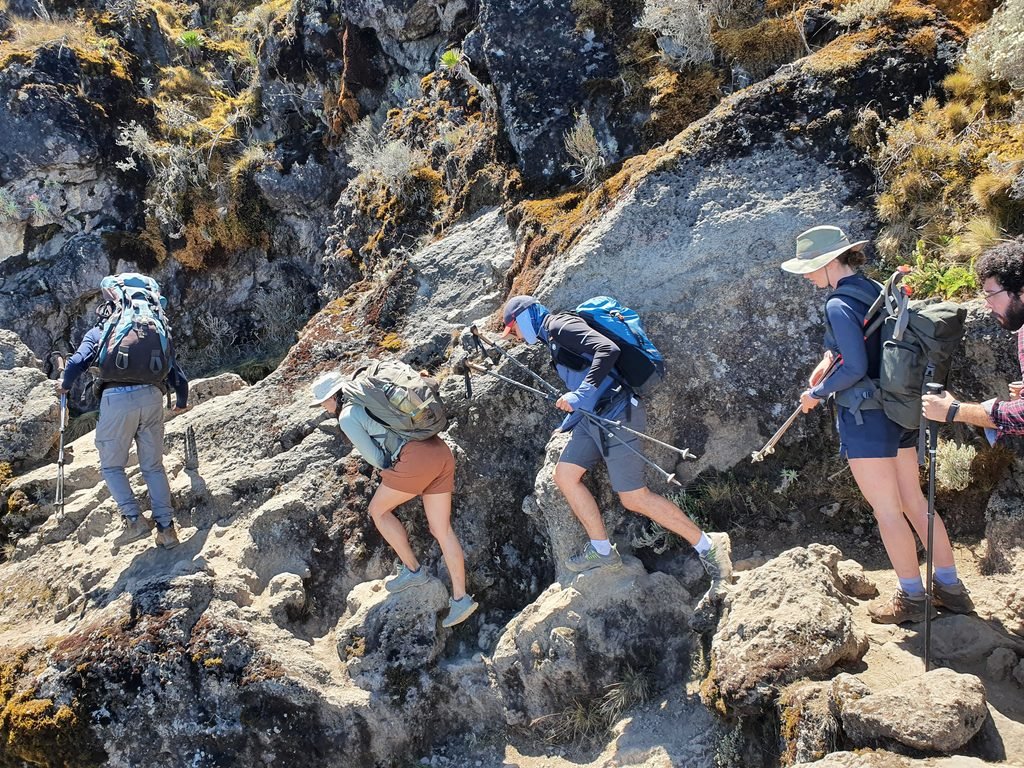
9. You Can Climb Kilimanjaro Without Technical Mountaineering Skills on Standard Routes
One reason Kilimanjaro attracts travelers from different backgrounds is that its standard trekking routes generally do not require technical mountaineering skills under suitable conditions. Climbers usually walk along established trails rather than using ropes and specialist rock-climbing equipment to reach Uhuru Peak.
However, this fact is sometimes misunderstood. A mountain does not need to involve technical climbing to be physically demanding or potentially dangerous. Kilimanjaro’s extreme altitude creates a significant challenge because the body must adjust to reduced oxygen availability. Climbers also face long walking days, steep sections, rocky terrain, cold temperatures, and the possibility of altitude-related illness.
Summit night is particularly demanding because the ascent commonly begins around midnight. Climbers may walk for several hours in freezing conditions before reaching the crater rim and continuing toward Uhuru Peak. The descent afterward can also be exhausting, particularly when the group has already spent many hours walking.
For travelers preparing to climb in 2027 or 2028, physical training and appropriate acclimatization should be priorities. Regular hiking, cardiovascular exercise, and strength training can help build endurance, but fitness does not prevent altitude sickness. A qualified healthcare professional can provide advice about personal medical risks, while a professional mountain guide should monitor climbers throughout the expedition.
10. Mount Kilimanjaro Has Important Cultural and Historical Significance
Mount Kilimanjaro has long been an important part of life in northern Tanzania, particularly for communities living around its slopes. The Chagga people have deep historical and cultural connections with the mountain, and its fertile lower slopes support agriculture, settlements, and traditional livelihoods.
The origin of the name Kilimanjaro is not completely certain. Different explanations have been proposed, including interpretations involving Swahili and local languages. Because the etymology remains debated, it is more accurate to acknowledge the uncertainty than to present one translation as a proven fact.
The mountain also has an important place in Tanzania’s national identity. Its highest point is named Uhuru Peak, with uhuru meaning freedom in Swahili. Kilimanjaro is widely recognized as a symbol of Tanzania and is featured prominently in the country’s tourism identity.
For travelers, visiting Kilimanjaro provides an opportunity to learn about the mountain’s natural environment and the communities surrounding it. Spending time in Moshi, visiting local cultural attractions, or combining the climb with other northern Tanzania experiences can provide a broader understanding of the region beyond the summit itself.
When Is the Best Time to Visit Mount Kilimanjaro in 2027 and 2028?
Mount Kilimanjaro can be visited throughout the year, although weather conditions vary by season and elevation. January to March and June to October are generally popular periods for climbing because they often experience relatively drier conditions. However, mountain weather can change quickly, and travelers may still encounter rain, strong winds, freezing temperatures, or poor visibility during these months.
April and May are generally associated with heavier rainfall, particularly on the lower forest trails. November and December may also experience seasonal rain, although the timing and intensity vary between years. Climbers should select their travel dates based on their preferred conditions, available time, and confirmed arrangements rather than expecting any particular month to guarantee favorable weather.
Travelers who do not wish to attempt the summit may also consider authorized day hikes and nature experiences around Kilimanjaro. These can provide an opportunity to enjoy the mountain’s forest environment and scenery without undertaking a multi-day high-altitude expedition.
How to Prepare for a Kilimanjaro Climb in 2027 or 2028
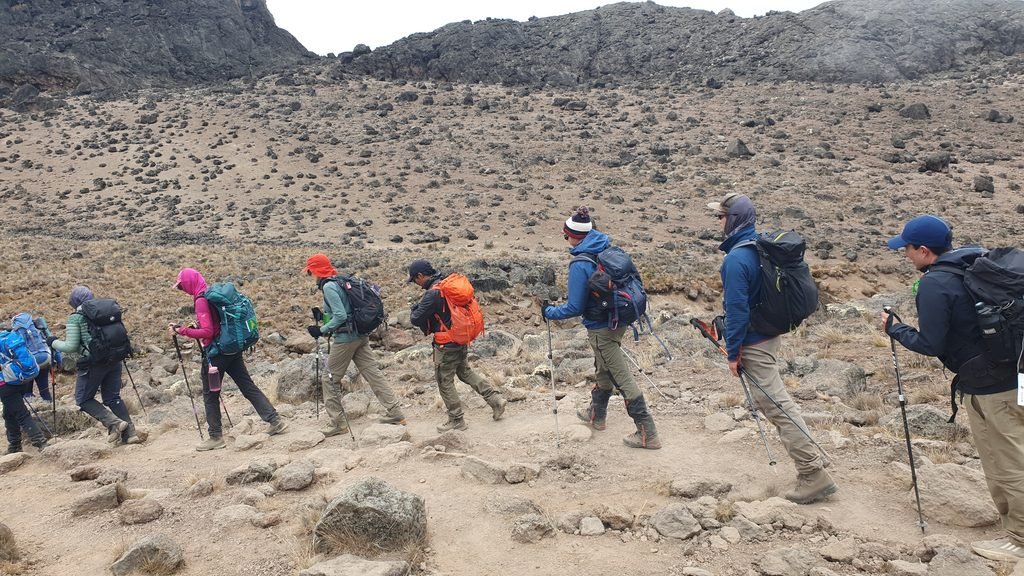
Preparing for Kilimanjaro should begin several months before departure, particularly for travelers who have limited previous hiking experience. Regular hill walking, cardiovascular exercise, and strength training can help develop the endurance required for consecutive trekking days. Training should also include longer walks with a daypack and practice on uneven terrain, as these conditions are common on the mountain.
Equipment preparation is equally important. Climbers need suitable hiking boots, waterproof outerwear, warm insulating layers, gloves, a headlamp, and a sleeping bag appropriate for cold mountain conditions. The lower rainforest can be warm and wet, while the upper mountain may experience freezing temperatures, so a layered clothing system is essential.
Altitude preparation should also be considered carefully. Longer itineraries generally provide better opportunities for acclimatization than very short climbs, but no itinerary removes the risk of altitude illness. Travelers should discuss medical concerns with a qualified healthcare professional and obtain travel insurance appropriate for high-altitude trekking and emergency evacuation.
Before booking, request a detailed quotation showing the route, number of trekking days, park fees, guiding arrangements, meals, accommodation, transfers, and excluded services. For 2027 and 2028, future prices and departure availability should be confirmed directly with the operator rather than assumed from older package descriptions.
Frequently Asked Questions About Mount Kilimanjaro
1. Where is Mount Kilimanjaro located?
Mount Kilimanjaro is located in northern Tanzania, East Africa, near the border with Kenya.
2. How tall is Mount Kilimanjaro?
Its highest point, Uhuru Peak, stands at 5,895 metres above sea level.
3. Is Kilimanjaro the highest mountain in Africa?
Yes. It is the highest mountain on the African continent.
4. Is Kilimanjaro the tallest free-standing mountain?
It is widely recognized as the world’s tallest free-standing mountain.
5. Is Mount Kilimanjaro a volcano?
Yes. Kilimanjaro is a volcanic massif formed from three main volcanic cones.
6. What are Kilimanjaro’s three volcanic cones?
Kibo, Mawenzi, and Shira.
7. Is Kilimanjaro still an active volcano?
Kibo is considered dormant, while the older Mawenzi and Shira volcanic structures are generally regarded as extinct.
8. Why does Kilimanjaro have snow near the equator?
Its extreme elevation creates cold conditions that allow snow and ice to persist near the summit.
9. Are Kilimanjaro’s glaciers disappearing?
Scientific research has documented substantial glacier retreat over recent decades, although exact future disappearance dates remain uncertain.
10. Is Kilimanjaro a UNESCO World Heritage Site?
Yes. Kilimanjaro National Park was inscribed on the UNESCO World Heritage List in 1987.
11. How many ecological zones does Kilimanjaro have?
The mountain is commonly described as having five major ecological zones.
12. What animals live on Kilimanjaro?
Wildlife includes colobus monkeys, blue monkeys, forest antelopes, birds, and other species found in the protected mountain habitats.
13. Can beginners climb Kilimanjaro?
Yes. Physically prepared beginners can attempt standard trekking routes with appropriate guiding and acclimatization arrangements.
14. Do I need technical climbing equipment?
Technical mountaineering equipment is not normally required on standard trekking routes under suitable conditions.
15. What is the easiest Kilimanjaro route?
No route is completely easy. Longer itineraries with suitable acclimatization schedules are generally preferable to very short climbs.
16. Which Kilimanjaro route is best for beginners?
Eight-day Lemosho and nine-day Northern Circuit are strong options to consider.
17. How many days does it take to climb Kilimanjaro?
Common itineraries range from five to nine trekking days, with longer options available.
18. What is the hardest part of climbing Kilimanjaro?
For many climbers, summit night is the most demanding because of altitude, cold temperatures, darkness, and fatigue.
19. Can I climb Kilimanjaro without a guide?
No. Climbs require the appropriate authorized guiding arrangements.
20. What is the best month to climb Kilimanjaro?
January to March and June to October are generally popular climbing periods.
21. Can I visit Kilimanjaro without climbing to the summit?
Yes. Authorized day hikes, forest walks, and other mountain-area experiences may be available.
22. Is Kilimanjaro suitable for photography?
Yes. The mountain offers varied landscapes, including rainforest, volcanic formations, moorland, and summit scenery.
23. Can I climb Kilimanjaro in 2027?
You can request a quotation and discuss suitable climbing arrangements for 2027, subject to confirmation.
24. Can I book a Kilimanjaro climb for 2028?
Yes. You can enquire about 2028 expeditions, although prices and availability must be confirmed.
25. Can I combine Kilimanjaro with a Tanzania safari?
Yes. Many travelers combine Kilimanjaro with a wildlife safari in northern Tanzania or a Zanzibar beach holiday.
Discover Mount Kilimanjaro with Eddy Tours & Safaris in 2027 and 2028
Mount Kilimanjaro is much more than Africa’s highest mountain. Its three volcanic cones, distinctive ecological zones, remaining glaciers, wildlife habitats, and cultural history make it one of Tanzania’s most important natural attractions. Whether you are interested in geology, photography, nature, or mountain trekking, Kilimanjaro offers an opportunity to discover an extraordinary environment that changes dramatically with elevation.
For travelers planning a summit expedition, understanding these facts is also an important part of preparation. The mountain’s height, cold summit conditions, and demanding terrain require careful route selection, physical training, suitable equipment, and adequate acclimatization time. Choosing a responsible operator and allowing enough days for the climb can help create a more manageable and safer experience.
At Eddy Tours & Safaris, we help travelers plan guided Kilimanjaro climbing expeditions for 2027 and 2028. Our team can assist with route comparisons, preparation advice, mountain arrangements, and personalized quotations. We can also help combine your Kilimanjaro adventure with a Tanzania wildlife safari or Zanzibar holiday.
Request Your Kilimanjaro Climbing Quotation
Chat with Eddy Tours & Safaris on WhatsApp
Email: sales@eddytours-safaris.com
Explore Mount Kilimanjaro with a suitable itinerary, realistic expectations, and a greater understanding of the natural and cultural features that make the mountain special.