
Facts About Tanzania’s Ngorongoro Crater help explain why this destination deserves a place on your 2027/2028 Tanzania safari itinerary. Its enormous volcanic basin brings grasslands, woodland, wetlands, and wildlife together beneath steep crater walls. For visitors, that means a day filled with changing scenery and opportunities to observe animals in their natural surroundings.
However, Ngorongoro is more than a wildlife viewing destination. Understanding its geology, conservation history, and place within northern Tanzania will help you plan a more rewarding visit.
Whether you want a short crater excursion or a longer journey through the Serengeti, explore Tanzania safari options with Eddy Tours & Safaris and use this guide to decide how Ngorongoro fits into your trip.
Facts About Tanzania’s Ngorongoro Crater: 2027/2028 Safari Guide
Facts About Tanzania’s Ngorongoro Crater help explain why this destination deserves a place on your 2027/2028 Tanzania safari itinerary. Its enormous volcanic basin brings grasslands, woodland, wetlands, and wildlife together beneath steep crater walls. For visitors, that means a day filled with changing scenery and opportunities to observe animals in their natural surroundings.
However, Ngorongoro is more than a wildlife viewing destination. Understanding its geology, conservation history, and place within northern Tanzania will help you plan a more rewarding visit.
Whether you want a short crater excursion or a longer journey through the Serengeti, explore Tanzania safari options with Eddy Tours & Safaris and use this guide to decide how Ngorongoro fits into your trip.
Geological Facts About Tanzania’s Ngorongoro Crater
1. Ngorongoro is a volcanic caldera
Although its familiar name is Ngorongoro Crater, the landform is a caldera: a large depression created when a volcano collapses inward.
The Ngorongoro Lengai Geopark dates its formation to approximately 2.5 million years ago. Its circular walls are the remains of that ancient volcanic structure. It was formed through volcanic processes, rather than a meteorite impact. Ngorongoro Lengai Geopark
This history adds another dimension to a game drive. As your vehicle descends toward the floor, you are entering a landscape shaped long before today’s wildlife communities developed.
Visitors interested in the region’s geology can learn more through the official Ngorongoro Lengai Geopark.
2. It is the world’s largest intact, unfilled volcanic caldera
Ngorongoro is widely described as the world’s largest intact and unfilled volcanic caldera. That precise description matters: it does not mean Ngorongoro is the largest volcanic depression of every type.
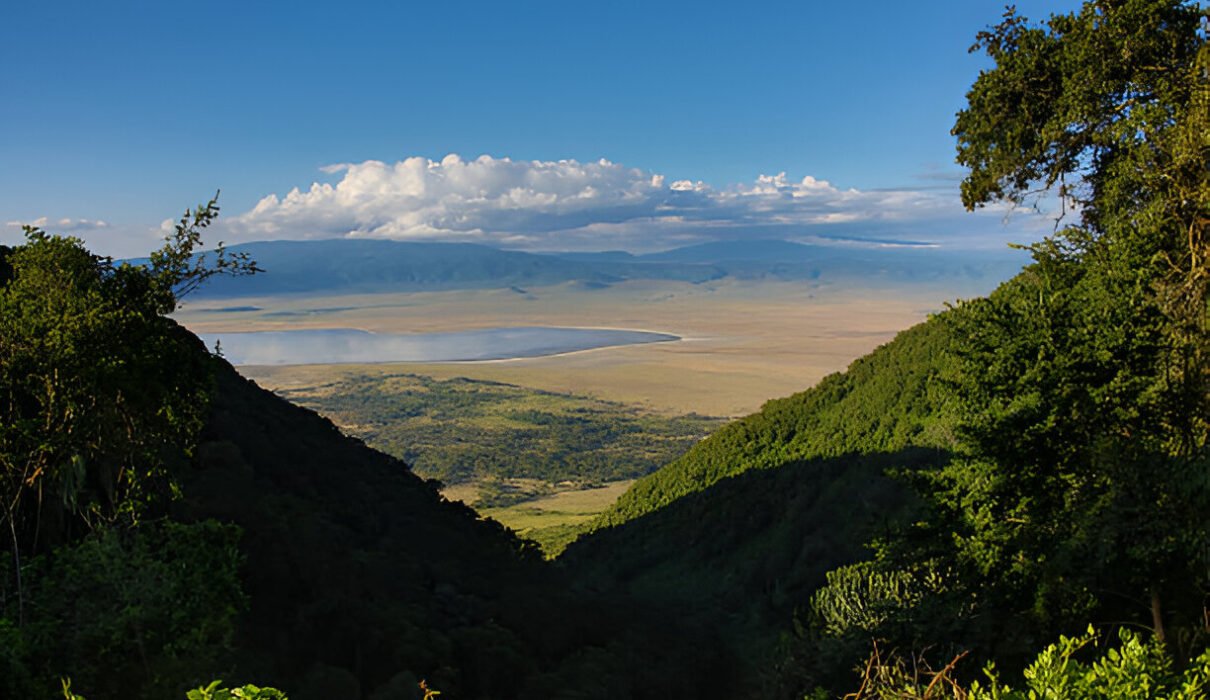
Its broad floor and surrounding walls make the landscape especially striking from the rim. Before descending, allow time to appreciate the scale of the basin. From above, distant animals and safari vehicles can look surprisingly small. Ngorongoro Lengai Geopark
For photographers, the rim provides a different perspective from the close wildlife views available during a crater drive.
3. The crater floor covers approximately 260 square kilometres
The conservation authority’s crater information gives the floor an area of approximately 260 square kilometres, with a depth of around 610 metres below the rim.
These figures help explain why Ngorongoro feels spacious despite its enclosed appearance. A crater safari involves exploring different habitats and searching for wildlife across a substantial area. Craters & Wildlife
A well-paced visit leaves room for patient observation. Watching a herd move through the grassland or waiting for a resting lion to become active can be more rewarding than rushing between sightings.
Conservation Facts About Tanzania’s Ngorongoro Crater
4. The crater is only one part of the Ngorongoro Conservation Area
Ngorongoro Crater and the Ngorongoro Conservation Area are related, but they are not interchangeable names.
The conservation area covers a much larger landscape, including highlands, plains, forests, and archaeological sites. The famous crater is its best-known attraction, rather than the whole destination.
Established in 1959, the conservation area was designed around multiple land uses. Its history includes wildlife conservation and the lives of pastoral communities. UNESCO World Heritage Centre
For itinerary planning, this distinction is useful. An activity described as taking place “in Ngorongoro” may be outside the crater itself. Ask your operator whether your package includes an actual descent and game drive on the crater floor.
5. UNESCO recognises both its natural and cultural importance
The Ngorongoro Conservation Area was inscribed on the UNESCO World Heritage List for its natural importance in 1979. Cultural recognition was added in 2010, reflecting the area’s significant evidence of human evolution.
Its heritage value therefore extends beyond scenery and animals. Archaeological discoveries are an important part of the wider destination. UNESCO World Heritage Centre
You can read the official designation on UNESCO’s Ngorongoro Conservation Area page.
A safari itinerary that includes both wildlife and an archaeological visit offers a broader understanding of northern Tanzania.
Wildlife Facts About Tanzania’s Ngorongoro Crater
6. Several habitats exist within the same basin
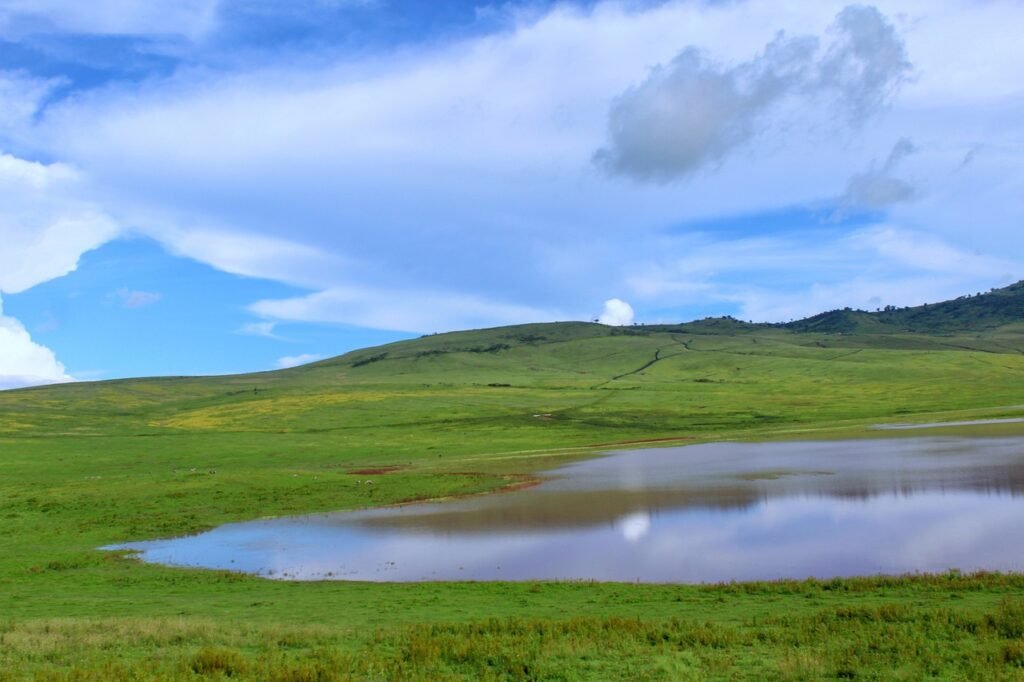
The crater contains more than open grassland. Its habitats include woodland, marshes, a lake, and other wetland areas.
These environments support different animals and birds. A morning drive may move between grazing herds on the plains, birds near water, and wildlife using wooded areas for shelter. Craters & Wildlife
This variety is one reason to avoid treating every game drive as a search for only a few famous species. Smaller animals, birds, and changes in vegetation are part of the experience.
Binoculars are particularly useful when wildlife is distant or when you want to identify birds without approaching them.
7. Ngorongoro offers a chance to see black rhinos
Black rhinos are among the crater’s most sought-after animals. Tanzania’s official tourism information identifies Ngorongoro as an important place to look for them. tanzaniatourism.com
However, a rhino sighting is never guaranteed. Animals may be far from the road, partly hidden, or difficult to distinguish without binoculars.
The same principle applies to a Big Five safari. Seeing lions, elephants, buffaloes, leopards, and rhinos on one visit depends on wildlife movement and conditions.
Choose a safari for the overall quality of the experience, and let individual sightings be a welcome part of the day.
If time is limited, Eddy Tours offers a one-day Ngorongoro Crater safari from Arusha. Ask about the departure time and driving schedule before deciding whether a day trip suits you.
8. Birdwatching is an important part of a crater visit
Ngorongoro’s grasslands, wooded areas, and wetlands provide varied birdwatching opportunities. Flamingos are associated with the crater’s lake, although their presence and numbers vary with conditions. Flamingos & Bird Watching
A pink shoreline should therefore be treated as a possibility, rather than a fixed feature of every visit.
For travellers interested in birds:
- Bring binoculars and a camera with a suitable zoom.
- Tell your guide that birdwatching is a priority.
- Allow time to observe wetlands and woodland.
- Record sightings to identify unfamiliar species later.
Even when large mammals are resting, bird activity can keep a game drive interesting.
9. The Great Migration is a wider ecosystem event
A common misunderstanding is that visiting Ngorongoro Crater automatically means seeing the Great Wildebeest Migration.
The crater supports its own wildlife community. The seasonal migration also uses plains within the wider conservation area, including areas near the Serengeti boundary. These plains are different from the crater floor. UNESCO World Heritage Centre
If migration viewing is your main goal, your itinerary should place you in the appropriate region for your travel dates. River crossings are a separate experience and should not be promised as part of a crater game drive.
Read Eddy Tours’ guide to understanding the Great Migration and discuss how to combine it with Ngorongoro.
Cultural and Historical Facts About Tanzania’s Ngorongoro Crater
10. The wider area contains major archaeological sites
Olduvai Gorge and Laetoli are important sites within the broader conservation landscape. Laetoli is known for ancient hominin footprints dating to approximately 3.6 million years ago.
These sites contribute to our understanding of human evolution. They are separate attractions, so visiting them requires additional itinerary time. UNESCO World Heritage Centre
If you are travelling between Ngorongoro and the Serengeti, ask whether an archaeological stop can be included. Confirm opening arrangements, guiding, and any additional charges before booking.
11. Ngorongoro has a living cultural history
The conservation area’s history includes Maasai pastoral communities, alongside its internationally recognised wildlife and archaeological heritage. Questions about land use, conservation, and community livelihoods are part of that history. UNESCO World Heritage Centre
A cultural visit should provide an opportunity to learn from people, with their consent and participation. Ask who hosts the experience, what the visit includes, and how payments are handled.
Respectful practices include requesting permission before taking portraits and avoiding assumptions that every household shares the same lifestyle.
For a possible addition to your itinerary, review Eddy Tours’ Maasai cultural day tour and ask how it can fit around your safari.
Planning Your Ngorongoro Crater Safari in 2027/2028
Choose your season according to your interests
Ngorongoro can be visited in different seasons, and each period offers a different atmosphere.
During drier conditions, wildlife may concentrate around available water. Wetter periods can bring greener scenery, while rain may affect visibility and road conditions. The conservation authority’s seasonal information highlights the relationship between dry conditions, water, and wildlife viewing. Best Season to Visit
For a 2027/2028 booking, use seasonal patterns as guidance. Weather and wildlife behaviour cannot be predicted precisely for a particular day.
Your decision should also consider whether you are combining the crater with migration viewing, birdwatching, or other destinations.
Pack for cool highland mornings
Ngorongoro’s rim lies at more than 2,200 metres above sea level, and its highland climate can feel cool. Land of the Kilimajaro
Bring layers that you can remove as the day warms up:
- A fleece or warm sweater.
- A lightweight windproof or waterproof jacket.
- Comfortable closed shoes.
- A hat and sunglasses.
- Binoculars and spare camera batteries.
- Sun protection and a reusable water bottle.
Keep the items you need during the drive in a small bag within easy reach.
Decide between a day trip and an overnight itinerary
A crater day trip from Arusha can suit travellers with limited time, but it involves a substantial driving day. An overnight stay closer to Ngorongoro can make the schedule more relaxed.
Accommodation location matters. Ask how far your lodge is from the entry gate and how the morning drive is organised.
For a short combination, consider Lake Manyara and Ngorongoro safari options. For a longer wildlife journey, review a Serengeti and Ngorongoro itinerary.
Some published packages carry earlier years in their titles. Request an updated proposal for your actual 2027 or 2028 travel dates, rather than assuming an older price still applies.
Check what the quotation includes
Before paying a deposit, request a written breakdown covering:
- Conservation area entry and crater-related charges.
- Safari vehicle and guide.
- Accommodation and meal plan.
- Transfers and pickup location.
- Any optional activities.
- Exclusions, cancellation terms, and payment conditions.
Ask whether quoted charges are confirmed or subject to future tariff changes. This makes comparing packages much easier.
Responsible Travel Tips for Ngorongoro
A good safari gives wildlife space and follows the guide’s instructions.
Keep noise low, avoid feeding animals, and take all rubbish away. Do not encourage a driver to crowd an animal for a photograph. Follow the designated arrangements for leaving the vehicle.
The conservation authority also prohibits removing natural materials such as rocks, plants, and animal products. Leave the landscape as you found it. ngorongorocrater.org
For current visitor requirements, consult the Ngorongoro Conservation Area Authority and confirm arrangements with your operator before departure.

Frequently Asked Questions About Ngorongoro Crater
Is Ngorongoro Crater the same as Serengeti National Park?
No. They are separate destinations within northern Tanzania’s broader safari landscape. Many itineraries combine them because they offer different settings and wildlife experiences.
Can I see all the Big Five in one day?
It is possible to encounter Big Five species, but no operator can guarantee all five on a particular game drive. Allow your guide to plan around actual conditions.
How much time should I allow?
Many itineraries include one crater game drive. Your total schedule should also allow for transfers, accommodation, and any other activities in the conservation area.
Can I combine Ngorongoro with the wildebeest migration?
Yes. The itinerary needs to include the relevant migration region as well as the crater. Ask your operator to explain where you will stay and why those locations suit your dates.
Are 2027/2028 prices already fixed?
That depends on the operator, accommodation, and applicable tariffs. Request a dated quotation and check which costs may change before travel.
Plan Your 2027/2028 Ngorongoro Safari
These Facts About Tanzania’s Ngorongoro Crater show why a visit can offer much more than a list of animal sightings. Its volcanic landscape, varied habitats, and place within a larger cultural and conservation area make it a rewarding part of a Tanzania journey.
To plan your visit, contact Eddy Tours & Safaris with your preferred dates, group size, budget, and accommodation preferences. Ask for a clear itinerary showing your crater visit, travel times, overnight stops, and included costs.
Email: sales@eddytours-safaris.com
WhatsApp: +255 711 906 664