
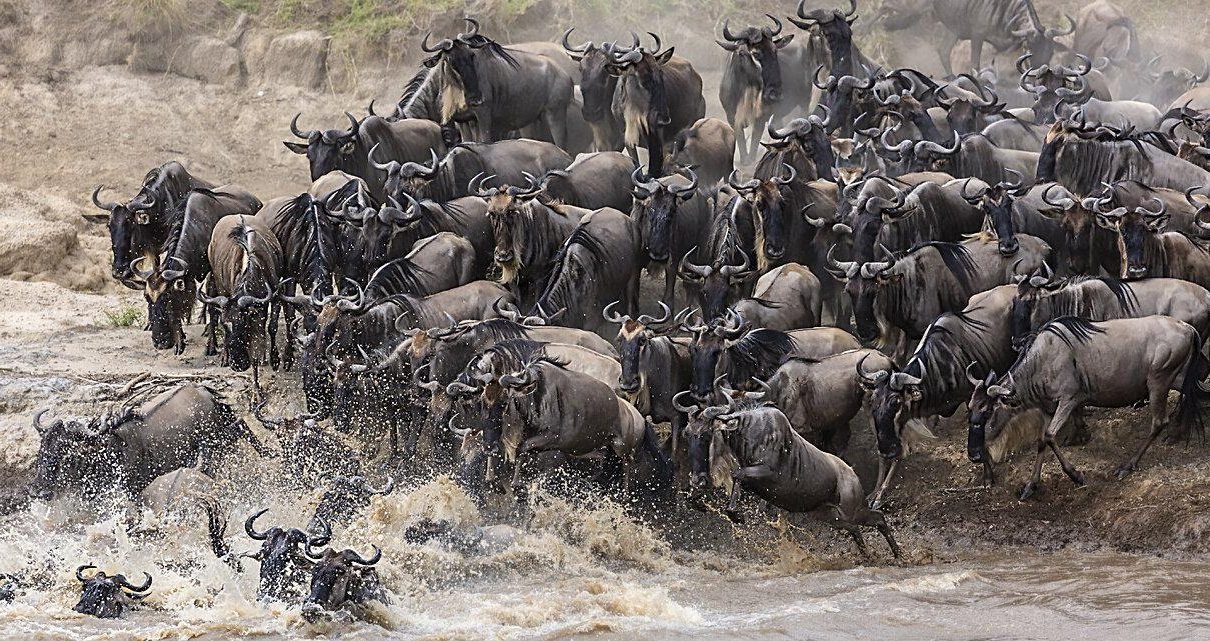
Watching thousands of wildebeest gather along the Mara River before attempting to cross is one of the most remarkable wildlife experiences in Tanzania. The animals move towards the water, hesitate along the riverbanks, and sometimes turn back before suddenly entering the river. Some crossings involve relatively small groups, while others attract enormous herds of wildebeest and zebras. For travellers planning a Great Migration river crossing safari in 2027 or 2028, understanding the best months, the right locations, and the unpredictable nature of the migration is essential.
The Great Migration takes place across the Serengeti–Mara ecosystem, covering northern Tanzania and southwestern Kenya. Although the migration continues throughout the year, the famous Mara River crossings are mainly associated with the northern Serengeti between July and October. August and September are particularly popular months for travellers hoping to witness the river crossings, but the exact timing depends on rainfall, grazing conditions, water levels, and animal movements. No safari operator can guarantee that wildebeest will cross the river on a particular day.
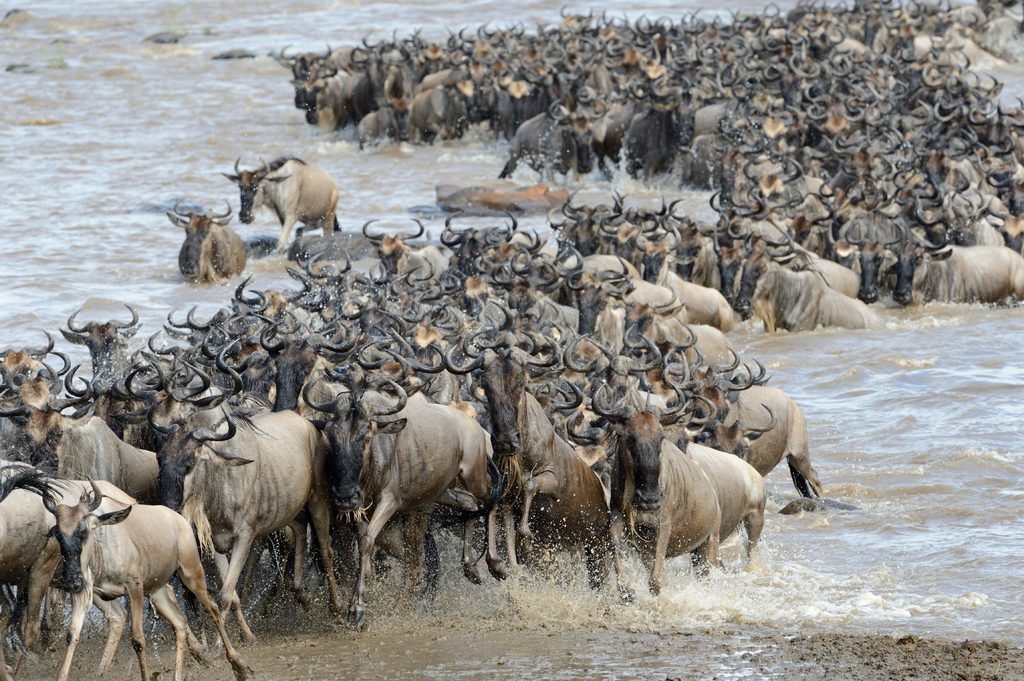
At Eddy Tours & Safaris, we help travellers plan Tanzania wildlife safaris around the seasonal movement of the migration. Whether you are visiting in 2027 or 2028, choosing the right region of the Serengeti and spending enough time there can make a significant difference to your safari experience. This guide explains when to visit, where to stay, how to improve your chances of seeing a crossing, and what to expect when travelling to northern Tanzania during the migration season.
What Is the Great Migration River Crossing?
The Great Migration is the continuous movement of more than a million wildebeest, accompanied by hundreds of thousands of zebras and other grazing animals, through the Serengeti–Mara ecosystem. The herds follow seasonal rainfall and the availability of fresh grass, moving between different grazing areas throughout the year. Their journey takes them across open grasslands, wooded areas, and rivers, with the Mara River becoming one of the most challenging obstacles during the northern migration season.
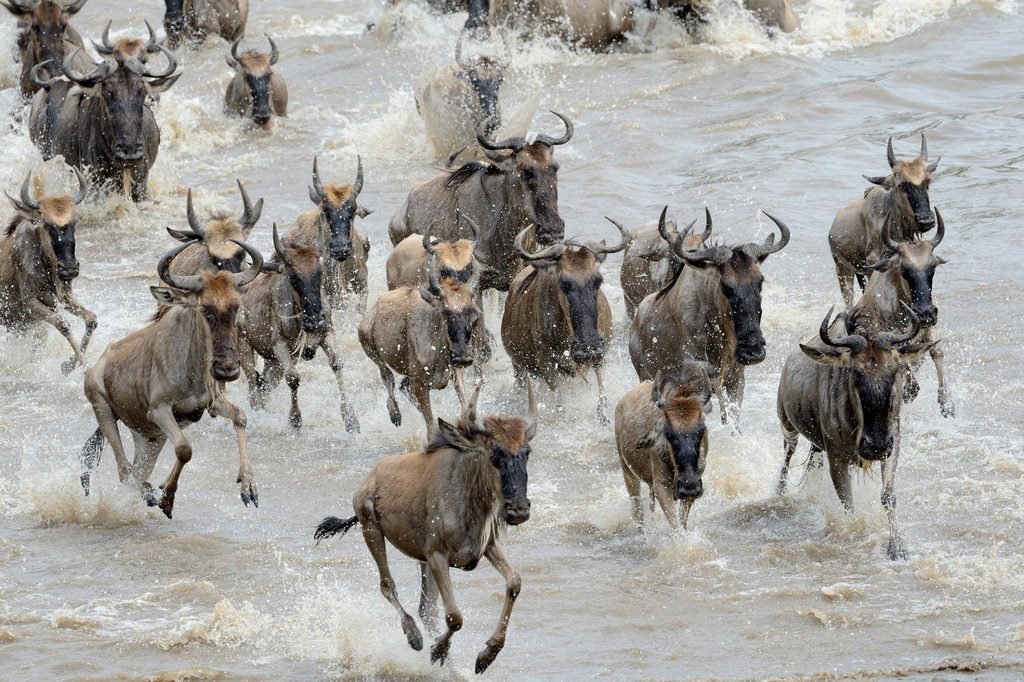
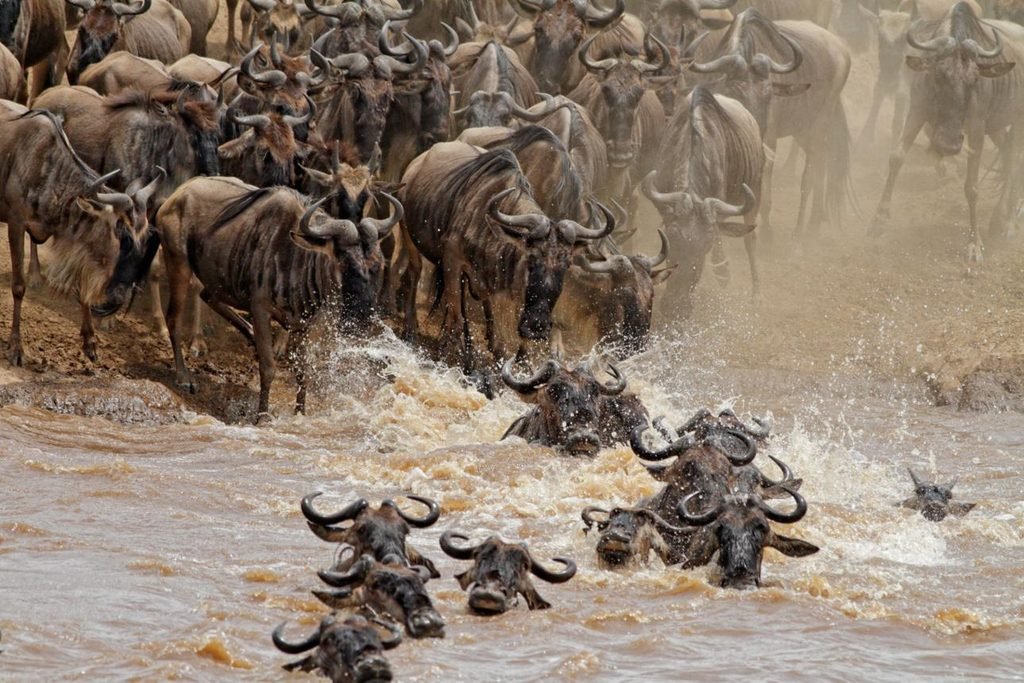
A river crossing begins when animals gather near a suitable section of the riverbank. Wildebeest are naturally cautious about entering unfamiliar or dangerous water, especially where the banks are steep or the current is strong. Large groups may wait for hours, move along the river, or retreat into the surrounding grassland before attempting to cross. Sometimes one animal enters the water and others follow, creating a sudden rush of movement as the herd tries to reach the opposite bank.
The Mara River is home to Nile crocodiles, which may attack animals during crossings. Strong currents, steep banks, and the pressure of other animals can also make crossing difficult. However, not every crossing involves a crocodile attack or a dramatic struggle. Some animals cross successfully in relatively calm conditions, while others face greater challenges. Watching the migration is therefore about observing natural wildlife behaviour rather than expecting a particular scene.
For travellers interested in understanding the entire migration cycle, our Great Migration River Crossing Guide provides additional information about the seasonal movement of the herds and the different areas of Serengeti National Park.
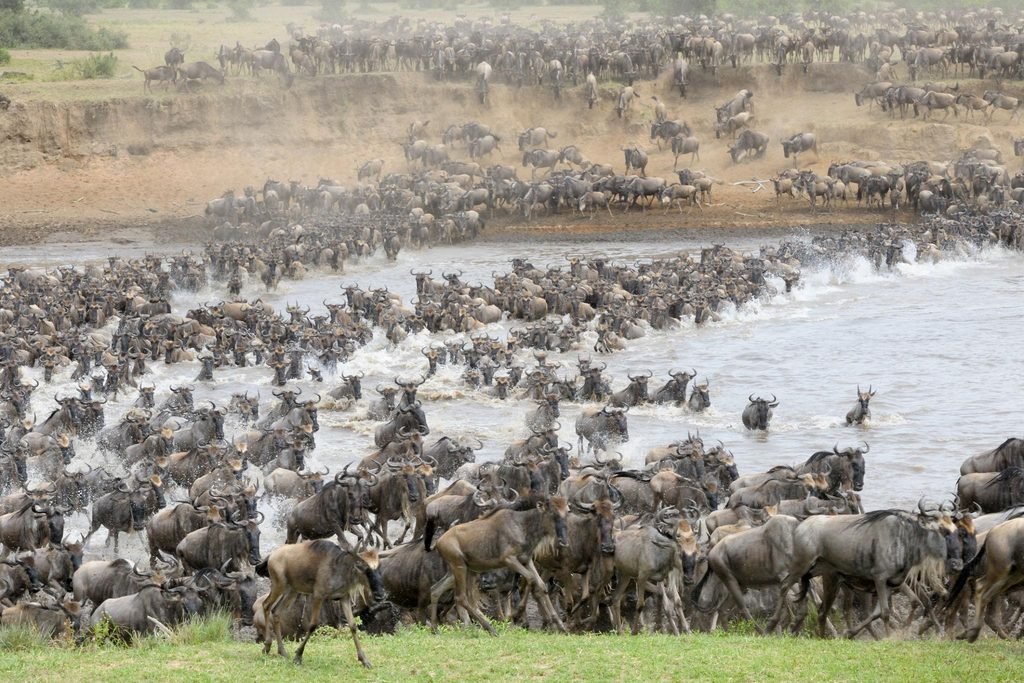
Best Time to See the Great Migration River Crossing in 2027 and 2028
The most suitable period for planning a Mara River crossing safari is generally July to October, with August and September often considered the strongest months for northern Serengeti migration viewing. These seasonal patterns are useful when planning travel dates, but they should not be treated as a fixed schedule for 2027 or 2028. Wildebeest respond to environmental conditions, and their movements can change from one year to another.
During some seasons, large herds reach northern Serengeti earlier than expected, while in other years they remain farther south for longer. Rainfall in Tanzania and Kenya influences where fresh grass develops, and animals may cross the Mara River several times as they move between grazing areas. A successful migration safari therefore depends on choosing a suitable seasonal location, allowing enough days for wildlife viewing, and travelling with a guide who understands the movement of the herds.
Great Migration River Crossing Calendar for 2027–2028
| Month | Typical Migration Location | River Crossing Opportunities |
|---|---|---|
| January–March | Southern Serengeti and Ndutu | Calving season rather than Mara River crossings |
| April–May | Central and Western Serengeti | Herd movement; Mara crossings generally unlikely |
| June | Western Corridor and Grumeti region | Possible Grumeti River activity |
| July | Northern Serengeti and Kogatende | Early Mara River crossing opportunities |
| August | Northern Serengeti and Mara River | One of the main crossing months |
| September | Northern Serengeti and Maasai Mara | Strong seasonal crossing opportunities |
| October | Northern Serengeti and surrounding areas | Later crossings may continue |
| November–December | Central and Southern Serengeti | Herds generally move towards southern grazing areas |
This calendar reflects typical seasonal migration patterns, not confirmed wildlife locations or crossing forecasts for 2027 and 2028.
July 2027 and 2028: The Beginning of the Northern Migration Season
July is an interesting month for travellers who want to see the migration moving towards northern Serengeti. Depending on rainfall and grazing conditions, wildebeest may begin arriving around the Mara River during the early or middle part of the month. Some herds may already be gathering near crossing points, while others continue moving north through the Serengeti plains. This period can provide opportunities to observe long columns of migrating animals, predator activity, and the first significant river crossings of the season.
Travellers visiting in July should understand that migration activity can be spread across a large area. Some sections of northern Serengeti may have substantial concentrations of wildebeest, while other locations remain relatively quiet. A knowledgeable guide can adjust game-drive routes according to recent wildlife activity, but even with careful planning, river crossings cannot be guaranteed.

August 2027 and 2028: A Popular Month for Mara River Crossings
August is one of the most requested months for a Great Migration river crossing safari. Historically, large numbers of wildebeest have often been present in the northern Serengeti and Maasai Mara ecosystem during this period. Herds may gather around the Mara River, sometimes remaining near the banks for extended periods before crossing. This creates opportunities for visitors to watch the animals approach the water, assess the river, and move between different crossing areas.
August is also part of Tanzania’s busy safari season, meaning accommodation in northern Serengeti can become expensive and popular camps may fill several months in advance. Travellers planning an August 2027 or 2028 safari should consider booking early and selecting accommodation within a practical driving distance of the river. Staying in central Serengeti and travelling north for a single day is generally less suitable for visitors whose main priority is witnessing a crossing.
September 2027 and 2028: Excellent Northern Serengeti Wildlife Viewing
September is another strong month for planning a Mara River crossing safari. Wildebeest may remain distributed across northern Serengeti and Kenya’s Maasai Mara, with some herds moving between grazing areas and crossing the river in different directions. This means a crossing does not necessarily represent animals travelling from Tanzania into Kenya. Some crossings take place entirely within Tanzania, while others occur farther north within the wider ecosystem.
The generally dry conditions during September can also make wildlife easier to observe in some areas because vegetation is less dense and animals may concentrate around available water. Besides wildebeest, visitors may encounter lions, elephants, giraffes, buffaloes, zebras, and other wildlife during their game drives. September can therefore be rewarding even when a river crossing does not occur during a particular day’s excursion.
October 2027 and 2028: Later River Crossings and Southward Movement
October can still provide opportunities to observe Mara River crossings, although the distribution of wildebeest may begin changing as the seasonal rains approach. Some herds remain in northern Serengeti, while others gradually move towards areas where fresh grazing becomes available. The timing of this movement varies, and substantial herds can sometimes remain in the north longer than expected.
Travellers considering October should discuss the latest seasonal patterns with their safari operator before finalising accommodation. It is important not to assume that all wildebeest have already left the Mara River by the beginning of October, just as it would be incorrect to guarantee crossings throughout the month. The migration follows environmental conditions rather than fixed calendar dates.
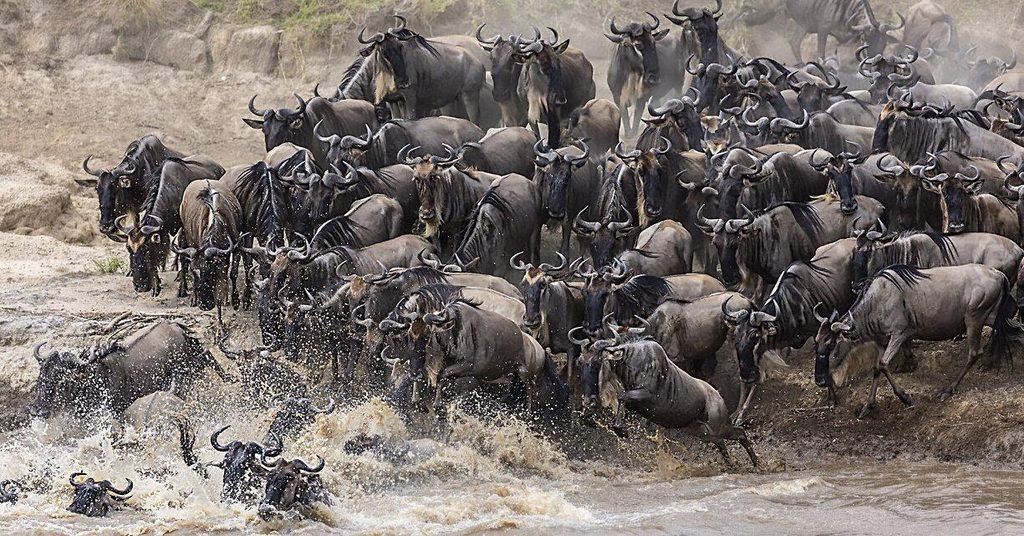
Where Is the Best Place to See the Great Migration River Crossing?
Northern Serengeti National Park – Tanzania
The northern Serengeti is one of the best destinations for travellers who want to observe the Mara River crossing from Tanzania. The region contains open grasslands, rolling hills, riverine woodland, and several areas where wildebeest may approach the river during the dry season. Compared with the central Serengeti, the northern region is more remote and requires additional travel time, but its location makes it particularly important for migration-focused safaris.
The most commonly discussed areas include Kogatende, Lamai, and the surrounding Mara River region. These locations provide access to different wildlife habitats and recognised crossing areas, although the exact places where animals gather can change from day to day.
Travellers can explore our Mara River Crossing Safari Guide to understand how the northern Serengeti fits into a Tanzania migration safari.
Kogatende – A Practical Base for River Crossing Safaris
Kogatende is located in northern Serengeti and is one of the main areas used by safari operators during the migration season. The region has access to the Mara River and several surrounding wildlife areas, making it a practical base for visitors interested in spending multiple days searching for crossing activity.
Accommodation around Kogatende ranges from seasonal tented camps to more established safari properties. Some camps are closer to particular sections of the river than others, so travellers should ask about actual driving distances rather than assuming every camp advertised as a migration camp is immediately beside a crossing point. Road conditions and the location of wildlife can influence how long it takes to reach suitable viewing areas.
Lamai – Northern Serengeti’s Remote Migration Landscape
Lamai is another important area in northern Serengeti, known for its open landscapes, rocky hills, and proximity to parts of the Mara River. The area can offer rewarding wildlife viewing during the northern migration season, particularly when large herds are moving between Tanzania and Kenya.
Because Lamai is relatively remote, accommodation choices and transport arrangements require careful planning. Travellers interested in staying in this region should confirm the location of their camp, the available game-drive routes, and the number of nights included in their itinerary. Spending sufficient time in the area is more useful than simply adding Lamai to a long list of destinations without allowing enough time for wildlife viewing.
Maasai Mara National Reserve – Kenya
Kenya’s Maasai Mara National Reserve is another well-known destination for observing the northern phase of the Great Migration. The reserve forms part of the wider Serengeti–Mara ecosystem, and wildebeest move between Tanzania and Kenya as grazing conditions change. The Mara River passes through parts of this landscape, creating crossing opportunities on both sides of the international border.
Travellers deciding between Tanzania and Kenya should consider the length of their holiday, accommodation preferences, travel budget, and the amount of time available for game drives. Both destinations can provide excellent migration experiences, but there is no guarantee that the main herds will be concentrated in one country during a particular week. Visitors planning a combined Kenya and Tanzania safari should also account for border procedures, separate park fees, and transport arrangements.
Mara River Crossing vs Grumeti River Crossing: What Is the Difference?
The Mara River and Grumeti River are both associated with the Great Migration, but they are located in different parts of the Serengeti ecosystem and are generally visited during different periods of the year. Understanding this distinction is important because some travellers book a safari expecting the dramatic Mara River crossings without realising that their itinerary only visits the Western Corridor.
The Grumeti River lies in western Serengeti and is associated with migration activity commonly occurring around May, June, and sometimes July. Depending on rainfall and water levels, wildebeest may encounter river channels and crossing points as they move through the region. The surrounding area also supports resident wildlife and can be rewarding for travellers who want to explore a less frequently visited part of the park.
The Mara River, by comparison, lies in the northern Serengeti–Mara ecosystem and is most commonly associated with the July to October migration period. Its riverbanks and seasonal water conditions create some of the best-known crossing scenes in East Africa. Travellers specifically interested in the famous Mara River crossings should therefore ensure their itinerary includes northern Serengeti rather than relying only on central or western Serengeti game drives.
How Many Days Do You Need to See the Great Migration River Crossing?
One of the most common mistakes when planning a migration safari is allowing too little time in northern Serengeti. A traveller may book a five-day Tanzania safari that includes several national parks, only to discover that the itinerary provides one afternoon near the Mara River before travelling to another destination. Although this arrangement can still offer excellent wildlife viewing, it gives relatively little time to wait for a river crossing.
For visitors whose main priority is the Mara River, spending at least three nights in northern Serengeti is a sensible starting point. Four nights or more provides additional flexibility, especially when animals are moving between different sections of the river. More time does not guarantee a crossing, but it allows your guide to revisit promising areas and respond to changes in wildlife activity without rushing through the itinerary.
A six- or seven-day safari can work well when the main focus is northern Serengeti, particularly if transport arrangements reduce time spent travelling. Visitors who also want to explore Tarangire National Park, Ngorongoro Crater, and central Serengeti may benefit from an eight- to ten-day itinerary. The most suitable duration depends on whether the holiday is designed primarily around migration viewing or combines several different wildlife destinations.
Travellers comparing routes can review the Tanzania Safari Packages offered by Eddy Tours & Safaris and request an itinerary that allocates enough nights to the northern migration area.
Practical Viewing Tips for the Great Migration River Crossing in 2027–2028
1. Choose the Right Location Rather Than Relying Only on the Month
Travelling in August or September does not automatically mean you will see a river crossing. Your accommodation location and the areas covered during game drives are equally important. Northern Serengeti is a large region, and some camps require considerable driving to reach particular sections of the Mara River.
Before booking, ask your safari operator to explain where your accommodation is located and how the daily game drives will be organised. A camp near Kogatende or another suitable northern location may provide more flexibility than accommodation much farther south, particularly when your safari is short.
2. Allow Time for the Animals to Make Their Own Decisions
Wildebeest can spend hours gathering near a river without crossing. They may move towards the bank, retreat, and return several times before entering the water. In some cases, animals cross suddenly after a long period of inactivity, while on other occasions they leave the area without crossing at all.
Patience is therefore an important part of migration viewing. Travellers who expect constant action may become disappointed, but those who take time to observe the herds can enjoy many interesting behaviours even before a crossing begins. A professional guide can explain what the animals are doing and help determine whether it is worth waiting at a particular location or exploring another area.
3. Spend More Than One Day Near the Mara River
Repeated game drives provide more opportunities to observe changing wildlife activity. A crossing may occur in one part of the river while another area remains quiet, and animals can move considerable distances between days. Spending several nights in northern Serengeti gives your guide more flexibility to follow recent wildlife reports and adjust the route.
However, it is important to understand that longer stays improve opportunities rather than guarantee results. Even travellers spending a week near the river may experience periods when the herds remain away from accessible crossing points.
4. Travel With an Experienced Local Safari Guide
A knowledgeable safari guide plays an important role during a migration safari. Guides familiar with northern Serengeti understand the road network, recognised crossing areas, seasonal wildlife movements, and park regulations. They can also communicate with other authorised guides to understand where recent wildlife activity has been observed.
Good guiding is not simply about driving towards a crowd of safari vehicles. It also involves reading animal behaviour, selecting suitable viewing positions, maintaining safe distances, and avoiding actions that disturb wildlife. A responsible guide will not block the animals’ route to the river or encourage unsafe behaviour simply to obtain photographs.
5. Prepare for Long Game Drives and Changing Weather
A river crossing safari can involve several hours inside a safari vehicle, particularly when travelling between accommodation and different viewing areas. Although the dry season generally provides favourable road conditions, mornings and evenings can be cool, and dusty conditions are common in some areas.
Travellers should carry drinking water, sunscreen, a hat, sunglasses, and a light jacket. Comfortable clothing in neutral colours is practical for long game drives. Binoculars are also useful because animals may gather at a considerable distance from the vehicle, and some crossing areas cannot be approached closely due to park regulations and terrain.
6. Bring Suitable Photography Equipment
The Mara River crossing offers excellent opportunities for wildlife photography, but the animals can move quickly once a crossing begins. A camera with a telephoto lens is useful for photographing wildebeest entering the water, crocodiles near the riverbanks, and interactions between animals. A lens in the approximate 100–400 mm range can be versatile, although photographers should choose equipment according to their experience and budget.
Travellers using smartphones can still capture good photographs and videos, particularly when animals are relatively close. However, digital zoom may reduce image quality, and fast-moving wildlife can be difficult to photograph at a distance. Carrying spare batteries, memory cards, and a power bank is advisable because some safari camps have limited charging facilities.
7. Respect Wildlife and National Park Regulations
River crossings are natural events that should be observed without interfering with the animals. Safari vehicles must remain on authorised tracks and follow the instructions of park authorities. Drivers should avoid blocking access to crossing points, approaching animals too closely, or creating unnecessary noise when herds are gathering.
Responsible viewing protects wildlife and helps maintain the quality of the experience for other visitors. It also reduces the risk of animals becoming frightened or changing direction because of vehicle pressure. Travellers should choose safari operators who prioritise wildlife welfare and comply with Tanzania’s conservation regulations.
Is August or September Better for a Great Migration Safari?
Both August and September are excellent months to consider for a northern Serengeti migration safari. August is often associated with large concentrations of wildebeest in the northern ecosystem, while September can provide continued crossing opportunities as herds move between grazing areas. However, neither month is automatically better in every year, and it is not possible to predict exactly where the animals will be during a particular week in 2027 or 2028.
Accommodation availability and the amount of time spent near the river may matter more than the difference between these two months. A traveller spending four nights in a well-positioned northern Serengeti camp in September may have more opportunities to observe a crossing than someone visiting for only one afternoon in August.
For travellers with flexible dates, the period from late July through September is a useful starting point for planning. October can also be considered, particularly when the migration remains active in the north. The final choice should reflect the overall itinerary, travel budget, and preferred accommodation rather than a promise of guaranteed wildlife activity.
What Other Animals Can You See During a Mara River Crossing Safari?
Although wildebeest are the main attraction, northern Serengeti supports a wide variety of other wildlife. Zebras frequently travel alongside migrating wildebeest, while Thomson’s gazelles, topi, and other antelope species can be observed in suitable habitats. Large predators, including lions, leopards, cheetahs, and spotted hyenas, are also present in the wider Serengeti ecosystem.
The Mara River itself supports Nile crocodiles and hippos, although visitors should remember that crocodile attacks are not guaranteed during every crossing. Elephants, giraffes, buffaloes, and numerous bird species may also be encountered during game drives away from the river.
This diversity is one of the reasons northern Serengeti remains rewarding even when no river crossing takes place. A well-planned safari should allow time to explore the surrounding grasslands, woodland, and river habitats rather than concentrating entirely on one crossing point.
Choosing Between a Road Safari and a Fly-In Migration Safari
Travellers visiting northern Serengeti can reach the area by road or by scheduled and chartered light aircraft services, depending on availability and the selected itinerary. Each option has advantages, and the best choice depends on the duration of the holiday, budget, and preferred travel experience.
A road safari normally begins in Arusha and may include visits to Tarangire, Ngorongoro, and central Serengeti before continuing north. This arrangement allows visitors to experience several different landscapes and wildlife destinations, but the journey to northern Serengeti involves long driving distances. It is therefore better suited to travellers with enough days to explore the parks without rushing.
A fly-in safari can reduce the amount of time spent travelling overland, making it useful for visitors with shorter holidays or those who want to concentrate on the Mara River area. Flights to suitable northern Serengeti airstrips depend on schedules and operating conditions, and baggage restrictions may apply. Travellers should confirm whether flights, airstrip transfers, and park fees are included in the quotation.
For either arrangement, it is important to review the daily itinerary carefully. A safari advertised as seven days may include several travel days, so the number of nights spent in northern Serengeti is often more important than the total package duration.
How Much Does a Great Migration River Crossing Safari Cost in 2027 and 2028?
The cost of a Great Migration river crossing safari depends on the travel season, accommodation category, number of travellers, transport arrangements, and total duration. Northern Serengeti is relatively remote, and the most popular migration months often coincide with higher accommodation demand. Seasonal tented camps, luxury lodges, and fly-in arrangements generally cost more than basic camping or shared road safaris.
Private safaris offer greater flexibility over game-drive schedules and the amount of time spent waiting near the river, but they may cost more per person when travelling alone or as a couple. Group-joining arrangements can reduce transport expenses, although not every shared safari reaches the northern Serengeti during the appropriate season.
Travellers should request a detailed quotation showing accommodation names, park fees, transport, meals, guide services, and any additional activities. Prices for 2027 and 2028 should be confirmed before booking because accommodation rates, government charges, and transport costs may change.
The cheapest itinerary is not necessarily the best option for river crossing viewing. A lower-priced safari that spends most of its time in central Serengeti may offer fewer opportunities to reach the Mara River than a slightly longer itinerary with several nights in northern Serengeti.
Can You Combine the Great Migration With Ngorongoro Crater and Tarangire?
A Great Migration safari can be combined with other northern Tanzania wildlife destinations, particularly when travellers have at least seven to ten days available. Ngorongoro Crater is a popular addition because it supports a wide variety of resident wildlife within a relatively compact area, including lions, elephants, buffaloes, and a small population of endangered black rhinoceroses.
Tarangire National Park is another worthwhile destination, especially during the dry season when elephants and other wildlife may gather around the Tarangire River. The park’s baobab trees, woodland, and open grassland provide a different setting from the Serengeti plains.
Combining these destinations creates a more varied safari, but travellers should avoid trying to visit too many parks in a short period. If witnessing a Mara River crossing is the main objective, it is better to spend additional nights in northern Serengeti than to include several destinations with very limited time for game drives.
Combining the Great Migration Safari With Mount Kilimanjaro Climbing
Many international travellers visiting Tanzania want to experience both the Great Migration and Mount Kilimanjaro during the same holiday. These activities can be combined, although the overall itinerary should allow enough time for mountain trekking, wildlife viewing, and rest between the two experiences.
Mount Kilimanjaro is located in northern Tanzania near Moshi, while most northern safari itineraries begin in Arusha. Travellers can arrange a Kilimanjaro climb before their safari or visit the Serengeti first and continue to the mountain afterwards. The best order depends on travel dates, physical preparation, and the number of days available.
Visitors interested in climbing can explore Kilimanjaro Climb Specialist for information about mountain routes, trekking preparation, and climbing arrangements. Popular options include the Machame, Lemosho, Marangu, and Rongai routes, each offering different walking distances, accommodation arrangements, and acclimatisation schedules.
Because Kilimanjaro climbing requires physical effort and time at altitude, travellers should plan their mountain itinerary carefully rather than adding it to an already crowded holiday. A combined Kilimanjaro and Great Migration safari can work particularly well for visitors spending approximately two weeks or longer in Tanzania.
Common Mistakes to Avoid When Booking a Great Migration River Crossing Safari
One of the biggest mistakes travellers make is assuming that the Great Migration remains in one location throughout the year. The wildebeest move according to rainfall and grazing conditions, meaning an itinerary suitable for February may not be appropriate for August. Visitors hoping to witness the Mara River crossing should therefore choose northern Serengeti during the usual crossing season rather than booking a general Serengeti safari without checking the route.
Another common mistake is expecting a crossing to happen at a fixed time. Some travellers arrive at the river expecting immediate activity, only to discover that the animals have moved elsewhere or are waiting along the banks. This can be disappointing when expectations are based on dramatic wildlife videos rather than an understanding of natural animal behaviour.
Booking accommodation too far from the Mara River can also reduce valuable game-drive time. Travellers should confirm the location of their camp and ask how long it normally takes to reach relevant viewing areas. Similarly, attempting to combine too many destinations in a short safari can leave insufficient time for migration viewing.
Finally, travellers should be cautious of any operator promising a guaranteed river crossing. An experienced safari company can recommend suitable travel dates, arrange accommodation in the right region, and provide knowledgeable guiding, but it cannot control wildlife movements.
Why Plan Your Great Migration Safari With Eddy Tours & Safaris?
Eddy Tours & Safaris is a locally based tour company in Arusha, Tanzania, organising wildlife safaris, Kilimanjaro climbing trips, and other travel experiences. Our location near the northern safari circuit allows us to assist travellers with planning routes through Serengeti National Park, Ngorongoro Conservation Area, Tarangire, and other destinations.
For Great Migration safaris, we focus on helping travellers select suitable travel dates and accommodation locations based on the seasonal movement of the herds. We also explain the difference between a general Serengeti wildlife safari and a migration-focused itinerary that includes several nights in northern Serengeti.
Travellers can choose between private safari arrangements, different accommodation categories, and itineraries that combine the Mara River with other national parks. Our aim is to provide clear information about the route, transport, accommodation, and services before a booking is confirmed, allowing visitors to make informed decisions about their Tanzania holiday.
Frequently Asked Questions About the Great Migration River Crossing 2027–2028
What Is the Best Month to See the Great Migration River Crossing in Tanzania?
August and September are among the most popular months for Mara River crossing safaris in northern Serengeti. July and October can also provide opportunities, depending on the movement of the herds and environmental conditions. The best approach is to plan within the usual July-to-October season and spend several nights near suitable crossing areas rather than expecting a guaranteed event on a particular date.
Can I See the Mara River Crossing in Tanzania Without Visiting Kenya?
Yes. The Mara River passes through northern Serengeti National Park in Tanzania, and wildebeest crossings can occur within the Tanzanian section of the ecosystem. Visitors do not need to enter Kenya to have an opportunity to witness the event. Areas around Kogatende and Lamai are commonly used for northern Serengeti migration safaris.
Are the Great Migration River Crossings Guaranteed?
No. River crossings are natural wildlife events and cannot be guaranteed by any safari operator. Wildebeest may gather near the river without entering the water, move to another crossing point, or cross at a time when visitors are elsewhere. Spending more days in northern Serengeti and travelling with an experienced guide can improve viewing opportunities, but it does not remove the uncertainty.
How Many Days Should I Spend in Northern Serengeti?
At least three nights in northern Serengeti is a reasonable recommendation for travellers whose main interest is the Mara River crossing. Four nights or longer can provide additional flexibility, particularly when the animals are moving between different sections of the river. Visitors combining the migration with other national parks may require a longer overall safari.
Is the Great Migration Better in Tanzania or Kenya?
Both Tanzania and Kenya offer excellent opportunities to observe the northern phase of the Great Migration. Tanzania’s Serengeti provides access to different stages of the migration throughout the year, including the southern calving season and northern Mara River crossings. Kenya’s Maasai Mara is particularly well known for migration activity during the northern dry-season period. The best destination depends on travel dates, the location of the herds, and the itinerary.
Can Children Join a Great Migration River Crossing Safari?
Yes, families with children can visit northern Serengeti, although accommodation policies, travel distances, and the length of game drives should be considered carefully. Some tented camps have minimum age requirements, while others welcome families. Parents should discuss their children’s ages and travel needs with the safari operator before confirming a booking.
Can I See the Great Migration in December or February?
Yes, the Great Migration continues throughout the year, but the main herds are usually associated with southern Serengeti and Ndutu during the calving season rather than the Mara River. February is particularly well known for wildebeest calving, while December often marks the period when animals are returning towards southern grazing areas. Travellers visiting during these months should plan a southern Serengeti migration safari rather than a northern river crossing itinerary.
When Should I Book My 2027 or 2028 Great Migration Safari?
Booking several months in advance is advisable, particularly for August and September departures. Popular camps in northern Serengeti have limited accommodation capacity, and demand can be high during the migration season. Early planning also provides more time to compare road and fly-in arrangements, confirm accommodation locations, and organise flights and other travel requirements.
Plan Your Great Migration River Crossing Safari in Tanzania for 2027–2028
The Great Migration river crossing is one of Tanzania’s most sought-after wildlife experiences, but the best safari is built around realistic expectations and careful planning. July to October remains the main period to consider for Mara River crossings, with August and September offering particularly popular opportunities for northern Serengeti wildlife viewing. However, the actual movement of wildebeest will depend on rainfall, grazing conditions, and other natural factors during 2027 and 2028.
Choosing accommodation near the appropriate northern Serengeti wildlife areas, allowing several days for game drives, and travelling with an experienced guide can help you make the most of your visit. Even when a river crossing does not occur, the surrounding Serengeti landscape offers excellent opportunities to observe predators, elephants, giraffes, zebras, and many other species.
At Eddy Tours & Safaris, we can help you organise a migration-focused safari that matches your travel dates, budget, and preferred accommodation. Whether you are planning a private photography safari, a family holiday, or a longer Tanzania wildlife adventure, our team can assist with itinerary planning and practical travel arrangements.
Contact Eddy Tours & Safaris
Location: Arusha, Tanzania
Website: Eddy Tours and Safaris
Email: sales@eddytours-safaris.com
Request your Great Migration River Crossing Safari quotation for 2027 or 2028 and start planning your journey to northern Serengeti National Park.