
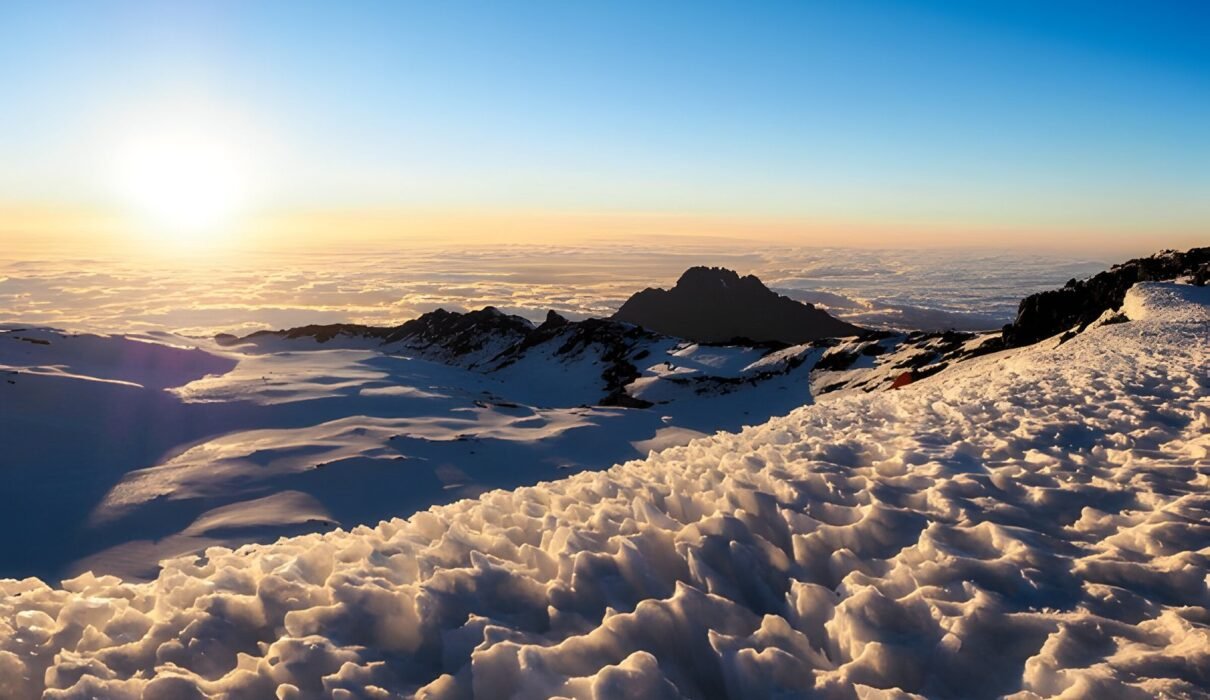
Kilimanjaro Group Hiking brings travellers together for a guided journey through Tanzania’s mountain landscapes towards Uhuru Peak, Africa’s highest point at 5,895 metres. Whether you join other hikers or organise a private climb with friends, the experience combines individual effort with shared camp routines, encouragement and support from a mountain team.
For a climb in 2027 or 2028, your first decisions are the route, number of mountain days and type of group. These choices affect the daily programme, accommodation and overall price. A clear itinerary also helps everyone understand what the climb requires before making a booking.
Group trekking works best when expectations are discussed early. Your fellow hikers may have different walking speeds, experience and responses to altitude. The guiding arrangements should accommodate those differences.
Explore Kilimanjaro climbing packages from Eddy Tours & Safaris or contact the team to enquire about group arrangements for your preferred dates.
What Is Kilimanjaro Group Hiking?
A group climb is a guided mountain programme involving several travellers on an agreed itinerary.
There are two main formats: an open joining departure and a private group climb. Both require clear booking details, including the route, accommodation, group size and services.
| Arrangement | Joining departure | Private group |
|---|---|---|
| Travellers | People booking separately | Your own travelling party |
| Dates | Proposed or confirmed departure dates | Dates agreed with the operator |
| Itinerary | Usually a set programme | Discussed around your group’s needs |
| Accommodation sharing | According to the booking conditions | According to your agreed arrangements |
| Departure conditions | May depend on minimum bookings | Based on the private proposal |
| Price | Quoted per person under stated conditions | Based on group size and services |
Do not assume a listed date is confirmed. Ask whether the departure has enough bookings to operate and what happens if it does not.
Why Choose a Group Kilimanjaro Climb?
Shared encouragement
Walking with others can make long days feel more social. Meals and camp evenings provide opportunities to talk, compare experiences and prepare for the next stage.
Encouragement should respect individual limits. Everyone needs to feel comfortable reporting concerns without worrying about disappointing the group.
Shared logistics
A group programme brings the daily itinerary, transfers and mountain services into one organised arrangement.
Your guide team manages the agreed mountain programme while you focus on walking and preparation. Confirm the actual services rather than relying on a broad description.
Meeting people with a common goal
Joining departures can suit solo travellers and small parties who enjoy meeting others.
Ask about the proposed group size and accommodation-sharing policy. These details help you decide whether the social setting suits your preferences.
Planning with friends or family
A private group gives you the opportunity to prepare together and choose dates as a travelling party.
Agree on priorities before requesting a quotation. Accommodation preferences, route duration and spending expectations should be clear to everyone.
Choosing a Route for Kilimanjaro Group Hiking
The route should suit the programme and participants. Group travel does not remove the need to assess individual preparation.
Seven-Day Machame Route
Machame is a camping route with forest walking, the Shira landscape and an approach through Barranco and Karanga.
The commonly offered seven-day version includes a separate Karanga night. The six-day version generally combines the Barranco-to-Barafu approach into one stage.
Review the seven-day Machame programme and confirm whether joining arrangements are available for your dates.
Eight-Day Lemosho Route
Lemosho begins on the western side and crosses the Shira Plateau before joining the southern circuit.
It is worth comparing when your group has time for a longer camping programme. Exact overnight sequences vary, so request the full itinerary.
Explore the eight-day Lemosho package.
Six-Day Marangu Route
Marangu uses shared mountain huts. Its six-day programme includes an additional day at Horombo before moving towards Kibo and the summit stage.
This can suit travellers who prefer huts, although the accommodation is basic and generally shared.
Read the six-day Marangu itinerary before choosing.
Rongai and Northern Circuit
Rongai offers a northern approach, while the Northern Circuit provides a longer journey around the mountain’s northern slopes. Commonly offered programmes include seven-day Rongai and nine-day Northern Circuit itineraries.
Ask about availability and the actual daily route. These should not be assumed to have the same joining-departure frequency as other programmes.
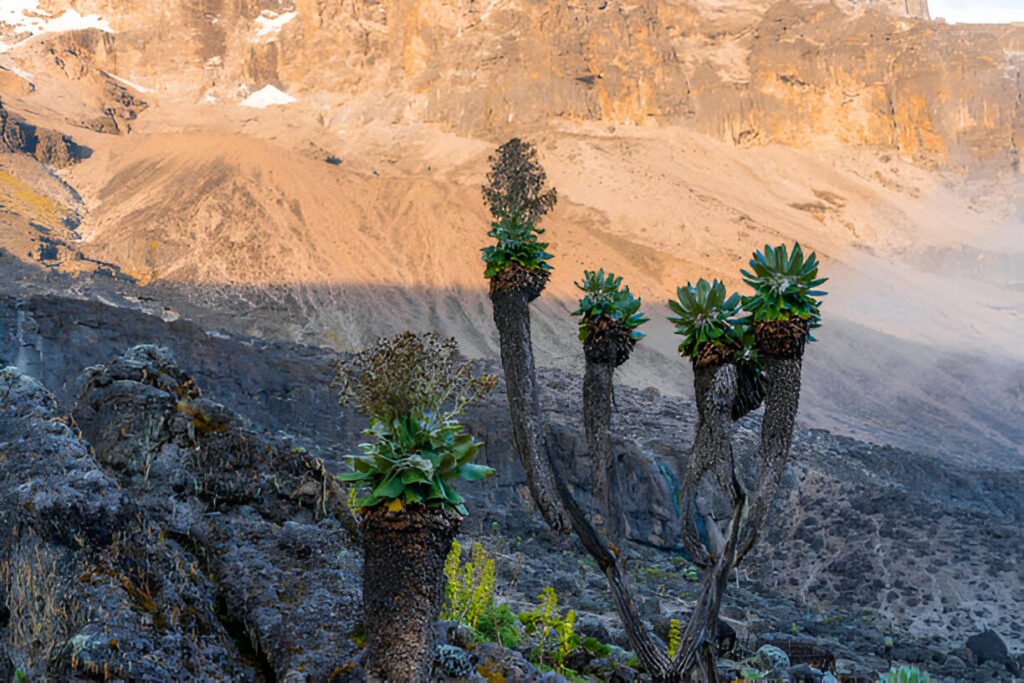
Sample Seven-Day Group Machame Itinerary
This is an illustrative mountain programme. Departure availability and services require confirmation.
| Day | Programme | Overnight |
|---|---|---|
| 1 | Machame Gate to Machame Camp | Machame Camp |
| 2 | Machame Camp to Shira Camp | Shira Camp |
| 3 | Shira via Lava Tower to Barranco | Barranco Camp |
| 4 | Barranco Wall to Karanga | Karanga Camp |
| 5 | Karanga to Barafu | Barafu Camp |
| 6 | Summit attempt and descent | Mweka Camp |
| 7 | Mweka Camp to Mweka Gate | Hotel, if included |
Day 1: Begin the Mountain Journey
Meet your crew, complete registration and begin walking through rainforest.
Use the first stage to settle into the group routine. Follow your guide’s pace and keep rain protection accessible.
At camp, organise your equipment and review the next day’s programme.
Day 2: Continue Towards Shira
Leave the forest behind and move into more open terrain.
Pay attention to uneven ground and maintain a comfortable rhythm. Communicate with the guides rather than feeling pressure to match another hiker’s speed.
Day 3: Lava Tower and Barranco
Climb towards Lava Tower before descending to Barranco.
This higher daytime excursion followed by a lower overnight stop is a notable part of the itinerary. Keep essential layers and snacks accessible during the walk.
Day 4: Cross the Barranco Wall
Follow your guide through the scrambling sections of the wall, then continue towards Karanga.
Give other hikers space. At Karanga, rest and prepare for the approach to summit camp.
Day 5: Reach Barafu
Continue to Barafu and organise equipment for the overnight summit attempt.
The guide will explain the planned departure and turnaround procedures. Everyone should understand these arrangements before resting.
Day 6: Summit Attempt and Descent
The ascent normally begins during the night and approaches the crater rim at Stella Point.
Continuing towards Uhuru Peak depends on individual condition, weather and guide assessment. Afterwards, descend towards Barafu and continue to Mweka.
Day 7: Finish at Mweka Gate
Complete the forest descent, park exit procedures and transfer to your booked accommodation.
Allow time to rest before onward travel.
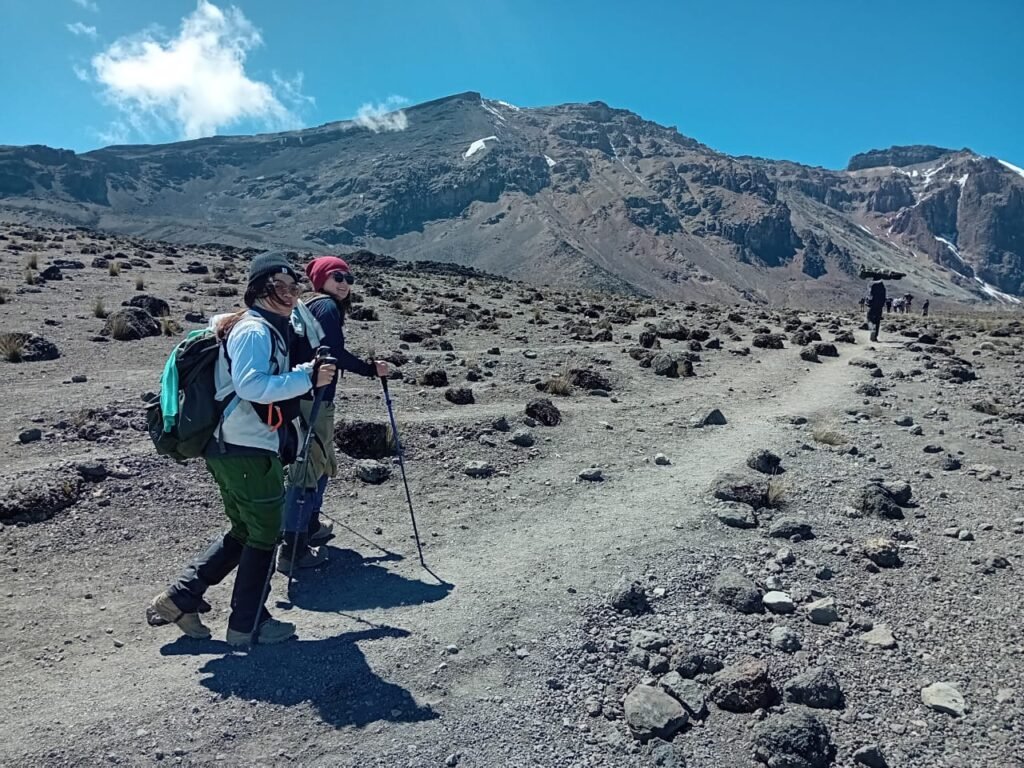
Arrival and Group Preparation
Arrive before the first mountain day for the briefing and equipment check.
Confirm where the group meets, which hotel is used and whether airport transfers are included. For travellers arriving separately, ask how differing flight times are handled.
Review tent or room-sharing arrangements before arrival. A joining climb should have a clear policy for solo travellers, while private groups should agree on occupancy.
Check rental equipment before leaving for the mountain. Everyone should have suitable clothing, footwear and sleeping equipment.
A preparation day provides space to resolve missing items and become familiar with the programme.
Group Size, Guides and Walking Pace
Ask about the maximum number of climbers and the guide arrangements.
Useful questions include:
- How many guides accompany the group?
- How are different walking speeds managed?
- What happens if someone needs to descend?
- Who accompanies a climber turning around?
- How does the remaining group continue?
- What communication and emergency equipment is carried?
These are practical questions about how the programme operates.
The group should not pressure anyone to continue higher. Individual decisions need to reflect health and conditions rather than the expectations of fellow travellers.
Camping and Hut Sharing
On camping routes, confirm tent occupancy and mattress arrangements.
A private group climb does not automatically include a separate tent for every traveller. Single-tent requests may involve additional arrangements or supplements.
On Marangu, huts are shared mountain accommodation. Booking as a private party does not necessarily provide private sleeping rooms.
Ask about sleeping-bag requirements, bathroom facilities and charging arrangements. Prepare for mountain conditions rather than hotel standards.
Respect fellow hikers by organising equipment before bedtime and keeping noise low.
Kilimanjaro Group Hiking Costs for 2027/2028
Prices depend on route duration, group size, dates and services.
Joining a group may spread some shared costs, but savings are not automatic. Compare the complete proposal rather than assuming every joining climb is cheaper.
Check whether the quotation includes:
- Mountain guiding and crew services.
- Applicable park and accommodation fees.
- Tents or hut accommodation.
- Mountain meals and drinking water.
- Gate transfers.
- Hotel nights.
- Airport transfers.
- Equipment rentals.
Budget separately for flights, entry expenses, suitable insurance, tips and personal items unless included in writing.
Ask whether a change in participant numbers affects the price for a private group.
Departure Dates and Booking Conditions
Request availability for your chosen year and route.
For joining departures, confirm the minimum booking requirement and what happens if it is not met. Ask whether the alternatives involve changing dates, paying a supplement or receiving a refund under stated conditions.
For private groups, clarify how deposits and cancellations are handled if one person withdraws.
Full-moon dates can be used as planning targets, but they are not confirmed departures. The climbing start date must be calculated from the itinerary’s summit day.
Contact Eddy Tours & Safaris for confirmed options rather than relying on an older departure calendar.
Training and Altitude Preparation
Prepare with regular walking, uphill hikes and controlled descents. Practise on consecutive days while carrying your daypack.
Test boots and clothing before travelling. Preparing together can help a private group identify equipment needs, although individual fitness levels may differ.
Physical fitness does not protect against altitude illness. Seek individual medical advice and report symptoms promptly during the trek.
The CDC advises against further ascent with altitude illness symptoms. Symptoms that worsen while resting require descent and appropriate care.
Consult the CDC altitude-travel guidance and Kilimanjaro Climb Specialist when preparing.
Add a Safari After Your Group Climb
Leave time to rest after the mountain before beginning a wildlife extension.
Browse Tanzania safari packages or discuss a three-day group safari, subject to confirmed availability.
For your own travelling party, compare the four-day Tanzania safari.
A shorter day-trip extension may suit travellers with limited time.
Frequently Asked Questions
Can I join a climb as a solo traveller?
Ask about confirmed joining departures and accommodation-sharing arrangements for your preferred route.
Can beginners take part?
Yes, after discussing preparation, health and programme suitability. The trek remains demanding.
Must everyone walk at the same speed?
Ask how the guide team manages different paces. Participants should not feel pressured to exceed a suitable rhythm.
What happens if someone turns around?
The operator should explain early-descent supervision, transport and any additional costs before booking.
Are group departures guaranteed?
Only where confirmed under the operator’s booking conditions. Some dates depend on minimum participant numbers.
Is reaching the summit guaranteed?
No. Each person’s condition, weather and guide assessment determine whether continuing is appropriate.
Plan Your Kilimanjaro Group Hiking Adventure
Share your preferred 2027 or 2028 dates, number of climbers and trekking experience with Eddy Tours & Safaris.
Specify whether you want to join other travellers or organise a private group. The team can discuss the route, confirm availability and provide a detailed quotation.
Enquire about Kilimanjaro group hiking.
Email: sales@eddytours-safaris.com
Alternative email: eddytoursandsafaris@gmail.com
WhatsApp: +255 711 906 664