
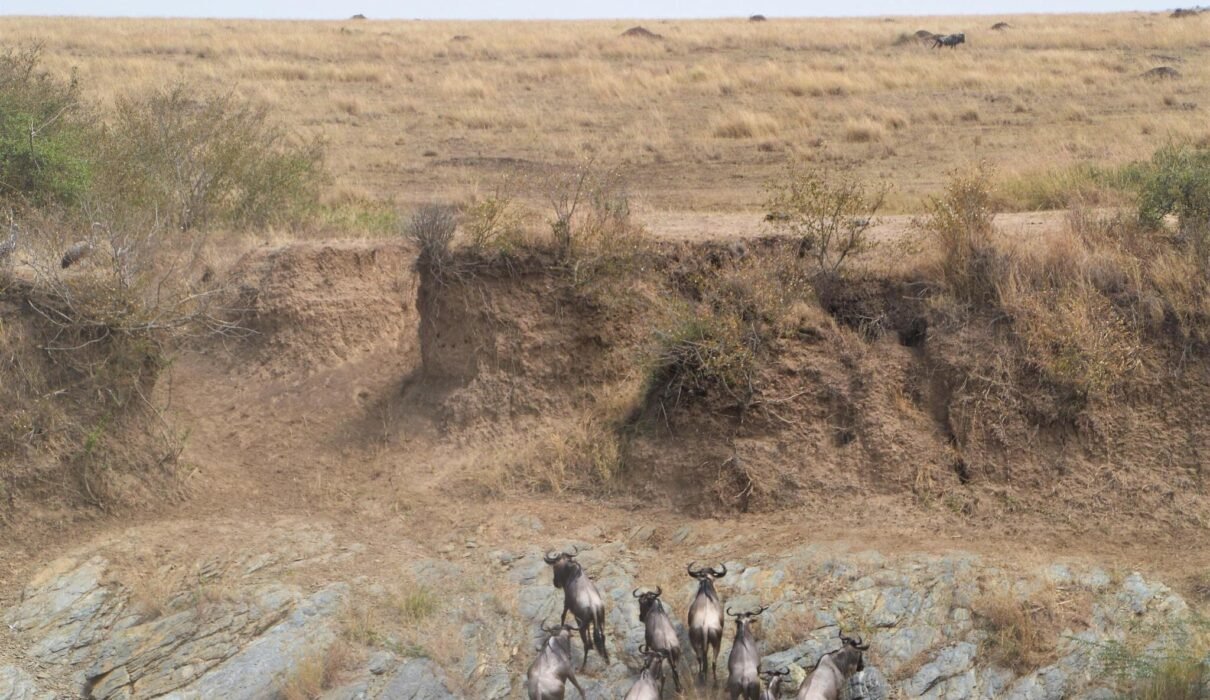
Know About the Great Migration : Every year, millions of wildebeest, zebras, and gazelles move across the plains of East Africa in search of fresh grass and water. Their journey takes them through the Serengeti in Tanzania and the Maasai Mara in Kenya, creating one of the most remarkable wildlife events in the world.
This extraordinary movement is known as the Great Wildebeest Migration, or simply the Great Migration.
For many travelers, witnessing the Great Migration is one of the main reasons to visit Tanzania. Imagine standing in an open safari vehicle as thousands of wildebeest move across the grasslands, hearing their calls in the distance, and watching predators follow the herds.
At certain times of the year, the migration brings dramatic river crossings, newborn calves, and large concentrations of wildlife.
However, the Great Migration is not a single event that happens on one particular day. It is a continuous movement influenced by rainfall, grass growth, and the availability of water.
Understanding how the migration works can help you choose the right time and location for your safari.
Some visitors travel to the southern Serengeti to see the calving season, while others visit the western or northern Serengeti hoping to witness river crossings.
At Eddy Tours and Safaris, we help travelers plan Tanzania wildlife safaris based on their preferred travel dates, destinations, and interests.
This guide explains everything you need to know about the Great Migration in Tanzania, including when it happens, where the herds travel, the best months to visit, what wildlife you may see, and how to plan a Great Migration safari in 2027 or 2028.
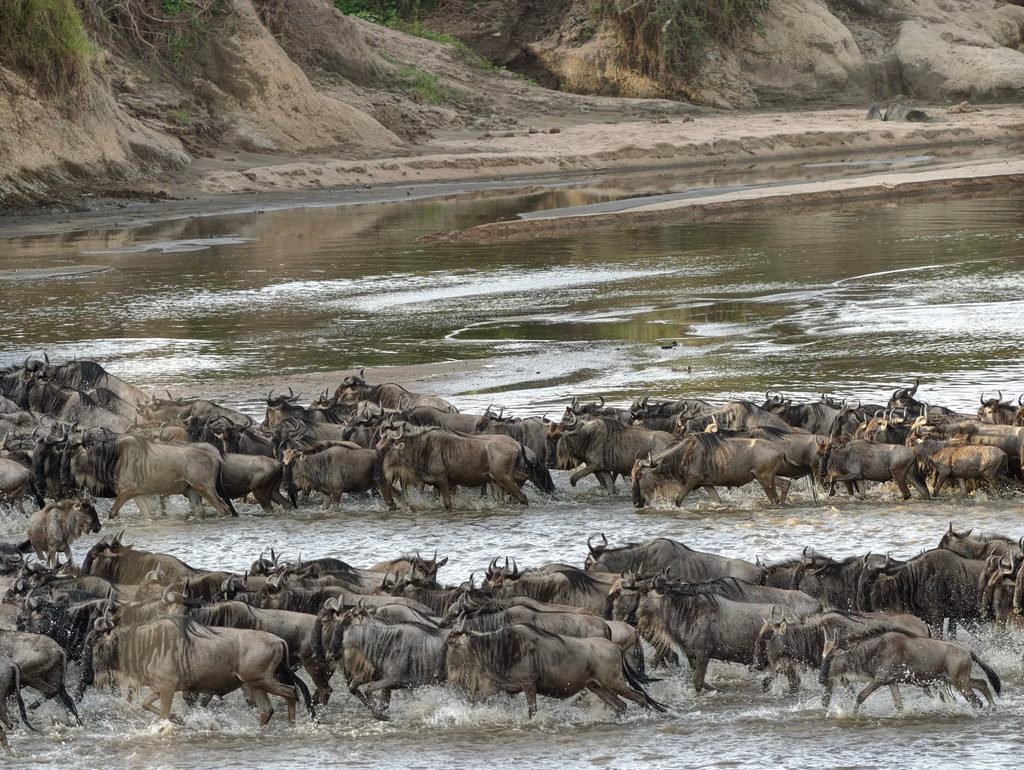
What Is the Great Wildebeest Migration?
The Great Wildebeest Migration is the seasonal movement of enormous herds of wildebeest, accompanied by zebras and other grazing animals, across the Serengeti–Mara ecosystem.
Approximately 1.2 to 1.5 million wildebeest participate in this movement, along with hundreds of thousands of zebras and gazelles.
The exact numbers vary between estimates and from year to year.
The animals travel in search of fresh grazing areas and water, following seasonal rainfall patterns.
The migration is often described as a circular journey, although the herds do not move together in one continuous line.
Instead, different groups spread across large areas, sometimes moving in different directions depending on local conditions.
The migration takes place mainly between Serengeti National Park and surrounding areas in Tanzania and the Maasai Mara National Reserve in Kenya.
Despite its name, the Great Migration is not limited to one country.
However, much of the annual movement, including the important calving season, takes place in Tanzania.
Why Does the Great Migration Happen?
The main reason for the Great Migration is the search for food and water.
Wildebeest depend heavily on grass, and their movement is influenced by rainfall and the growth of fresh vegetation.
During the rainy season, the southern Serengeti and nearby Ndutu plains provide nutritious grass that supports large herds.
As conditions become drier, the animals gradually move toward areas where grazing remains available.
This movement eventually takes many herds toward the western and northern Serengeti.
Later in the year, changing rainfall patterns encourage them to return toward the southern plains.
The migration also plays an important role in the ecosystem.
Wildebeest grazing affects grass growth, while their movement provides food for predators and scavengers.
Their presence supports a complex network of wildlife interactions involving lions, hyenas, cheetahs, crocodiles, vultures, and many other species.
Where Does the Great Migration Take Place?
The Great Migration moves through several important wildlife areas.
Southern Serengeti and Ndutu
The southern Serengeti and Ndutu region are particularly important during the calving season.
These open plains provide nutritious grass following seasonal rainfall.
Large numbers of wildebeest gather here to give birth, creating excellent opportunities to observe newborn animals and predator activity.
Central Serengeti
The central Serengeti, including the Seronera Valley, is known for its year-round wildlife populations.
Migration herds may pass through the region during parts of the year.
The area is also known for resident predators, including lions, leopards, and cheetahs.
Western Serengeti and Grumeti
The western corridor becomes important as many herds move toward the northwestern parts of the ecosystem.
Some animals cross rivers and waterways in the Grumeti region.
These crossings can be dramatic, although they differ from the better-known Mara River crossings.
Northern Serengeti
The northern Serengeti is one of the most popular destinations during the river-crossing season.
Large herds may gather near the Mara River before attempting to cross.
The timing and location of crossings depend on rainfall, grazing conditions, and animal movements.
Maasai Mara, Kenya
Some migration herds move into the Maasai Mara in Kenya during parts of the year.
However, not every wildebeest crosses the international border.
Many remain within the Serengeti ecosystem, and herds may move back and forth as conditions change.
Great Migration Month-by-Month Guide
The following calendar explains the general migration pattern throughout the year.
Remember that these movements are approximate. Rainfall and grazing conditions can cause the herds to arrive earlier, later, or in different locations.
| Month | Typical migration area | Main wildlife experience |
|---|---|---|
| January | Southern Serengeti and Ndutu | Large herds gathering on green plains |
| February | Ndutu and southern Serengeti | Wildebeest calving season |
| March | Southern Serengeti | Calves, grazing herds, and predator activity |
| April | Southern and central Serengeti | Herds beginning to spread and move |
| May | Central and western Serengeti | Large moving herds |
| June | Western corridor and Grumeti | Herd movement and possible crossings |
| July | Western and northern Serengeti | Herds moving north; possible Mara crossings |
| August | Northern Serengeti | Mara River crossing opportunities |
| September | Northern Serengeti and Maasai Mara | River crossings and large herds |
| October | Northern Serengeti and Maasai Mara | Herds beginning to move south |
| November | Northern and central Serengeti | Southward movement following rains |
| December | Central and southern Serengeti | Herds returning toward southern grazing areas |
This is a seasonal guide, not a guaranteed migration timetable.
January: Wildebeest Gather in the Southern Serengeti
January is an excellent month to explore the southern Serengeti and Ndutu region.
Seasonal rainfall often produces fresh grass, attracting large numbers of wildebeest and zebras.
The plains become busy with grazing animals, and predators follow the herds.
Travelers may see lions resting near the grasslands, cheetahs scanning the open plains, or hyenas searching for feeding opportunities.
January is also an interesting month for wildlife photography because the landscape is often green.
The exact concentration of herds depends on rainfall patterns.
February: The Great Migration Calving Season
February is one of the most remarkable months to experience the Great Migration.
During the calving season, hundreds of thousands of wildebeest calves are born over a relatively short period.
The southern Serengeti and Ndutu plains are particularly important for this event.
Newborn calves can often stand and begin moving shortly after birth.
This is essential because the herds must remain mobile to survive.
The large number of newborn animals also attracts predators.
Lions, cheetahs, hyenas, and other carnivores may take advantage of the abundance of vulnerable young animals.
For travelers interested in wildlife behavior and photography, the calving season offers a very different experience from the river crossings.
Rather than focusing on dramatic river scenes, visitors can observe the beginning of life on the open plains.
However, births and predator encounters cannot be guaranteed on any particular game drive.
March: Calves and Large Herds on the Southern Plains
March is another interesting month for visiting the southern Serengeti.
Many calves born earlier in the season are now moving with the herds.
The plains may remain green, depending on rainfall.
Predator activity can continue as lions, cheetahs, and hyenas hunt among the grazing animals.
As the month progresses, some herds may begin moving toward other parts of the ecosystem.
For travelers planning a March safari, it is important to consider the seasonal rains.
Road conditions can become muddy in some areas, particularly after heavy rainfall.
April: The Migration Begins Moving Toward Central Serengeti
April is generally associated with the long rainy season in northern Tanzania.
During this period, migration herds may begin moving away from the southern plains toward central and western areas.
The movement is not always predictable because the animals respond to local rainfall and grazing conditions.
Some groups may remain in the south while others begin traveling northward.
The landscape can be particularly green during April, offering beautiful scenery.
However, rainfall may affect road conditions and game-drive schedules.
Travelers visiting during this period should prepare for wet weather.
May: Large Herds Move Through the Serengeti
May is often associated with large herds moving through central and western Serengeti.
During this period, wildebeest may travel in long columns across the plains.
The movement can create impressive scenes as thousands of animals cross open grassland.
Zebras frequently travel alongside the wildebeest.
The herds may also attract predators that follow their movements.
May can be an interesting month for visitors who want to observe large-scale herd movement without focusing exclusively on river crossings.
However, the rainy season can still affect road conditions.
June: Western Corridor and Grumeti River
June is an important transition period as many herds continue toward the western and northern Serengeti.
The western corridor becomes particularly relevant during this time.
Some animals may cross the Grumeti River or nearby waterways.
Crocodiles inhabit parts of these river systems, and crossings can involve significant danger for the wildebeest.
However, Grumeti crossings are not guaranteed and may not involve the same large concentrations commonly associated with the Mara River.
June is also the beginning of the main dry-season safari period in northern Tanzania.
As conditions become drier, wildlife viewing can improve in some areas because animals concentrate around available water sources.
July: Migration Herds Move Toward Northern Serengeti
July is one of the popular months for Great Migration safaris.
Many herds move toward the northern Serengeti, although their exact locations vary.
Depending on rainfall and grazing conditions, some groups may begin crossing the Mara River during July.
Other herds may remain farther south or west.
Travelers hoping to see river crossings should understand that the animals do not cross at scheduled times.
They may gather near a crossing point for hours or even days before moving.
Sometimes the herds approach the river and then turn back without crossing.
A well-planned itinerary should therefore include enough time in the relevant region rather than relying on a single afternoon game drive.
August: Mara River Crossing Season
August is one of the most popular months for travelers hoping to witness the Great Migration river crossings.
During this period, large herds may gather near the Mara River in the northern Serengeti.
The river creates a major obstacle for the migrating animals.
Some wildebeest hesitate near the riverbanks before eventually entering the water.
Crossings can involve strong currents, steep riverbanks, and crocodiles.
The scenes can be dramatic, with large numbers of animals attempting to reach the opposite side.
However, river crossings are unpredictable.
Even during August, there is no guarantee that visitors will witness one.
Travelers should consider spending several nights in the northern Serengeti to improve their opportunities.
September: Continued Migration Activity in Northern Serengeti
September is another popular month for Great Migration safaris.
Migration herds may remain in the northern Serengeti and Maasai Mara region.
Some animals cross the Mara River multiple times as they move between grazing areas.
The river-crossing activity can continue throughout the month, depending on local conditions.
September also falls within Tanzania’s dry season, making it attractive for general wildlife viewing.
Visitors may see elephants, giraffes, lions, buffalo, and other animals during their safari.
For travelers interested in combining migration viewing with visits to Ngorongoro or Tarangire, September can be a good month to consider.
October: The Herds Begin Their Southward Movement
During October, many migration herds begin moving southward as seasonal conditions change.
Some animals may still be found in the northern Serengeti or Maasai Mara.
Others begin moving toward central Serengeti.
The timing depends heavily on rainfall.
Early rains can encourage the animals to move sooner, while delayed rainfall may keep them in northern grazing areas longer.
October can still provide opportunities to see large herds and occasional river crossings.
However, travelers should not assume that every herd will be in the same location.
November: Following the Short Rains
November is normally associated with the short rainy season in northern Tanzania.
As fresh grass begins growing, migration herds may move toward central and southern Serengeti.
The animals respond to the availability of new grazing areas.
During this period, visitors may encounter large moving herds in different parts of the ecosystem.
The landscape becomes greener, creating beautiful scenery for photography.
However, rain showers may affect road conditions and visibility.
December: Returning Toward the Southern Serengeti
By December, many herds are moving toward or gathering in the southern Serengeti and Ndutu region.
The return to the southern plains prepares the animals for the next calving season.
Depending on rainfall, large concentrations of wildebeest may already be present.
The green landscapes and gathering herds can make December an attractive month for wildlife viewing.
Travelers visiting during the Christmas and New Year holidays should plan early because accommodation demand can be high.
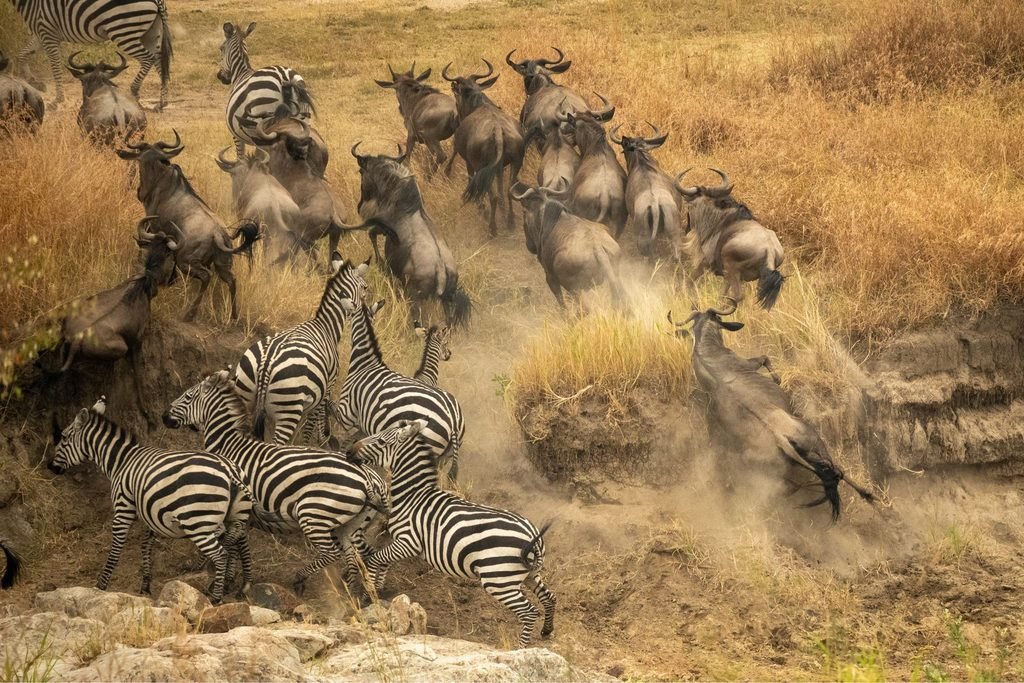
What Are the Great Migration River Crossings?
River crossings are among the most famous events associated with the Great Wildebeest Migration.
They occur when migrating animals attempt to cross rivers and waterways while moving between grazing areas.
The Mara River crossings are particularly well known.
Large numbers of wildebeest may gather near the riverbanks before entering the water.
The animals face several challenges, including strong currents, steep banks, exhaustion, and crocodiles.
Some crossings involve hundreds or thousands of animals, while others are much smaller.
The exact timing cannot be predicted reliably.
A herd may approach a crossing point several times without entering the river.
For this reason, travelers should avoid booking a safari based on promises of a guaranteed crossing.
Where Is the Best Place to See the Mara River Crossings?
The northern Serengeti is one of the best places in Tanzania to look for Mara River crossings.
Areas around Kogatende and the northern Serengeti river system are particularly relevant during the migration season.
Safari camps in this region provide access to game-drive routes near potential crossing areas.
However, being close to the river does not guarantee a crossing.
The best approach is to spend several days in the region and allow your guide to respond to current wildlife movements.
A three- or four-night stay in northern Serengeti may provide more opportunities than a short visit, although the outcome remains unpredictable.
What Is the Great Migration Calving Season?
The calving season is the period when large numbers of wildebeest give birth on the southern Serengeti and Ndutu plains.
It generally takes place between January and March, with February often considered the main calving month.
During a relatively short period, hundreds of thousands of calves may be born.
The open grasslands provide grazing for the adult animals and space for the newborn calves to move.
The large number of calves attracts predators, creating opportunities to observe natural hunting behavior.
For many wildlife photographers, the calving season is just as interesting as the Mara River crossings.
It offers a chance to observe newborn animals, maternal behavior, predator interactions, and the movement of large herds across green plains.
Which Is Better: Calving Season or River Crossings?
Both experiences are remarkable, but they offer different types of wildlife viewing.
| Experience | Calving season | River-crossing season |
|---|---|---|
| Typical months | January–March | July–October |
| Main location | Ndutu and southern Serengeti | Northern Serengeti |
| Main attraction | Newborn wildebeest calves | Mara River crossings |
| Landscape | Often green plains | Generally drier savannah |
| Predator activity | Lions, cheetahs, hyenas | Crocodiles and terrestrial predators |
| Photography | Newborn animals and wildlife behavior | Herd movement and river scenes |
| Guaranteed sightings | No | No |
For travelers interested in newborn wildlife and predator behavior, the calving season can be an excellent choice.
For those hoping to witness dramatic river crossings, July through September is a popular period to consider.
Neither experience is guaranteed, and the best choice depends on your interests.
What Animals Can You See During the Great Migration?
Although wildebeest are the main participants, the migration involves many other animals.
Wildebeest
Wildebeest form the largest part of the migration.
They travel in enormous herds, following seasonal grazing conditions.
Their movement is the main feature of the Great Migration.
Zebras
Large numbers of zebras travel alongside the wildebeest.
The two species often graze in the same areas because they feed on grasses in different ways.
Gazelles
Thomson’s gazelles and other antelope species may be seen in migration areas.
Their movements are not always identical to those of the wildebeest.
Lions
Lions are among the main predators in the Serengeti ecosystem.
They may hunt wildebeest, zebras, and other grazing animals.
Cheetahs
Cheetahs are particularly associated with open grassland habitats.
The southern Serengeti and Ndutu plains can provide opportunities to observe cheetahs hunting.
Hyenas
Spotted hyenas are common predators and scavengers in the Serengeti ecosystem.
They play an important role in the natural food chain.
Crocodiles
Nile crocodiles inhabit the Mara and Grumeti river systems.
They are particularly associated with the dramatic river-crossing scenes.
Elephants, Giraffes and Other Wildlife
During a Serengeti safari, visitors may also encounter elephants, giraffes, buffalo, hippos, leopards, and many bird species.
Wildlife sightings depend on the location, season, and animal movements.
How Many Days Do You Need for a Great Migration Safari?
The ideal safari duration depends on the season and the specific wildlife experience you want.
A three-day safari may provide an introduction to Serengeti wildlife, but it can be difficult to reach remote migration areas from Arusha within such a short period.
A four- or five-day itinerary allows more time in the Serengeti.
For travelers focusing on Mara River crossings, a six- or seven-day itinerary can be more practical because it allows additional nights in northern Serengeti.
Longer safaris also provide opportunities to visit Ngorongoro Crater, Tarangire, or other destinations.
For the calving season, an itinerary that includes multiple nights in the Ndutu region can provide more time to explore the southern plains.
How Much Does a Great Migration Safari Cost in 2027/2028?
The cost of a Great Migration safari depends on the travel season, number of days, group size, accommodation, and transport arrangements.
The northern Serengeti can be particularly expensive during the popular river-crossing season because of accommodation demand and travel distances.
A private safari generally costs more per person than a group joining safari, particularly for solo travelers.
For general planning, the following broad estimates may be useful.
| Safari type | Illustrative cost per person per day |
|---|---|
| Budget camping safari | $200–$350 |
| Mid-range safari | $350–$600 |
| Comfortable private safari | $450–$800 |
| Luxury safari | $800–$1,500+ |
| Exclusive luxury safari | $1,500+ |
These are illustrative planning ranges, not confirmed Eddy Tours and Safaris prices for 2027 or 2028.
Actual prices may vary significantly depending on accommodation, park fees, season, and travel arrangements.
For an accurate quotation, contact Eddy Tours and Safaris with your preferred dates and number of travelers.
What Is Usually Included in a Great Migration Safari?
Package inclusions vary by operator and accommodation category.
A typical supported safari may include:
- Safari vehicle and professional driver-guide.
- National park entry fees.
- Accommodation during the safari.
- Meals according to the itinerary.
- Scheduled game drives.
- Transport between destinations.
- Drinking water arrangements.
Some packages may also include airport transfers, domestic flights, or additional activities.
Always confirm the inclusions before booking.
What Is Not Usually Included?
Depending on the package, additional costs may include international flights, visa fees, travel insurance, tips, alcoholic beverages, personal purchases, and optional activities.
Domestic flights may also be excluded from road-based safari packages.
Travelers should request a detailed written quotation before making payment.
What Should You Pack for a Great Migration Safari?
Packing suitable clothing and equipment can make your safari more comfortable.
Recommended items include:
- Lightweight, comfortable clothing.
- Neutral-colored shirts and trousers.
- Warm jacket for early morning game drives.
- Comfortable walking shoes.
- Sun hat.
- Sunglasses and sunscreen.
- Binoculars.
- Camera and spare batteries.
- Reusable water bottle.
- Personal medication.
- Insect repellent.
- Small daypack.
- Travel documents and insurance information.
Temperatures can be cool during early morning game drives, particularly in the dry season.
Layered clothing is useful because conditions may become warmer during the day.
Is the Great Migration Worth Seeing?
For wildlife enthusiasts, the Great Migration is one of Africa’s most remarkable natural events.
The opportunity to observe large herds moving across open plains, newborn wildebeest during calving season, or animals gathering near the Mara River can make a safari particularly memorable.
However, the experience is not limited to dramatic crossings.
The movement of the herds, interactions between predators and prey, and changing landscapes are all important parts of the migration.
Even when a river crossing does not occur, the Serengeti offers excellent opportunities to observe wildlife.
The best safari experience comes from understanding that nature is unpredictable.
How to Plan a Great Migration Safari in Tanzania
Planning a successful migration safari begins with choosing the experience you want.
If you are interested in the calving season, consider traveling between January and March and spending time in Ndutu and the southern Serengeti.
If your main interest is the Mara River crossings, consider July through September and allow several nights in northern Serengeti.
Travelers visiting during other months can still see migration herds, but their locations may be less predictable.
It is important to choose accommodation near the areas you intend to explore.
For example, staying in central Serengeti while hoping to see Mara River crossings may involve very long driving distances.
A well-planned itinerary should reduce unnecessary travel and allow enough time for game drives.
You should also book early for popular travel periods, particularly July, August, September, and the Christmas holidays.
Responsible Wildlife Viewing During the Great Migration
The Great Migration takes place within an important natural ecosystem.
Responsible wildlife viewing helps protect the animals and their habitats.
Visitors should follow national park rules and the instructions of their safari guide.
Vehicles should not block animal movement or interfere with river crossings.
It is also important to avoid approaching wildlife too closely or creating unnecessary disturbance.
Wild animals should never be fed.
Responsible safari practices help protect the Serengeti ecosystem for future generations.
For official information about Tanzania’s national parks, visit the Tanzania National Parks Authority.
Why Plan Your Great Migration Safari with Eddy Tours and Safaris?
Planning a Great Migration safari requires an understanding of seasonal wildlife movements, accommodation locations, and realistic travel distances.
At Eddy Tours and Safaris, we help travelers explore Tanzania safari itineraries according to their preferred dates, destinations, and interests.
Whether you want to experience the wildebeest calving season in Ndutu or search for Mara River crossings in northern Serengeti, our team can help you discuss suitable safari arrangements.
We can also assist with planning visits to Ngorongoro Crater, Tarangire National Park, and other destinations in northern Tanzania.
Travelers interested in combining their safari with Mount Kilimanjaro climbing or a Zanzibar beach holiday can request a customized itinerary.
For more information, visit Eddy Tours and Safaris or contact our team.
Frequently Asked Questions About the Great Migration
What is the Great Wildebeest Migration?
The Great Wildebeest Migration is the seasonal movement of large herds of wildebeest, zebras, and other grazing animals across the Serengeti–Mara ecosystem in search of fresh grass and water.
When is the Great Migration in Tanzania?
The migration takes place throughout the year. The animals move between different parts of the Serengeti ecosystem according to rainfall and grazing conditions.
What is the best month to see the Great Migration?
The best month depends on the experience you want. February is popular for calving, while July through September is popular for Mara River crossing opportunities.
Where is the Great Migration in January?
Many herds are commonly found in the southern Serengeti and Ndutu region, depending on rainfall.
Where is the Great Migration in February?
February is normally associated with the calving season in Ndutu and the southern Serengeti.
When do wildebeest cross the Mara River?
Crossings are often observed between July and October, but the timing varies. No particular crossing can be guaranteed.
Is the Great Migration better in Tanzania or Kenya?
Both countries offer excellent migration experiences. Tanzania is particularly important for the calving season and the northern Serengeti river crossings, while Kenya’s Maasai Mara is also a popular migration destination.
How many wildebeest participate in the migration?
Estimates commonly suggest approximately 1.2 to 1.5 million wildebeest, along with hundreds of thousands of zebras and gazelles.
Can I see the Great Migration in December?
Yes. Many herds are often moving toward or gathering in the southern Serengeti during December, depending on rainfall.
How many days are recommended for a migration safari?
Five to seven days is a useful duration for many travelers, particularly when visiting remote parts of the Serengeti. Longer itineraries provide more flexibility.
Are Mara River crossings guaranteed?
No. River crossings are natural events and cannot be scheduled or guaranteed.
Can I combine the Great Migration with Ngorongoro Crater?
Yes. Many Tanzania safari itineraries combine Serengeti wildlife viewing with a visit to Ngorongoro Crater.
Can I combine the Great Migration with Kilimanjaro climbing?
Yes. Travelers can combine a Serengeti safari with Mount Kilimanjaro climbing and other activities in Tanzania.
Final Thoughts: Experiencing the Great Migration in Tanzania
The Great Wildebeest Migration is one of the most extraordinary wildlife movements in the world.
From the calving season on the southern Serengeti plains to the dramatic Mara River crossings in the north, every stage of the migration offers a different experience.
However, understanding the migration is important when planning your safari.
The animals do not follow an exact calendar, and their movements depend on rainfall and grazing conditions.
Travelers who want to see newborn wildebeest should consider the southern Serengeti and Ndutu during the calving season.
Those hoping to witness river crossings should consider the northern Serengeti during the main crossing months.
Whatever time of year you visit, the Serengeti offers opportunities to experience Tanzania’s remarkable wildlife and landscapes.
A well-planned itinerary, realistic expectations, and enough time in the right region can make your Great Migration safari more rewarding.
Book Your Great Migration Safari for 2027/2028 with Eddy Tours and Safaris
Are you planning to experience the Great Wildebeest Migration in Tanzania?
Eddy Tours and Safaris can help you explore safari itineraries based on your preferred travel dates, accommodation preferences, and number of travelers.
Whether you are interested in the Ndutu calving season, northern Serengeti river crossings, or a longer Tanzania wildlife holiday, contact our team to discuss your plans.
Website: Eddy Tours and Safaris
Contact page: Plan Your Great Migration Safari
Email: sales@eddytours-safaris.com
WhatsApp: +255 711 906 664