
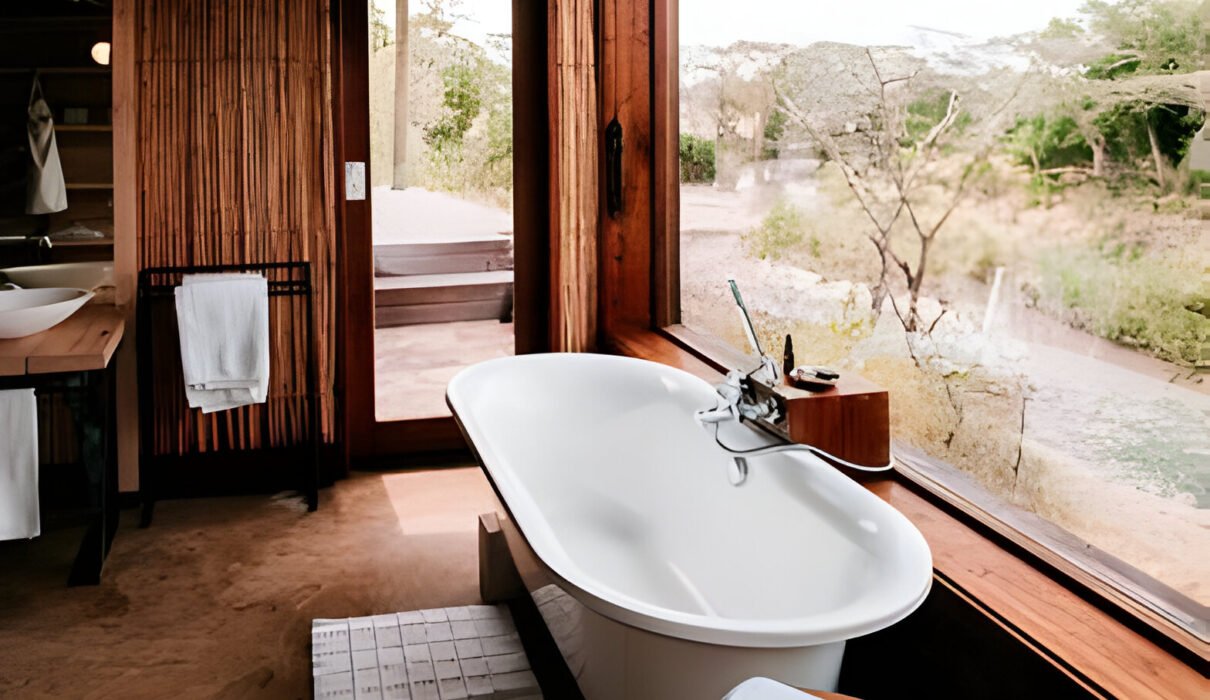
2-Day Lake Manyara and Ngorongoro Crater : A Tanzania safari does not always require a week or more of traveling. Even with just two days, you can visit beautiful national parks, enjoy exciting game drives, and see some of Africa’s most famous wildlife in their natural surroundings.
The 2-Day Lake Manyara and Ngorongoro Crater Tanzania Safari is an excellent choice for travelers who want to explore two of northern Tanzania’s popular wildlife destinations within a short holiday.
This safari begins with a visit to Lake Manyara National Park, located beneath the Great Rift Valley escarpment. The park is known for its groundwater forests, elephants, large troops of baboons, birdlife, and occasional sightings of tree-climbing lions.
On the second day, you travel to Ngorongoro Crater, one of Africa’s most remarkable wildlife areas. Here, you descend into a vast volcanic caldera where lions, buffaloes, zebras, wildebeest, elephants, and other animals live throughout the year.
The crater is also one of the places in Tanzania where visitors may have an opportunity to see the endangered black rhinoceros.
Although wildlife sightings can never be guaranteed, the combination of Lake Manyara and Ngorongoro offers an interesting variety of habitats and animals.
This two-day safari is particularly suitable for couples, families, small groups, and travelers who have limited time in Tanzania.
It can also be added to a Mount Kilimanjaro climbing holiday or a longer trip that includes Zanzibar.
At Eddy Tours and Safaris, we help travelers plan wildlife safaris according to their preferred travel dates, budget, and accommodation preferences.
In this guide, you will find the complete two-day itinerary, estimated costs for 2027 and 2028, accommodation options, wildlife highlights, the best months to travel, and useful information to help you prepare for your Tanzania safari.
Why Choose a 2-Day Lake Manyara and Ngorongoro Crater Safari?
One of the main advantages of this safari is that you can visit two different wildlife areas in just two days.
Lake Manyara offers beautiful forests, open floodplains, lake scenery, and views of the Great Rift Valley.
Ngorongoro Crater offers a completely different landscape, with open grasslands, freshwater areas, wetlands, and wildlife living within a volcanic caldera.
Another advantage is the relatively convenient location of both destinations.
They are accessible by road from Arusha, making this itinerary practical for visitors who cannot spend several days traveling to more distant parts of the Serengeti.
The safari also provides opportunities to observe different animals.
At Lake Manyara, you may encounter elephants, giraffes, buffaloes, baboons, blue monkeys, and numerous bird species.
Inside Ngorongoro Crater, visitors often look for lions, zebras, wildebeest, buffaloes, hippos, elephants, and black rhinos.
The variety of wildlife and scenery makes this short itinerary appealing to first-time safari travelers.
2-Day Lake Manyara and Ngorongoro Safari Overview
| Safari details | Information |
|---|---|
| Destination | Northern Tanzania |
| Safari duration | 2 days and 1 night |
| Starting point | Arusha, with Moshi transfers available |
| Main destinations | Lake Manyara National Park and Ngorongoro Crater |
| Safari type | Private or group joining, subject to availability |
| Accommodation | Budget, mid-range, or luxury options |
| Transport | Safari vehicle |
| Main activities | Game drives and wildlife photography |
| Best travel period | Year-round |
| Suitable for | Couples, families, solo travelers, and small groups |
| Ending point | Arusha or Moshi, according to arrangements |
Complete 2-Day Lake Manyara and Ngorongoro Crater Safari Itinerary
Day 1: Arusha to Lake Manyara National Park – Wildlife, Forests and the Great Rift Valley
Your Tanzania safari begins in the morning with pickup from your hotel in Arusha.
After meeting your professional safari driver-guide, you begin traveling toward Lake Manyara National Park.
The drive normally takes approximately two hours, depending on traffic, road conditions, and your departure location.
Along the way, you pass through local villages, farmland, and the beautiful countryside of northern Tanzania.
As you approach Lake Manyara, you will notice the impressive Great Rift Valley escarpment rising above the surrounding landscape.
After arriving at the park entrance, your guide completes the necessary registration procedures.
You then begin your first game drive.
Exploring Lake Manyara’s Groundwater Forest
One of the first landscapes you encounter is the park’s groundwater forest.
This area is known for its tall trees, thick vegetation, and cool atmosphere.
Unlike the open grasslands found in many other safari destinations, the forest provides a different wildlife-viewing experience.
Large troops of baboons are frequently seen near the road, sometimes moving through the forest or resting in open areas.
Blue monkeys may also be seen among the trees.
Your guide will help you look for animals while explaining the park’s vegetation and wildlife habitats.
As you continue deeper into the park, the landscape gradually changes.
You may encounter open grassland, acacia woodland, and areas near the lake.
Searching for Elephants and Tree-Climbing Lions
Lake Manyara is known for its elephants.
Depending on the season and wildlife movements, you may see elephants feeding near the forest, moving through open areas, or gathering in family groups.
The park is also famous for its tree-climbing lions.
Although lions are generally associated with resting on the ground, some lions in Lake Manyara have been observed resting in trees.
Seeing this behavior is an exciting possibility, but it is not guaranteed.
Your guide will look for wildlife in suitable areas while following national park rules.
Other animals you may encounter include giraffes, buffaloes, zebras, wildebeest, and various antelope species.
Birdwatching Around Lake Manyara
Lake Manyara is also an interesting destination for birdwatching.
The park supports hundreds of bird species, including pelicans, storks, herons, fish eagles, and flamingos.
Flamingos may gather around the alkaline lake when water levels and feeding conditions are suitable.
Their numbers vary throughout the year.
Bird enthusiasts can enjoy watching different species in the forest, wetlands, and open areas.
Picnic Lunch and Afternoon Game Drive
During the day, you stop at a designated picnic area for lunch.
Afterward, you continue exploring the park, looking for wildlife and enjoying the scenery.
The exact game-drive route depends on road conditions, wildlife movements, and the time available.
In the late afternoon, you leave Lake Manyara National Park and travel toward your accommodation.
Most two-day itineraries use accommodation around Mto wa Mbu or Karatu.
Karatu is particularly convenient for travelers visiting Ngorongoro Crater the following morning.
After arriving at your lodge or campsite, you can relax, enjoy dinner, and prepare for the second day.
Day 1 details
- Route: Arusha to Lake Manyara National Park
- Approximate driving time: 2 hours to the park from Arusha
- Main activity: Lake Manyara game drive
- Wildlife possibilities: Elephants, giraffes, baboons, buffaloes, zebras, lions, and birds
- Overnight: Mto wa Mbu or Karatu
- Meals: According to the confirmed safari package
Day 2: Ngorongoro Crater Game Drive – Lions, Rhinos and Beautiful Wildlife
Your second safari day begins with an early breakfast at your lodge.
After breakfast, you travel toward the Ngorongoro Conservation Area.
The drive from Karatu to the crater area is relatively short, although the total travel time depends on your lodge location, registration procedures, and road conditions.
As you approach the Ngorongoro highlands, the landscape becomes greener and more mountainous.
The road passes through highland vegetation before reaching the crater rim.
On clear mornings, you may enjoy beautiful views across the enormous volcanic caldera.
Descending into Ngorongoro Crater
After completing the necessary entry procedures, your guide drives down the crater descent road.
Ngorongoro Crater is the world’s largest intact, unfilled volcanic caldera.
Its floor covers approximately 260 square kilometres and supports a remarkable variety of wildlife.
The descent provides views of the crater’s grasslands, wetlands, and surrounding walls.
Once you reach the crater floor, your game drive begins.
Wildlife Viewing Inside the Crater
Ngorongoro Crater is known for its large concentrations of wildlife.
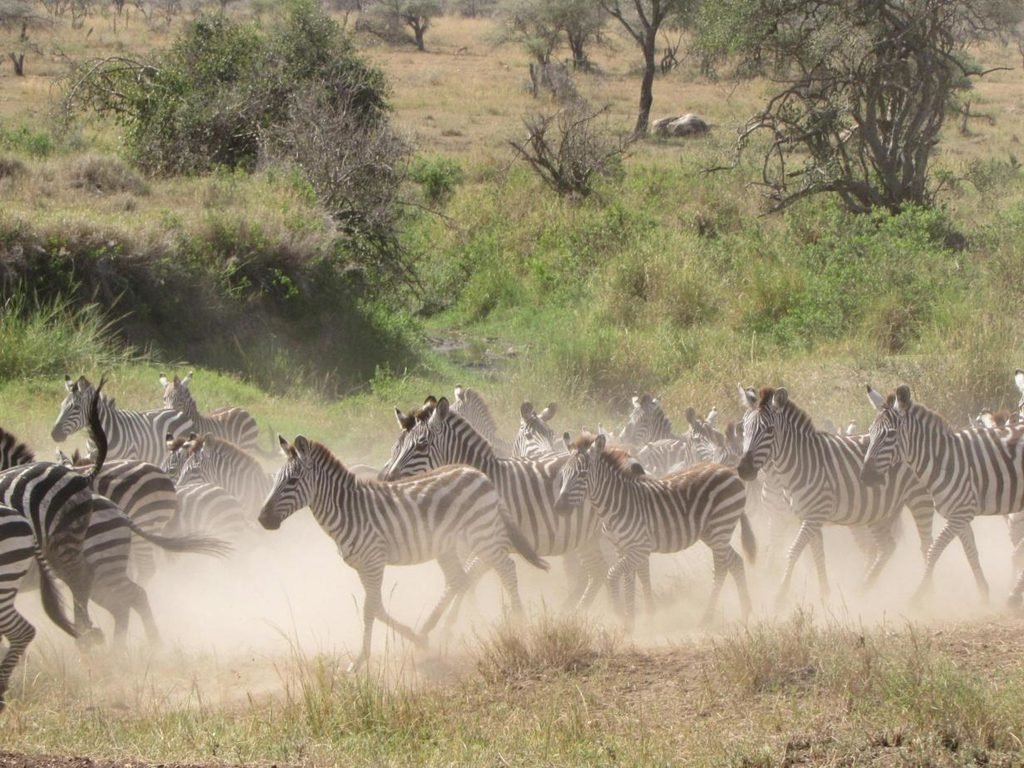
You may see zebras grazing alongside wildebeest, buffaloes moving through open grassland, and elephants feeding in suitable habitats.
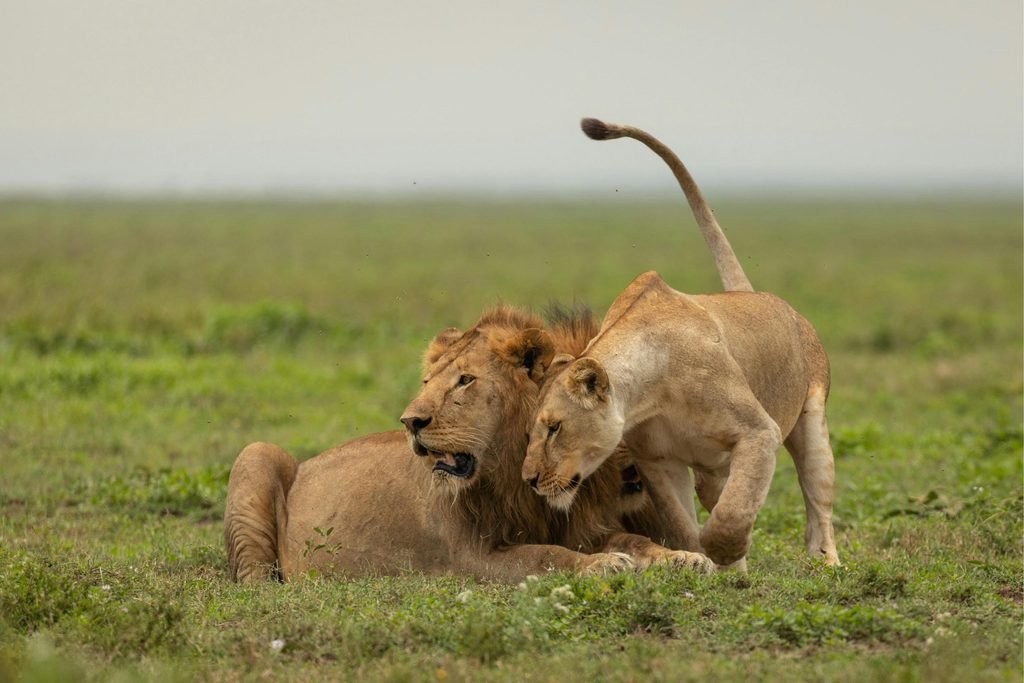
Lions are among the main predators found inside the crater.
They may be seen resting in the grass, moving across open areas, or watching grazing animals.
Spotted hyenas are also common.
Hippos can often be seen in pools and wetlands.
One of the animals many visitors hope to see is the endangered black rhinoceros.
Ngorongoro is an important conservation area for this species, but rhinos can be difficult to spot because of their relatively small population and movements.
Your guide will look for wildlife while respecting park rules and maintaining appropriate distances.
Picnic Lunch and Crater Scenery
During the game drive, you stop at a designated picnic area for lunch.
The crater’s scenery is one of the highlights of the visit.
The combination of grasslands, lakes, wetlands, and steep crater walls creates a beautiful natural setting.
After lunch, you continue your game drive, depending on the available time and permitted schedule.
Ngorongoro game drives are subject to conservation area regulations, including applicable crater-floor time limits.
Returning to Arusha or Moshi
After completing your game drive, you ascend from the crater floor and begin the return journey.
The drive back to Arusha generally takes several hours, depending on road conditions and traffic.
Travelers returning to Moshi should allow additional time.
Your guide drops you at your hotel or another agreed location, bringing your two-day Tanzania safari to an end.
Day 2 details
- Route: Karatu or Mto wa Mbu to Ngorongoro Crater, then Arusha
- Main activity: Ngorongoro Crater game drive
- Wildlife possibilities: Lions, elephants, buffaloes, zebras, wildebeest, hippos, hyenas, and black rhinos
- Lunch: Picnic lunch at a designated area
- Accommodation: Not included after the safari unless arranged
- Meals: According to the confirmed package
How Much Does a 2-Day Lake Manyara and Ngorongoro Crater Safari Cost in 2027/2028?
The cost of this safari depends on several factors, including the number of travelers, accommodation category, travel season, and whether you choose a private or group joining safari.
Private safaris normally cost more per person for solo travelers because vehicle and guide expenses are not shared.
Traveling as a couple or small group may reduce the cost per person.
Accommodation also affects the total price.
Budget camping is generally more affordable than mid-range lodges or luxury accommodation.
For general planning, the following estimated ranges may be useful.
| Safari package | Illustrative total cost per person |
|---|---|
| Budget group joining safari | $450–$700 |
| Budget private safari | $650–$950 |
| Mid-range lodge safari | $750–$1,200 |
| Luxury safari | $1,100–$1,800+ |
These are broad planning estimates for a two-day safari, not confirmed Eddy Tours and Safaris prices for 2027 or 2028.
Actual quotations depend on the travel dates, number of people, accommodation, park fees, crater service fees, and other arrangements.
For an accurate quotation, contact Eddy Tours and Safaris with your preferred dates and group size.
What Is Included in the 2-Day Safari Package?
A typical supported two-day Lake Manyara and Ngorongoro Crater safari may include:
- Professional safari driver-guide.
- Safari vehicle for transportation and game drives.
- Lake Manyara National Park entry fees.
- Ngorongoro Conservation Area entry fees.
- Applicable crater service fee.
- One night of accommodation.
- Meals according to the itinerary.
- Picnic lunches during game drives.
- Drinking water during the safari.
- Pickup and drop-off arrangements within the agreed locations.
The exact inclusions depend on the package selected.
Always request a written quotation before confirming your booking.
What Is Not Usually Included?
Depending on the package, additional expenses may include international flights, Tanzania visa fees, travel insurance, alcoholic drinks, tips for the safari guide, personal purchases, and optional activities.
Airport transfers and accommodation before or after the safari may also be charged separately.
Travelers should confirm these details before making payment.
Accommodation Options for the 2-Day Safari
Because this itinerary includes one overnight stay, choosing suitable accommodation is important.
Most travelers stay around Mto wa Mbu or Karatu.
Budget Accommodation
Budget options may include basic lodges, guesthouses, or campsites.
These are suitable for travelers who want to keep their safari costs lower.
Facilities vary by property.
Mid-Range Lodges
Mid-range lodges generally provide private rooms, comfortable beds, bathrooms, and restaurant facilities.
They can be a good choice for couples and families who want comfort without paying for luxury accommodation.
Luxury Accommodation
Luxury options may include high-end lodges or boutique properties around Karatu or the Ngorongoro highlands.
These properties can provide more spacious rooms, attractive surroundings, and additional services.
However, accommodation availability and prices depend on the travel season.
Wildlife You May See During the Safari
One of the main attractions of this itinerary is the variety of animals found in the two destinations.
| Animal | Lake Manyara | Ngorongoro Crater |
|---|---|---|
| Elephant | Possible | Possible |
| Lion | Possible, including tree-climbing behavior | Frequently sought and regularly observed |
| Giraffe | Possible | Not normally found on the crater floor |
| Zebra | Possible | Common |
| Wildebeest | Possible | Common |
| Buffalo | Possible | Common |
| Hippopotamus | Possible | Common in suitable pools |
| Black rhinoceros | Not a typical sighting | Possible, but not guaranteed |
| Baboons | Common | Possible in surrounding highland areas |
| Flamingos | Seasonal | Seasonal |
The presence of wildlife does not guarantee a sighting during a particular safari.
Best Time for a Lake Manyara and Ngorongoro Safari
Both destinations can be visited throughout the year.
However, the weather and wildlife-viewing conditions change between seasons.
January to March
These months often bring green landscapes and relatively warm conditions.
Wildlife viewing can be rewarding, and birdwatching is particularly interesting.
Rainfall may occur, especially toward the end of the period.
April and May
April and May are generally associated with the long rainy season.
The landscape becomes green, but heavy rainfall may affect road conditions.
Some travelers enjoy the quieter atmosphere during these months.
June to October
June through October is the main dry-season period in northern Tanzania.
Wildlife viewing can be good because animals may gather around available water sources.
The cooler weather can also make game drives comfortable, particularly during the day.
Early mornings around Ngorongoro can be cold, so warm clothing is useful.
November and December
November often brings short rains, while December conditions can vary.
The landscapes may become greener, and birdlife can be particularly interesting.
There is no single month that guarantees the best wildlife sightings.
Lake Manyara vs Ngorongoro Crater: What Is the Difference?
Although the two destinations are relatively close to each other, they provide different safari experiences.
| Feature | Lake Manyara National Park | Ngorongoro Crater |
|---|---|---|
| Landscape | Forest, lake, woodland, floodplains | Volcanic caldera, grassland, wetlands |
| Famous attraction | Tree-climbing lions and birdlife | Dense wildlife populations and crater scenery |
| Elephant sightings | Possible | Possible |
| Rhino sightings | Not a typical attraction | Possible |
| Birdwatching | Excellent variety | Good variety |
| Main experience | Diverse habitats and forest wildlife | Wildlife viewing on the crater floor |
Visiting both destinations provides a broader understanding of northern Tanzania’s natural landscapes.
Is a 2-Day Lake Manyara and Ngorongoro Safari Worth It?
Yes, particularly for travelers who have limited time.
This safari allows you to experience two different wildlife areas without spending several days traveling across northern Tanzania.
It is also a practical option for visitors staying in Arusha or Moshi.
However, two days is a relatively short safari.
You will spend part of each day traveling between destinations, which limits the time available for game drives.
Travelers who want to visit Serengeti National Park or spend more time observing wildlife should consider a longer itinerary.
A three- or four-day safari provides additional flexibility.
For those with only two days, Lake Manyara and Ngorongoro Crater remain an attractive combination.
Private Safari vs Group Joining Safari
A private safari provides a dedicated vehicle and greater flexibility.
This can be useful for couples, families, photographers, and travelers with specific interests.
You can discuss your preferred departure time and accommodation arrangements with your operator.
A group joining safari can be more affordable because participants share some operating costs.
It can also be a social experience for solo travelers.
However, group tours normally follow a fixed schedule and offer less flexibility.
The best choice depends on your budget and travel preferences.
What Should You Pack for a 2-Day Tanzania Safari?
You do not need a large amount of luggage for a short safari.
However, bringing suitable clothing and personal items will make your trip more comfortable.
Recommended items include:
- Lightweight, comfortable clothing.
- Warm jacket for early morning game drives.
- Comfortable shoes.
- Sun hat.
- Sunglasses.
- Sunscreen.
- Camera and spare batteries.
- Binoculars.
- Reusable water bottle.
- Personal medication.
- Insect repellent.
- Small daypack.
- Travel documents.
- Phone charger or power bank.
Neutral-colored clothing is practical for safari activities.
Early mornings around Ngorongoro can be cold, while afternoons at lower elevations may be warm.
Layered clothing is therefore useful.
Can You Combine This Safari with Kilimanjaro Climbing?
Yes. The two-day Lake Manyara and Ngorongoro safari can be added to a Kilimanjaro climbing holiday.
Many travelers visit Tanzania primarily to climb Mount Kilimanjaro but also want to experience the country’s wildlife.
After completing a mountain climb, a short safari provides an opportunity to explore national parks before returning home.
However, climbers should allow enough time to rest after their trek.
A safari can also be arranged before the mountain climb, depending on travel dates and personal preferences.
Eddy Tours and Safaris can be contacted about combining Kilimanjaro trekking with a Tanzania wildlife safari.
Can You Add Zanzibar to This Safari?
Yes. Travelers planning a longer Tanzania holiday can combine the two-day safari with a Zanzibar beach holiday.
After visiting Lake Manyara and Ngorongoro, you can travel to Zanzibar for several days of relaxation.
Zanzibar is known for its beaches, historical attractions, and Indian Ocean scenery.
Depending on your travel arrangements, you may fly from Arusha or Kilimanjaro to Zanzibar.
This combination is popular among couples and travelers who want both wildlife experiences and time at the beach.
Why Book with Eddy Tours and Safaris?
Planning a Tanzania safari involves choosing suitable destinations, accommodation, transportation, and travel dates.
At Eddy Tours and Safaris, we help travelers explore safari itineraries according to their interests and available time.
Whether you want a short two-day safari or a longer wildlife holiday, our team can help you discuss suitable travel arrangements.
We can also assist with planning Kilimanjaro climbing, Tanzania day trips, and Zanzibar holidays.
Travelers can request information about accommodation categories, safari vehicles, park visits, and available dates.
For more information, visit Eddy Tours and Safaris or contact our team.
Frequently Asked Questions About the 2-Day Lake Manyara and Ngorongoro Safari
How much does the 2-Day Lake Manyara and Ngorongoro Crater safari cost?
The cost depends on group size, accommodation, and whether the safari is private or shared. Broad planning estimates range from approximately $450 to $1,800 or more per person for the complete two-day trip.
Can I visit Lake Manyara and Ngorongoro Crater in two days?
Yes. A common itinerary visits Lake Manyara on the first day, stays overnight around Karatu or Mto wa Mbu, and explores Ngorongoro Crater on the second day.
Is this safari suitable for beginners?
Yes. The itinerary is suitable for first-time safari travelers because it includes established wildlife destinations accessible by road from Arusha.
Can I see the Big Five during this safari?
You may see several Big Five species, including lions, elephants, and buffaloes. Black rhinos are possible in Ngorongoro, while leopards can be difficult to spot. Seeing all five is not guaranteed.
Are tree-climbing lions guaranteed at Lake Manyara?
No. Lake Manyara is known for tree-climbing lions, but sightings depend on animal movements and conditions.
Can I see black rhinos in Ngorongoro Crater?
Yes, sightings are possible. However, black rhinos are endangered and can be difficult to find.
Where will I sleep during the safari?
Most itineraries include one night around Mto wa Mbu or Karatu, depending on the accommodation category.
Is Ngorongoro Crater a national park?
No. Ngorongoro Crater lies within the Ngorongoro Conservation Area, which is managed by the Ngorongoro Conservation Area Authority.
What is the best month for this safari?
Both destinations offer wildlife viewing throughout the year. June through October is popular for drier conditions, while the greener months can be particularly attractive for scenery and birdwatching.
Is a two-day safari enough?
Two days is enough to visit Lake Manyara and Ngorongoro Crater, but a longer safari allows more time for wildlife viewing and additional destinations.
Can the safari start from Moshi?
Yes, it can be arranged from Moshi, although the longer transfer means an earlier departure may be necessary.
Can I book a private safari?
Private arrangements may be available. Contact Eddy Tours and Safaris to discuss your preferred dates, number of travelers, and accommodation requirements.
Final Thoughts: Exploring Lake Manyara and Ngorongoro in Two Days
The two-day Lake Manyara and Ngorongoro Crater safari is a rewarding option for travelers who want to experience Tanzania’s wildlife within a short period.
The first day introduces you to Lake Manyara’s forests, elephants, birdlife, and beautiful Rift Valley scenery.
The second day takes you into Ngorongoro Crater, where open grasslands, wetlands, and wildlife create one of Tanzania’s most distinctive safari experiences.
Although two days cannot cover everything northern Tanzania has to offer, this itinerary provides an introduction to the country’s natural beauty.
For couples, families, solo travelers, and visitors combining a safari with Kilimanjaro climbing, it is a practical choice.
With suitable accommodation, a well-planned itinerary, and realistic expectations about wildlife sightings, the trip can be an enjoyable part of your Tanzania holiday.
Book Your 2-Day Lake Manyara and Ngorongoro Crater Safari for 2027/2028
Are you planning a short Tanzania safari?
Eddy Tours and Safaris can help you explore the two-day Lake Manyara and Ngorongoro Crater itinerary and discuss available accommodation options.
Whether you are traveling alone, as a couple, with friends, or with family, contact our team to request a quotation based on your preferred dates and number of travelers.
Website: Eddy Tours and Safaris
Contact page: Plan Your Tanzania Safari
Email: sales@eddytours-safaris.com
WhatsApp: +255 711 906 664