
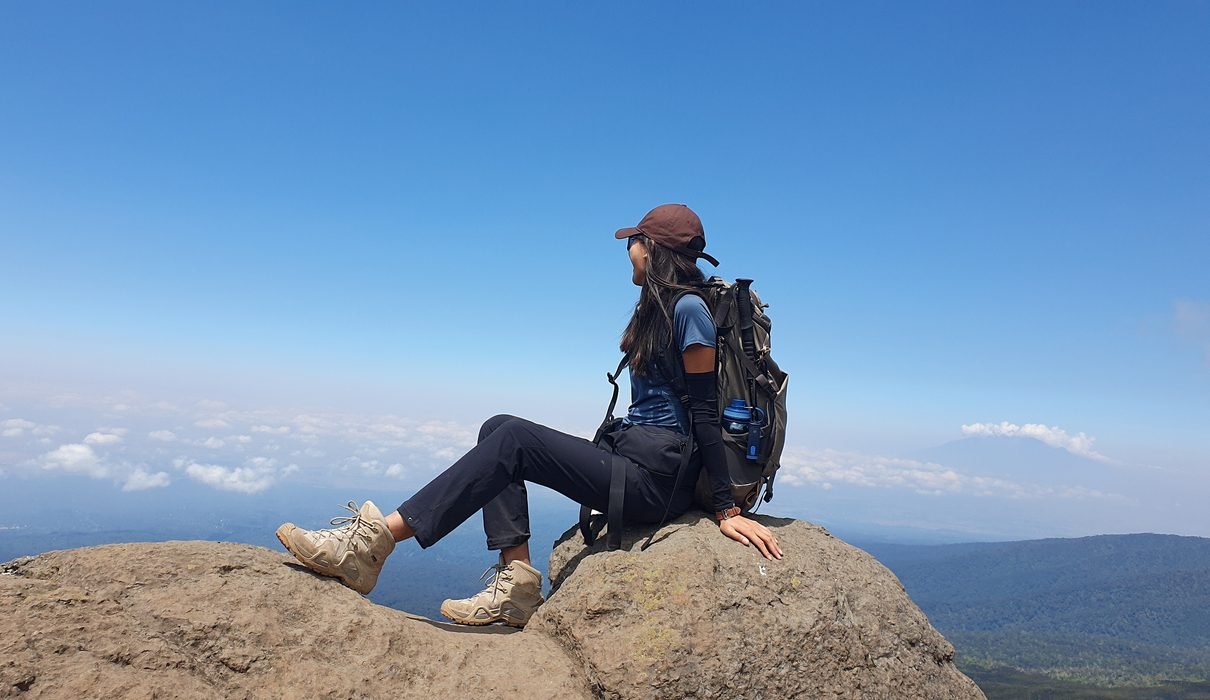
Planning to climb a mountain in East Africa in 2027 or 2028? Two names will probably come up during your research: Mount Kenya and Mount Kilimanjaro. Both mountains offer beautiful landscapes, challenging hiking trails, cold summit conditions, and the chance to experience Africa’s high-altitude environment. However, they are very different mountains, and choosing the right one depends on what you want from your trip.
Mount Kilimanjaro, located in northern Tanzania, is the highest mountain in Africa at 5,895 metres (19,341 feet). It attracts travelers who want to reach Uhuru Peak, experience several different landscapes, and complete a major high-altitude trek without technical rock-climbing experience. Mount Kenya, located in central Kenya, reaches 5,199 metres (17,057 feet) at Batian Peak. Unlike Kilimanjaro, its highest summit requires technical climbing skills, although most hikers can attempt the lower Point Lenana summit through established trekking routes.
For first-time mountain travelers, this difference is worth understanding before making a booking. Climbing Kilimanjaro generally means trekking to the mountain’s highest point, while trekking Mount Kenya usually means reaching Point Lenana rather than Batian. Both adventures require physical preparation, suitable equipment, experienced guides, and careful attention to altitude.
At Eddy Tours & Safaris, we help travelers plan guided Kilimanjaro expeditions and Tanzania holidays. This guide compares Mount Kenya and Kilimanjaro in simple terms, covering their heights, routes, difficulty, scenery, costs, climbing seasons, accommodation, and preparation requirements to help you choose the best mountain for 2027 or 2028.
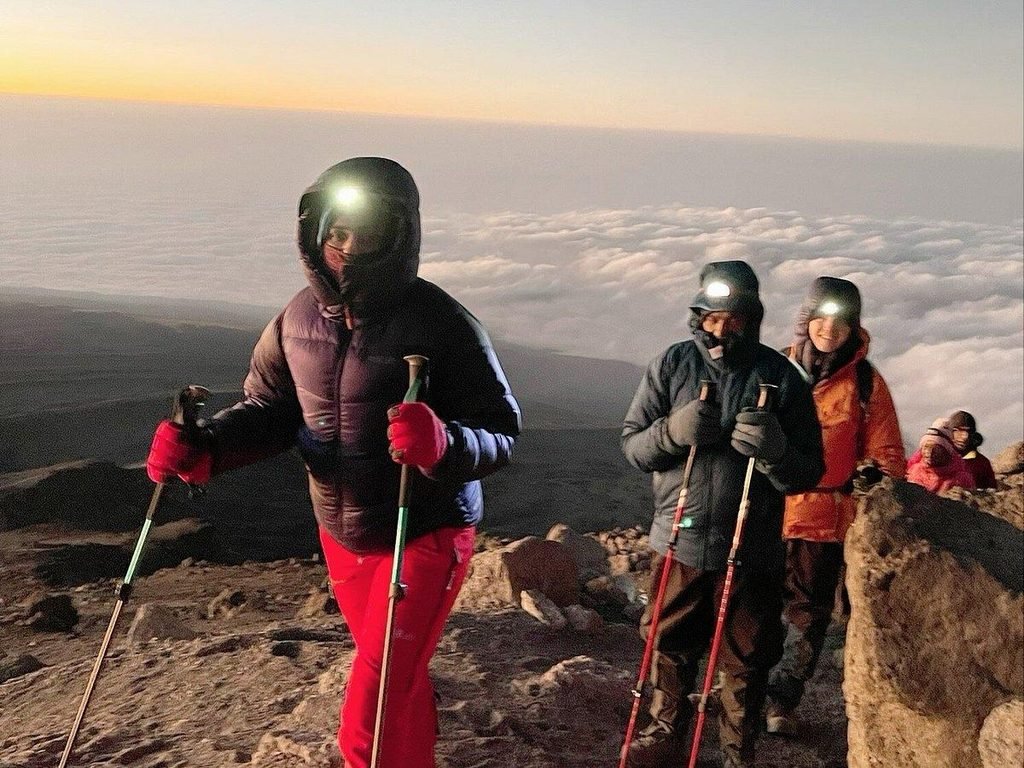
Mount Kenya vs. Kilimanjaro: Quick Comparison
| Feature | Mount Kenya | Mount Kilimanjaro |
|---|---|---|
| Country | Kenya | Tanzania |
| Highest summit | Batian Peak | Uhuru Peak |
| Highest elevation | 5,199 m | 5,895 m |
| Main trekking summit | Point Lenana, approximately 4,985 m | Uhuru Peak, 5,895 m |
| Technical climbing | Required for Batian and Nelion | Not normally required on standard trekking routes |
| Popular trekking routes | Sirimon, Chogoria, Naro Moru | Machame, Lemosho, Marangu, Rongai, Northern Circuit |
| Typical trekking duration | 4–6 days to Point Lenana | 6–9 days on many established itineraries |
| Mountain character | Jagged peaks, alpine valleys, lakes and rocky ridges | Volcanic slopes, rainforest, moorland, alpine desert and summit crater |
| Accommodation | Mountain huts or camping, depending on route | Camping on most routes; huts on Marangu |
| Main challenge | Altitude, steep terrain and technical skills for the highest peaks | Extreme altitude, endurance and long summit day |
| Best for | Alpine scenery, shorter treks and experienced technical climbers | Travelers wanting to reach Africa’s highest summit |
Both mountains can provide an excellent experience. The best choice depends on your climbing goal, available time, previous experience, and budget.
1. Location: Where Are Mount Kenya and Kilimanjaro?
Mount Kenya: The Heart of Kenya’s Central Highlands
Mount Kenya rises above the central highlands of Kenya, surrounded by forests, farmland, and protected mountain landscapes. The mountain is located within Mount Kenya National Park, an area known for its varied ecosystems, unusual alpine plants, high-altitude valleys, and rugged summit peaks.
Most international travelers begin their Mount Kenya journey in Nairobi before traveling toward towns such as Nanyuki or Naro Moru, depending on the selected route. The drive provides views of Kenya’s central highlands and rural landscapes before reaching the mountain’s access points.
One of Mount Kenya’s attractions is its distinctive alpine scenery. The highest peaks rise sharply above surrounding valleys, while lower sections include forest, bamboo, moorland, and mountain lakes. Travelers who enjoy dramatic rock formations and remote trekking environments may find Mount Kenya particularly appealing.
Mount Kilimanjaro: Tanzania’s Famous Mountain
Mount Kilimanjaro is located in northern Tanzania, close to the town of Moshi and within reach of Kilimanjaro International Airport. Its location makes it convenient for travelers who want to combine a mountain expedition with a wildlife safari or a beach holiday in Zanzibar.
Kilimanjaro is an enormous volcanic mountain made up of three main volcanic cones: Kibo, Mawenzi, and Shira. Uhuru Peak is located on Kibo, the highest part of the mountain. Unlike Mount Kenya’s sharp central rock towers, Kilimanjaro is known for its broad volcanic summit and long trekking routes that gradually rise through different ecological zones.
For travelers interested in exploring Tanzania beyond the mountain, Kilimanjaro also provides access to destinations such as Tarangire National Park, Ngorongoro Crater, and Serengeti National Park.
2. Mountain Height: Which Is Taller?
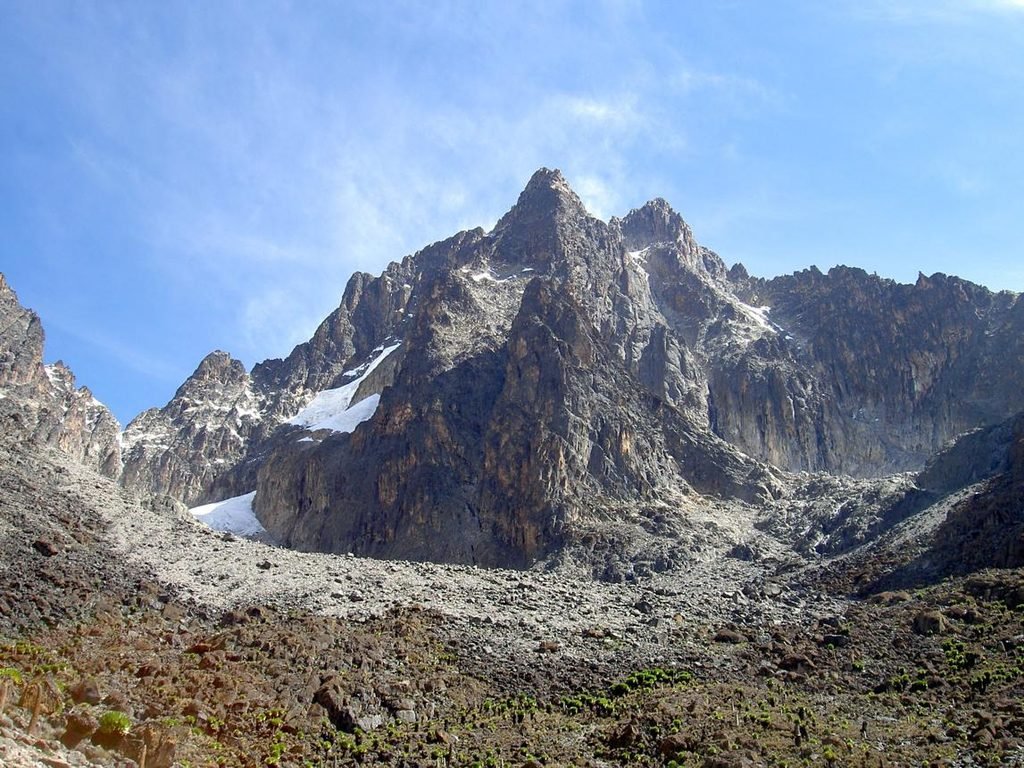
Mount Kilimanjaro is taller than Mount Kenya. Kilimanjaro reaches 5,895 metres at Uhuru Peak, while Mount Kenya reaches 5,199 metres at Batian Peak. The difference between their highest summits is 696 metres, which is significant when considering the effects of altitude.
However, height alone does not determine which mountain is harder to climb. Kilimanjaro’s standard trekking routes reach a higher elevation, making altitude acclimatization a major concern. Mount Kenya’s highest peaks are lower, but Batian and Nelion require technical rock-climbing skills that are not normally needed on Kilimanjaro’s standard routes.
For ordinary trekkers, the comparison is slightly different because most Mount Kenya hiking itineraries aim for Point Lenana at approximately 4,985 metres. This is still a serious high-altitude objective, but it is considerably lower than Uhuru Peak.
3. Climbing Difficulty: Is Mount Kenya Harder Than Kilimanjaro?
The answer depends on which summit you want to reach. If you compare trekking to Point Lenana with trekking to Uhuru Peak, Kilimanjaro generally presents a greater altitude challenge because it reaches a higher elevation and often requires more days of continuous walking. However, if you compare Kilimanjaro with Mount Kenya’s true summit at Batian, Mount Kenya is technically more demanding.
Kilimanjaro’s standard routes are trekking routes. Climbers walk over forest trails, rocky paths, scree, and exposed mountain terrain without normally needing ropes or technical rock-climbing equipment. The difficulty comes from the elevation, physical endurance, cold weather, and the long summit ascent.
Mount Kenya’s Point Lenana can also be reached through trekking, although the final approach may be steep, rocky, and exposed. Batian and Nelion are different challenges altogether. Reaching these peaks involves technical climbing, specialized equipment, route-finding skills, and appropriate experience.
Which Mountain Is Better for Beginners?
For beginners who want to reach the highest point of a mountain without technical climbing, Kilimanjaro is often the clearer choice. Routes such as eight-day Lemosho, seven-day Machame, and nine-day Northern Circuit provide established trekking itineraries with different acclimatization opportunities.
Mount Kenya’s Point Lenana is also a reasonable option for fit beginners who prefer a shorter high-altitude trek. However, travelers should understand that reaching Point Lenana is not the same as reaching Mount Kenya’s highest summit.
4. Mount Kilimanjaro Climbing Routes Explained
One of Kilimanjaro’s main advantages is the range of established trekking routes available. Each route offers a different combination of scenery, duration, difficulty, and accommodation arrangements. Choosing the right itinerary is important because the amount of time spent acclimatizing can influence how well climbers adjust to the mountain’s extreme elevation.
Machame Route: Scenic and Challenging
The Machame Route approaches Kilimanjaro from the southwest and passes through rainforest, the Shira Plateau, Lava Tower, Barranco Wall, and Barafu Camp before the summit attempt. It is popular because of its varied scenery and the opportunity to experience several recognizable mountain landmarks.
The route is commonly completed in six or seven days, although the seven-day version is generally preferable because it includes an overnight stay at Karanga Camp. This provides additional time before the summit attempt and avoids combining the Barranco-to-Karanga and Karanga-to-Barafu stages into one long day.
Travelers considering Machame should prepare for steep sections, rocky terrain, camping accommodation, and a demanding summit night.
Lemosho Route: A Strong Choice for First-Time Climbers
The Lemosho Route begins on Kilimanjaro’s western side and offers a varied journey through rainforest, open moorland, and the Shira Plateau. It eventually joins the southern circuit and continues toward Barranco, Karanga, Barafu, and Uhuru Peak.
An eight-day Lemosho itinerary is particularly attractive because it provides additional time for acclimatization compared with shorter schedules. The route is suitable for many physically prepared beginners, although it remains a demanding high-altitude expedition.
For travelers planning their first Kilimanjaro climb in 2027 or 2028, Lemosho deserves serious consideration because of its scenery and longer itinerary options.
Marangu Route: Mountain Hut Accommodation
Marangu is known for its permanent mountain huts, making it different from the camping routes used on most other Kilimanjaro itineraries. The trail begins at Marangu Gate and continues through Mandara Hut, Horombo Hut, and Kibo Hut before the summit attempt.
Although Marangu is sometimes described as an easier route, the mountain’s altitude remains challenging. The five-day itinerary provides limited acclimatization time, while the six-day version includes an additional day around Horombo.
Travelers who prefer hut accommodation may appreciate Marangu, but it is important to consider the ascent schedule rather than choosing the route solely for its sleeping arrangements.
Rongai Route: The Northern Approach
Rongai approaches Kilimanjaro from the north near the Tanzania–Kenya border. The trail passes through forest, open moorland, and landscapes surrounding Mawenzi before reaching Kibo for the summit attempt.
The route appeals to travelers who want to experience a different side of Kilimanjaro. Longer seven- or eight-day Rongai itineraries provide more time for acclimatization than compressed six-day schedules.
Northern Circuit: A Longer Mountain Expedition
The Northern Circuit is one of Kilimanjaro’s longest commonly offered trekking routes. It begins on the western side before continuing around the mountain’s northern slopes, providing a more extended journey through remote landscapes.
A nine-day Northern Circuit itinerary is particularly attractive for travelers who want additional time for acclimatization. It is also a good option for hikers who enjoy longer expeditions and quieter sections of mountain trail.
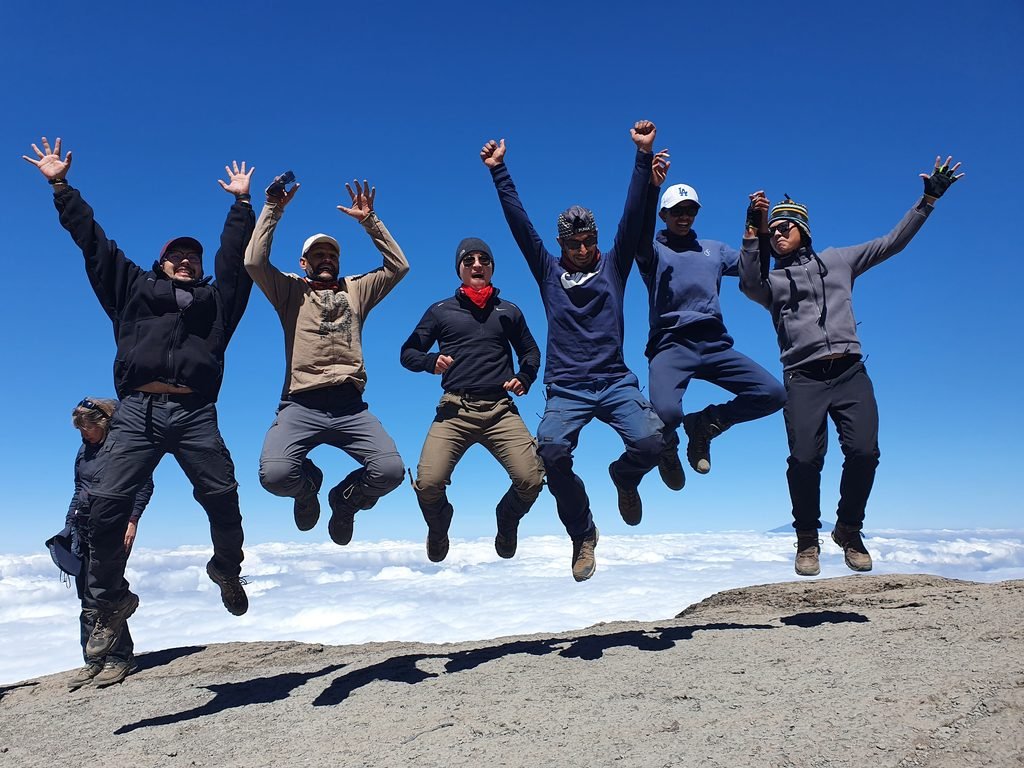
5. Mount Kenya Climbing Routes Explained
Mount Kenya has several established trekking routes leading toward Point Lenana. The most commonly discussed options include Sirimon, Chogoria, and Naro Moru. Each route offers different scenery, trail conditions, and ascent profiles, making the choice important for both comfort and acclimatization.
Sirimon Route
Sirimon approaches Mount Kenya from the northwest and is known for its relatively gradual ascent through forest, moorland, and high-altitude valleys. The route commonly passes through Old Moses Camp and Shipton’s Camp before the summit attempt toward Point Lenana.
For many first-time Mount Kenya trekkers, Sirimon is a practical option because of its established trail and the opportunity to plan a gradual itinerary. However, climbers must still prepare for cold temperatures, altitude, and long walking days.
Chogoria Route
Chogoria is widely appreciated for its dramatic scenery, including valleys, cliffs, waterfalls, and high-altitude lakes. It approaches the mountain from the east and is often combined with Sirimon to create a traverse that allows hikers to experience different sides of Mount Kenya.
Travelers who prioritize scenery may particularly enjoy Chogoria. However, the route can involve demanding terrain and longer walking stages, so the itinerary should be planned carefully.
Naro Moru Route
Naro Moru is one of Mount Kenya’s more direct trekking approaches. It is known for its steep sections and the challenging area commonly called the Vertical Bog, which can become muddy and difficult in wet conditions.
Shorter Naro Moru itineraries may appeal to travelers with limited time, but rapid altitude gain can create acclimatization concerns. Allowing additional days is generally preferable when practical.
Technical Routes to Batian and Nelion
Travelers aiming for Mount Kenya’s highest summits must understand that Batian and Nelion are technical climbing objectives. These peaks involve exposed rock faces, climbing equipment, ropes, and specialized mountain skills.
They should not be promoted as ordinary hiking routes. Only climbers with suitable technical experience and specialist guiding arrangements should consider these objectives.
6. Scenery and Landscapes: Which Mountain Is More Beautiful?
Both mountains offer beautiful landscapes, but their scenery is very different. Mount Kenya is particularly known for its rugged alpine character, with jagged rock towers rising above valleys, mountain lakes, and unusual high-altitude vegetation. The scenery can feel more like a traditional alpine environment, especially around the central peaks.
Kilimanjaro provides a broader journey through several ecological zones. Climbers begin in rainforest before entering moorland, alpine desert, and the cold summit environment. The transition between these landscapes is one of the most memorable parts of the expedition, particularly on routes such as Lemosho and Machame.
Travelers who enjoy rocky alpine scenery and mountain lakes may prefer Mount Kenya, while those who want to experience a large volcanic mountain and reach Africa’s highest summit may find Kilimanjaro more appealing. Neither mountain is objectively more beautiful; the choice depends on the landscapes you enjoy.
7. How Many Days Do You Need to Climb Mount Kenya or Kilimanjaro?
The time required depends on the route, summit objective, and acclimatization schedule. Mount Kenya trekking itineraries to Point Lenana commonly take four to six days, while Kilimanjaro expeditions often take six to nine days.
A shorter itinerary is not necessarily a better choice. At high altitude, the body needs time to adjust to reduced oxygen availability, and rapid ascents can increase the risk of altitude illness. Travelers should therefore consider the sleeping elevations and daily ascent profile rather than focusing only on the total number of days.
| Travel time available | Mount Kenya option | Kilimanjaro option |
|---|---|---|
| 4–5 trekking days | Point Lenana via an appropriate trekking itinerary | Usually too short for a well-acclimatized climb |
| 6 trekking days | Longer Point Lenana trek | Some Machame, Rongai, or Marangu itineraries |
| 7 trekking days | Extended trek or specialist itinerary | Seven-day Machame or Rongai |
| 8 trekking days | Extended mountain exploration | Eight-day Lemosho or Rongai |
| 9 trekking days | Extended expedition | Nine-day Northern Circuit |
For travelers who can allow sufficient time, longer Kilimanjaro itineraries are generally worth considering because they provide additional acclimatization opportunities.
8. Mount Kenya vs. Kilimanjaro: Which Is More Expensive?
The cost of climbing either mountain depends on the number of days, route, group size, accommodation arrangements, park fees, transport, and services included. A shorter Point Lenana trek on Mount Kenya may cost less overall than a longer Kilimanjaro expedition, but this is not guaranteed. Technical climbing to Batian or Nelion can be considerably more expensive because it requires specialist guiding, climbing equipment, and additional safety arrangements.
Kilimanjaro packages commonly include national park fees, professional mountain guides, porters, meals, camping equipment or hut accommodation, and transport to the trailhead. Longer routes usually cost more because they require additional days of guiding, meals, accommodation, and crew support.
When comparing quotations, travelers should check whether the price includes accommodation before and after the climb, airport transfers, equipment rental, travel insurance, and tips for the mountain crew. A lower advertised price may exclude important services, making the total cost higher than expected.
For 2027 and 2028, exact package prices and park fees should be confirmed through current written quotations rather than relying on estimates published several years earlier.
9. Best Time to Climb Mount Kenya and Kilimanjaro in 2027/2028
Best Time for Kilimanjaro
Kilimanjaro can be climbed throughout the year, although January to March and June to October are commonly popular because they often experience relatively drier weather. April and May are generally wetter, while November and December may bring additional seasonal rainfall.
However, mountain weather is unpredictable, and climbers can encounter rain, strong winds, freezing temperatures, and poor visibility during any month. Even during popular climbing seasons, suitable equipment and flexible expectations remain important.
Best Time for Mount Kenya
Mount Kenya is also affected by seasonal rainfall and changing mountain weather. January to March and July to October are commonly considered favorable periods for trekking, although conditions vary across the mountain’s different slopes and elevations.
For technical climbers, the best season may depend on the specific rock face being attempted because sun exposure, moisture, and weather conditions can affect climbing safety. Travelers planning Batian or Nelion should seek specialist advice rather than relying on general trekking-season recommendations.
10. Accommodation on Mount Kenya vs. Kilimanjaro
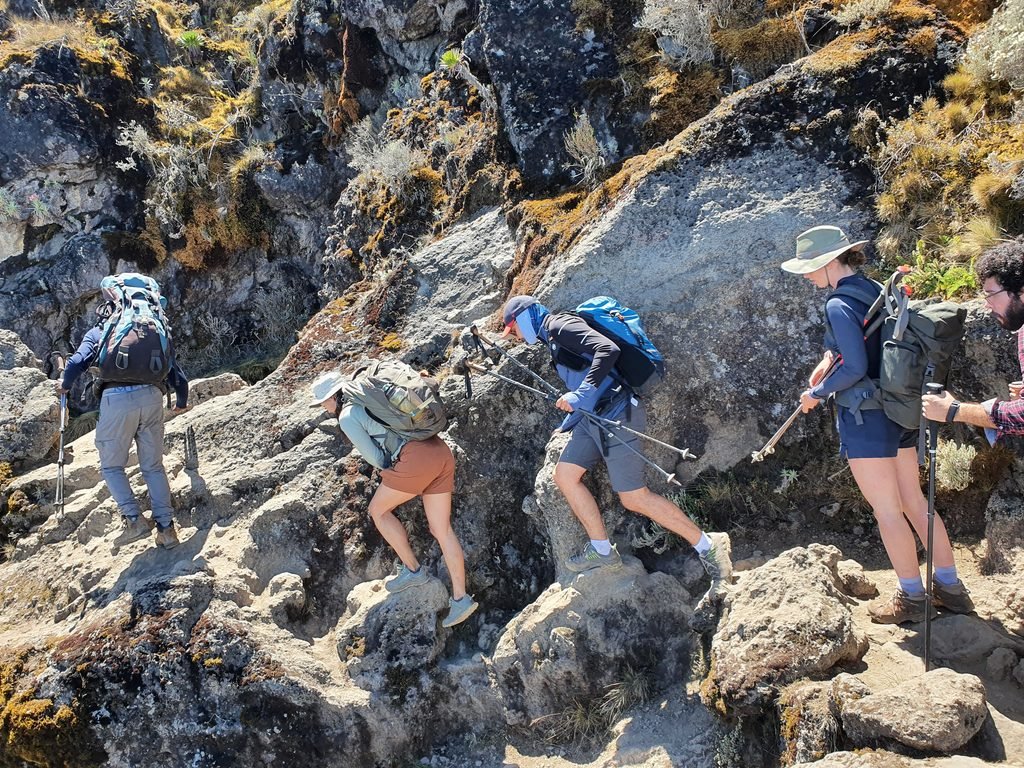
Accommodation arrangements differ between the mountains and their routes. On Kilimanjaro, most trekking routes use designated mountain campsites where climbers sleep in tents. The Marangu Route is the main exception, offering established mountain huts.
Mount Kenya offers a mixture of mountain huts, campsites, and other basic mountain facilities depending on the selected itinerary. Some routes involve camping throughout the trek, while others may include hut accommodation at established locations.
Neither mountain should be approached with expectations of luxury accommodation during the high-altitude stages. Travelers should prepare for basic facilities, cold nights, limited washing opportunities, and the need to carry appropriate personal equipment.
11. Altitude Sickness: Which Mountain Has Greater Risk?
Both Mount Kenya and Kilimanjaro involve high-altitude trekking, and climbers on either mountain can develop altitude illness. Kilimanjaro reaches a higher elevation, making its summit particularly demanding, but Mount Kenya’s Point Lenana also rises high enough for altitude sickness to become a serious concern.
Symptoms may include headache, nausea, dizziness, unusual fatigue, poor appetite, and difficulty sleeping. More serious symptoms, such as confusion, loss of coordination, or breathlessness at rest, require urgent medical attention and may make immediate descent necessary.
The risk depends on factors such as the speed of ascent, sleeping elevations, previous altitude exposure, and individual susceptibility. Physical fitness alone does not prevent altitude sickness, and climbers should not assume that a lower mountain is automatically safe.
Before departure, travelers should consult a qualified healthcare professional about high-altitude trekking and ensure that their travel insurance covers the planned activity and emergency evacuation. On the mountain, reporting symptoms early and following the guide’s safety decisions are essential.
12. How to Prepare for Mount Kenya or Kilimanjaro
Preparing for either mountain should begin several months before departure. Regular hiking, hill walking, stair climbing, and cardiovascular exercise can help improve endurance, while strength training prepares the legs and core for repeated uphill and downhill walking.
For many first-time climbers, three to six months of consistent training is a useful starting point, depending on current fitness and previous hiking experience. Training should gradually increase in difficulty and include longer walks with a daypack to simulate mountain conditions.
Equipment preparation is equally important. Waterproof hiking boots, suitable thermal clothing, a warm insulated jacket, waterproof outer layers, gloves, a headlamp, trekking poles, and a comfortable daypack are useful for both mountains. Climbers should test their equipment before departure rather than discovering problems during the expedition.
Travelers planning technical climbs on Mount Kenya must also prepare the specialist equipment and climbing skills required for their chosen route. Ordinary trekking experience is not sufficient for Batian or Nelion.
13. Can You Combine Mount Kenya and Kilimanjaro in One Trip?
Yes. Travelers with enough time can plan a combined East African mountain adventure that includes Mount Kenya and Kilimanjaro. One possible arrangement is to trek Mount Kenya’s Point Lenana first, spend time recovering, and then travel to Tanzania for a Kilimanjaro expedition.
This combination offers the opportunity to experience two very different mountain environments. Mount Kenya provides dramatic alpine scenery, while Kilimanjaro offers a longer journey toward Africa’s highest summit. Previous altitude exposure may help with acclimatization, but the benefit depends on timing, elevation, individual response, and the complete travel schedule.
A combined expedition requires careful planning because travelers must account for cross-border transport, entry requirements, accommodation, recovery days, and the physical demands of two high-altitude treks. It is important not to schedule the climbs too closely together without allowing appropriate recovery time.
14. Why Choose Kilimanjaro for Your 2027 or 2028 Mountain Adventure?
Kilimanjaro is an attractive choice for travelers who want to reach Africa’s highest summit through an established trekking route. It offers several itinerary options, varied scenery, and the opportunity to experience a major high-altitude expedition without needing technical rock-climbing skills.
Another advantage is its location in northern Tanzania. After completing the climb, travelers can explore some of the country’s famous wildlife destinations, including Serengeti National Park, Ngorongoro Crater, Tarangire National Park, and Lake Manyara National Park. Zanzibar is also a popular extension for travelers who want to relax after the mountain.
At Eddy Tours & Safaris, we can help travelers compare Kilimanjaro routes and select an itinerary based on their experience, available time, and travel plans. Whether you prefer the scenery of Lemosho, the challenge of Machame, the northern approach of Rongai, or the longer Northern Circuit, careful preparation and suitable acclimatization should remain central to the decision.
Frequently Asked Questions About Mount Kenya vs. Kilimanjaro
1. Is Mount Kilimanjaro higher than Mount Kenya?
Yes. Kilimanjaro reaches 5,895 metres, while Mount Kenya reaches 5,199 metres at Batian Peak.
2. Which mountain is harder to climb?
Kilimanjaro is higher and presents a greater altitude challenge on its standard trekking routes. Mount Kenya’s Batian and Nelion peaks require technical rock-climbing skills.
3. Can beginners climb Kilimanjaro?
Yes. Physically prepared beginners can attempt standard trekking routes with appropriate guiding and acclimatization.
4. Can beginners climb Mount Kenya?
Yes. Fit beginners may attempt Point Lenana with a suitable trekking itinerary, but Batian and Nelion are technical climbing objectives.
5. Does Mount Kenya require ropes?
Point Lenana generally does not require technical rock-climbing equipment on standard trekking routes. Batian and Nelion do.
6. Does Kilimanjaro require technical climbing?
The standard trekking routes normally do not require technical mountaineering skills under suitable conditions.
7. Which mountain takes longer to climb?
Kilimanjaro generally requires more trekking days, particularly on itineraries designed to provide additional acclimatization time.
8. Which mountain is better for first-time climbers?
Both offer trekking options, but Kilimanjaro is a strong choice for travelers whose goal is to reach the highest point of a mountain without technical climbing.
9. What is the highest trekking summit on Mount Kenya?
Point Lenana, at approximately 4,985 metres.
10. What is Kilimanjaro’s highest point?
Uhuru Peak, at 5,895 metres above sea level.
11. Which mountain has better scenery?
Both offer impressive landscapes. Mount Kenya is known for jagged alpine peaks and lakes, while Kilimanjaro offers broad volcanic scenery and changing ecological zones.
12. Is Mount Kenya cheaper than Kilimanjaro?
A shorter Point Lenana trek may cost less overall, but actual prices depend on the route, services, and travel arrangements.
13. What is the best Kilimanjaro route for beginners?
Eight-day Lemosho and nine-day Northern Circuit are strong options because they provide additional acclimatization time.
14. What is the best Mount Kenya trekking route?
Sirimon and Chogoria are popular choices, and some itineraries combine them into a scenic traverse.
15. Can I climb Kilimanjaro in five days?
Short itineraries exist, but they provide limited acclimatization time and are not recommended for most first-time climbers.
16. How many days are recommended for Kilimanjaro?
Seven to nine trekking days is often a sensible range to consider, depending on the route and ascent profile.
17. How many days are recommended for Mount Kenya?
Four to six days is a common range for Point Lenana trekking itineraries.
18. Can altitude sickness affect climbers on Mount Kenya?
Yes. Point Lenana is high enough for altitude illness to be a serious concern.
19. Can altitude sickness affect climbers on Kilimanjaro?
Yes. Altitude illness is one of the main risks associated with climbing Kilimanjaro.
20. What is the best time to climb Kilimanjaro?
January to March and June to October are generally popular climbing periods.
21. What is the best time to trek Mount Kenya?
January to March and July to October are commonly favorable periods, although weather varies.
22. Can I climb both mountains during one holiday?
Yes. A combined itinerary is possible with appropriate transport, recovery time, and travel arrangements.
23. Which mountain is better for photography?
Both offer excellent opportunities. Mount Kenya is particularly attractive for alpine lakes and rocky peaks, while Kilimanjaro offers volcanic landscapes and summit views.
24. Can I combine Kilimanjaro with a Tanzania safari?
Yes. Travelers can visit Serengeti, Ngorongoro, Tarangire, or other northern Tanzania destinations after the climb.
25. Can I book a Kilimanjaro expedition for 2027 or 2028?
You can request a quotation and discuss suitable dates, routes, and travel arrangements with Eddy Tours & Safaris, subject to confirmation.
Final Comparison: Mount Kenya or Kilimanjaro – Which Should You Choose?
Mount Kenya and Mount Kilimanjaro are both excellent mountain destinations, but they offer different experiences. Mount Kenya is particularly attractive for travelers who enjoy rugged alpine scenery, mountain lakes, and shorter trekking itineraries to Point Lenana. Its highest peaks, Batian and Nelion, provide serious technical climbing challenges for experienced mountaineers.
Kilimanjaro is the stronger choice for travelers whose main goal is to reach Africa’s highest summit through a guided trekking expedition. Its established routes provide different options for scenery, accommodation, and acclimatization, while its location in Tanzania makes it convenient to combine the climb with a wildlife safari or Zanzibar holiday.
For most first-time climbers planning a major African mountain expedition in 2027 or 2028, Kilimanjaro offers a particularly appealing combination of accessibility, scenery, and personal achievement. However, the route and itinerary should be selected carefully, with enough time for acclimatization and a clear understanding of the mountain’s physical demands.
Plan Your Kilimanjaro Climb for 2027/2028 with Eddy Tours & Safaris
At Eddy Tours & Safaris, we help travelers plan guided Mount Kilimanjaro expeditions in Tanzania. Whether you are interested in Machame, Lemosho, Marangu, Rongai, Umbwe, or the Northern Circuit, our team can discuss route options, mountain accommodation, preparation requirements, and suitable travel arrangements before providing a detailed quotation.
We can also help you combine your Kilimanjaro expedition with a Tanzania wildlife safari or Zanzibar beach holiday, allowing you to explore more of the country during the same trip.
Request Your Kilimanjaro Climbing Quotation
Chat with Eddy Tours & Safaris on WhatsApp
Email: sales@eddytours-safaris.com
Choose a route that matches your experience, prepare carefully, and make mountain safety a priority when planning your Kilimanjaro adventure for 2027 or 2028.