
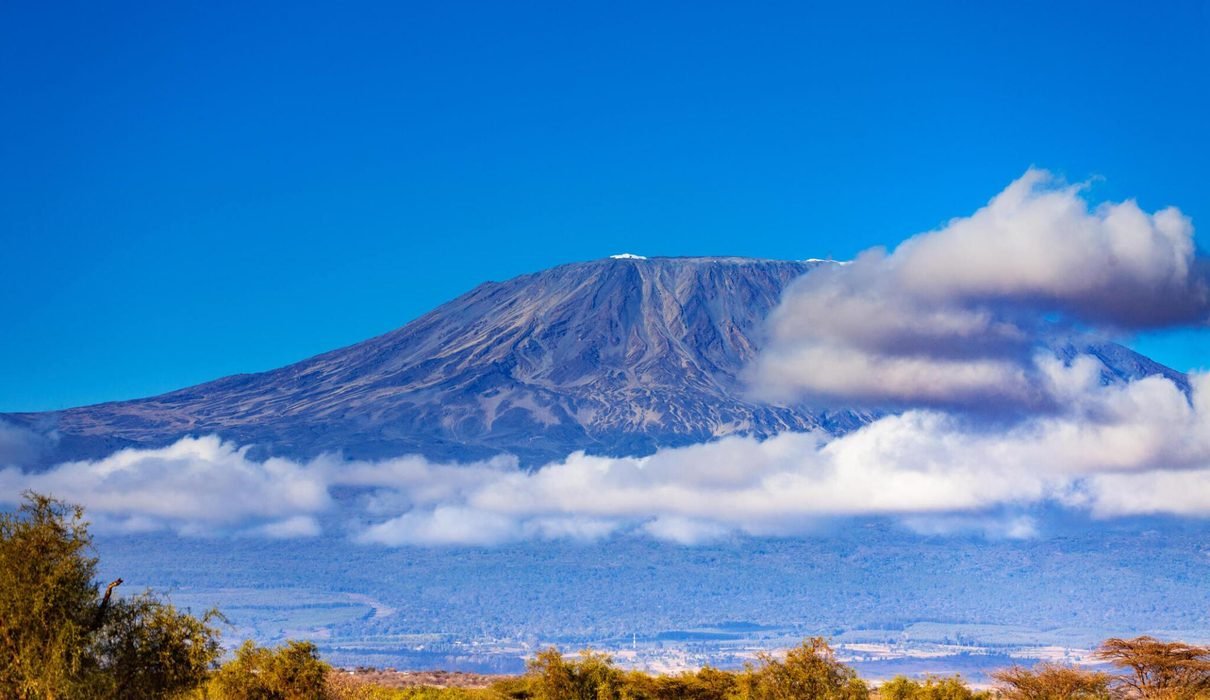
Mount Kilimanjaro is the highest mountain in Africa and one of the most famous natural landmarks in the world. Rising to an impressive 5,895 meters (19,341 feet) above sea level, this enormous volcanic mountain stands in northeastern Tanzania, close to the border with Kenya. Its snow-covered summit, beautiful rainforest, unusual volcanic landscapes, and extraordinary trekking routes attract visitors from different parts of the world every year.
Many travelers searching for information about Mount Kilimanjaro want to know exactly where it is located, how high it is, whether it belongs to Tanzania or Kenya, and what makes it different from other famous mountains. Others are interested in climbing to Uhuru Peak, discovering the mountain’s volcanic history, or learning about the wildlife and climate zones found along its slopes. Kilimanjaro is remarkable not only because of its height but also because of the enormous variety of natural environments encountered between its lower forests and the summit.
Unlike mountains that form part of long mountain ranges, Kilimanjaro rises as an isolated volcanic massif above the surrounding plains. It contains three principal volcanic cones, known as Kibo, Mawenzi, and Shira, with Uhuru Peak situated on Kibo. The mountain is protected within Kilimanjaro National Park, a UNESCO World Heritage Site recognized for its exceptional natural beauty, biodiversity, and geological importance.
At Eddy Tours & Safaris, we help travelers plan guided Kilimanjaro climbing expeditions and Tanzania holidays. Whether you want to climb Mount Kilimanjaro in 2027, explore its beautiful foothills, or combine a mountain adventure with a Tanzania wildlife safari, understanding the mountain’s geography, height, history, and climbing conditions will help you prepare for a memorable experience.
This complete guide explains the most important Mount Kilimanjaro facts, including its exact country, location, official height, volcanic origins, climate zones, climbing routes, best travel seasons, altitude challenges, and practical information for visitors planning a journey to Tanzania.
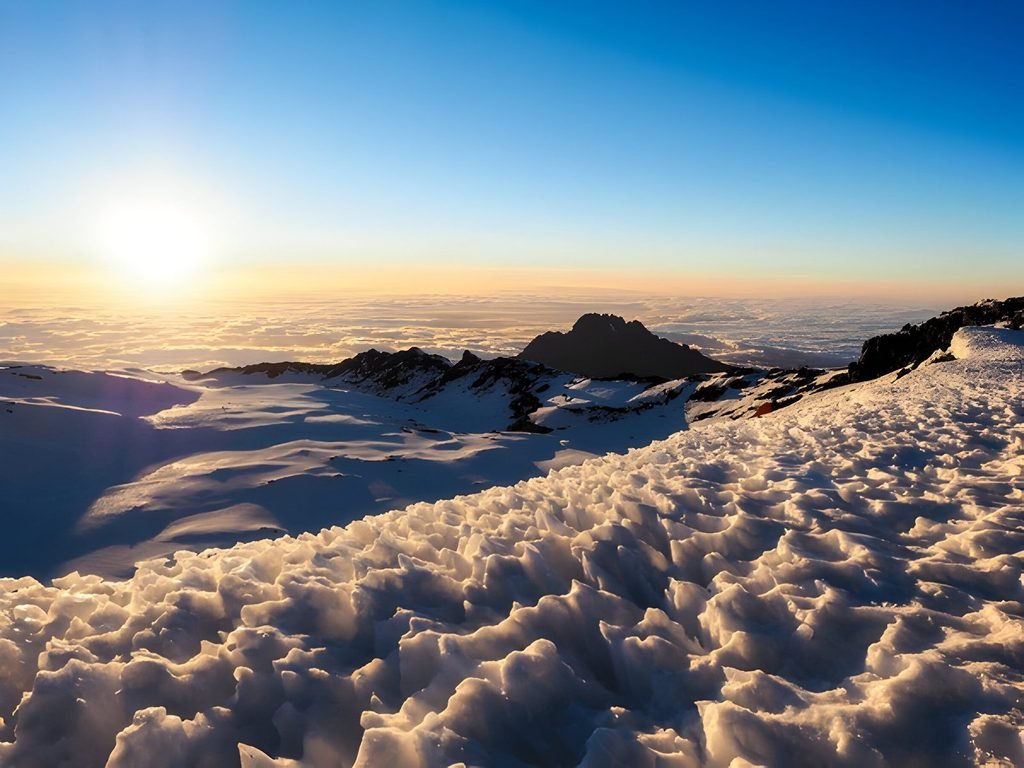
Mount Kilimanjaro Facts: Quick Information
| Question | Answer |
|---|---|
| Which country is Mount Kilimanjaro in? | Tanzania, East Africa |
| How tall is Mount Kilimanjaro? | 5,895 meters (19,341 feet) |
| What is its highest point? | Uhuru Peak |
| Is Kilimanjaro in Tanzania or Kenya? | Tanzania |
| Which region is Kilimanjaro located in? | Kilimanjaro Region, northeastern Tanzania |
| What is the nearest major climbing town? | Moshi |
| What type of mountain is Kilimanjaro? | Dormant volcanic massif |
| How many main volcanic cones does it have? | Three: Kibo, Mawenzi and Shira |
| Is Kilimanjaro the highest mountain in Africa? | Yes |
| Is Kilimanjaro a UNESCO World Heritage Site? | Yes, since 1987 |
| Can tourists climb Kilimanjaro? | Yes, on approved routes with authorized guiding arrangements |
| How long does climbing take? | Commonly 5–9 days, depending on route and itinerary |
| Best general climbing periods | January–March and June–October |
| Main airport for international visitors | Kilimanjaro International Airport (JRO) |
Where Is Mount Kilimanjaro Located?
Mount Kilimanjaro is located in northeastern Tanzania, East Africa, within the Kilimanjaro Region and close to the international border between Tanzania and Kenya. The mountain rises above the surrounding plains near Moshi, a town that serves as an important starting point for climbing expeditions. Its enormous volcanic shape dominates the landscape and can sometimes be seen from considerable distances when weather conditions are clear.
Although Kilimanjaro is situated close to Kenya, the mountain itself is entirely within Tanzania. Its summit, climbing routes, protected forests, and principal volcanic formations are all on the Tanzanian side of the international border. Visitors planning to climb the mountain therefore need to arrange their expedition through Tanzania and comply with the country’s national park regulations.
The mountain’s location makes it accessible to international travelers arriving through Kilimanjaro International Airport, which serves northern Tanzania. From the airport, visitors commonly travel to Moshi or Arusha before beginning their climbing expedition. Both towns provide accommodation, transport connections, and access to travel services, although Moshi is particularly convenient for many Kilimanjaro climbing routes.
The surrounding region is also known for its agricultural landscapes, coffee farms, local communities, and beautiful mountain scenery. Travelers who have additional time before or after their climb can explore nearby waterfalls, cultural attractions, and natural areas. Kilimanjaro’s location in northern Tanzania also makes it possible to combine a climbing expedition with a safari to destinations such as Tarangire, Serengeti, and Ngorongoro.
Is Mount Kilimanjaro in Tanzania or Kenya?
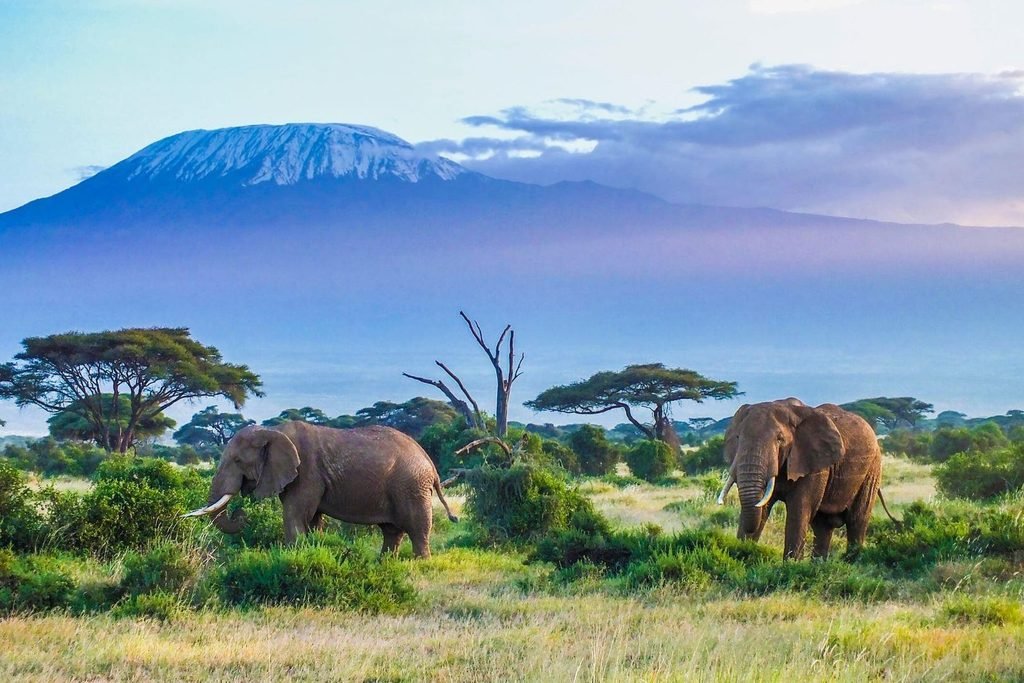
One of the most frequently asked questions about Mount Kilimanjaro concerns whether the mountain belongs to Tanzania or Kenya. The correct answer is that Mount Kilimanjaro is in Tanzania, even though it stands close to the Kenyan border and can be clearly visible from some locations in Kenya.
The confusion often arises because many famous photographs of Kilimanjaro are taken from Amboseli National Park in Kenya. From Amboseli, the mountain can appear as a spectacular snow-covered backdrop behind elephants and other wildlife. These photographs have become internationally recognized, leading some people to assume that Kilimanjaro is located inside Kenya.
In reality, the mountain’s summit and its principal climbing routes are within Tanzania. Travelers wishing to reach Uhuru Peak normally enter Kilimanjaro National Park through designated gates on the Tanzanian side. Popular access points include Machame Gate, Marangu Gate, Londorossi Gate, Rongai Gate, and Umbwe Gate, depending on the selected climbing route.
For visitors planning a Kilimanjaro climb in 2027, Tanzania is therefore the country where the expedition will take place. You can arrange your climbing adventure through Eddy Tours & Safaris, with suitable transfers and accommodation before and after the mountain expedition.
How Tall Is Mount Kilimanjaro?
Mount Kilimanjaro stands at an officially recognized elevation of 5,895 meters (19,341 feet) above sea level, making it the highest mountain in Africa. This height refers to Uhuru Peak, the highest point on the rim of Kibo, the mountain’s largest and tallest volcanic cone.
The mountain’s elevation is particularly impressive because it rises from relatively low surrounding plains rather than forming part of a high mountain range. From its lower slopes to the summit, Kilimanjaro creates an enormous vertical landscape that includes tropical forests, open moorland, alpine desert, and the freezing summit environment.
For climbers, the height of Kilimanjaro is one of the most important considerations when preparing for an expedition. At nearly 5,900 meters, the reduced availability of oxygen makes physical activity more demanding, and the risk of altitude sickness becomes significant. Even travelers who are physically fit must allow suitable time for acclimatization and follow their mountain guide’s instructions.
Although the summit is very high, most standard Kilimanjaro trekking routes do not require technical mountaineering skills under normal conditions. However, this does not mean the climb is easy. Reaching Uhuru Peak requires endurance, appropriate equipment, careful preparation, and the ability to manage several days of trekking at increasing elevations.
Is Mount Kilimanjaro the Highest Mountain in Africa?
Yes. Mount Kilimanjaro is the highest mountain on the African continent, with Uhuru Peak reaching 5,895 meters above sea level. It is also one of the Seven Summits, a group consisting of the highest mountains on each continent, although different Seven Summits lists use different peaks for Australia and Oceania.
Kilimanjaro is considerably higher than Mount Kenya, the second-highest mountain in Africa, whose highest summit, Batian, reaches approximately 5,199 meters. The difference in elevation is substantial, making Kilimanjaro the undisputed highest point on the African continent.
The mountain’s position as Africa’s highest summit has made it an internationally recognized destination for trekking enthusiasts. Climbers from many countries travel to Tanzania with the ambition of standing at Uhuru Peak and experiencing the remarkable scenery of the mountain’s upper slopes.
However, the experience of climbing Kilimanjaro involves much more than reaching the highest point. The journey through different ecosystems, the changing vegetation, the volcanic landscapes, and the experience of trekking with a mountain support team all contribute to making Kilimanjaro a memorable destination.
Why Is Kilimanjaro Called the World’s Highest Free-Standing Mountain?
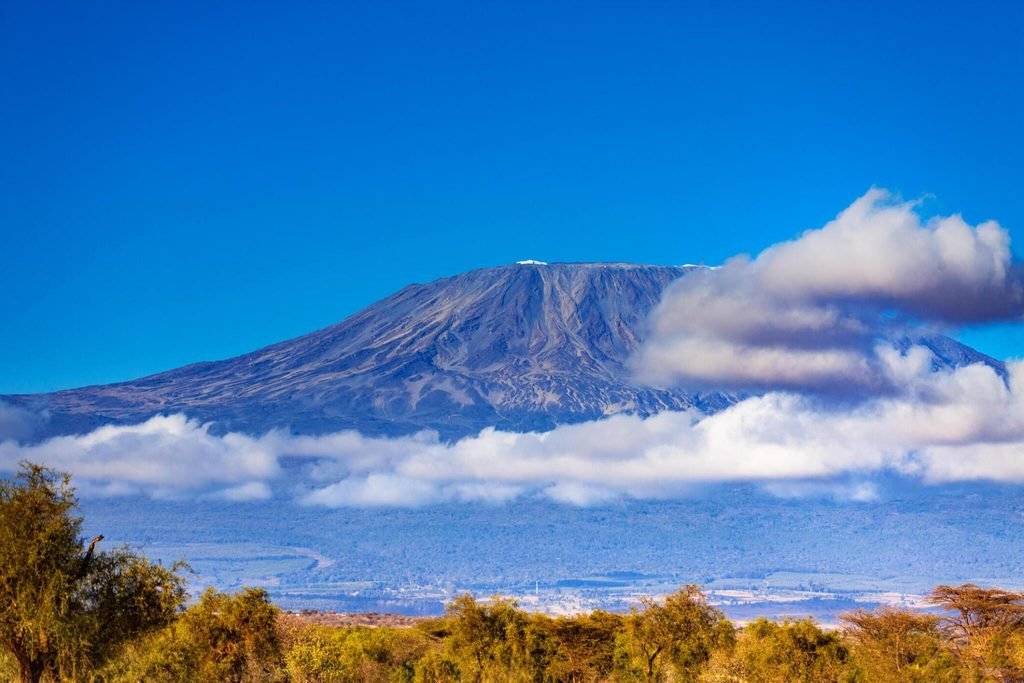
Mount Kilimanjaro is widely recognized as the world’s highest free-standing mountain because it rises as an isolated volcanic massif rather than forming part of a major mountain range. Unlike Mount Everest, which belongs to the Himalayan mountain system, Kilimanjaro stands prominently above the surrounding plains of northern Tanzania.
This geographical characteristic makes the mountain particularly impressive when viewed from a distance. Its enormous volcanic form rises from relatively low surrounding terrain to nearly 5,900 meters, creating a dramatic landscape that can dominate the horizon. The mountain’s isolation also contributes to its distinctive weather patterns and ecological zones.
The expression free-standing mountain refers to this geographical independence rather than suggesting that Kilimanjaro is the highest mountain in the world. Mount Everest is much higher above sea level, but Kilimanjaro is exceptional because of the way its volcanic mass rises separately from surrounding mountain ranges.
For visitors traveling through northern Tanzania, this characteristic helps explain why Kilimanjaro can appear so enormous from the surrounding countryside. On clear mornings, the summit may be visible above clouds, with its upper slopes standing far above the towns, farms, and plains below.
Is Mount Kilimanjaro a Volcano?
Yes. Mount Kilimanjaro is a large volcanic mountain formed through geological activity associated with the East African Rift system. The mountain consists of three main volcanic cones: Kibo, Mawenzi, and Shira. These formations developed through volcanic processes over long periods and now create the distinctive shape of Kilimanjaro.
Kibo is the highest and most recognizable cone, containing Uhuru Peak and the summit crater. It is classified as dormant, meaning it is not currently erupting but is not considered extinct. Mawenzi is a rugged volcanic formation with steep ridges and sharp peaks, while Shira is an older volcanic structure that has undergone extensive collapse and erosion.
Although Kilimanjaro has no current eruption, its volcanic origins remain visible throughout the mountain. Climbers encounter volcanic rocks, lava formations, ash deposits, and dramatic geological features along different routes. The summit region contains the Kibo crater and other formations that reveal the mountain’s volcanic history.
Kilimanjaro’s geology is one of the reasons the mountain attracts interest from scientists, geographers, and nature enthusiasts. Its volcanic history, high-altitude environment, and isolated position make it a remarkable natural landmark within East Africa.
The Three Main Peaks of Mount Kilimanjaro
1. Kibo – The Highest Volcanic Cone
Kibo is the tallest of Kilimanjaro’s three volcanic cones and contains Uhuru Peak, the highest point in Africa. Reaching 5,895 meters above sea level, Kibo is the main destination for climbers following standard Kilimanjaro summit routes. Its broad volcanic summit, crater formations, and remaining glaciers create the famous snow-covered appearance associated with Mount Kilimanjaro.
Kibo is considered dormant rather than extinct, and its summit area contains geological features associated with its volcanic origins. Climbers approaching the summit may pass through steep scree slopes and rocky terrain before reaching points such as Stella Point or Gilman’s Point, depending on the selected route.
2. Mawenzi – The Rugged Second Peak
Mawenzi is Kilimanjaro’s second-highest volcanic cone, reaching approximately 5,149 meters above sea level. Unlike the broad summit of Kibo, Mawenzi has sharp ridges, steep rocky formations, and a rugged appearance that makes it particularly striking when viewed from the eastern side of the mountain.
Mawenzi is not normally part of standard Kilimanjaro trekking itineraries because reaching its technical summits requires specialized climbing arrangements. However, climbers following the Marangu and Rongai routes may enjoy impressive views of Mawenzi during their expeditions.
3. Shira – The Ancient Volcanic Formation
Shira is the oldest of Kilimanjaro’s three main volcanic formations and is associated with the beautiful Shira Plateau on the western side of the mountain. The Shira volcanic structure underwent extensive collapse and erosion, leaving a broad high-altitude landscape that forms an important part of several climbing routes.
Travelers using the Lemosho or Shira approaches can experience the remarkable scenery of the plateau, including open moorland, volcanic formations, and distant views of Kibo. The area is particularly attractive for photography and provides a different perspective on Kilimanjaro’s geological history.
How Old Is Mount Kilimanjaro?
Mount Kilimanjaro developed through volcanic activity over a long geological period, with its principal formations developing during the past several million years. The mountain did not appear in a single eruption; instead, repeated volcanic processes gradually created the enormous massif visible today.
Shira is generally considered the oldest of the three principal volcanic cones, followed by Mawenzi and Kibo. Over time, volcanic activity, erosion, and geological changes shaped the mountain’s present appearance. The collapse of the older Shira structure contributed to the formation of the plateau that visitors can explore today.
Kibo developed later and became the highest part of the mountain. Although it is now dormant, its crater and volcanic formations remain visible, providing important evidence of Kilimanjaro’s geological origins.
Understanding this history adds another dimension to the climbing experience. The rocks, ridges, valleys, and volcanic landscapes encountered along the routes are not simply scenic features; they are part of the geological story of one of Africa’s most remarkable mountains.
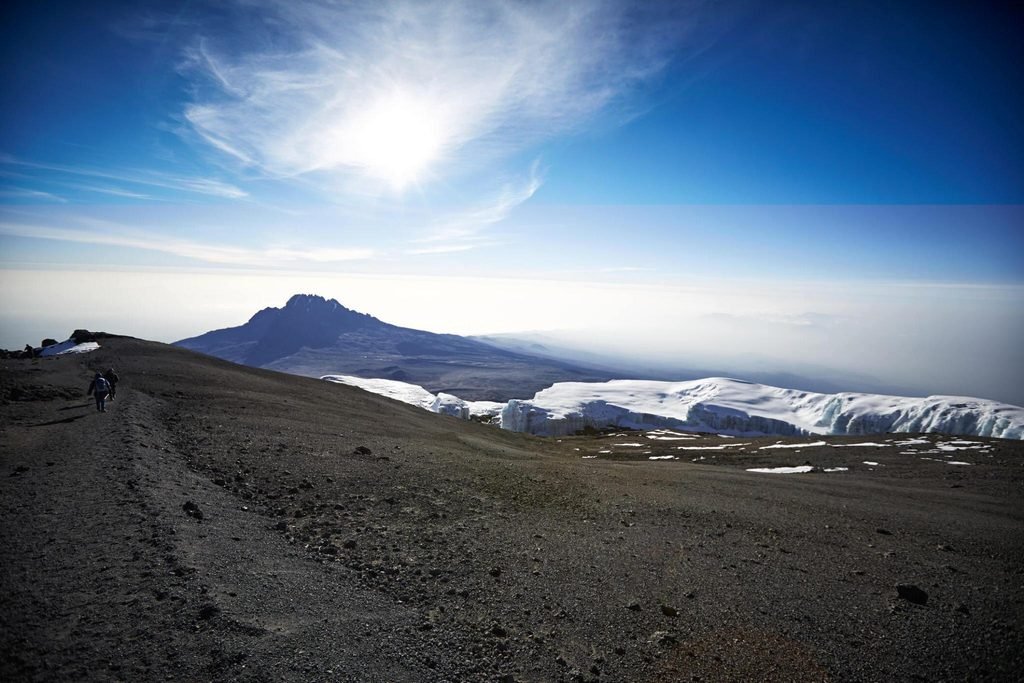
Why Does Mount Kilimanjaro Have Snow Near the Equator?
Mount Kilimanjaro is located relatively close to the equator, where lowland temperatures are generally warm throughout the year. However, the summit reaches almost 5,900 meters above sea level, where temperatures are much colder because of the extreme elevation. This explains why snow and ice can occur near the top of the mountain despite its tropical geographical location.
As elevation increases, air temperatures generally decrease, creating a dramatic difference between the lower slopes and the summit region. Travelers beginning their climb may experience warm or humid conditions in the rainforest before encountering cold winds, freezing nights, and potentially snow or ice near Uhuru Peak.
Kilimanjaro’s remaining glaciers are among its most recognizable natural features. These ice formations have attracted scientific attention because they have retreated substantially over time. Changes in climate and environmental conditions have contributed to the loss of ice, making the conservation and scientific study of Kilimanjaro increasingly important.
For climbers, the possibility of snow and freezing temperatures means that suitable equipment is essential. Warm insulating layers, waterproof clothing, gloves, and appropriate footwear are necessary for summit day, regardless of the season.
The Five Main Climate and Vegetation Zones of Mount Kilimanjaro
One of the most fascinating facts about Kilimanjaro is that climbers pass through several distinct ecological zones while ascending the mountain. The enormous change in elevation creates different temperatures, vegetation types, and environmental conditions, making the journey feel like traveling through several natural regions within one expedition.
1. Cultivated Lower Slopes
The lower slopes of Kilimanjaro contain farming communities, villages, and agricultural landscapes. Crops such as coffee, bananas, and maize are grown in suitable areas, and the surrounding countryside supports local livelihoods. Travelers driving toward the mountain’s climbing gates often pass through these beautiful green landscapes.
2. Montane Rainforest
The rainforest zone contains dense vegetation, tall trees, mosses, ferns, and a variety of wildlife. Rainfall is relatively high in this environment, and the trails can become muddy or slippery. Climbers may encounter monkeys, forest birds, and other wildlife while walking through the lower sections of several Kilimanjaro routes.
3. Heath and Moorland
As the trail gains elevation, the dense forest gradually gives way to heath and moorland vegetation. This zone includes giant heathers, shrubs, and distinctive high-altitude plants such as giant groundsels. The landscape becomes more open, allowing beautiful views of the mountain’s volcanic formations and surrounding valleys.
4. Alpine Desert
The alpine desert zone is characterized by rocky terrain, sparse vegetation, strong sunlight, cold nights, and changing weather conditions. Climbers may pass through volcanic landscapes, exposed ridges, and barren slopes while approaching the higher camps. This environment can be physically demanding because of the altitude and limited shelter from wind and sun.
5. Arctic Summit Zone
The highest part of Kilimanjaro contains extremely cold conditions, rocky summit terrain, and remaining ice formations. Vegetation is very limited, and the thin air makes physical activity particularly challenging. Climbers approaching Uhuru Peak must prepare for freezing temperatures, strong winds, and the possibility of snow or ice.
What Animals Live on Mount Kilimanjaro?
Mount Kilimanjaro is not only a famous climbing destination but also an important protected ecosystem supporting a variety of wildlife. The mountain’s forests and lower slopes provide habitats for mammals, birds, reptiles, and other species adapted to different environmental conditions.
Animals that may be found within Kilimanjaro National Park include blue monkeys, black-and-white colobus monkeys, forest antelopes, and numerous bird species. Larger mammals, including elephants and buffaloes, may also inhabit suitable forest areas, although sightings along standard climbing trails are uncommon.
Birdlife is particularly interesting because different species occupy different elevation zones. Forest habitats support a variety of smaller birds, while higher areas may provide opportunities to observe ravens and other species adapted to mountain conditions.
Wildlife encounters are not guaranteed, and climbing Kilimanjaro should not be confused with a traditional Tanzania safari. Travelers whose main interest is observing large African animals should consider combining their mountain expedition with a visit to Tarangire, Serengeti, Ngorongoro, or another wildlife destination.
Can You Climb Mount Kilimanjaro?
Yes. Mount Kilimanjaro can be climbed using established trekking routes within Kilimanjaro National Park. Unlike some of the world’s highest mountains, the standard summit routes generally do not require technical rock or ice climbing skills under normal conditions. However, reaching the summit is still a demanding high-altitude expedition that requires physical preparation, suitable equipment, and responsible acclimatization.
Climbers normally travel with authorized mountain guides and support teams who assist with navigation, camping arrangements, meals, and expedition logistics. Depending on the route, the climb commonly takes between five and nine days, although some specialized itineraries may be longer.
The main challenge is often the altitude rather than technical climbing. As trekkers ascend toward Uhuru Peak, the reduced availability of oxygen can cause altitude sickness, fatigue, and difficulty maintaining a normal walking pace. Choosing an itinerary with sufficient acclimatization time is therefore an important part of planning the climb.
At Eddy Tours & Safaris, we help travelers compare Kilimanjaro routes according to their available time, trekking experience, and preferred travel dates. You can explore our complete Machame Route itinerary or request a personalized Kilimanjaro climbing quotation.
Best Kilimanjaro Climbing Routes for 2027
Mount Kilimanjaro has several established climbing routes, each offering different scenery, trekking durations, accommodation arrangements, and acclimatization profiles. Choosing the right route is one of the most important decisions when planning a summit expedition.
Machame Route – Scenic and Popular
The Machame Route approaches Kilimanjaro from the southern side and is known for its beautiful rainforest, Shira Plateau, Lava Tower, Barranco Wall, and southern circuit scenery. It is commonly completed over six or seven days, with the seven-day itinerary providing an additional overnight stop at Karanga Camp.
Machame is a camping route and includes several demanding sections, but its scenery and established itinerary make it popular among climbers. Travelers interested in this option can explore our 7-Day Machame Route Kilimanjaro Climbing Package or read the 6-Day Machame Route guide.
Lemosho Route – Beautiful Western Approach
The Lemosho Route begins on the western side of Kilimanjaro and travels through forest and moorland landscapes before joining the southern circuit. It is commonly completed over seven or eight days and can provide a more gradual approach than shorter routes.
Lemosho is particularly attractive to travelers who want beautiful scenery and additional time on the mountain. The route crosses the Shira Plateau and continues toward Lava Tower, Barranco, Karanga, and Barafu before the summit attempt.
If you are comparing the two routes, read our Machame vs. Lemosho Kilimanjaro comparison.
Marangu Route – Mountain Hut Accommodation
The Marangu Route is known for using mountain huts rather than camping tents. It approaches Kilimanjaro from the southeastern side and normally follows the same general route for ascent and descent.
Marangu is commonly completed over five or six days, although the six-day version provides additional acclimatization time. Despite its reputation as a more straightforward route, the climb still involves significant altitude challenges and requires suitable preparation.
Rongai Route – Northern Approach
The Rongai Route approaches Kilimanjaro from the northern side, near the Kenyan border. It offers a different perspective on the mountain and passes through landscapes that contrast with the southern approaches.
Rongai is often selected by travelers interested in a quieter initial route and beautiful views of Mawenzi. The itinerary generally includes camping accommodation and descends through the Marangu side of the mountain.
Umbwe Route – Steep and Challenging
The Umbwe Route is one of Kilimanjaro’s steepest approaches and is generally recommended for experienced hikers. It climbs rapidly through rainforest and along a dramatic ridge before joining the southern circuit at Barranco Camp.
Because of its rapid altitude gain, Umbwe requires careful consideration of acclimatization and physical preparation. Travelers interested in this challenging route can explore our 7-Day Kilimanjaro Umbwe Route itinerary.
Northern Circuit Route – Longer Trekking Experience
The Northern Circuit is one of Kilimanjaro’s longer established trekking routes, commonly completed over eight or nine days. It approaches through the western side before traversing the quieter northern slopes of the mountain.
The longer duration can provide additional time for acclimatization, making the route attractive to travelers who have sufficient time and prefer a more extended mountain experience. It also offers different views of Kilimanjaro compared with the southern circuit routes.
How Long Does It Take to Climb Mount Kilimanjaro?
The time required to climb Kilimanjaro depends on the selected route, the number of acclimatization days, and the planned trekking schedule. Most standard summit itineraries take between five and nine days, although longer customized expeditions are possible. Shorter itineraries generally involve a faster ascent and less time for the body to adjust to altitude. Longer itineraries may provide additional opportunities for acclimatization, but they do not guarantee reaching Uhuru Peak or prevent altitude sickness.
For many travelers, a seven-day or eight-day itinerary provides a more balanced approach than the shortest available climbs. The best choice depends on your trekking experience, health, fitness, available time, and preferred route. Before confirming a climb, discuss the itinerary with your mountain operator and make sure you understand the daily elevation changes, expected hiking hours, and summit-day demands.
How Difficult Is Climbing Mount Kilimanjaro?
Climbing Kilimanjaro is physically demanding because of the altitude, changing weather, long trekking days, and the difficult summit ascent. Although the standard trekking routes do not normally require technical mountaineering skills, they involve several consecutive days of walking on steep, rocky, muddy, or uneven terrain. Summit day is usually the most demanding part of the expedition. Climbers often begin walking late at night or shortly after midnight, ascending through freezing conditions toward the crater rim and Uhuru Peak. The combination of cold temperatures, reduced oxygen, fatigue, and steep terrain makes this stage particularly challenging.
Altitude sickness is a serious concern and can affect anyone, regardless of fitness or previous trekking experience. Symptoms may include headache, nausea, dizziness, and unusual fatigue, while severe cases can become life-threatening. Climbers should report symptoms promptly and follow their guide’s instructions regarding rest, descent, or medical attention. Physical preparation is valuable, but it cannot eliminate the effects of altitude. Travelers should train before departure, choose a suitable route duration, carry appropriate equipment, and approach the mountain with realistic expectations.
Best Time to Visit or Climb Mount Kilimanjaro in 2027
Mount Kilimanjaro can be visited throughout the year, but the weather varies between seasons. Travelers planning a climbing expedition should consider rainfall, visibility, trail conditions, and summit temperatures when selecting departure dates.
January to March
January to March is often considered a favorable period for Kilimanjaro climbing, with opportunities for clear morning views and relatively quieter trails during some weeks. Conditions can still be cold at higher elevations, and rain or snow may occur.
April to May
April and May are commonly associated with the main rainy season in northern Tanzania. Lower trails can become muddy and slippery, while cloud cover and precipitation may reduce visibility. Climbing is possible, but the conditions can make the expedition more demanding.
June to October
June to October is generally one of the most popular climbing periods because of relatively drier conditions. The mountain can offer beautiful views during these months, although summit temperatures remain extremely cold and strong winds are possible.
November to December
November and December can bring variable weather associated with the short rains. The lower slopes may become greener, but wet trails and changing conditions can affect the trekking experience. For 2027 departures, we recommend discussing your preferred dates with Eddy Tours & Safaris before confirming accommodation, mountain arrangements, and travel plans.
Interesting Facts About Mount Kilimanjaro
Mount Kilimanjaro has many remarkable features that make it different from other famous mountains around the world. Its height, volcanic origins, location near the equator, and changing ecosystems have contributed to its international reputation.
- Kilimanjaro is the highest mountain in Africa. Its summit, Uhuru Peak, reaches 5,895 meters above sea level.
- The mountain is entirely in Tanzania. Although it can be photographed from Kenya, the summit and climbing routes are within Tanzania.
- Kilimanjaro is a volcanic mountain. Its three main cones are Kibo, Mawenzi, and Shira.
- Kibo is dormant. The mountain is not currently erupting, but its highest volcanic cone is not considered extinct.
- It is the world’s highest free-standing mountain. Kilimanjaro rises as an isolated volcanic massif above the surrounding plains.
- Kilimanjaro has snow and glaciers near the equator. Its extreme elevation creates freezing summit conditions despite its tropical location.
- The mountain has five main ecological zones. Climbers pass through different environments, from lower cultivated slopes to the Arctic summit zone.
- Kilimanjaro National Park is a UNESCO World Heritage Site. The park received this recognition in 1987.
- Uhuru means freedom in Swahili. The summit name is associated with Tanzania’s history and independence.
- The mountain supports wildlife. Its forests provide habitats for monkeys, birds, and other animals.
- Most standard climbing routes do not require technical mountaineering. However, the altitude and physical demands make the expedition challenging.
- The mountain’s glaciers have retreated considerably. Kilimanjaro is an important location for studying environmental and climatic changes.
- Moshi is a major gateway for climbers. Many trekking expeditions begin with accommodation and transfers arranged from this northern Tanzanian town.
- Kilimanjaro has several climbing routes. Machame, Lemosho, Marangu, Rongai, Umbwe, and the Northern Circuit provide different trekking experiences.
- Kilimanjaro can be combined with a wildlife safari. Travelers can explore northern Tanzania’s national parks before or after their mountain adventure.
Can You See Mount Kilimanjaro Without Climbing It?
Yes. Visitors do not need to climb Kilimanjaro to appreciate its beauty. The mountain can be viewed from several locations in northern Tanzania when weather conditions are clear, including parts of Moshi and the surrounding countryside. Early mornings often provide favorable opportunities for mountain views, although visibility depends on clouds, rainfall, and seasonal weather. Some travelers choose accommodation with views toward Kilimanjaro, while others explore nearby villages, coffee farms, waterfalls, and scenic areas.
Guided day hikes are another option for travelers who want to experience part of the mountain without attempting the summit. Depending on the selected activity and national park arrangements, visitors may explore lower trails or designated areas with a guide. These experiences can be suitable for travelers who have limited time or do not want to undertake a demanding high-altitude expedition. Contact Eddy Tours & Safaris to discuss available Kilimanjaro day trips and suitable activities.
How to Travel to Mount Kilimanjaro in Tanzania
Most international travelers visiting Kilimanjaro arrive through Kilimanjaro International Airport, commonly known by its airport code JRO. The airport serves northern Tanzania and provides access to Moshi, Arusha, and the surrounding tourism destinations.
Moshi is a convenient base for many climbing expeditions because of its proximity to several mountain access routes. Visitors often spend at least one night in town before beginning their climb, allowing time for equipment checks, a briefing with the mountain guide, and final preparations.
Travelers arriving through other Tanzanian airports may need additional domestic transport or a road transfer to reach the Kilimanjaro region. The most suitable arrangement depends on the international flight schedule and the planned itinerary.
Before traveling, visitors should confirm the applicable Tanzania visa requirements, passport validity, travel insurance, and any health-related entry requirements. Climbers should also ensure that their insurance covers high-altitude trekking and emergency evacuation where necessary.
How Much Does It Cost to Climb Mount Kilimanjaro in 2027?
The cost of climbing Kilimanjaro depends on the selected route, number of trekking days, group size, mountain crew arrangements, national park fees, accommodation, and additional services included in the package. A shorter climb may have a lower total price because it involves fewer days of park fees, camping arrangements, meals, and crew support. However, choosing the shortest itinerary simply to reduce costs may result in a more demanding ascent and less time for acclimatization.
Private expeditions and group joining climbs can also have different prices. Private climbs offer dedicated arrangements for your group, while scheduled group departures may allow some costs to be shared among participants. For travel in 2027, the final price should be calculated using the applicable park fees and confirmed operating arrangements. At Eddy Tours & Safaris, we can prepare a personalized quotation based on your preferred route, dates, group size, and accommodation requirements.
Request Your Kilimanjaro Climbing Quotation
Why Combine Mount Kilimanjaro with a Tanzania Wildlife Safari?
Climbing Mount Kilimanjaro is an extraordinary mountain experience, but Tanzania also offers some of Africa’s most famous wildlife destinations. Many travelers choose to combine a Kilimanjaro expedition with a safari, allowing them to experience both the country’s dramatic mountain landscapes and its remarkable wildlife. Popular safari destinations include Serengeti National Park, Ngorongoro Crater, Tarangire National Park, and Lake Manyara National Park. These protected areas provide opportunities to observe elephants, lions, giraffes, zebras, buffaloes, wildebeest, and many other species in their natural habitats.
A wildlife safari can be arranged before or after the mountain expedition, depending on your available time and travel preferences. Some visitors prefer to complete the demanding Kilimanjaro climb first and then enjoy several days of game drives and comfortable lodge accommodation. At Eddy Tours & Safaris, we can help travelers plan combined Kilimanjaro and Tanzania safari holidays, including suitable transport, accommodation, and travel arrangements.
Why Book Your Kilimanjaro Adventure with Eddy Tours & Safaris?
Planning a Kilimanjaro climbing expedition involves more than selecting a route and choosing departure dates. Travelers need to consider altitude, physical preparation, equipment, guiding arrangements, national park requirements, accommodation, and the overall organization of the journey.
At Eddy Tours & Safaris, we help travelers arrange guided Kilimanjaro climbing expeditions based on their preferred routes, travel dates, group size, and trekking expectations. Whether you are interested in the scenic Machame Route, the longer Lemosho Route, the hut-based Marangu Route, or another established climbing itinerary, our team can discuss the available options and prepare a personalized quotation.
We encourage climbers to select routes that provide suitable acclimatization opportunities and to prepare carefully for the demands of high-altitude trekking. Your quotation should clearly explain the mountain crew arrangements, park fees, meals, camping equipment, transport, and other services included in the package.
For visitors interested in exploring more of Tanzania, we can also discuss combining a Kilimanjaro climb with a wildlife safari or Zanzibar beach holiday.
Frequently Asked Questions About Mount Kilimanjaro
1. Which country is Mount Kilimanjaro located in?
Mount Kilimanjaro is located in Tanzania, East Africa, near the border with Kenya.
2. How high is Mount Kilimanjaro in meters?
Mount Kilimanjaro reaches 5,895 meters above sea level at Uhuru Peak.
3. How high is Mount Kilimanjaro in feet?
The officially recognized elevation is 19,341 feet above sea level.
4. Is Mount Kilimanjaro in Kenya?
No. Mount Kilimanjaro is entirely within Tanzania, although it can be seen from parts of Kenya.
5. Is Kilimanjaro the highest mountain in Africa?
Yes. Mount Kilimanjaro is the highest mountain on the African continent.
6. What is the highest point on Kilimanjaro?
Uhuru Peak, situated on Kibo, is the highest point at 5,895 meters.
7. Is Mount Kilimanjaro an active volcano?
Kilimanjaro is a dormant volcanic massif. Kibo is considered dormant, while Mawenzi and Shira are extinct volcanic formations.
8. How many volcanic peaks does Kilimanjaro have?
Kilimanjaro has three main volcanic cones: Kibo, Mawenzi, and Shira.
9. Can beginners climb Mount Kilimanjaro?
Some well-prepared beginners complete Kilimanjaro climbs, but the mountain is physically demanding and altitude sickness can affect anyone. Choosing a suitable route and allowing sufficient acclimatization time are important.
10. How many days does it take to climb Kilimanjaro?
Most standard climbing itineraries take between five and nine days, depending on the route and acclimatization schedule.
11. What is the easiest Kilimanjaro route?
No route is truly easy because of the altitude. Marangu is often described as more straightforward in terms of trail conditions, but shorter itineraries can create acclimatization challenges.
12. Which Kilimanjaro route is best for first-time climbers?
Many first-time climbers consider the seven-day Machame Route or a longer Lemosho itinerary because they provide more time for acclimatization than some shorter routes.
13. Does Mount Kilimanjaro have snow?
Yes. Snow and ice can occur near the summit because of the mountain’s extreme elevation, although the remaining glaciers have retreated significantly.
14. Why is Kilimanjaro famous?
Kilimanjaro is famous for being Africa’s highest mountain, its isolated volcanic shape, snow-covered summit, beautiful ecosystems, and internationally recognized trekking routes.
15. What is the nearest airport to Kilimanjaro?
Kilimanjaro International Airport (JRO) is the main international airport serving the Kilimanjaro region.
16. What town is closest to Mount Kilimanjaro?
Moshi is one of the principal towns used as a gateway for Kilimanjaro climbing expeditions.
17. Is Kilimanjaro a UNESCO World Heritage Site?
Yes. Kilimanjaro National Park was inscribed on the UNESCO World Heritage List in 1987.
18. What animals live on Mount Kilimanjaro?
The mountain’s forests support monkeys, forest antelopes, numerous bird species, and other wildlife. Larger mammals may also inhabit suitable forest areas.
19. Can I visit Kilimanjaro without climbing to the summit?
Yes. Visitors can enjoy mountain views, guided day hikes, and nearby attractions without undertaking a full summit expedition.
20. What is the best time to climb Kilimanjaro in 2027?
January to March and June to October are generally popular climbing periods, although weather conditions can change throughout the year.
21. Can I combine Kilimanjaro with a Serengeti safari?
Yes. Kilimanjaro climbing can be combined with a Tanzania wildlife safari visiting Serengeti, Ngorongoro, Tarangire, and other destinations.
22. How do I book a Kilimanjaro climbing tour?
You can contact Eddy Tours & Safaris through the website, email, or WhatsApp and share your preferred dates, route, number of climbers, and travel requirements.
Plan Your Mount Kilimanjaro Adventure in Tanzania for 2027
Mount Kilimanjaro is much more than Africa’s highest mountain. Its remarkable volcanic history, snow-covered summit, beautiful forests, unusual high-altitude plants, and changing landscapes make it one of the most extraordinary natural destinations in the world. Located entirely in Tanzania, the mountain rises to 5,895 meters above sea level and provides an unforgettable adventure for travelers who want to explore the Roof of Africa.
Whether you are researching Mount Kilimanjaro’s height and country, comparing climbing routes, or preparing for a summit expedition in 2027, understanding the mountain’s geography and challenges is an important first step. Choosing the right route, allowing suitable acclimatization time, preparing appropriate equipment, and traveling with an experienced mountain support team can help you plan responsibly.
At Eddy Tours & Safaris, we can help you organize a Kilimanjaro climbing adventure according to your preferred dates, available time, and trekking expectations. Our team can also assist with additional Tanzania wildlife safaris, Zanzibar holidays, and customized travel arrangements.
Start planning your Kilimanjaro adventure today.
Request Your Kilimanjaro Climbing Quotation
Chat with Eddy Tours & Safaris on WhatsApp
Explore our Machame Route climbing itinerary, 7-Day Machame Route package, and 7-Day Umbwe Route expedition to discover different ways to experience Mount Kilimanjaro.
Discover the height, beauty, and extraordinary landscapes of Mount Kilimanjaro with Eddy Tours & Safaris.