
Olduvai Gorge: The Cradle of Mankind is one of the most important places a traveller can visit in northern Tanzania. It is not a large museum built far from the landscape where history happened. It is a dramatic gorge within the Ngorongoro Conservation Area, where exposed layers of earth have preserved fossils, animal remains and stone tools from deep time. The discoveries made here changed how scientists think about early humans, toolmaking and the environments in which our distant relatives lived.
For safari guests, Olduvai Gorge is a thoughtful addition between Ngorongoro Crater and Serengeti National Park. A wildlife journey already puts you among volcanic plains, grazing animals and big skies; Olduvai adds the human story beneath those same landscapes. Eddy Tours & Safaris can include the gorge as part of a private northern Tanzania itinerary, allowing enough time for the visit rather than treating it as a hurried roadside stop.
The word “shocking” in this guide refers to how strongly these discoveries changed old assumptions. Archaeology is careful work, and some questions remain open. Scientists test evidence, debate interpretations and revise ideas when new material is found. That is what makes Olduvai so compelling: it has not delivered one simple answer about human origins. It has revealed a long, detailed record that continues to produce new questions.
Where is Olduvai Gorge?
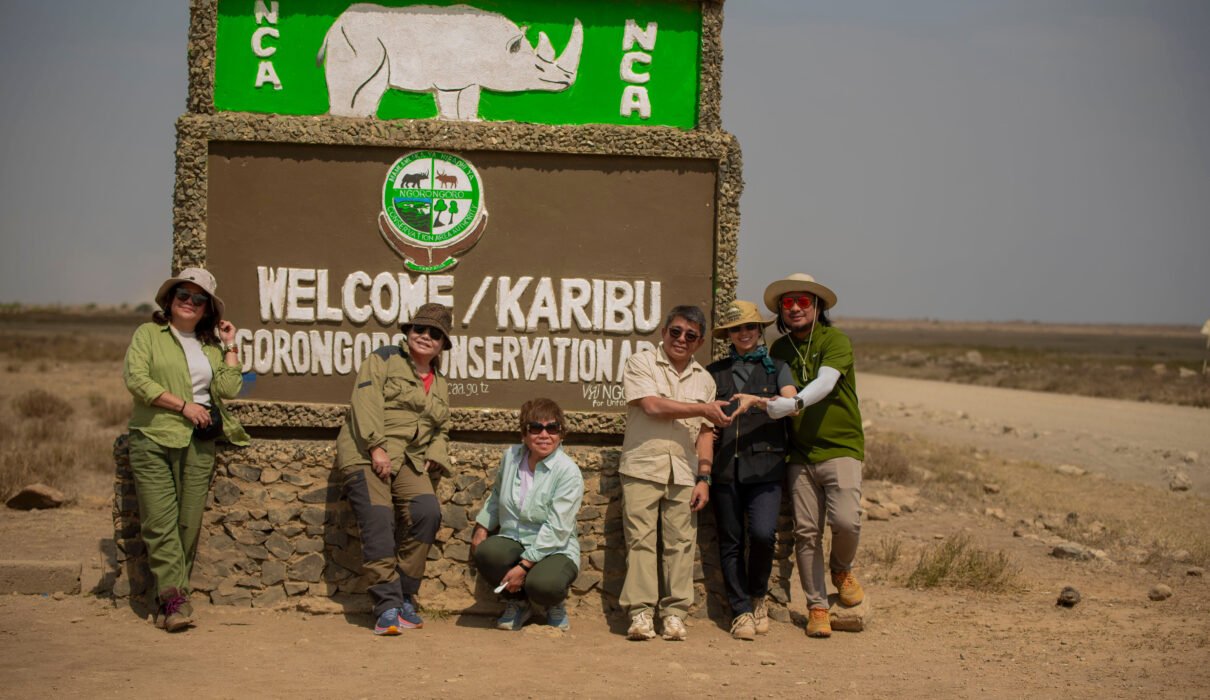
Olduvai Gorge, also written Oldupai Gorge, lies in northern Tanzania within the Ngorongoro Conservation Area, between the Ngorongoro highlands and the Serengeti plains. The local Maasai name is often given as Oldupai, linked to a wild sisal plant found in the area. The landscape is dry, open and volcanic, with steep-sided gullies that expose a sequence of ancient sediments. Those exposed layers are the reason the site became so important to archaeology.
On a safari route, the gorge is often visited while travelling between the crater and central Serengeti. It is not the same as the Ngorongoro Crater and should not be confused with a game-drive destination. The main draw is archaeological and geological: an opportunity to understand how a changing East African landscape preserved evidence of early hominins, extinct animals and technological development over a very long period.
Why is Olduvai called the Cradle of Mankind?
The phrase “Cradle of Mankind” is used because Olduvai Gorge has provided an exceptionally important record of early hominins and their behaviour. Hominin is the scientific term for species on the human branch of evolution after the split from the lineage leading to chimpanzees. The gorge is famous not because modern humans began there in one simple moment, but because the evidence found there helped researchers piece together a far more complicated story of our evolutionary past.
Fossils, tools, animal bones and geological layers can be studied together at Olduvai. That combination is powerful. A skull can tell us something about anatomy; a stone tool can show a technological choice; bones and sediments can help reconstruct the environment. When all these clues occur in known layers, researchers can ask better questions about who lived there, what they were doing and how conditions were changing around them.
1. The gorge itself became a natural archive of deep time
The first of the seven discoveries is not one object but the geological archive. Olduvai Gorge cuts through deposits laid down over a very long period. Volcanic ash, lake sediments, stream deposits and soil horizons accumulated one above another. Erosion later exposed the sequence. To an archaeologist, these layers are a timeline, though not as neat as the pages of a book. Each layer must be mapped, compared and dated carefully.
Volcanic material is particularly useful because it can help establish the age of the deposits around fossils and artefacts. This allows researchers to place discoveries in context rather than treating every find as an isolated curiosity. Olduvai therefore became a major reference point for understanding early Stone Age archaeology in East Africa. The gorge made it possible to connect ancient tools, bones and landscapes to a well-studied sequence of time.
For a visitor standing at the viewpoint, it is easy to see only dry earth and distant plains. The real drama is in the layers. They record changing lakes, vegetation, animal communities and human relatives over millions of years. That is why guides and museum interpretation are useful: the discovery is not always something large and visible on the ground. Often it is the relationship between small finds and the sediment around them.
2. Mary Leakey’s 1959 discovery of the OH 5 skull transformed attention on Olduvai
In 1959, Mary Leakey found a remarkably preserved hominin skull at Olduvai, commonly known by its catalogue number, OH 5. At the time it was famously called Zinjanthropus, while today it is generally classified as Paranthropus boisei. The skull had a powerful build, large chewing teeth and a prominent crest on top where strong jaw muscles attached. These features led to the popular nickname “Nutcracker Man,” although that name oversimplifies a real species with a complex diet and ecology.
The discovery attracted international attention and brought greater support to research at the gorge. It was not a direct, simple ancestor of modern humans, and it should not be presented that way. Its importance lies in showing that early human relatives were diverse. Evolution was not a straight line from one species to the next. Different hominins could exist in the same broad region, with different bodies, diets and adaptations.
That lesson still matters. When visitors hear “Cradle of Mankind,” they sometimes imagine a single first person. Olduvai helped show that the reality is more interesting: many branches of the family tree, some ending and others contributing to later human history. The OH 5 skull remains a landmark discovery because it made that complexity impossible to ignore.
3. Homo habilis helped reshape the story of the genus Homo
Olduvai Gorge is also closely linked with fossils assigned to Homo habilis, a species whose name means “handy man.” The Leakey team’s discoveries, including material found in the early 1960s, contributed to the recognition that early members of the genus Homo existed much earlier than many people had imagined. Homo habilis had a smaller brain and different body proportions from modern humans, but its fossils were important in discussions about the emergence of our genus.
The link between Homo habilis and early stone tools has often been taught as a simple fact, but researchers are more cautious today. Tools found near fossils do not automatically prove which species made them. More than one hominin may have lived in the region, and behaviour does not fossilise as neatly as bone. Still, Olduvai provided crucial evidence that early human relatives were already living in a world where stone technology mattered.
This discovery changed the language of human origins. It pushed scientists to consider early Homo as varied, adaptive and technologically capable, while also reminding us that labels and family trees can be revised as new fossils are found. Olduvai remains central to that discussion because its evidence is tied to carefully studied geological layers.
4. The Oldowan stone tools revealed early technological skill
Among the most influential discoveries at Olduvai are the simple but purposeful stone tools known as Oldowan tools. The name “Oldowan” comes directly from Olduvai. These artefacts include sharp flakes, cores and hammerstones made by striking one stone against another in a controlled way. They may look basic beside a modern knife, but they represent planning, hand control and knowledge of how rock breaks.
A sharp flake can cut meat, skin or plant material. A heavy core can pound or break. The value of the Oldowan tradition is not that it proves every detail of daily life, but that it shows early hominins were deliberately altering materials to solve practical problems. Toolmaking changed what could be done with animal carcasses and other resources. It created a technological relationship with the environment that would become central to human evolution.
Olduvai was especially important because tools were found with animal bones and in datable contexts. Researchers could examine marks on bones, the spatial arrangement of artefacts and the surrounding deposits. Interpretations have changed over time—some sites once described as “living floors” or “butchery sites” are now discussed more cautiously—but the basic discovery remains: early Stone Age technology was established and meaningful in this landscape.
5. Acheulean handaxes showed that technology did not stand still
Olduvai’s record does not end with the earliest tools. Later deposits preserve evidence of the Acheulean, a technological tradition associated with more carefully shaped implements such as handaxes and cleavers. Compared with many Oldowan tools, Acheulean artefacts often show greater symmetry and more extensive shaping. They reflect a different way of planning and producing a cutting edge.
This was not an overnight invention. Technological change happens through many small choices, learned skills and local conditions. Yet the sequence at Olduvai helped researchers see that early hominin technology developed over time. There was no single moment when our ancestors suddenly became intelligent. There were long periods of experimentation, adaptation and accumulated practical knowledge.
For visitors, a handaxe is a useful object to think about because it looks familiar in purpose while remaining very ancient. It was made with no metal, no written instructions and no factory. Its shape suggests the maker understood the material, could imagine an outcome and had the patience to work toward it. That is a quiet but profound connection between the gorge and the human skills we take for granted today.
6. Animal bones helped reconstruct a vanished world
Olduvai has produced not only hominin fossils and tools but also a rich record of animal remains. These bones help researchers reconstruct ancient communities of animals and the environments in which early hominins lived. The landscape was not always the same as the dry open view travellers see today. At different times it included lakeshores, wetlands, grasslands and wooded areas, each supporting different creatures.
Some bones carry marks that may relate to cutting, pounding, trampling or carnivore activity. Sorting out those marks is demanding work. A broken bone does not automatically show that a hominin used it, and a cut-like mark must be compared carefully with other possible causes. The strength of Olduvai research is that many specialists can study the same evidence: archaeologists, geologists, palaeontologists, dating experts and scientists who analyse wear and fracture patterns.
What emerged was a richer picture of early life. Hominins were not alone in a calm landscape; they shared their world with large animals, predators, scavengers and changing sources of water. Survival required attention to food, risk, materials and social cooperation. The animal bones at Olduvai make early human history feel ecological, not merely anatomical.
7. Newly described bone tools show that Olduvai is still changing the story
Olduvai is not only famous for discoveries made decades ago. Research published in 2025 described 27 bone tools from a site in the gorge dated to about 1.5 million years ago. Most were made from the limb bones of elephants and hippos and had been deliberately shaped by flaking. The researchers described them as the earliest known example of systematic bone-tool production, a finding that has added an important new chapter to the history of technology.
This does not mean archaeologists now know exactly which hominin made every tool. No hominin fossil was found directly with that tool collection, and researchers must be precise about uncertainty. Homo erectus is a leading possibility, but other hominins known in the region are part of the scientific discussion. What is clear is that the makers understood that bone could be selected and worked as a useful material, not merely discarded after a meal.
This is a powerful reminder that Olduvai remains active science. New excavation, new dating methods and careful re-analysis can change the questions asked of old ground. A visitor is not walking through a finished story. You are visiting a place where the evidence of early human history is still being studied.
How to visit Olduvai Gorge on a Tanzania safari
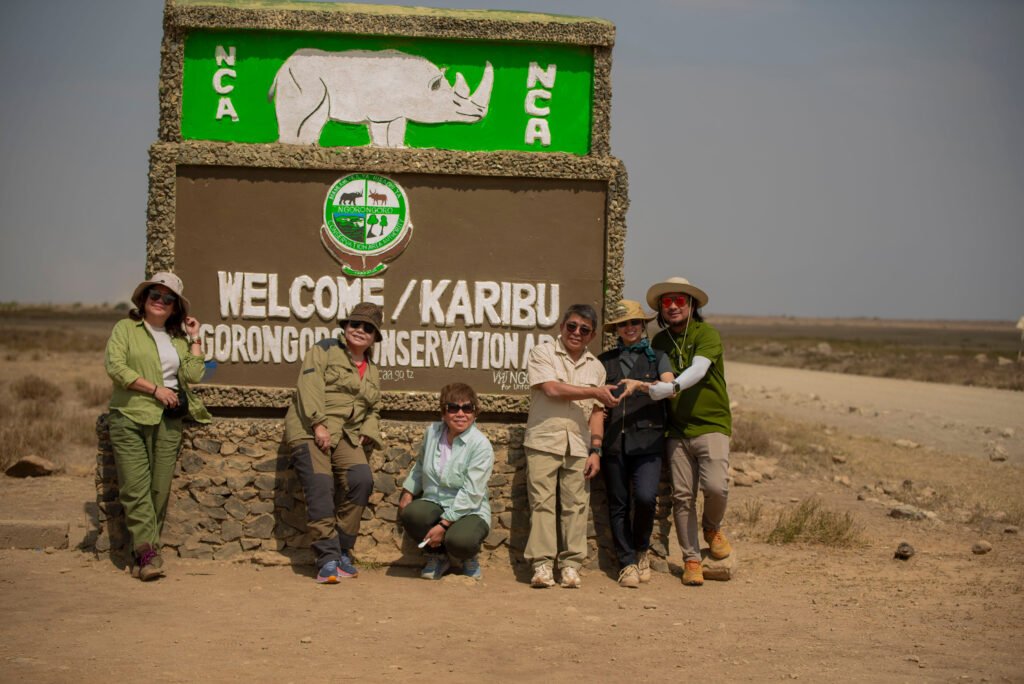
Olduvai is most easily included on a northern Tanzania safari that also visits Ngorongoro and Serengeti. A common route begins in Arusha, continues to Tarangire, spends a night in the Ngorongoro highlands, descends into the crater, then travels toward central Serengeti with a planned Olduvai stop. The exact order depends on your accommodation, park access, current road conditions and how much time you want at the gorge.
Do not try to add Olduvai to an already over-packed transfer day. A short museum and viewpoint visit is possible, but history-minded travellers benefit from time to listen, look at the gorge and understand the main discoveries. The museum display and access arrangements can change, so your guide will confirm the practical details before the trip. Fees and opening conditions should always be checked at the time of booking.
For a balanced itinerary, pair Olduvai with a full Ngorongoro Crater game drive and at least two or three nights in Serengeti. If you want to follow the migration, give the Serengeti more nights and let the month guide where you stay. Olduvai works in every season because its importance is historical rather than dependent on animal movement.
What to bring and how to visit responsibly
Bring water, sunscreen, a hat, sunglasses and a light jacket. The Ngorongoro highlands can be cool, while Olduvai’s open setting can be hot and dusty later in the day. Comfortable shoes are useful, but stay only where your guide and site staff permit. Do not remove stones, plants or anything that appears to be an artefact. A small fragment on the ground may be important evidence in its original location.
Listen to the local guide and respect photography rules in the museum or at any archaeological display. The value of Olduvai is not just in objects removed long ago; it is in the context that connects objects to layers, dates and landscape. Protecting the site allows future researchers to ask questions that today’s technology may not yet be able to answer.
For travel-health and entry requirements, seek current official information and qualified advice for your own circumstances. You can use Google to locate a recognised travel-health clinic, but individual medical guidance should come from a professional who knows your health history. If your journey also includes a Kilimanjaro climb, visit Kilimanjaro Climb Specialist for route ideas and discuss the order of your trek and safari with us.
Frequently asked questions about Olduvai Gorge
Is Olduvai Gorge inside Ngorongoro Crater?
No. Olduvai Gorge is within the wider Ngorongoro Conservation Area, but it is separate from the crater floor. It is commonly visited while travelling between the Ngorongoro area and Serengeti.
Why is Olduvai Gorge important?
It has yielded important fossils, stone tools, animal remains and geological evidence that helped scientists study early hominins, ancient technology and changing environments over a long period.
Can children visit Olduvai Gorge?
Yes. It can be a very good educational stop for families, especially when the guide explains the site in clear, interesting language. Tell us children’s ages so we can build a sensible route and schedule.
How much time should I allow for the visit?
Allow at least an hour for a basic stop; longer is better if archaeology is a main interest. The final timing depends on the day’s driving route and current site arrangements.
Can I combine Olduvai with Zanzibar?
Yes. Many travellers finish a northern Tanzania safari with a flight to Zanzibar for a few quiet beach days. We can plan the final safari night and domestic connection around your preferred dates.
Plan an Olduvai Gorge and Tanzania safari with Eddy Tours & Safaris
Olduvai Gorge brings a different kind of depth to a Tanzania safari. It connects the animals and plains you see today with a long record of early hominins learning, adapting and making tools in East Africa. Give the stop enough time, travel with a guide who can place it in context and combine it with the wildlife areas that make the northern circuit so rewarding.
To plan your visit, contact Eddy Tours & Safaris through our contact page. You can also email eddytoursandsafaris@gmail.com or sales@eddytours-safaris.com, or call and WhatsApp +255 711 906 664. Share your travel dates, group size, budget and whether Olduvai is a short stop or a main interest. We will prepare a clear safari plan with the time and accommodation that fit your journey.