
Ndutu is one of the most rewarding places to visit during a Tanzania safari, especially for travellers who want to understand the Great Migration beyond the famous Mara River crossings. Set within the wider Serengeti ecosystem, between the southern Serengeti and the Ngorongoro Conservation Area, Ndutu offers open grassland, seasonal lakes, resident predators and some of the most dramatic wildlife activity of the year.
The main reason people travel to Ndutu is the calving season, when vast herds of wildebeest gather on the short-grass plains and thousands of calves are born within a relatively short period. Yet Ndutu is not only a destination for a single wildlife event. It is also a good area for photographers, birdwatchers, families, first-time safari guests and returning visitors who prefer wide landscapes and long game drives without the constant pressure to chase one particular sighting.
This guide explains the real reasons to visit Ndutu in 2027 or 2028, the wildlife you may see, the best seasons for different interests and how to plan a route that suits your time and budget. Migration movements are shaped by rainfall, so no responsible operator should promise that animals will stand in exactly the same place on a fixed date. A well-planned safari gives you the best chance by choosing the right region and staying flexible.
1. Ndutu is one of the best places to see the wildebeest calving season
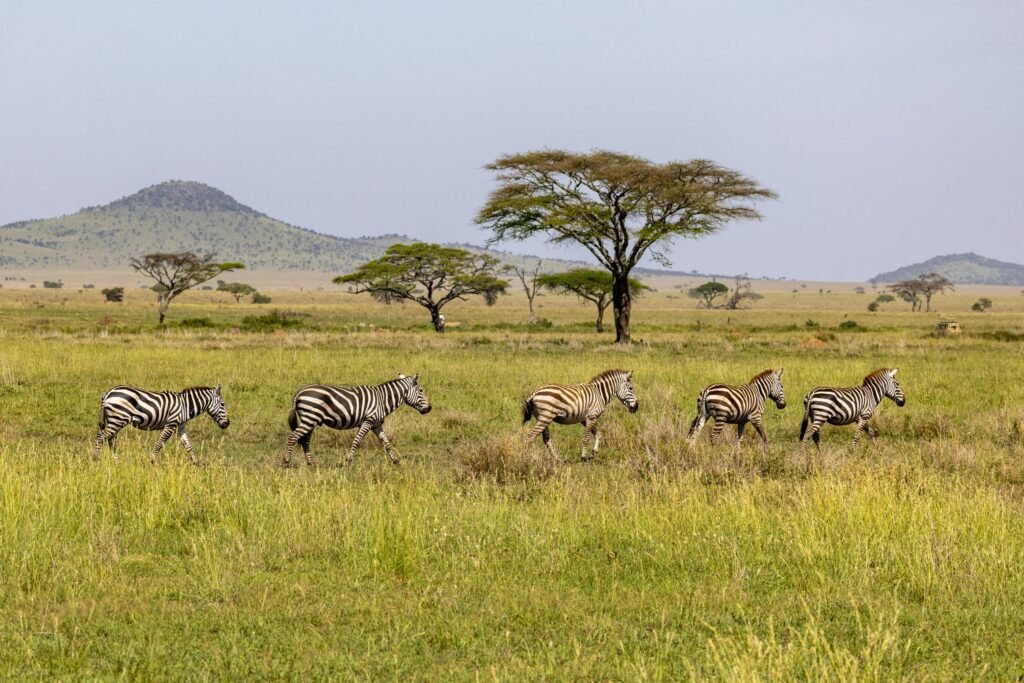
Ndutu is most widely known for the southern migration and calving period, generally from late December through March. The exact timing varies with rain and grazing conditions. In a strong green season, the plains may hold enormous numbers of wildebeest and zebra; in a drier or later season, the herds can be more spread out. This is why a local guide who follows current sightings is far more valuable than a rigid promise made months in advance.
During the peak weeks, wildebeest cows give birth across the grasslands every day. The calves are able to stand quickly, and within a short time they are moving with the herd. It is an intense natural cycle: new life is everywhere, while lions, cheetahs, hyenas and jackals remain close by. The scenes can be emotional, sometimes difficult, and always real. Visitors should arrive with respect for the wildlife rather than expecting a staged experience.
For travellers who have only seen the migration in documentaries, Ndutu reveals the scale of the event. The plains can look empty one morning and full of moving animals the next. Your driver-guide will use recent reports, tracks and experience to decide where to search, whether that means the open plains, woodland edges or areas near seasonal water.
2. The short-grass plains create exceptional wildlife viewing
The Ndutu area is known for wide, open short-grass plains. This habitat is important because it offers nutritious grazing after rain and allows visitors to see animals across long distances. On a clear morning, you may spot lines of wildebeest, zebra, gazelle and buffalo moving through the grass while predators scan from a low rise or an acacia shade.
Open country makes Ndutu especially enjoyable for people who want to understand animal behaviour. You can watch a lioness moving through grass, a cheetah checking the horizon, a group of zebra reacting to an alarm call or a hyena trotting between feeding areas. It is not only about ticking species from a list. The landscape gives context to what the animals are doing.
Game drives here often feel less enclosed than drives in riverine woodland. There are few visual barriers, so the morning light, clouds and distant herds become part of the experience. Bring binoculars, but do not spend the whole time looking through them. Ndutu is a place where simply watching the horizon can lead to a good sighting.
3. Ndutu offers some of Tanzania’s strongest predator action
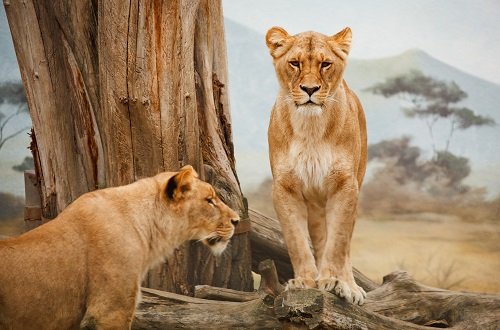
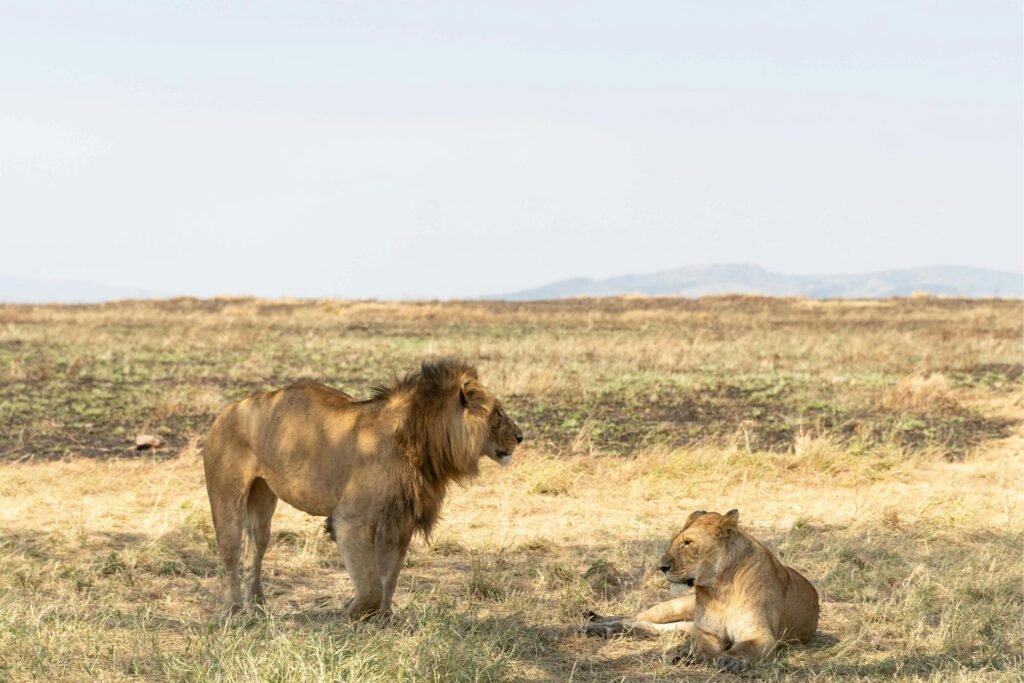
Where there are large herbivore herds, predators follow. Lions are regularly seen around Ndutu, particularly near kopjes, shaded trees and areas where prey is concentrated. Cheetahs favour the open plains, where they can use visibility and speed. Spotted hyenas are common and highly active, while jackals may be seen around newborn animals or moving through the grass in pairs.
It is important to keep expectations realistic. Wild predators do not perform on demand, and a good guide will never drive too close or pressure an animal simply to create a photograph. Some days bring a hunt, a feed or cubs playing near a vehicle. Other days bring quieter but equally interesting behaviour: lions sleeping after a night of activity, cheetahs scanning the grassland, or hyenas returning to a den.
The concentration of prey in the calving season can increase the chance of seeing predator-prey interactions, but it can also attract more safari vehicles. Choosing a camp close to Ndutu and starting early helps you enjoy the best light and wildlife activity before the middle of the day. Your guide can also leave a busy sighting and search for a quieter experience elsewhere.
4. It is a superb destination for wildlife photography
Ndutu gives photographers room to work. The open plains provide clean backgrounds, long sightlines and beautiful early-morning light. A zebra herd against a stormy sky, a cheetah walking through fresh green grass or a line of wildebeest crossing a low ridge can make a strong image without needing a close-up.
Pack extra memory cards, spare batteries and a dust-protective bag for your camera. A beanbag can be useful for supporting a long lens in the vehicle, although many people photograph successfully with a simple telephoto lens and a steady hand. Ask your guide to position the vehicle carefully and then be patient. The best images often come from waiting for an animal to turn, walk into the light or create space around itself.
For phone photographers, Ndutu is still highly rewarding. Use the natural light, avoid zooming too far digitally and take wide landscape images as well as animal portraits. Please do not stand up suddenly, shout, play animal sounds or ask the guide to disturb wildlife for a closer photograph. Respectful viewing produces better experiences for everyone.
5. Seasonal lakes bring another side of the landscape
Lake Ndutu and Lake Masek are seasonal features that add variety to the plains. Water levels change with rainfall, and the surrounding areas may attract birds, herbivores and predators. The lakes can appear pale, reflective or dry depending on the time of year; all of these conditions are part of the landscape’s character.
Birdwatchers should keep binoculars ready. Flamingos may be present when conditions suit them, alongside storks, raptors, bustards, lapwings and many smaller species. Your guide can help you identify birds, but even casual observers usually enjoy the movement and colour around the water margins. In the wet months, the contrast between green grass, dark cloud and shallow lake water can be particularly striking.
Do not plan a trip around the assumption that every lake will be full or every bird species will appear. Nature changes season by season. The value of Ndutu is that its changing conditions create different experiences rather than one fixed view.
6. Ndutu is more than a migration-only destination
Many travellers make the mistake of thinking Ndutu is worth visiting only when the herds are at their largest. The area also has resident wildlife and rewarding scenery outside the main calving window. Lions, hyenas, giraffes, elephants, antelope, birds and smaller mammals may be found in the wider area at different times, although distribution changes with water and grazing.
If you travel in December, early migration herds may be arriving after the short rains. In January and February, the short-grass plains are often a key focus for calving. March can remain productive, though increasing rain and movement patterns may change the location of the herds. By April and May, many animals begin moving west or northwest as the long rains influence the route. These are broad patterns, not guarantees, and current conditions always matter.
This seasonal movement is exactly what makes a Tanzania migration safari interesting. There is no single “best” month for every visitor. A photographer may prefer green landscapes and young animals; a family may prefer drier roads and shorter transfers; a repeat visitor may enjoy lower-season camps and fewer vehicles. Discuss your priorities before booking rather than copying another person’s itinerary.
7. The area works well with a classic northern Tanzania safari route
Ndutu fits naturally into a northern circuit itinerary. Many guests combine it with Tarangire National Park, the Ngorongoro Crater and either central or southern Serengeti. This combination gives you different habitats in one trip: elephant-rich savannah in Tarangire, the enclosed wildlife bowl of Ngorongoro and the open grassland of Ndutu.
A six- to nine-day itinerary gives enough time to avoid rushing. One night near Ndutu can work on a short schedule, but two nights are better if the migration is a major reason for travel. They allow full morning and afternoon drives, time to follow wildlife reports and freedom to change plans if rain or animal movement shifts the action.
For personalised route planning, start with the Eddy Tours & Safaris website. Tell the team your dates, group size, accommodation level and whether you care most about the calving season, big cats, birdlife, photography or a balanced first safari. The plan should be built around your priorities, not a copied itinerary.
8. Ndutu can be a good choice for a private safari
A private safari is particularly useful in Ndutu because wildlife movement is not predictable by timetable. With your own vehicle and guide, you can stay longer at a peaceful sighting, leave a crowded area, focus on birds or photography, or return to camp when children need a break. The guide can adjust the day around the season and the latest sightings.
Group safaris can also be excellent when everyone understands that flexibility is shared. If your main goal is a specific photographic angle or long quiet periods with wildlife, choose a private vehicle if your budget allows. Whichever option you choose, the quality of guiding, vehicle condition, route planning and honest communication matter more than marketing phrases.
9. The green season can offer good value and beautiful scenery
The calving period often overlaps with Tanzania’s green season, when rain refreshes the grassland and the plains look very different from dry-season safari images. Skies can be dramatic, grass is lush and wildlife photography has a softer, richer background. Rain can affect road conditions, so a capable vehicle and an experienced guide are important, but showers do not automatically ruin a safari day.
Some travellers choose this period because they prefer fewer crowds than the peak months in the northern Serengeti. Availability and prices still vary by camp and holiday period, so book early if you have fixed dates. A good itinerary uses sensible driving distances and accommodation close to the areas you want to explore. Spending less time on long transfers means more time actually watching wildlife.
10. Ndutu makes the Great Migration easier to understand
The Great Migration is not one river crossing or one photo of animals running across a plain. It is a year-round movement through the Serengeti-Mara ecosystem, driven by rain, grass and water. Ndutu shows the renewal stage of that cycle. It explains why predators, herbivores, birds and grazing land are connected.
Watching wildebeest with young calves changes the way many guests see the migration. You notice the zebra moving among them, the gazelles feeding nearby, the raptors overhead and the predators choosing when to conserve energy. A knowledgeable guide can explain these relationships without turning the drive into a lecture. The result is a safari that feels more meaningful than simply chasing a checklist.
Best time to visit Ndutu in 2027/2028
For wildebeest calving and large southern herds, plan broadly around January to March. Late December may also be excellent when the herds have arrived, while March can still be productive depending on rain. The best approach is to share your available dates and ask for current seasonal guidance nearer to travel. Weather patterns cannot be controlled, and the migration does not follow a calendar printed years in advance.
For green scenery, young animals, birdlife and a strong chance of predator activity, January and February are frequently popular choices. For people who prefer a broader circuit rather than a migration-focused stay, Ndutu can be combined with other parks in several months of the year. April and May may bring rain and challenging roads in some locations, but they can also bring quieter camps and vivid landscapes.
What to pack for an Ndutu safari
Pack light layers because early drives can feel cool and afternoons can be warm. Long trousers, breathable shirts, a fleece, compact rain jacket, closed shoes, a hat, sunglasses and sunscreen cover most needs. In green-season months, add a waterproof cover for camera gear and a pair of shoes that can handle wet or muddy ground. Dust can still be present on some roads, so a scarf or buff is useful.
Bring binoculars if you have them. Keep medication, travel documents, valuables, phone, chargers and camera batteries in your day bag. Domestic bush flights may have soft-bag and weight limits, so confirm this before packing. If your holiday combines safari with a mountain climb, read the route-specific preparation guidance from Kilimanjaro Climb Specialist; mountain equipment is different from ordinary safari clothing.
Responsible wildlife viewing in Ndutu
Good wildlife viewing is calm and patient. Keep voices low, stay in the vehicle unless the guide says otherwise and give animals space. Never ask a guide to block an animal’s path, approach a den or surround a mother and young one with vehicles. The welfare of wildlife must come before a photograph or a social-media clip.
Follow park and conservation-area rules, keep litter with you and avoid single-use items where possible. If you are unsure why a guide is moving away from an animal, ask politely. Often the reason is simple: the animal needs room, other vehicles are approaching, or the guide wants to avoid changing its behaviour. Ethical guiding protects the experience for future visitors as well as for the wildlife that makes Ndutu special.
Plan your Ndutu safari with Eddy Tours & Safaris
Ndutu is at its best when the itinerary is planned around the season, not forced into a fixed template. Eddy Tours & Safaris can help you choose the right number of nights, combine Ndutu with Ngorongoro and Serengeti, arrange a private vehicle or group option, and select accommodation that matches your budget. The team will give clear advice about likely wildlife conditions for your travel window without promising what nature cannot guarantee.
To discuss a 2027 or 2028 Tanzania safari, use the Eddy Tours & Safaris contact page, email eddytoursandsafaris@gmail.com or sales@eddytours-safaris.com, or call and WhatsApp +255 711 906 664. Share your preferred month, number of travellers and what you most hope to see, and the safari can be shaped around the right part of Tanzania.