

The Serengeti Great Migration is one of Africa’s most famous wildlife events and a major attraction for travelers visiting Tanzania. Every year, more than a million wildebeest move across the Serengeti ecosystem in search of fresh grazing areas and water. Large numbers of zebras and gazelles also move through the grasslands, attracting predators such as lions, cheetahs, hyenas, and crocodiles. For wildlife lovers, the migration provides an opportunity to see animals moving through their natural environment on a remarkable scale.
Planning a Serengeti Great Migration safari in 2027, 2028, or 2029 requires an understanding of the migration seasons, available safari packages, accommodation options, and overall travel costs. Unlike a traditional safari that focuses on one national park throughout the year, a migration safari is designed around the expected movement of the wildebeest herds. This means the best place to stay in February may be completely different from the best location in August.
The southern Serengeti and Ndutu plains are particularly popular during the calving season, while the western Serengeti becomes important as the herds move toward the Grumeti region. Between July and October, many travelers visit the northern Serengeti hoping to witness wildebeest crossing the Mara River. However, the timing of these movements depends on rainfall and grazing conditions, so wildlife sightings and river crossings can never be guaranteed.
At Eddy Tours & Safaris, we help travelers plan Tanzania wildlife safaris based on their preferred travel dates, budget, and interests. Whether you are looking for an affordable camping safari, a comfortable mid-range lodge experience, or a luxury migration safari, choosing the right itinerary can help you spend more time in the areas where the herds are most likely to be found.
This guide explains Serengeti Great Migration safari tours and prices for 2027, 2028, and 2029, including estimated package costs, the best months to travel, recommended safari durations, accommodation choices, and a sample seven-day migration itinerary.
Serengeti Great Migration Safari Overview
| Safari information | Details |
|---|---|
| Destination | Serengeti National Park, Tanzania |
| Main attraction | Annual wildebeest migration |
| Travel years | 2027, 2028 and 2029 |
| Recommended duration | 5–8 days |
| Popular safari options | Budget, mid-range and luxury |
| Calving season | Mainly January–March |
| Northern migration season | Generally July–October |
| Famous river crossing | Mara River |
| Western migration area | Grumeti and Western Corridor |
| Main departure locations | Arusha and Kilimanjaro region |
| Safari transport | 4×4 safari vehicle |
| Accommodation | Camping, tented camps and safari lodges |
| Tour arrangements | Private or group safari, subject to availability |
The Great Migration is a year-round natural cycle. The best safari itinerary depends on when you travel and where the main herds are expected to be during that period.
How Much Does a Serengeti Great Migration Safari Cost in 2027, 2028 and 2029?
The cost of a Serengeti Great Migration safari depends on several factors, including the number of travel days, accommodation category, group size, season, and transport arrangements. A traveler joining a shared camping safari may pay considerably less than someone booking a private luxury safari with exclusive vehicle use and high-end tented accommodation.
Accommodation is one of the biggest factors affecting the total price. Budget safaris generally use public campsites or simpler accommodation, while mid-range packages include comfortable lodges and tented camps with private facilities. Luxury safaris may include premium camps located close to important migration areas, allowing guests to spend more time on wildlife viewing rather than traveling long distances each day.
Travel season also affects prices. Accommodation in the northern Serengeti can be especially expensive during the popular Mara River migration months because demand for well-located camps increases. Similarly, the southern Serengeti and Ndutu region attract considerable interest during the wildebeest calving season.

Estimated Serengeti Great Migration Safari Prices
The following figures are broad planning estimates in US dollars per person, generally assuming two adults sharing accommodation on a road-based safari. They are not published or confirmed prices from Eddy Tours & Safaris.
| Safari duration | Budget safari | Mid-range safari | Luxury safari |
|---|---|---|---|
| 3 days | $850–$1,400 | $1,200–$1,900 | $2,000–$3,500+ |
| 4 days | $1,100–$1,750 | $1,500–$2,500 | $2,500–$4,500+ |
| 5 days | $1,350–$2,200 | $1,900–$3,300 | $3,200–$5,500+ |
| 6 days | $1,600–$2,650 | $2,300–$3,900 | $3,800–$6,500+ |
| 7 days | $1,900–$3,100 | $2,700–$4,600 | $4,500–$7,500+ |
| 8 days | $2,200–$3,600 | $3,100–$5,300 | $5,200–$8,500+ |
Important: These are illustrative budget ranges based on the wider safari market, not guaranteed rates. Actual costs may fall outside these ranges, particularly for solo travelers, premium migration camps, domestic flights, and peak-season departures. Prices for 2027, 2028, and 2029 must be confirmed through a personalized quotation.
For travelers planning a safari during the northern migration season, choosing accommodation close to Kogatende or the Mara River can be more useful than selecting a cheaper lodge far from the migration area. A lower accommodation rate may not provide better overall value if it requires several additional hours of driving each day.
What Determines the Price of a Serengeti Migration Safari?
1. Safari Duration
The number of days you spend on safari has a direct effect on the total cost because each additional day includes accommodation, meals, guiding services, vehicle use, and applicable park fees. A three-day safari may be suitable for travelers with limited time, but it provides fewer opportunities to explore different migration areas. Longer itineraries allow more flexibility and reduce the pressure to see everything during a short visit.
For travelers whose main goal is the Great Migration, a five- to seven-day itinerary is often a practical choice. Those hoping to see Mara River crossings may benefit from spending several nights in the northern Serengeti because crossings happen unpredictably.
2. Accommodation Standard
Budget safaris generally use public camping facilities and shared arrangements, making them attractive to travelers who want to control costs. Mid-range safaris provide additional comfort through tented camps and lodges, while luxury safaris focus on premium accommodation, personalized services, and locations close to wildlife viewing areas.
The difference in price is not only about the quality of the room. Some camps are positioned near important migration routes, which may reduce driving time and allow guests to begin wildlife viewing earlier in the day.
3. Number of Travelers
Private safari costs are often lower per person when several travelers share the same vehicle and guide. For example, a group of four may pay less per person than a couple traveling privately because certain transport and guiding expenses are divided among more guests.
Solo travelers generally face higher per-person costs unless they join an existing group departure. Families and groups of friends may benefit from requesting a customized quotation based on their exact number of travelers.
4. Travel Season
Peak migration periods usually attract more visitors, particularly during the northern Serengeti river crossing season and the southern calving months. Accommodation prices may increase during these periods, especially at camps located near the most popular wildlife areas.
Traveling during quieter months may provide better accommodation value, but the expected migration location should still guide the itinerary. Booking an inexpensive northern Serengeti camp in February, for example, may not be the best decision if your main goal is to see the calving herds in the south.
5. Road Safari or Fly-In Safari
A traditional road safari from Arusha is often more affordable than a fly-in safari, particularly for small groups. Road travel also allows visitors to include destinations such as Tarangire National Park and Ngorongoro Crater along the way.
Fly-in safaris can save time by using domestic flights to reach airstrips inside or near the Serengeti. This option is particularly attractive to luxury travelers or visitors with limited time, although flight costs increase the total package price.
Best Time to See the Serengeti Great Migration in 2027, 2028 and 2029
The Great Migration follows a broad seasonal pattern, but the movement of the herds changes according to rainfall, water availability, and grazing conditions. Some years, the wildebeest may reach particular areas earlier than expected, while in other years they may remain in one region for longer.
Understanding the migration calendar helps travelers choose a safari that matches the wildlife experience they want to see.
January to March: Wildebeest Calving Season
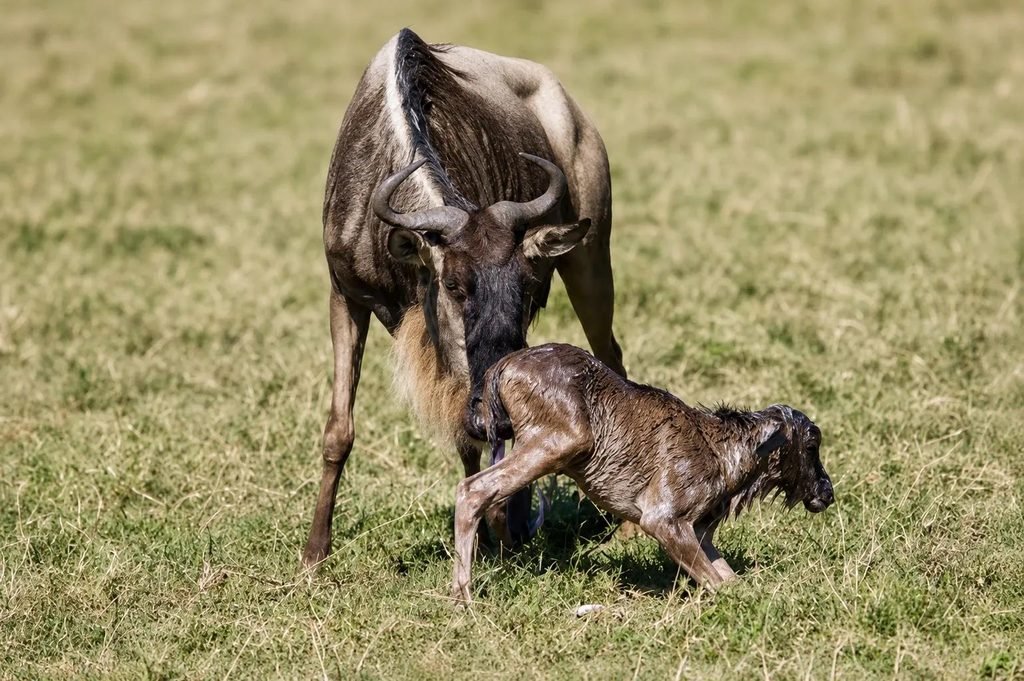
The southern Serengeti and Ndutu plains are particularly important during the early months of the year. Large numbers of wildebeest gather on the short-grass plains, where many females give birth during the calving season. February is especially popular with wildlife photographers because of the concentration of animals and the possibility of observing newborn calves.
The presence of young wildebeest also attracts predators, including lions, cheetahs, and hyenas. Visitors may witness hunting activity or other natural interactions between predators and grazing animals, although no particular encounter can be guaranteed.
For travelers planning a migration safari in January, February, or March 2027–2029, accommodation around Ndutu and the southern Serengeti is often a sensible choice.
April to May: Movement Through the Central Serengeti
As seasonal rainfall changes the availability of grazing areas, the wildebeest begin moving away from the southern plains. During this period, herds may spread through the central and western parts of the Serengeti.
The landscape is often green, and visitors may experience fewer safari vehicles than during the busiest months. However, rain can make some roads muddy and affect travel times.
A flexible itinerary that includes the central Serengeti can work well during this period, particularly for travelers who enjoy wildlife photography and quieter safari conditions.
June to July: Western Serengeti and Grumeti Region
During the middle of the year, migration activity may be concentrated in the western Serengeti and surrounding areas. Large herds move through the grasslands, and some animals encounter river systems such as the Grumeti.
This period can provide excellent opportunities to observe large groups of wildebeest moving together, along with zebras, gazelles, and predators. However, the exact timing of herd movements varies, and not every safari will include a river crossing.
Travelers visiting during June or early July should discuss the expected migration location with their safari operator before selecting accommodation.
July to October: Northern Serengeti and Mara River Crossings
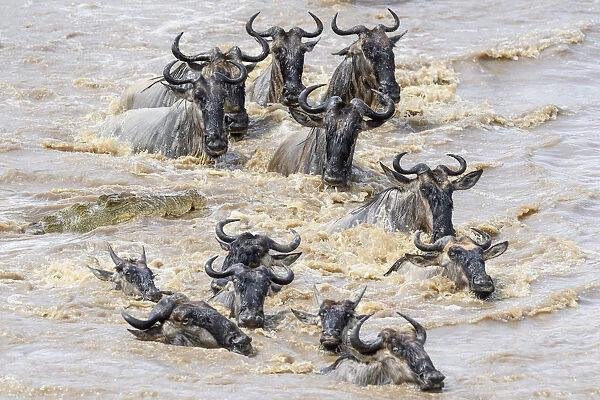
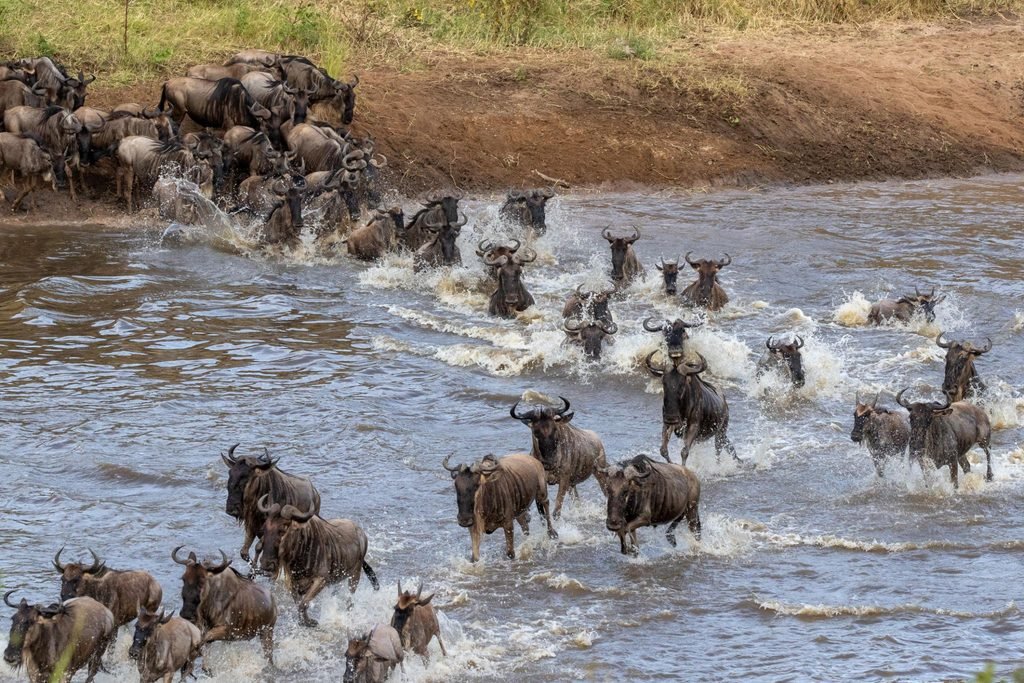
The northern Serengeti is particularly popular between July and October because of the possibility of witnessing wildebeest crossing the Mara River. These crossings are among the most dramatic events associated with the Great Migration, as large groups of animals gather near the river before attempting to reach the opposite bank.
Crocodiles may be present in the river, while the surrounding grasslands support predators and other wildlife. However, wildebeest do not cross according to a fixed timetable. Herds may gather for hours or days before moving, and sometimes they turn away without crossing.
For travelers whose main goal is a Mara River crossing, spending at least two or three nights in the northern Serengeti is often preferable to visiting the area for only one afternoon.
November to December: Return Toward the Southern Plains
As seasonal rainfall returns, the migration gradually shifts toward the eastern and southern Serengeti. The movement can be spread across a large area, making the exact herd location difficult to predict far in advance.
November and December can still provide rewarding wildlife viewing, particularly for travelers who enjoy green landscapes and want to avoid some of the busiest safari periods.
The best itinerary during these months should remain flexible and be planned using recent information from guides and camps operating in the Serengeti.
Serengeti Great Migration Calendar
| Month | Expected migration area | Main wildlife experience |
|---|---|---|
| January | Southern Serengeti and Ndutu | Large herds and early calving activity |
| February | Ndutu and southern plains | Calving season and predator activity |
| March | Southern and central Serengeti | Herd movement and remaining calving activity |
| April | Central Serengeti | Green landscapes and moving herds |
| May | Central and western Serengeti | Migration movement toward western areas |
| June | Western Corridor and Grumeti | Large herds and possible river activity |
| July | Western and northern Serengeti | Northern movement and possible crossings |
| August | Northern Serengeti | Mara River crossing opportunities |
| September | Northern Serengeti | River crossing opportunities |
| October | Northern and eastern Serengeti | Migration activity and return movement |
| November | Eastern and central Serengeti | Herds moving toward southern areas |
| December | Southern and eastern Serengeti | Return toward calving grounds |
This calendar is a general guide rather than a fixed schedule. Actual herd movements may differ in 2027, 2028, and 2029.
Best Serengeti Great Migration Safari Packages for 2027–2029
Eddy Tours & Safaris can help travelers compare different migration safari durations based on the season, budget, and preferred accommodation.
3-Day Serengeti Great Migration Safari
A three-day migration safari is suitable for travelers with limited time who want a short introduction to the Serengeti. Depending on the departure location and transport arrangements, the itinerary may focus mainly on the central Serengeti or include a fly-in option to reach a specific migration area more quickly.
Because the Serengeti is a large national park, a short safari may involve substantial travel time. Travelers should understand that three days provide fewer opportunities to follow moving herds, particularly when the migration is concentrated in remote northern areas.
Estimated planning budget: $850–$3,500+ per person, depending on accommodation and transport.
4-Day Serengeti Migration Safari
A four-day safari allows more time for wildlife viewing than a three-day itinerary. Travelers may spend additional time in the Serengeti or combine the park with another northern Tanzania destination.
This option can work well for visitors who want to experience the migration while keeping their overall travel schedule relatively short. However, the itinerary should be designed around the expected location of the herds rather than trying to cover too many parks in a limited period.
Estimated planning budget: $1,100–$4,500+ per person.
5-Day Serengeti Great Migration Safari
A five-day safari is a popular choice for travelers who want a balance between wildlife viewing and overall cost. The itinerary can include several game drives in the Serengeti, with accommodation selected according to the expected migration location.
During the calving season, a five-day safari may focus on Ndutu and the southern Serengeti. During the northern migration season, the itinerary may prioritize the Kogatende area, although reaching the north by road requires careful planning.
Estimated planning budget: $1,350–$5,500+ per person.
6-Day Serengeti Wildebeest Migration Safari
A six-day migration safari provides additional flexibility and may allow travelers to combine Serengeti National Park with Ngorongoro Crater. This duration is particularly attractive to visitors who want to see the wildebeest migration while also exploring other wildlife habitats in northern Tanzania.
With more time available, the itinerary can include multiple nights in the Serengeti and longer game drives in areas where the herds are expected to be. The extra day can make the overall safari less rushed compared with shorter packages.
Estimated planning budget: $1,600–$6,500+ per person.
7-Day Serengeti Great Migration Safari
A seven-day migration safari is one of the best options for travelers who want a more complete wildlife experience. The itinerary can include several days in the Serengeti, a visit to Ngorongoro Crater, and accommodation positioned close to the expected migration areas.
During the northern migration season, a seven-day itinerary may allow travelers to spend several nights near the Mara River. This provides more opportunities to observe the herds and reduces the pressure to see a crossing during a single game drive.
Estimated planning budget: $1,900–$7,500+ per person.
8-Day Serengeti Migration Safari
An eight-day safari is suitable for travelers who prefer a more relaxed schedule and want to explore several wildlife destinations. Depending on the season, the itinerary may combine Tarangire, Ngorongoro Crater, the central Serengeti, and the northern or southern migration areas.
This duration is especially useful for wildlife photographers and travelers who prefer spending more time observing animals rather than moving between accommodation locations every day.
Estimated planning budget: $2,200–$8,500+ per person.

Sample 7-Day Serengeti Great Migration Safari Itinerary
The following itinerary is an example designed for the northern Serengeti migration season, generally July to October. For January to March departures, the itinerary should be adjusted to focus on Ndutu and the southern Serengeti instead.
Day 1: Arrival in Arusha, Tanzania
Your Tanzania safari begins with your arrival at Kilimanjaro International Airport or Arusha Airport, depending on your travel arrangements. After meeting your driver or safari representative, you transfer to your accommodation in Arusha, where you can rest after your journey and prepare for the adventure ahead.
Arusha is the main starting point for many northern Tanzania safaris. Depending on your arrival time, you may have an opportunity to explore the town or simply relax at your hotel. Your safari guide will explain the planned route, travel times, accommodation arrangements, and what to expect during the following days.
Accommodation: Arusha hotel
Meals: According to the confirmed package
Day 2: Arusha to Central Serengeti National Park
After breakfast, you begin your journey toward Serengeti National Park, traveling through the beautiful landscapes of northern Tanzania. Depending on the selected route, the drive may pass through the Ngorongoro Conservation Area before continuing toward the central Serengeti. The journey offers views of highland scenery, open plains, and rural communities along the way.
Upon entering the Serengeti, the landscape opens into extensive grasslands dotted with acacia trees and rocky formations. Your guide begins searching for wildlife, including elephants, giraffes, zebras, buffaloes, antelopes, and predators. The central Serengeti is known for its resident wildlife, making it an excellent place to begin the safari even when the main migration herds are farther north.
By late afternoon, you arrive at your lodge or tented camp, where you can relax and enjoy dinner while preparing for the following day’s journey.
Accommodation: Central Serengeti lodge or tented camp
Meals: Breakfast, lunch and dinner
Day 3: Central Serengeti to Northern Serengeti
After breakfast, you continue toward the northern Serengeti, where the landscape changes as you travel through different wildlife habitats. The drive itself becomes part of the safari, with opportunities to observe animals along the route and stop for photographs when conditions allow.
As you approach the northern region, your guide begins looking for signs of the migrating wildebeest herds. During the main northern migration season, large groups may be found grazing on the surrounding plains or gathering near water sources. The exact location depends on rainfall and grazing conditions, so the day’s route may be adjusted using recent wildlife information.
You arrive at your northern Serengeti accommodation later in the day. Staying in this area allows you to begin wildlife viewing close to the migration zone the following morning, rather than spending several hours driving from the central Serengeti.
Accommodation: Northern Serengeti tented camp or lodge
Meals: Breakfast, lunch and dinner
Day 4: Full-Day Great Migration Safari Near the Mara River
Today is dedicated to exploring the northern Serengeti and searching for the wildebeest migration. After an early breakfast, you leave camp with your guide and travel toward areas where the herds have recently been observed. The northern plains can support large numbers of wildebeest, zebras, and other grazing animals, as well as predators such as lions and hyenas.
If the herds are gathered near the Mara River, your guide may take you to an authorized viewing area where you can observe their behavior from a safe distance. River crossings are unpredictable, and animals may spend long periods waiting near the river before deciding whether to cross. Your guide will follow park regulations and avoid disturbing the wildlife.
Even if no crossing takes place, the northern Serengeti provides rewarding wildlife viewing opportunities. The day may include sightings of elephants, giraffes, buffaloes, antelopes, and various bird species, depending on animal movements and local conditions.
You return to camp in the evening for dinner and an overnight stay.
Accommodation: Northern Serengeti tented camp or lodge
Meals: Breakfast, lunch and dinner
Day 5: Northern Serengeti to Central Serengeti
After breakfast, you enjoy another game drive in the northern Serengeti before beginning the journey back toward the central region. The morning provides an additional opportunity to observe the migration herds or other wildlife that may be active near your camp.
As you travel south, your guide continues searching for animals across the open plains and river valleys. The Serengeti is home to a wide variety of wildlife throughout the year, so the safari remains interesting even when the main migration herds are concentrated elsewhere.
By late afternoon, you arrive at your accommodation in the central Serengeti. The evening is a good opportunity to review photographs, enjoy the surroundings, and prepare for the following day’s visit to Ngorongoro.
Accommodation: Central Serengeti lodge or tented camp
Meals: Breakfast, lunch and dinner
Day 6: Serengeti to Ngorongoro Conservation Area
After breakfast, you leave the Serengeti and travel toward the Ngorongoro Conservation Area. Depending on the itinerary and travel conditions, you may enjoy wildlife viewing during the early part of the journey before continuing toward the Ngorongoro highlands.
The scenery changes as the open Serengeti plains give way to greener highland landscapes. Ngorongoro is known for its volcanic history and the famous Ngorongoro Crater, which supports a remarkable concentration of wildlife.
You arrive at your accommodation in or near the conservation area, where you can relax before the following day’s crater safari.
Accommodation: Ngorongoro highlands lodge or nearby accommodation
Meals: Breakfast, lunch and dinner
Day 7: Ngorongoro Crater Safari and Return to Arusha
After an early breakfast, you travel toward Ngorongoro Crater for a wildlife viewing experience inside one of Tanzania’s most famous conservation areas. The crater floor contains grasslands, woodland, wetlands, and seasonal water sources that support a variety of animals.
During your game drive, you may encounter buffaloes, zebras, wildebeest, hippos, lions, elephants, and other wildlife. Black rhinos are also present in the crater, although sightings are never guaranteed. Your guide will help you explore the different habitats while explaining the area’s ecology and conservation importance.
After completing the crater visit, you begin the return journey toward Arusha, arriving later in the day. Depending on your travel schedule, you may transfer to your hotel or continue to the airport for your onward journey.
Meals: Breakfast and lunch
End of safari: Arusha
Budget, Mid-Range and Luxury Serengeti Migration Safaris
Budget Serengeti Migration Safari
A budget migration safari is designed for travelers who want to experience Tanzania’s wildlife while keeping accommodation costs relatively low. These packages commonly use public campsites, simpler meals, and shared transport arrangements where available.
Budget camping can be an excellent way to experience the Serengeti, but travelers should understand the facilities before booking. Campsite accommodation is generally more basic than lodge accommodation, and some services may be shared.
A budget safari is particularly attractive to adventurous travelers who prioritize game drives and wildlife viewing over luxury facilities.
Mid-Range Serengeti Migration Safari
Mid-range safaris provide a balance between comfort and affordability. Accommodation usually consists of tented camps or lodges with private bathrooms, comfortable beds, and dining facilities.
This category is popular with couples, families, and small groups who want a comfortable place to relax after a full day of wildlife viewing without paying premium luxury rates.
For many travelers planning a five- to seven-day migration safari, a mid-range package offers good value, especially when accommodation is selected close to the expected migration area.
Luxury Serengeti Migration Safari
Luxury safaris focus on premium accommodation, personalized service, and convenient access to wildlife viewing areas. Depending on the package, guests may stay in high-end tented camps or lodges with spacious rooms, private facilities, carefully prepared meals, and additional services.
Some luxury packages include domestic flights, allowing travelers to reach remote parts of the Serengeti without spending long hours driving from Arusha.
Luxury safaris are particularly popular for honeymoons, anniversaries, photography trips, and special family holidays.
What Is Included in a Serengeti Great Migration Safari Package?
A typical Serengeti migration safari package may include accommodation, meals during the safari, transport in a 4×4 safari vehicle, a professional safari guide, scheduled game drives, and applicable park or conservation fees. Some packages also include airport transfers and accommodation in Arusha before or after the safari.
The exact services depend on the selected itinerary and accommodation category. Private safaris generally provide exclusive use of the vehicle and guide, while group safaris may involve sharing transport with other travelers.
Items commonly excluded unless specifically stated include international flights, Tanzania visa fees, travel insurance, personal expenses, alcoholic beverages, tips, optional activities, and domestic flights. Travelers should request a written quotation showing the full list of inclusions and exclusions before confirming a booking.
How to Save Money on a Serengeti Migration Safari
One of the simplest ways to reduce safari costs is to travel with friends or family members who can share the same vehicle. Since vehicle and guide expenses are divided among the group, the per-person price may be lower than booking a private safari for one or two travelers.
Choosing suitable mid-range accommodation instead of premium luxury camps can also reduce costs without removing the main wildlife experience. The important consideration is location. A comfortable camp close to the expected migration area may provide better value than a cheaper property requiring long daily transfers.
Travelers with flexible dates may find better accommodation options during quieter periods. However, the safari should still be planned around the wildlife experience they want. If your main goal is seeing newborn wildebeest, traveling during the southern calving season is more important than selecting the cheapest available month.
Booking early can also help with accommodation choices, particularly during the popular northern migration months. For 2027, 2028, and 2029, request quotations in advance and confirm the applicable payment terms before making a reservation.
Is a Serengeti Migration Safari Worth the Price?
A Serengeti migration safari can be one of the most rewarding wildlife experiences in Tanzania because it offers the opportunity to observe large animal herds and the natural interactions between grazers and predators. Unlike wildlife experiences based on scheduled activities, the Great Migration follows the animals’ own movements, which makes each safari different.
The value of the experience depends on choosing the right season, allowing enough time, and staying in a suitable location. A well-planned five- or seven-day safari may provide better wildlife viewing opportunities than a longer itinerary that spends too much time traveling between distant parks.
For travelers interested in wildlife photography, the migration can be particularly rewarding because it offers changing landscapes, animal behavior, and opportunities to observe large groups of wildebeest. However, patience is important, and no tour operator can guarantee a particular crossing or predator encounter.
Frequently Asked Questions About Serengeti Great Migration Safaris
1. How much does a Serengeti Great Migration safari cost?
The price depends on safari duration, accommodation standard, group size, season, and transport arrangements. A five-day safari may cost approximately $1,350 to more than $5,500 per person, depending on the package. These are planning estimates, not confirmed future rates.
2. What is the best month to see the Great Migration?
The best month depends on what you want to see. February is popular for calving, while August and September are often chosen for Mara River crossing opportunities.
3. Can I see the Great Migration in January?
Yes. January is generally a good time to visit the southern Serengeti and Ndutu region, where large herds may gather before and during the calving season.
4. Is February a good month for a migration safari?
Yes. February is particularly popular for wildebeest calving and the predator activity associated with large numbers of young animals.
5. When do wildebeest cross the Mara River?
Crossings are commonly associated with July to October, but the exact timing varies according to herd movements and environmental conditions.
6. Are Mara River crossings guaranteed?
No. Wildebeest cross naturally and unpredictably. No operator can guarantee a crossing on a particular date.
7. How many days should I spend on a migration safari?
Five to seven days is a practical duration for many travelers, although longer itineraries provide more flexibility.
8. Is a three-day Serengeti safari enough?
Three days can provide a useful introduction to the Serengeti, but the time available for migration viewing may be limited, especially when traveling by road.
9. Is a seven-day migration safari better than five days?
Seven days generally allows more time for game drives, travel between wildlife areas, and accommodation near the expected migration location.
10. Can I see the Great Migration throughout the year?
The migration is a year-round movement, but the main herds are found in different regions at different times.
11. Where is the Great Migration in February?
The southern Serengeti and Ndutu plains are generally the main areas to consider.
12. Where is the Great Migration in August?
The northern Serengeti and Mara River region are commonly important during August.
13. Where is the Great Migration in December?
The herds are generally moving toward the eastern and southern Serengeti, depending on rainfall.
14. Is the Serengeti migration suitable for families?
Yes. Family safaris can be arranged with suitable accommodation and an itinerary that considers children’s ages and travel needs.
15. Can I book a private migration safari?
Yes. Private safaris allow travelers to use their own vehicle and guide, subject to the confirmed arrangements.
16. Are group migration safaris cheaper?
They can be more affordable because transport and guiding expenses are shared among several travelers.
17. What is the difference between budget and luxury safaris?
The main differences involve accommodation, service levels, transport arrangements, and additional comforts. Wildlife sightings are never guaranteed in either category.
18. Can I combine Serengeti with Ngorongoro Crater?
Yes. Many migration safari itineraries include Ngorongoro Crater because it is one of northern Tanzania’s major wildlife destinations.
19. Can I combine Serengeti with Tarangire National Park?
Yes. Tarangire is often included in longer northern Tanzania safari itineraries.
20. Is a fly-in migration safari worth considering?
A fly-in safari can save travel time and is particularly useful for visitors who want to reach remote migration areas quickly.
21. Do I need travel insurance for a Tanzania safari?
Travel insurance is strongly recommended, including appropriate medical and travel disruption coverage.
22. How early should I book a 2027 migration safari?
Booking several months in advance is useful, especially for popular migration seasons and camps with limited accommodation.
23. Can I book a Serengeti migration safari for 2028?
Yes. You can request a customized itinerary and quotation for 2028, subject to confirmation of future rates and availability.
24. Can I plan a Serengeti migration safari for 2029?
Yes. Early planning is possible, although accommodation prices, park fees, and other costs may change before 2029.
25. How do I get an exact Serengeti migration safari price?
Contact your safari operator with your preferred travel dates, number of travelers, accommodation category, and desired safari duration.
Book Your Serengeti Great Migration Safari for 2027, 2028 or 2029
The Serengeti Great Migration offers travelers the opportunity to experience one of Africa’s most remarkable wildlife movements. From the wildebeest calving season in the southern plains to the movement through the western Serengeti and the dramatic Mara River crossing season in the north, each period provides a different reason to visit.
Choosing the right safari package involves more than comparing prices. The travel month, expected migration location, accommodation standard, and number of days spent in the Serengeti all influence the overall experience. A carefully planned itinerary should provide enough time for wildlife viewing while avoiding unnecessary long-distance travel between camps.
At Eddy Tours & Safaris, we help travelers organize Serengeti Great Migration safaris for 2027, 2028, and 2029. Whether you prefer a budget camping adventure, a comfortable mid-range safari, or a luxury wildlife holiday, our team can help you compare suitable options and prepare a personalized quotation.
Request Your Serengeti Great Migration Safari Quotation
Chat with Eddy Tours & Safaris on WhatsApp
Email: sales@eddytours-safaris.com
Contact our team with your preferred travel month, number of travelers, and safari budget to start planning your Serengeti Great Migration adventure in Tanzania.
1 Comment
Comments are closed.