
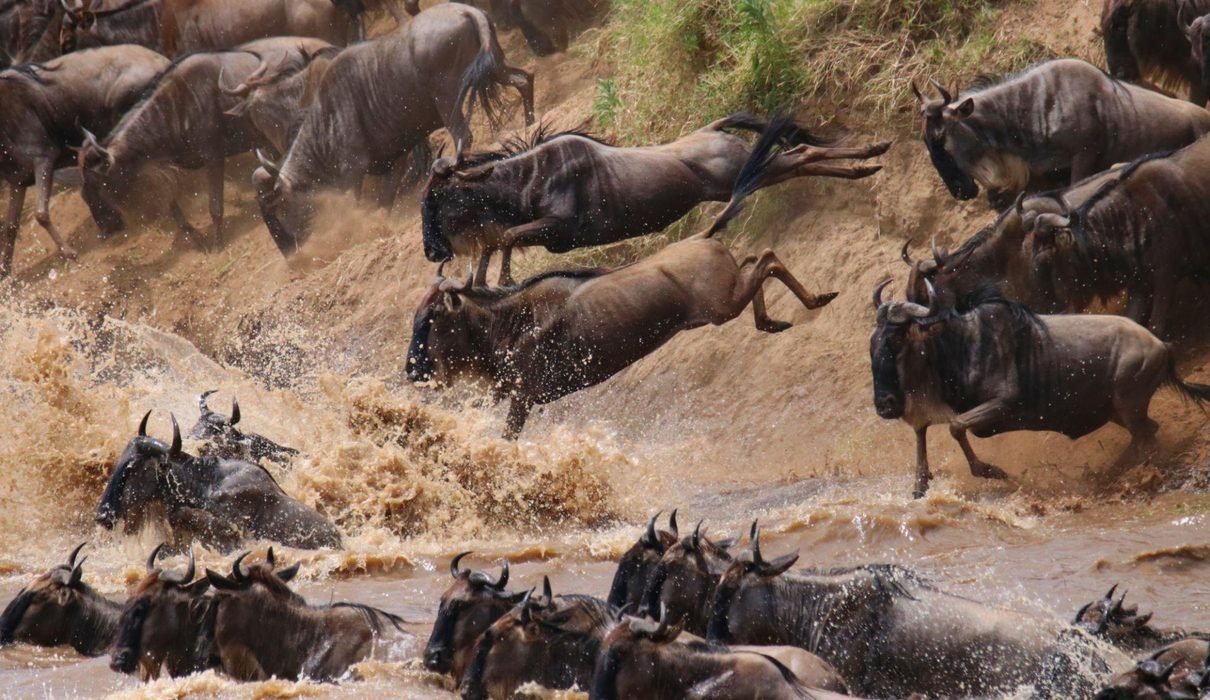
The Serengeti Wildebeest Migration in 2027 is expected to attract thousands of travellers to Tanzania, particularly those interested in seeing large wildebeest herds, newborn calves, predators, and the famous Mara River crossings. Every year, wildebeest move across the Serengeti ecosystem in search of fresh grass and water, accompanied by large numbers of zebras and gazelles. Their journey takes them through different parts of Serengeti National Park and neighbouring wildlife areas before some herds enter Kenya’s Maasai Mara National Reserve.
For travellers planning a Tanzania safari in 2027, understanding the migration’s seasonal movements is important because the animals do not remain in one location throughout the year. The southern Serengeti and Ndutu area are particularly important during the calving season, while the western and northern regions become popular as the herds move towards the Grumeti and Mara rivers. Visitors who want to see river crossings need a different itinerary from those interested in photographing newborn wildebeest or large herds grazing on the southern plains.
The Serengeti is one of Africa’s most important wildlife conservation areas and has been recognised as a UNESCO World Heritage Site since 1981. Its extensive grasslands, woodland habitats, rivers, and seasonal grazing areas support one of the world’s largest remaining terrestrial wildlife migrations. According to UNESCO’s Serengeti National Park information, the migration and the park’s large predator populations are among the main reasons for its international conservation importance.
This updated Serengeti migration guide explains where the wildebeest are generally found throughout the year, the best months to visit in 2027, how to choose accommodation, recommended safari itineraries, transport options, expected costs, and practical advice for planning your holiday. Whether you are visiting Tanzania for the first time or returning to explore another part of the Serengeti, understanding these details will help you choose a safari that suits your travel dates and interests.
What Is the Serengeti Great Wildebeest Migration?
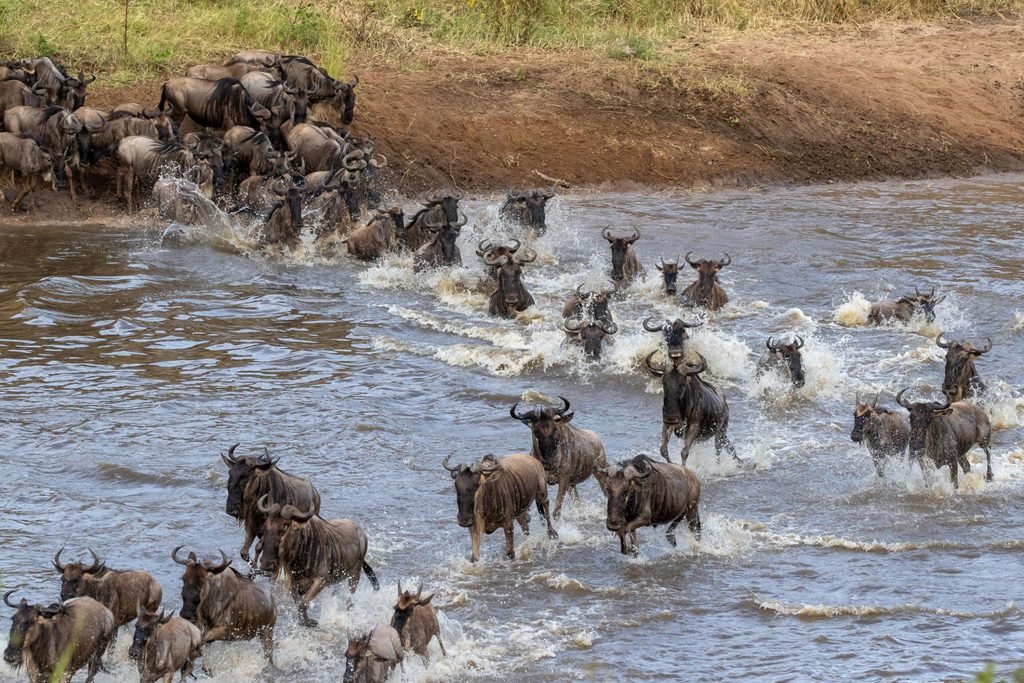
The Great Wildebeest Migration is the seasonal movement of enormous herds of wildebeest across the Serengeti-Mara ecosystem in Tanzania and Kenya. The animals move in response to rainfall, fresh grass, and the availability of water. Zebras and gazelles also participate in these seasonal movements, although different species do not always follow exactly the same routes or travel together.
The migration is often described as a circular journey, but it is not a perfectly organised movement in which every animal travels in the same direction at the same time. Herds frequently separate, gather in different areas, and change direction according to local conditions. Some animals may reach the northern Serengeti while others remain in central or western areas, which is why the location of the migration can vary considerably during the same month.
The movement of these animals also supports a large predator population. Lions, cheetahs, leopards, hyenas, and crocodiles depend on the wider wildlife ecosystem, although not all predators follow the migrating herds. Many lions and leopards remain within established territories throughout the year, providing wildlife-viewing opportunities even when the main migration has moved elsewhere.
For visitors, the migration offers several different experiences. During the calving season, the southern plains become important breeding grounds, while the northern Serengeti is associated with the possibility of watching herds cross the Mara River. Between these periods, large groups of wildebeest may be encountered travelling through central and western Serengeti.
The Tanzania National Parks Authority’s Great Migration guide provides additional information about this annual movement and its importance to Tanzania’s wildlife tourism.
Serengeti Wildebeest Migration Calendar 2027
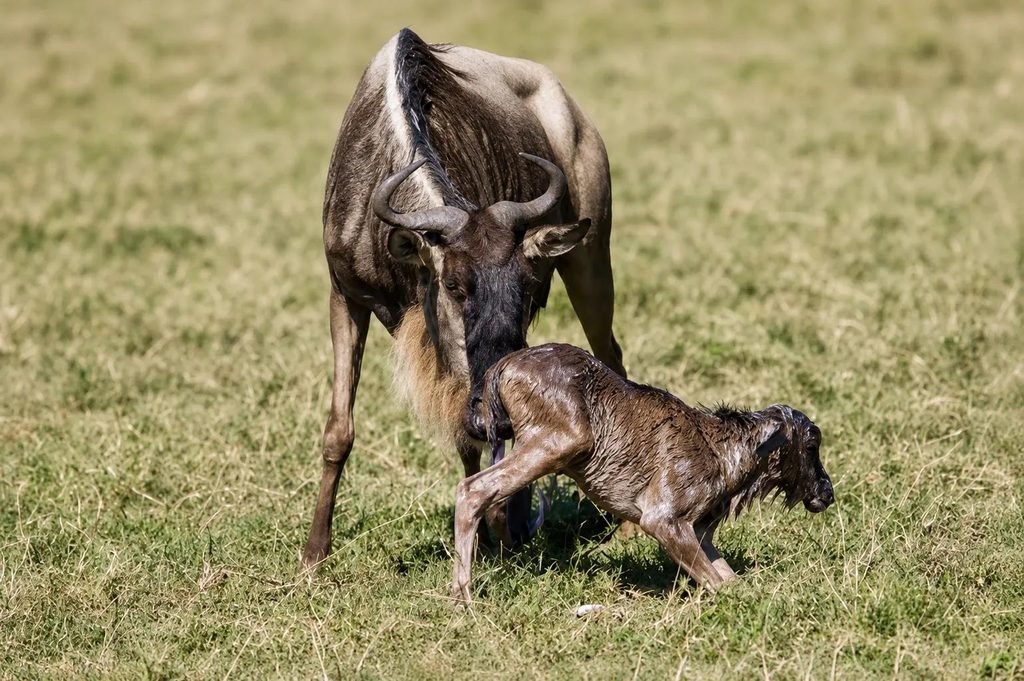
The migration calendar is one of the most useful tools for planning a Serengeti safari. However, it should be treated as a general seasonal guide rather than a fixed schedule. The animals respond to natural conditions, particularly rainfall and grazing availability, and their movements may change from one year to another.
The following table shows the areas where migrating herds are commonly found during different months. It can help you decide which part of the Serengeti to visit in 2027 and what type of wildlife experience to expect.
| Month | Expected Migration Location | Main Wildlife Experience |
|---|---|---|
| January | Southern Serengeti and Ndutu | Large herds gathering on the short-grass plains |
| February | Ndutu and southern Serengeti | Main wildebeest calving period and predator activity |
| March | Southern and central Serengeti | Herds with young calves and seasonal movement |
| April | Central and southern Serengeti | Green landscapes and migrating herds |
| May | Central and western Serengeti | Herd movements towards western grazing areas |
| June | Western Corridor and Grumeti region | Large herds and possible Grumeti River crossings |
| July | Western and northern Serengeti | Northward movement and possible early Mara River crossings |
| August | Northern Serengeti and Mara River | Large herds and possible river crossings |
| September | Northern Serengeti and Maasai Mara ecosystem | River-crossing opportunities and northern migration activity |
| October | Northern Serengeti and surrounding areas | Late northern migration activity |
| November | Central and eastern Serengeti | Herds beginning their return towards southern areas |
| December | Southern and central Serengeti | Seasonal movement towards the southern plains |
Important: This is a typical annual pattern, not a prediction of exact herd locations for 2027. Rainfall can bring the animals into a region earlier or later than expected, and different groups may occupy several areas at the same time.
January to March 2027: Southern Serengeti and Ndutu Calving Season
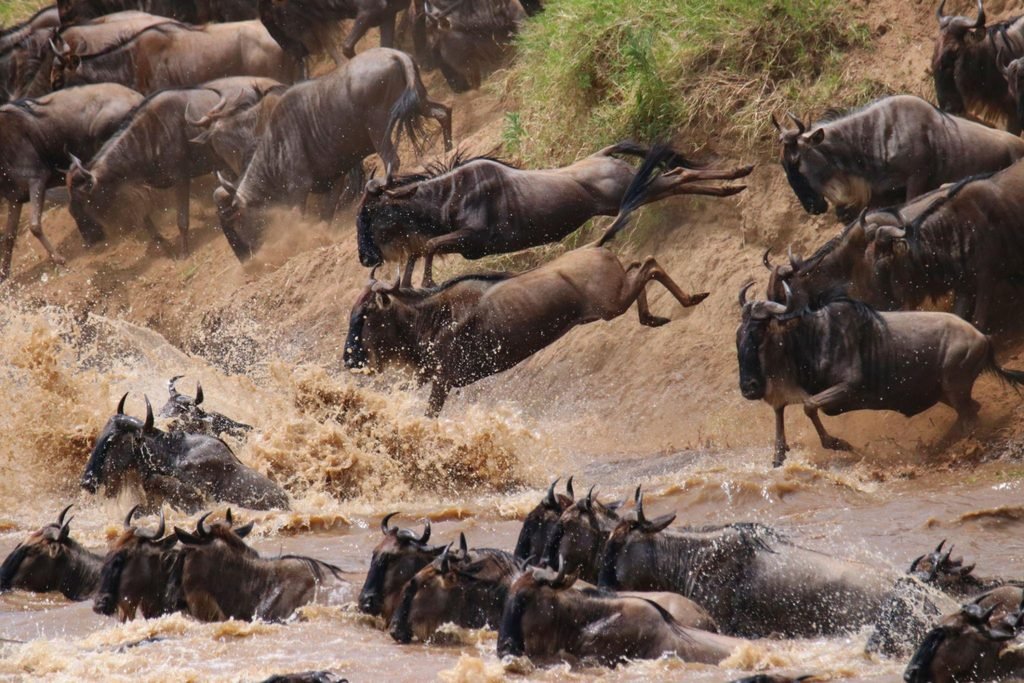
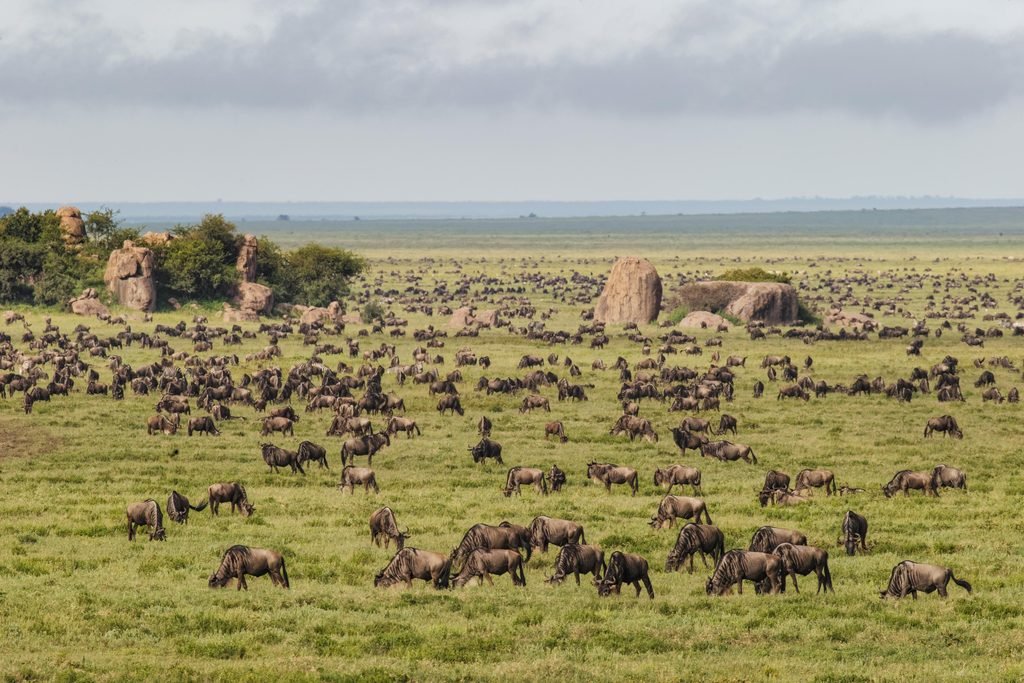
January, February, and March are important months for travellers interested in the southern Serengeti and Ndutu region. During this period, large wildebeest herds commonly gather on the short-grass plains, where seasonal rainfall supports fresh grazing. These areas provide suitable conditions for wildebeest to give birth, making the calving season one of the most interesting stages of the annual migration.
February is generally associated with the main calving period, although births may begin earlier or continue into March depending on environmental conditions. Large numbers of calves can be born within a relatively short period, and visitors may observe young wildebeest learning to stand, follow their mothers, and move with the herd. The concentration of animals also attracts predators, creating opportunities to observe lions, cheetahs, and hyenas searching for prey.
The Ndutu region is particularly suitable for wildlife photography because its open landscapes provide opportunities to observe animal behaviour across large distances. However, travellers should understand that Ndutu lies partly within the Ngorongoro Conservation Area, and safari arrangements must account for the relevant conservation regulations and accommodation locations.
For a trip focused on this season, choosing accommodation around Ndutu or the southern Serengeti is generally more practical than staying in the northern Serengeti. Visitors should allow several days in the area because animal movements and predator sightings change daily.
April to May 2027: Migration Through Central and Western Serengeti
As seasonal conditions change, wildebeest herds gradually begin moving away from the southern plains towards central and western parts of the Serengeti. April and May are generally associated with wetter conditions in northern Tanzania, although rainfall varies between years and locations.
During this period, the landscape can become particularly green, with fresh grass covering large sections of the plains. Migrating wildebeest may gather in sizeable groups, while zebras and other grazing animals move through the same areas. The scenery is attractive for photography, especially when clouds, grasslands, and wildlife create contrasting landscapes.
Travelling during the wetter months can also mean fewer visitors in some parts of the Serengeti. However, heavy rainfall may affect road conditions, and some seasonal accommodation properties may close temporarily. Travellers considering an April or May safari should confirm the accessibility of their preferred destinations before making reservations.
The central Serengeti remains a useful destination during this period because it supports resident wildlife populations, including lions, leopards, cheetahs, elephants, and giraffes. Even when the migrating herds are spread across different areas, game drives around Seronera can provide opportunities to observe wildlife.
June to July 2027: Western Corridor and Grumeti River
June and July are commonly associated with the movement of wildebeest through the western Serengeti and towards the northern parts of the ecosystem. During suitable conditions, large herds may gather around the Western Corridor, where the Grumeti River and surrounding habitats form part of the migration route.
The Grumeti River is known for its crocodiles and occasional wildebeest crossings. However, these crossings differ from the more widely publicised Mara River events and should not be expected on a particular day. Water levels, herd movements, and rainfall all influence whether animals cross at a given location.
The western Serengeti also supports other wildlife, including elephants, buffaloes, giraffes, lions, and various antelope species. Travellers visiting this region can therefore enjoy a broader safari experience rather than concentrating exclusively on the migration.
By July, some herds may already have reached the northern Serengeti, while others remain farther south or west. Visitors travelling during this transitional period should discuss the most suitable accommodation location with their safari operator before confirming the itinerary.
August to October 2027: Northern Serengeti and Mara River Crossings
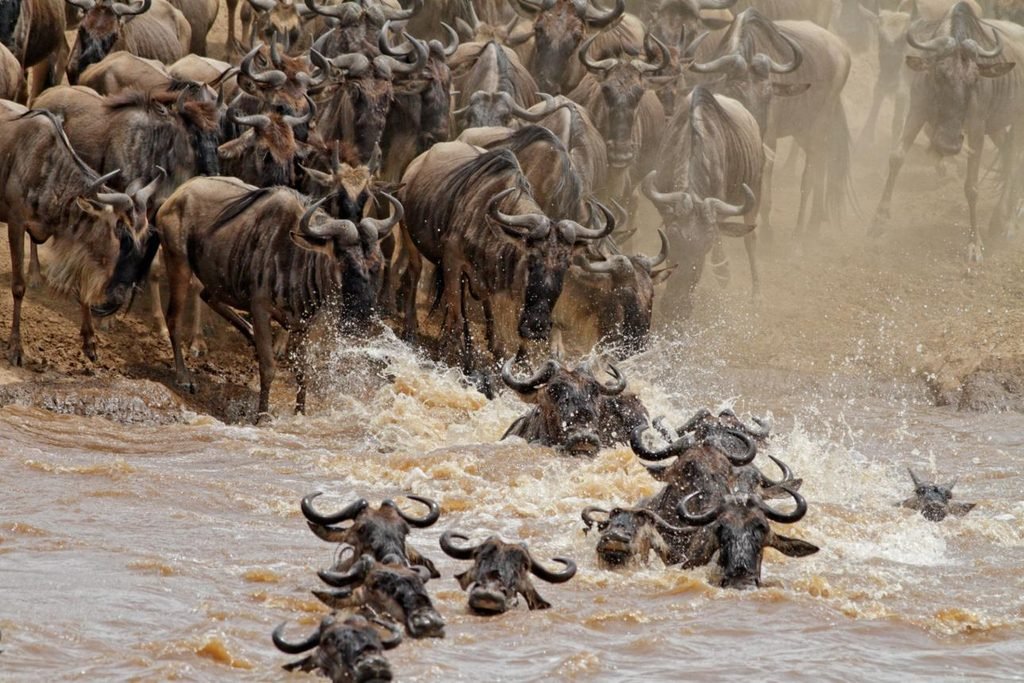
August, September, and parts of October are among the most popular periods for travellers interested in the northern Serengeti and the possibility of witnessing wildebeest crossing the Mara River. During suitable seasonal conditions, large herds may gather near the river before moving between grazing areas in Tanzania and Kenya.
The Mara River presents several natural obstacles, including steep banks, flowing water, and crocodiles. Wildebeest may gather near a crossing point for a considerable time before entering the water, and some groups may turn away without crossing. On other occasions, large numbers of animals may cross within a short period.
Although the river crossings attract considerable attention, they are not guaranteed. A traveller may spend several days in the northern Serengeti without witnessing a crossing, while another visitor may encounter one during a morning game drive. For this reason, a well-planned itinerary should include enough time to explore different areas rather than promising a specific crossing event.
The northern Serengeti is also a large region, and choosing accommodation near suitable game-drive areas can reduce unnecessary travel. Kogatende and nearby northern safari areas are commonly used as bases for migration-focused safaris during this period.
Tanzania National Parks has established specific guidelines for wildlife viewing near the Mara River. These include designated vehicle-viewing areas and restrictions intended to prevent vehicles from interfering with animal movements. Travellers can review the official Mara River Migration Crossing Guidelines before their safari.
November to December 2027: Wildebeest Return Towards Southern Serengeti
During November and December, seasonal rainfall often encourages migrating wildebeest to move back towards central and southern parts of the Serengeti ecosystem. Fresh grass begins to develop in suitable grazing areas, and the herds gradually spread across different regions as they respond to changing conditions.
This period is sometimes overlooked by travellers who associate the migration only with river crossings. However, the return movement can provide rewarding wildlife experiences, particularly for visitors interested in large herds, green landscapes, and predator activity.
The exact location of the wildebeest during these months can be difficult to predict because the timing and distribution of rainfall vary. Some herds may reach southern areas relatively early, while others remain in central or eastern parts of the ecosystem.
Travellers visiting in November or December should therefore choose flexible itineraries that allow their guide to explore suitable wildlife areas. The central Serengeti can be a practical base for general wildlife viewing, while southern accommodation may become more attractive as the herds move towards the calving grounds.
Where Is the Best Place to See the Wildebeest Migration in 2027?
Choosing the right Serengeti region is one of the most important decisions when planning a migration safari. The park covers approximately 14,763 square kilometres, and travelling between its main wildlife areas can take several hours. Staying in the wrong region may mean spending much of your safari driving towards the animals rather than observing them.
Southern Serengeti and Ndutu
The southern Serengeti and Ndutu region are generally the best choices for travellers visiting during the calving season. The short-grass plains provide important grazing areas, while the concentration of wildebeest creates opportunities to observe calves, predators, and large herds.
Accommodation in this region includes seasonal tented camps and established lodges. Some camps operate primarily during the calving period, so availability should be checked according to your travel dates.
Central Serengeti and Seronera
Central Serengeti is one of the most practical areas for general wildlife viewing throughout the year. The Seronera Valley supports resident populations of lions, leopards, cheetahs, elephants, giraffes, and other species, making it suitable for visitors who want to see more than the migrating herds.
Although the migration may pass through central Serengeti during certain periods, the area is particularly valuable because wildlife remains present even when the main herds are elsewhere.
Western Serengeti and Grumeti
The western Serengeti is associated with the seasonal movement of wildebeest through the Western Corridor. Its river systems, woodland, and grasslands provide different habitats from the open southern plains.
Travellers visiting during late May, June, or early July may consider this region, depending on the expected movement of the herds. However, accommodation should be selected carefully because the Western Corridor covers a considerable area.
Northern Serengeti and Kogatende
The northern Serengeti is the main destination for visitors interested in possible Mara River crossings. During the appropriate season, wildebeest may gather near different crossing points before moving across the river.
Staying near Kogatende or another suitable northern location can reduce travel time to important game-drive areas. Visitors should consider spending at least three nights in the region, particularly if river crossings are their main interest.
For more information about Tanzania’s main wildlife habitats, see the official Serengeti National Park wildlife guide.
Best Time to Visit Serengeti for the Great Migration in 2027
The best time to visit the Serengeti depends on the type of migration experience you want. There is no single month that guarantees the best wildlife viewing for every traveller because the migration includes several different stages throughout the year.
Visitors interested in newborn wildebeest and predator activity should generally consider January and February, when the southern Serengeti and Ndutu region are commonly associated with the calving season. Travellers interested in large moving herds may consider the central and western regions during the middle months of the year, while those hoping to witness Mara River crossings usually focus on the northern Serengeti between July and October.
August and September are particularly popular for northern Serengeti safaris, but this popularity can result in higher accommodation demand. Booking well in advance is advisable for travellers who want to stay in a particular camp or lodge near the Mara River.
It is also important to consider your broader safari interests. If your priority is photographing lions, leopards, and cheetahs rather than witnessing a river crossing, central Serengeti may provide rewarding opportunities during different months. Similarly, travellers interested in green landscapes and fewer vehicles may prefer selected periods outside the busiest season.
How Many Days Do You Need for a Serengeti Migration Safari?
The number of days required for a Serengeti migration safari depends on the region you want to visit and how you plan to travel. A short fly-in safari can provide more time in a specific wildlife area, while a road safari from Arusha generally requires additional travel time.
For visitors interested in the calving season around Ndutu, a five- or six-day itinerary can provide a practical opportunity to explore the southern Serengeti and combine it with Ngorongoro Crater. Travellers interested in the northern Serengeti should consider a longer road itinerary or a domestic flight because the distance from Arusha to Kogatende is considerable.
A seven- or eight-day safari is often suitable for travellers who want to explore the Serengeti without rushing between destinations. However, visitors with limited time can consider a four-day fly-in safari focused on one migration region.
Eddy Tours & Safaris offers different migration-focused itineraries, including a 4-Day Serengeti Migration Safari and an 8-Day Serengeti Wildebeest Migration Safari. These options provide useful starting points for choosing a trip according to your available time and preferred travel arrangements.
Suggested 7-Day Serengeti Wildebeest Migration Safari Itinerary
A seven-day safari provides enough time to combine important wildlife destinations in northern Tanzania while spending several days in the Serengeti. The following itinerary is suitable as a general road-based example, particularly when the main migration-viewing area is accessible from central or southern Serengeti. For northern Serengeti river crossings, the itinerary should be adjusted to include additional travel time or domestic flights.
Day 1: Arrival in Arusha
Upon arrival at Kilimanjaro International Airport, your driver will meet you and transfer you to your accommodation in Arusha. Depending on your arrival time, you may relax after your international flight or explore part of the town. Your safari guide will explain the planned route, expected driving times, accommodation arrangements, and the wildlife areas you will visit during the following days.
Day 2: Arusha to Tarangire National Park
After breakfast, depart Arusha and travel towards Tarangire National Park. The park is known for its elephants, baobab trees, and seasonal wildlife concentrations, particularly around the Tarangire River. During your game drive, you may encounter elephants, giraffes, buffaloes, zebras, antelopes, and different bird species. After exploring the park, continue to your accommodation near Tarangire or Karatu for dinner and an overnight stay.
Day 3: Karatu to Serengeti National Park
Following breakfast, travel through the Ngorongoro highlands towards Serengeti National Park. The journey passes through changing landscapes, from cultivated highland areas to open grasslands. After entering the Serengeti, enjoy a game drive while travelling towards your accommodation. Depending on the season, you may begin encountering migrating wildebeest or resident wildlife during the afternoon.
Day 4: Full-Day Serengeti Migration Safari
Spend the day exploring suitable wildlife areas with your professional safari guide. The route will depend on the season and the expected location of the migrating herds. During the calving season, the focus may be on the southern plains, while other periods may involve exploring central or western areas. Your guide will also search for lions, leopards, cheetahs, elephants, and other wildlife encountered along the way.
Day 5: Another Full Day in Serengeti National Park
A second full day in the Serengeti allows more time to explore different habitats and observe wildlife behaviour. Rather than rushing from one sighting to another, you can spend time watching large herds, photographing animals, and exploring suitable game-drive routes. If the migration is nearby, your guide may focus on areas where wildebeest are gathering or moving between grazing locations.
Day 6: Serengeti to Ngorongoro Conservation Area
After breakfast, enjoy a final game drive while travelling out of Serengeti National Park towards Ngorongoro. The journey passes through open plains and gradually climbs into the cooler highland environment. Depending on your accommodation arrangements, you will spend the night near the crater rim or in Karatu, preparing for the following day’s visit.
Day 7: Ngorongoro Crater Game Drive and Return to Arusha
Begin the day early and descend into Ngorongoro Crater for a game drive. The crater supports lions, elephants, buffaloes, zebras, wildebeest, hippos, and numerous bird species. Visitors may also have an opportunity to observe the endangered black rhinoceros, although sightings are never guaranteed. After the game drive, return to Arusha, where your safari ends.
Travellers planning to visit the northern Serengeti during August or September should discuss a different route that allows several nights near the Mara River. A northern migration safari should not be treated as a simple extension of a central Serengeti itinerary because the additional driving distances can reduce the time available for wildlife viewing.
Serengeti Migration Safari by Road or Domestic Flight
Most Serengeti safaris begin in Arusha, the main tourism centre for northern Tanzania. Travellers can reach the Serengeti by road or by domestic flight, depending on their budget, available time, and preferred safari region.
A road safari allows visitors to travel through different landscapes and combine destinations such as Tarangire, Ngorongoro, and Serengeti. However, reaching central Serengeti from Arusha commonly takes around seven to eight hours or longer, depending on the route, road conditions, and stops. Travelling to the northern Serengeti requires considerably more time.
Domestic flights can reduce long road transfers, particularly for visitors travelling to Kogatende, Seronera, or Ndutu during the appropriate season. Flights generally operate according to airline schedules and seasonal demand, so availability should be confirmed before booking.
For travellers with only four or five days available, flying into the migration region can provide more time for game drives. Visitors with seven or eight days may prefer a road safari that combines several national parks, provided the itinerary allows enough time in the Serengeti.
The official Serengeti Visitor Guide provides further information about park access, accommodation, and visitor requirements.
Where to Stay During the Serengeti Migration in 2027
Accommodation location is one of the most important factors when booking a migration safari. A comfortable lodge may offer excellent facilities, but if it is several hours away from the wildlife area you want to visit, much of your day may be spent travelling.
The Serengeti offers different accommodation categories, including public campsites, budget tented camps, mid-range lodges, mobile migration camps, and luxury properties. Each category provides a different level of comfort, but the most suitable choice depends on your preferred location, travel season, and available budget.
During the calving season, accommodation around Ndutu and the southern Serengeti can provide convenient access to the short-grass plains. For central Serengeti wildlife viewing, camps and lodges around Seronera are practical choices. During the northern migration period, accommodation near Kogatende and other northern game-drive areas is often preferable for visitors interested in the Mara River.
Mobile migration camps are particularly useful because some operators position their camps seasonally to provide access to different migration regions. However, these properties can have limited capacity, and popular dates may sell out well in advance.
Travellers should compare accommodation based on location, meals, facilities, access roads, and applicable park or conservation charges. Choosing a camp solely because it is advertised as a migration property does not guarantee that wildebeest will be nearby during your visit.
How Much Does a Serengeti Migration Safari Cost in 2027?
The cost of a Serengeti migration safari depends on the number of days, accommodation category, group size, transport arrangements, and travel season. A joining-group camping safari generally costs less per person than a private safari because vehicle and guiding expenses are shared among participants. Mid-range safaris provide additional accommodation comfort, while luxury packages may include premium camps, private services, and domestic flights.
The northern Serengeti can be more expensive during popular river-crossing months because accommodation demand is high and travel distances are considerable. Travellers visiting Ndutu during the calving season may also encounter higher demand for well-located camps.
Safari quotations should include clear information about accommodation, park fees, conservation charges, meals, transport, guiding services, and airport transfers. Optional activities such as hot-air balloon safaris, additional flights, and personal expenses may be charged separately.
For a current example of an existing package, visitors can review the 5-Day Serengeti Migration Safari offered by Eddy Tours & Safaris. The final cost for a 2027 departure should still be confirmed according to your exact dates, number of travellers, and accommodation preferences.
Can You See the Serengeti Migration Without a River Crossing?
Yes. The Serengeti Migration is much more than the Mara River crossings. Large herds of wildebeest can be observed in different parts of the ecosystem throughout the year, and many travellers enjoy excellent migration experiences without witnessing animals crossing a river.
During the calving season, visitors may see large groups of wildebeest with newborn calves on the southern plains. In the central and western Serengeti, the movement of herds across grasslands and woodland can provide opportunities for photography and wildlife observation. The presence of predators also adds another dimension to the experience.
River crossings are popular because of their unpredictable nature, but they represent only one stage of the migration. Travellers who are unable to visit the northern Serengeti during August or September should not assume they have missed the migration entirely.
A well-planned safari during another season can still provide opportunities to observe large wildebeest herds, predator behaviour, and the changing landscapes of the Serengeti.
Wildlife You Can See During the Serengeti Migration
Although wildebeest are the main attraction, the Serengeti supports a wide variety of wildlife throughout the year. Zebras are commonly associated with migrating herds, while gazelles, topis, hartebeests, and other grazing animals occupy different habitats across the ecosystem.
Lions are among the most frequently sought-after predators, particularly in areas with suitable prey populations. Cheetahs are often associated with open grasslands, where they hunt smaller antelope and other suitable prey. Leopards are more difficult to locate because they are solitary and often use woodland habitats for shelter.
Elephants, giraffes, buffaloes, hippos, crocodiles, and numerous bird species also occur within the Serengeti ecosystem. Their distribution varies according to habitat, water availability, and seasonal conditions.
Visitors should remember that wildlife sightings are never guaranteed. Even in areas known for particular species, animals move freely and may not be visible during every game drive. Spending more time in suitable habitats generally provides greater opportunities for observation.
Can You Combine the Serengeti Migration with Ngorongoro and Tarangire?
Yes. Many Serengeti migration safaris include Ngorongoro Crater and Tarangire National Park because these destinations are part of Tanzania’s northern safari circuit. Combining them allows visitors to experience different wildlife habitats during one holiday.
Ngorongoro Crater is particularly attractive because of its relatively concentrated wildlife populations and distinctive volcanic landscape. Visitors may encounter lions, elephants, buffaloes, zebras, wildebeest, hippos, and numerous bird species during a crater game drive.
Tarangire National Park offers a different environment, with large baobab trees, woodland habitats, and important seasonal wildlife concentrations. It is particularly well known for elephants and can be a rewarding destination during the dry season.
However, travellers interested primarily in the Mara River crossings should consider whether adding several other parks will reduce their time in the northern Serengeti. In some cases, spending an additional night near the Mara River may be more valuable than including another destination.
Important Tips for Planning a Serengeti Migration Safari in 2027
Planning a migration safari requires more attention to seasonal wildlife movements than a general Tanzania safari. The first step is deciding whether you want to see the calving season, large migrating herds, or possible river crossings. Once you have identified your preferred experience, you can choose suitable travel dates and accommodation locations.
Booking early is particularly important for popular travel periods, especially January and February around Ndutu and August and September in the northern Serengeti. Well-located accommodation can become limited, and last-minute alternatives may require longer daily transfers.
Travellers should also allow enough days for wildlife viewing. A river crossing cannot be scheduled, and spending only one day near the Mara River may provide limited opportunities. A longer stay offers more flexibility, although it still cannot guarantee a crossing.
It is equally important to choose a professional safari guide who understands the park’s regulations and wildlife-viewing practices. Vehicles should not block migrating animals, approach wildlife too closely, or leave authorised routes where driving is restricted.
For general park regulations and visitor information, consult Tanzania National Parks Authority before travelling.
Frequently Asked Questions About Serengeti Migration 2027
When Will the Serengeti Wildebeest Migration Take Place in 2027?
The migration takes place throughout the year, with wildebeest moving between different grazing areas in the Serengeti-Mara ecosystem. The southern Serengeti is generally associated with the January-to-March calving season, while the northern Serengeti is particularly popular for possible Mara River crossings between July and October. Exact movements depend on rainfall and grazing conditions.
Which Month Is Best for the Serengeti River Crossings in 2027?
August and September are commonly considered popular months for visiting the northern Serengeti in search of Mara River crossings. However, crossings may occur outside these months, and no operator can guarantee that one will happen during a particular safari.
Is February a Good Month for the Serengeti Migration?
Yes. February is generally one of the best months for travellers interested in the wildebeest calving season around Ndutu and the southern Serengeti. Large herds may gather on the short-grass plains, providing opportunities to observe newborn calves and predator activity.
How Many Days Should I Spend in Serengeti for the Migration?
Three or four nights in the appropriate Serengeti region can provide a practical amount of time for migration-focused game drives. Travellers interested in northern river crossings may benefit from additional nights or a fly-in safari to reduce travel time.
Can I See the Great Migration in Central Serengeti?
Yes, migrating herds pass through central Serengeti during certain periods. However, the main herds may be located elsewhere depending on the season. Central Serengeti also supports resident wildlife throughout the year, making it a useful destination for general game viewing.
Is a Serengeti Migration Safari Suitable for Families?
Yes. Families can enjoy a Serengeti migration safari when the itinerary includes suitable accommodation, manageable travel times, and appropriate game-drive arrangements. Families travelling with young children may prefer a private safari because it allows greater flexibility.
Is the Serengeti Migration Better Than the Maasai Mara Migration?
Both destinations form part of the same wildlife ecosystem. The Serengeti offers opportunities to observe different stages of the migration, including the southern calving season and northern river crossings. The Maasai Mara is particularly associated with seasonal migration movements during parts of the year. The best destination depends on your travel dates and preferred wildlife experience.
Can I Book a Serengeti Migration Safari Directly with a Local Tour Operator?
Yes. Travellers can arrange a migration safari through a Tanzania-based tour operator. Before booking, confirm the itinerary, accommodation locations, park fees, transport arrangements, payment conditions, and cancellation policy.
Book Your Serengeti Wildebeest Migration Safari 2027 with Eddy Tours & Safaris
Planning a Serengeti Wildebeest Migration safari in 2027 begins with choosing the right time and location. Travellers interested in newborn wildebeest should consider the southern Serengeti and Ndutu during the calving season, while those hoping to witness Mara River crossings should focus on the northern Serengeti during the appropriate months. The central and western regions also provide rewarding wildlife experiences as the herds move through different parts of the ecosystem.
Eddy Tours & Safaris is a local tour company based in Arusha, Tanzania, arranging wildlife safaris, Kilimanjaro climbing trips, and private holidays. Our team can help you select suitable Serengeti accommodation, organise transport, and prepare an itinerary according to your travel dates, group size, and budget.
Whether you are interested in a short fly-in migration safari, a private Serengeti holiday, or a longer itinerary combining Serengeti, Ngorongoro, and Tarangire, you can discuss your plans directly with our team.
Explore our Tanzania safari packages or contact Eddy Tours & Safaris for a personalised Serengeti migration quotation.
Email: sales@eddytours-safaris.com
Phone/WhatsApp: +255 711 906 664