
Superior 6 Days Lemosho Route Kilimanjaro Climbing 2027 package is a focused, scenic route to Africa’s highest point. Starting on Kilimanjaro’s western side, it moves through rainforest, opens onto the Shira Plateau and then follows the mountain’s southern circuit toward Barafu Camp and Uhuru Peak. Lemosho is loved for the variety of its landscapes; in six days, however, it is also a serious high-altitude undertaking that needs honest preparation.
This schedule is designed for strong, well-trained trekkers who have limited time and understand that the daily altitude gain is quicker than on the seven- or eight-day Lemosho versions. It is not a technical climb, but it is not a casual walk. Summit night is demanding, the days are long and the success of the trip depends on steady pacing, hydration, warm clothing and good communication with the guides.
Eddy Tours & Safaris provides a local Kilimanjaro crew, organised transfers, mountain camping equipment and practical advice before your 2027 departure. To check a private departure or a group date, contact eddytoursandsafaris@gmail.com, sales@eddytours-safaris.com or call and WhatsApp +255 711 906 664.
Is a 6-day Lemosho climb right for you?
The biggest question is not whether you can walk uphill for one day. It is whether you can manage several days of walking while your body adapts to progressively thinner air. The 6 Days Lemosho Route Kilimanjaro Climbing itinerary crosses the lower route quickly, uses the climb-high-sleep-lower principle via Lava Tower and then continues straight through the southern circuit.
For many climbers, a longer Lemosho plan is the more comfortable option because it allows more acclimatisation time. We will say that plainly. The six-day version is suitable when you have a solid fitness base, previous long-distance trekking or mountain experience, and a realistic understanding that the guides may slow the group or advise descent if health requires it.
The benefits are still substantial: a quiet western start, wide Shira views, dramatic volcanic terrain, the Barranco Wall and a summit approach from Barafu. If you are choosing between routes, tell us about your hiking history rather than simply asking for the quickest one. The best itinerary is the one that fits your body and time available.
2027 climb overview
| Item | Details |
|---|---|
| Route | Lemosho Route via the western approach and southern circuit |
| Mountain days | Six days from the Londorossi area to Mweka Camp |
| Summit | Uhuru Peak, 5,895 m / 19,341 ft |
| Style | Private climbing package; group dates available on request |
| Camps | Mti Mkubwa, Shira, Barranco, Karanga, Barafu and Mweka itinerary stages |
| Difficulty | Demanding due to fast ascent profile and summit night |
| Accommodation | Tented mountain camps, with hotel arrangements available in Moshi |
Superior 6 Days Lemosho Route Kilimanjaro Climbing 2027 itinerary
Day 1: Londorossi Gate to Mti Mkubwa Camp
After breakfast in Moshi, drive to the western side of Kilimanjaro for registration at Londorossi Gate. The trailhead is reached after the permit and crew formalities are completed. Here you meet the guide team, porters and cook, while the main duffel bags and group equipment are organised.
The first walk enters rainforest. The path is usually humid, green and occasionally muddy, with tall trees providing shade. You may hear birds or see monkeys in the canopy, but the main task is to begin slowly. There is no reason to race on the first day. A measured pace, regular sips of water and comfortable boots will set the tone for the whole climb.
Mti Mkubwa means “big tree.” At camp, the crew prepares the tents, hot drinks and evening meal. The first night on 6 Days Lemosho Route Kilimanjaro Climbing is also the first chance to establish your mountain routine: keep your water bottle close, store tomorrow’s layers where you can reach them and speak to the guide if you feel unwell.
Day 2: Mti Mkubwa Camp to Shira Camp
The forest gradually gives way to heather and moorland. The route climbs steadily and the views begin to open over the western slopes. It can feel like you have crossed into a different country in a single day: dense vegetation below, wide volcanic ground above and Kibo appearing in the distance if the sky is clear.
This is one of the days when the shorter schedule becomes obvious. You are gaining altitude, so use the guide’s pace rather than your usual speed. The phrase pole pole—slowly, slowly—is not a slogan. It is the most practical way to conserve energy and give your body time to adapt.
At Shira Camp, temperatures are lower and the landscape is exposed. Wear a warm layer once you stop. Your daily briefing covers the next day’s longer traverse and the importance of reporting any headache, nausea, loss of appetite or unusual tiredness early.
Day 3: Shira Camp via Lava Tower to Barranco Camp
This is the key acclimatisation day of 6 Days Lemosho Route Kilimanjaro Climbing. You cross the Shira Plateau and climb towards Lava Tower, a striking volcanic formation at roughly 4,630 metres. Lunch is often taken in the higher zone before descending to Barranco Camp at a lower elevation.
That pattern of climbing higher during the day and sleeping lower is useful for acclimatisation. It does not remove all altitude risk, but it is a sensible way to help the body adjust. The descent towards Barranco brings a remarkable change in scenery, with giant groundsels, steep valleys and the Barranco Wall rising ahead.
Do not judge the day only by distance. The high point and the changing terrain make it demanding. Eat when food is offered, drink even if you are not thirsty and put on a warm layer quickly during breaks. At Barranco, the guide checks the group and you have time to rest before dinner.
Day 4: Barranco Camp to Karanga Camp
The day begins with the Barranco Wall. From camp, it looks severe; on the route, it is a manageable guided scramble. You do not need ropes or technical climbing experience. Your guides show the safe line, advise where to place hands and feet, and keep the group moving calmly.
After the wall, the path follows a series of ridges and shallow valleys before arriving at Karanga Camp. The terrain rises and falls, so it can feel tougher than the map suggests. Keep your rhythm rather than trying to power uphill. Karanga provides a valuable night before the move to Barafu.
The afternoon is for recovery. Wash, drink, eat and organise the layers you will need on summit night. This portion of 6 Days Lemosho Route Kilimanjaro Climbing is not about collecting extra walking kilometres; it is about arriving at Barafu with enough energy left for the following night.
Day 5: Karanga Camp to Barafu Camp
Today you move into the high alpine desert. There is little vegetation, the air feels dry and thin, and the summit cone grows larger as you approach Barafu. The distance is not enormous, but altitude makes every step more deliberate.
At Barafu Camp, the crew serves an early meal. Then you prepare your headlamp, spare batteries, insulated jacket, waterproof shell, gloves, warm socks, water and summit snacks. Check that your boots are comfortable and your water is protected from freezing. The guides explain the midnight schedule, walking order, expected conditions and the importance of raising concerns without embarrassment.
Try to sleep during the afternoon or early evening. Some climbers only manage a little rest, which is normal. The right mindset for 6 Days Lemosho Route Kilimanjaro Climbing is calm and patient: you do not need to feel perfect, but you do need to follow the plan carefully.
Day 6: Barafu Camp to Uhuru Peak, then Mweka Camp
The summit attempt begins around midnight. You walk in darkness behind the guide, steadily climbing the volcanic slope towards Stella Point on Kilimanjaro’s crater rim. This is the hardest section of the route. It is cold, steep and very high, so the pace is deliberately slow with brief stops for water and food.
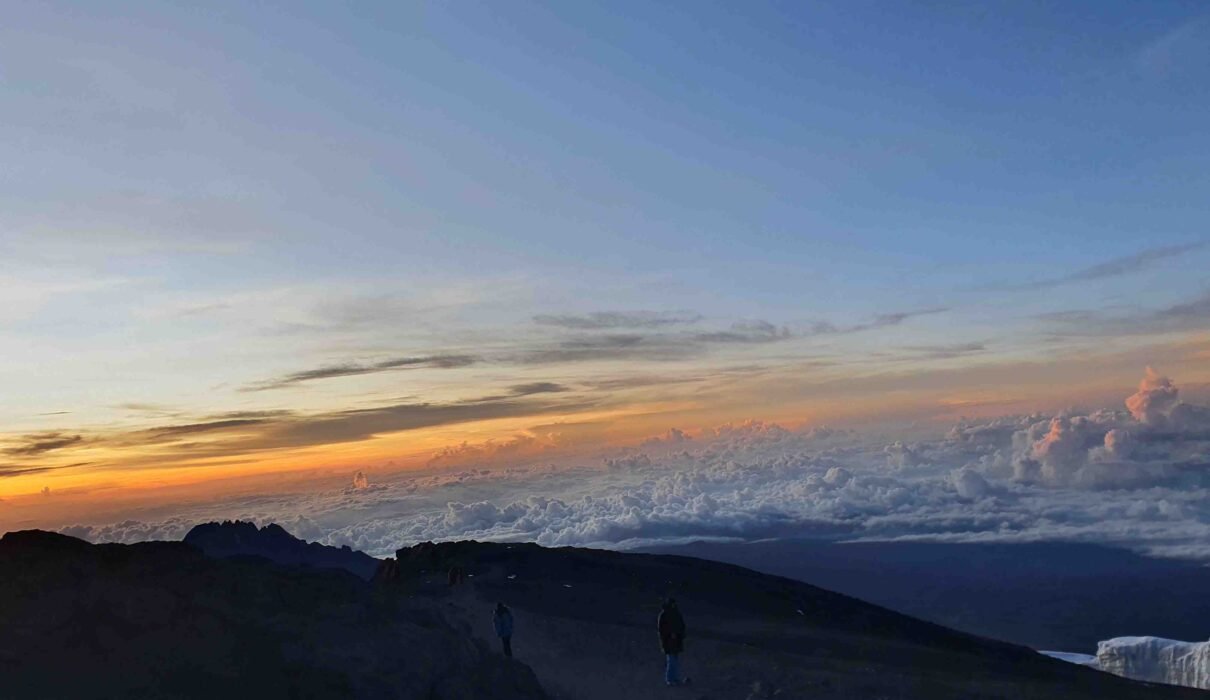
From Stella Point, continue along the rim to Uhuru Peak, the highest point in Africa. Dawn often arrives during this final stretch, with glaciers, crater views and distant plains coming into view. The guide will allow time for photos, but the stay is short because of the altitude and wind.
You then descend to Barafu for a rest and brunch before continuing down to Mweka Camp. The lower elevation makes breathing easier, although your legs may be tired from the long day. A final hot meal and night in camp follows. The walk from Mweka Camp to Mweka Gate, certificate collection and transfer to Moshi are arranged the next morning; it is a separate exit service after the six scheduled mountain days.
What makes Lemosho special?
Lemosho offers more variety than a direct forest-to-summit route. You begin under rainforest trees, walk across high moorland and the wide Shira Plateau, pass volcanic rock and giant groundsels, scramble the Barranco Wall and finish in the alpine desert below Kibo. It is a route that shows the mountain changing around you.
The western start is often quieter than the busier southern trailheads. Once the route joins the southern circuit, you meet other climbers, but the first stages retain a more remote feeling. This combination is why many people choose Lemosho even when their time is limited.
On 6 Days Lemosho Route Kilimanjaro Climbing, you see those landscapes in a compact schedule. It is beautiful, but it is also fast. Treat preparation and acclimatisation as central parts of the holiday, not paperwork to finish before the “real trip” starts.
Safety and altitude on Kilimanjaro
Altitude sickness does not care whether someone is an athlete or a first-time hiker. A fit person can become unwell, while a slower walker can feel excellent. Symptoms such as headache, dizziness, nausea, severe fatigue, loss of coordination or breathing difficulty must be reported to the guide immediately.
Your local team monitors the group, carries emergency oxygen and follows established procedures if somebody needs support or evacuation. A summit is never worth ignoring a health warning. With 6 Days Lemosho Route Kilimanjaro Climbing, careful communication matters even more because the programme is compact.
The crew’s role on 6 Days Lemosho Route Kilimanjaro Climbing is not only to carry equipment and point out the trail; it is to manage the climb responsibly from the first health check to the final descent.
The practical rules are straightforward:
Walk at the guide’s pace; never rush to camp.
Drink regularly and carry enough water each day.
Eat meals and snacks to maintain energy.
Keep a waterproof layer and warm clothing in your daypack.
Avoid alcohol before and during the mountain portion.
Discuss pre-existing medical conditions and medicines before booking.
Talk to a qualified travel-health clinician before your trip about personal medical advice, vaccinations and prescriptions. Google may help you locate a travel clinic, but online information should not replace advice from a professional who knows your health history.
Training for a six-day Lemosho climb
Training should begin months before departure whenever possible. Build aerobic fitness through walking, jogging, cycling, swimming or gym cardio, then add long walks on hills and stairs. The goal is not to become the fastest person in the group. It is to develop enough endurance to walk at a controlled pace for several days and still recover overnight.
Strength work helps, especially for the legs, hips, core and back. Squats, step-ups, lunges and controlled downhill practice can make a real difference on summit descent. Take a few weekend hikes on consecutive days and wear the boots and socks you plan to bring to Tanzania.
Equipment testing is part of training. A small heel rub, loose backpack strap or gloves that are too thin become major problems on a cold mountain. The 6 Days Lemosho Route Kilimanjaro Climbing briefing includes a gear check, but it is always better to solve obvious issues before you travel.
Think of preparation for 6 Days Lemosho Route Kilimanjaro Climbing as part of the trip, not a separate chore: trained legs and familiar gear allow you to conserve energy at altitude.
Packing essentials
Kilimanjaro has several climate zones, and conditions can change quickly. Layers are more useful than a single heavy item. Your complete equipment checklist is sent after booking; the main essentials include:
Waterproof, broken-in hiking boots with reliable grip
Thermal base layers, trekking socks and warm trousers
Fleece or insulated mid-layer, down jacket and waterproof shell
Gloves, warm hat, sun hat and buff or neck gaiter
Headlamp and spare batteries
Sunglasses, sunscreen and lip balm
Reusable water bottles or a hydration bladder
Trekking poles, personal medication and blister-care items
A sleeping bag suitable for sub-zero camp temperatures
Porters carry the main duffel under responsible weight limits. You carry your own daypack with water, jacket, rain protection, snacks, camera, medication and valuables. Waterproof liners inside the duffel are helpful, especially during the rainforest stage.
For 6 Days Lemosho Route Kilimanjaro Climbing, a dependable headlamp, warm gloves and dry layers are especially important because summit night begins after midnight.
Inclusions and exclusions
A standard 6 Days Lemosho Route Kilimanjaro Climbing quote normally includes park fees, professional mountain guides, porters and cook, quality tents, sleeping mats, meals during the mountain days, safety equipment and transfers between Moshi and the Kilimanjaro gates. Exact hotel arrangements and exit-day services are confirmed in your quotation.
International flights, visas, travel insurance, personal trekking equipment, extra accommodation, tips for the crew, alcoholic drinks and any item not listed in your confirmation are usually excluded. Your insurance should explicitly cover high-altitude trekking and emergency evacuation. Please check the policy wording rather than assuming that general travel insurance is enough.
For further independent route information, visit Kilimanjaro Climb Specialist. Compare route descriptions carefully, then choose a climb based on safety standards, crew support, pacing and clear communication—not price alone.
Best time for 6 Days Lemosho Route Kilimanjaro Climbing in 2027
The most popular periods are January to early March and June to October, when trail conditions are generally drier. January and February can offer crisp mornings; July through September is often busier but reliably popular with climbers from many countries.
April and May usually receive heavier rain, which makes the forest trail muddier and can bring more cloud. November has shorter rains and may suit travellers who are flexible about weather and prefer fewer people. The best date for 6 Days Lemosho Route Kilimanjaro Climbing depends on your flights, training schedule and personal comfort with rain or cooler conditions.
Frequently asked questions
Is six days enough for the Lemosho Route?
It can work for strong, well-prepared trekkers, but it is a faster acclimatisation schedule than seven or eight days. We recommend that you assess your fitness honestly and consider a longer route if you have the time. There is no advantage in choosing fewer days simply to save one night on the mountain.
Is 6 Days Lemosho Route Kilimanjaro Climbing harder than the seven-day version?
Yes, usually. The route covers the same high-altitude environment with less time to adapt. The seven- and eight-day options are often a more comfortable choice for climbers who are new to altitude or who want a more gradual schedule.
Is the Barranco Wall dangerous?
It is a short guided scramble, not technical rock climbing. The guides show the safest line and help where needed. Move slowly, use your hands and avoid trying to pass others at narrow points.
What is included in 6 Days Lemosho Route Kilimanjaro Climbing?
The 6 Days Lemosho Route Kilimanjaro Climbing quote sets out park fees, mountain crew, tents, meals, safety arrangements and transfers individually, so you can see exactly what you are booking before confirming your place.
Can beginners join this route?
Beginners with strong fitness and thorough training can join, but a longer Lemosho itinerary may suit them better. The decision should be based on your hiking history, medical information and time available, not simply age or gym fitness.
Is 6 Days Lemosho Route Kilimanjaro Climbing a private departure?
Yes. 6 Days Lemosho Route Kilimanjaro Climbing can be arranged privately around your dates for a solo climber, couple, family or group of friends, subject to park availability.
Can I add a safari after the climb?
Yes. We can arrange a recovery night in Moshi and then add Tarangire, Ngorongoro, Serengeti or Zanzibar to your plan. Send your dates through our contact page and we will prepare one joined-up itinerary.
Book your Superior 6 Days Lemosho Route Kilimanjaro Climbing 2027
The 6 Days Lemosho Route Kilimanjaro Climbing package gives trained hikers a scenic, compact path to Uhuru Peak. It asks for discipline and proper preparation, but it rewards you with rainforest, volcanic plateaus, the southern circuit and the roof of Africa in one remarkable route.
Contact Eddy Tours & Safaris for availability, a personalised price and honest guidance about whether the six-day schedule matches your experience. Use the contact page, call or WhatsApp +255 711 906 664, or email eddytoursandsafaris@gmail.com and sales@eddytours-safaris.com.